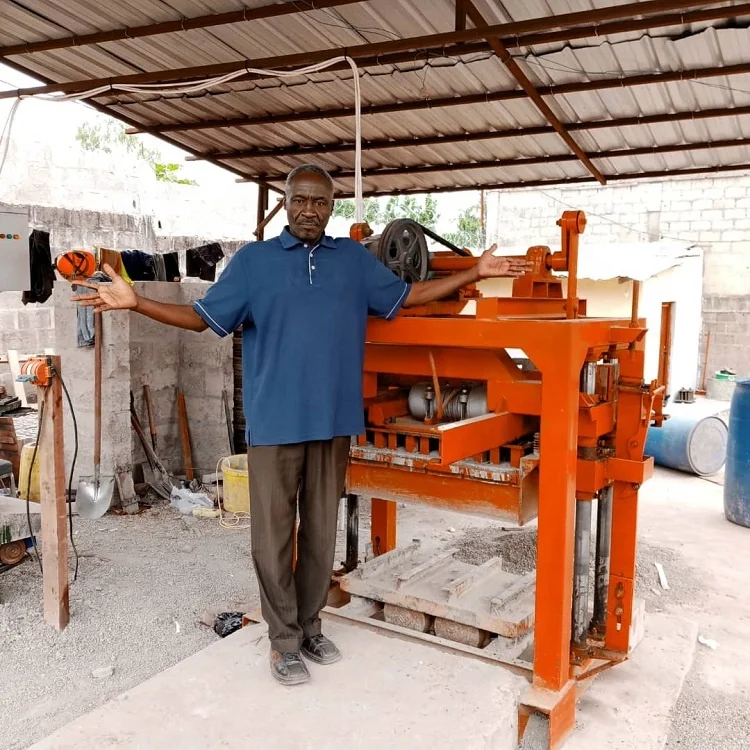
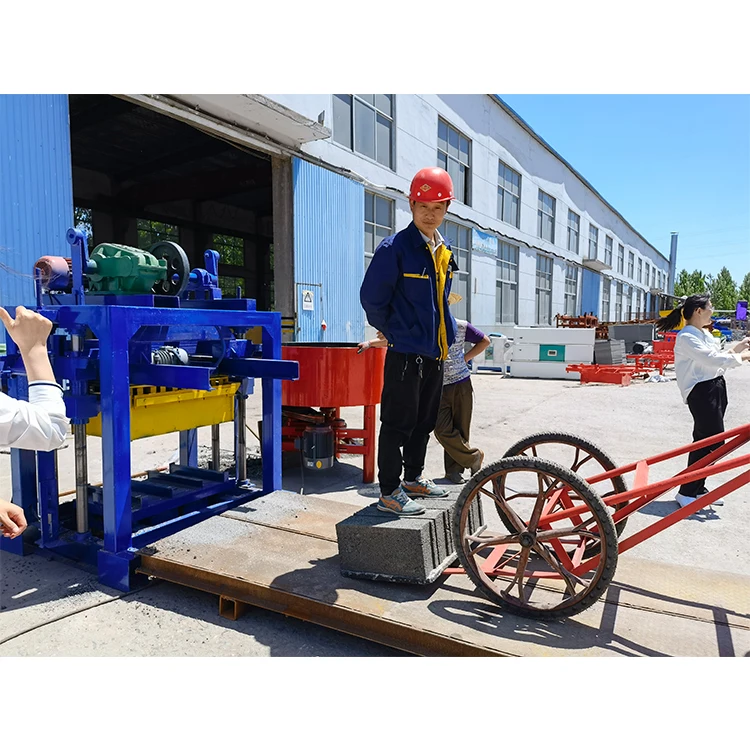


Description
Mould-Matched Capacity — Every QTJ4-40 output figure here is tied to a specific block size and cavity count, so your daily projection holds up on the shop floor.
Technical Specifications
| Parameter | Value |
|---|---|
| Model | QTJ4-40 |
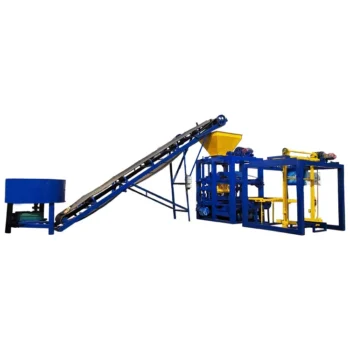
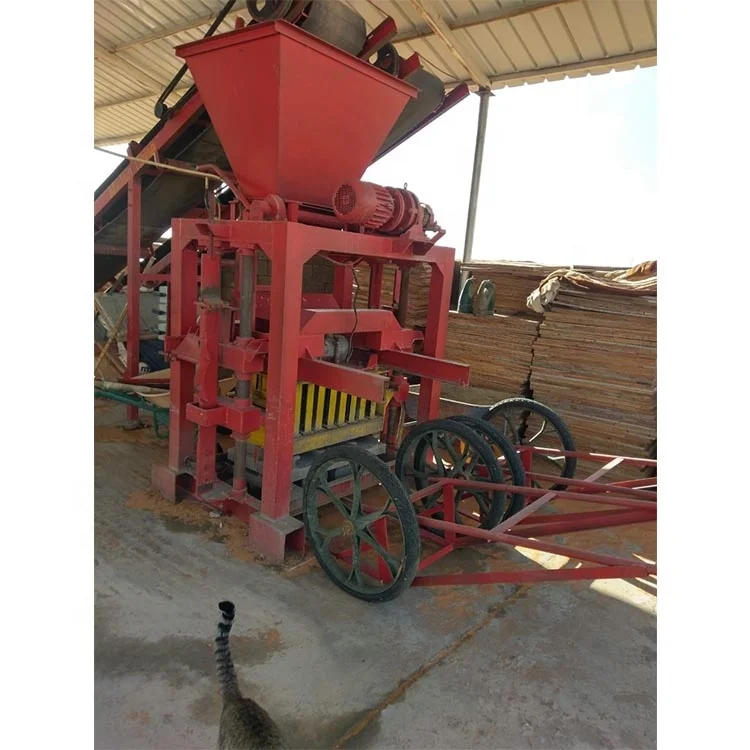
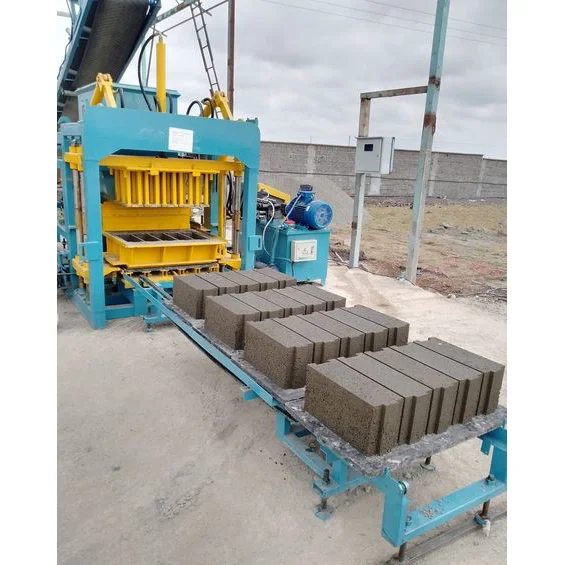
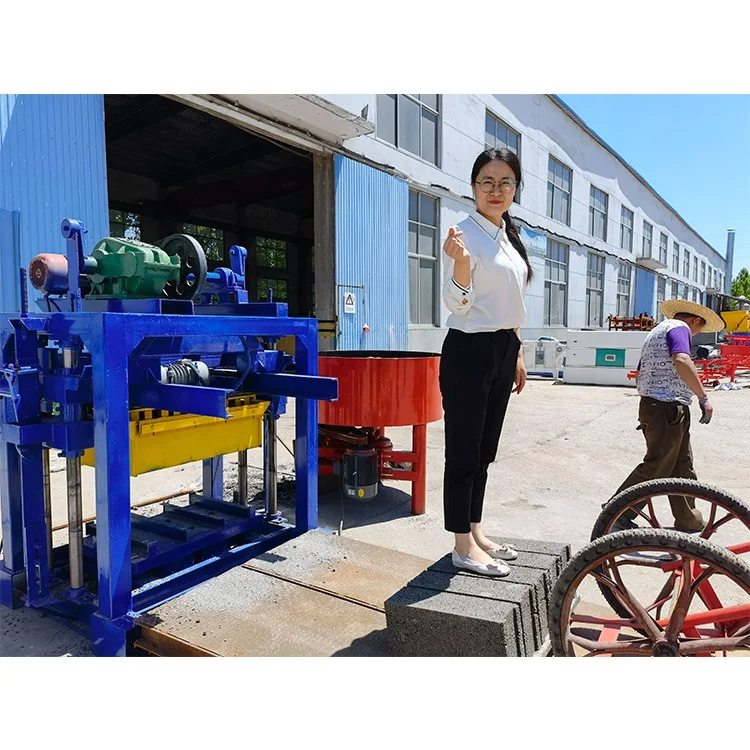
| Product Type | Semi-Automatic Concrete Block Making Machine |
| Rated Power | 10.4 kW |
| Molding Cycle | 40 s |
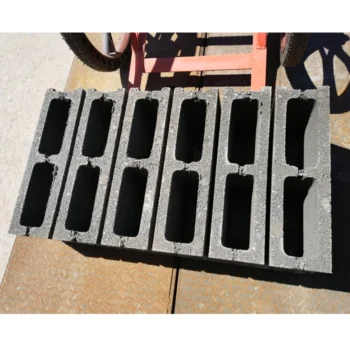
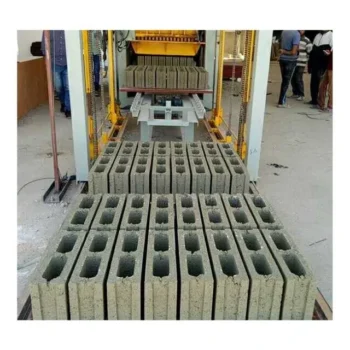
| Theoretical Output (400×200×200 mm hollow block, 4 pcs/mould) | 360 pcs/h, 2800 pcs/day (basis: continuous operation, confirmed mix) |
| Theoretical Output (400×150×200 mm hollow block, 5 pcs/mould) | 450 pcs/h, 3600 pcs/day (basis: continuous operation, confirmed mix) |
| Theoretical Output (225×112.5×60 mm solid brick, 9 pcs/mould) | 800 pcs/h, 6400 pcs/day (basis: continuous operation, confirmed mix) |
| General Output Range | 2000–2500 pcs/8h (basis not stated in source — confirm block format and material) |
| Vibration System | Bed mould vertical vibration + upper mould compression vibration |
| Control System | Semi-automatic with top die push/pull and automatic scraper |
| Pallet Size | 850×450 mm |
| Machine Weight | 1 T |
| Overall Dimensions | 1350×1460×1800 mm |
| Voltage | Configurable to buyer’s local supply (V/Hz to be confirmed before production) |
| Raw Material Compatibility | Concrete, sand, cement, fly ash, lime, gypsum |
| Mould Format Options | Hollow block, solid brick (additional formats subject to mould availability) |
| Certification | CE (confirm per unit) |
Application Suitability
| Application | Material or Output |
|---|---|
| Small to medium block plant startup | Hollow blocks from locally sourced sand, crushed stone, and cement |
| On-site production for housing projects | 400×200×200 mm hollow blocks using site-available aggregate |
| Existing concrete product manufacturer expanding range | Adding 225×112.5×60 mm solid bricks alongside current hollow block output |
| First-time entrepreneur entering block market | Semi-automatic line with low initial investment using fly ash or gypsum blends |
What "2800 Blocks a Day" Actually Means for the QTJ4-40
Output numbers only matter when the block format and mould cavity count are stated beside them.
Many quotations list a single daily capacity for the QTJ4-40 block machine without naming the block size behind that figure. I once configured this machine for an Indonesian contractor who expected 2800 hollow blocks daily based on a brochure number. The quote assumed 400×200×200 mm blocks at four per mould. His market actually demanded a thinner 400×150×200 mm format, which runs five per mould and changes the cycle dynamics entirely. Without that conversation before order, his output projection would have been wrong from day one. Capacity must always be read alongside the format it was calculated on [NEED_CITE: block format assumptions in capacity quotations].
Matching the Press to the Block Your Market Actually Buys
The QTJ4-40 block machine specifications change meaning depending on which block your customers pay for. A four-cavity hollow block mould and a nine-cavity solid brick mould produce very different daily totals on the same press. Before confirming an order, the specific format and mould drawing should be locked so the capacity calculation reflects your real product, not a catalogue default.
Why Pallet Size Decisions Ripple Through the Whole Plant
The 850×450 mm pallet is not an isolated dimension — it dictates your curing rack spacing, forklift fork width, and stacking pattern. I have seen buyers receive machines only to discover their existing curing racks were built for a different pallet footprint. Confirming pallet compatibility before production avoids a situation where blocks are stacked by hand because the handling equipment does not fit [NEED_CITE: pallet and curing area compatibility in block plants].
Reading the Specs That Actually Shape Your Output
The dual vibration system — bed mould vertical vibration combined with upper mould compression vibration — is what determines block density and surface finish. On a semi-automatic press like the QTJ4-40, vibration force must be matched to the buyer’s mix design. A lightweight fly ash blend responds differently than a dense crushed-stone mix, and the vibration setting that produces strong blocks with one aggregate may leave the other under-compacted.
The 40-second molding cycle applies across listed formats, but real cycle time on the floor includes pallet change and mould filling. The top die push/pull mechanism with automatic scraper improves filling accuracy, which matters when you are running a stiff mix that does not flow easily into cavity corners.
At 10.4 kW rated power, this machine does not demand a heavy industrial supply, but the exact voltage and frequency must be confirmed before the electrical panel is wired. A 50 Hz motor running on a 60 Hz supply will cycle faster but overheat; the reverse causes sluggish vibration. These are not theoretical problems — they show up on the first day of commissioning [NEED_CITE: voltage and frequency mismatch in exported machinery].
The Cost of Skipping the Configuration Conversation
When the QTJ4-40 block machine is ordered without confirming local aggregate, the buyer often ends up substituting materials at higher cost to match a mix the machine was set up for. A quotation built on river sand means little when only volcanic aggregate is available locally. The vibration parameters tuned for one material will not automatically transfer to another, and the resulting blocks may fail strength tests or show inconsistent density across a batch [NEED_CITE: aggregate substitution impact on block strength].
Why Buyers Source This Machine Here
Block machinery is the single focus of this operation, so the QTJ4-40 is specified as part of a matched system — press, mould, pallet, and handling — rather than assembled from separate suppliers who do not coordinate.
Configuration is set against the buyer’s actual mix design, target block format, and local aggregate, not pulled from a generic catalogue page.
Mould design covers the formats the buyer’s market demands, and custom mould drawings are available when standard cavities do not match local block dimensions.
The semi-automatic platform allows a buyer to start with manual pallet handling and move toward higher automation later without replacing the press itself.
Installation support includes on-site commissioning and operator training so the first production run is not a learning exercise at the buyer’s expense.
Documentation & Verification
- Line layout with capacity calculation stating the exact block format and mould cavity count assumed
- Mould drawing and format list confirming which cavities ship with the quotation
- Pallet specification sheet covering size, material, and load rating for your curing setup
- Voltage, frequency, and control language confirmation documented before production begins
- Factory test record on your specified block format before dispatch
- Operation and maintenance manual with wear parts and mould replacement list
Installation, Commissioning & Support
- Foundation pad sized to the 1350×1460 mm footprint with level tolerance for vibration stability
- Dedicated electrical circuit rated for the 10.4 kW draw at your confirmed local voltage and frequency
- Machine ships as a single unit at 1 T — verify site access for unloading equipment
- First-run commissioning includes vibration tuning to your specific aggregate and mix design
- Operator training covers mould change procedure, scraper adjustment, and daily inspection points
- Wear parts list provided at delivery so first replacements can be sourced before they are needed
What to Prepare Before Requesting a Quote
To size the QTJ4-40 accurately, share the block formats your market buys most, the daily volume you need for each, and the raw materials available locally — especially the coarse aggregate type and gradation. Confirm your site voltage and frequency, the language you need on the control interface, and whether your existing curing racks and forklifts are compatible with an 850×450 mm pallet. If you are adding this press to an existing line, describe the upstream mixer and downstream handling so the cycle timing aligns.
Frequently Asked Questions
Q: How is output capacity verified for each block format on the QTJ4-40?
A: Every capacity figure is calculated against a named block dimension and mould cavity count — for example, 400×200×200 mm hollow blocks at four per mould. The quotation includes a line layout document that states these assumptions so the buyer can verify the projection against their actual product mix before the machine enters production.
Q: Which mould formats are available and how long does a mould change take?
A: Standard options include hollow block and solid brick moulds in the dimensions listed in the specifications. Additional formats are available subject to mould design confirmation. The QTJ4-40 uses a bolt-on mould mounting system, and changeover time depends on operator familiarity — first-time changes take longer until the team builds a routine.
Q: What pallet size does the QTJ4-40 require and can it match my curing setup?
A: The machine runs on 850×450 mm pallets. Before ordering, the buyer should check that this dimension fits existing curing racks, forklift fork spacing, and stacking area. Pallet material and load rating are confirmed during the proposal stage so the pallets suit the block weight and curing environment.
Q: How should the machine be configured for my local aggregate?
A: The vibration system and mix proportions are adjusted based on the buyer’s local aggregate type, gradation, and cement ratio. Providing a sample or lab analysis of the coarse and fine aggregate allows the configuration to be set before shipment, reducing trial-and-error during commissioning.
Q: What voltage and control language options are confirmed before shipment?
A: Voltage and frequency are configured to the buyer’s local supply and documented in writing before the electrical panel is assembled. The control interface language is confirmed at the same stage so the operator reads instructions in a familiar language from the first day of production.