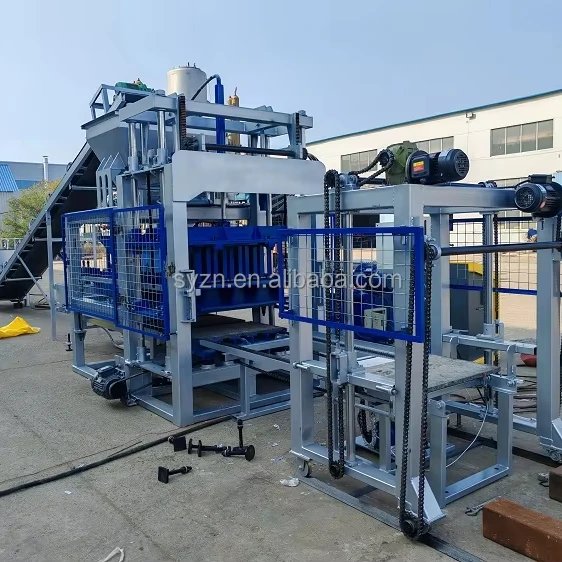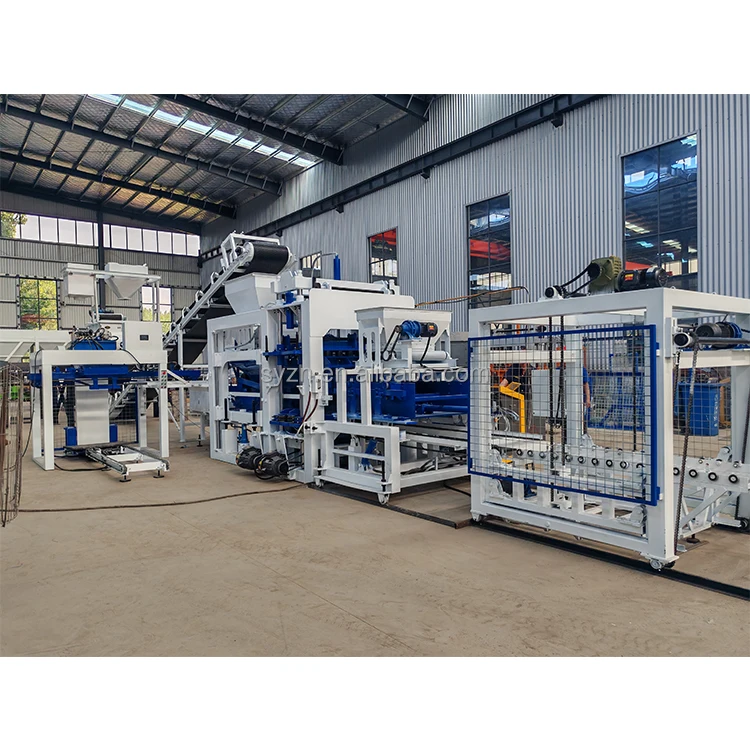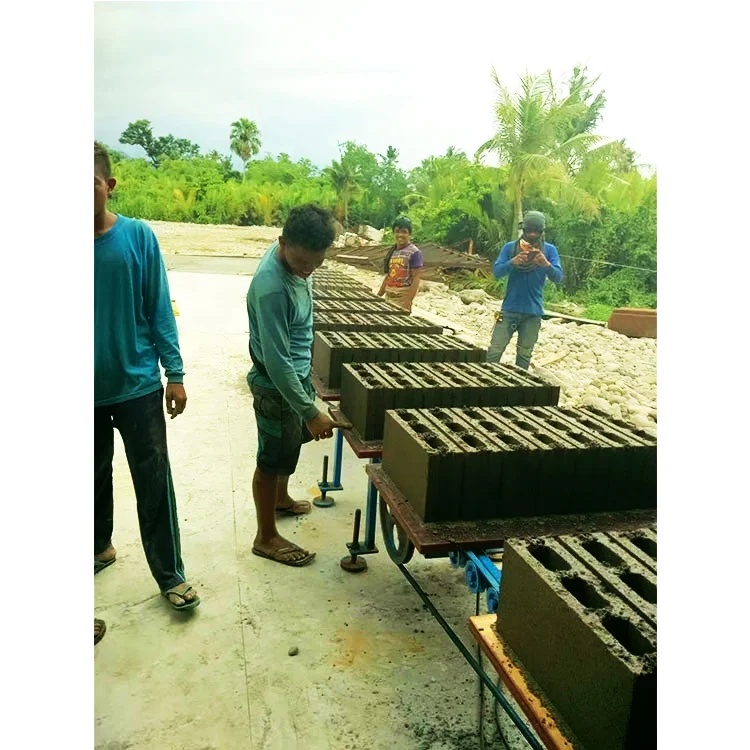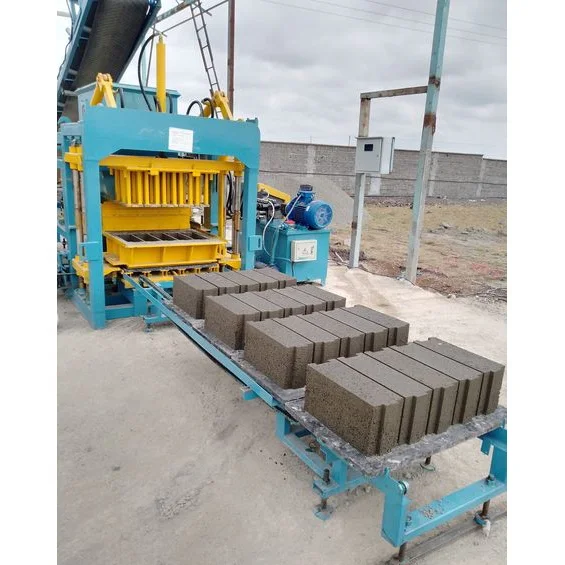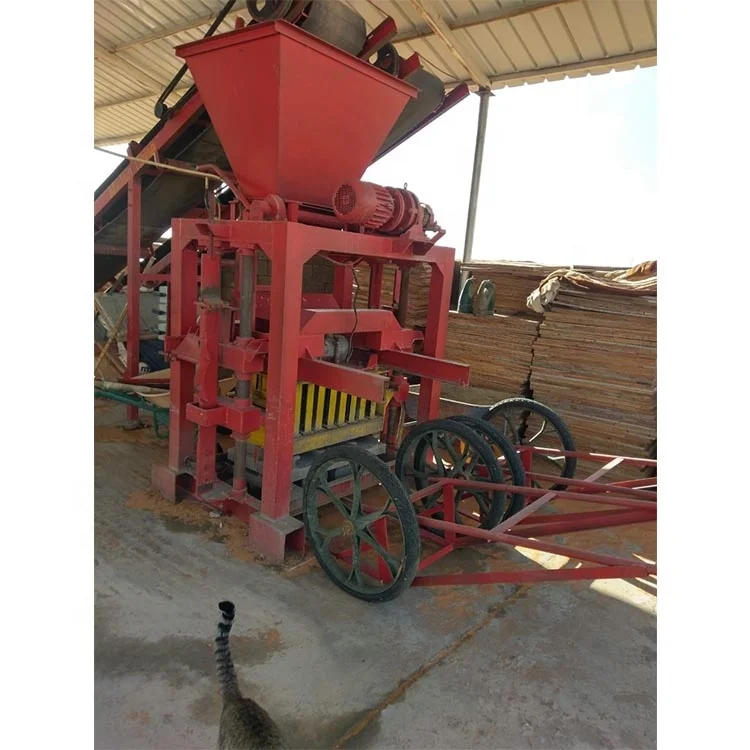
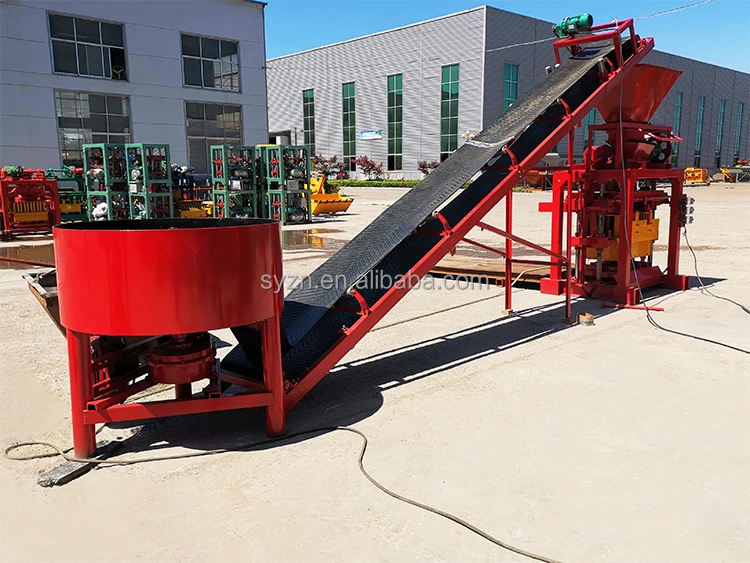
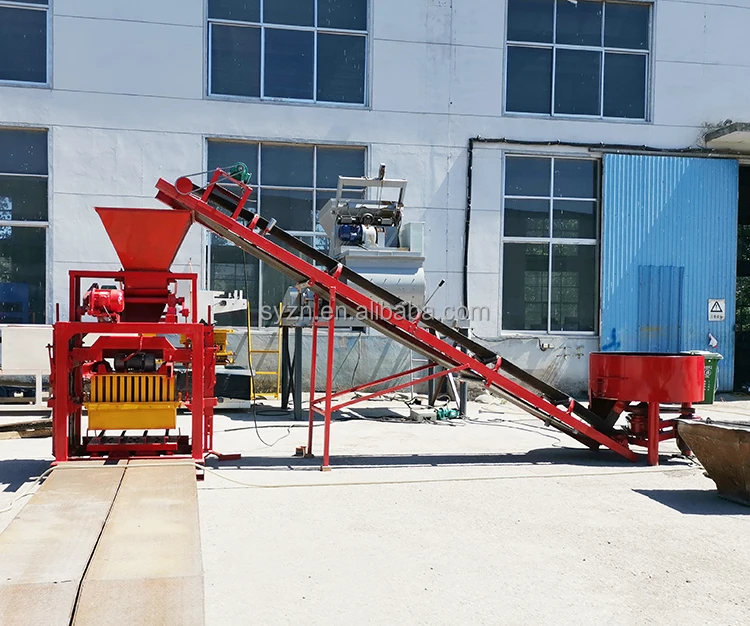
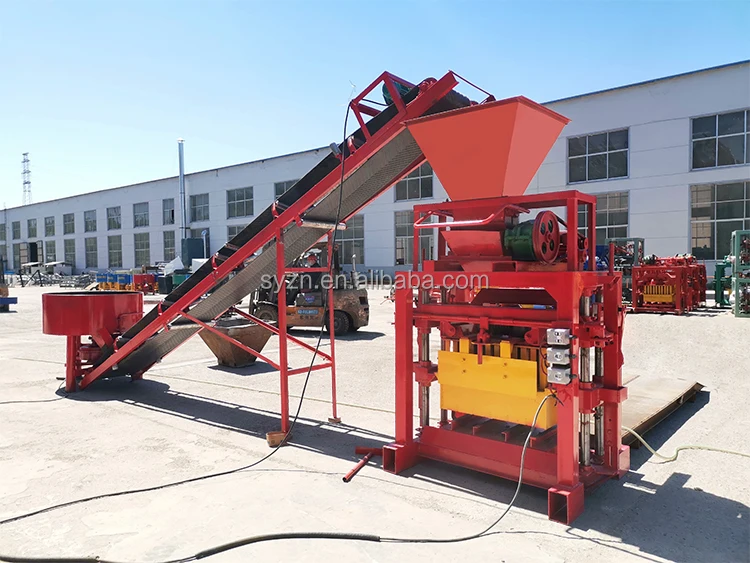
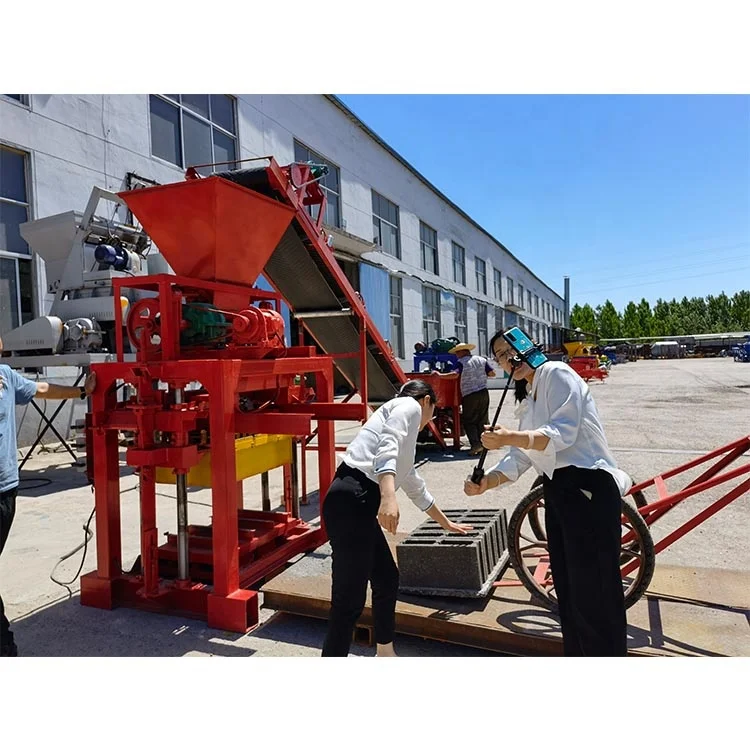

Description
Capacity Transparency First — Every output figure for the QTJ4-35 names the exact block size and pieces-per-mould behind it, so your daily production plan matches reality on the shop floor.
Technical Specifications
| Parameter | Value |
|---|---|
| Model | QTJ4-35 |
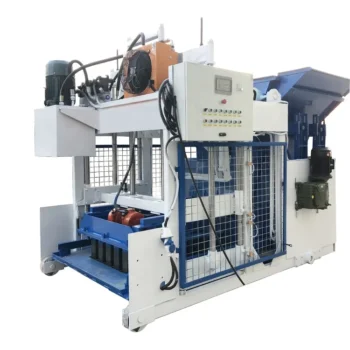
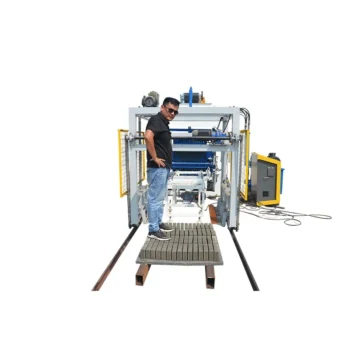
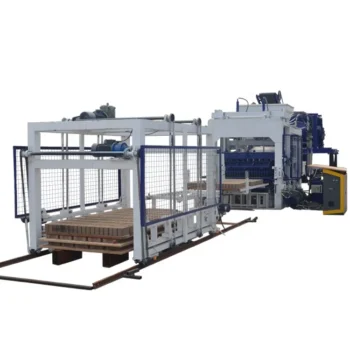
| Product Type | Concrete Block Making Machine |
| Overall Dimensions (L×W×H) | 1350×1460×1800 mm |
| Molding Cycle | 35 s |
| Vibration Frequency | 2800 r/min |
| Vibration Force (Exciting Power) | 30 kN |
| Total Power | 11.15 kW |
| Mixer Model | JQ350 |
| Pallet Size | 850×450×20 mm |
| Net Weight | 1500 kg |
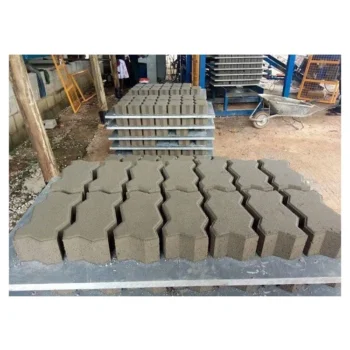
| Applied Products | Concrete hollow blocks (8 inch, 6 inch), solid bricks |
| Raw Materials | Crushed stones, sand, cement, dust, fly ash |
| Output Capacity | 408 pcs/h (based on 400×200×200 mm hollow block, 4 pcs/mould) |
| Output Capacity | 510 pcs/h (based on 400×150×200 mm hollow block, 5 pcs/mould) |
| Output Capacity | 2100 pcs/h (based on 240×115×53 mm solid brick, 18 pcs/mould) |
| Daily Output (8 hr) | 3264 pcs (400×200×200 mm hollow block) |
| Daily Output (8 hr) | 4080 pcs (400×150×200 mm hollow block) |
| Daily Output (8 hr) | 17000 pcs (240×115×53 mm solid brick) |
| Control System | basis to be confirmed (PLC / manual / relay logic) |
| Voltage & Frequency | basis to be confirmed |
| Automation Level | Semi-automatic (manual pallet handling implied) |
| Stacking Method | Manual (basis to be confirmed) |
| Certification | CE (verify applicability to this model) |
Application Suitability
| Application | Material or Output |
|---|---|
| Small-scale block production workshops | Hollow blocks from crushed stone, sand, and cement |
| On-site construction block production | 8-inch and 6-inch hollow blocks for building walls |
| Solid brick manufacturing | Standard 240×115×53 mm bricks from fly ash and stone dust |
| First block plant for entrepreneurs | Mixed format output with limited capital investment |
| Concrete product range expansion | Adding hollow block and solid brick formats to existing lines |
What "408 Pieces per Hour" Actually Means for Your Plant
The QTJ4-35 block machine specifications only hold weight when tied to a specific block format and local aggregate.
I have seen buyers receive a single headline capacity number and assume it applies across every mould they plan to run. The reality on site is that switching from a 400×200×200 mm hollow block to a standard solid brick changes throughput by a factor of several times on the same QTJ4-35 block machine specifications sheet. When the local aggregate differs from what was used during factory testing — volcanic rock instead of river sand, for instance — cycle times drag and daily output drops well below expectation [NEED_CITE: effect of aggregate grading on block compaction cycle time]. That gap between catalogue promise and shop floor result is where most disputes start.
Matching Mould Format to Your Market Before Quoting Output
The QTJ4-35 produces 408 pcs/h on a 400×200×200 mm hollow block at 4 pcs per mould, and 2100 pcs/h on a 240×115×53 mm solid brick at 18 pcs per mould. These are the same machine with the same 35-second molding cycle — the difference is purely format geometry. A technical buyer sizing a machine must start from the block that actually sells in their local market, then work backward to the daily output that format delivers.
Pallet Size and Curing Area Alignment
The 850×450×20 mm pallet size on the QTJ4-35 must match the curing racks and forklift dimensions the buyer already has on site. A pallet that does not fit existing curing infrastructure forces a complete rework of the handling area, adding cost that never appeared in the machine quotation [NEED_CITE: pallet and curing rack compatibility standards for block plants]. Confirming this dimension before production starts avoids a costly mismatch after arrival.
Vibration Force and Block Density at 30 kN
The 30 kN vibration force at 2800 r/min works together with upper-mould compression to compact the mix into a consistent block. For lightweight aggregates or high fly-ash content mixes, this vibration force must be matched to the material’s response — too little force leaves weak blocks, while excessive force can fracture the mould over time. The four-lead guide and channel steel frame keep mould alignment stable across format changes, which matters when a plant switches between hollow blocks and solid bricks within the same shift.
When the Mix Design Does Not Match the Machine
A QTJ4-35 configured for river sand and standard cement will underperform if the buyer’s local supply relies on stone dust or high-ash fly ash without adjusting the vibration parameters and moisture ratio. The block strength becomes inconsistent, and rejection rates climb without the operator understanding why. Sizing the QTJ4-35 block machine specifications to the buyer’s actual available materials is the step that prevents this [NEED_CITE: relationship between local aggregate properties and block compressive strength].
Why Source Verification Matters Here
Every QTJ4-35 leaving our facility is specified against the buyer’s confirmed block format, local aggregate sample, and target daily output — not pulled from a catalogue default. The mould set, pallet specification, and mixer configuration are chosen as one matched system so the machine performs as stated from the first day of production. We confirm voltage, frequency, and control language before production begins, not after the machine arrives and commissioning stalls. The capacity calculation document you receive names the exact block format and pieces-per-mould behind every output figure, so there is no ambiguity between what was quoted and what the plant delivers.
Documentation & Verification
- Line layout and capacity calculation stating block format assumed for each output figure
- Mould drawing and format list confirming which block sizes the quoted moulds produce
- Pallet specification sheet with size, material, and load rating matched to your curing racks
- Voltage, frequency, and control display language confirmation recorded before production
- Factory test record on your specified block format and raw material mix before dispatch
Installation, Commissioning & Support
- Foundation pad sized to 1350×1460 mm footprint with level tolerance for vibration stability
- Dedicated power circuit for 11.15 kW total load with confirmed voltage and frequency
- Machine arrives assembled; pallet handling station and mixer positioned on site
- First-run parameter tuning for your local aggregate moisture content and mix ratio
- Operator training covering mould change procedure and daily maintenance checkpoints
- Wear parts list with mould and vibration component replacement intervals provided at delivery
What We Need to Quote Accurately
To size the QTJ4-35 to your plant, share the block format your market sells most, the local aggregate type available, and the daily output your project schedule requires. Confirm your site voltage and frequency, the pallet size your curing area accepts, and whether you need the JQ350 mixer included or already have one on site.
Frequently Asked Questions
Q: How is the QTJ4-35 capacity verified per block format, and which format does the headline number assume?
A: Every output figure is tied to a specific block size and pieces-per-mould count. The 408 pcs/h figure assumes a 400×200×200 mm hollow block at 4 pcs per mould, while 2100 pcs/h assumes a 240×115×53 mm solid brick at 18 pcs per mould. The capacity calculation document you receive before order states the format behind each number.
Q: What mould formats are available for the QTJ4-35, and how long does a mould change take on site?
A: Standard moulds cover 8-inch and 6-inch hollow blocks plus 240×115×53 mm solid bricks. Custom moulds can be designed to buyer drawings. Mould change time depends on operator familiarity and whether the format change was planned — confirm this figure with your installation team before your first production shift.
Q: How should the 850×450 mm pallet size be matched to the buyer’s curing area and forklift?
A: The pallet must fit your existing curing rack spacing and forklift tine width. Share your rack dimensions and forklift model before order so the pallet specification — size, material, and load rating — is confirmed compatible. A mismatch here forces expensive infrastructure changes after the machine arrives.
Q: Which raw materials and mix designs has the QTJ4-35 been configured for, and can it use local fly ash or stone dust?
A: The machine handles crushed stone, sand, cement, fly ash, and stone dust. However, the vibration force and moisture settings must be adjusted to match your specific aggregate grading and binder content. Share a sample of your local material so the QTJ4-35 block machine specifications are tuned before dispatch rather than adjusted blindly on site.