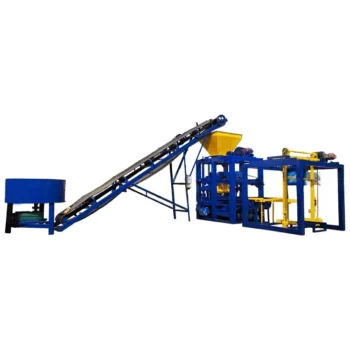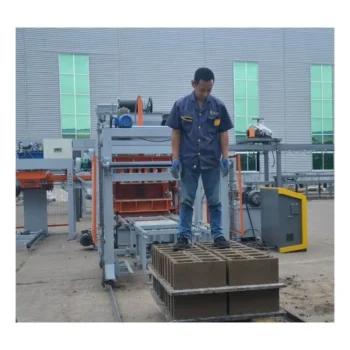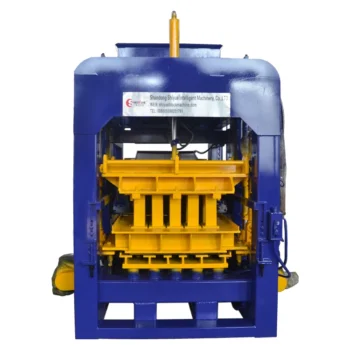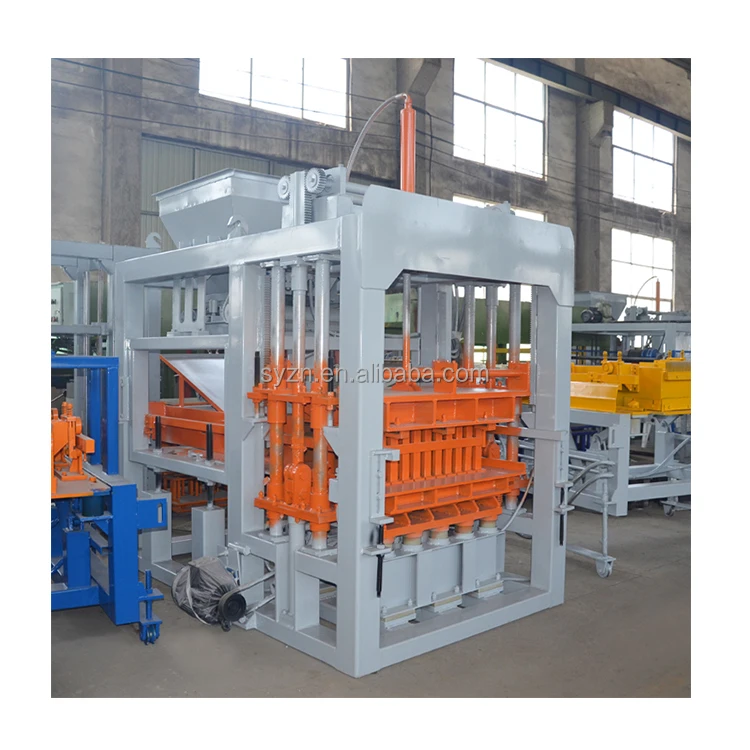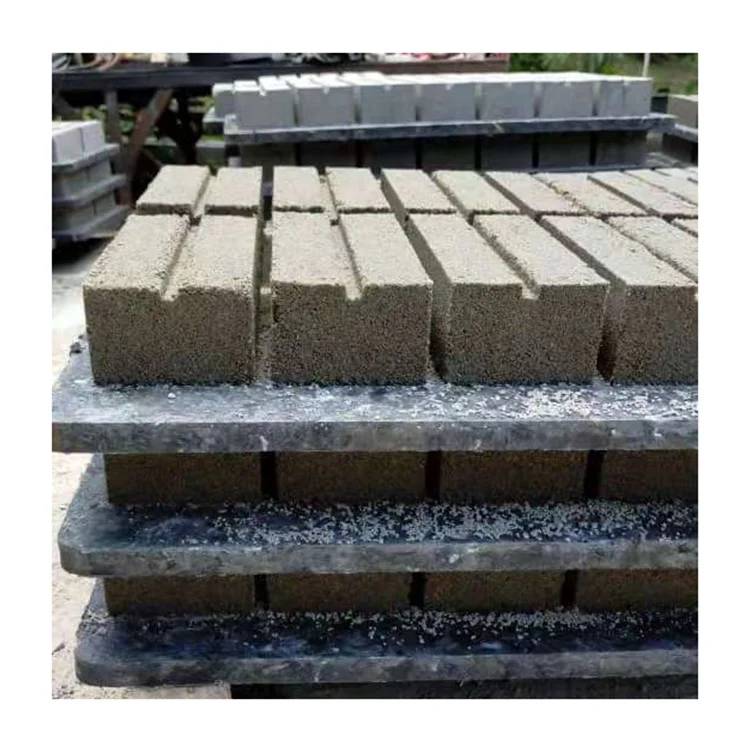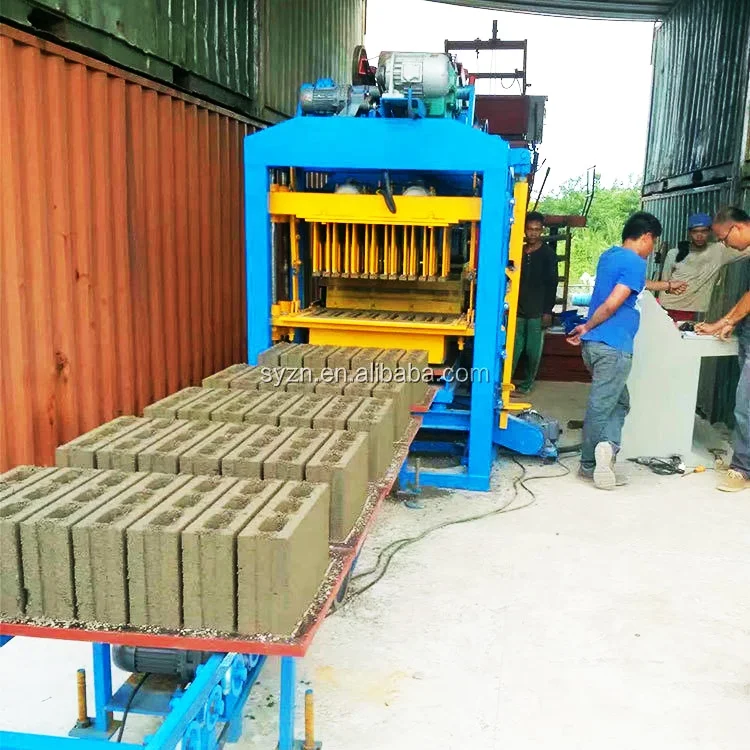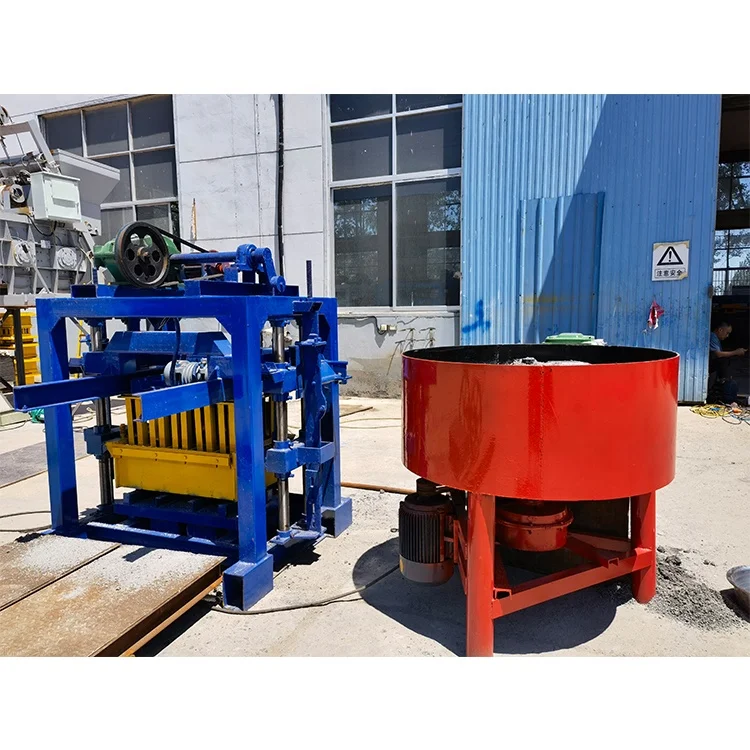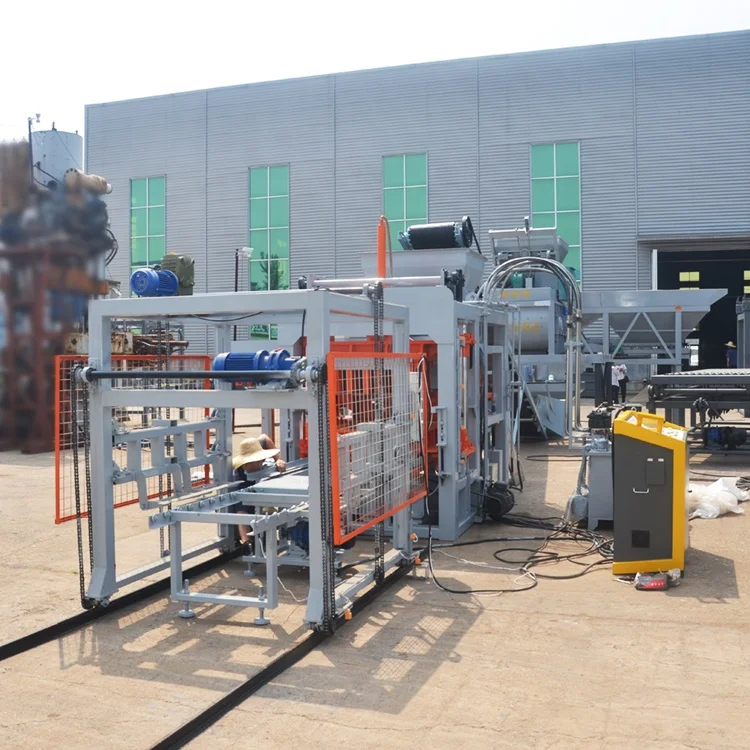


Description
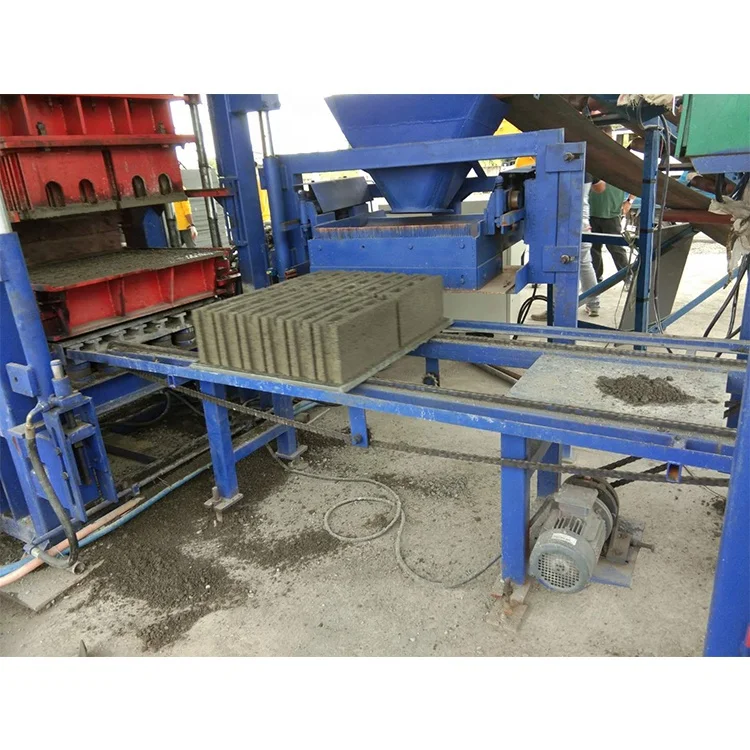
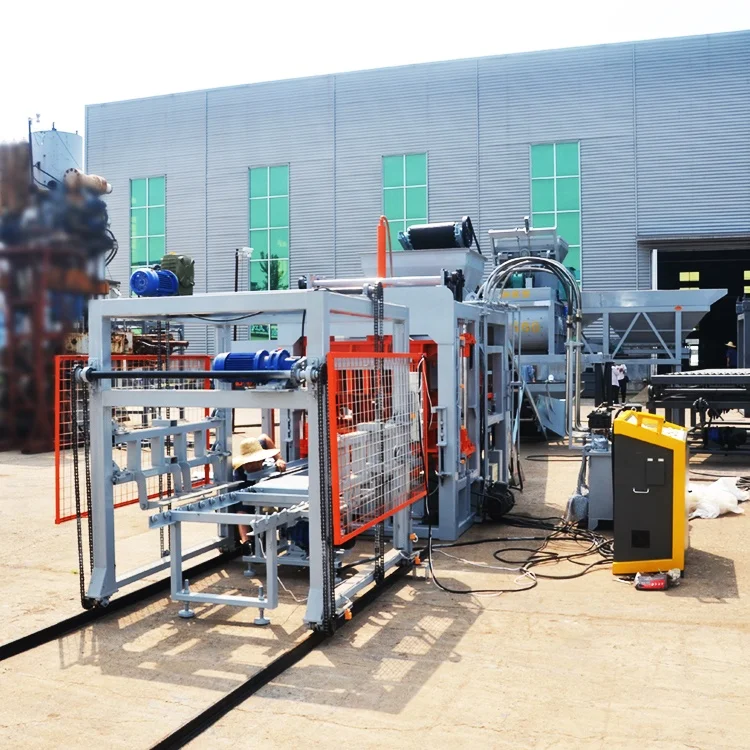
Matched Vibration and Pressure — the QT6-15 is configured around your actual block format, local aggregate, and target compressive strength rather than shipped with catalogue-default settings.
Technical Specifications
| Parameter | Value |
|---|---|
| Model | QT6-15 |
| Product Type | Concrete Block Making Machine |
| Overall Dimensions (L×W×H) | 8200×1700×2950 mm |
| Total Mass | 7 T |
| Vibration Form | Platform Vibration |
| Vibration Frequency | 0-60 Hz (adjustable) |
| Vibration Force | 45 kN |
| Moulding Mode | Automatic loading with vibration moulding |
| Demolding Method | Hydraulic |
| Molding Cycle | 15-20 s |
| Pallet Size | 880×850 mm |
| Total Power | 37 kW |
| Control System | PLC with touch screen HMI and fault diagnosis system |
| Hydraulic System | Independent integrated station isolated from dust and vibration |
| Block Compressive Strength | >15 MPa |
| Output: Hollow Block 400×200×200 mm | 1080-1440 pcs/h, 8640-11520 pcs/8hr (basis: 15-20s cycle, 6 pcs/mould) |
| Output: Hollow Block 400×150×200 mm | 1440-1920 pcs/h, 11520-15360 pcs/8hr (basis: 15-20s cycle) |
| Output: Solid Brick 240×115×53 mm | 5760-7680 pcs/h, 46080-61440 pcs/8hr (basis: 15-20s cycle, 32 pcs/mould) |
| Output: Rectangular Paver 200×100×60 mm | 2160-2880 pcs/h, 17280-23040 pcs/8hr (basis: 20-25s cycle) |
| Output: Zigzag Paver 225×112.5×60 mm | 2160-2880 pcs/h, 17280-23040 pcs/8hr (basis: 20-25s cycle) |
| Recommended Factory Area | 1200 m² |
| Warranty | 1 year for whole machine (excluding spare parts) |
Application Suitability
| Application | Material or Output |
|---|---|
| Hollow block production | Standard concrete mixes with local crushed stone and cement |
| Solid brick manufacturing | Dense aggregate blends for high compressive strength load-bearing units |
| Rectangular and zigzag paving blocks | Interlocking paver formats from fine aggregate and pigmented face mix |
| Waste material utilization | Ash, slag, and recycled aggregate with reduced cement dosage |
| On-site construction projects | Blocks and pavers produced locally using available regional materials |
| Format expansion for existing plants | Additional mould formats added to current production range |
What "Pieces per Hour" Hides About the QT6-15 Concrete Block Making Machine Specifications
Every capacity figure on this page is tied to a named block size and a stated cycle window — no single headline number.
I once had a buyer who compared two quotations based purely on the cycles-per-hour claim on the first page. The machine he almost bought quoted its maximum on a thin solid brick his market did not even sell. When he finally ran hollow blocks, real output fell to less than half the brochure figure. That gap is not a defect; it is physics. Heavier blocks need longer vibration dwell and slower demolding to avoid corner damage, and any honest QT6-15 concrete block making machine specifications sheet must state which format each number assumes. [NEED_CITE: concrete block cycle time and format relationship]
Matching the Machine to the Format You Actually Sell
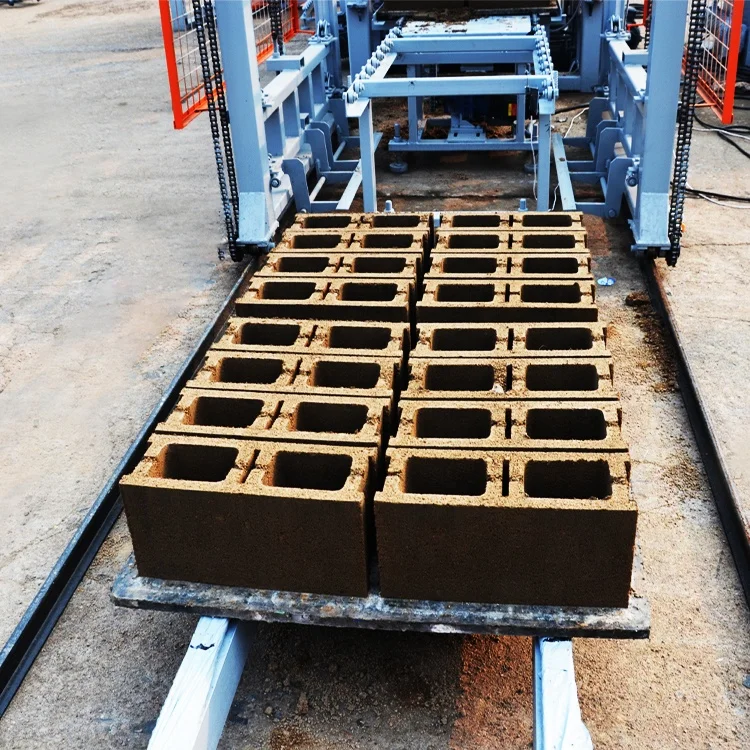
The QT6-15 produces 6 pieces of 400×200×200 mm hollow block per mould in a 15-20 second cycle, yielding 8640-11520 pieces across an 8-hour shift. Switch to the 240×115×53 mm solid brick mould and the same press delivers 32 pieces per cycle, pushing shift output to 46080-61440 units. These are two completely different production realities from one machine, which is why format-first sizing matters more than any generic throughput claim. Buyers evaluating the QT6-15 concrete block making machine specifications should start with their best-selling format, confirm the mould cavity count, and calculate daily revenue from that number alone.
Cycle Time Is a Function of Mix Design, Not Just the Press
Platform vibration runs between 0-60 Hz with 45 kN of force, but the frequency and dwell that produce a clean 400×150×200 mm hollow block in 15 seconds will damage a paver made from a drier zero-slump mix. The right cycle setting depends on aggregate grading, cement content, and moisture percentage — variables that differ from one quarry to the next. We configure vibration profiles against the buyer’s trial mix before the QT6-15 leaves the factory, so the stated cycle times are achievable on arrival rather than theoretical. [NEED_CITE: vibration frequency and concrete mix design parameters]
Reading the Specs That Actually Govern Block Strength
Block compressive strength above 15 MPa is achievable only when hydraulic pressure and vibration force are balanced for the specific mix. The QT6-15 carries an independent integrated hydraulic station physically isolated from dust and main press vibration, which keeps demolding pressure stable across long shifts. Pallet size is fixed at 880×850 mm, and that dimension must align with the buyer’s existing curing racks, forklift tine spacing, and yard layout or pallets will bottleneck the line. Moulding cycle windows of 15-20 seconds apply to hollow and solid formats, while pavers with a 20-25 second cycle demand a separate throughput calculation. Raw material adaptability covers waste ash, slag, and various aggregates, and the reduced cement dosage capability affects both per-block cost and the vibration energy needed to consolidate the mix. Total installed power is 37 kW across the press, feeder, and hydraulic pack, and the recommended 1200 m² factory area must accommodate raw material bays, curing zones, and finished block storage — not just the press footprint.
The Cost of Choosing Format After the Machine Arrives
When mould format is treated as an afterthought, the buyer ends up paying twice. A machine tuned for one aggregate and one block size will produce inconsistent density on a second format unless vibration and hydraulic parameters are re-mapped. Mould changeovers that should take minutes stretch into a full shift because the quick-lock system was never specified for the buyer’s format list. Pallets ordered in the wrong size cannot be stacked by the buyer’s existing forklift, forcing a separate handling purchase. These mismatches do not show up in the quotation but they dominate the first year of operation. [NEED_CITE: block machine configuration mismatch and downtime causes]
Why Buyers Source This Format from the Same Line
Block machinery is our single focus, so the press, mould, pallet, and handling stations are specified as one matched system rather than assembled from unrelated suppliers. Every QT6-15 configuration is set against the buyer’s actual mix design and target block format, not pulled from a catalogue default. Mould design covers every format the buyer’s regional market sells, including custom drawings when a standard cavity layout does not fit. Automation level is selectable, meaning a plant can start with manual pallet handling and add automatic stacking and cubing later without replacing the press. Installation support includes on-site commissioning and operator training tied to the buyer’s own raw materials and target formats.
Documentation & Verification
- Line layout showing 880×850 mm pallet flow and 1200 m² recommended area allocation.
- Capacity calculation per block format with stated cycle time assumptions.
- Mould drawing and format list for every cavity the buyer intends to produce.
- Voltage, frequency, and PLC display language confirmation in writing before production.
- Factory test record run on the buyer’s target block format prior to dispatch.
- Hydraulic and electrical schematic for the independent integrated station.
Installation, Commissioning & Support
- Foundation designed for 7 T total mass and 45 kN platform vibration isolation requirements.
- Dedicated electrical circuit sized for 37 kW total draw at the confirmed site voltage.
- Machine dismantled for container loading and reassembled on site with alignment check.
- PLC touch screen HMI configured to the buyer’s language before commissioning begins.
- Vibration frequency and hydraulic pressure calibrated against the buyer’s trial mix.
- Mould change procedure and quick-lock system training delivered to the operating crew.
- Wear parts and hydraulic seal list supplied with first replacement intervals noted.
What We Need to Size Your Line Correctly
Send us your best-selling block format with dimensions, your target daily output, and the source and grading of your local aggregate. Confirm the voltage and frequency at your site and the language your operators need on the PLC display. If you have existing pallets, curing racks, or forklifts, share those dimensions so the 880×850 mm pallet spec can be validated before the order is placed.
Frequently Asked Questions
Q: How is QT6-15 output calculated for each block format?
A: Each capacity figure is derived from the number of cavities per mould multiplied by the achievable cycles within one hour for that specific format. Hollow blocks 400×200×200 mm run at a 15-20 second cycle, while rectangular and zigzag pavers require 20-25 seconds due to denser mix and longer vibration dwell. Daily figures assume a continuous 8-hour shift.
Q: Which mould formats are available and what is the changeover time?
A: Standard options cover hollow blocks, solid bricks, rectangular pavers, zigzag pavers, and custom formats from buyer drawings. Changeover depends on whether the mould quick-lock system is included in the configuration. We confirm the expected change procedure and realistic time window against the buyer’s full format list before the order is finalized.
Q: How should vibration force and hydraulic pressure match my aggregate?
A: The 45 kN vibration force and 0-60 Hz adjustable frequency are set against the buyer’s mix design, aggregate grading, and cement content during factory testing. Higher fines or increased ash content change consolidation behaviour, so the vibration profile is tuned to deliver above 15 MPa compressive strength on the buyer’s actual material rather than a reference mix.
Q: What pallet size does the QT6-15 use and how do I plan around it?
A: The machine runs an 880×850 mm pallet. Buyers should verify that existing curing racks, forklift tine spacing, and yard stacking patterns accept that dimension. If the current handling equipment is sized differently, pallet specification is confirmed and adjusted before production starts to avoid a handling bottleneck on arrival.
Q: What electrical and PLC details are confirmed before shipment?
A: Voltage, frequency, and PLC touch screen display language are confirmed in writing before the machine enters production. This prevents commissioning delays caused by mismatched power supply or an interface the operating crew cannot read. The written confirmation is included in the documentation package shipped with the machine.