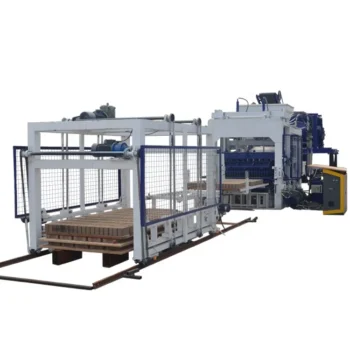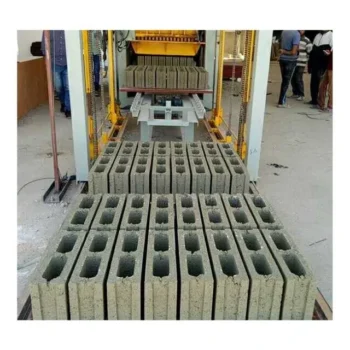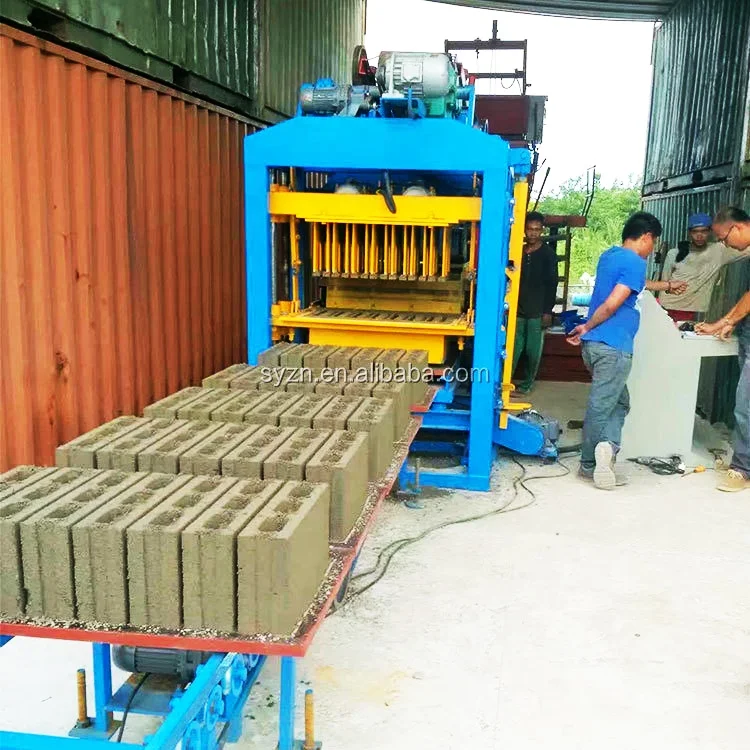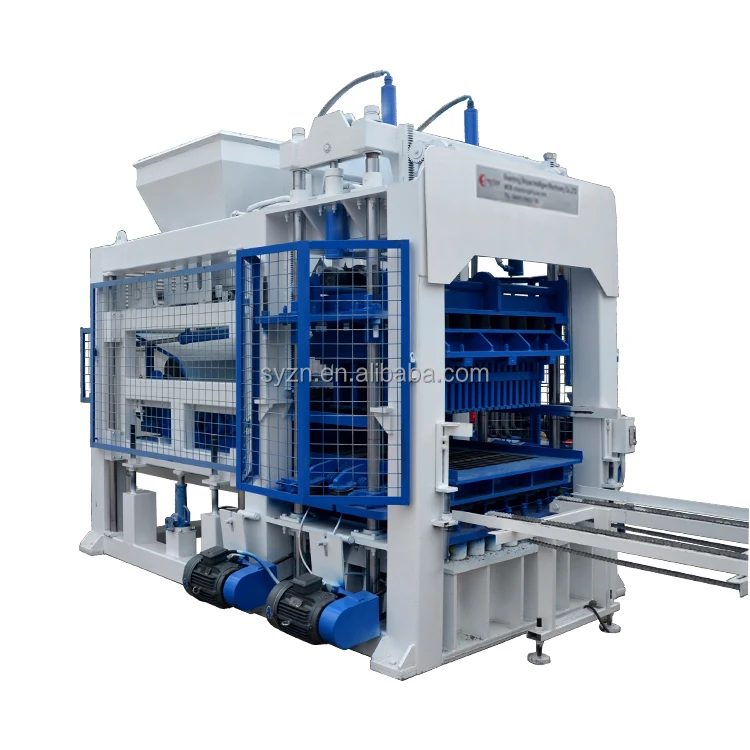


Description
Honest Capacity by Block Format — Every output figure for the Qt4-25a block making machine is tied to a named block size and mould cavity count, so you calculate daily production against the product your market actually buys rather than a misleading single headline number.
Technical Specifications
| Parameter | Value |
|---|---|
| Model | Qt4-25a |
| Product Type | Automatic Block Making Machine |
| Overall Dimensions (L×W×H) | 7100×1600×2610 mm |
| Net Weight | 5800 kg |
| Rated Power | 27.5 kW |
| Voltage | 380V or configurable to buyer requirement |
| Vibration Force (Exciting Force) | 60 KN |
| Pallet Size | 1020×850×40 mm |
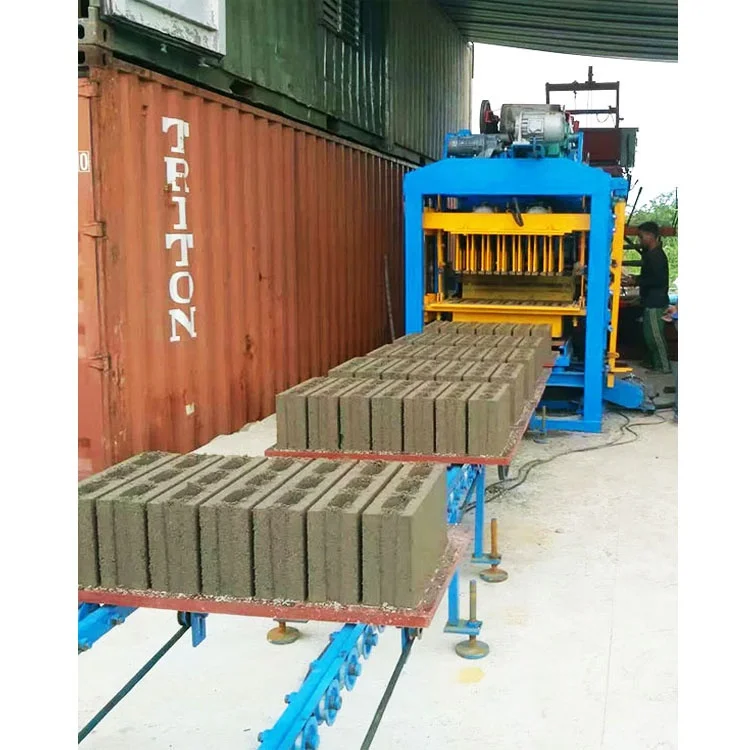
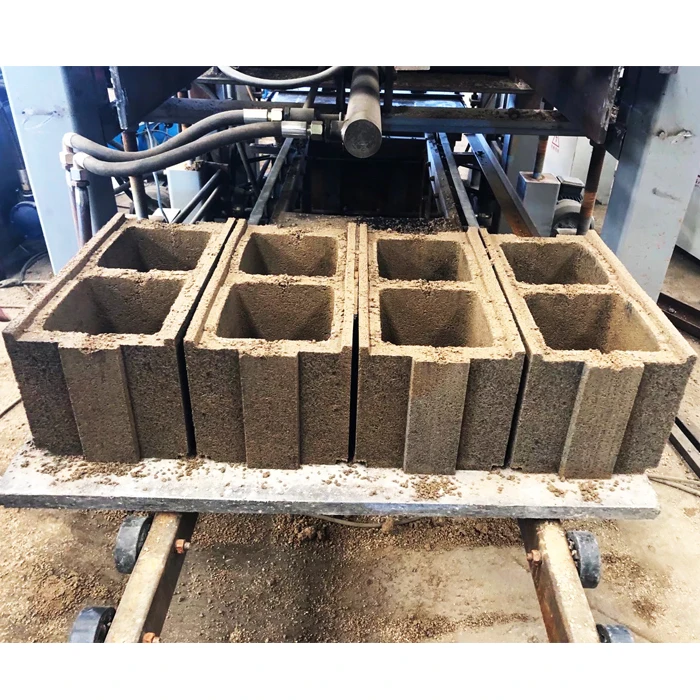
| Output Capacity (400×200×200mm hollow block) | 960 pcs/hour, 7680 pcs/day (4 pcs/mould) |
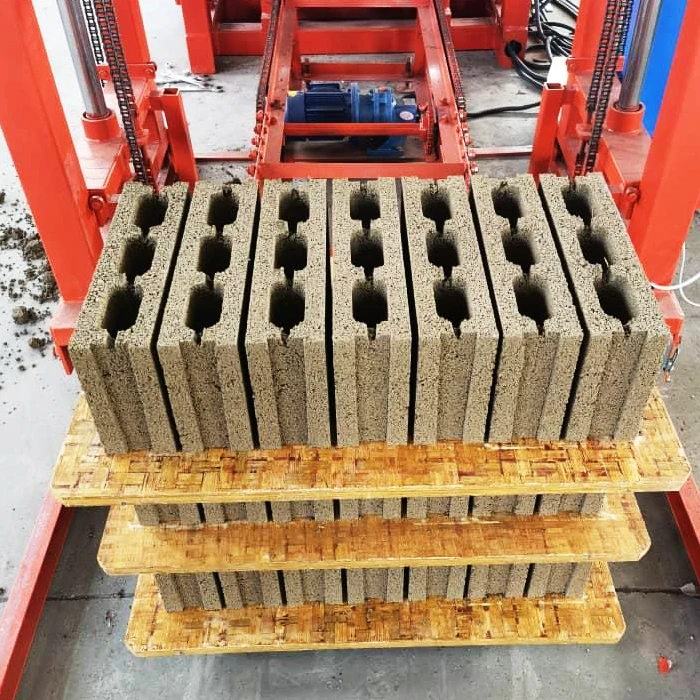
| Output Capacity (400×150×200mm block) | 1440 pcs/hour, 11520 pcs/day (6 pcs/mould) |
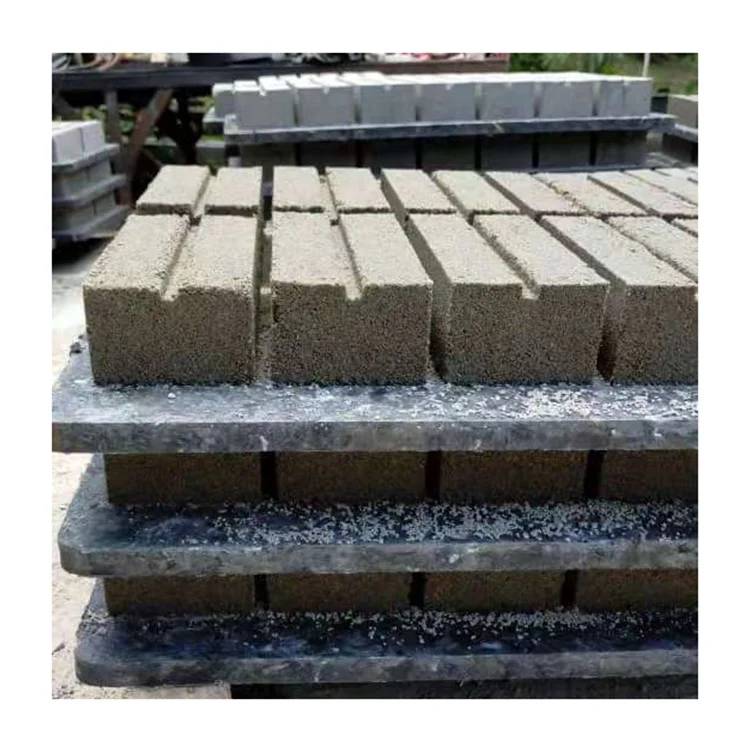
| Output Capacity (225×112.5×53mm solid brick) | 3840 pcs/hour, 30720 pcs/day (16 pcs/mould) |
| Control System | Available with PLC or manual control (basis to be confirmed) |
| Automation Level | Automatic (specific scope of pallet feeding, stacking, cubing to be confirmed) |
| Hydraulic Pressure | Value to be confirmed with supplier |
| Cycle Time per Format | To be confirmed per block format |
| Mould Change Time | To be confirmed |
| Color Options | Configurable to buyer request |
| Warranty | 1 year |
| Standards | ISO 9001:2008, CE |
Application Suitability
| Application | Material or Output |
|---|---|
| Standard hollow block production for building walls | Crushed stone, sand, cement, and water mix for 400×200×200mm and 400×150×200mm formats |
| Solid brick manufacturing for masonry and paving | Fine aggregate and cement blend for 225×112.5×53mm bricks |
| On-site block production for construction contractors | Local aggregate sourced near project sites, small-to-medium batch runs |
| First block plant setup for entrepreneurs | Entry-level automatic configuration with multiple format flexibility |
| Format expansion for existing concrete product manufacturers | Additional mould configurations to broaden product range |
What "960 Pieces per Hour" Actually Means for the Qt4-25a Block Making Machine
Capacity only matters when you know which block format it was measured against.
A number like 960 pieces per hour sounds impressive until you discover it was calculated for a small solid brick, while your market buys 400×200×200mm hollow blocks. The Qt4-25a automatic block making machine produces at different rates depending on the mould installed, and every output figure on this page states the exact format and cavity count behind it. I have seen buyers receive machines expecting one daily tonnage and find the real throughput is half of that, simply because the quoted capacity assumed a different block geometry [NEED_CITE: block format impact on daily production output]. Sizing a machine starts with naming the product you will sell, not comparing headline numbers.
Matching the Qt4-25a to Your Local Block Market
The Qt4-25a block making machine covers three documented mould formats, each with a distinct cycle rhythm and output tier. A technical buyer evaluating this machine needs to match the cavity configuration to the format that moves volume in their local market. If your region builds primarily with 400×200×200mm hollow blocks, your realistic daily ceiling sits at 7680 pieces per shift. If demand splits between hollow blocks and solid bricks, you need to plan mould change windows into your production schedule.
Pallet Size, Curing Area, and the Layout Question Buyers Overlook
The 1020×850×40mm pallet dimension on the Qt4-25a is not an arbitrary number — it dictates the footprint of your curing racks, the aisle width your forklift needs, and how many pallets can cycle through the line at once. Before ordering, walk your curing area with a tape measure and confirm that existing racks accommodate this pallet size. A buyer who skips this step often ends up re-racking an entire curing yard or running a forklift that cannot clear the loaded pallet weight [NEED_CITE: pallet handling and curing yard compatibility in block plants]. The machine, the pallet, and the curing infrastructure must be specified as one system.
How Vibration Force and Mix Design Interact on This Machine
The Qt4-25a delivers a vibration force rated at 60 KN, which compacts the concrete mix inside the mould cavity before the block is stripped. That number alone does not guarantee block strength. The actual density and compressive strength you achieve depend on how well that vibration energy transfers through your specific aggregate gradation and cement ratio. Volcanic scoria, river sand, and crushed granite each respond differently to the same exciting force. I worked with a buyer whose local aggregate was highly porous volcanic rock — we had to adjust the mix moisture and vibration duration over two weeks before the blocks met the target strength consistently. The 27.5 kW rated power drives both the vibration motor and the hydraulic system, so the energy available for compaction is finite and must be matched to your material [NEED_CITE: vibration force and aggregate compatibility in concrete block production]. Voltage and frequency must be confirmed in writing before production begins, because a motor wound for 380V/50Hz will not deliver the same vibration profile on a 440V/60Hz supply.
The Hidden Cost of Skipping the Format Conversation
When a machine is ordered against a single capacity number without naming the target block format, the consequences surface on the first day of production. Blocks come out under-compacted because the vibration time was set for a different mix. Mould changes take longer than expected because the quick-change system was never specified. The pallets do not fit the curing racks already on site, and wet blocks pile up on the floor. These are not machine defects — they are specification gaps [NEED_CITE: consequences of underspecified block machine orders]. Every hour spent clarifying format, mix, and pallet logistics before the order is placed saves days of troubleshooting after the container arrives.
Why Technical Buyers Source This Machine Here
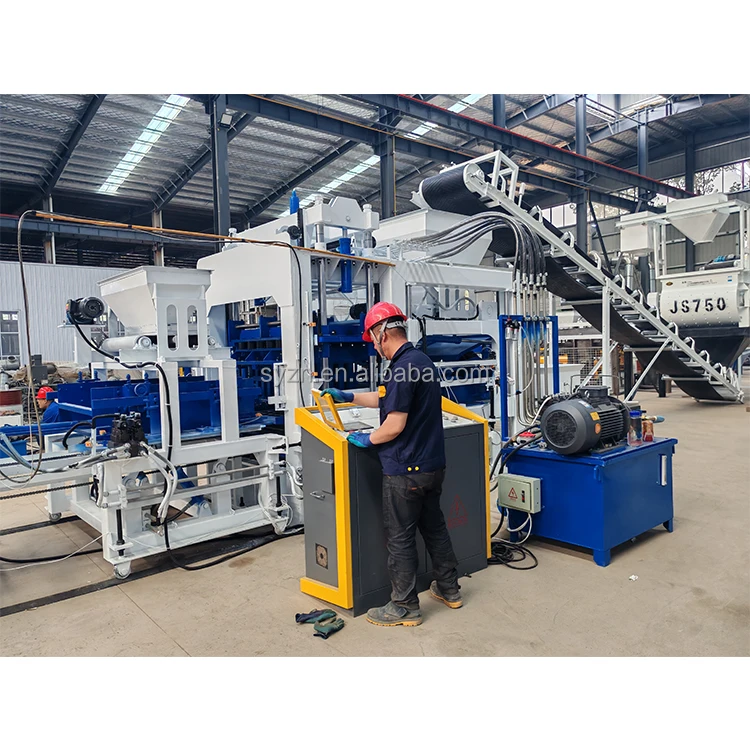
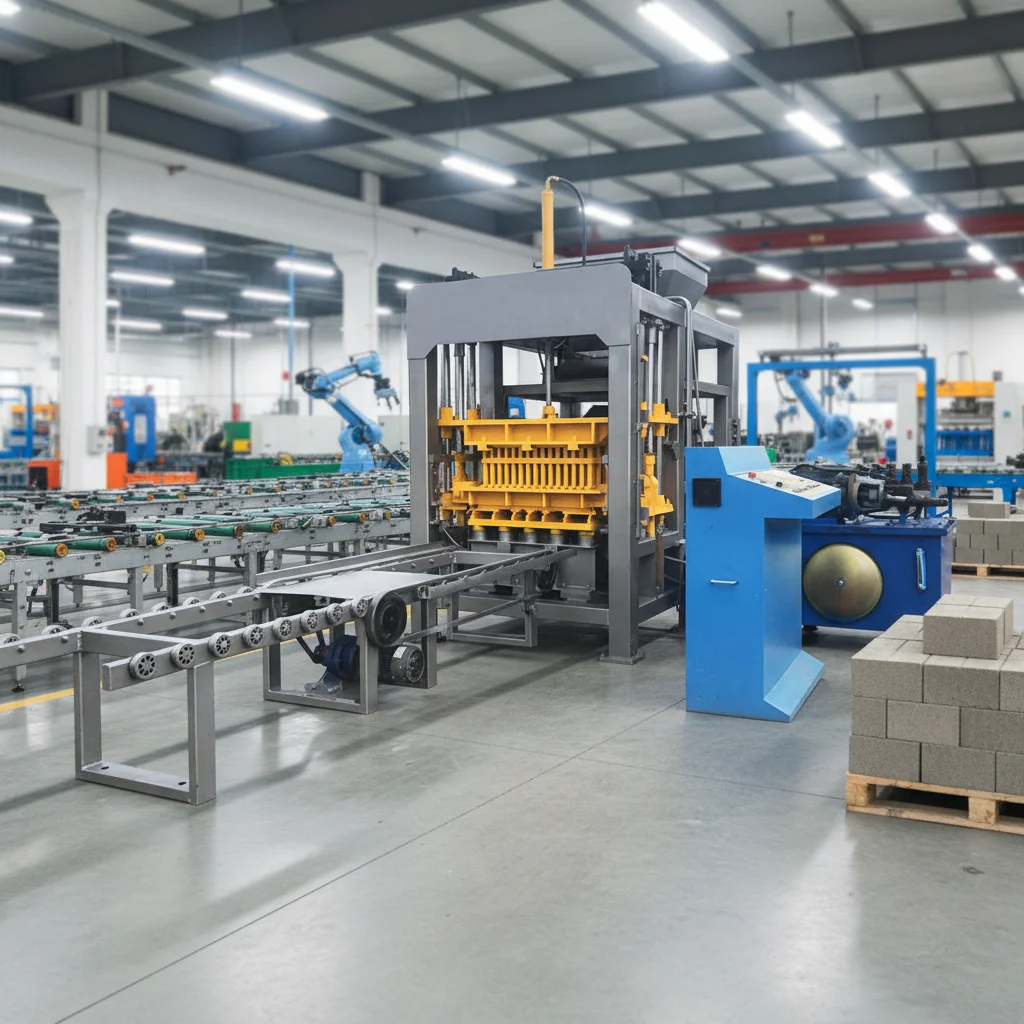
Block machinery is the single focus of this production facility, which means the Qt4-25a is not assembled from unrelated components sourced across different workshops. The machine, mould, pallet, and handling equipment are specified together so the cycle times align at every station. Configuration is set against your actual mix design and local aggregate, not pulled from a catalogue default. Mould design covers the formats your market sells, and custom moulds can be built from your own drawings if your region demands a size outside the standard range. The automation level is selectable — you can start with manual pallet handling and add automatic stacking later as volume grows. Installation support includes on-site commissioning and operator training so the crew running the machine on day one understands the parameter adjustments for each format.
Documentation & Verification
- Line layout and capacity calculation sheet stating the assumed block format for every output figure
- Mould drawing and format list confirming cavity count and dimensions before production
- Pallet specification matched to your curing rack layout and forklift capacity
- Voltage, frequency, and control language confirmation document signed before manufacturing begins
- Factory test record demonstrating cycle times on your specified block format before dispatch
- Wear parts and mould list included with the quotation for first replacement ordering
Installation, Commissioning & Support
- Foundation pad must support the 5800 kg net weight and 7100×1600 mm footprint with level tolerance for the pallet feed track
- Dedicated electrical circuit rated for 27.5 kW total draw with voltage and frequency confirmed to match the wound motor specification
- Machine arrives with mould and pallet system; on-site assembly includes vibration table alignment and hydraulic line connection
- First production run includes cycle time adjustment per block format and mix compaction testing
- Operator training covers mould change procedure, PLC parameter navigation, and daily vibration motor inspection
- Wear parts list provided at order so first replacement set ships with the machine
What to Include in Your Inquiry
To size the Qt4-25a correctly for your plant, provide the specific block format your market demands, the aggregate type available locally, and the daily volume you need to hit on that format. Confirm your site voltage, frequency, and the language you need on the control display. If you already have curing racks and a forklift on site, share those dimensions so the pallet specification aligns before the machine enters production.
Frequently Asked Questions
Q: How is the Qt4-25a output capacity verified per block format?
A: Every capacity figure is tied to a named block dimension and mould cavity count — for example, 960 pieces per hour assumes the 400×200×200mm hollow block at 4 pieces per mould. Cycle times differ by format, so the daily output you plan against must match the product you will actually sell. Request a format-by-format capacity sheet with your quotation.
Q: How should the 60 KN vibration force be matched to my local aggregate?
A: Vibration energy transfers differently through porous volcanic rock, river sand, and crushed granite. The mix moisture, cement ratio, and vibration duration must be tuned together to achieve target block strength. Provide your aggregate type and gradation during the inquiry stage so the machine parameters can be set before commissioning.
Q: Is the 1020×850mm pallet compatible with my existing curing racks?
A: The pallet size dictates your curing rack spacing, aisle width, and forklift capacity requirements. Measure your existing racks and confirm forklift load ratings before ordering. If your current infrastructure uses a different pallet dimension, the curing layout may need adjustment to avoid bottlenecks after the machine arrives.
Q: When must voltage, frequency, and control language be confirmed?
A: These must be confirmed in writing before the machine enters production. A motor wound for one voltage and frequency combination will not deliver the same vibration performance on a different supply. The PLC display language must also be set at this stage so operators can read parameters on day one without translation delays.
Q: Can I order custom moulds for block formats my market sells?
A: Custom moulds can be designed and manufactured from your own drawings for formats outside the standard 4-cavity, 6-cavity, and 16-cavity configurations. Provide the target block dimensions, required compressive strength, and daily volume so the mould design aligns with the Qt4-25a vibration table and pallet size.