
Description
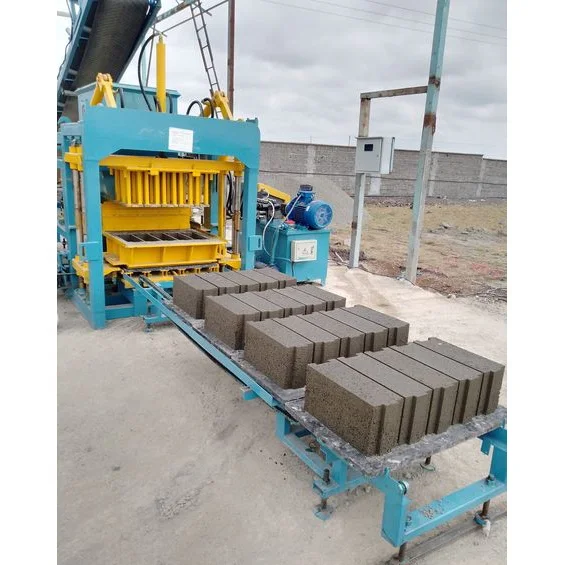
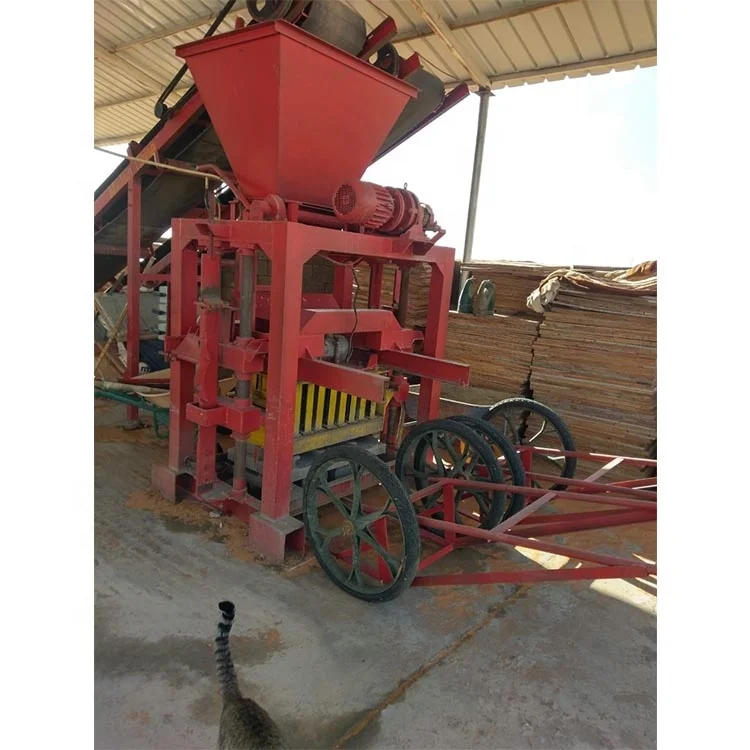
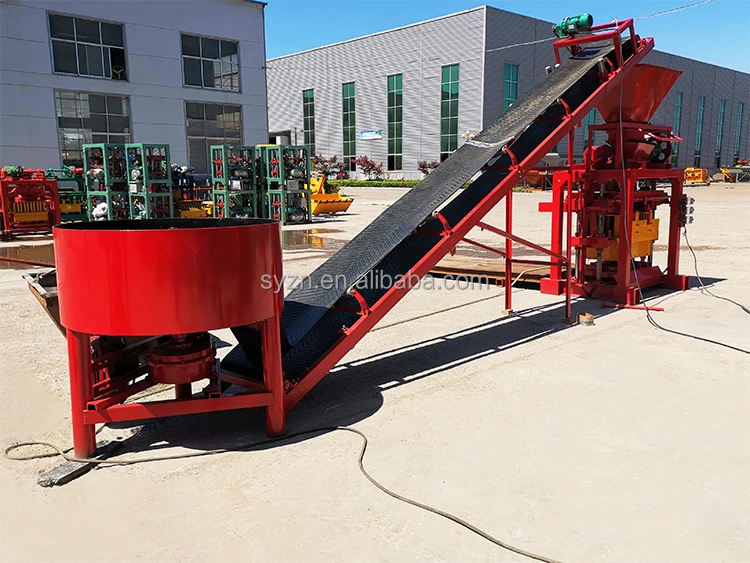
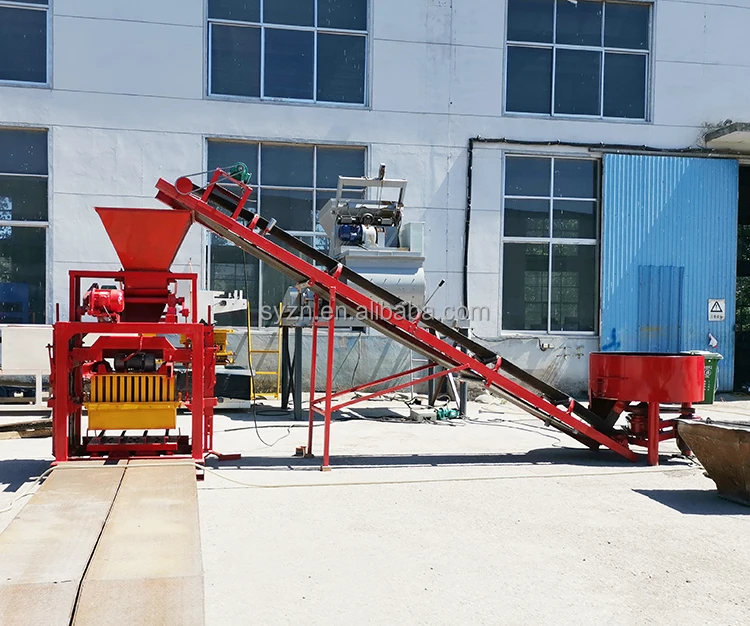
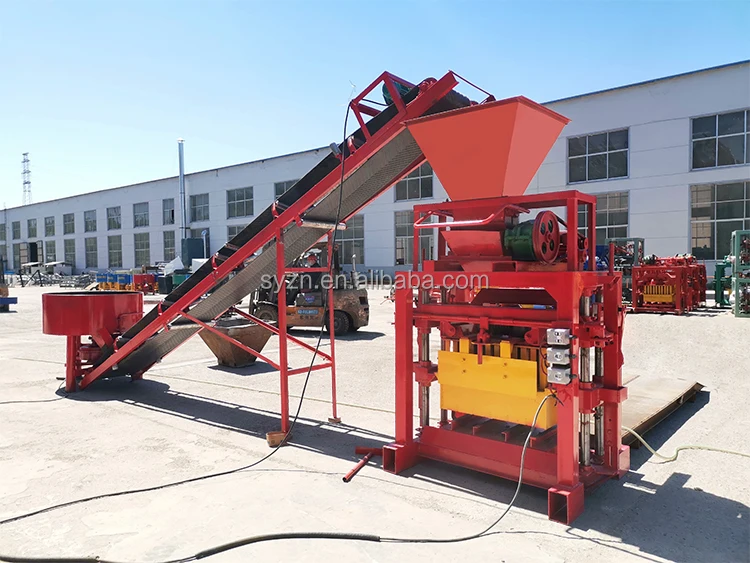
Matched Mould Sizing — The QTJ4-35 block machine is configured around the specific hollow block and solid brick formats your local market demands, with pallet, vibration and cycle time verified against your actual mix design rather than a catalogue default.
Technical Specifications
| Parameter | Value |
|---|---|
| Model | QTJ4-35 |
| Product Type | Concrete Block Making Machine |
| Overall Dimensions (L×W×H) | 1350 × 1460 × 1800 mm |
| Net Weight | 1500 kg |
| Molding Cycle | 35 s |
| Vibration Frequency | 2800 r/min |
| Vibration Force | 30 kN |
| Total Power | 11.15 kW |
| Mixer Model | JQ350 |
| Pallet Size | 850 × 450 × 20 mm |
| Output — Hollow Block 400×200×200 mm | 408 pcs/h, 3264 pcs/8h (4 pcs/mould) |
| Output — Hollow Block 400×150×200 mm | 510 pcs/h, 4080 pcs/8h (5 pcs/mould) |
| Output — Solid Brick 240×115×53 mm | 2100 pcs/h, 17000 pcs/8h (18 pcs/mould) |
| Applied Products | Concrete hollow block (8 inch, 6 inch), solid brick |
| Raw Materials | Crushed stones, sand, cement, dust, fly ash |
| Automation Level | Semi-automatic / manual pallet handling |
| Voltage & Frequency | Configurable to buyer’s local supply (basis to be confirmed) |
| Control System | Manual / semi-automatic (basis to be confirmed) |
Application Suitability
| Application | Material or Output |
|---|---|
| Small-scale hollow block production | Crushed stone, sand and cement blends for 8-inch and 6-inch blocks |
| On-site contractor block making | Locally sourced aggregate with fly ash partial cement replacement |
| Solid brick manufacturing for local sale | Sand and cement mixes for standard 240×115×53 mm bricks |
| First-plant entrepreneur setup | Low-capital entry producing both hollow block and solid brick on one machine |
| Workshop adding brick format to range | Quick mould swap between hollow block and solid brick on the same pallet size |
What the QTJ4-35 Block Machine Specifications Actually Mean for Your Daily Output
Capacity figures only matter when the block format behind them is named.
I have walked through too many small block yards where the owner points at a machine and quotes a single hourly number — usually the solid brick figure because it looks the largest on paper. The QTJ4-35 block machine specifications list three very different outputs depending on whether you are pressing 400×200×200 mm hollow blocks at 408 pieces per hour, 400×150×200 mm hollow blocks at 510 pieces per hour, or 240×115×53 mm solid bricks at 2100 pieces per hour. A buyer whose market runs on 8-inch hollow blocks needs to plan around the lowest of those three numbers, not the highest [NEED_CITE: block format demand varies significantly by regional construction code]. When the quotation sheet does not state which format the capacity assumes, the daily output on your business plan will not survive the first week of production.
Mould Options and What Each Format Demands from the Operator
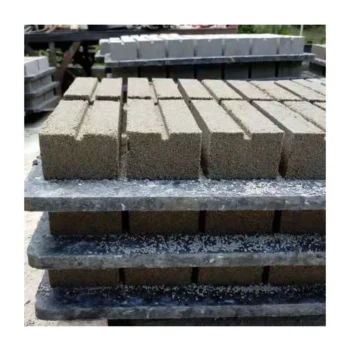
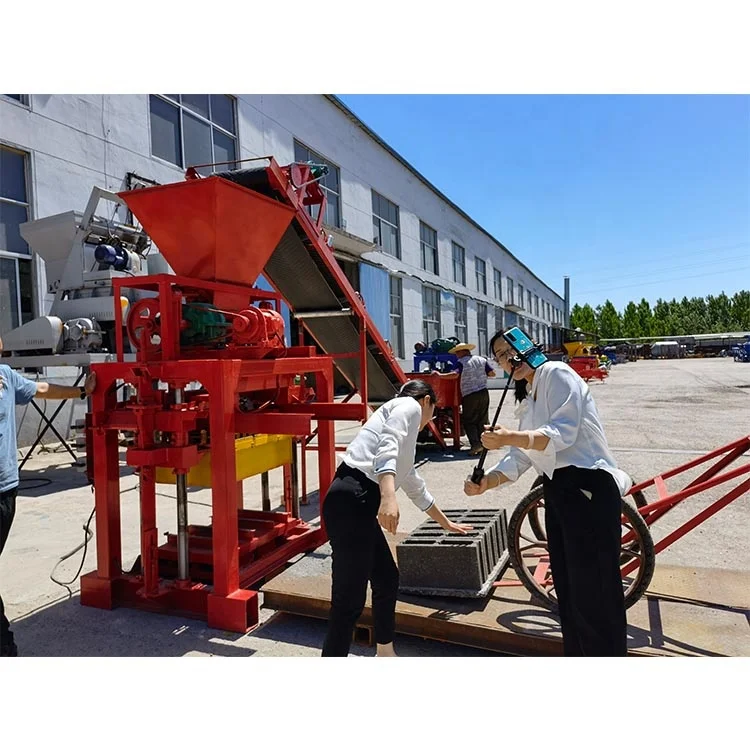
The QTJ4-35 accepts separate moulds for 8-inch hollow block, 6-inch hollow block and standard solid brick, each mounted on the same 850×450×20 mm pallet. Switching between formats means lifting out one mould box and seating the next, then adjusting the feed depth so the 35-second cycle produces a consistent fill. The vibration force of 30 kN at 2800 r/min is fixed, so the operator controls density through mix moisture and feed volume rather than machine settings — a straightforward arrangement for a small crew, but one that requires discipline on every cycle.
Pallet Size, Curing Area and the Forklift You Already Own
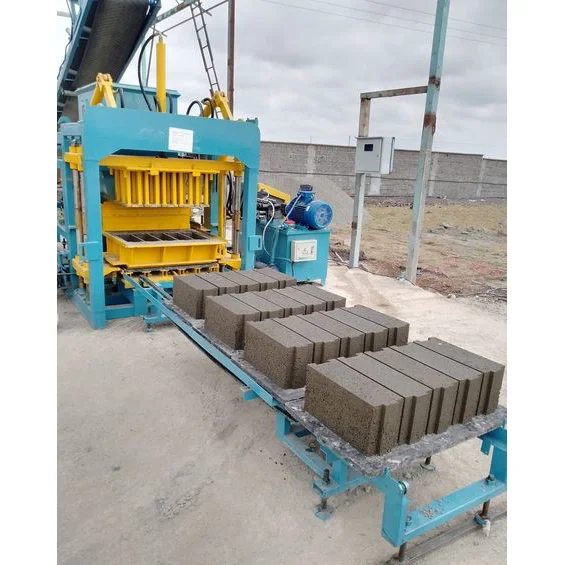
Every wet block leaves the press sitting on an 850×450×20 mm pallet, and those pallets must travel to your curing racks, stay there for the curing period, then return empty to the machine. Before confirming the order, measure the rack spacing in your curing area and the fork width on your existing forklift or hand truck. A pallet that is too wide for the rack or too heavy for the lift means you will be moving blocks by hand for the rest of the machine’s life [NEED_CITE: pallet and curing rack compatibility in small block plants]. The 1500 kg machine weight also dictates the floor loading — a compacted gravel base is usually sufficient, but a poured slab gives more consistent vibration transmission through the channel steel frame.
Vibration Force, Mix Design and Local Aggregate Reality
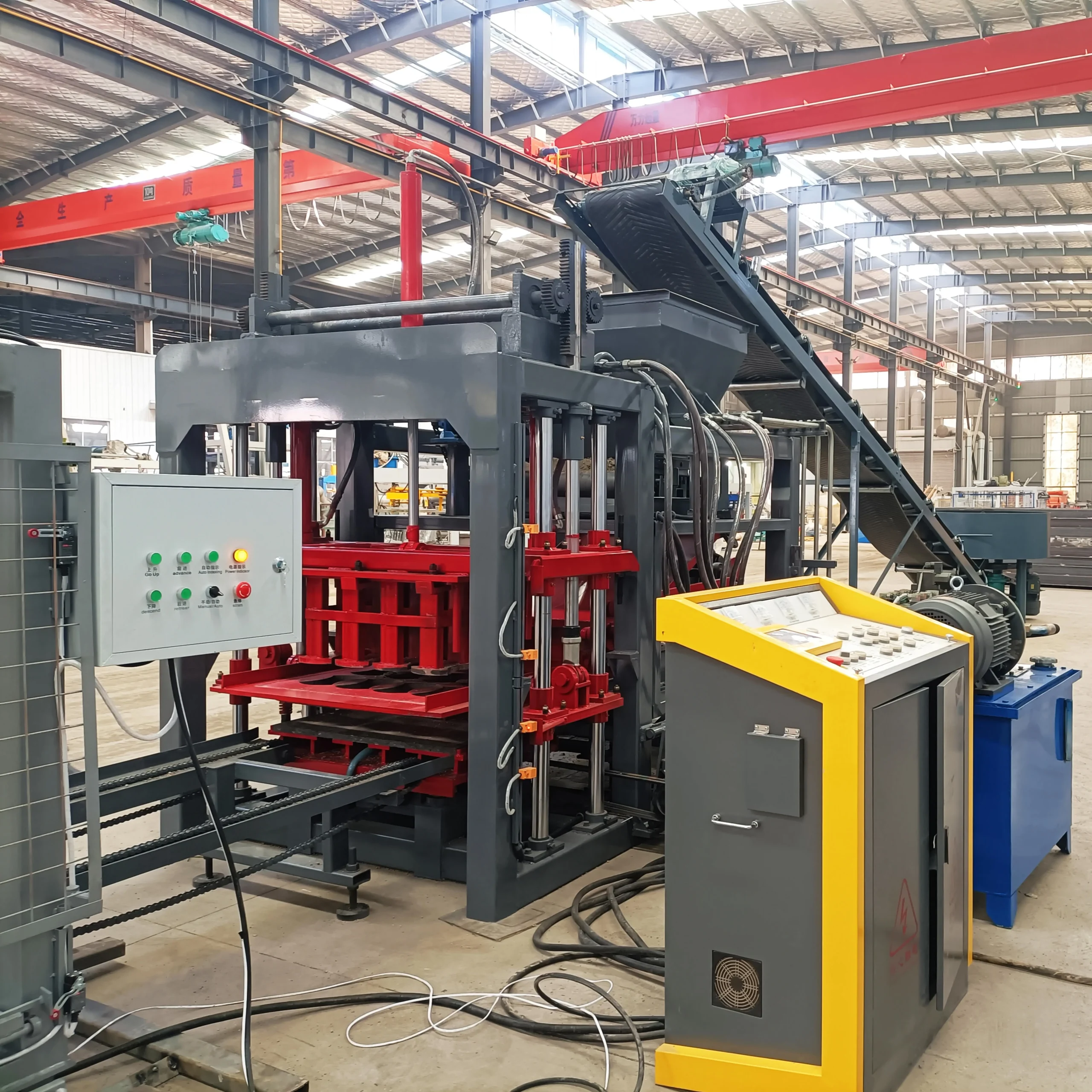
The 30 kN exciting force at 2800 r/min is delivered through a four-lead guide system and a channel steel frame designed to keep the mould box stable across the full 35-second cycle. Vibration-only forming — without hydraulic top pressure — means block density depends heavily on the gradation and moisture of your raw material. I once saw a small plant in West Africa order a vibration machine rated for clean river sand, only to find their local supply was a laterite-and-crushed-stone blend with far higher fines content. The blocks came out underweight, and the crew spent weeks adjusting water ratios before the output met the local block standard. That QTJ4-35 block machine specifications sheet listed sand and crushed stone; it did not list laterite. If your aggregate is anything other than standard sand and gravel, send a sample and a target block weight before the machine enters production.
The Hidden Cost of Skipping the Voltage Conversation
Voltage and frequency are left open on the standard QTJ4-35 data sheet because this machine ships to markets running everything from 220 V/50 Hz to 440 V/60 Hz. A motor wound for the wrong frequency will run at the wrong speed, shifting the vibration frequency away from the 2800 r/min design point and producing blocks with inconsistent density. Rewinding a motor on site is expensive and adds weeks of downtime before the first saleable block leaves the yard [NEED_CITE: voltage and frequency standards by export market]. Confirm your local three-phase supply, the available breaker capacity for an 11.15 kW total load, and the language you need on any control display before production begins — not after the container arrives.
Why Source This Machine Through a Matched-System Approach
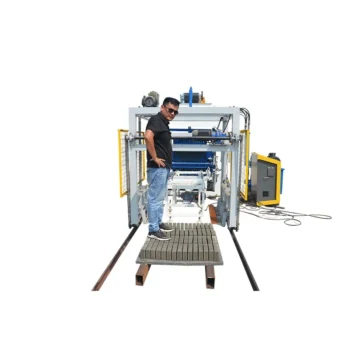
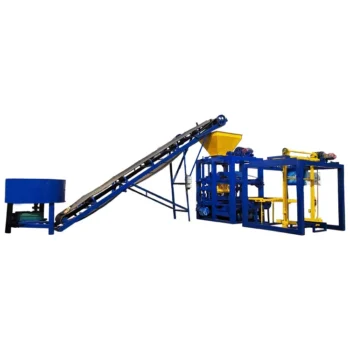
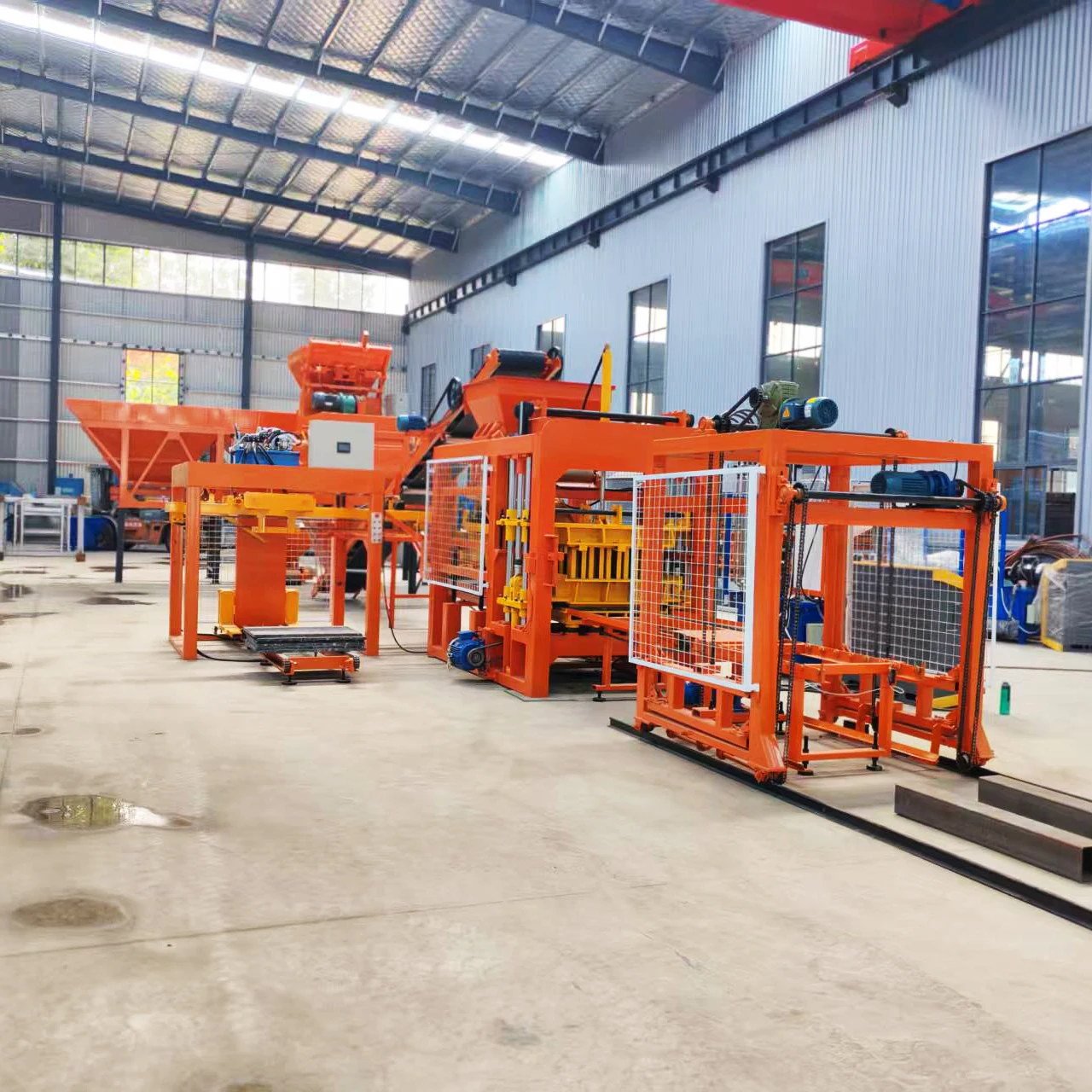
The QTJ4-35 is specified as a complete working cell — press, JQ350 mixer, pallets and moulds — rather than a standalone press that the buyer must integrate alone. Mould drawings are produced against the block dimensions that actually sell in your market, including custom sizes if your local standard differs from the three formats listed above. Capacity calculations are issued per block format so your business plan uses the number that applies to your product, not the largest number on the sheet. Pallet size is confirmed against your curing rack and forklift before the order is locked. Voltage, frequency and control language are written into the production order so commissioning starts the day power is connected. Wear parts and replacement moulds are catalogued at order time, meaning the first reorder does not become a search project.
Documentation & Verification
- Capacity calculation sheet stating per-format output for hollow block and solid brick
- Mould drawing and format list matching your local block dimensions
- Pallet specification cross-referenced to your curing rack spacing
- Voltage, frequency and control language written confirmation before production
- Factory test record on your specified mix design and target block weight
- Operation and maintenance manual with wear parts and mould replacement list
Installation, Commissioning & Support
- Compacted gravel or poured slab base sized to the 1350×1460 mm machine footprint
- Dedicated three-phase circuit rated for the 11.15 kW total connected load
- Machine shipped assembled with mixer; pallets and moulds packed separately for container loading
- First-run block pressing supervised on your local aggregate blend to verify 35-second cycle consistency
- Operator training covering mould change procedure, feed depth adjustment and daily vibration mount inspection
- Wear parts list and replacement mould lead times provided at order confirmation
What to Include in Your First Inquiry
Send the block formats your market actually buys, the local aggregate type and a target daily output so the capacity calculation can be built around your product rather than a catalogue average. Include your site voltage and frequency, the curing rack dimensions you already have in place, and the language your operators need on any control interface. If your raw material is anything outside standard sand and crushed stone — volcanic ash, laterite, crusher dust with high fines — mention it up front so the vibration parameters can be checked before the machine is built.
Frequently Asked Questions
Q: What is the real daily output of the QTJ4-35 for each block format it can produce?
A: Output depends on the mould fitted. With the 400×200×200 mm hollow block mould you can expect 3264 pieces across an eight-hour shift. The 400×150×200 mm hollow block mould raises that to 4080 pieces per shift, while the 240×115×53 mm solid brick mould reaches 17000 pieces per shift. All figures assume a consistent 35-second cycle with manual pallet handling.
Q: Which pallet size does the machine use and how does it match my curing setup?
A: The QTJ4-35 runs on 850×450×20 mm pallets. Before ordering, measure the clear span between your curing rack rails and the fork opening on your existing forklift or hand truck. If either dimension is tighter than the pallet, blocks will have to be moved by hand, which defeats the purpose of a mechanised press line.
Q: Can the QTJ4-35 use my local aggregate, or will I need to change materials?
A: The machine is rated for crushed stone, sand, cement, dust and fly ash, but vibration-only forming is sensitive to gradation and moisture. If your local supply includes laterite, volcanic scoria or crusher dust with high fines, send a sample and your target block weight before production so the mix-to-vibration match can be verified.
Q: How long does a mould change take and what tools are required on site?
A: Mould change on this class of vibration machine involves unbolting the current mould box, lifting it clear, seating the replacement and resetting the feed depth. Basic hand tools and a small overhead hoist or block clamp are sufficient. Plan for a portion of a shift the first time, dropping to a shorter change once the crew is practised.
Q: What voltage and frequency options are available for my country?
A: Voltage and frequency are configured to your local three-phase supply before production. Common ranges include 220 V, 380 V and 440 V at either 50 Hz or 60 Hz. Confirm your available breaker capacity for an 11.15 kW load and any control display language requirement when you place the order.