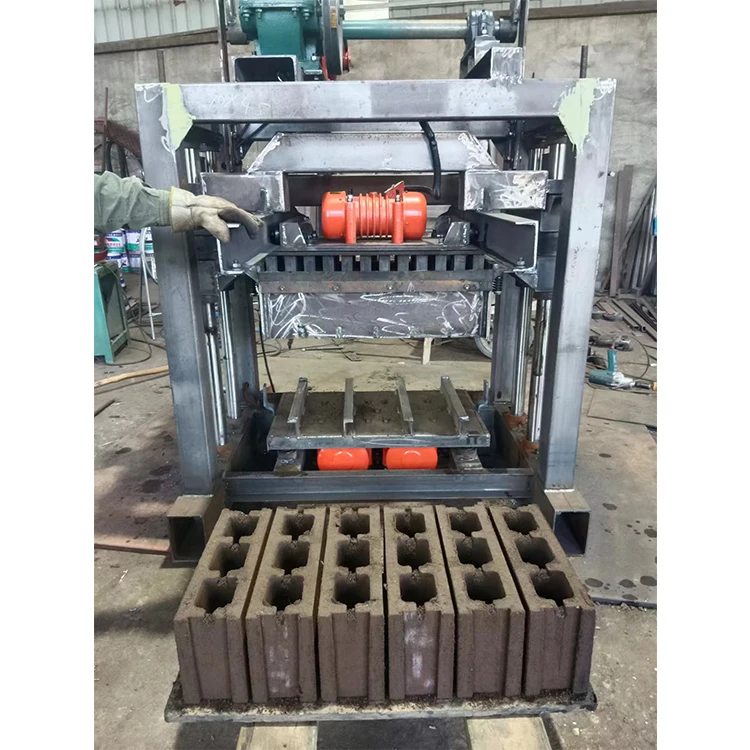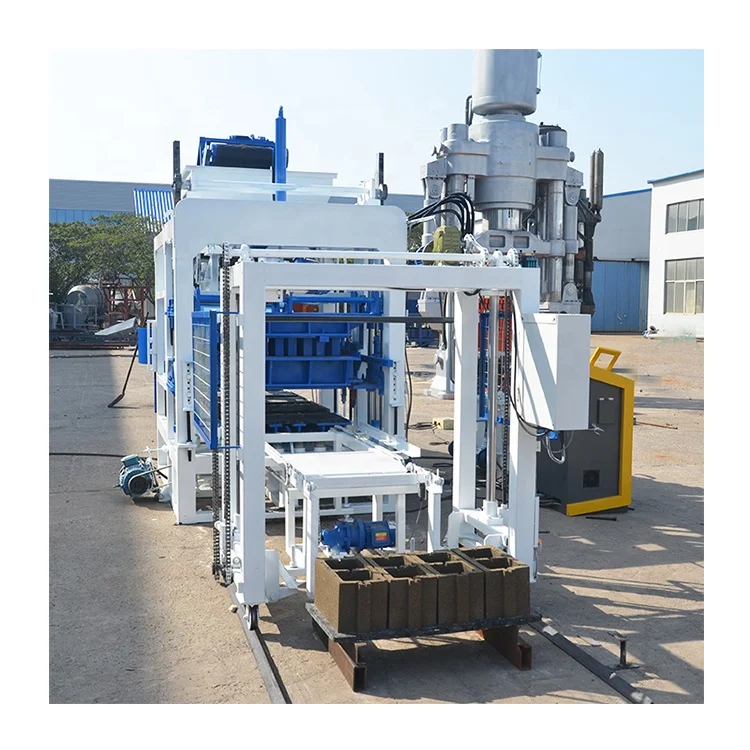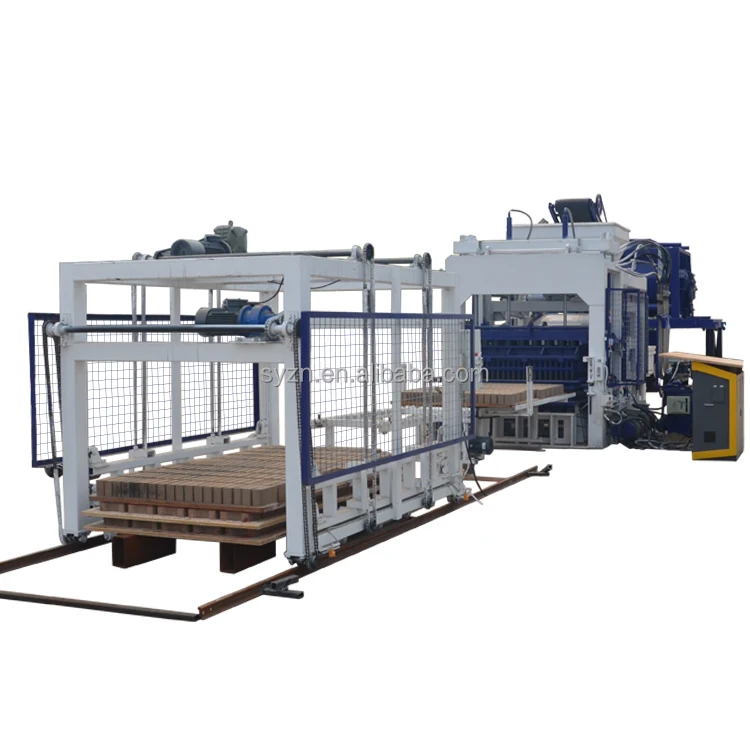


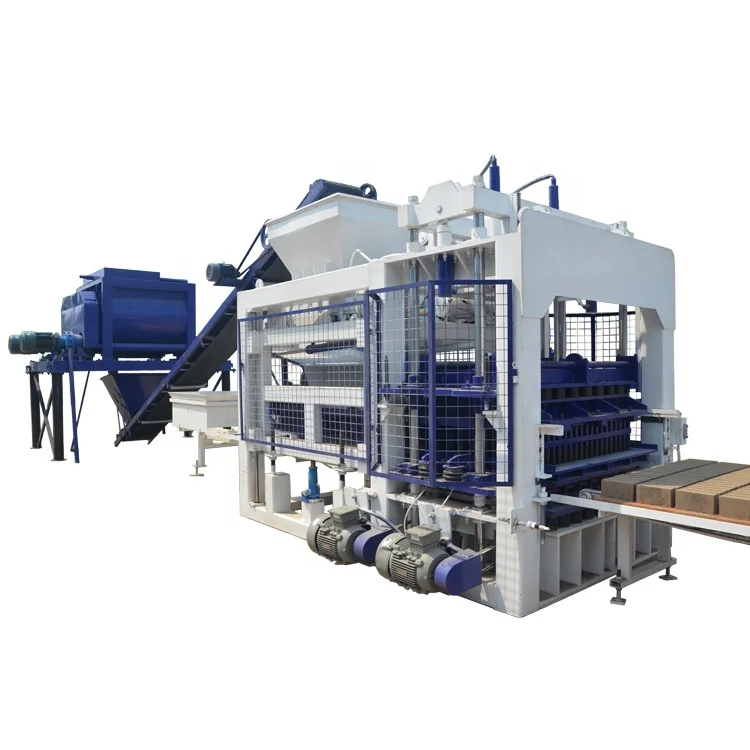
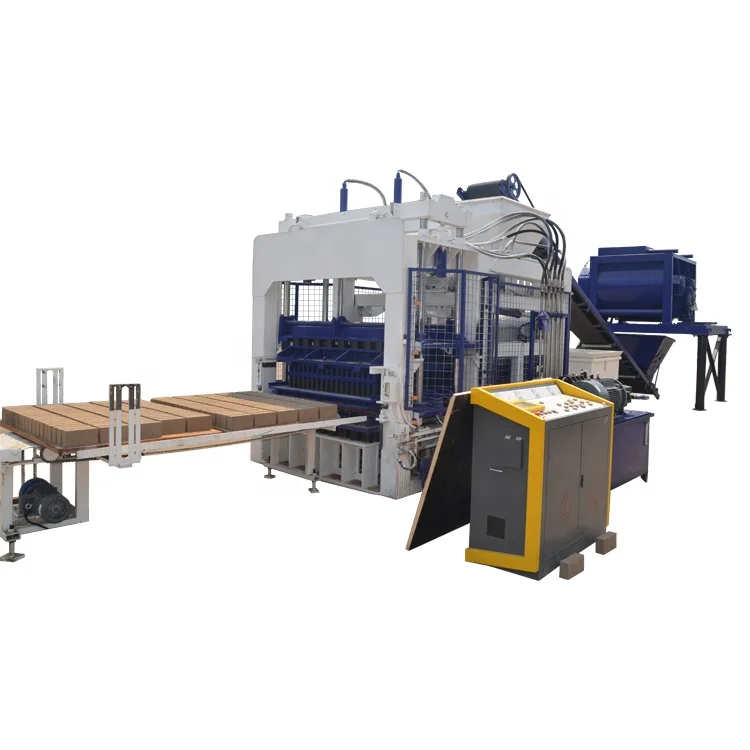

Description
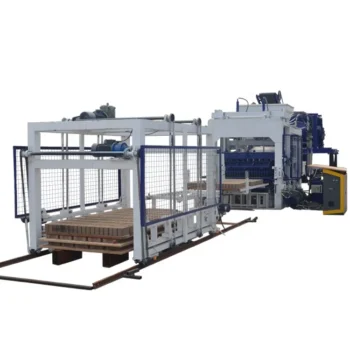
Pallet and line synchronization — The QT12-15 block making machine is specified with its pallet size, handling equipment, and cycle time as a matched system, so the press is never left waiting for the next board.
Technical Specifications
| Parameter | Value |
|---|---|
| Model | QT12-15 |
| Product Type | Hydraulic Concrete Block Making Machine |
| Rated Power | 62 kW |
| Pallet Size | 1300 × 900 mm |
| Moulding Cycle | 15–30 seconds (basis not stated in source — confirm block format, material, and thickness) |
| Vibration Type | Table vibration with dynamic and static table |
| Vibration Force | 120 kN (source labels as vibration frequency — verify against manufacturer catalog) |
| Vibration Acceleration | Up to 20 g (rated or peak not specified in source) |
| Vibration Synchronization | Four-axis with forced synchronization gear shaft |
| Feeding System | 360° rotating press-in arch breaker |
| Wear Protection | Replaceable cloth platform wear-resistant plate |
| Noise Reduction | Flexible pressure head reduction; adjustable air bag in mould box |
| Voltage & Frequency | Configured to buyer’s local industrial supply (exact rating to be confirmed) |
| Block Formats | Hollow blocks, solid wall blocks, porous bricks, paving blocks, slope protection bricks (via mould change) |
| Control System | To be confirmed — PLC or MCC type and display language options |
| Automation Level | To be confirmed — manual, semi-automatic, or fully automatic options |
Application Suitability
| Application | Material or Output |
|---|---|
| Hollow block production for building walls | Crushed stone, sand, cement, and water mix |
| Paving block manufacturing for roads and yards | Fine aggregate with pigment for colored pavers |
| Porous brick production for permeable surfaces | Lightweight aggregate blended with cement |
| Solid wall block for load-bearing structures | Coarse aggregate with high cement ratio |
| Slope protection brick for embankments | Standard concrete mix with reinforced mould design |
Why "15–30 Seconds" Tells Only Half the Story
Cycle time on a QT12-15 block machine depends entirely on which block format you run and what your local mix looks like.
Catalogue sheets often quote a single moulding cycle as if every product takes the same time to press. In reality, a thin paving block might reach full density in fifteen seconds while a tall hollow block needs the full thirty to consolidate properly. If the aggregate available near your site is finer than the default mix the machine was tested on, vibration energy transmits differently through the material and the cycle stretches further. I have watched plants plan two shifts of output around a cycle figure that was never tested on their actual raw material [NEED_CITE: effect of aggregate grading on block compaction cycle time]. The QT12-15 block machine specifications must be confirmed against your specific block format before any daily output projection is made.
Matching Vibration Force to Your Mix Design
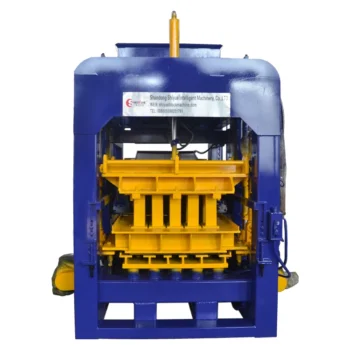
The QT12-15 delivers vibration through a four-axis synchronized system with a dynamic and static table combination. Frequency conversion control adjusts the excitation pattern, and the forced synchronization gear shaft keeps all four axes in phase so vibration energy spreads evenly across the 1300 × 900 mm pallet area. This matters because uneven vibration produces blocks with density variation from one side of the pallet to the other. The 120 kN vibration force and acceleration up to 20 g provide the compaction energy needed for dense pavers and load-bearing hollow blocks, but only when the hydraulic pressure and mix proportions are set to match. A coarse aggregate requires different vibration tuning than a fine sand mix, and the QT12-15 block making machine must be commissioned with your actual material on site.
Pallet Size Dictates Your Entire Curing Layout
The 1300 × 900 mm pallet on the QT12-15 determines how many blocks are pressed per cycle, but it also defines the curing rack dimensions, forklift tine spacing, and yard layout for the entire plant. If your existing curing racks were built for a smaller pallet, the new boards will not fit, and you face the cost of replacing the full rack inventory. Similarly, if your forklift was spec’d for a narrower pallet, handling becomes slow and unsafe. Before the QT12-15 hydraulic block machine is ordered, the pallet size must be cross-checked against your current curing area and material handling equipment [NEED_CITE: pallet and curing rack dimension compatibility in block plants]. This is why pallet specification is confirmed early in the configuration process rather than treated as a default.
What the Specs Mean on the Shop Floor
The 62 kW rated power covers the vibration motors, hydraulic pump, and feeding system running together. Plants with limited transformer capacity need to confirm this draw against their existing supply before installation. The 360° rotating press-in arch breaker addresses a common feeding problem: material bridging in the hopper that causes uneven fill across the mould cavity. When fill is uneven, blocks on one side of the pallet come out shorter or weaker than the other side. Replaceable wear-resistant plates on the cloth platform mean that abrasion from aggregate does not require replacing the entire platform — only the wearing surface. Adjustable air bag vibration reduction inside the mould box and flexible damping on the pressure head reduce structure-borne noise transmitted to the machine frame, which extends the service life of welds and bolted joints over years of continuous operation.
The Cost of Skipping Voltage Confirmation
Arriving at a job site to find the local supply is 440 V at 60 Hz while the machine was built for 380 V at 50 Hz means the vibration motors run at the wrong speed and the hydraulic pump delivers incorrect pressure. The QT12-15 block machine cannot be commissioned until a transformer is sourced or the motors are rewound — a delay that can stretch weeks when spare parts must ship internationally [NEED_CITE: industrial voltage and frequency standards by region]. PLC display language is another detail that gets overlooked: if the control screen defaults to a language the operators cannot read, every fault code and parameter adjustment requires a translator on site. Confirming voltage, frequency, and control language before production begins is a small step that prevents large delays at the other end.
Why Source the QT12-15 Through This Line
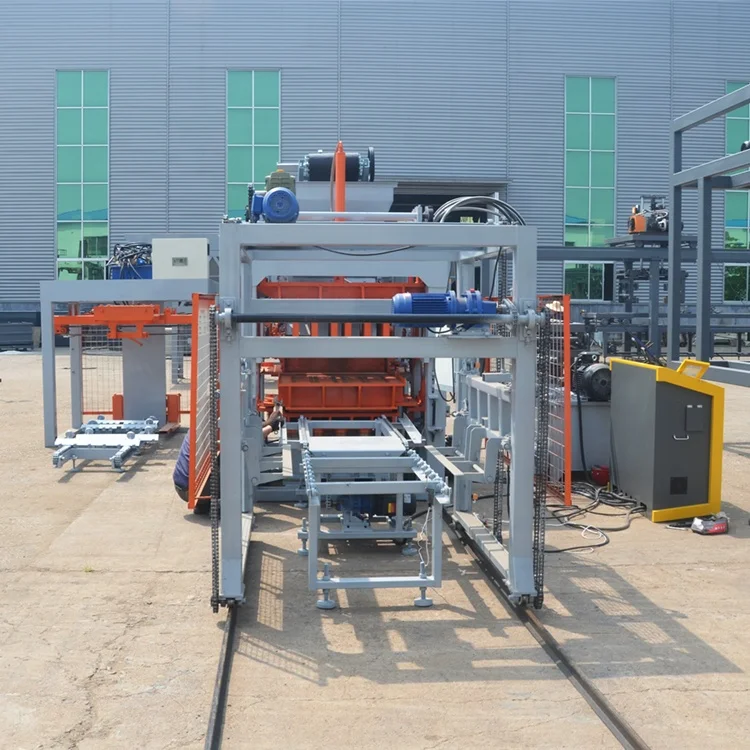
The QT12-15 is treated as one element in a complete block production line rather than a standalone press. Machine, mould, pallet, and handling equipment are specified together so cycle times match at every station and the press is not left idle waiting for the next pallet. Configuration starts from the buyer’s actual mix design and local aggregate, not a catalogue default, so vibration force and hydraulic pressure are set to produce consistent block density with the material you can actually source. Mould design covers the formats your market demands, and custom moulds can be built to buyer drawings when standard formats do not match local construction practice. Automation level is selectable — a buyer can begin with semi-automatic pallet handling and add automatic stacking later as production volume grows. Installation includes operator training so the crew understands mould change procedure, daily maintenance points, and how to read the control system before the commissioning engineer leaves site.
Documentation & Verification
- Line layout showing pallet flow from press through curing rack to cubing station
- Capacity calculation sheet stating block format assumed for each output figure
- Mould drawing and format list matched to your target block dimensions
- Voltage, frequency, and PLC display language confirmation record before production
- Factory test run on your specified mix and block format with results documented
- Hydraulic and electrical schematic for local maintenance and troubleshooting
Installation, Commissioning & Support
- Foundation plan based on QT12-15 overall dimensions and vibration load for civil works preparation
- Dedicated electrical circuit sized for the 62 kW rated power draw at confirmed local voltage
- Machine dismantled for container loading with reassembly sequence documented for site crew
- Vibration force and hydraulic pressure adjusted on site using buyer’s actual aggregate and mix
- Operator training covering mould change, control system navigation, and daily lubrication points
- Wear parts list with replaceable cloth platform plates and hydraulic seal kits identified
What We Need From You to Quote Accurately
To configure a QT12-15 for your plant, we need the target block format and dimensions, the daily output you plan to run, and the type of aggregate available near your site. Please also confirm your local industrial voltage and frequency, the language your operators need on the control display, and whether you have existing curing racks or forklifts that the pallet size must match.
Frequently Asked Questions
Q: What daily output can I expect from the QT12-15 for my block format?
A: Realistic output depends on the specific block dimensions, your mix design, and the automation level chosen. A moulding cycle of 15–30 seconds is quoted, but the actual figure for your format must be calculated and confirmed during configuration. We provide a capacity sheet stating the exact block type assumed so projections match what the machine delivers on your shop floor.
Q: How do I choose the right pallet for my curing area?
A: The QT12-15 uses a 1300 × 900 mm pallet. Before ordering, we cross-check this against your curing rack dimensions and forklift tine spacing. If your existing equipment was built for a different pallet size, we discuss the options so the block line integrates with your current handling setup without unexpected replacement costs.
Q: Can the QT12-15 produce custom block formats?
A: Yes. Moulds are customized to the buyer’s target block format, including non-standard dimensions required by local construction practice. We work from your drawings or design the mould to your specifications. Mould change procedure and time are documented so your team can switch formats without losing a full shift.
Q: How are voltage and control language handled before shipment?
A: Your local industrial voltage, frequency, and required PLC display language are confirmed in writing before production begins. This prevents commissioning delays caused by motor speed mismatch or unreadable control screens. The confirmation record is included in the shipping documentation for your reference.
Q: What automation options are available for the QT12-15?
A: The machine can be configured from semi-automatic operation with manual pallet handling through to fully automatic stacking and cubing. The automation level is selectable so you can match it to your current labour capacity and upgrade later as production volume increases.