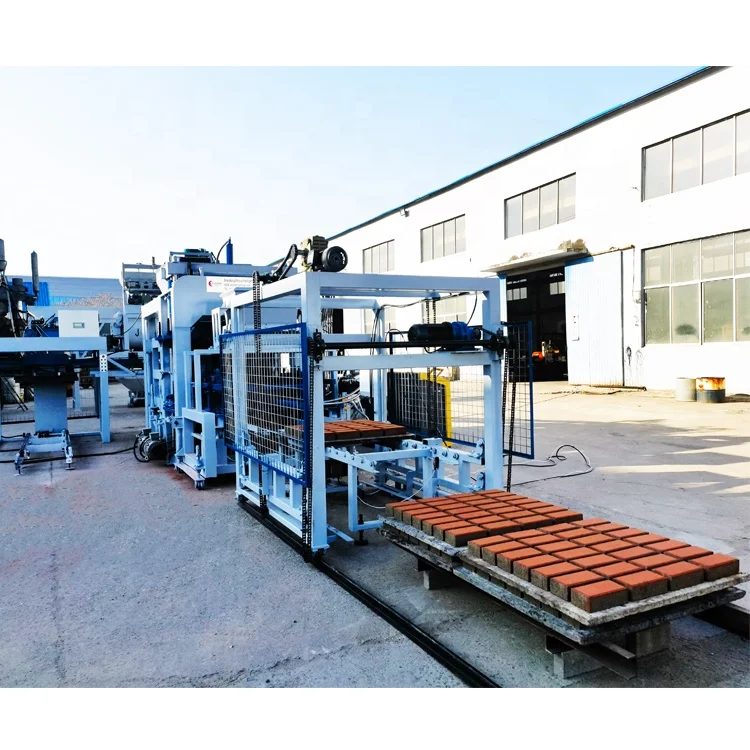
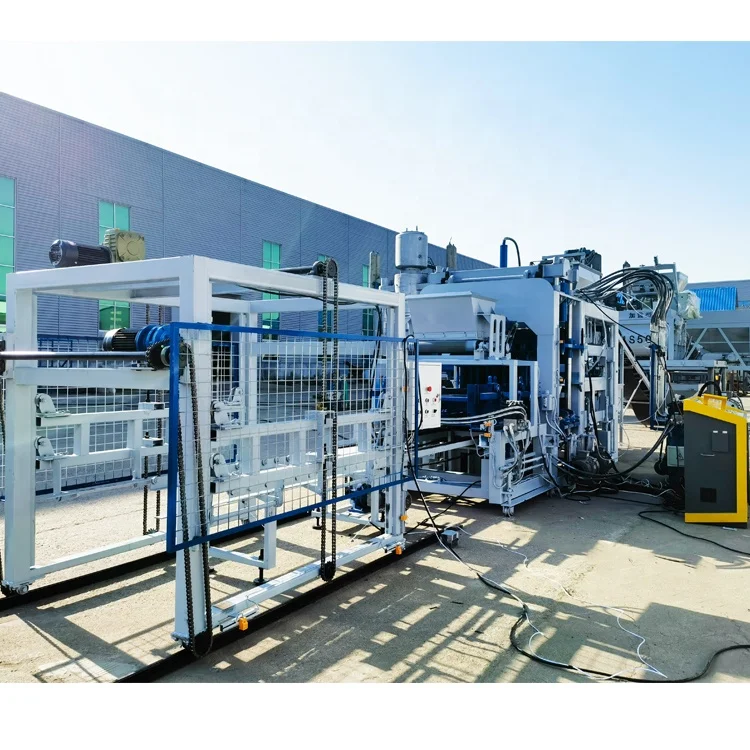


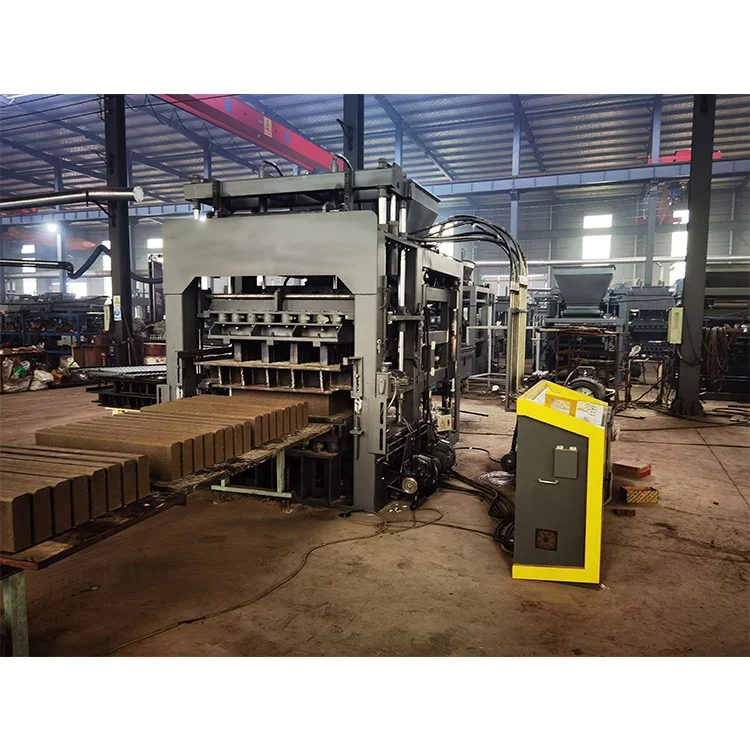
Description
Format-Matched Sizing — capacity is calculated against the buyer’s specific block format, local aggregate report, and pallet handling setup before quotation.
Technical Specifications
| Parameter | Value |
|---|---|
| Model | QT8-15 |
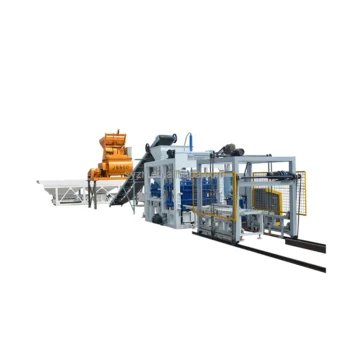
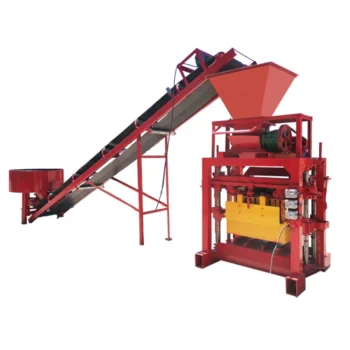
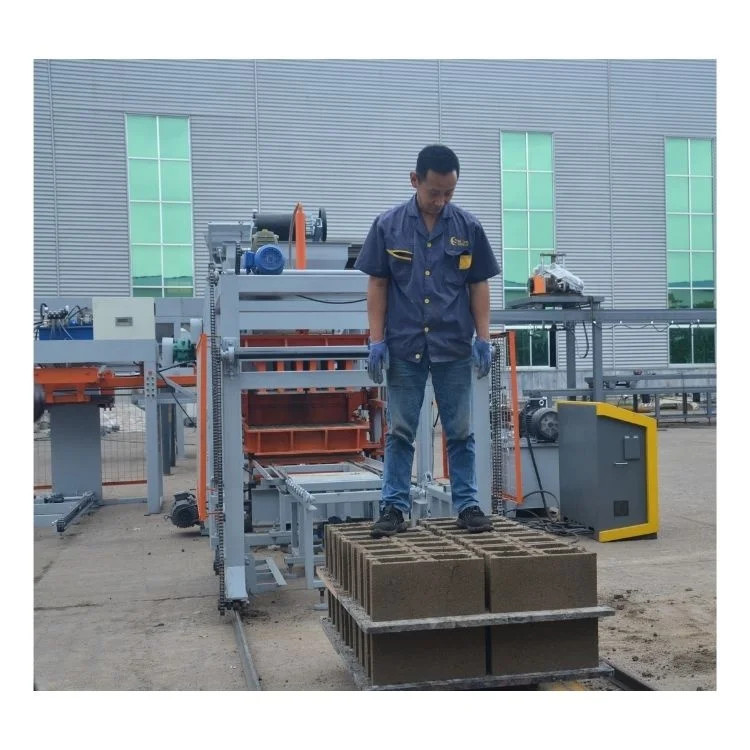
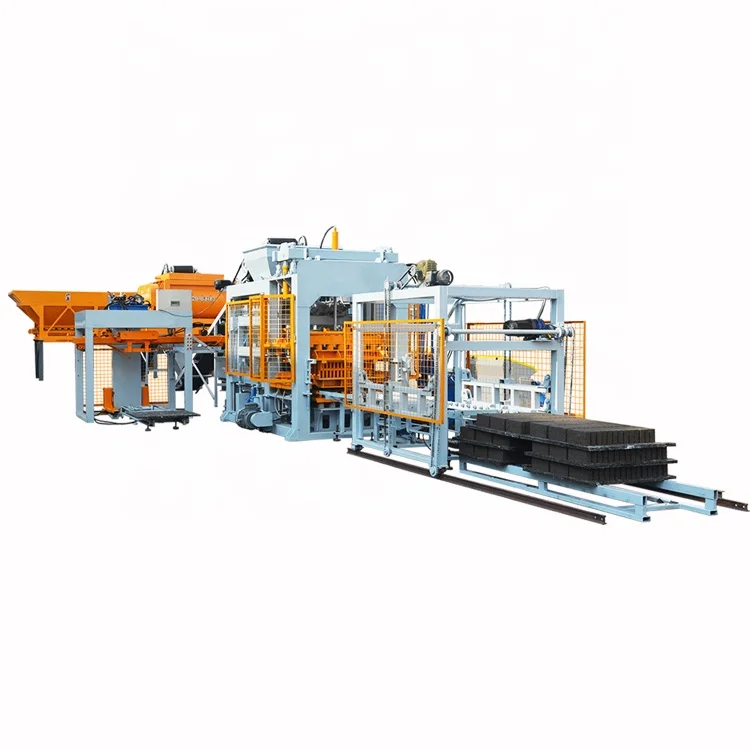
| Product Type | Hydraulic Full Automatic Concrete Block Making Machine |
| Overall Dimensions (L×W×H) | 8300×1860×3000 mm |
| Rated Hydraulic Pressure | 21 MPa |
| Vibration Form | Platform Vibration |
| Vibration Frequency | 2800–4500 r/min |
| Vibration Force | 45 kN |
| Pallet Size | 950×900 mm |
| Molding Cycle | 15–20 s (basis not stated in source — confirm block format / material / thickness) |
| Overall Power | 55.5 kW |
| Total Mass | 8 T |
| Demolding Method | Hydraulic |
| Recommended Factory Area | 300 m² |
| Automation Level | Full automatic with stacker |
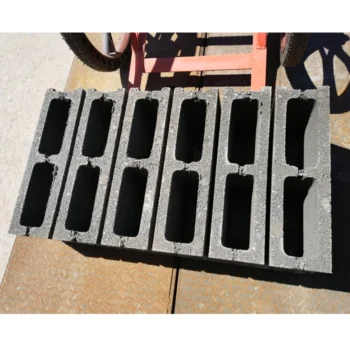
| Applied Products | Hollow blocks, solid blocks, pavers, interlocking blocks, curbstone |
| Raw Materials | Crushed stone, sand, cement, fly ash, gravel, slag |
| Voltage & Frequency | Configurable to target market (to be confirmed) |
| Control System | PLC (brand and display language to be confirmed) |
Application Suitability
| Application | Material or Output |
|---|---|
| Hollow block production for residential and commercial masonry | Crushed stone, sand, and cement blends |
| Solid block manufacturing for load-bearing walls | High-density concrete mixes with gravel or slag |
| Interlocking paver production for landscaping and driveways | Fine aggregate and cement with color pigment options |
| Curbstone forming for municipal infrastructure | Coarse aggregate with high cement content for structural strength |
| Porous and permeable paver runs for drainage applications | Open-graded aggregate mixes requiring adjusted vibration profiles |
Why "15-Second Cycle Time" Needs a Block Format Attached
A cycle time only becomes meaningful when paired with a specific block dimension and mix design.
Catalogs often list a single molding cycle, such as 15–20 seconds, without specifying whether that figure applies to a standard hollow block, a thin paver, or a tall curbstone. I have walked into plants where the owner calculated daily output by dividing shift hours by the shortest cycle number in the brochure, then discovered their primary product—a 200 mm hollow block—actually required a longer cycle due to the local sand’s high clay content slowing compaction. The result was daily volume falling noticeably short of projections. Before we confirm any QT8-15 hydraulic block machine specifications for a buyer, we ask for the target block drawing, the local aggregate sieve analysis, and the cement grade available on-site. [NEED_CITE: impact of aggregate gradation on concrete block compaction cycle]
Matching Vibration Force to Your Aggregate Profile
The platform vibration system on the QT8-15 delivers 45 kN of force across a frequency range of 2800–4500 r/min, but the right setting depends entirely on the material feeding the hopper. A coarse crushed-stone mix requires a different frequency band than a fine fly-ash blend to achieve consistent density without cracking green blocks during demolding. When the vibration profile is mismatched, operators compensate by extending cycle time, which erodes the daily output advantage the machine was purchased to deliver. We set the QT8-15 hydraulic block machine specifications against your actual material report, not a default factory preset.
Pallet Size and Its Effect on Downstream Handling
The 950×900 mm pallet is the interface between the press and the curing area. If your existing curing racks and forklift are dimensioned for a different pallet, every wet block must be manually transferred before the stacker can cube them—negating the automation investment. Before production, we confirm pallet size against the buyer’s rack spacing and forklift tine width. This step is especially important when a plant is replacing an older press and intends to reuse its curing infrastructure. [NEED_CITE: pallet handling compatibility in concrete block plant layouts]
Reading the Pressure and Vibration Numbers Together
The 21 MPa rated hydraulic pressure and 45 kN vibration force work in tandem: pressure compacts the mix vertically while vibration settles fines into voids. If pressure is high but vibration is insufficient for a particular aggregate, blocks emerge with a dense shell and a porous core, failing compressive strength tests. Conversely, excessive vibration on a lean mix can cause segregation, with coarse aggregate sinking and cement paste rising. The QT8-15 hydraulic block machine specifications list both values so the buyer’s engineer can cross-reference them against the target block’s required density and strength class. Demolding is hydraulic rather than mechanical, which reduces impact shock and preserves edge definition on interlocking formats. Total connected load of 55.5 kW must be accounted for in the plant’s main distribution panel, and the 8 T machine mass requires a reinforced concrete foundation slab within the 300 m² recommended factory area.
The Hidden Cost of Skipping the Format Conversation
When a machine arrives configured for a generic catalogue mix rather than the buyer’s local materials, the first production run produces unsaleable output. Blocks may crack during curing, crumble at the edges, or fail compressive strength verification. I have seen plants shut down for extended periods waiting for revised parameter sets and replacement moulds while the press sits idle. Rectifying a configuration mismatch after commissioning is far more disruptive than spending time upfront on the mix design and format list. [NEED_CITE: common causes of commissioning delays in block plant startups]
Why Configuration Starts Before Production
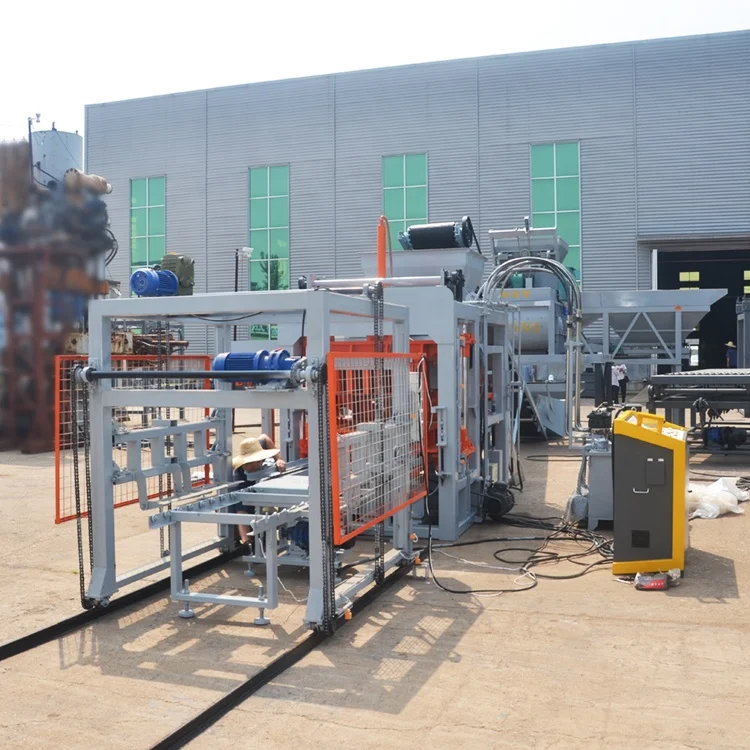
We treat the QT8-15 as part of a matched system: the press, the mould, the pallet, and the handling equipment are specified together against the buyer’s product range and site conditions. Mould design covers the formats the buyer’s market actually sells, including custom drawings when standard catalogue shapes do not fit. Automation level is selectable, so a plant can begin with semi-automatic pallet handling and add the stacker later as volume grows. Installation and commissioning include operator training on mould change procedure and daily maintenance routines. Every unit undergoes a factory test run with the buyer’s confirmed block format before crating. [NEED_CITE: factory acceptance testing protocols for hydraulic block machinery]
Documentation & Verification
- Line layout drawing with capacity stated per confirmed block format
- Mould drawing and format list covering every product the buyer will produce
- Pallet specification matched to existing curing racks and forklift dimensions
- Voltage, frequency, and PLC display language confirmation sheet signed before production
- Factory test record showing cycle time and block weight on the buyer’s target format
- Operation and maintenance manual with wear parts and mould replacement schedule
Installation, Commissioning & Support
- Reinforced slab foundation within the 300 m² factory area to support the 8 T machine mass
- Dedicated 55.5 kW power circuit with voltage and frequency matching confirmed target market supply
- Machine arrives partially dismantled for container loading; reassembly supervised on-site
- First-run parameter tuning using buyer’s local aggregate and confirmed mix proportions
- Operator training on PLC interface, mould change sequence, and daily vibration system inspection
- Wear parts list covering hydraulic seals, vibration springs, and pallet guide rails with reorder codes
What to Include in Your Inquiry
To size the QT8-15 accurately, send us the block formats your market demands—dimensions, wall thickness, and face texture—along with your local aggregate sieve analysis and cement type. Include your available supply voltage and frequency, the PLC display language your operators need, and the dimensions of your existing curing racks and forklift. If you have a target daily output, state which block format that figure should be calculated against. This information lets us return a capacity sheet that reflects your actual production conditions rather than a generic estimate.
Frequently Asked Questions
Q: How is QT8-15 capacity calculated per block format, and what cycle time applies to each?
A: The 15–20 second molding cycle is a baseline that shifts depending on block height, wall thickness, and aggregate type. We calculate output by running your specific block format through a timed cycle test using your confirmed mix, then multiply by effective shift hours minus mould change and maintenance intervals. Every quotation includes a capacity sheet stating the exact block format assumed.
Q: Which mould formats are available, and how long does a mould change take on this machine?
A: Moulds cover hollow blocks, solid blocks, interlocking pavers, and curbstones, with custom designs available from buyer drawings. Change time depends on the mould locking system specified—hydraulic clamp systems reduce changeover compared to manual bolt patterns. We confirm the expected changeover duration during the configuration stage so you can plan multi-format production shifts.
Q: How do I confirm pallet size matches my curing area and forklift?
A: The standard 950×900 mm pallet must align with your curing rack spacing and forklift tine width. Before production, we request your rack and forklift dimensions, then verify pallet compatibility on the layout drawing. If a mismatch exists, we adjust the pallet specification so the automatic stacker and downstream handling work without manual transfer.
Q: What raw material mix design and local aggregate does this configuration assume?
A: Every QT8-15 is configured against the buyer’s aggregate sieve report, cement grade, and any supplementary materials like fly ash or slag. Vibration frequency and hydraulic pressure are set to compact that specific mix to the required block density. We request a material sample or lab report before finalizing the machine parameters.
Q: What documentation is provided to verify voltage, control language, and block strength before shipment?
A: You receive a signed voltage and frequency confirmation sheet, a PLC language declaration, and a factory test record showing block weight, dimensions, and cycle time on your target format. These documents let your electrical team prepare the site and give you confidence that the machine produces saleable output before it leaves our facility.