Description
Format-matched configuration — every M7MI capacity figure on this page is tied to the 300×150×100 mm interlocking block format, so buyers can match output to the brick their market actually demands rather than a generic catalogue claim.
Technical Specifications
| Parameter | Value |
|---|---|
| Model | M7MI |
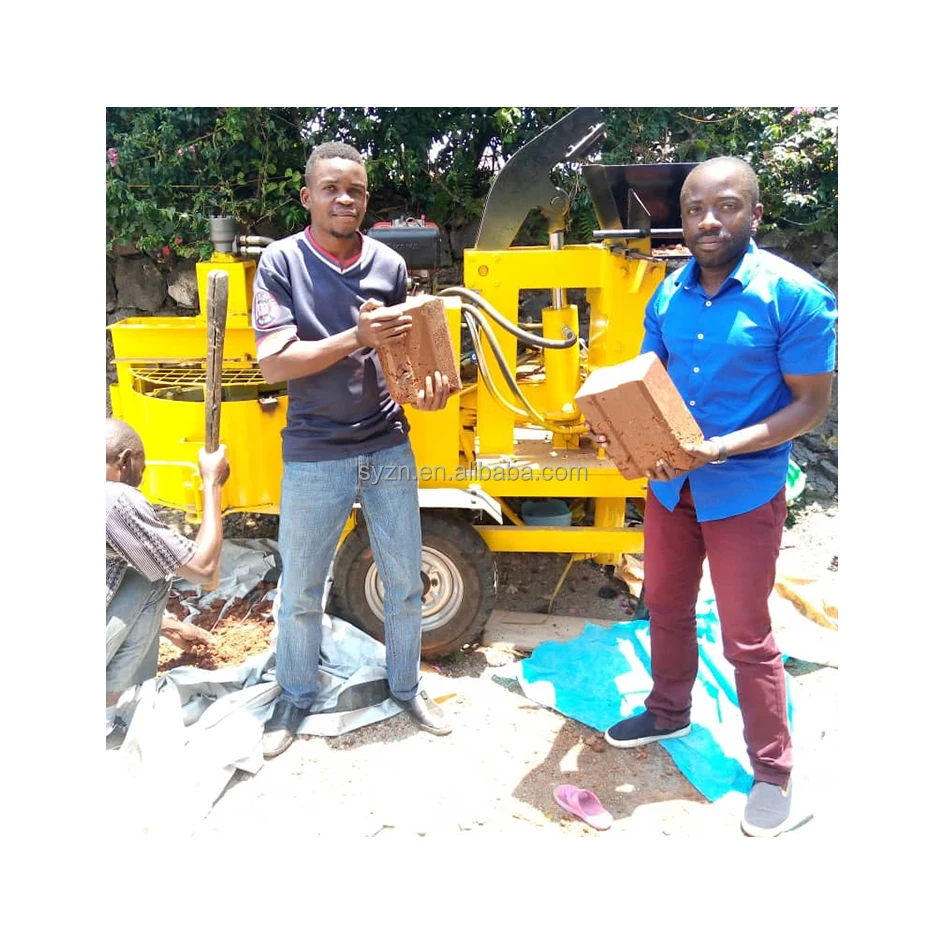
| Product Type | Mobile Hydraulic Clay Interlocking Brick Making Machine |
| Overall Dimensions (L×W×H) | 3200×1100×1500 mm |
| Net Weight | 1100 kg |
| Main Drive | Diesel Engine |
| Rated Auxiliary Power | 7.5 kW (source value — verify whether this refers to auxiliary motor) |
| Hydraulic Pressure | 16 MPa |
| Molding Cycle | 15–20 s (basis not stated in source) |
| Output Capacity | 2200 pcs/day (8 hours) (basis not stated in source) |
| Productivity Reference | 300×150×100 mm interlocking block, 1 pc/mould, 20 s cycle, 200 pcs/h, 1600 pcs/8 hr |
| Mould Format | Interlocking block (multiple formats via mould change) |
| Automation Level | Mobile / manual pallet handling |
| Assembly State | Mobile, trailer-mountable |
Application Suitability
| Application | Material or Output |
|---|---|
| On-site interlocking brick production for building contractors | Locally dug clay or soil mixed with stabiliser |
| Off-grid rural housing projects | Diesel-powered operation without grid electricity |
| Small-scale community block plants | Clay, laterite, or soil-cement mixes |
| Contractor-led housing developments | Interlocking bricks produced directly at the construction site |
What "2200 Pieces per Day" Actually Means for Your Block Format
The daily output number only matters when you know exactly which block size and cycle time produced it.
Quotations for mobile interlocking clay brick making machines frequently state a headline capacity without naming the block format behind it. A buyer expecting 2200 interlocking bricks per eight-hour shift may discover on arrival that the figure assumed a smaller solid block, and the interlocking profile they actually need yields noticeably fewer units per cycle. The M7MI productivity reference on this page is tied to a 300×150×100 mm interlocking block at a 20-second cycle, giving 200 pieces per hour and 1600 pieces over eight hours. Any other format will shift that number [NEED_CITE: capacity calculation methods for hydraulic block machines]. Stating the format up front prevents the gap between quotation promise and site reality.
Matching Machine to the Interlocking Profile Your Market Sells
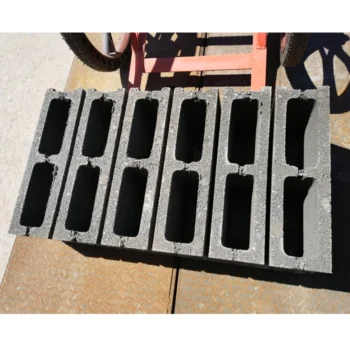
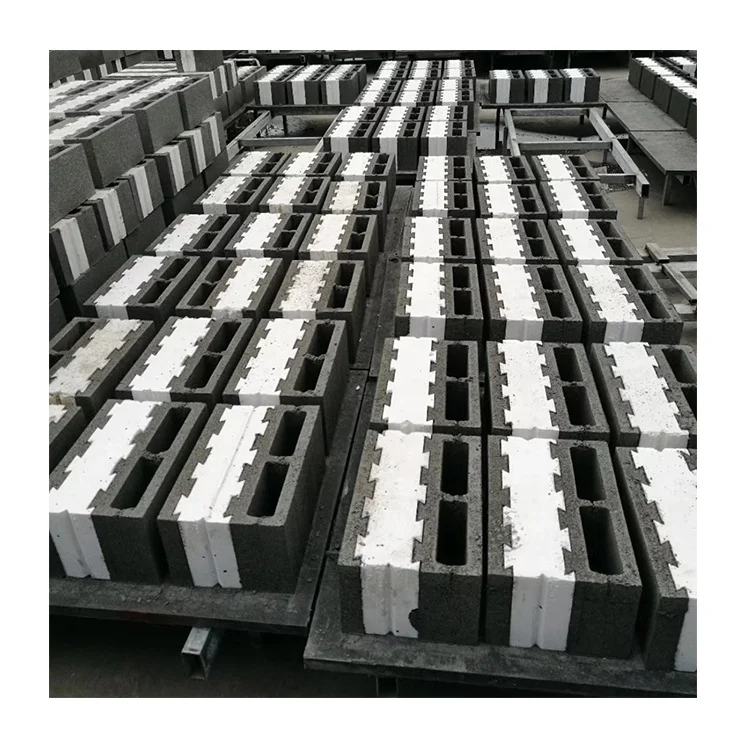
The M7MI is built around a single-block mould cavity that accepts interchangeable mould inserts, each producing a different interlocking profile. Buyers selecting a mobile interlocking clay brick making machine need to confirm which profiles the included mould set covers — a flat-face interlocking brick for load-bearing walls differs in cavity geometry from a channel-profile block used for reinforced columns. The mould drawing and format list supplied with the machine documents every profile the unit can press, so the buyer can verify market fit before the machine leaves the factory.
Diesel Drive for Sites Where Grid Power Is Not an Option
Many rural housing and infrastructure projects operate in areas where three-phase electricity is unavailable or unreliable. The M7MI’s diesel engine as the main drive removes the grid dependency entirely, letting contractors produce interlocking blocks directly on the building site. The 7.5 kW auxiliary power rating applies to support systems such as the hydraulic pump motor or control circuits, and buyers should confirm whether local site conditions require any auxiliary electrical hook-up at all [NEED_CITE: diesel versus electric drive selection for mobile block machines]. This configuration keeps the machine operational in remote locations where bringing in a generator would add a separate layer of logistics.
Reading the Pressure and Cycle Numbers Against Your Mix
Hydraulic pressure at 16 MPa determines how densely the clay or soil-cement mix is compacted inside the mould. Higher pressure generally yields a denser, stronger block, but only when the mix design and moisture content are matched to that pressure level. A laterite-rich soil with low clay content may need a longer cycle or added stabiliser to hold the interlocking profile after demoulding, while a high-clay mix might compress well within the shorter end of the 15–20 second range. The 1100 kg machine weight also contributes to vibration damping during pressing, affecting surface finish and edge sharpness of the interlocking teeth. Buyers should request a factory test on their own soil sample to confirm that pressure and cycle settings produce the target block strength [NEED_CITE: relationship between hydraulic pressure and unfired clay brick compressive strength].
The Hidden Cost of Skipping the Soil Sample Test
A buyer who confirms a machine order without providing a local soil sample risks receiving a unit configured for a standard red-clay mix that their site cannot replicate. The interlocking teeth may crumble after demoulding, or the block may pass visual inspection but fail a compressive strength test weeks later. On one Southeast Asian project, a high-sand soil required over a dozen mix adjustments before the interlocking bricks met spec, delaying the construction schedule. Every day of on-site troubleshooting is a day the machine sits idle and the contractor pays crew wages without output [NEED_CITE: field adjustment costs for soil block mix designs]. Sending a soil sample before order confirmation lets the factory dial in the right hydraulic pressure, cycle time, and stabiliser ratio from the first production run.
Why Source the M7MI Through This Line
Block machinery is our single product focus, which means the M7MI machine, its moulds, pallets, and any supporting handling equipment are specified as one matched system rather than assembled from separate suppliers. The configuration is set against the buyer’s actual mix design and target interlocking profile, not a catalogue default. Mould design covers the formats the buyer’s market sells, and custom mould drawings are available when a project specifies a non-standard interlocking geometry. Automation level starts at manual pallet handling and can be expanded as production volume grows, so a buyer does not over-invest on day one. Installation support includes on-site commissioning and operator training so the crew can run the machine independently after the technician leaves.
Documentation & Verification
- Line layout stating the 300×150×100 mm interlocking block as the capacity basis
- Mould drawing and format list for every interlocking profile included
- Hydraulic and electrical schematic showing diesel drive and auxiliary circuits
- Factory test record run on the buyer’s submitted soil sample before dispatch
- Operation and maintenance manual with mould change procedure
- Packing photographs and customs documentation support for export shipment
Installation, Commissioning & Support
- Ground must be level and compacted to support the 1100 kg machine weight during pressing
- Diesel fuel supply and storage arranged on site before the machine arrives
- Mould installers trained on cavity alignment to protect interlocking tooth geometry
- First production run supervised to confirm cycle time against the buyer’s soil mix
- Replacement hydraulic seals and mould wear plates listed in the spare parts schedule
- Daily greasing points marked on the machine frame for the operator crew
What to Include With Your Inquiry
To size the M7MI correctly for your project, send a representative soil or clay sample from the actual dig site along with the target interlocking block dimensions and your daily output requirement. If the site has any auxiliary power available, note the voltage and frequency so the support circuits can be matched before shipment. Mention whether you already have curing space and pallets on hand, because that determines how the manual handling workflow is laid out around the machine.
Frequently Asked Questions
Q: How is the stated daily output verified, and which block format does it assume?
A: The productivity reference is based on a 300×150×100 mm interlocking block produced one piece per mould at a 20-second cycle, yielding 200 pieces per hour and 1600 pieces over eight hours. The 2200-piece daily figure listed elsewhere lacks a stated format basis. Buyers should request a capacity calculation tied to their specific block dimensions before confirming an order.
Q: Which interlocking block profiles can the M7MI produce, and what is the mould change procedure?
A: The machine accepts interchangeable mould inserts, each producing a different interlocking geometry. The included format list documents every profile available. Mould change involves releasing the cavity bolts, lifting out the current insert, and seating the replacement — a manual process whose duration depends on crew familiarity and should be confirmed during commissioning training.
Q: Can the mix design be adjusted to local clay or soil without changing the machine configuration?
A: Yes, within limits. The 16 MPa hydraulic pressure and adjustable cycle time accommodate a range of soil-cement and clay-stabiliser ratios. However, soils with extreme sand or organic content may require mix modifications rather than machine adjustments. Submitting a site soil sample before order allows the factory to confirm compatibility and recommend any stabiliser additions.
Q: What site conditions are needed for mobile operation of the M7MI?
A: The machine requires a level, compacted working area that can bear 1100 kg plus material and operator loads. A curing zone adjacent to the press is needed since pallet handling is manual. Diesel fuel must be available on site. No grid electricity is required for the main drive, though any auxiliary systems should be checked against available power before arrival.
Q: How are hydraulic wear parts and replacement moulds supplied after the first year?
A: A wear parts list covering hydraulic seals, mould liners, and other consumables is included with the machine documentation. Replacement moulds can be manufactured to the original drawings or to new interlocking profiles the buyer requests. Buyers should confirm lead times for specific mould inserts before placing a reorder to avoid production gaps.