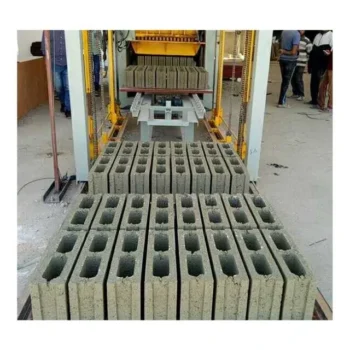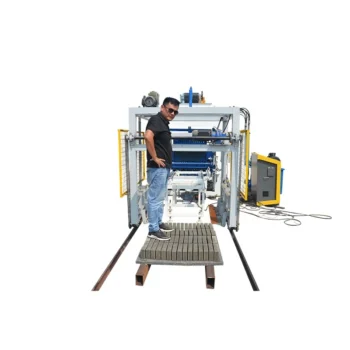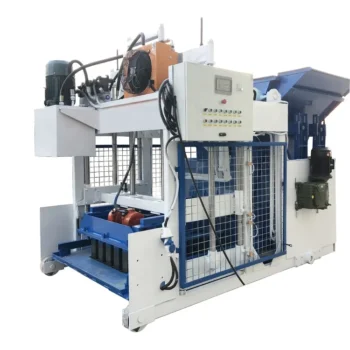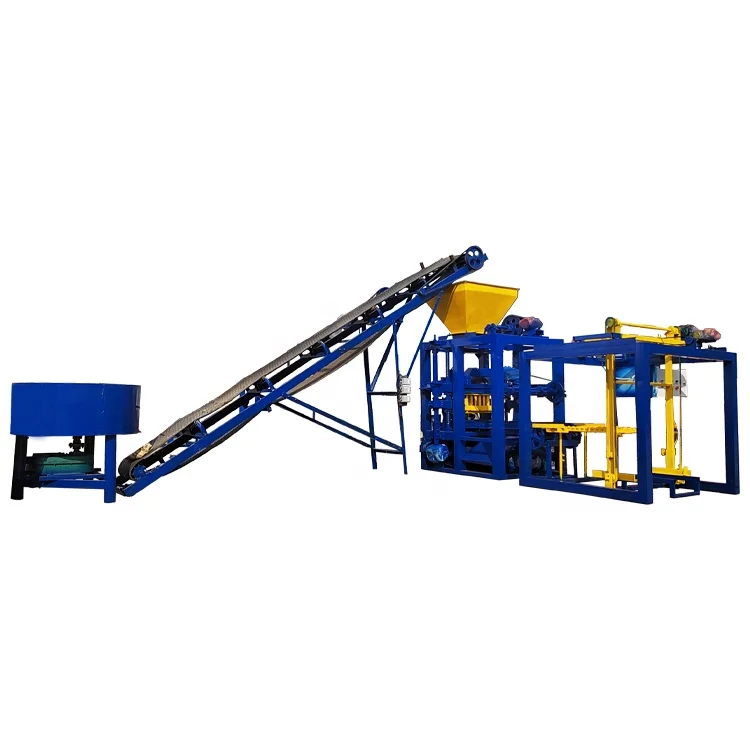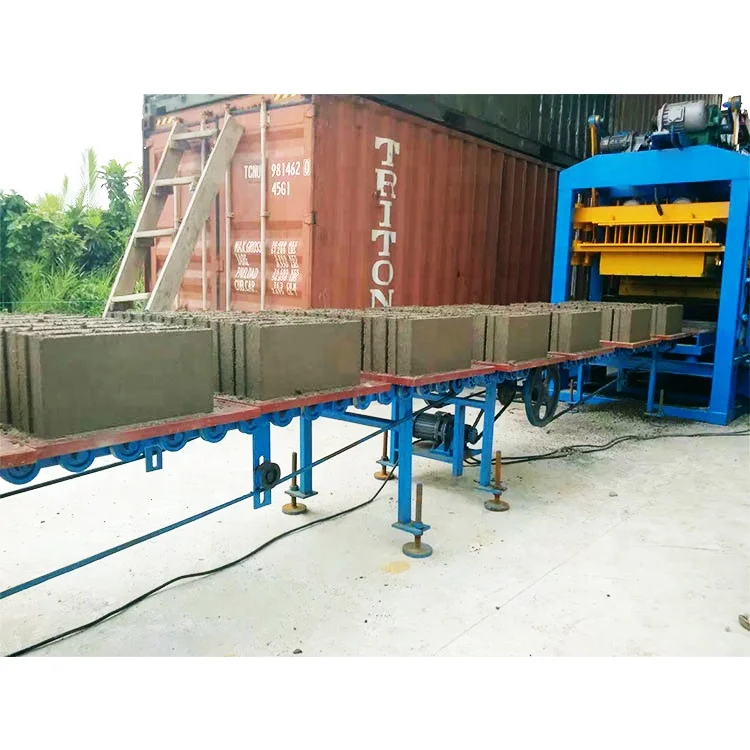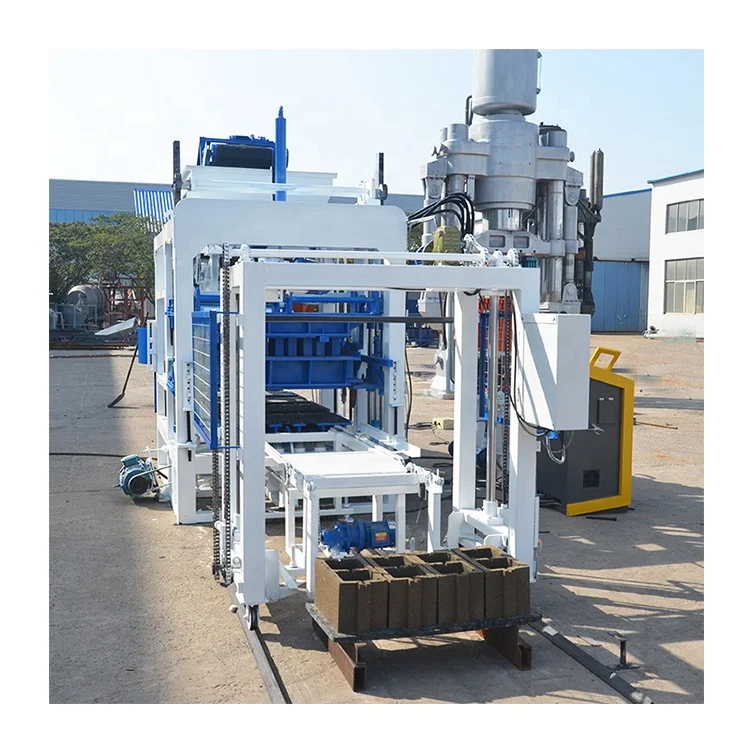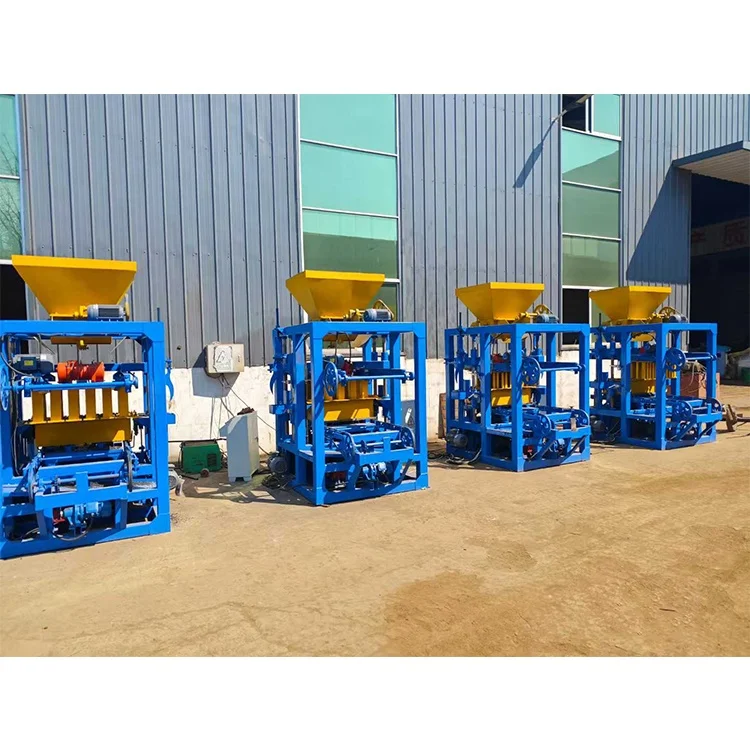
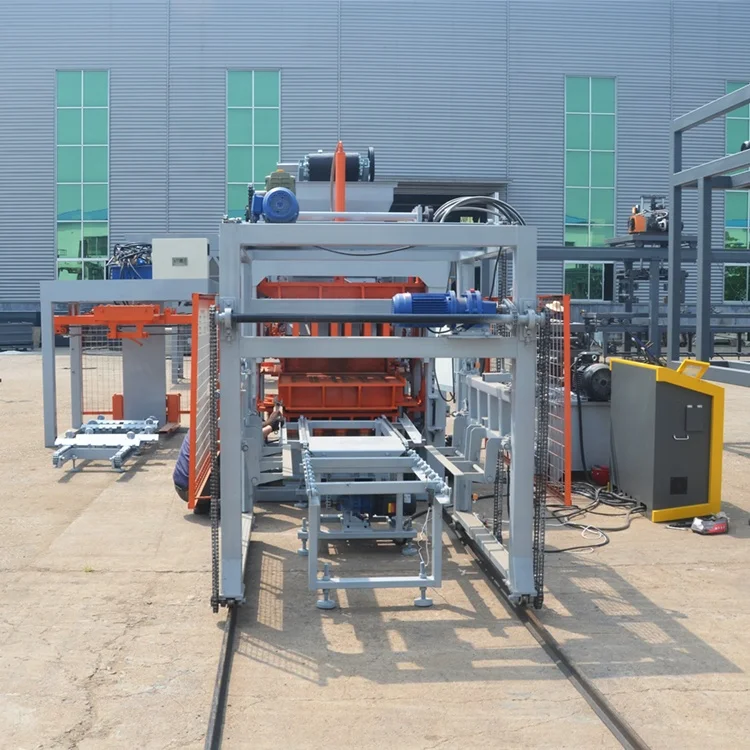


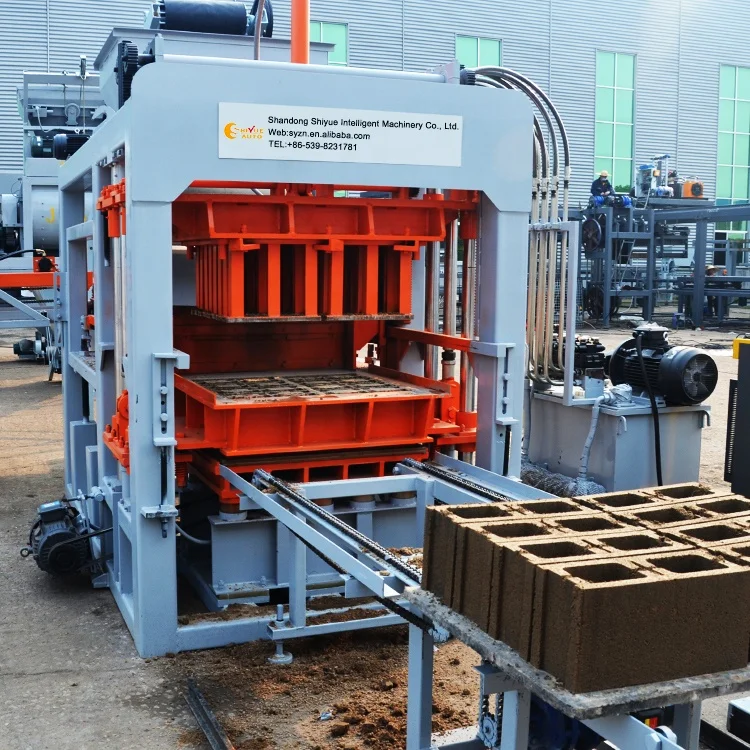
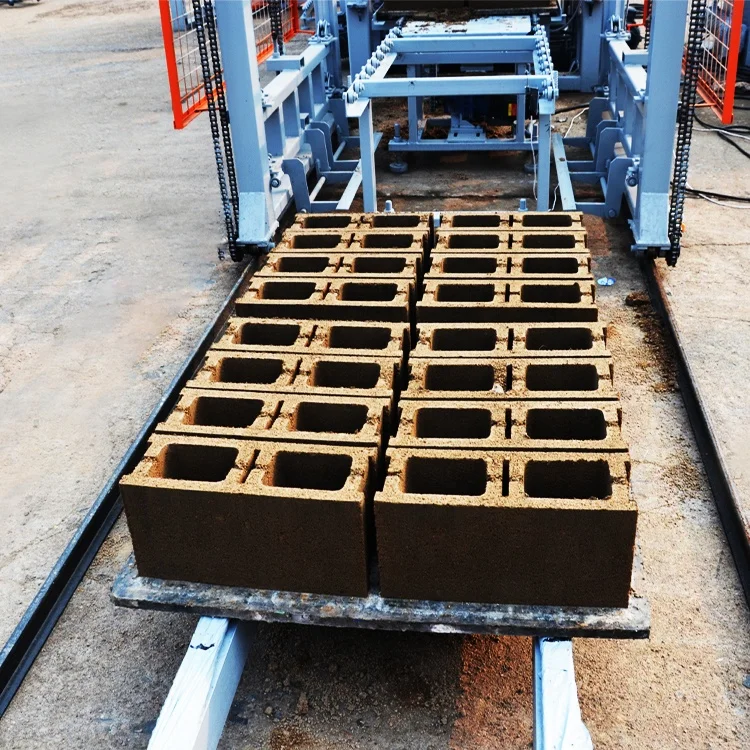
Description
Mould-Specific Capacity Planning — cycle time, cavity count, and daily output for the QT6-15 are calculated against the block format your market actually buys, not a single misleading catalogue figure.
Technical Specifications
| Parameter | Value |
|---|---|
| Model | QT6-15 |
| Product Type | Hydraulic Block Making Machine |
| Overall Dimensions (L×W×H) | 8200×1700×2950 mm |
| Total Mass | 7 T |
| Overall Power | 37 kW |
| Vibration Frequency | 0–60 Hz |
| Vibration Form | Platform Vibration |
| Vibration Force | 45 kN |
| Moulding Mode | Load automatically, vibration moulding |
| Demolding Method | Hydraulic |
| Pallet Size | 880×850 mm |
| Molding Cycle | 15–20 s (basis to be confirmed by block format, material, and thickness) |
| Control System | PLC with touch screen interface |
| Factory Area Required | 1200 m² |
| Block Compressive Strength | >15 MPa (basis to be confirmed by mix design and curing condition) |
| Output – Hollow Block 400×200×200 mm | 6 pcs/mould, 1080–1440 pcs/h, 8640–11520 pcs/8 hr |
| Output – Hollow Block 400×150×200 mm | 8 pcs/mould, 1440–1920 pcs/h, 11520–15360 pcs/8 hr |
| Output – Solid Brick 240×115×53 mm | 32 pcs/mould, 5760–7680 pcs/h, 46080–61440 pcs/8 hr |
| Output – Rectangular Paver 200×100×60 mm | 21 pcs/mould, 2160–2880 pcs/h at 20–25 s cycle, 17280–23040 pcs/8 hr |
| Output – Zigzag Paver 225×112.5×60 mm | 15 pcs/mould, 2160–2880 pcs/h at 20–25 s cycle, 17280–23040 pcs/8 hr |
| Hydraulic System | Independent integrated hydraulic station |
| Raw Material Compatibility | Waste ash, slag, and other aggregates with reduced cement dosage |
| Fault Diagnosis | Built-in fault diagnosis system in PLC |
| Warranty | 1 year for whole machine (excluding spare parts) |
Application Suitability
| Application | Material or Output |
|---|---|
| Hollow block production for residential and commercial walls | Crushed stone, sand, and cement blends; waste ash or slag aggregates |
| Solid brick manufacturing for load-bearing and partition walls | Standard concrete mixes with local fine aggregates |
| Rectangular paving brick for walkways, driveways, and public squares | High-density concrete with coarse aggregate and pigment additives |
| Zigzag interlocking paver for heavy-traffic roads and parking areas | Reinforced concrete mixes requiring higher vibration force and longer cycle |
| Kerbstone and custom format production | Adapted mould designs matched to project-specific dimensions and strength targets |
What "Pieces per Hour" Leaves Out When Format Is Ignored
A capacity number without a block format attached is not a capacity number at all.
Most quotations for a QT6-15 block machine specifications sheet arrive with a single hourly output figure, usually based on the smallest solid brick the machine can press. When the buyer’s actual product is a 200×100×60 mm rectangular paver running a 20–25 second cycle, the real throughput drops noticeably compared to that headline number. I once reviewed a project file where the buyer planned production schedules around a catalogue claim, only to discover during commissioning that the paver format they sold locally required nearly double the cycle time assumed in the quote. The entire curing rack layout and shift planning had to be redrawn on site. [NEED_CITE: block format impact on actual cycle time versus catalogue claims]
How to Choose Hydraulic Block Making Machine by Target Format
Sizing the QT6-15 to your market starts with the block you sell most. The rectangular paver at 200×100×60 mm runs 21 cavities per mould with a 20–25 second cycle, while the 400×200×200 mm hollow block uses 6 cavities at a 15–20 second cycle. These are fundamentally different production rhythms. A buyer choosing a hydraulic block making machine must match the machine’s vibration force and mould cavity layout to the format that generates revenue, not the format that looks best on a spec sheet. The QT6-15 block machine specifications above list each format separately so you can plan against your actual product mix.
Mould Selection and Format Flexibility on the QT6-15
Mould change time determines whether a multi-format plant actually runs multiple formats or gets stuck on one. The QT6-15 uses a hydraulic demolding system with platform vibration, meaning the mould sits on a vibrating table and must be aligned precisely each time it is swapped. Custom mould design is available to buyer drawings, so if your local market requires a non-standard interlocking profile or a kerbstone dimension that differs from the catalogue range, the tooling can be built to match. The key is confirming the format list and mould drawing before the order enters production, not after the machine arrives and the first mould change takes most of a shift. [NEED_CITE: mould change procedures and alignment requirements for hydraulic block presses]
Reading the Numbers That Actually Matter
The 45 kN vibration force on the QT6-15 is delivered through platform vibration, where the entire pallet and mould assembly oscillate at up to 60 Hz. This force must be matched to the mix design: a dry, low-slump concrete with coarse local aggregate needs higher vibration energy to consolidate properly, while a wetter mix with finer sand may require less force but risks segregation if over-vibrated. The independent integrated hydraulic station controls demolding pressure separately from vibration, so block faces stay intact during extraction. The 880×850 mm pallet size is fixed and must be checked against your existing curing racks and forklift capacity before ordering — a mismatch here means buying new handling equipment or leaving pallets stacked by hand.
The Hidden Cost of Skipping Format Confirmation
When voltage, frequency, and PLC display language are not confirmed in writing before production, the machine may arrive with a control interface the operators cannot read, delaying commissioning by days or weeks. I have seen a block plant sit idle because the touch screen defaulted to a language the local team could not navigate, and the PLC parameters needed for their specific aggregate had never been loaded. The pallet specification — size, material, thickness — is another frequent gap. If the buyer’s curing area uses wooden racks cut for a different pallet dimension, every pallet must be re-stacked manually, eliminating the output advantage the machine was supposed to deliver. [NEED_CITE: commissioning delays caused by unconfirmed electrical and control specifications]
Why Source This Machine Here
Block machinery is the single focus of Shandong Shiyue Intelligent Machinery, so the QT6-15 is specified as a matched system: machine, mould, pallet, and handling equipment are configured together rather than assembled from separate suppliers. The configuration is set against the buyer’s actual mix design and local aggregate, not a catalogue default — I always ask for a material sample before finalizing vibration parameters, because a mix that works in standard sand may behave entirely differently with volcanic scoria or recycled demolition aggregate. Mould design covers the formats the buyer’s market actually sells, including custom drawings for non-standard dimensions. Automation level is selectable, so a plant can start with semi-automatic pallet handling and add automatic stacking later. Installation support includes operator training on the specific formats and cycle times relevant to the buyer’s production plan.
Documentation & Verification
- Line layout and capacity calculation stating the specific block format and cycle time assumed
- Mould drawing and format list confirming cavity count and block dimensions before production
- Pallet specification sheet matched to buyer’s curing rack system and forklift capacity
- Voltage, frequency, and PLC display language confirmed in writing before factory test
- Factory test record run on the buyer’s target block format prior to dispatch
- Hydraulic and electrical schematic with component list for local maintenance sourcing
Installation, Commissioning & Support
- Foundation must support 7 T total mass across the 8200×1700 mm footprint with level tolerance for platform vibration alignment
- Dedicated power circuit required for 37 kW overall power draw, with voltage and frequency matching local grid supply
- Machine ships dismantled for container loading; reassembly on site includes hydraulic station connection and PLC boot-up
- First commissioning run uses buyer’s actual raw material to calibrate vibration frequency and hydraulic pressure per format
- Operator training covers mould change procedure, PLC fault diagnosis navigation, and daily maintenance checkpoints
- Wear parts list and mould inventory provided at handover for first replacement cycle planning
Before You Request a Quote
To size the QT6-15 accurately, we need your target block format and dimensions, the local aggregate type you plan to use, and your target daily output per format. Share your existing curing rack dimensions and forklift capacity so the 880×850 mm pallet can be verified against your handling setup. Confirm your site voltage, frequency, and preferred PLC display language to avoid delays at commissioning.
Frequently Asked Questions
Q: How is capacity calculated per block format, and what cycle time applies to my target paver or hollow block?
A: Each format has its own cavity count and cycle time. A 400×200×200 mm hollow block runs 6 cavities at 15–20 seconds, while a 200×100×60 mm rectangular paver runs 21 cavities at 20–25 seconds. Daily output is calculated from these format-specific figures, not from a single generic number.
Q: Can the mould be designed to my local block dimensions, and how long does a mould change take?
A: Custom mould design is available to buyer drawings for non-standard formats. Mould change time depends on the hydraulic demolding alignment and operator familiarity. Training during commissioning covers the procedure so format swaps do not consume a full shift.
Q: What pallet size does the QT6-15 use, and how does it align with my existing curing racks and forklift?
A: The pallet size is 880×850 mm. Before ordering, we confirm this dimension against your curing rack spacing and forklift tine width to ensure pallets move from press to curing area without manual re-stacking or equipment modification.
Q: How is block compressive strength matched to my local aggregate and mix design?
A: The 45 kN vibration force and hydraulic pressure are adjusted based on your specific aggregate type and cement dosage. We request a material sample or mix design data so the QT6-15 block machine specifications are calibrated to produce consistent strength above 15 MPa under your actual curing conditions.
Q: Are voltage, frequency, and PLC language confirmed before shipment, and what documentation is included?
A: Yes. Voltage, frequency, and PLC display language are confirmed in writing before production. Documentation includes a factory test record on your target format, hydraulic and electrical schematics, mould drawings, and an operation manual with wear parts list.