
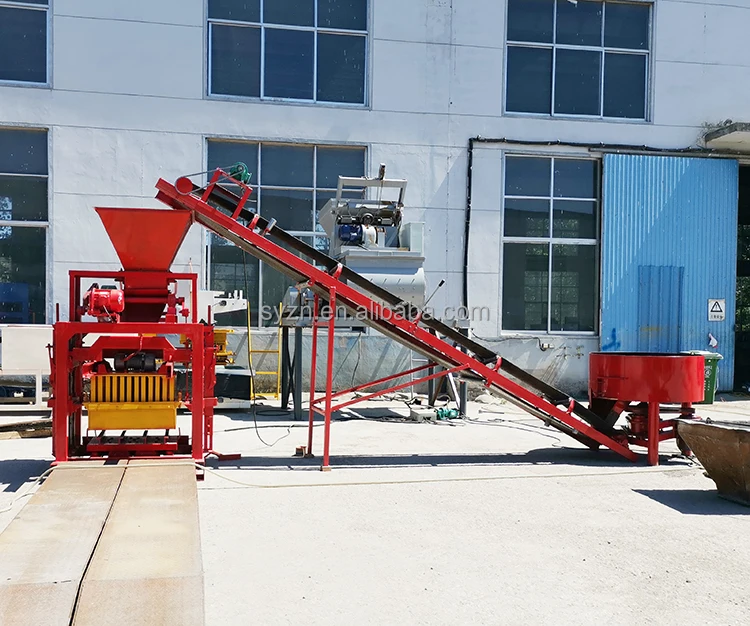

Description
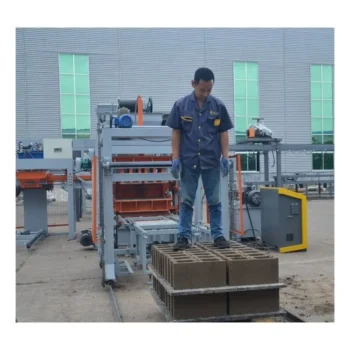
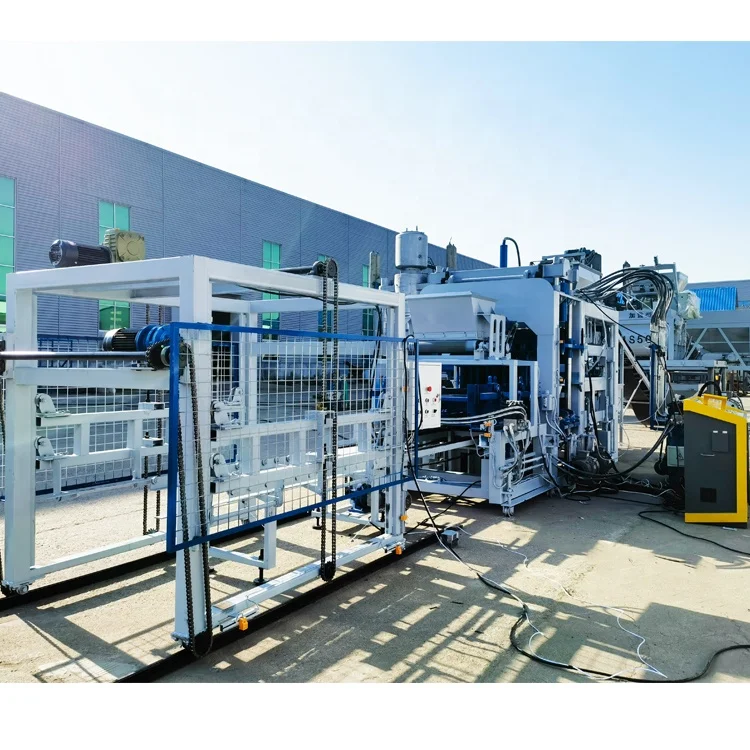
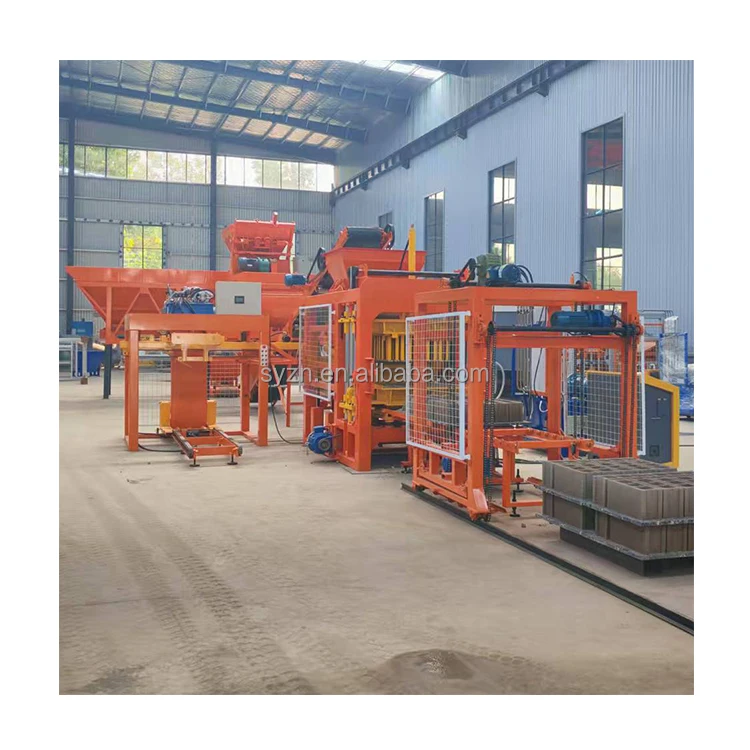
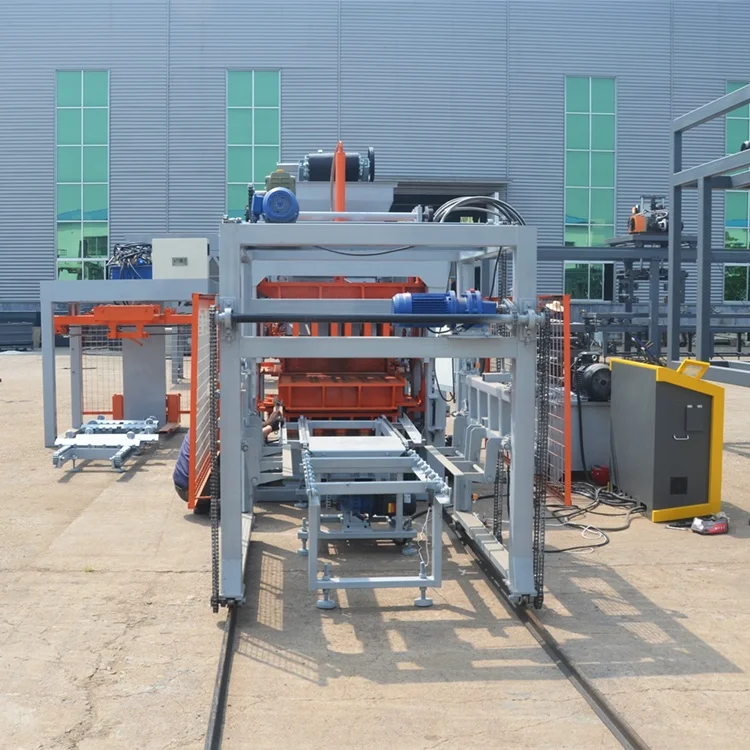
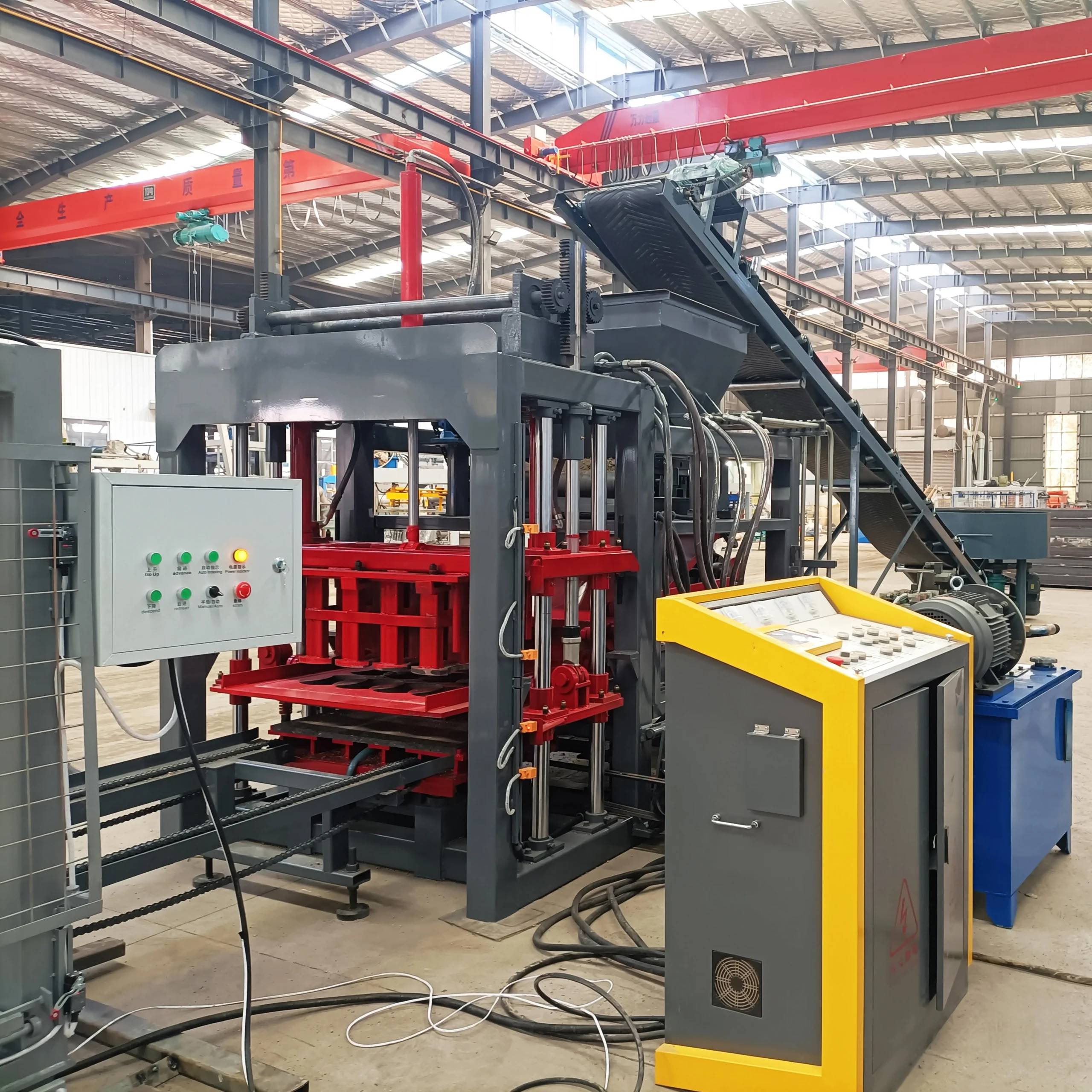
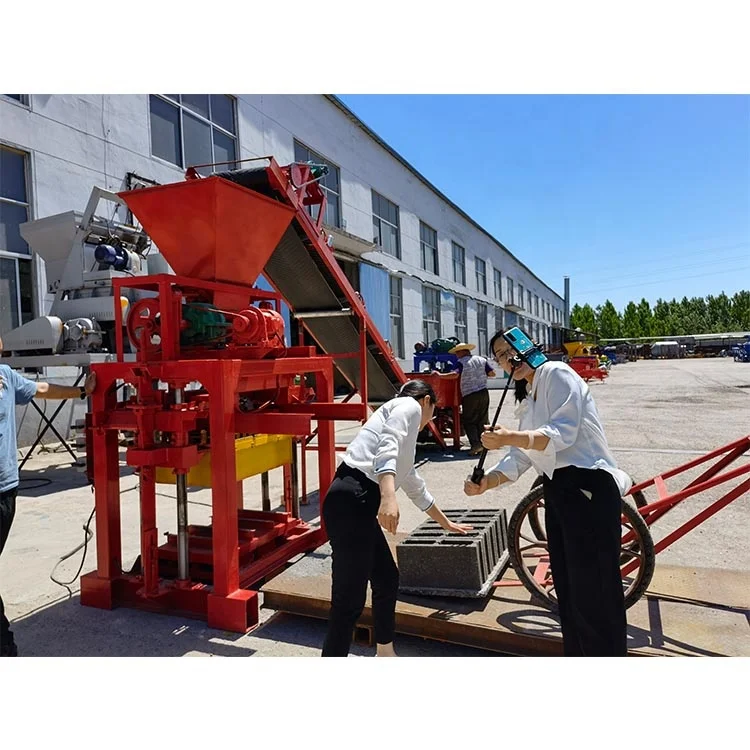
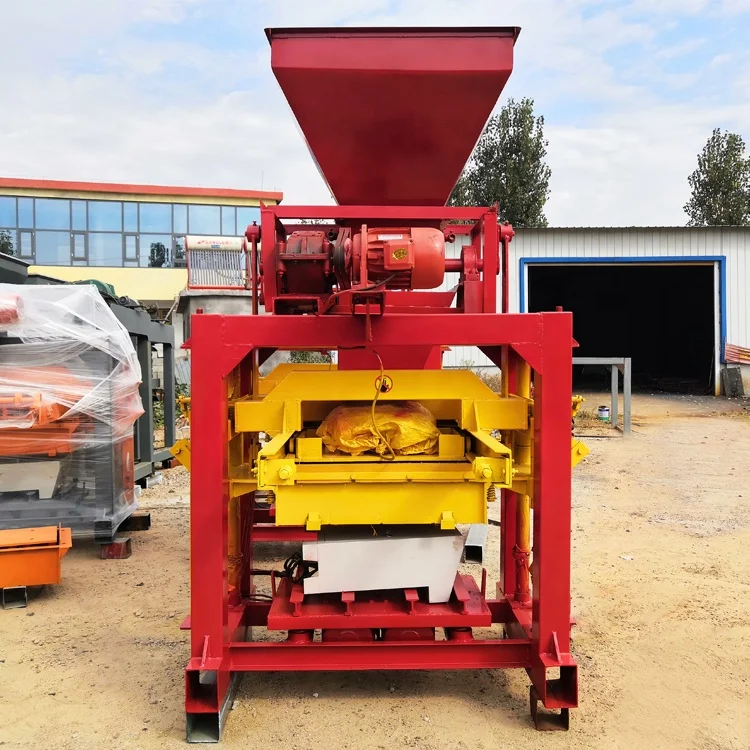
Block machinery as a single focus — machine, mould, pallet and handling specified as one matched system for the QTJ4-35, not assembled from separate suppliers.
Technical Specifications
| Parameter | Value |
|---|---|
| Model | QTJ4-35 |
| Product Type | Small Automatic Cement Block Making Machine |
| Overall Dimensions (L×W×H) | 1350×1460×1800 mm |
| Molding Cycle | 35 s |
| Vibration Frequency | 2800 r/min |
| Exciting Power (Vibration Force) | 30 kN |
| Total Power | 11.15 kW |
| Mixer Model | JQ350 |
| Pallet Size | 850×450×20 mm |
| Total Weight | 1500 kg |
| Frame Construction | Four-lead channel steel stand |
| Applied Products | Concrete blocks, hollow block (8 inch, 6 inch), solid brick |
| Raw Materials | Crushed stones, sand, cement, dust, fly ash |
| Output Capacity (Hollow Block 400×200×200 mm) | 408 pcs/hr, 3264 pcs/8hr (4 pcs/mould) |
| Output Capacity (Hollow Block 400×150×200 mm) | 510 pcs/hr, 4080 pcs/8hr (5 pcs/mould) |
| Output Capacity (Solid Brick 240×115×53 mm) | 2100 pcs/hr, 17000 pcs/8hr (18 pcs/mould) |
| Automation Level | Semi-automatic with belt conveyor |
| Hydraulic Pressure | (basis to be confirmed) |
| Voltage & Frequency | (basis to be confirmed) |
| Control System | (basis to be confirmed) |
Application Suitability
| Application | Material or Output |
|---|---|
| Small-scale block production plants | Hollow blocks (8 inch / 6 inch) from crushed stone, sand, and cement |
| On-site production for construction contractors | Solid bricks from locally available aggregates including fly ash and dust |
| Entrepreneurs setting up a first block plant | Mixed format output targeting local building material markets |
| Concrete product manufacturers adding formats | Hollow and solid formats using existing raw material supply chains |
What "4000 Blocks per Hour" Leaves Out About QTJ4-35 Block Machine Specifications
Capacity only means something when tied to a specific block format, mould cavity count, and cycle time.
I have watched contractors in West Africa take delivery of a small block press, start production, and realize by mid-afternoon that their daily target was based on a solid brick figure while their market actually buys 8-inch hollow blocks. The headline number on a brochure rarely tells you which format it assumes. With the QTJ4-35, the cycle is 35 seconds, but the output changes dramatically depending on whether you are running 4 cavities for a 400×200×200 hollow block or 18 cavities for a standard solid brick. Buyers who skip this step end up chasing a target the machine was never configured to hit [NEED_CITE: common causes of output shortfall in small block plants].
Matching the Mould to the Block Your Market Actually Buys
The QTJ4-35 block machine specifications list three standard output tiers, each tied to a defined mould cavity count. A 400×200×200 hollow block runs at 4 pieces per mould, yielding 408 pieces per hour at the rated 35-second cycle. Switch to a 400×150×200 hollow block and the cavity count rises to 5, pushing output to 510 pieces per hour. Solid brick production at 240×115×53 mm uses an 18-cavity mould. This format-specific approach to cement brick making machine capacity by format means you select the mould that matches your local demand rather than adjusting your business to a single catalogue figure.
Vibration Force and Upper Compression Working Together
The 30 kN exciting force at 2800 r/min provides the primary compaction energy. On a semi-automatic machine in this class, upper-mould and bottom-mould compression work together with vibration to consolidate the mix. The balance between vibration amplitude and pressure determines whether a hollow block holds its shape when the mould lifts. If the vibration is too aggressive for a lean mix, the block walls can crack before curing begins. If it is too mild for a coarse aggregate, density drops and compressive strength falls below local building code requirements [NEED_CITE: relationship between vibration force and block density in concrete masonry].
Reading the Numbers That Actually Matter on Site
The 850×450×20 mm pallet size defines the footprint of every block that leaves the press. This matters because your curing racks, wheelbarrows, and forklift forks all need to accommodate that dimension. The 1500 kg total weight and four-lead channel steel stand provide mass and rigidity to absorb continuous vibration cycles without frame drift. The JQ350 mixer paired with the belt conveyor feeds the press at a rate matched to the 35-second cycle, so the operator is not waiting for the next batch. Total power at 11.15 kW means the machine can run on a standard small-plant electrical supply, but voltage and frequency must be confirmed before production starts to avoid motor rewinding on arrival.
The Hidden Cost of Skipping Pallet and Voltage Checks
I have seen machines sit idle for weeks because the pallet size specified did not match the curing racks the buyer already had on site. Pallets ordered locally as a workaround turned out to be 5 mm too thin, causing feed jams at the conveyor transfer point. Voltage mismatch is another recurring issue — a machine wired for 380V/50Hz arriving at a site running 220V/60Hz means the main motor and vibration motor both need replacement before first production [NEED_CITE: electrical standard differences across African and Southeast Asian markets]. These are not engineering failures. They are specification gaps that a two-page checklist before production would eliminate entirely.
Why Source the QTJ4-35 Through a Block-Line Specialist
The QTJ4-35 is treated here as part of a matched system rather than a standalone press. Machine, mould, pallet, and mixer are specified together so that cycle times align and the press is never left waiting for material or pallets. Configuration is set against your actual mix design and local aggregate, not a default catalogue recipe — the difference between consistent block density and a week of on-site troubleshooting. Mould selection covers the formats your market sells, with custom mould design available to buyer drawings. The automation level is semi-automatic with belt conveyor, leaving a clear upgrade path if production volume later justifies additional handling equipment. Documentation includes a line layout and capacity calculation that states the exact block format assumed, so you can verify output against your own target before the machine ships.
Documentation & Verification
- Line layout with capacity calculation stating the block format and mould cavity count assumed
- Mould drawing and format list confirming included moulds and custom design availability
- Pallet specification sheet covering size, material, and quantity for curing area compatibility
- Voltage, frequency, and control language confirmation document signed before production
- Factory test record run on your specified block format before dispatch
- Operation and maintenance manual with wear parts and mould replacement schedule
Installation, Commissioning & Support
- Foundation pad sized to the 1350×1460 mm footprint with vibration isolation consideration
- Dedicated circuit rated for the 11.15 kW total power draw at confirmed voltage and frequency
- Machine shipped as a single unit at 1500 kg, requiring forklift or crane for offloading
- First-run parameter tuning for vibration frequency and cycle time against your local aggregate mix
- Operator training covering mould change procedure, pallet feed sequence, and daily greasing points
- Wear parts list provided with initial spares for high-contact components
Before You Request a Quote
To size the QTJ4-35 correctly for your production, we need to know which block formats your market actually buys and in what daily volume. Share your local raw material availability — specifically the type of sand or crushed stone and whether fly ash is an option. Confirm your site voltage, frequency, and preferred control language so that electrical and interface specifications are locked before the machine enters production.
Frequently Asked Questions
Q: How is capacity calculated and for which block format on the QTJ4-35?
A: Output is stated per format with the mould cavity count and 35-second cycle as the basis. A 400×200×200 hollow block yields 408 pieces per hour at 4 cavities, while a 240×115×53 solid brick yields 2100 pieces per hour at 18 cavities. We do not quote a single headline number because the actual output depends entirely on which format you produce.
Q: Which mould formats come with the machine and can I order custom moulds?
A: Standard moulds cover 8-inch hollow block, 6-inch hollow block, and solid brick in the sizes listed. Custom mould design to buyer drawings is available for formats outside the standard range. Each mould change requires the operator to swap the mould box and confirm alignment before resuming production.
Q: What pallet size does the QTJ4-35 use and can I use my existing pallets?
A: The machine uses 850×450×20 mm pallets. Before ordering, check whether your existing curing racks, wheelbarrows, and forklift forks accommodate this dimension. Pallets that are too thin or too wide cause feed jams at the conveyor transfer point and disrupt cycle consistency.
Q: How do I confirm the machine matches my local raw material?
A: Share a sample description or lab result of your available sand, crushed stone, and any supplementary materials like fly ash. The vibration force and cycle parameters are then evaluated against your mix design to confirm that the block will achieve adequate density and hold its shape when the mould lifts.
Q: What voltage, frequency, and control language will the machine ship with?
A: These are confirmed with the buyer before production begins. You specify your site voltage, frequency, and the preferred language for any control interface labels. This prevents motor rewinding and commissioning delays after the machine arrives at your facility.