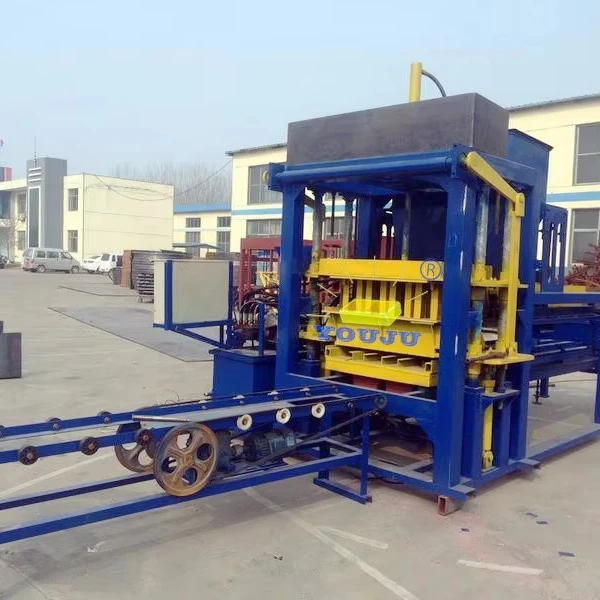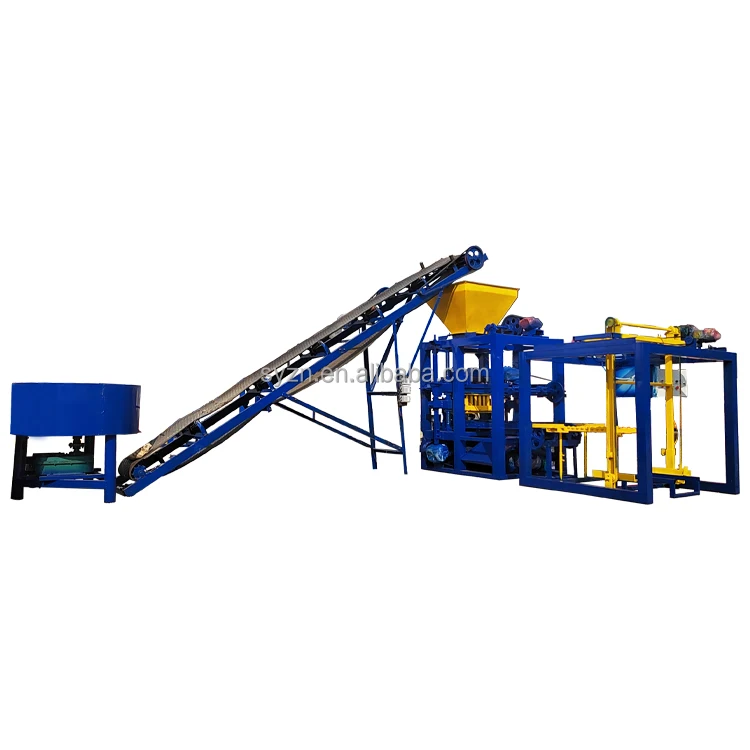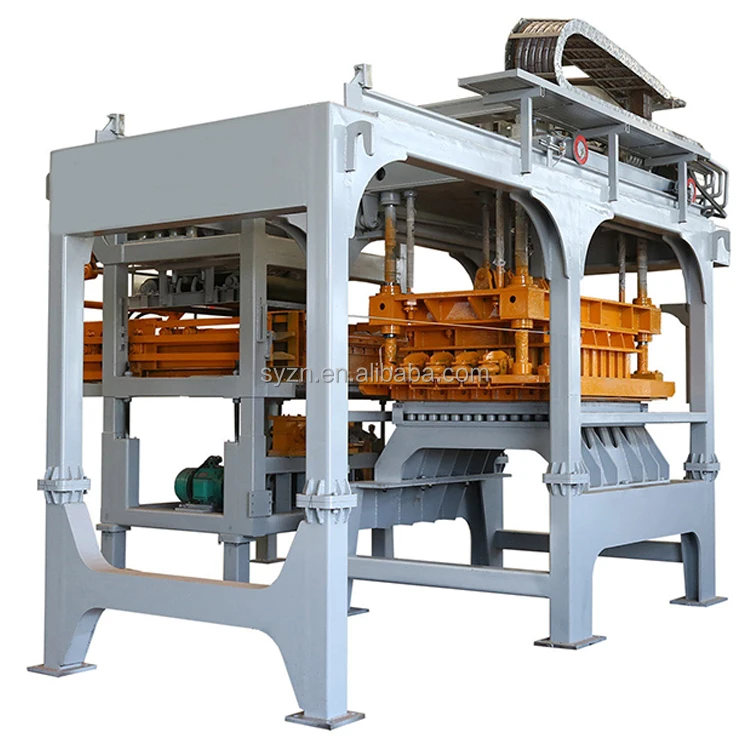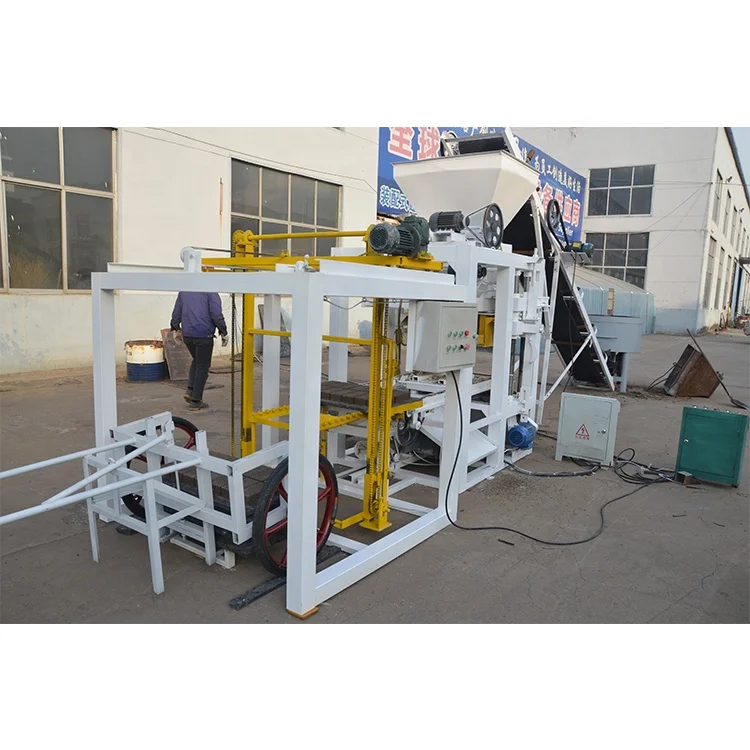
Description
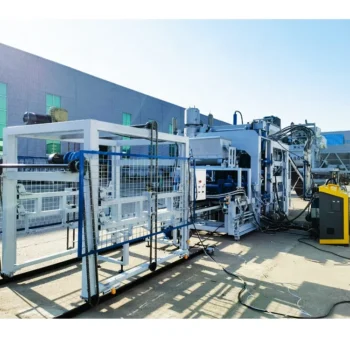
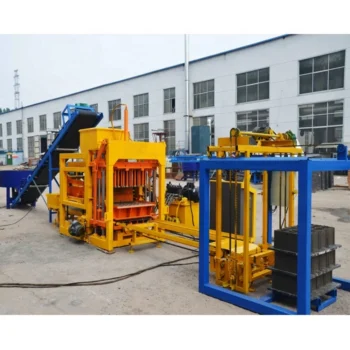
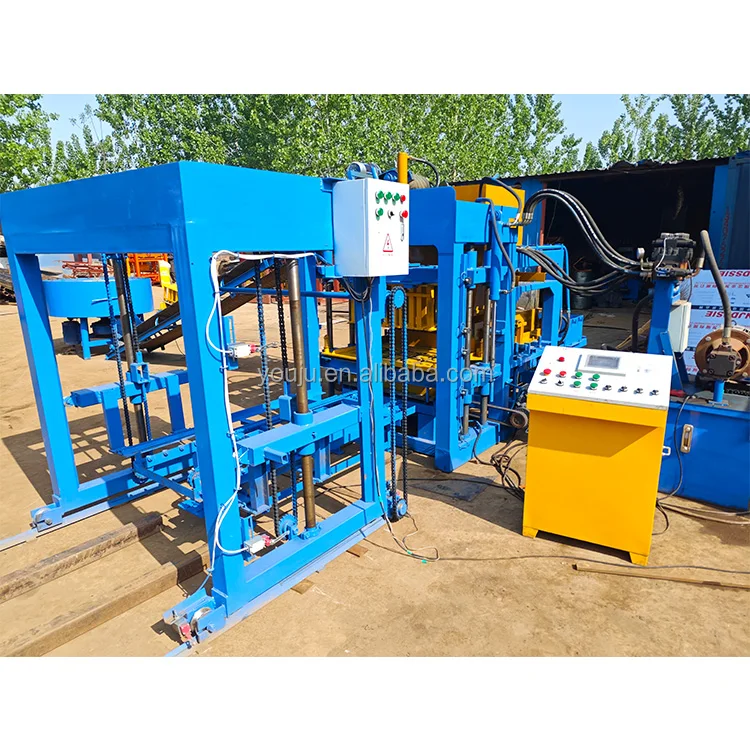
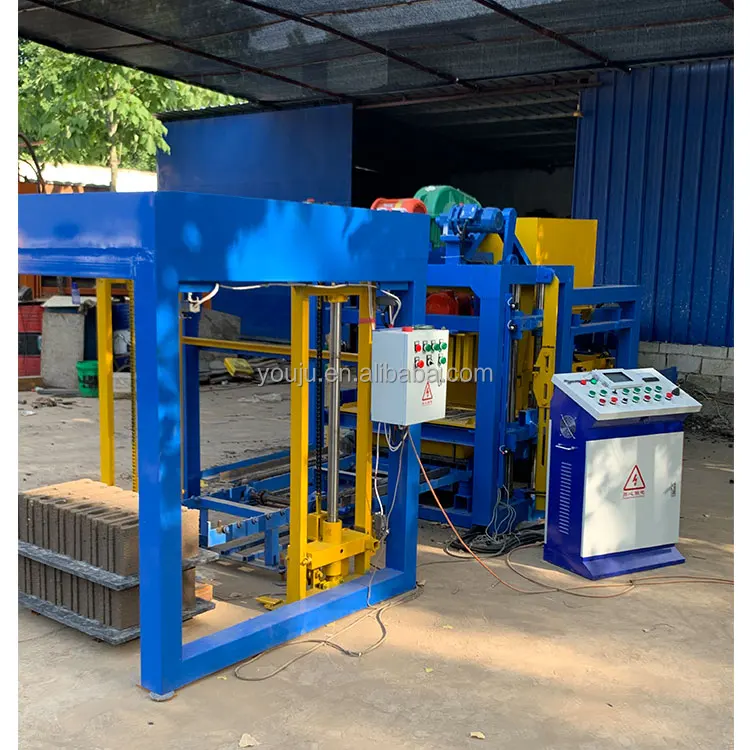
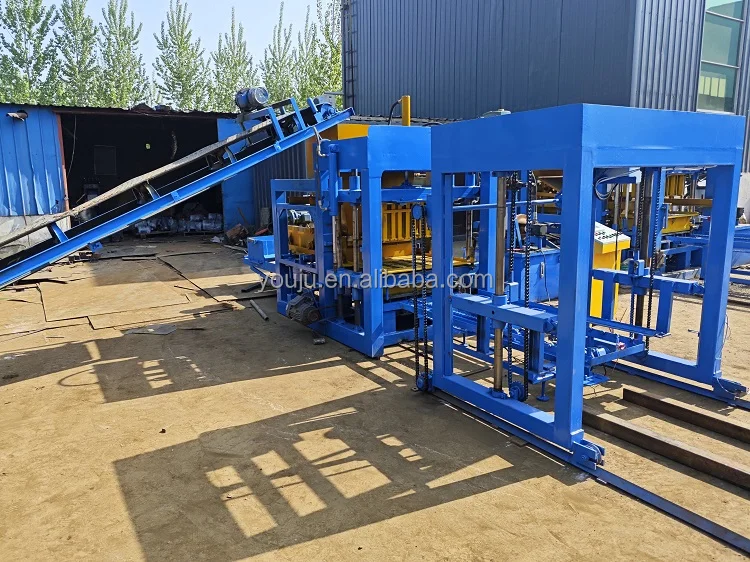
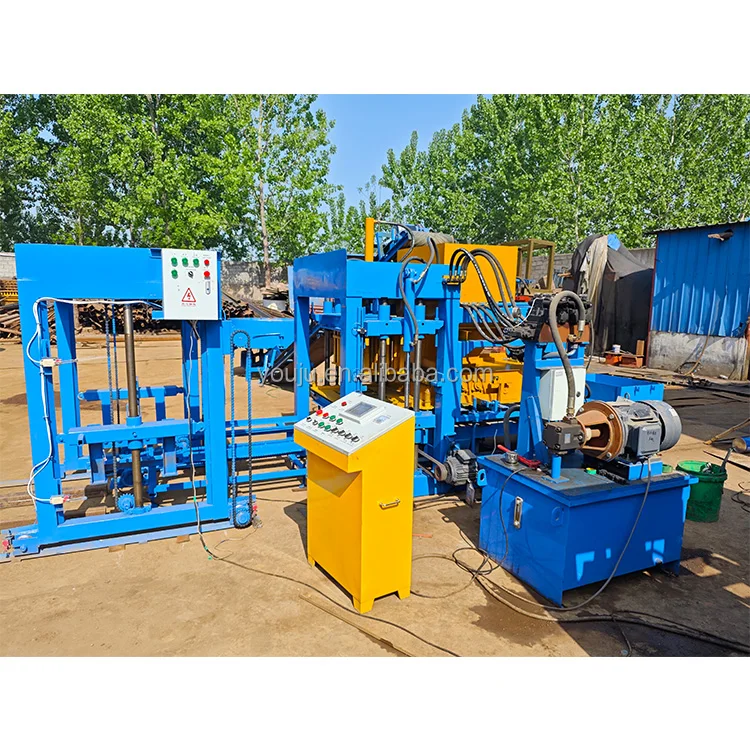
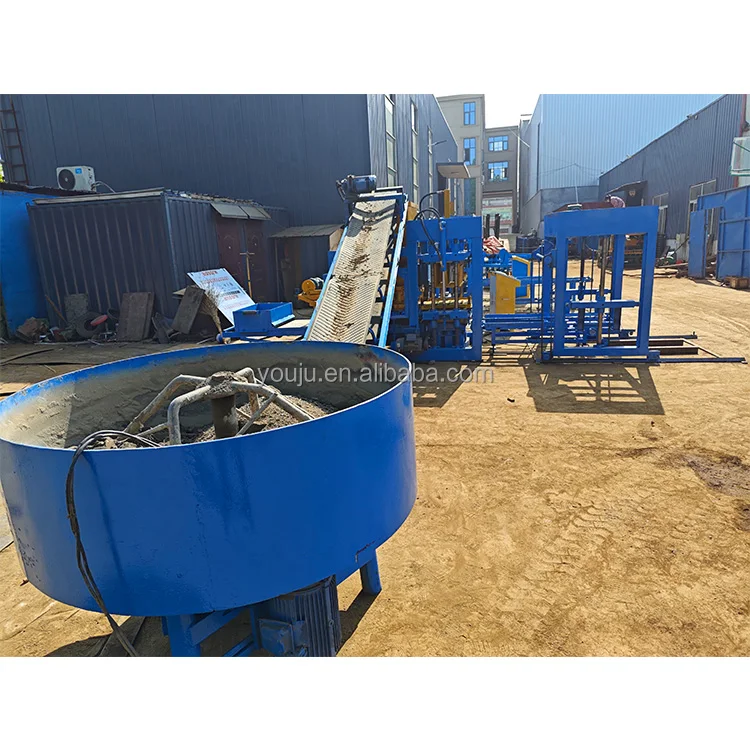
Matched Pallet and Mixer System — the QTJ4-25 is specified with its 850 × 550 mm pallet and JQ350 mixer as one coordinated set, so cycle times hold steady from feed to press.
Technical Specifications
| Parameter | Value |
|---|---|
| Model | QTJ4-25 |
| Product Type | Semi-Automatic Concrete Block Making Machine |
| Rated Power | 17.9 kW |
| Control System | Motor-driven with hydraulic station (PLC presence to be confirmed) |
| Overall Dimensions (L×W×H) | 6400 × 1500 × 2700 mm |
| Net Weight | 2500 kg |
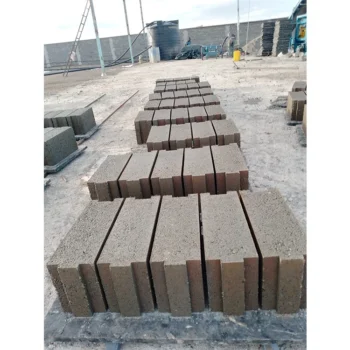
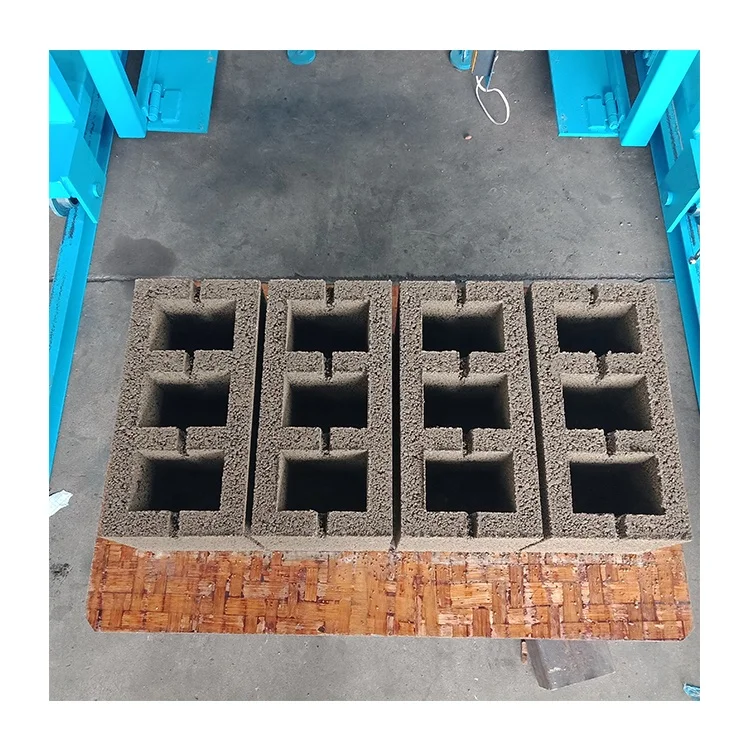
| Mould Format | 400 × 200 × 200 mm hollow block, 4 pcs/mould |
| Output Capacity | 960 pcs/h, 7680 pcs/day (basis: 400×200×200 mm hollow block, 4 pcs/mould) |
| Cycle Time | 25 s |
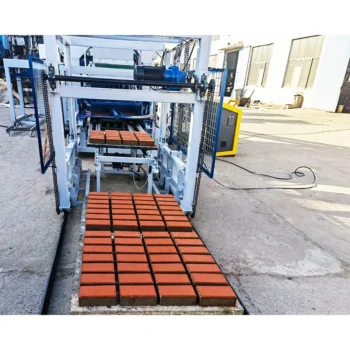
| Pallet Size | 850 × 550 × 20 mm |
| Vibration Frequency | 2800 r/min |
| Vibration Force (Exciting Power) | 60 kN |
| Hydraulic Pressure | Value to be confirmed with manufacturer |
| Automation Level | Semi-automatic, manual pallet handling and stacking |
| Stacking Method | Manual, stack on pallet, move with trolley |
| Mould Change Time | To be confirmed with manufacturer |
| Configuration Included | Host machine 1 set, block mould 1 set, JQ350 mixer |
| Voltage & Frequency | To be confirmed before order |
| Language Options | To be confirmed |
| Certification | To be confirmed |
Application Suitability
| Application | Material or Output |
|---|---|
| 8-inch hollow block production | Cement, crushed stone, sand mix |
| 6-inch and 5-inch solid block production | Crusher dust, river sand, cement |
| Paving block and kerbstone formats | Fine aggregate and cement with pigment |
| On-site contractor block production | Locally sourced aggregate, semi-dry mix |
| First block plant for entrepreneurs | Standard concrete mix with manual stacking |
What "960 Pieces per Hour" Actually Means on Your Site
Every output figure must name the block format it applies to, or it means nothing.
A catalogue number like "960 pieces per hour" only holds true when you are running 400 × 200 × 200 mm hollow blocks with a four-cavity mould. Switch to a smaller solid block or a paver with a different cycle behaviour and the real throughput shifts. I once stood next to a QTJ4-25 block machine specifications sheet while a buyer in West Africa insisted the daily target was missed — until we checked which format his crew had been running that week and recalculated. [NEED_CITE: how block format affects actual daily output on semi-automatic machines]
Matching Vibration and Pressure to Your Aggregate
The QTJ4-25 block machine specifications list a vibration frequency of 2800 r/min and an exciting force of 60 kN. Those values determine how densely the semi-dry mix compacts inside the mould cavity. When your local sand carries high clay content or your aggregate is lightweight volcanic ash, the vibration energy must be re-tuned at commissioning to achieve target block strength. Skipping this calibration means weak blocks straight off the pallet.
Pallet Size Decisions Before the Container Ships
The 850 × 550 × 20 mm pallet is the interface between the press and your curing yard. If your forklift tines are spaced for a different pallet width, or your curing racks were built around a smaller board, every pallet change becomes a bottleneck. Confirm pallet material — timber, bamboo composite, or PVC — against your local humidity and expected curing cycle before production begins. [NEED_CITE: pallet material durability in tropical curing environments]
Reading the Specs That Matter on Site
The 25-second cycle time assumes the JQ350 mixer has already delivered a consistent semi-dry batch and the operator has positioned the pallet. The 17.9 kW rated power covers the vibration motors and the hydraulic station together, so your site electrical supply must accommodate that draw plus start-up surge. The 6400 mm machine length includes the feed hopper and mould travel zone, meaning your foundation slab needs at least that clearance with room for manual pallet staging on both sides.
The Cost of Ignoring Format-Specific Capacity
When a buyer orders based on a single hourly number and later switches to pavers or kerbstones, the cycle time stretches and daily output drops without warning. Crews push the machine harder to compensate, accelerating wear on the vibration springs and hydraulic seals. Pallet handling slows further if the pallet size was never checked against the curing area layout, and the whole shift ends up moving blocks by hand instead of meeting schedule targets. [NEED_CITE: impact of unconfirmed pallet handling on semi-automatic plant labour]
Why This Configuration Approach Works
Block machinery is the single product focus here, so the QTJ4-25, its mould, pallet, and JQ350 mixer are specified as a matched set rather than sourced separately. The configuration starts from your actual block format and local aggregate, not a catalogue default. Mould drawings cover the formats your market sells, with custom designs available when standard cavities do not fit. The semi-automatic setup lets you begin with manual stacking and add automation stations later. Factory testing runs your chosen block format before the machine leaves the workshop, and commissioning support includes operator training on your specific mix.
Documentation & Verification
- Line layout drawing with capacity stated per block format for the QTJ4-25
- Mould drawing and format list confirming included and optional cavities
- Pallet specification matching material and size to your curing area
- Voltage, frequency, and control language confirmation sheet before production
- Factory test record showing cycle time on your chosen block format
- Operation and maintenance manual with wear parts and mould list
Installation, Commissioning & Support
- Foundation slab sized to the 6400 × 1500 mm footprint plus manual pallet staging clearance
- Dedicated power circuit rated for 17.9 kW continuous draw with start-up surge allowance
- Voltage and frequency confirmed before production to match your site electrical supply
- Hydraulic station pressure and vibration frequency calibrated to your local aggregate on site
- Operator training covering mould change procedure, pallet handling, and daily maintenance checks
- Wear parts list identifying vibration springs, hydraulic seals, and mould liner replacement intervals
What to Share Before Quoting
Send your target block format with dimensions, the aggregate type available locally, and your expected daily output. Include your site voltage and frequency, plus the pallet size your curing yard and forklift already accommodate. If you have an existing mixer or stacking setup, note the specifications so the QTJ4-25 block machine specifications can be aligned to your line.
Frequently Asked Questions
Q: How is daily output calculated and which block format does each figure assume?
A: The 7680-piece daily figure assumes 400 × 200 × 200 mm hollow blocks running four per mould at a 25-second cycle. Switching to solid blocks or pavers changes the cycle behaviour and cavity count, so a separate capacity calculation is prepared for each format you plan to produce.
Q: What pallet material and size should I choose for my curing area?
A: The standard 850 × 550 × 20 mm pallet works with timber, bamboo composite, or PVC. The right choice depends on your local humidity, curing duration, and the forklift tine spacing you already use. We confirm the pallet specification before production so it fits your yard on arrival.
Q: How do I match vibration force and pressure to my local aggregate?
A: The 60 kN exciting force and hydraulic station pressure are set against your mix design during commissioning. If your sand has high clay content or you use lightweight aggregate, the vibration frequency and pressure are adjusted on site to reach the block strength your market requires.
Q: What voltage and control language options are available?
A: Voltage, frequency, and any control display language must be confirmed before the machine enters production. This avoids rewiring or reprogramming after the QTJ4-25 arrives at your site, keeping commissioning on schedule.
Q: How long does a mould change take and what tools are required?
A: Mould change time depends on the cavity design and bolt configuration. The standard procedure uses common hand tools, and the exact changeover duration is confirmed during your factory test so your crew can plan shift scheduling around format switches.