
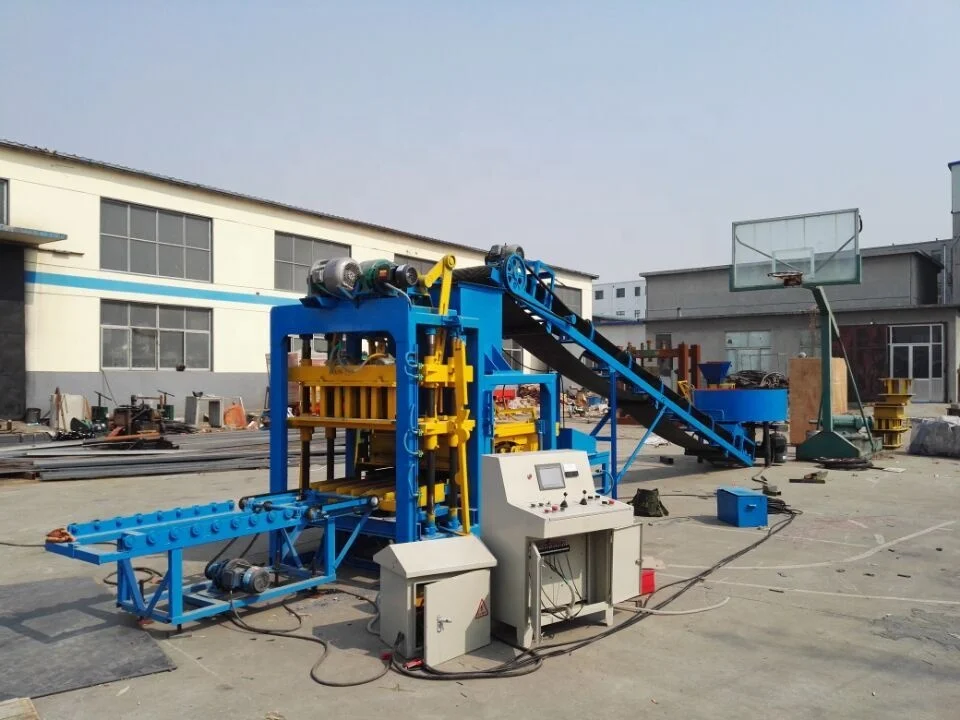

Description
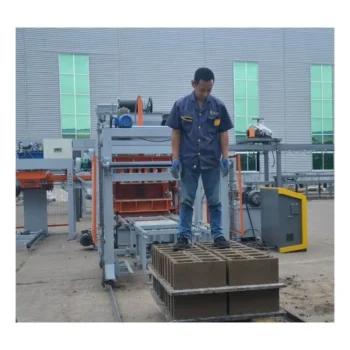
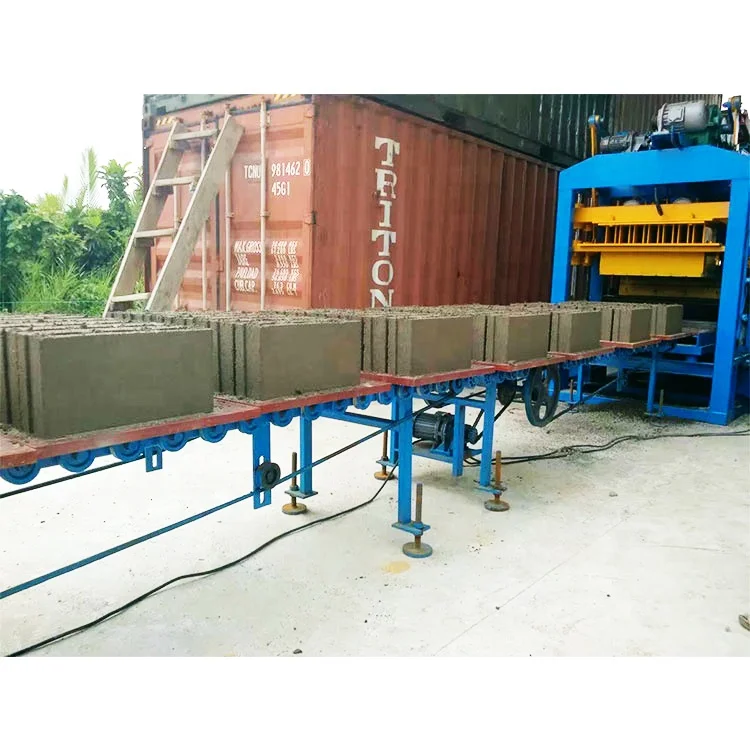
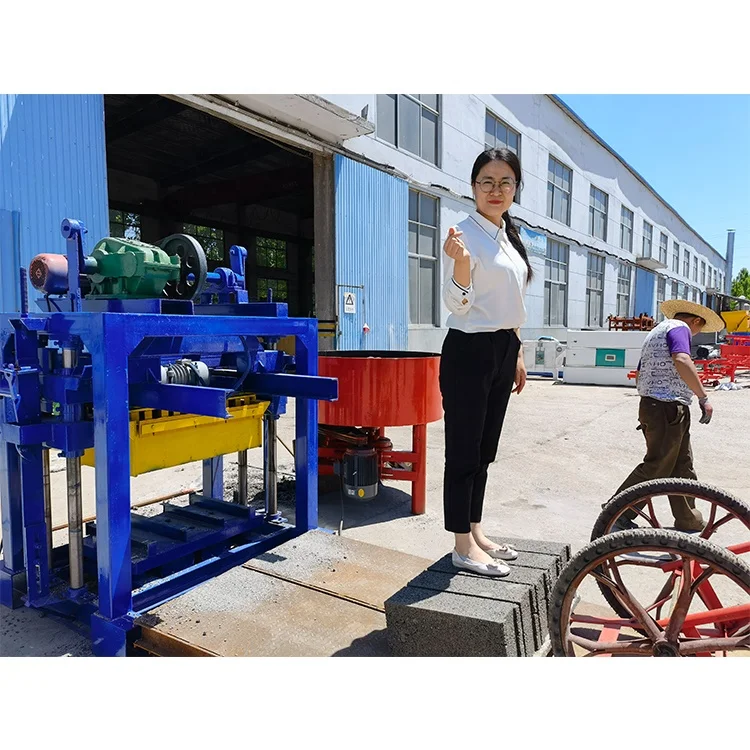
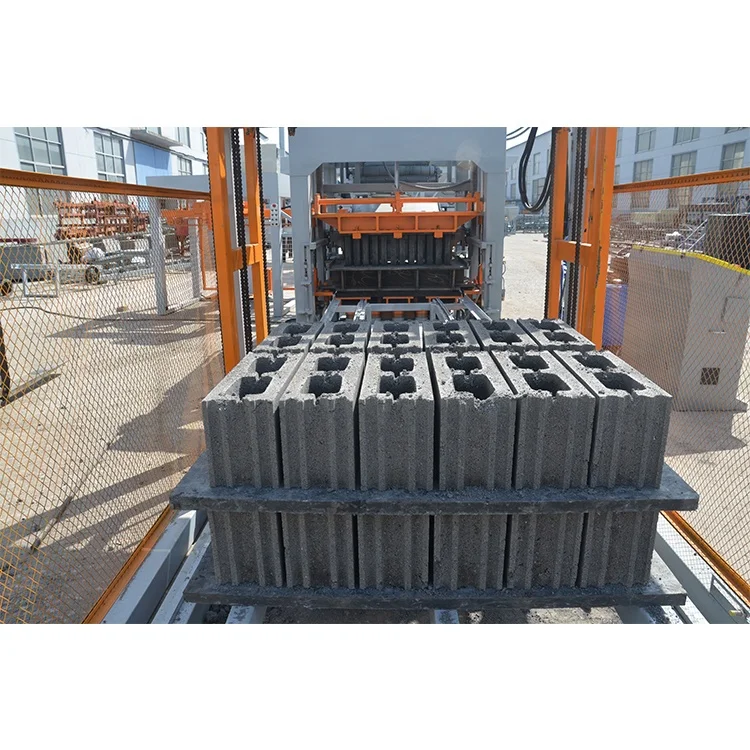
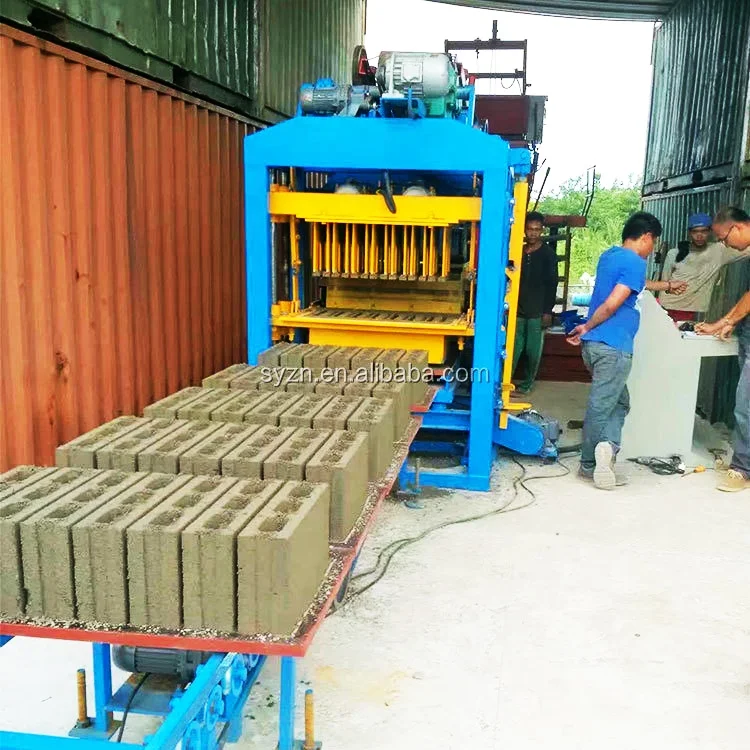
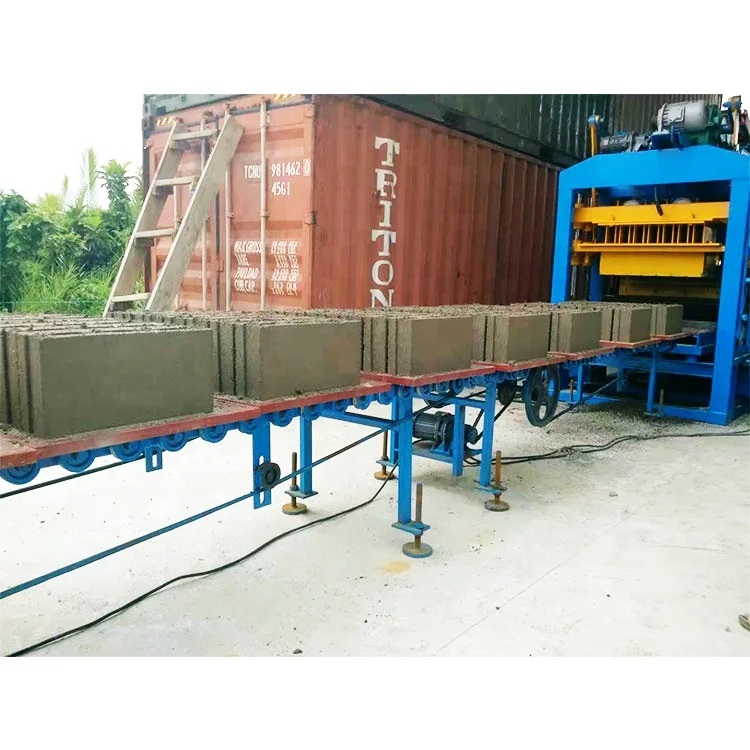
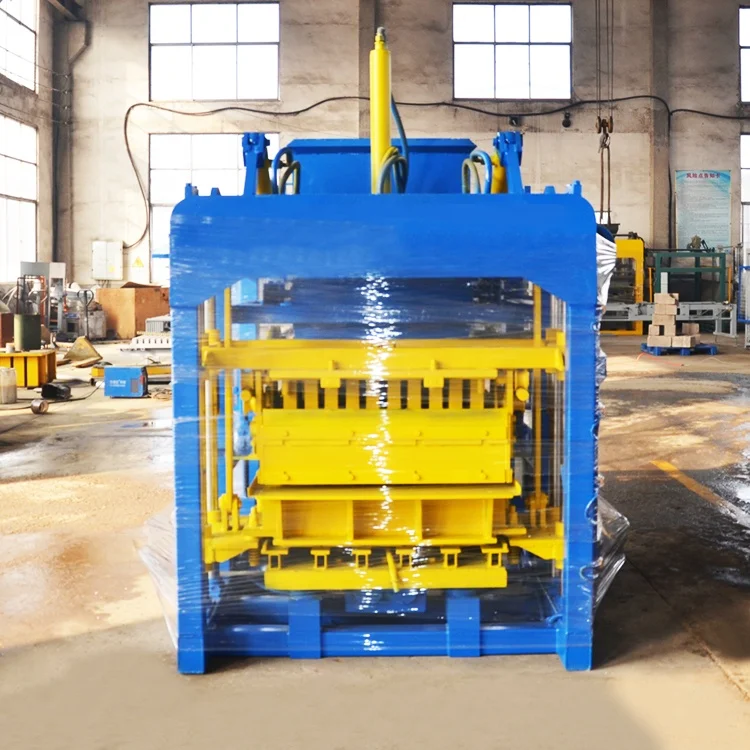
Specified to your mix — every QTJ4-25 block machine leaves our Linyi workshop only after vibration frequency, hydraulic pressure, and mould cavity count are matched to the buyer’s local aggregate and target block format, not a catalogue default.
Technical Specifications
| Parameter | Value |
|---|---|
| Model | QTJ4-25 |
| Product Type | Semi-Automatic Concrete Block Making Machine |
| Overall Dimensions (L×W×H) | 6400×1500×2700 mm |
| Net Weight | 2500 kg |
| Molding Cycle | 25 s |
| Vibration Frequency | 2800–5100 r/min |
| Vibration Force (Exciting Power) | 60 kN |
| Rated Power | 17.9 kW |
| Mixer Model | JQ350 |
| Pallet Size | 850×550×20 mm |
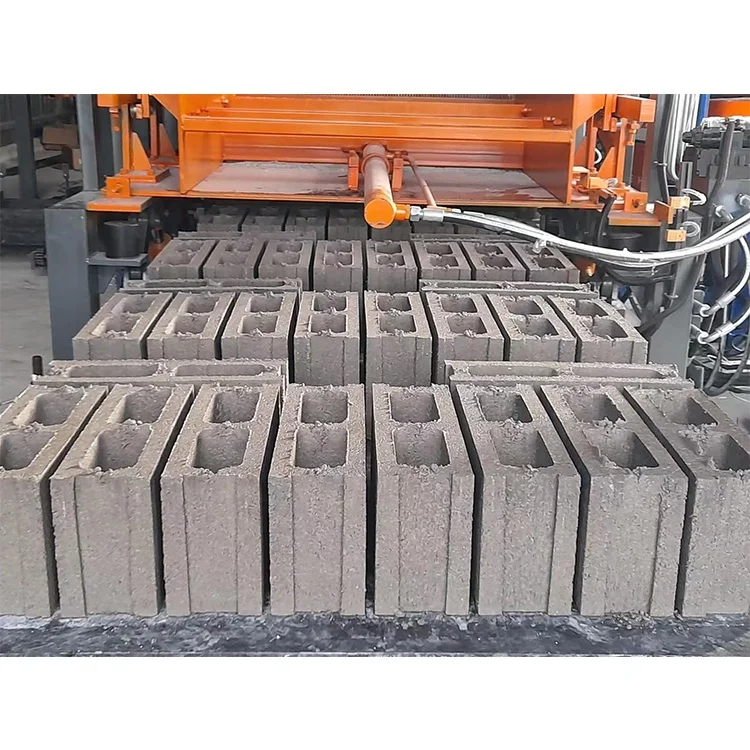
| Output Capacity (390×190×190 mm hollow block, 4 pcs/mould) | 480 pcs/hr |
| Output Capacity (400×150×200 mm hollow block, 5 pcs/mould) | 600 pcs/hr |
| Output Capacity (240×115×53 mm solid brick, 18 pcs/mould) | 2100 pcs/hr |
| Daily Output — 8 hr (390×190×190 mm hollow block) | 3800 pcs |
| Daily Output — 8 hr (400×150×200 mm hollow block) | 4800 pcs |
| Daily Output — 8 hr (240×115×53 mm solid brick) | 17000 pcs |
| Hydraulic Station | Equipped (pressure rating to be confirmed) |
| Control System | Basis to be confirmed (PLC or manual) |
| Voltage & Frequency | Basis to be confirmed |
| Assembly & Shipment | Complete unit, nude packing in 20GP container |
| Applied Products | Concrete hollow blocks, solid bricks, pavers, kerbstones |
Application Suitability
| Application | Material or Output |
|---|---|
| 6-inch and 8-inch hollow block production for residential wall construction | Crushed stone, sand, cement, fly ash blends |
| Solid brick runs for infill and partition walls | Sand and cement with fine aggregate grading |
| Paver and kerbstone formats for site hardstanding and road edges | Coarse aggregate with higher cement content |
| On-site production for housing and development contractors | Locally sourced crushed stone and river sand |
| First block plant setup by entrepreneurs entering the building materials trade | Standard concrete mixes using regional raw materials |
What "480 Pieces per Hour" Leaves Out About QTJ4-25 Block Machine Specifications
Capacity figures mean nothing unless the block format and mould cavity count are stated alongside them.
I once stood in a yard outside Monrovia watching a brand-new semi-automatic block machine produce half its quoted output. The problem was not the press — it was the assumption behind the number. A rate that applies to one block size collapses when the mould is swapped for a heavier format that demands longer vibration. When you review QTJ4-25 block machine specifications, every hourly figure on this page is tied to a specific dimension and cavity count so you can match it to the product your market actually buys. [NEED_CITE: block format demand by regional construction market]
Matching Vibration to Your Local Aggregate
Vibration force on the QTJ4-25 reaches 60 kN across a frequency band of 2800–5100 r/min. Bed mould vertical vibration combined with upper mould compression vibration gives the machine enough range to compact both fine sand mixes and coarse crushed stone. On a job in West Africa, the local aggregate carried a high clay fraction that damped vibration transmission; we had to shift the frequency upward and extend the cycle before block density returned to acceptable levels. That adjustment only works when the machine offers a tunable frequency range rather than a single fixed speed.
Pallet Size and What It Decides Downstream
The standard pallet measures 850×550×20 mm. This dimension sets the mould footprint and therefore the number of cavities per cycle. More importantly, it must match the curing racks and forklift tines already in your yard. I have seen plants receive a machine only to discover their existing racks were built for a different pallet width, forcing a full rack rebuild before the first block could be stacked. Confirm pallet material — fiberglass or treated wood — and order enough units to keep an eight-hour shift circulating without bottlenecks at the curing area. [NEED_CITE: pallet material durability under tropical curing conditions]
Reading the Specs That Actually Matter
The 17.9 kW rated power covers the vibration motors, hydraulic pump, and mixer drive together. Compare that to the 25 s molding cycle: shorter cycles demand more instantaneous power from the vibration motors, so a machine with a low rated power but a fast claimed cycle is likely under-compacting the mix. The JQ350 pan mixer feeds the press and must keep pace — if it falls behind, the hopper starves and the press sits idle between cycles. The 60 kN vibration force, paired with hydraulic pressure from the equipped station, determines final block density; both parameters must be set together against your specific mix, not left at factory defaults.
The Hidden Cost of Skipping Format Verification
Ordering a block press without confirming which format drives the quoted capacity leads to a familiar disappointment. The machine arrives, the mould is installed, and the daily tally sits well below the number on the proforma invoice. Beyond lost revenue, the buyer then pays for an additional mould and re-runs the commissioning process. Mould change time and tool requirements should be verified before the machine ships so the operator can practice the swap during training rather than learning mid-shift. [NEED_CITE: typical mould change procedures for semi-automatic block presses]
Why Buyers Source the QTJ4-25 Through Shiyue
The machine, mould, pallet, and JQ350 mixer are specified as one matched system rather than assembled from separate suppliers, so cycle time and block strength align from the first run. Configuration is set against the buyer’s actual mix design and local aggregate — vibration frequency and hydraulic pressure are adjusted before dispatch, not left for the installer to guess on-site. Mould design covers the hollow block, solid brick, and paver formats the buyer’s market demands, with custom drawings available for non-standard sizes. Automation level is selectable: a buyer can start with manual pallet handling and add automatic stacking later without replacing the press.
Documentation & Verification
- Line layout showing block format assumed for each capacity figure
- Machine specification sheet with confirmed voltage and frequency
- Mould drawing and format list matched to buyer’s market demand
- Pallet specification covering material, dimensions, and quantity
- Hydraulic and electrical schematic for local maintenance teams
- Factory test record on buyer’s target block format before dispatch
Installation, Commissioning & Support
- Foundation pad sized for 6400×1500 mm footprint and 2500 kg static load
- Dedicated power circuit confirmed for 17.9 kW total draw at site voltage
- Shipped as a complete unit in 20GP — no partial reassembly of the main frame
- First-run vibration frequency and hydraulic pressure set against buyer’s mix sample
- Operator training covers mould change procedure and daily maintenance points
- Wear parts list and recommended spare mould inventory provided at handover
Before You Send the Inquiry
Tell us which block format your market buys most — dimensions and daily volume target. Share a sample description of your local aggregate so we can run a trial mix and lock vibration parameters before the machine enters production. Confirm your site voltage, frequency, and preferred control language so the electrical cabinet is wired and labelled correctly before it leaves the workshop.
Frequently Asked Questions
Q: How is daily output calculated for the QTJ4-25?
A: Each figure is based on a specific block format and mould cavity count. For example, 3800 pieces per eight-hour shift applies to 390×190×190 mm hollow blocks produced at four per mould. If your primary product is a different size, the output changes with cavity count and cycle time. We provide a capacity sheet stating the assumed format for every number.
Q: What voltage and frequency options are available?
A: Voltage and frequency must match the destination grid. These values are confirmed during the order process and the electrical cabinet is built accordingly. The control system display language is also set before shipment so operators can read prompts from day one without relying on a translator.
Q: How long does a mould change take on the QTJ4-25?
A: Mould change time depends on the format swap and operator experience. On a semi-automatic press of this class, a trained operator using the correct tools can complete a swap within a short shift break. We include the procedure in operator training and supply the required fasteners and alignment guides with the machine.
Q: Can the QTJ4-25 run on locally available aggregate?
A: Yes, provided the mix is tested first. We request a description or sample of the buyer’s aggregate so vibration frequency, cycle time, and moisture content can be adjusted before production. Skipping this step is the most common reason a machine fails to reach its stated density and output on arrival.
Q: What pallet quantity and material should I order?
A: For a continuous eight-hour shift, we typically recommend between 300 and 500 pallets to keep the press cycling without waiting for cured blocks to be stripped. Fiberglass pallets offer longer service life under wet curing conditions, while treated wood is a lower-cost option. The choice should also match your existing forklift tine spacing and rack dimensions.