

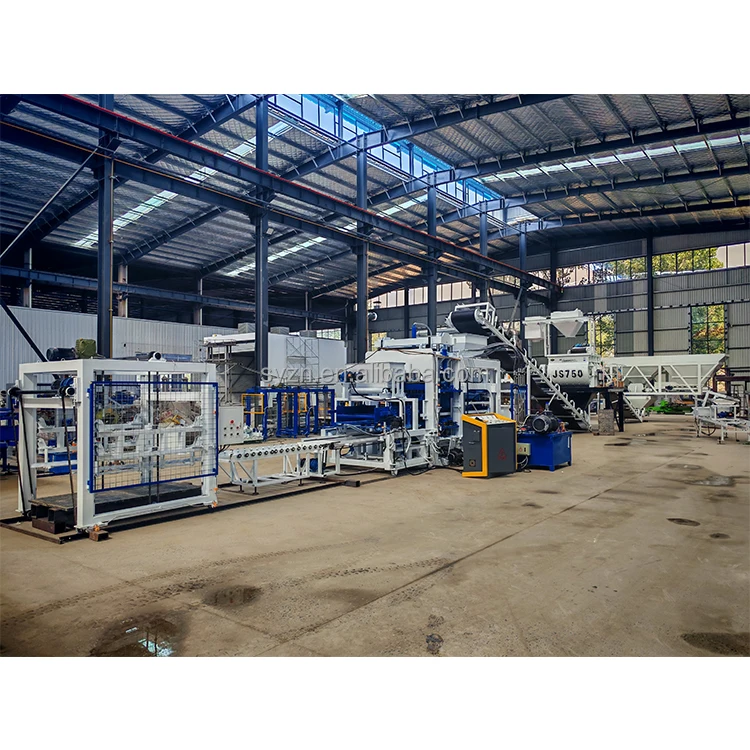
Description
Matched Mould Configuration — cycle time and vibration force are set against your actual block format and local aggregate, not a catalogue default.
Technical Specifications
| Parameter | Value |
|---|---|
| Model | QT8-15 |
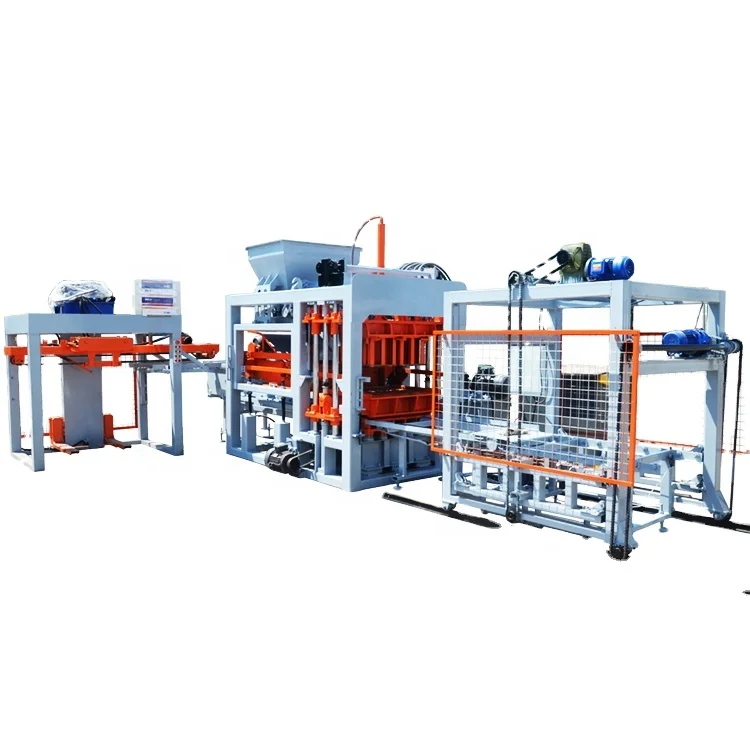
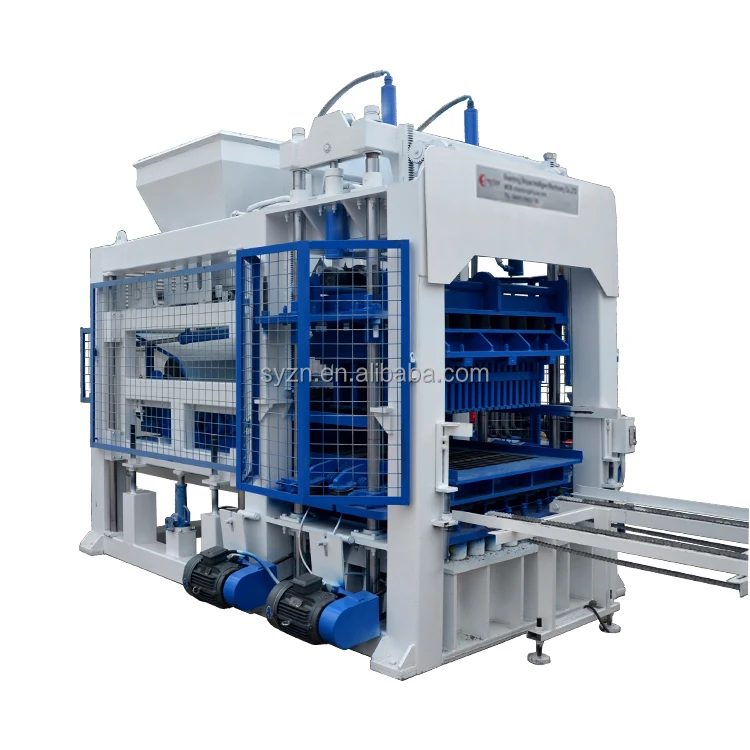
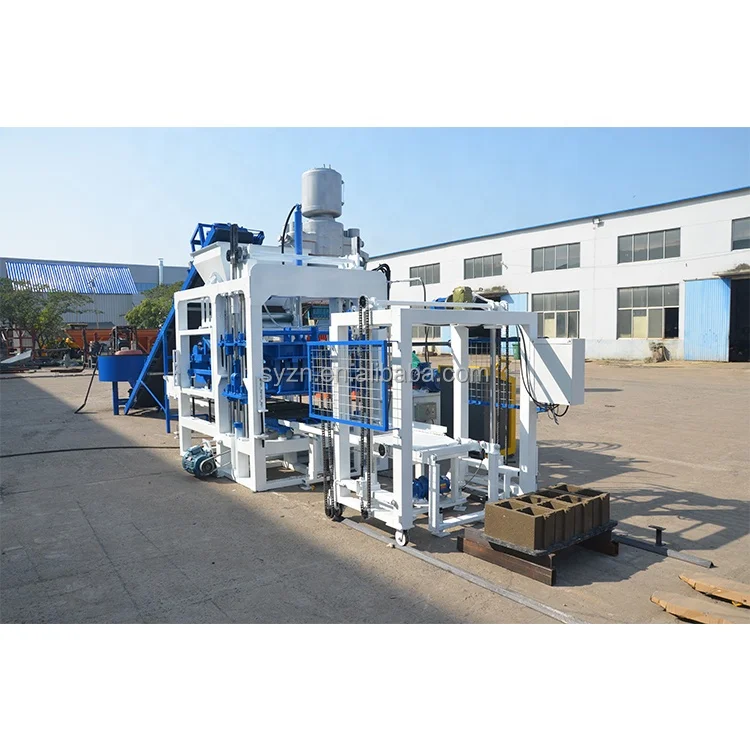
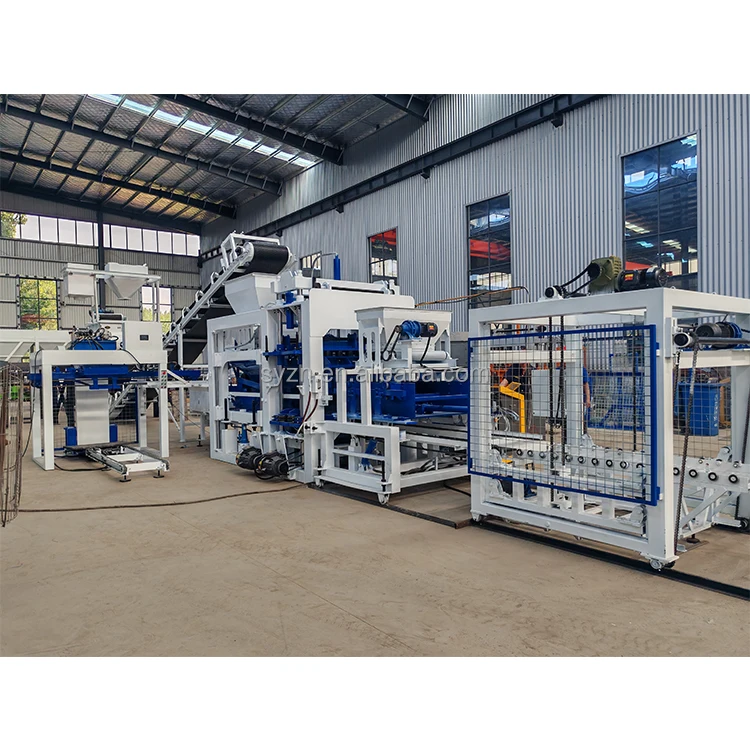
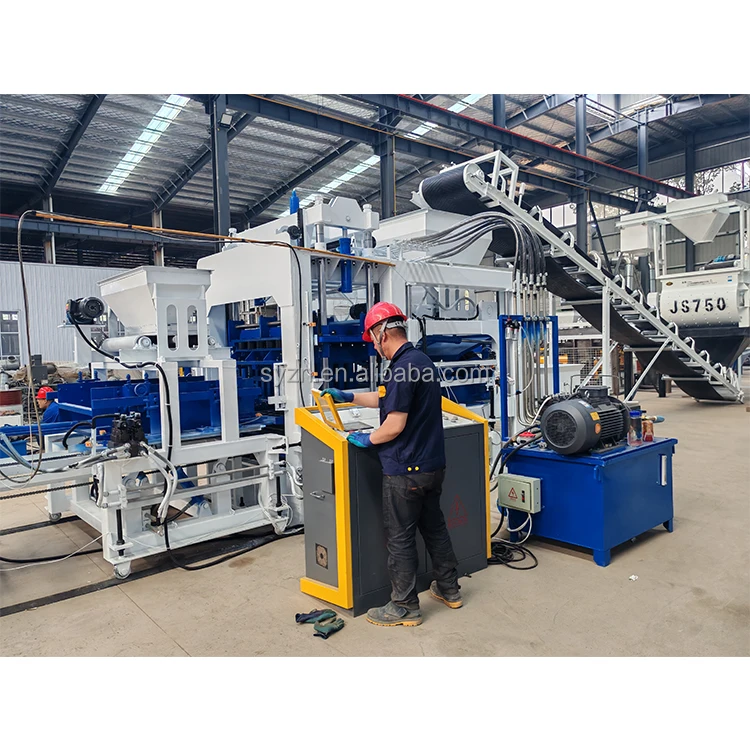
| Product Type | Hydraulic Concrete Block Making Machine |
| Overall Dimensions (L×W×H) | 8300 × 1860 × 3000 mm |
| Rated Pressure | 21 MPa |
| Main Vibration Form | Platform Vibration |
| Vibration Frequency | 2800–4500 r/min |
| Vibration Force | 45 kN |
| Pallet Size | 950 × 900 mm |
| Molding Cycle | 15–20 s (basis to be confirmed by block format) |
| Overall Power | 55.5 kW |
| Total Mass | 8 T |
| Demolding Method | Hydraulic |
| Factory Area Required | 300 m² |
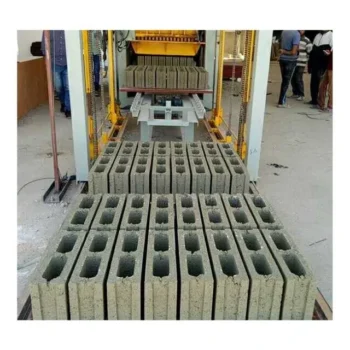
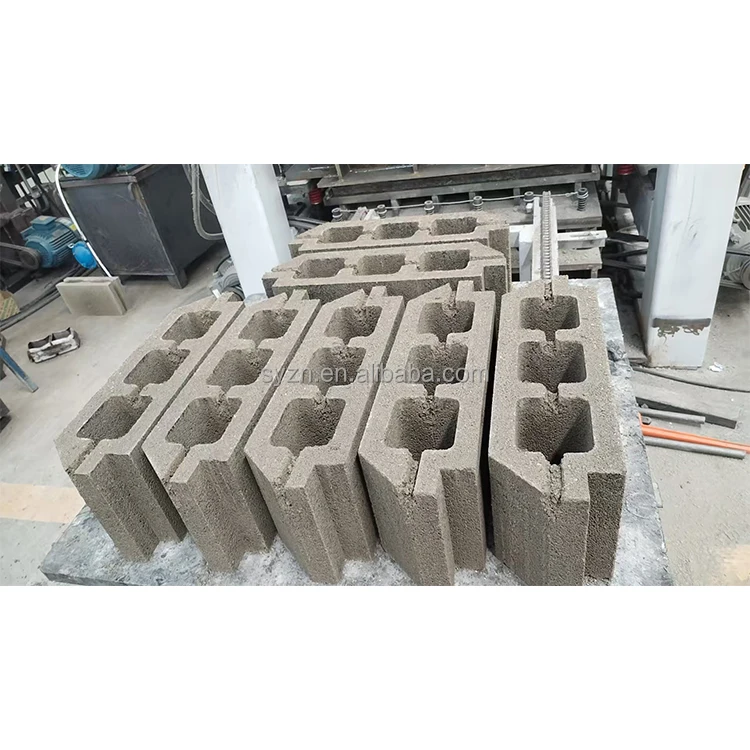
| Applied Products | Hollow blocks, solid blocks, pavers, interlocking blocks, curbstones, colored pavers |
| Raw Materials | Crushed stone, sand, cement, fly ash, gravel, slag, dust |
| Output Capacity | Basis not stated in source — confirm block format and material before quoting |
Application Suitability
| Application | Material or Output |
|---|---|
| Hollow block production for wall construction | Crushed stone, sand, cement, fly ash blends |
| Solid block manufacturing for load-bearing structures | Gravel, sand, cement mixes |
| Paving block and colored paver runs | Fine aggregate with cement and pigment |
| Interlocking brick production for retaining walls | Crushed stone and cement at higher pressure |
| Curbstone forming for road and drainage projects | Coarse aggregate with high-density compaction |
| On-site block production for housing developments | Locally sourced sand, gravel, and cement |
What the QT8-15 Block Machine Specifications Don’t Tell You About Daily Output
A cycle time printed on a brochure means nothing without the block format it was measured on.
I have watched buyers receive a concrete block making machine capacity by format sheet that only shows the fastest possible cycle — usually a small solid paver — and then wonder why their hollow block runs take almost twice as long. The QT8-15 block machine specifications list a 15–20 s molding cycle, but a 400 mm hollow block with a sticky fly ash mix will sit at the upper end or beyond that range, while a thin interlocking paver might hit the lower end. [NEED_CITE: block format and mix design effect on actual cycle time in hydraulic block presses]
Mould Format and the Honest Cycle Time
Every pallet that cycles through the QT8-15 carries a different number of cavities depending on the mould. A 950 × 900 mm pallet may hold four large hollow blocks or twelve smaller pavers, so output per hour shifts dramatically between formats. The vibration frequency range of 2800–4500 r/min must be tuned to each mould so the concrete settles evenly before the hydraulic head applies 21 MPa. When buyers skip this matching step, the blocks come out with weak corners or uneven density.
Matching Vibration Force to Your Local Aggregate
The 45 kN vibration force works well with standard crushed stone and sand mixes. However, I have seen sites in Southeast Asia where the local river sand carries high clay content, which absorbs vibration energy and leaves the block under-compacted. On one project, we had to raise the frequency and extend the vibration phase to get acceptable strength — the machine handled the adjustment, but the original settings would have produced scrap. [NEED_CITE: effect of clay-rich aggregate on vibration compaction in block making]
Reading the Pressure and Vibration Balance
Hydraulic demolding at 21 MPa gives the QT8-15 enough head pressure to compress coarse gravel mixes into dense curbstones, while the platform vibration consolidates finer particles around the aggregate. The interplay between these two forces determines block strength more than either figure alone. If the vibration frequency is too low for a stiff mix, the hydraulic pressure pushes against uncompacted material and the block cracks on release. Getting this balance right for each format is the real work of commissioning.
The Cost of Skipping Format-Level Capacity Checks
Buyers who confirm only the headline cycle time often discover that their daily output for the block they actually sell falls well short of the number in the quotation. Pallet handling and curing space then become the next bottleneck — a 300 m² factory area is enough for the press itself, but if the curing racks are undersized for the pallet count, blocks pile up on the floor and get damaged before they cure. [NEED_CITE: curing rack capacity planning for hydraulic block production lines]
Why Sourcing Through a Block-Machinery Specialist Matters
The QT8-15 is specified as a matched system — press, mould, pallet, and handling — rather than assembled from separate suppliers. Mould drawings are prepared for the formats your market actually sells, including custom profiles if standard options do not cover your range. Voltage, frequency, and PLC display language are confirmed before production so the machine starts running on arrival instead of sitting idle while a transformer is sourced. Capacity calculations state the exact block format assumed for each output figure, so you know what to expect on day one.
Documentation & Verification
- Line layout showing pallet flow and curing rack count for your chosen QT8-15 block format
- Mould drawing and format list confirming cavity count per pallet for each block type
- Capacity calculation sheet stating the block format and mix assumed for every output figure
- Hydraulic and electrical schematic matched to your confirmed voltage and frequency
- Factory test record run on your specified mould before dispatch
- Voltage, frequency, and PLC display language confirmation document signed before production
Installation, Commissioning & Support
- Foundation plan sized to the QT8-15 footprint of 8300 × 1860 mm and 8 T operating mass
- Dedicated power circuit rated for 55.5 kW overall power at your confirmed voltage and frequency
- Vibration frequency and hydraulic pressure tuned on-site to your local aggregate and mix design
- Mould change procedure demonstrated with your format set so operators can switch without downtime
- Pallet handling workflow mapped to your existing curing area and forklift capacity
- Wear parts and mould maintenance schedule tied to your daily production volume
What to Include in Your QT8-15 Inquiry
Send the exact block formats you plan to produce — dimensions, wall thickness, and target daily output per format — along with a sample or description of your local aggregate. Confirm the voltage and frequency at your site, the language your operators need on the PLC display, and the forklift and curing space you already have. This information lets the configuration match your conditions before the quotation is issued.
Frequently Asked Questions
Q: What is the realistic daily output of the QT8-15 for each block format?
A: Output depends on cavity count per pallet, molding cycle for that format, and shift length. A 15–20 s cycle is the listed range, but hollow blocks typically run slower than pavers. We provide a capacity table that states the assumed format, mix, and cycle time so the daily figure matches what you will actually produce.
Q: How is vibration force matched to my local aggregate?
A: The 45 kN vibration force and 2800–4500 r/min frequency range are adjustable during commissioning. We test your aggregate sample — including sand clay content and gravel grading — and set the vibration profile so the mix compacts evenly before hydraulic pressure is applied at 21 MPa.
Q: What mould formats are available and how long does a change take?
A: Moulds cover hollow blocks, solid blocks, pavers, interlocking bricks, and curbstones for the 950 × 900 mm pallet. Custom moulds can be built to your drawings. Change time depends on the mould locking system fitted; we confirm the procedure and expected duration for your format list before shipment.
Q: Which pallet size does the QT8-15 require, and is it compatible with my curing setup?
A: The machine uses 950 × 900 mm pallets. We check your existing curing rack dimensions and forklift capacity to confirm that the pallet size and material — wood, bamboo, or composite — fit your handling workflow without requiring new equipment.
Q: What voltage and control language options are confirmed before shipment?
A: Voltage and frequency are confirmed during the quotation stage to match your site supply. The PLC display language is set to your operator preference before production, so the control panel is readable from the first day of operation.