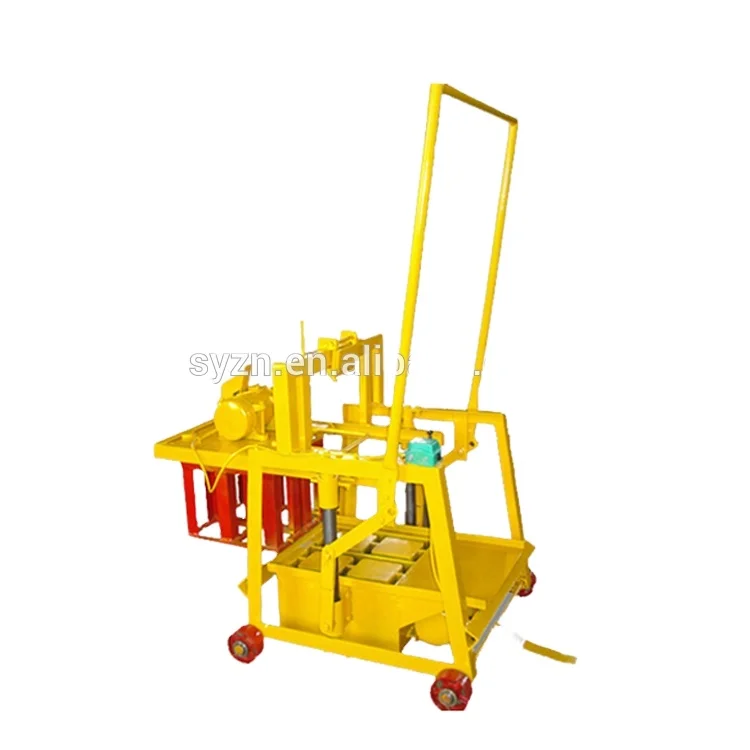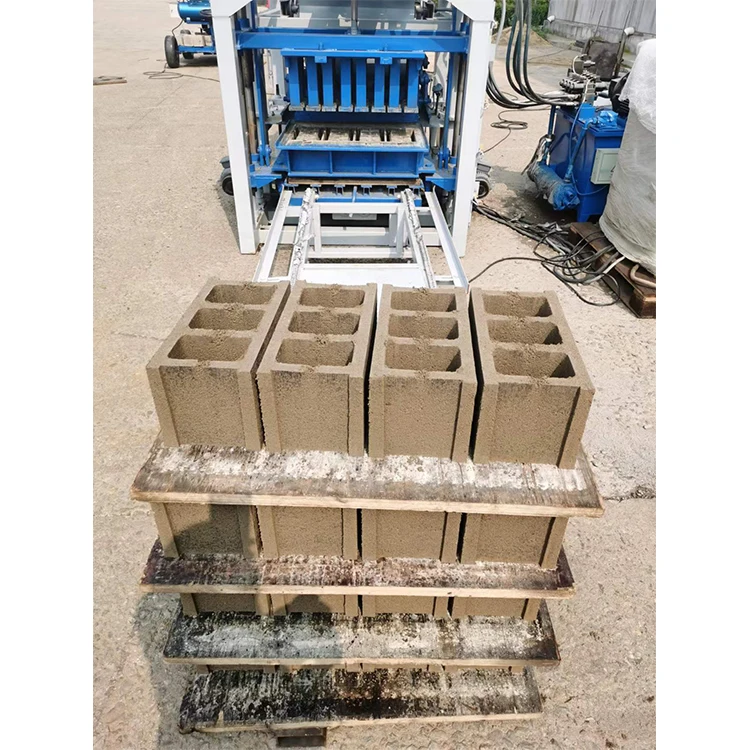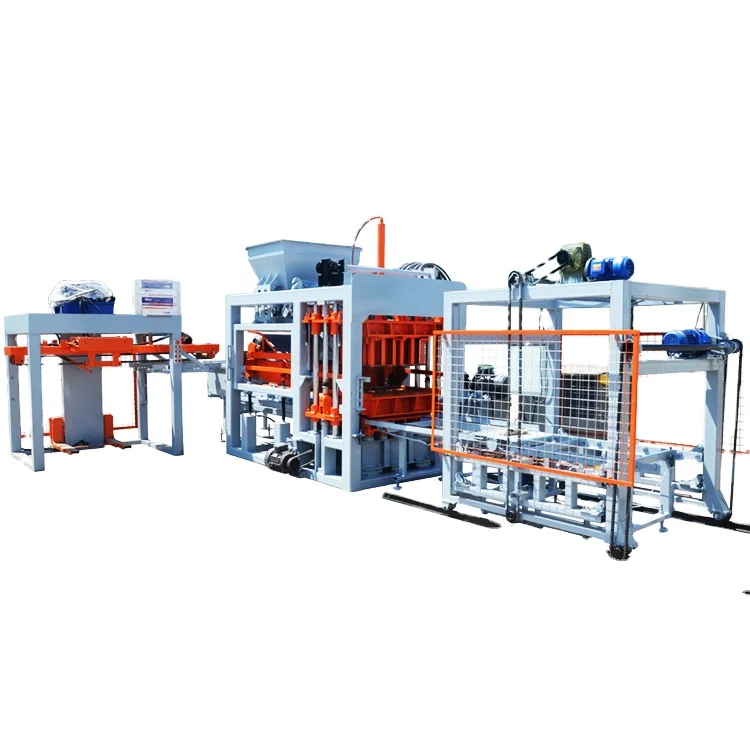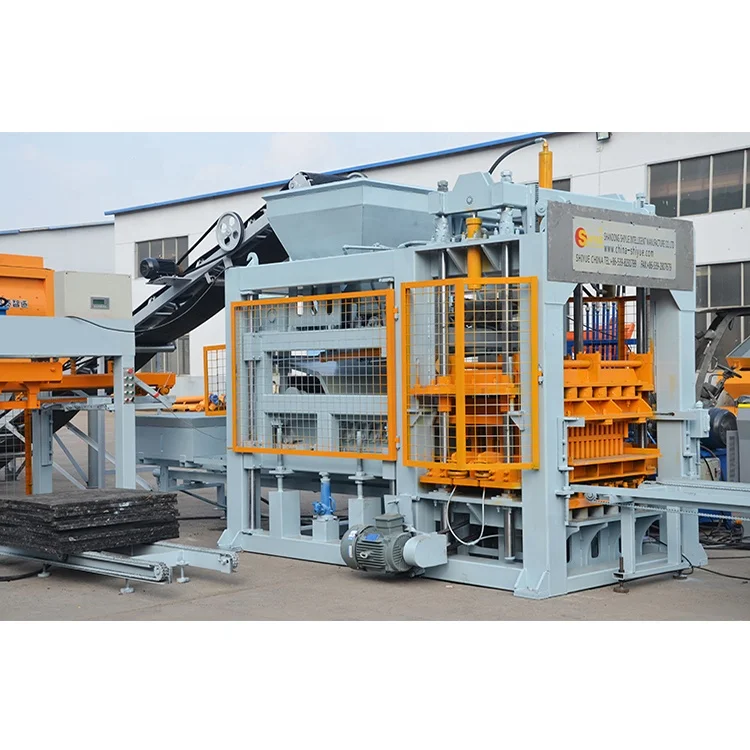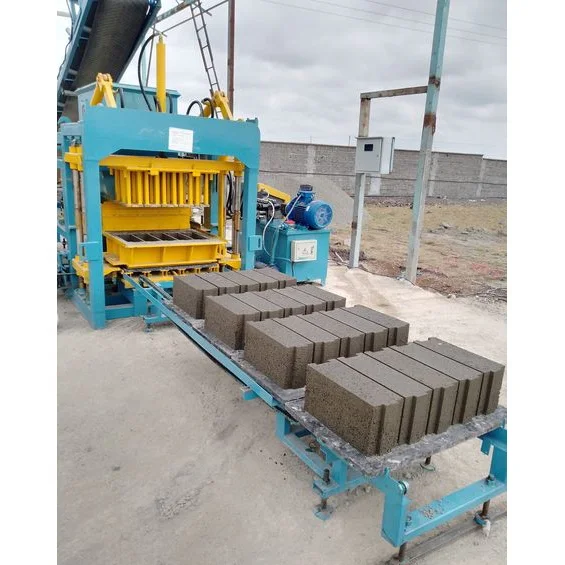
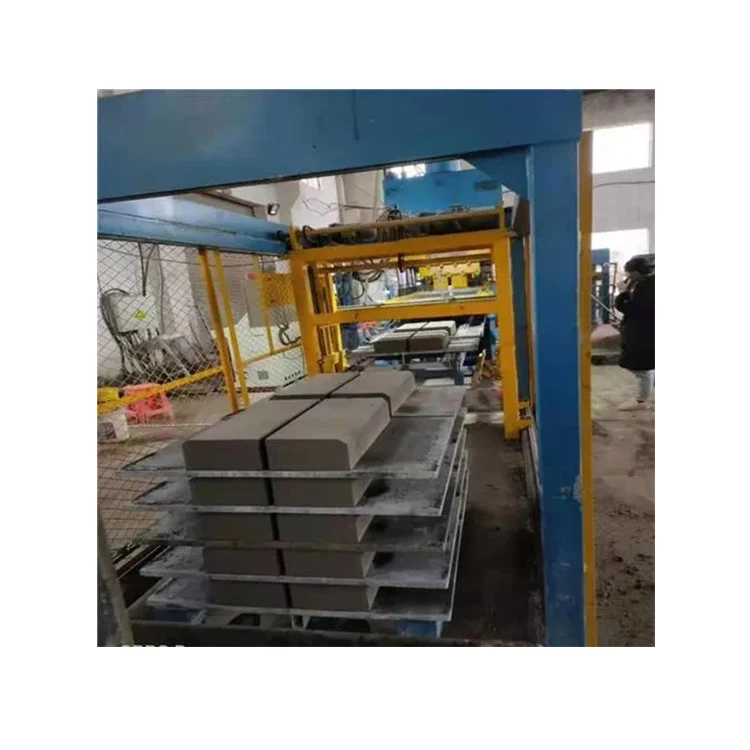


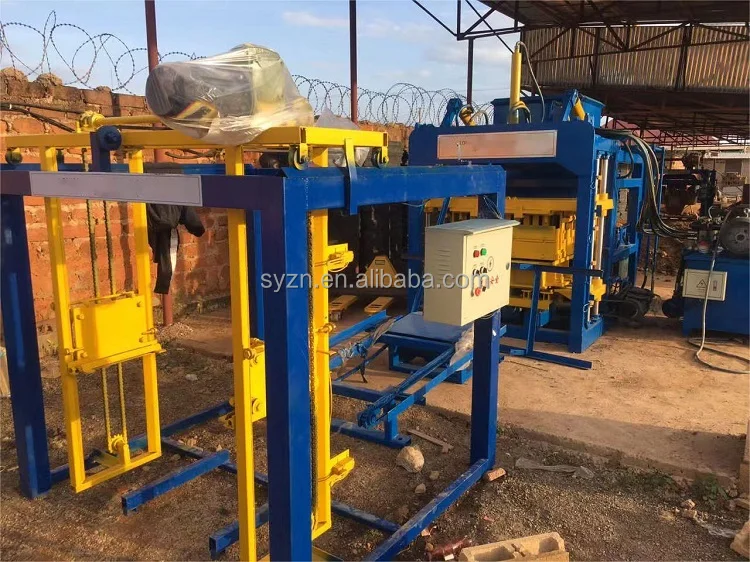

Description
Configuration matched to your local aggregate — the QT4-15 block machine specifications are set against your actual raw material and target block format, not a default catalogue setting, so cycle times and pressing forces reflect what your plant will actually run.
Technical Specifications
| Parameter | Value |
|---|---|
| Model | QT4-15A |
| Product Type | Automatic Hydraulic Concrete Block Making Machine |
| Overall Dimensions (L×W×H) | 7100 × 1600 × 2610 mm |
| Molding Cycle | 15–25 s depending on block format |
| Vibration Frequency | 4600 r/min |
| Exciting Power (Vibration Force) | 40–50 kN |
| Total Installed Power | 18.45 kW |
| Mixer Model in Standard Line | JQ350 |
| Standard Pallet Size | 850 × 550 × 25 mm |
| Net Weight (Press Only) | 3 T |
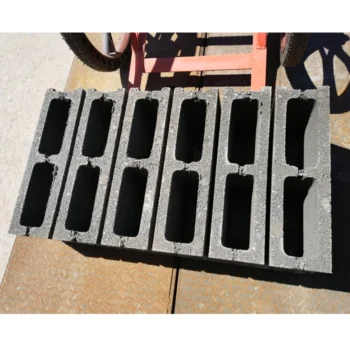
| Output: Hollow Block 400×200×200 mm | 4 pcs/mould, 3264 pcs per 8-hour shift (basis: 15–25s cycle) |
| Output: Hollow Block 400×150×200 mm | 5 pcs/mould, 4080 pcs per 8-hour shift (basis: 15–25s cycle) |
| Output: Solid Brick 240×115×53 mm | 18 pcs/mould, 17000 pcs per 8-hour shift (basis: 15–25s cycle) |
| Applicable Raw Materials | Crushed stones, sand, cement, dust, fly ash |
| Automation Level | Semi-automatic with automatic stacker option |
| Standards Compliance | CE (unit-level certification subject to order confirmation) |
Application Suitability
| Application | Material or Output |
|---|---|
| Hollow block production for residential and commercial masonry | Crushed stone, river sand, or manufactured sand with cement binder |
| Solid brick manufacturing for load-bearing and partition walls | Fly ash, stone dust, and cement blends |
| Paving block and kerbstone pressing for municipal and landscape projects | High-strength aggregate mixes with adjusted vibration and pressure settings |
| On-site block production for large contractor projects | Local quarry sand and gravel with portable batching setups |
What "4080 Pieces per Hour" Leaves Out When Sizing a QT4-15 Block Machine
Every capacity figure must name the block format it assumes, or it means nothing to your production plan.
Manufacturers often quote a single headline cycle rate for the QT4-15 block machine specifications without disclosing the mould behind that number [NEED_CITE: block machine capacity quotation standards and format assumptions]. A buyer expecting to run 400×150×200 mm hollow blocks may find the quoted throughput was calculated on a smaller solid brick mould, leaving actual daily output significantly below projection. The press itself is identical; the discrepancy lies entirely in which format the sales literature chose to highlight. This page states output per format so your plant layout and sales commitments can be built on verifiable data rather than a best-case scenario.
Format-by-Format Cycle Time and Mould Selection
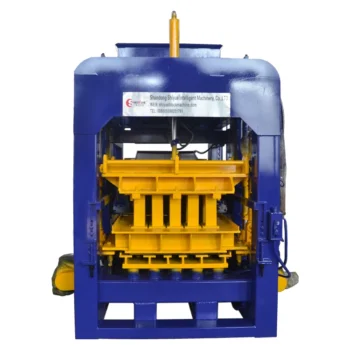
The QT4-15 block machine specifications cover a 15–25 second molding cycle range, and the exact position within that range depends on the block format and the height of the product being pressed. Taller hollow blocks require longer vibration and compression dwell to achieve full density through the core, while thinner solid bricks complete their cycle closer to the lower end. Selecting the right mould is not just about the external dimensions — the internal rib structure, head weight, and stripper shoe profile must match the target block format and the compressibility of the local mix [NEED_CITE: mould engineering for concrete block forming]. A buyer running primarily 400×200×200 mm hollow blocks will see different daily output than one running 240×115×53 mm solid bricks, even on the same press with the same operator.
Matching Vibration Force to Local Aggregate Density
The 40–50 kN vibration force and 4600 r/min frequency are specified to work together with hydraulic pressure to consolidate the mix. When local aggregate is lightweight or contains a high proportion of fines such as stone dust or fly ash, the energy transfer through the mould behaves differently than with dense crushed stone. A mix that works well with standard river sand may produce weak or laminated blocks when the same vibration settings are applied to desert sand with high salt content or angular manufactured sand. The correct QT4-15 block machine specifications for your plant must account for your actual material source, not a laboratory ideal.
Reading the Press Dimensions Against Your Plant Footprint
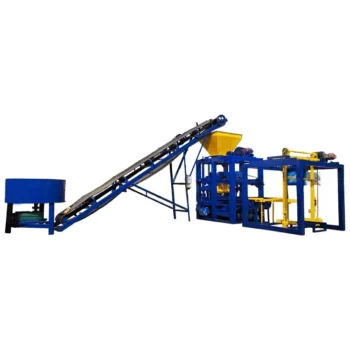
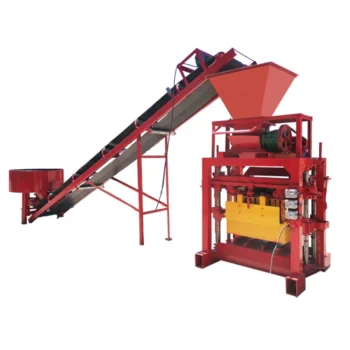
The overall press envelope of 7100 × 1600 × 2610 mm defines the minimum clearance required for the host machine, but a working block line extends well beyond the press itself. The JQ350 mixer, material feed hopper, pallet return system, and block stacker each occupy their own station, and the distances between them must allow the cycle timing to flow without the press waiting for a pallet or the stacker waiting for a finished layer. The 850 × 550 × 25 mm pallet size must align with the curing yard racking and the forklift tine width already in use at the buyer’s facility, otherwise blocks will be handled twice before they even reach the curing area [NEED_CITE: concrete block pallet sizing and curing yard logistics].
The Cost of Ignoring Pallet and Curing Area Compatibility
Choosing a pallet size without checking the curing rack dimensions and the forklift capacity leads to manual rehandling that erases the productivity gain of the automatic stacker. Blocks stacked by hand onto incompatible racks cure unevenly and sustain edge damage before they leave the yard. Voltage and control language mismatches discovered after the machine arrives can stall commissioning for weeks while replacement panels or translated PLC interfaces are sourced, and every day of delay is a day of lost production and idle labour [NEED_CITE: industrial equipment commissioning delays from voltage and language mismatches].
Why Sourcing the QT4-15 Through a Format-Focused Supplier Matters
The QT4-15 is specified as a matched system where the press, mould, pallet, and handling stations are configured together against the buyer’s stated block format and local material, rather than assembled from separate catalogue pages. Mould design covers the formats the buyer’s market actually purchases, including custom drawings when a regional block size falls outside standard offerings. The semi-automatic platform allows a buyer to start with manual pallet handling and add automatic stacking later as production volume grows, without replacing the core press. Every quotation includes a capacity calculation that names the assumed block format, so there is no gap between what the document promises and what the plant delivers. The line layout, hydraulic schematic, electrical schematic, and pallet specification are all confirmed before production begins, reducing the chance of a mismatch at commissioning.
Documentation & Verification
- Line layout and capacity calculation stating the exact block format assumed for each output figure.
- Mould drawing and format list confirming which block sizes are included and which remain optional.
- Pallet specification matched to the buyer’s existing curing rack spacing and forklift capacity.
- Hydraulic and electrical schematic provided before production for local contractor review.
- Factory test record run on the buyer’s specified block format and material blend.
Installation, Commissioning & Support
- Foundation plan based on the 7100 × 1600 mm press footprint and vibration isolation requirements.
- Electrical supply confirmed for the 18.45 kW total load including mixer, press, and stacker motors.
- Voltage and frequency locked before build to match the destination grid standard.
- PLC display language set to the operator’s working language prior to dispatch.
- On-site commissioning includes cycle time verification on the buyer’s actual raw material.
- Wear parts list covering mould shoes, vibration springs, and hydraulic seals for the first replacement cycle.
What We Need to Size Your Line Accurately
To configure the QT4-15 block machine specifications for your project, we need the target block formats and the daily output required for each, the local aggregate type and cement source you plan to use, and the dimensions of your available production floor and curing yard. Please also confirm the local voltage and frequency standard and the preferred PLC display language for your operators.
Frequently Asked Questions
Q: How is output capacity calculated and which block format does each figure assume?
A: Each capacity figure on this page is tied to a specific block format and the corresponding mould cavity count. The 3264-piece shift figure assumes 400×200×200 mm hollow blocks at four per mould, while 17000 pieces assumes solid bricks at eighteen per mould. Always verify which format underlies any quoted number.
Q: How should vibration force and hydraulic pressure match my local aggregate?
A: Lightweight or high-fines aggregates transfer vibration energy differently than dense crushed stone. The 40–50 kN force range must be paired with the correct pressure setting for your specific mix to avoid weak or laminated blocks. A trial run on your actual material is the only reliable way to confirm settings.
Q: What determines the mould change procedure and time on this machine?
A: Mould change time depends on the clamping system, the weight of the mould box, and the tools available on site. Request the specific mould change procedure and expected duration for your format set so you can plan production changeovers realistically within your shift schedule.
Q: How should I select the correct pallet size for my curing area?
A: The standard 850 × 550 × 25 mm pallet must fit your existing curing rack spacing and match the load capacity and tine width of your forklift. Confirming these dimensions before order ensures blocks move from stacker to rack to truck without manual rehandling.
Q: Which voltage and control language options are available?
A: Voltage and frequency must match the destination country’s industrial grid standard, and the PLC display language should match the operator’s working language. Both are confirmed during the quotation stage so commissioning is not delayed by electrical or interface mismatches on arrival.