


Description
Matched Vibration System — bed and upper mould exciters are paired to the block format you actually produce, keeping wall density uniform across every cycle.
Technical Specifications
| Parameter | Value |
|---|---|
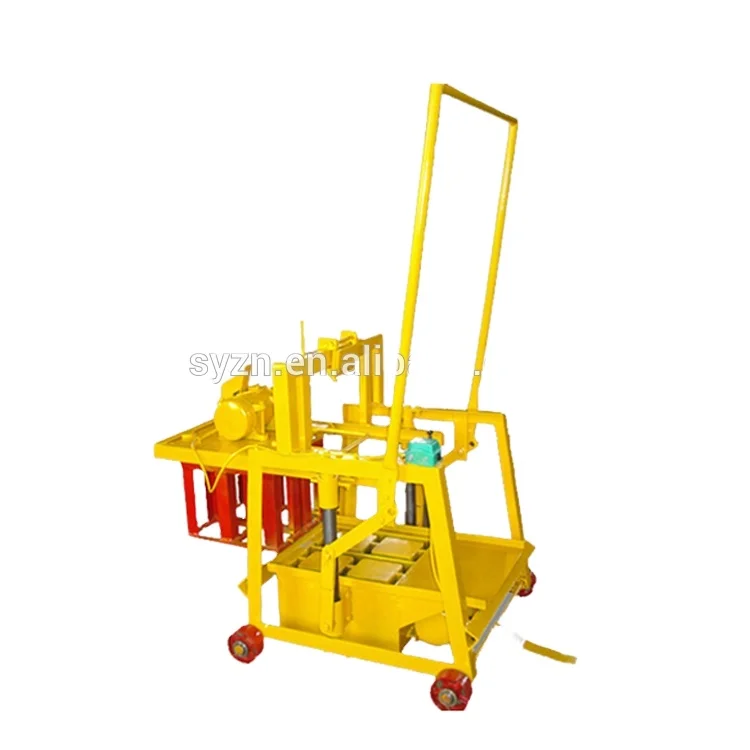
| Model | QMJ2-45 |
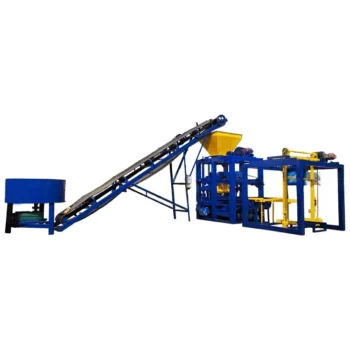
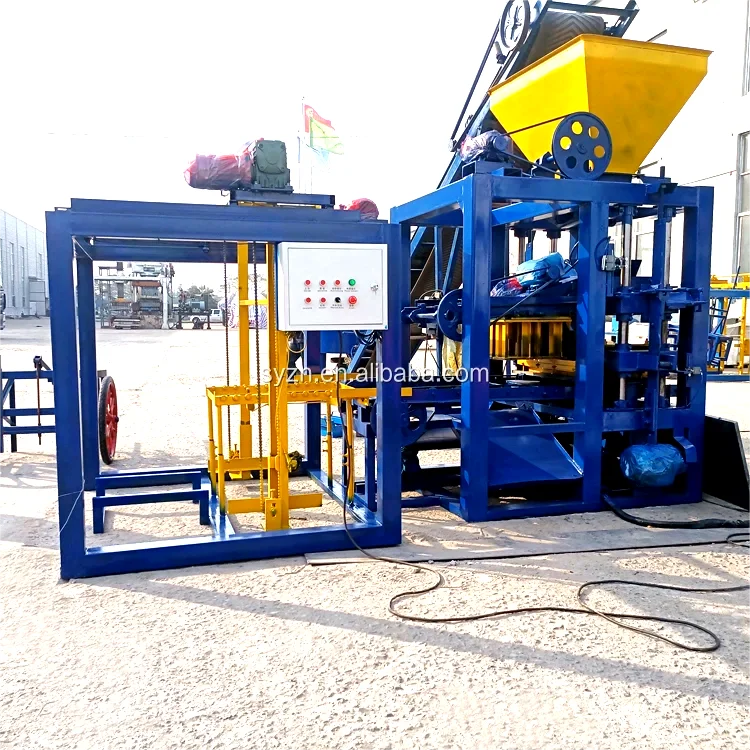
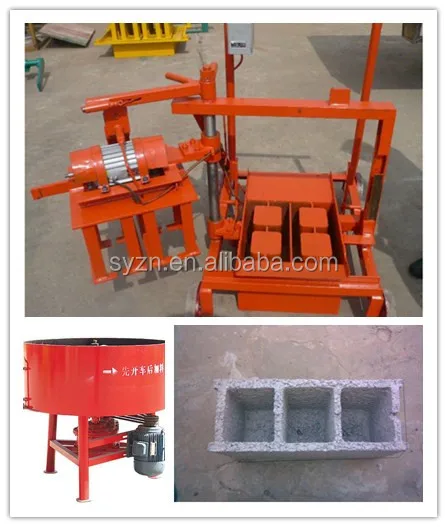
| Product Type | Manual Hollow Block Making Machine |
| Rated Power | 1.5 kW |
| Voltage & Frequency | Configurable to local supply (basis to be confirmed) |
| Control System | Semi-automatic (top die push/pull with automatic scraper) |
| Overall Dimensions (L×W×H) | 1300 × 1300 × 1150 mm |
| Net Weight | 400 kg |
| Cycle Time | 45 s |
| Vibration Configuration | Bed mould vertical vibration + upper mould compression; 2 exciters per mould |
| Automation Level | Semi-automatic / manual pallet handling |
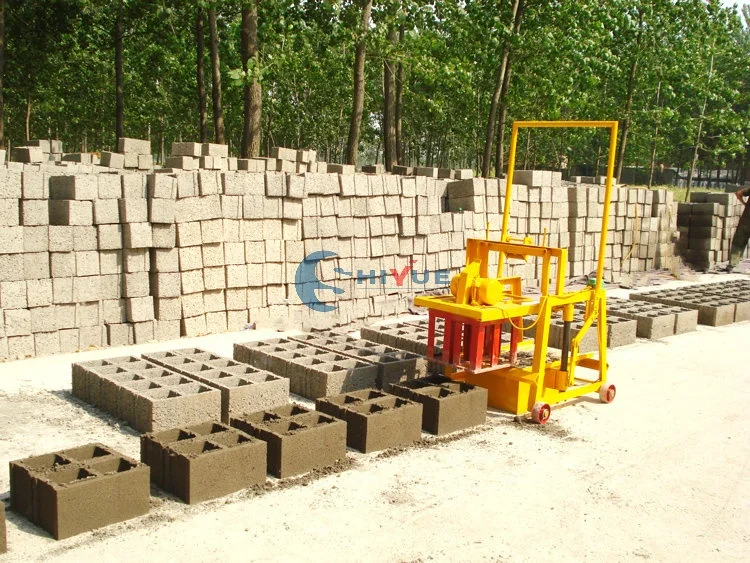
| Assembly State | Mobile / egg-laying type |
| Raw Material Compatibility | Concrete, sand, cement, fly ash, lime, gypsum |
Application Suitability
| Application | Material or Output |
|---|---|
| Small-scale hollow block production for startups | Concrete and sand mixes with cement binder |
| On-site contractor production without a fixed plant | Locally available aggregate, fly ash or lime blends |
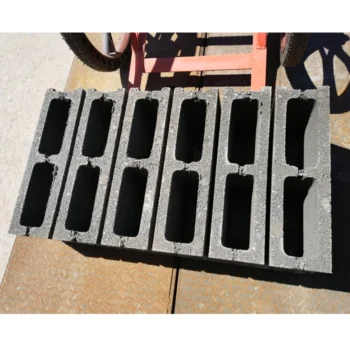
| Secondary mobile line for existing producers | 400×200×200 mm and 400×150×200 mm hollow block formats |
Why "Pieces per Day" Means Nothing Without a Block Format
The QMJ2-45 manual hollow block making machine specifications must always name the block size behind every output figure, or the number is meaningless.
I once watched a buyer receive a quotation that promised a high daily output without stating which hollow block format the figure assumed. When the machine arrived and started running 400×200×200 mm blocks, the real cycle count fell well short of what the buyer had used to plan staffing and curing space. The mismatch was not a machine fault — it was a quotation that omitted the format basis. Every capacity discussion for the QMJ2-45 manual hollow block making machine specifications should begin with the exact mould and block dimensions the buyer intends to sell locally. [NEED_CITE: capacity calculation standards for concrete block production lines]
Mould Options and Format-by-Format Output
The QMJ2-45 manual hollow block making machine specifications list two standard hollow formats: 400×200×200 mm at 2 pieces per mould, and 400×150×200 mm at 3 pieces per mould. Theoretical hourly rates differ between them because each cycle produces a different piece count, even though the cycle time stays at 45 seconds. Buyers comparing this machine against other mobile options should line up the output column using the same block format, not just the headline daily figure.
Matching Vibration to Your Local Aggregate
Bed mould vertical vibration combined with upper mould compression vibration gives two independent exciter sets working on each mould. The practical effect is that coarse aggregate settles under vertical vibration while the upper mould compression closes the surface. If your local sand is fine-graded, the vibration force may need adjustment upward to achieve the same wall density a coarser mix would give naturally. This is why we run a sample mix before locking in the exciter rating. [NEED_CITE: vibration frequency and amplitude requirements for different concrete aggregate gradings]
Reading the Specification Sheet Correctly
The 1.5 kW rated power drives both the vibration exciters and the scraper mechanism, so electrical planning needs to account for starting current on a single-phase or three-phase supply depending on your local grid. The 1300 × 1300 × 1150 mm footprint is compact enough to operate on a prepared concrete slab without a dedicated building, but the curing area behind the machine must be sized for the pallet dimensions you choose. The 400 kg net weight keeps the machine mobile — two operators can reposition it with a pallet jack — yet heavy enough that vibration energy transfers into the block rather than shaking the frame. Voltage, frequency and phase must be confirmed in writing before production starts, because rewiring a motor on arrival delays commissioning by days.
What Happens When Format Sizing Is Skipped
When a buyer orders a mobile block machine without specifying which hollow format the local market actually purchases, the factory ships the default mould. The machine runs, blocks come out, but the format sits in inventory while the buyer sources a different mould weeks later. Pallet handling is manual on this model, so if the curing area was not planned around a specific pallet size, operators end up carrying blocks by hand across uneven ground. These problems do not show up on the quotation — they appear on the first production day. [NEED_CITE: common causes of block plant downtime in mobile production setups]
What Sets This Configuration Apart
Block machinery is our single focus, so the QMJ2-45 is specified as a matched set — machine, mould, pallet and handling — rather than assembled from separate suppliers. We set the vibration configuration against the buyer’s actual mix design and local aggregate, not a catalogue default. Mould design covers the hollow formats the buyer’s market sells, and custom drawings are available when a non-standard wall thickness is needed. The automation level is selectable, meaning a buyer can start with manual pallet handling and add automatic stacking later. Installation and commissioning support includes operator training on the exact block format the buyer will produce.
Documentation & Verification
- Capacity calculation stating the exact 400×200×200 mm or 400×150×200 mm format behind each output figure
- Mould drawing and format list confirming included hollow sizes and optional additions
- Voltage, frequency and phase confirmation sheet signed before production begins
- Factory test record showing cycle time and block density on the buyer’s chosen mix
- Operation and maintenance manual with illustrated vibration exciter service steps
- Wear parts and mould interchange list for first-year procurement planning
Installation, Commissioning & Support
- 1.5 kW motor requires a dedicated circuit matching confirmed voltage, frequency and phase
- 1300 × 1300 mm footprint needs a level concrete slab; no fixed foundation bolts required
- Machine ships assembled; only top die scraper and mould alignment checked on arrival
- Commissioning includes first-cycle parameter adjustment on buyer’s local aggregate mix
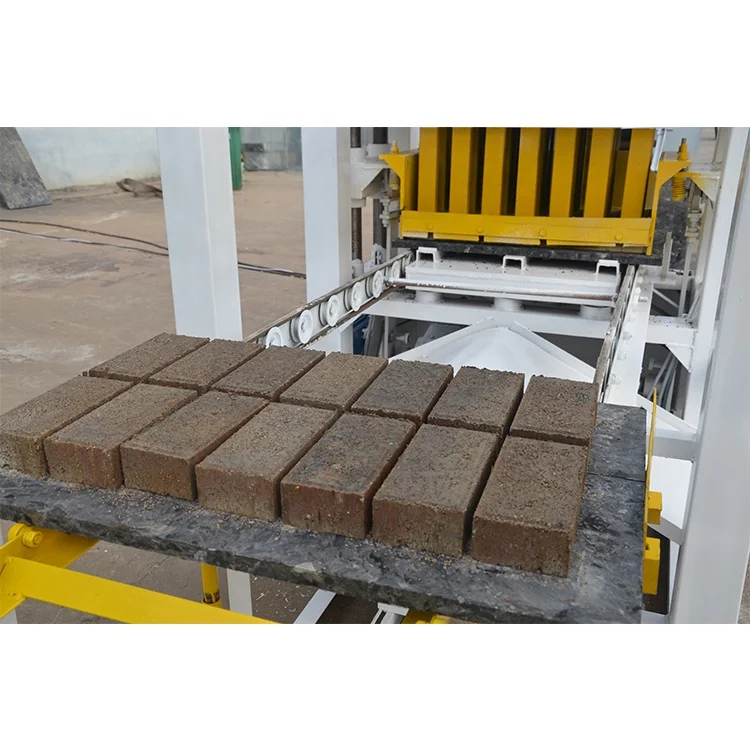
- Operator training covers manual pallet loading rhythm matched to the 45-second cycle
- Spare exciter bearings and scraper blades included in the first dispatch
Before You Send an Inquiry
To size the QMJ2-45 correctly, share the hollow block format your market purchases most, the daily volume you need to sustain, and the aggregate available at your site. Confirm your local voltage, frequency and phase so the motor can be wound to match. If you already have pallets and a curing area, send the pallet dimensions and available floor space so we can check compatibility before quoting.
Frequently Asked Questions
Q: How do I verify the real daily output of the QMJ2-45 for the specific hollow block format I sell?
A: Ask the supplier for a capacity calculation that names your exact block dimensions — for example, 400×200×200 mm at 2 pieces per mould — and shows the cycle time used. Cross-check that figure against an 8-hour shift with realistic breaks for mould changes and pallet reloading. A number without a stated format is not verifiable.
Q: Which block formats can the QMJ2-45 moulds produce, and how long does a mould change take on site?
A: Standard moulds cover 400×200×200 mm and 400×150×200 mm hollow blocks. Additional formats can be manufactured to custom drawings. Mould change involves releasing the bed clamps and swapping the mould box; operators typically complete the swap within a short shift segment once trained.
Q: How is vibration force matched to my local aggregate to keep block strength consistent?
A: We request a sample of your sand, cement and aggregate blend, then run a test press to measure block density and wall integrity. If fine-graded sand is present, exciter amplitude may be adjusted upward. The goal is consistent compaction across every cycle without surface cracking.
Q: What voltage, frequency and control-display language should I confirm before the machine ships?
A: Provide your site voltage, phase and frequency so the 1.5 kW motor is wound correctly. If your operators read a specific language, confirm this for any control labels or indicator markings. Written confirmation before production avoids rewiring or relabeling delays after arrival.