
Description
Mould-First Sizing — capacity quoted per block format, not as a blanket daily figure, so the LY2-40 output you plan against matches what your crew actually produces on site.
Technical Specifications
| Parameter | Value |
|---|---|
| Model | LY2-40 |
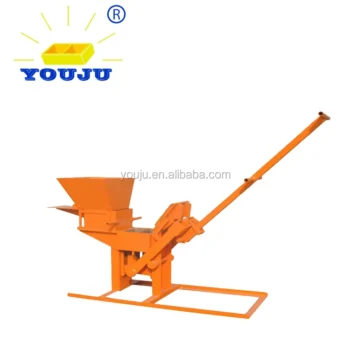
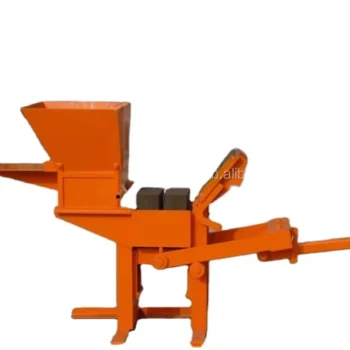
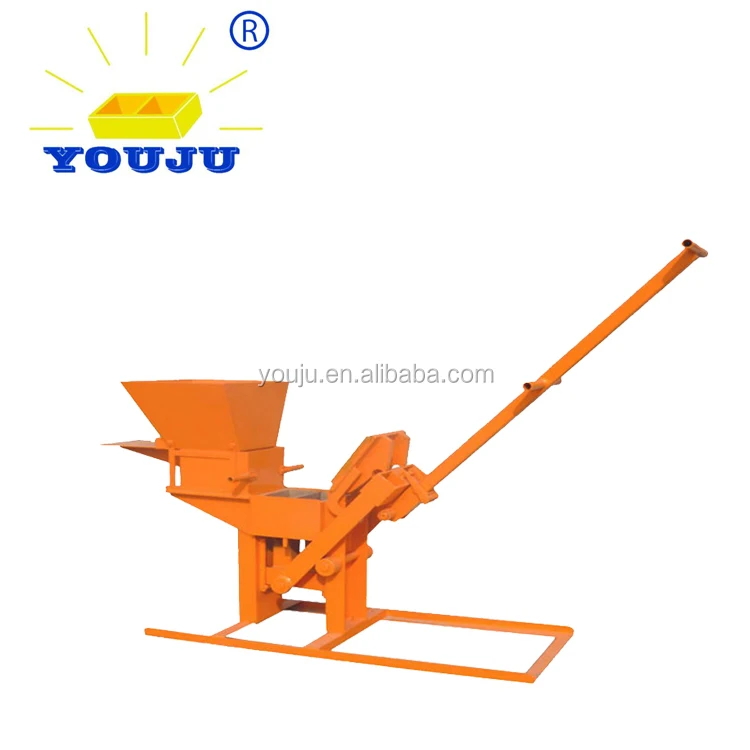
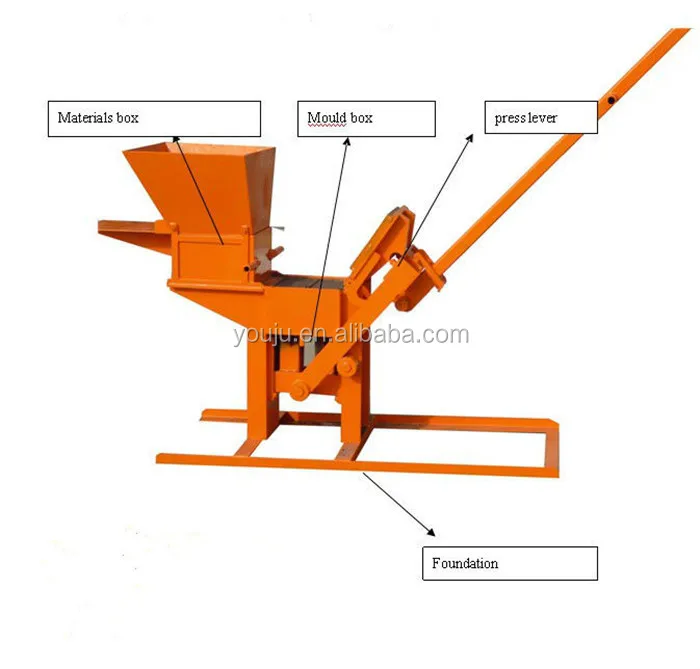
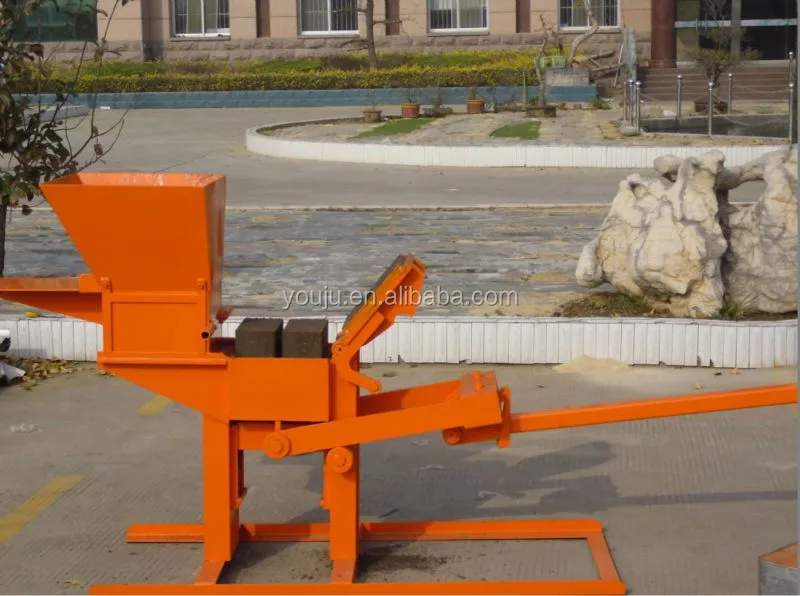
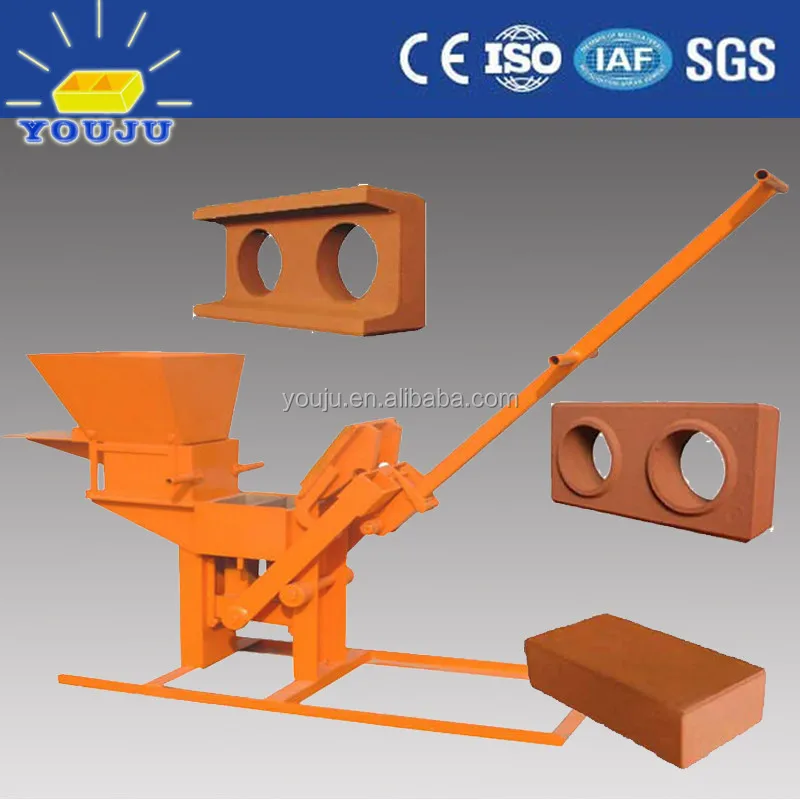
| Product Type | Manual Clay Interlocking Brick Making Machine |
| Overall Dimensions (L×W×H) | 1600 × 700 × 1200 mm |
| Net Weight | 200–240 kg |
| Total Power | None — completely manual operation |
| Molding Cycle | 30–40 s per press |
| Output Capacity | 400–1,000 pcs/day (basis not stated in source — confirm block format, material and wall thickness) |
| Automation Level | Fully manual, no electrical or hydraulic power |
| Lifting System | Manual lever actuation |
| Mobility | Steel wheels for repositioning on uneven ground |
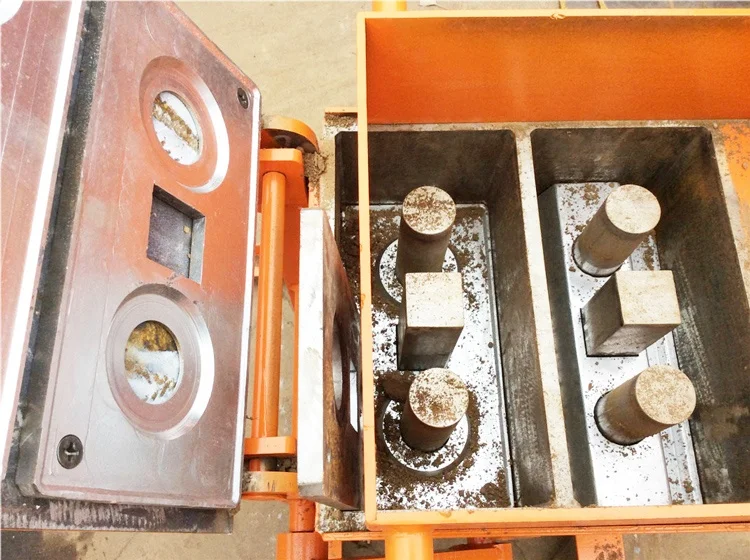
| Mould Format | Changeable across interlocking profiles |
| Matched Mixer Options | JFA-1 or JQ350 pan mixer |
| Warranty | 1 Year |
Application Suitability
| Application | Material or Output |
|---|---|
| Off-grid housing project sites | Local laterite or sandy clay blended with 5–10 % Portland cement |
| Small-scale community brick yards | Site-sourced soil stabilized with cement, hand-fed into the LY2-40 mould cavity |
| Rural school and clinic builds | Interlocking wall blocks pressed on location, eliminating transport of fired bricks |
| Entrepreneur first-plant operations | Low-volume interlocking paver and wall block runs where grid electricity is absent |
What "400 to 1,000 Pieces per Day" Actually Means for Manual Clay Interlocking Brick Machine Specifications
The range only holds once you lock the exact interlocking profile, soil-cement ratio and crew size into the calculation.
Suppliers often quote a single daily figure that collapses several block formats into one number. In practice, a solid interlocking wall block demands more lever strokes and longer demoulding care than a thinner paver profile, and a crew unfamiliar with the soil mix will lose rhythm within the first hour. On a project in coastal Kenya, I watched an operator team produce well under the lower end of the quoted range because the local black cotton soil retained moisture far longer than the sandy loam the cycle time was originally based on. Without a format-specific capacity sheet, buyers sign off on numbers they cannot reproduce once the machine arrives [NEED_CITE: effect of soil plasticity index on manual block cycle time].
Matching Mould Profile to the Block Your Market Actually Buys
Interlocking brick is not a single product. The male-female key depth, the web thickness and the overall face dimensions all shift from one market to the next, and the Manual Clay Interlocking Brick Machine specifications must reflect the profile your buyers expect. The LY2-40 accepts changeable moulds, which means the conversation before order confirmation should centre on which interlocking geometry dominates local tenders and retail hardware yards.
Mould Change Time and What It Costs You on a Short Run
A mould swap on a fully manual press involves unbolting the cavity liner, clearing residual soil from the guide rails and reseating the new profile by hand. If you run two formats in a single day — say, a 290 × 140 × 90 mm wall block in the morning and a thinner paving format after lunch — the changeover window must fit inside your schedule without the crew standing idle. Buyers who overlook this step often discover that the "multi-format flexibility" they paid for consumes a meaningful portion of their shortest production runs [NEED_CITE: manual mould change procedure and typical time loss on lever-operated presses].
Reading the Cycle, Weight and Mobility Numbers Together
The 30–40 s molding cycle assumes the operator has already filled the hopper, closed the lid and is ready to pull the lever. Net weight between 200 and 240 kg keeps the LY2-40 light enough for two people to roll across compacted ground on its steel wheels, yet heavy enough that the frame resists flex during the compaction stroke. The absence of any electrical drive removes voltage, frequency and PLC language questions entirely — useful on remote sites where the nearest three-phase supply is kilometres away. Paired with a JFA-1 or JQ350 pan mixer, the soil and cement can be homogenized in batches sized to match the press cycle so the operator never waits for the next mix.
The Cost of Skipping the Soil Test Before You Order
I once arrived at a site where the contractor had already taken delivery of a manual press and two mould sets, only to find that the local clay swelled beyond the mould cavity tolerance once water was added. Blocks cracked on demoulding and interlocking keys sheared off during stacking. A simple Atterberg limits test on the borrow pit sample would have flagged the issue before the purchase order was signed. When the mix is wrong, no amount of lever force compensates — the soil simply refuses to hold the key geometry [NEED_CITE: Atterberg limits and suitability of lateritic soils for compressed earth blocks].
Why Buyers Source This Machine Through a Format-First Process
Every LY2-40 leaves the workshop only after the target interlocking profile and local soil sample data have been reviewed together. Mould cavities are machined or selected against the buyer’s drawings, not pulled from a generic catalogue shelf. The matched mixer is sized so batch volume aligns with press cycle rhythm, avoiding half-mixed loads sitting in the pan while the operator waits. Documentation ships with the unit — not as a PDF link after the fact — and includes a capacity sheet that names the exact block format behind the daily output figure. Spare mould wear strips and lever pivot pins are packed in the same crate, so the first replacement does not trigger an international air-freight emergency.
Documentation & Verification
- Capacity calculation sheet naming the exact interlocking block format and soil type assumed
- Mould drawing with key depth and face dimensions matched to your market profile
- Mix design note listing soil classification, cement ratio range and target moisture content
- Factory press test record showing cycle times on the confirmed block format before crating
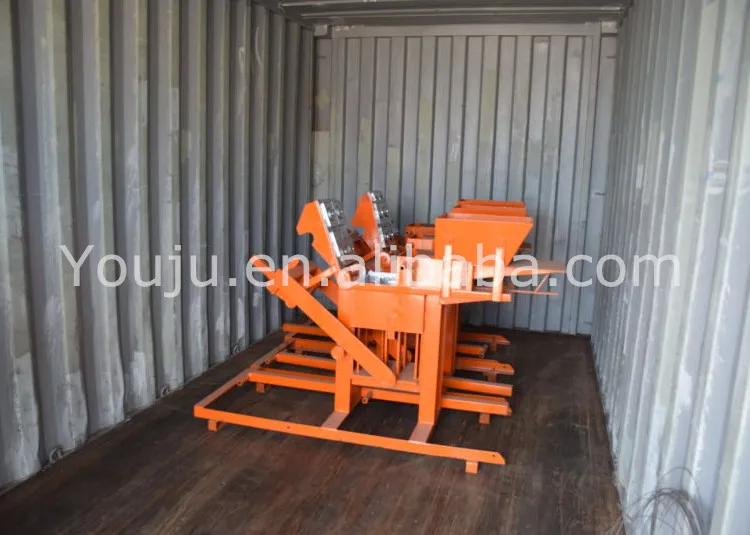
- Packing photographs documenting cradle bracing and mould protection inside the container
Installation, Commissioning & Support
- Level a compacted earth pad roughly 2 × 1 m; no concrete foundation needed for the 200–240 kg frame
- No electrical connection required — confirm only that the JFA-1 or JQ350 mixer matches your site generator rating
- Machine arrives fully assembled on steel wheels; roll into position and lock the axle before first stroke
- On-site commissioning covers mould seating check, lever pivot tension and first batch soil-cement trial
- Operator training session included, delivered in the language confirmed at order stage
- Wear parts list with lever pins and mould liner strips packed in the same shipping crate
What to Send With Your Enquiry
Tell us the interlocking block format your local market moves fastest — face dimensions, key type and target wall thickness. Share a soil description or lab classification from your borrow pit so the mix note can be drafted before the mould is finalized. If you already own a mixer or a generator, list its model and output rating so the supporting equipment can be matched without duplication.
Frequently Asked Questions
Q: How is the 400–1,000 pcs/day capacity verified for the LY2-40?
A: The range depends on the specific interlocking profile, soil-cement mix and crew size. We issue a capacity sheet that names the exact block format and cycle assumptions so you can reproduce the number on your own site, rather than relying on a generic daily figure that mixes several formats together.
Q: Which mould formats fit the machine, and how long does a change take?
A: Mould cavities are selected or custom-machined to the interlocking geometry your market requires. A format swap involves unbolting the liner and reseating the new profile by hand; plan for a short pause between runs rather than an instant switch, especially when soil residue must be cleared from the guide rails.
Q: How should the soil-cement mix be proportioned for consistent strength?
A: Start with a soil classification test to identify clay fraction and plasticity. Cement content typically falls within a narrow band suited to that soil type, and moisture must be controlled so the mix holds shape on demoulding without sticking. We provide a mix note validated against your local sample.
Q: What curing setup is needed when running without power?
A: Freshly pressed blocks should be moved to a shaded, wind-protected curing area on flat ground or simple timber racks. Keep them moist for several days to allow cement hydration. Plan the curing footprint before production starts so the manual press is not blocked by stacked output waiting to be relocated.
Q: Which wear parts should I keep in stock from day one?
A: Lever pivot pins, mould liner wear strips and mixer blade edges see the most contact. We include a wear parts list with the shipment and pack the first replacement set in the same crate, so you are not waiting on international freight when the initial components reach end of life.