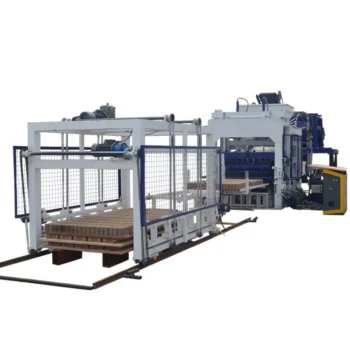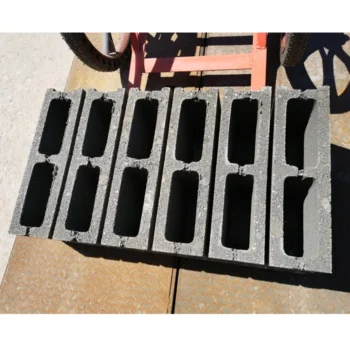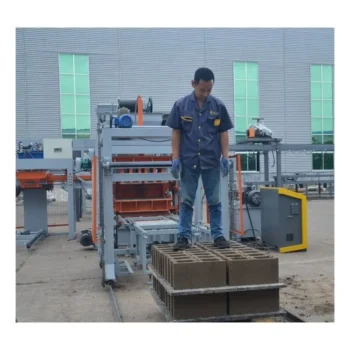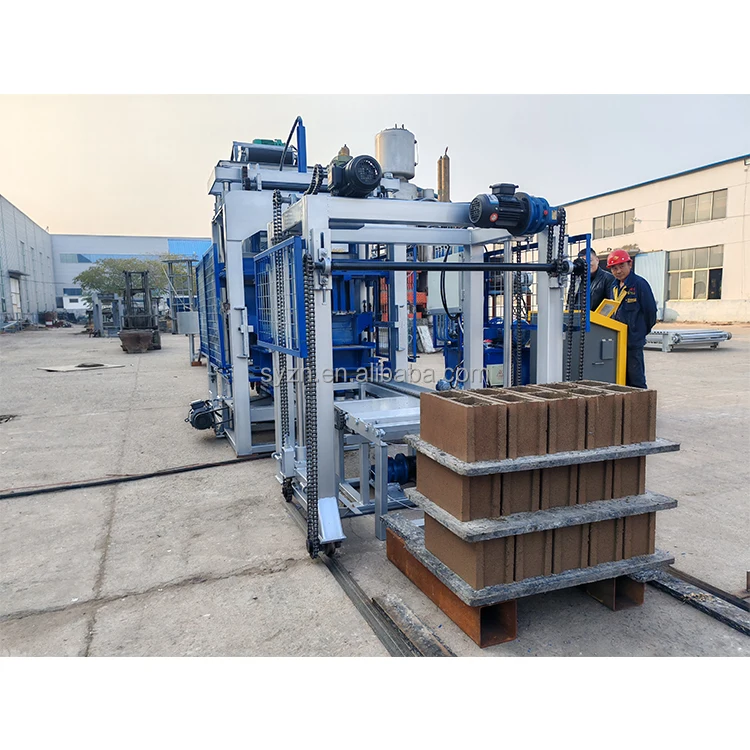
Description
Honest capacity per format — every QTJ4-24 cycle time and mould piece count is stated against the block you actually sell, not a catalogue best-case.
Technical Specifications
| Parameter | Value |
|---|---|
| Model | QTJ4-24 |
| Product Type | Semi-Automatic Concrete Block Making Machine |
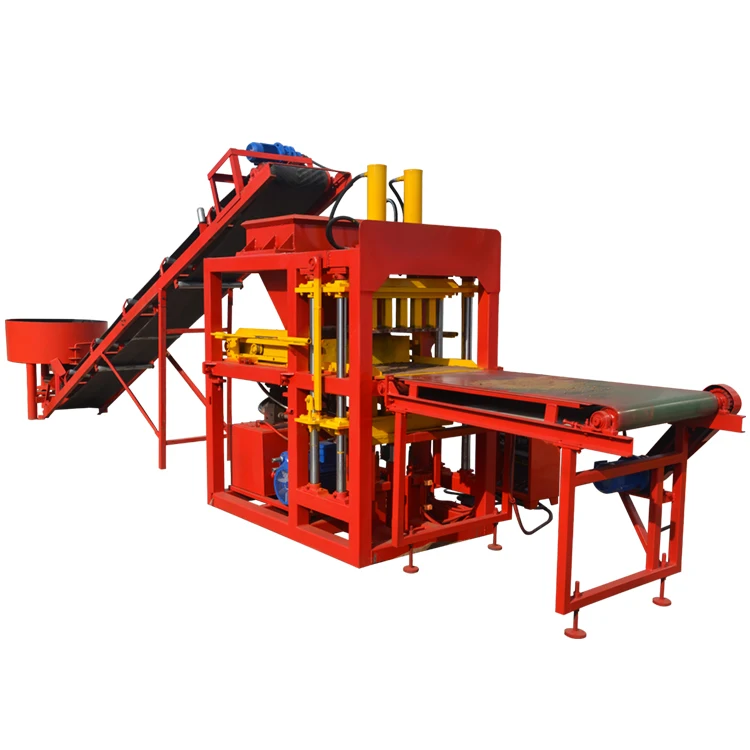
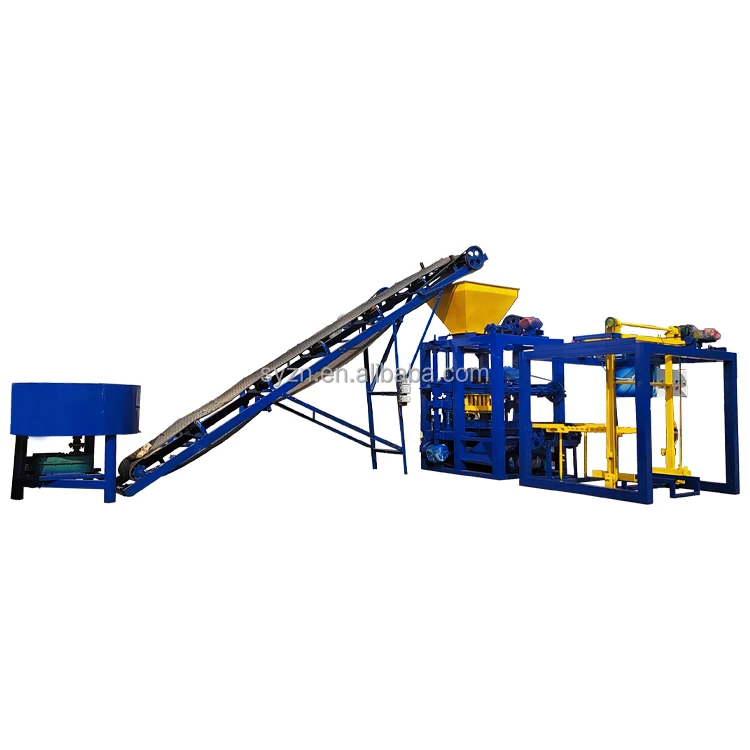
| Machine Type | Stationary small table vibration concrete block machine |
| Main Machine Power | 11.95 kW |
| Overall Dimensions (L×W×H) | 3600 mm × 1700 mm × 2560 mm |
| Net Weight | 3.5 T |
| Pallet Size | 900 mm × 450 mm |
| Molding Cycle | 24–26 s |
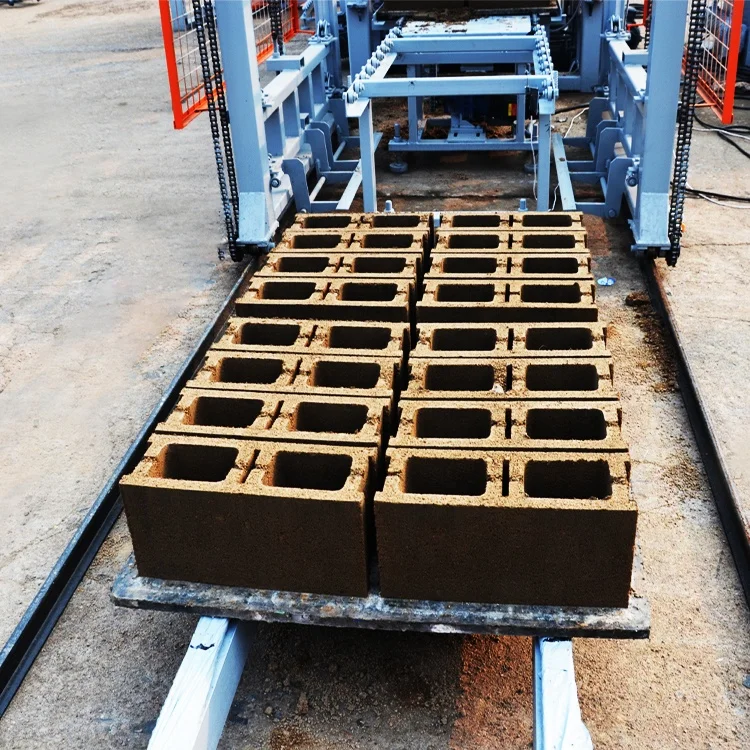
| Mould Formats & Pieces per Mould | 400×200×200 mm (4 pcs/mould) · 390×240×190 mm (3 pcs/mould) · 390×120×190 mm (6 pcs/mould) · 240×115×53 mm (21 pcs/mould) |
| Vibration Method | Table vibration feeding, fluctuation vibration molding |
| Feeding Method | Manual feeding, two feed ways available |
| Control System | Electrical control with mechanical interworking |
| Compatible Line Equipment | J350 / JQ350 / JQ500 mixer, 6 m / 8 m belt conveyor |
| Warranty | 1 year for whole machine (excluding spare parts) |
Application Suitability
| Application | Material or Output |
|---|---|
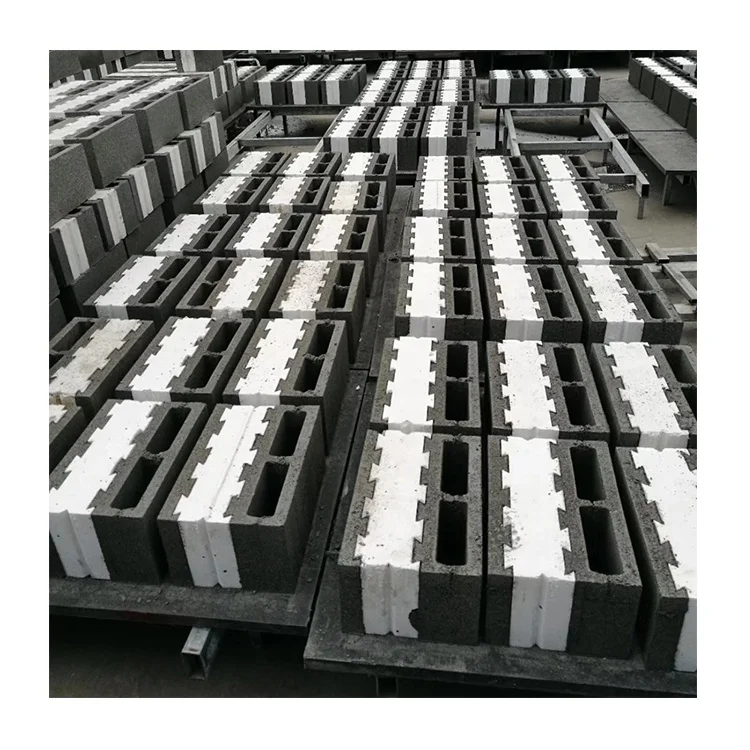
| Hollow block production for residential walls | Crushed stone, cement, and locally sourced sand |
| Solid brick manufacturing for load-bearing structures | Cement-sand mix with site-specific aggregate grading |
| Paving brick runs for external ground surfaces | Higher-density mix with fine aggregate and pigment |
| Multi-cellular brick for partition walls | Lightweight aggregate or fly ash blend with cement |
What "Pieces per Hour" Actually Means on a QTJ4-24
Cycle time only converts to daily output once you name the block format and the mix.
I have watched buyers compare two quotations side by side, both claiming similar hourly figures, and pick the cheaper one — only to discover the quoted capacity assumed a solid brick format while their market needed 400×200×200 hollow blocks. With the QTJ4-24 block machine specifications showing a 24–26 s cycle, a single mould produces four hollow blocks per press but twenty-one solid bricks per press. That difference alone reshapes your staffing plan and curing area. A machine rated at the same cycle can yield vastly different daily volumes depending entirely on which format your customers buy [NEED_CITE: capacity calculation methodology for vibration block presses]. Without a per-format breakdown, a quoted number is marketing, not engineering.
Mould Format Range and What Each Format Delivers
The QTJ4-24 covers hollow blocks at 400×200×200 mm down to standard solid bricks at 240×115×53 mm. Each format carries its own piece count per mould — four, three, six, or twenty-one — so the QTJ4-24 block machine specifications let you calculate output per format before you commit to a mould set. A buyer adding a paving line to an existing hollow block plant can order the additional mould without changing the host machine.
How Pallet Size Dictates Your Curing Layout
The 900 × 450 mm pallet is the fixed reference point around which your curing racks, forklift fork width, and stacking pattern must align. If your existing forklift was bought for a different pallet dimension, the mismatch surfaces on day one of production. Confirming pallet size early — and matching it to the curing area footprint available on your site — avoids a costly rack rebuild or a forklift swap after the QTJ4-24 has already arrived [NEED_CITE: pallet dimension compatibility with curing and handling systems].
Vibration Force, Cycle Time, and Block Density
Table vibration feeding followed by fluctuation vibration molding compacts the mix in two stages: the first fills the mould cavity evenly, the second densifies the block under sustained vibration. The 24–26 s molding cycle gives the concrete matrix time to settle around coarse aggregate particles, which is especially important when local sand carries higher clay content. Combined with the 11.95 kW main drive, the system delivers sufficient energy for standard hollow and solid formats. If your target block requires higher compressive strength than a standard walling block, the mix proportion and aggregate grading become the variables to adjust — the vibration profile remains constant across formats.
The Cost of Skipping Mix Verification Before Order
When a machine is configured around a default mix and your local sand has high silt content, the vibration force cannot fully compact the matrix. Blocks emerge with lower density, breakage during curing rises, and your effective daily saleable output drops well below the quoted figure. I once spent a week on a West African site adjusting parameters because the aggregate had not been sampled before the order was placed. That experience made me insist on seeing a local material report before finalizing any QTJ4-24 configuration [NEED_CITE: effect of aggregate silt content on vibration-formed block strength].
Why Specification Match Beats Price Comparison
Our block machinery focus means the QTJ4-24 is not sold as a standalone press but specified alongside the pallet, mould, mixer, and conveyor as one matched set. Machine and mould are configured against your actual target block format, local aggregate characteristics, and available curing space — not a generic catalogue line. Automation level is selectable so you can begin with semi-automatic manual pallet handling and add automatic stacking later as volume grows. Mould design and supply cover the formats your market demands, including custom drawings for non-standard sizes.
Documentation & Verification
- Line layout showing QTJ4-24 capacity calculation per block format
- Mould drawing and format list confirming included and optional sizes
- Pallet specification matched to your curing rack and forklift dimensions
- Voltage and control language confirmation before production begins
- Factory test record on your specified block format before dispatch
- Operation and maintenance manual with wear parts and mould list
Installation, Commissioning & Support
- Foundation pad leveled for 3600 × 1700 mm footprint and 3.5 T static load
- Dedicated circuit rated for 11.95 kW main drive plus mixer load
- Machine shipped in dismantled state for standard container loading
- On-site commissioning with parameter tuning to your local aggregate
- Operator training covering mould change procedure and daily maintenance
- Wear parts list with hydraulic seal and vibration motor replacement intervals
Preparing Your QTJ4-24 Inquiry
To size a QTJ4-24 block machine correctly, share the block formats your market sells, the daily volume you need per format, and a sample or description of your local sand and aggregate. Include your available curing area dimensions, existing forklift specifications, and the voltage and frequency standard at your site. If you already run a mixer or conveyor, note the model so the line can be matched around it.
Frequently Asked Questions
Q: How is daily output calculated for each block format on the QTJ4-24?
A: Daily output is derived by dividing your available production hours by the 24–26 s molding cycle, then multiplying by the pieces per mould for that specific format — four for 400×200×200 hollow blocks, twenty-one for 240×115×53 solid bricks. The calculation also factors in pallet return time and mould change intervals. We provide a written capacity sheet per format with every proposal.
Q: Which mould formats are included and what is the mould change procedure?
A: Standard supply covers the formats you confirm during inquiry — hollow, solid, and paving sizes listed in the specifications. Mould change on the QTJ4-24 involves releasing the clamping bolts, lifting the mould off the vibration table, and seating the replacement. Electrical-mechanical interworking ensures the control resets to the new mould position. Full change time depends on operator familiarity.
Q: How do I confirm the pallet size matches my curing racks and forklift?
A: The QTJ4-24 uses a 900 × 450 mm pallet. Before production we send a pallet specification sheet detailing material, thickness, and weight. You verify these against your curing rack slot width, rack spacing, and forklift fork dimensions. If a mismatch exists, we adjust the pallet or advise on rack modification before the machine ships.
Q: What voltage, frequency, and control language options are available?
A: Voltage and frequency are confirmed during the quotation stage to match your local grid standard. The electrical control panel labeling and any display language are set before production so commissioning is not delayed by a language barrier on site. We ask for your site voltage reading and preferred language at the inquiry stage.
Q: How does cycle time vary between hollow block and solid brick formats?
A: The base molding cycle of 24–26 s applies across formats, but total press-to-press time includes feeding and pallet indexing. Hollow blocks at four pieces per mould require a longer fill stroke than solid bricks at twenty-one pieces per mould, where the thinner profile fills faster. Actual cycle per format is confirmed during factory testing with your chosen mould set.