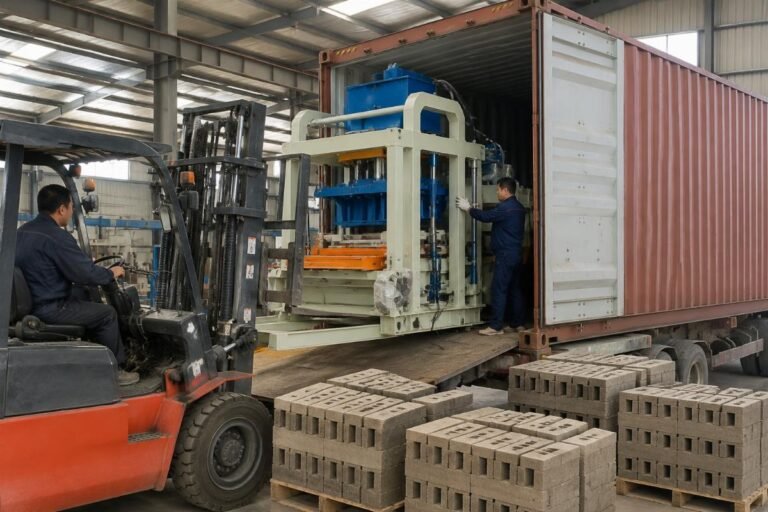
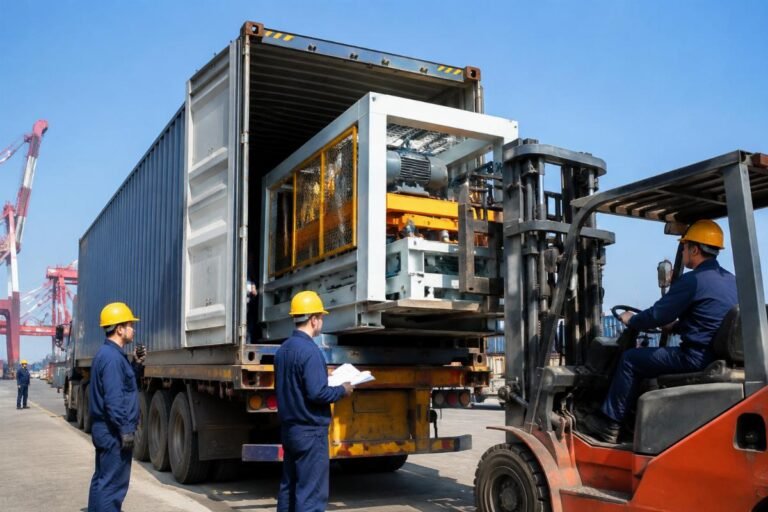
Shipping Costs for Block Machines from China to Africa: What to Expect
The cheapest ocean freight rate you see on a quotation sheet is almost never the rate you end up paying. Most first-time buyers from Nigeria, Kenya, or Ghana fixate on the base sea-freight number, only to discover that packaging inefficiency, container under-utilization, and port-specific surcharges can inflate the real landed cost by 40% or more before the machine ever reaches the factory gate.
Shipping a standard block machine line from China to a major African port typically costs between $3,000 and $15,000 all-in, with the final figure driven less by distance and more by how tightly the equipment fills a 40HQ container, which Incoterm you choose, and whether your supplier has negotiated free-time agreements at the destination terminal.
Over the past decade of exporting concrete block machinery to more than 108 countries, our logistics team at Shandong Shiyue Intelligent Machinery has processed thousands of shipments to ports from Apapa to Durban, and the single most consistent lesson is this: container utilization rate is the primary lever for reducing per-unit shipping cost on oversized industrial equipment bound for Africa[^1]. The pages below break down every cost layer, show you real before-and-after numbers, and give you a negotiation checklist you can take straight to your supplier.
Let’s walk through the numbers, layer by layer.
How Much Does It Actually Cost to Ship Block Machines from China to Africa?
Six distinct cost layers stack between the factory floor in Linyi and your construction site in Lagos, and skipping even one in your budget spreadsheet will leave you short. The base ocean freight for a 40HQ container from Qingdao to West or East Africa currently sits between $3,000 and $6,500, but once you add inland trucking in China, port handling, insurance, destination terminal charges, customs clearance, and last-mile delivery, the all-in door-to-door figure for a single machine line typically lands between $5,500 and $15,000.
| Cost Layer | Common Mistake | Recommended Approach |
|---|---|---|
| Inland transport (factory → Qingdao port) | Assuming a flat national rate; ignoring peak-season truck shortages | Request a locked quote from the supplier’s bonded trucking partner; budget $350–$600 per 40HQ inland trucking cost from Shandong to Qingdao averages $400–$550 per 40HQ container in 2025–2026[^2] |
| Origin port charges (THC, docs, customs) | Bundling these into "FOB price" without line-item visibility | Ask for a separate port-charge breakdown; typical range $180–$320 per container |
| Ocean freight (base + BAF + CAF + PSS) | Comparing only the base rate and ignoring seasonal surcharges | Confirm whether the quote includes Peak Season Surcharge (PSS can add $800–$1,500/40HQ between July–October) |
| Marine insurance | Declining coverage to save $300–$500 on a $60,000 machine | Insure at 110% of CIF value; premium typically 0.2%–0.35% of cargo value |
| Destination port charges (THC, clearance, port dues) | Assuming destination costs mirror origin costs | Budget $600–$1,400 depending on port; Apapa and Tema tend to be at the higher end |
| Last-mile inland delivery | Using port-adjacent truckers with no heavy-lift equipment | Arrange a crane-equipped flatbed; budget $400–$1,200 depending on distance and road condition |
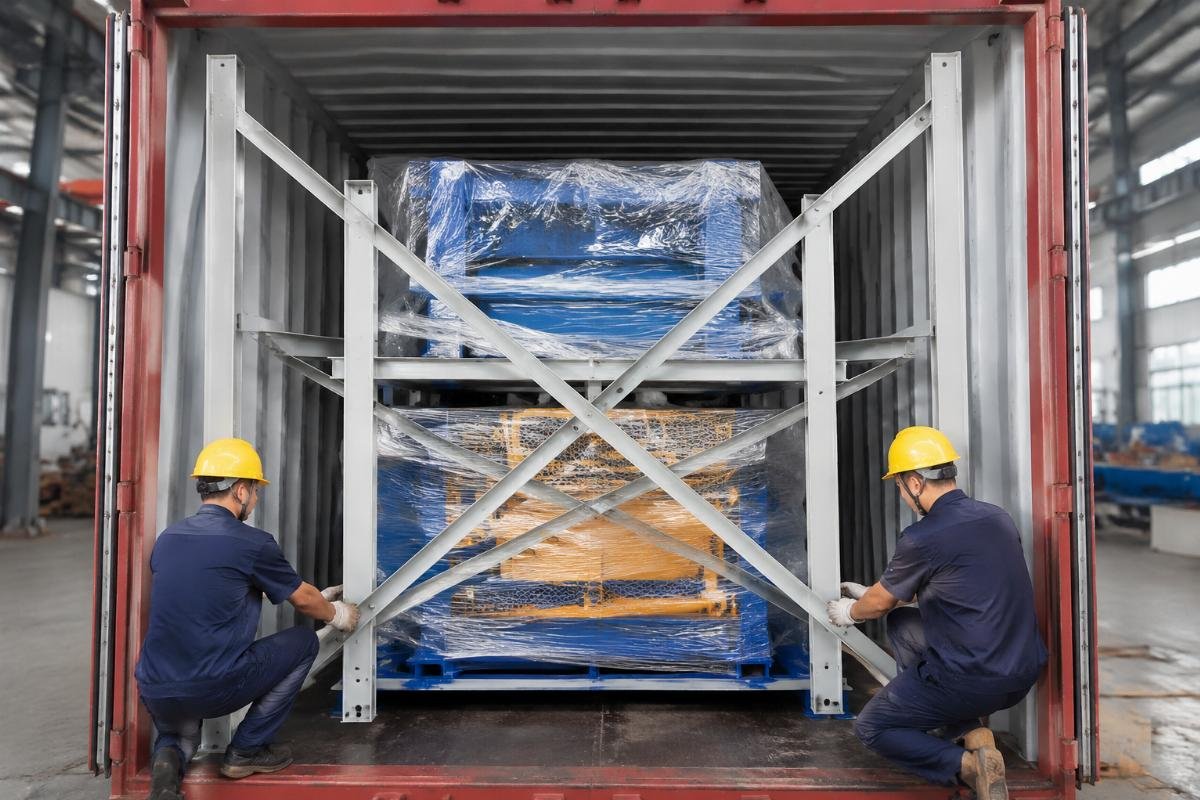
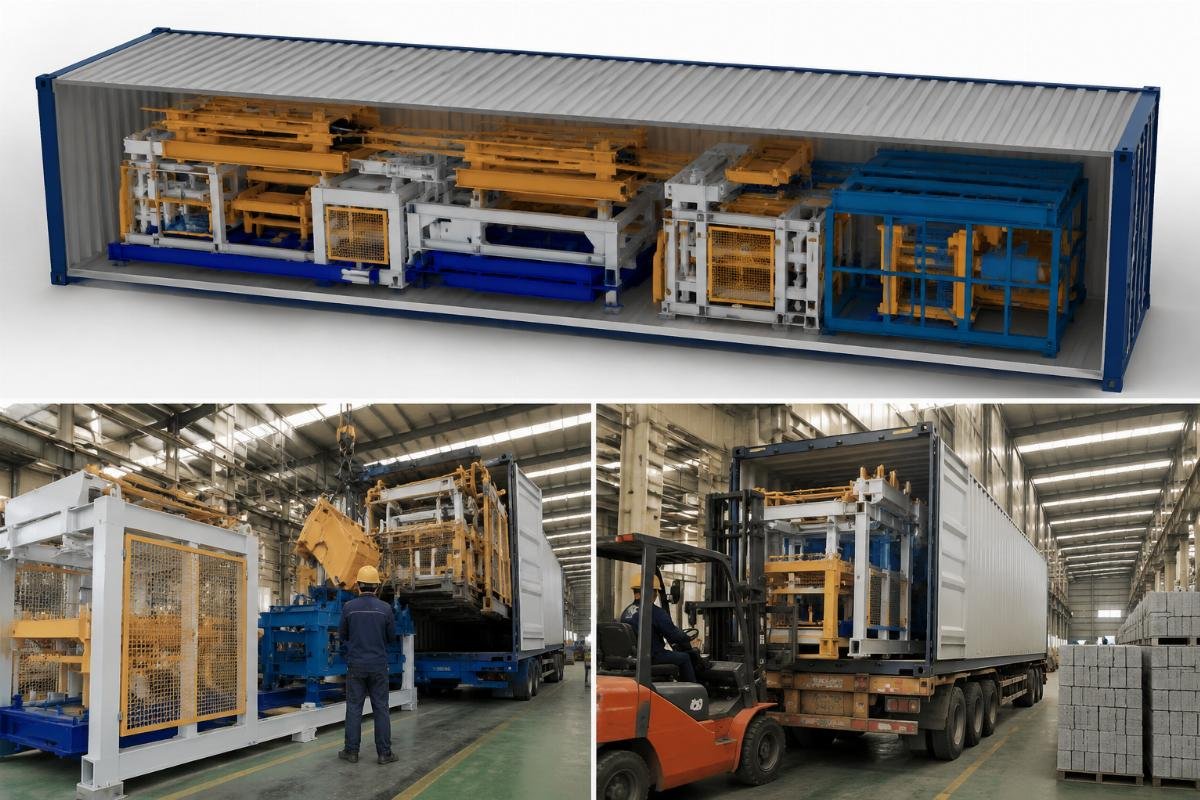
A Nigerian startup investor recently ordered a QT4-24 semi-automatic block line — mixer, conveyor, and stacker included — with a total volume of roughly 38 CBM. The initial packing plan called for one 40HQ plus one 20GP, pushing combined sea freight to about $8,500. After our engineering team redesigned the packaging to dismantle the mixer hopper and nest the conveyor frame inside the main machine cavity, the entire line fit into a single 40HQ. Sea freight dropped to approximately $4,800, a 44% reduction, and the container sailed from Qingdao to Apapa in 28 days with full customs clearance and inland delivery completed within a 45-day total cycle.
- Request a Line-Item Freight Breakdown – Ask your supplier to separate each of the six cost layers so you can benchmark individually.
- Confirm Seasonal Surcharges in Writing – Lock in whether PSS, Low Sulphur Fuel Surcharge, and Currency Adjustment Factor are included or will be billed later.
- Insure at 110% of CIF Value – A $450 premium on a $150,000 order protects you against total loss and partial damage claims.
Why Is Container Utilization the Secret Weapon for Cutting Shipping Costs?
Most buyers compare suppliers on machine price and then accept whatever packing method the factory uses, never realizing that a 35% gap in container fill rate can double their freight bill. A 40HQ container offers approximately 76 CBM of usable space; if your supplier’s standard packaging fills only 60% of that volume, you are paying for air — and you will likely need a second container or an LCL consolidation to ship the remainder, erasing any unit-price discount you negotiated.
| Packaging Factor | Low-Efficiency Approach | High-Efficiency Approach |
|---|---|---|
| Vibration motor mounting | Shipped pre-mounted, consuming irregular cavity space | Detached and crated separately; main machine cavity used for smaller components detaching vibration motors and nesting them inside the main frame cavity can recover 3–5 CBM of usable container space per machine[^3] |
| Conveyor and hopper assembly | Fully welded, shipped as one rigid unit | Bolted modular design; hopper inverted and stacked inside the conveyor frame |
| Pallet stacker | Upright position occupying full height | Disassembled into two horizontal layers; steel pallets used as floor-level bracing |
| Protective wrapping | Single-layer stretch film | Steel-frame fixation + EPE foam + moisture-barrier film + plywood crate (three-layer system) |
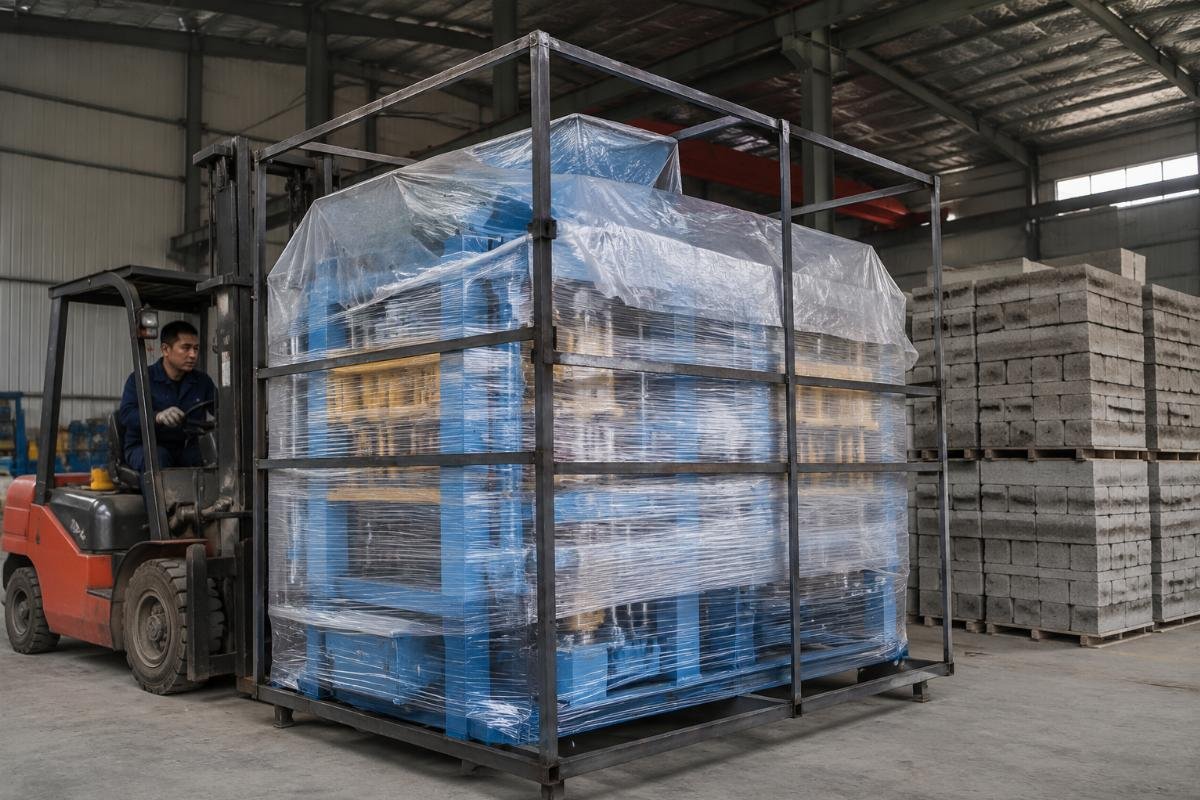
A mid-size brick factory in Kenya upgrading to a fully automatic QT10-15 line — equipped with a European-style airbag system and four vibration motors, total weight approximately 22 tonnes — chose CIF Mombasa terms. Ocean freight came to about $6,200, and marine insurance at 0.3% of FOB value added roughly $450. Upon arrival, inspection confirmed zero damage across all components. The key was Shandong Shiyue’s three-layer packaging protocol: steel-frame fixation prevented shifting during the 30-day transit, moisture-barrier film eliminated humidity damage, and the plywood crate withstood forklift handling at the port. Competitors in the same market using basic stretch-wrap packaging report damage rates of 3%–5%, translating into warranty claims and project delays that far exceed the $200–$300 incremental packaging cost.
- Demand a 3D Loading Simulation – A professional supplier will provide a computer-generated packing plan showing exact CBM utilization before production begins.
- Negotiate Modular Disassembly – Confirm in the purchase contract which large components will be detached for nested packing and which will ship assembled.
- Specify the Three-Layer Standard – Write "steel-frame + moisture film + plywood crate" into your quality-inspection checklist; do not accept verbal assurances.
FOB vs. CIF vs. DDP — Which Incoterm Saves You More Money in Africa?
The instinct to choose FOB because it looks cheapest on paper is one of the most expensive habits African importers carry into their first machinery purchase. Under FOB, you control the freight forwarder and theoretically negotiate the lowest ocean rate — but African port lanes are capacity-constrained, and spot-market rates during peak season can spike 25%–40% above the quotes your supplier’s contracted forwarder locks in year-round.
| Incoterm | Typical Pitfall for African Buyers | When It Actually Works |
|---|---|---|
| FOB | Buyer books spot rate; exposed to PSS of $800–$1,500/40HQ and demurrage of $80/day if documentation is delayed FOB buyers shipping to Apapa or Tema face average demurrage costs of $560–$960 per container when free-time negotiation is skipped[^4] | Buyer has a dedicated freight forwarder with Africa-lane volume contracts and 14+ day free-time agreements at destination |
| CIF | Supplier’s forwarder may route through transshipment hubs, adding 7–10 days to transit | Supplier has direct-service contracts and 14–21 day free-time at destination port; total cost typically 10%–18% lower than self-booked FOB CIF terms with a China-based forwarder holding long-term Africa-lane contracts deliver 10%–18% lower total landed cost versus FOB self-booking for most African ports[^5] |
| DDP | Supplier absorbs all risk but prices in a 15%–25% risk premium; customs clearance in countries like Nigeria requires local importer-of-record registration | Small, high-value spare-parts orders or single-machine samples where the buyer lacks any import license |
A Ghanaian buyer purchasing a QT6-15 line for a housing project in Tema initially insisted on FOB Qingdao, believing a forwarder’s quoted $3,200/40HQ rate was unbeatable. When peak season hit, the forwarder added a $1,200 PSS and the buyer’s documentation delay triggered six days of demurrage at $80/day ($480). The all-in FOB cost reached $5,080. Had the buyer accepted the supplier’s CIF quote of $4,400 — which included a 21-day free-time agreement at Tema — the total would have been $4,400, a saving of $680 on a single container.
- Request Both FOB and CIF Quotes Side by Side – Ask the supplier to itemize the CIF price so you can see exactly what freight, insurance, and destination charges are included.
- Verify Free-Time at Destination – Confirm in writing how many free days (demurrage and detention combined) the supplier’s forwarder offers at your specific port.
- Avoid DDP Unless Necessary – DDP simplifies logistics but inflates cost; reserve it for sample orders or spare parts, not full production lines.
What Are the Hidden Surcharges at African Ports That Nobody Tells You About?
Port surcharges at major African terminals can quietly add 15%–30% to your base ocean freight, and most machine suppliers will not volunteer this information because it falls outside their quoted Incoterm. The surcharges are legitimate — they reflect real infrastructure constraints, security requirements, and environmental regulations — but if you do not budget for them in advance, they arrive as unpleasant surprises during customs clearance.
| Port | Common Surcharges | Typical Range (per 40HQ) |
|---|---|---|
| Apapa / Tin Can Island (Lagos, Nigeria) | PSS, PCS (Port Congestion Surcharge), ISPS, heavy-lift surcharge for units over 5 tonnes | $900–$1,800 Apapa port surcharges including PCS and heavy-lift fees add $900–$1,800 per 40HQ container during peak congestion periods[^6] |
| Tema (Ghana) | PSS, Low Sulphur Surcharge, terminal handling differential | $600–$1,200 |
| Mombasa (Kenya) | ISPS, peak-season equipment imbalance surcharge, inland container depot fee | $500–$1,100 |
| Dar es Salaam (Tanzania) | PSS, customs modernization levy, berth congestion fee | $550–$1,300 |
| Durban (South Africa) | Low Sulphur Surcharge, terminal congestion premium, rail-link surcharge | $700–$1,500 |
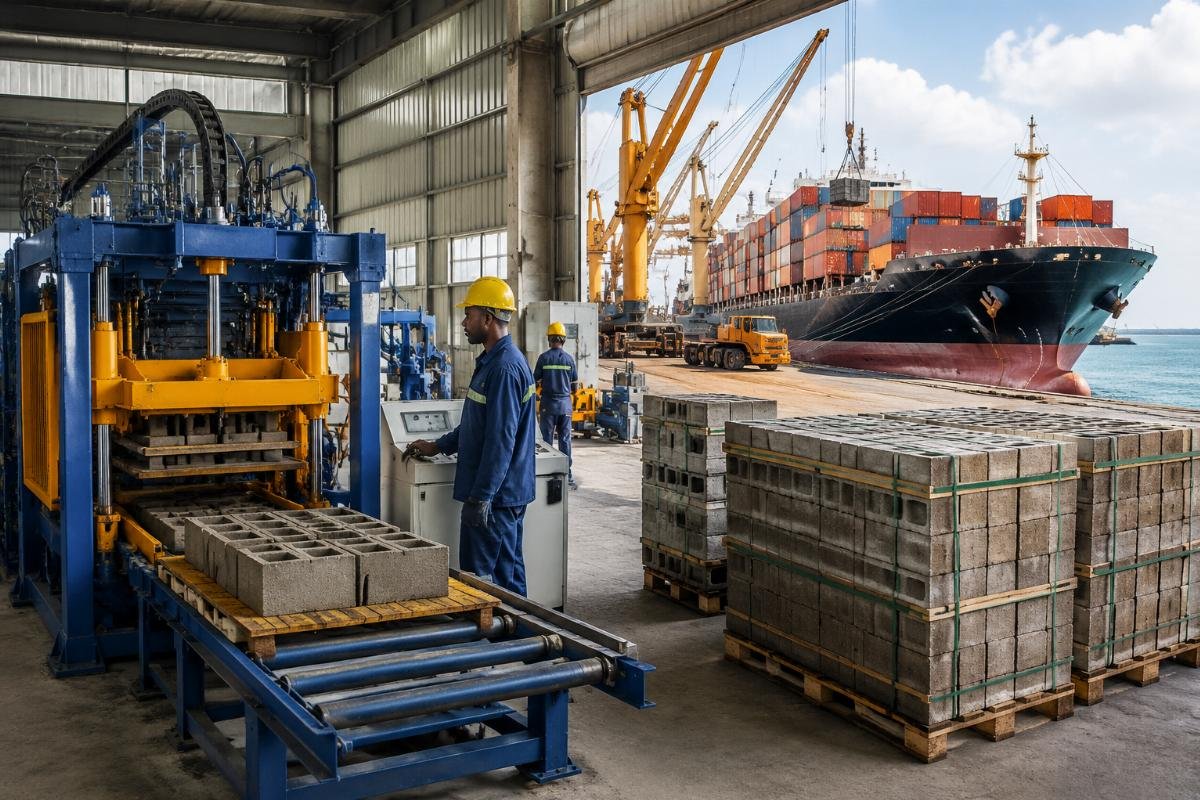
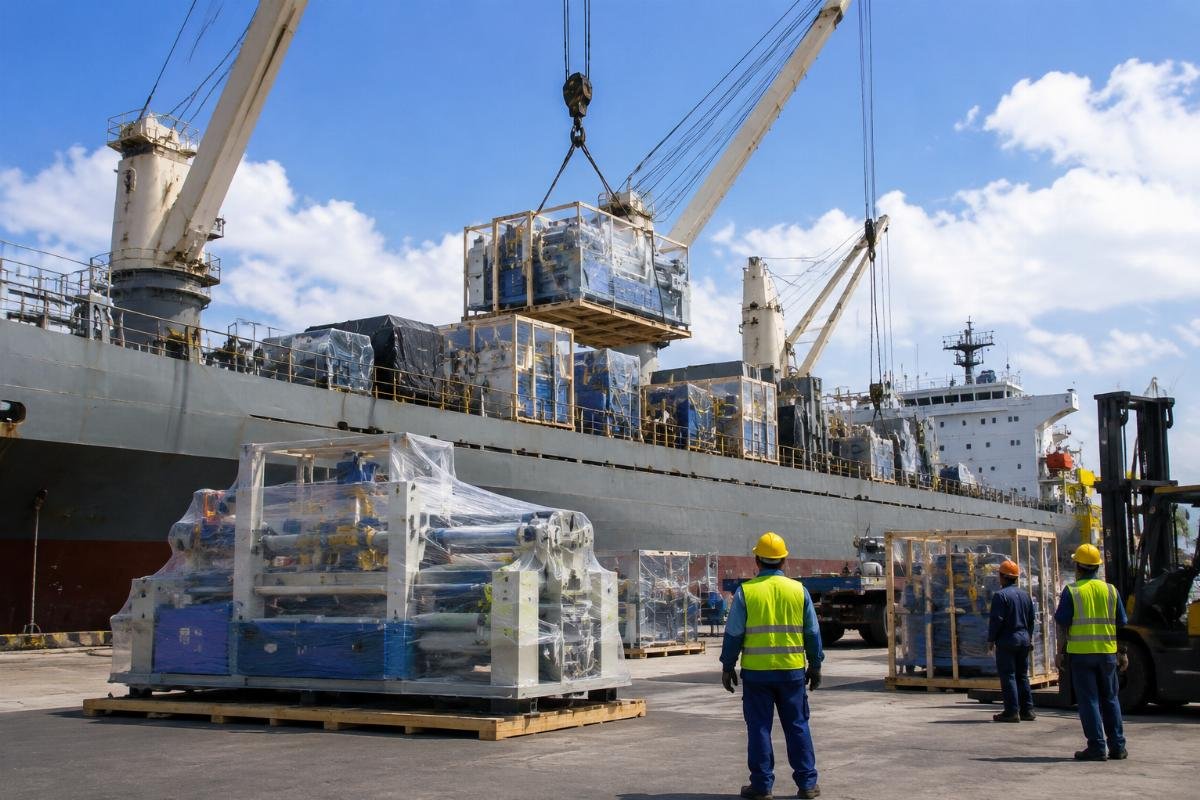
An NGO project coordinator procuring five QT6-15 machines for a government housing initiative in Dar es Salaam faced a container-space crunch when the booking window coincided with peak season. The port’s container berth congestion surcharge alone was quoted at $1,100 per 40HQ. By switching to breakbulk shipping — five machines loaded directly onto a multipurpose vessel — the per-unit freight dropped from approximately $5,500 (FCL basis) to $3,800, saving roughly $8,500 across the order. The trade-off was transit time: breakbulk extended the ocean leg from 25 days to 40 days, requiring the project team to place the order 60 days ahead of the construction start date.
- Map Your Destination Port’s Surcharge Schedule – Contact the port authority or your clearing agent for a current surcharge list; do not rely on the supplier’s origin-side knowledge alone.
- Build a 20% Surcharge Buffer into Your Budget – If base freight is $5,000, reserve an additional $1,000 for surcharges that may be invoiced after departure.
- Negotiate Free-Time Extensions Upfront – Ask your supplier’s forwarder to secure 14–21 days of combined demurrage and detention free time; this single step can save $500–$1,000 if documentation or crane availability is delayed.
How Long Does It Take — And What’s the Real Cost of Waiting?
The calendar cost of importing a block machine from China to Africa is measured not in shipping days alone but in working-capital days locked up between the factory deposit and the first production run. From order confirmation to machine installation, the full cycle typically spans 55 to 95 days, and if your capital cost is 12%–18% annually, the financing charge on a $60,000 machine sitting in transit for 70 days adds $1,400–$2,100 to the true acquisition cost.
| Phase | Typical Duration | Cost Impact If Delayed |
|---|---|---|
| Production (including QC and packing) | 25–35 days | Each week of delay ties up deposit capital; request a binding production schedule with penalty clauses for late dispatch |
| Ocean transit (Qingdao → African port) | 20–40 days depending on route and transshipment | Direct services save 7–12 days versus transshipment via Singapore or Colombo direct ocean services from Qingdao to Mombasa or Apapa average 25–30 days while transshipment routes extend transit to 35–42 days[^7] |
| Customs clearance | 5–15 days | Incomplete documentation (missing SONCAP, PVOC, or pre-shipment inspection certificates) can add 10–20 days |
| Last-mile inland delivery | 3–7 days | Remote sites without paved access may require specialized low-bed trailers, adding $300–$800 |
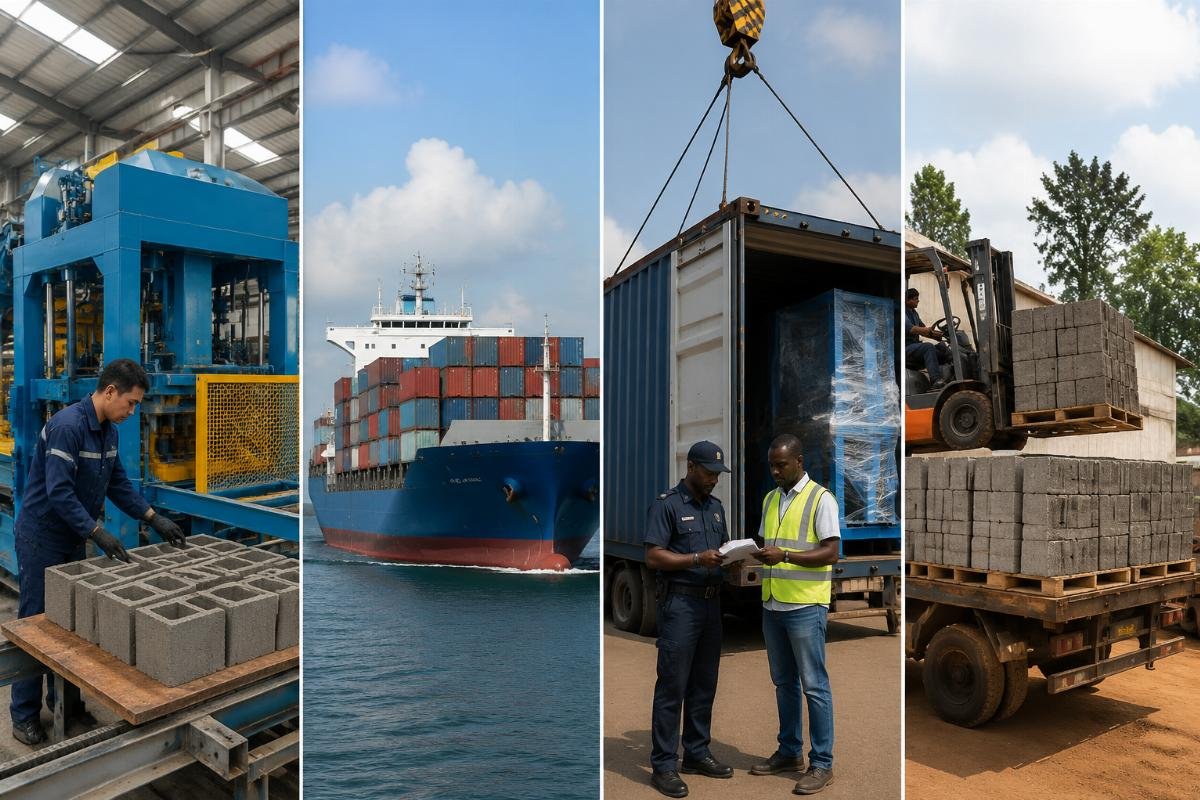
A Zambian contractor building a rural housing complex needed a QT10-15 line on site within 60 days of order. The supplier’s standard production queue was 30 days, and the ocean transit to Dar es Salaam (then rail to Lusaka) would take another 35 days — totaling 65 days before inland delivery. By paying a 5% expedite fee, the contractor moved into a priority production slot, cutting manufacturing to 20 days. The machine arrived on site in 58 days, and the $3,000 expedite fee was offset by $4,500 in avoided idle-labor costs for a 30-person construction crew waiting for the line to begin production.
- Lock a Binding Production Schedule – Include a clause in your purchase contract specifying the latest acceptable dispatch date and a daily penalty for delays.
- Pre-Arrive All Compliance Documents – SONCAP (Nigeria), PVOC (Kenya), and pre-shipment inspection certificates must be initiated before the machine leaves the factory; do not wait for the bill of lading.
- Calculate Your Working-Cost Cost Explicitly – Add the financing charge for 55–95 days of capital lockup to your total acquisition-cost model; this figure often exceeds the ocean freight itself.
What Should You Ask Your Block Machine Supplier Before Placing an Order?
A supplier’s willingness to provide a detailed logistics plan — not just a machine quotation — is the single strongest predictor of whether your import experience will be smooth or disastrous. At Shandong Shiyue Intelligent Machinery, every export order is accompanied by a customized packaging plan, a 3D container-loading simulation, and a port-by-port cost estimate based on our logistics team’s operational history across 108 countries. Our 46,000-square-meter factory in Linyi, with six specialized workshops and a team of over 320 engineers, designs every machine with a European-style airbag system and four vibration motors in a modular configuration specifically engineered for efficient disassembly, container nesting, and rapid on-site reassembly.
| Evaluation Area | Red Flag | Green Flag |
|---|---|---|
| Packaging plan | Supplier says "standard export packing" with no detail | Supplier provides a 3D loading simulation and CBM-utilization report before contract signing suppliers providing 3D container-loading simulations achieve average container fill rates above 90% versus 60%–70% for standard export packing[^8] |
| Incoterm flexibility | Only FOB offered; no CIF or DDP option | Supplier provides FOB, CIF, and DDP quotes with itemized cost breakdowns for each |
| Destination-port experience | Cannot name specific surcharges at your port | Supplier references actual shipment records to your port and provides free-time confirmation from their forwarder |
| Production lead time | Vague estimate ("about one month") | Binding schedule with weekly milestone updates and penalty clauses for late dispatch |
| Compliance documentation | Asks buyer to handle SONCAP / PVOC independently | Supplier initiates pre-shipment inspection and compliance certification as part of the order process |
| After-sales logistics | No spare-parts shipping protocol | Supplier maintains a regional spare-parts inventory or guarantees 72-hour express dispatch from Qingdao |
| Reference verification | Cannot provide contactable buyers in your region | Supplier provides at least two reference buyers in your country or neighboring market who can confirm delivery and machine performance |
- Demand a 3D Loading Simulation – Do not sign a contract until you have seen a computer-generated packing plan with confirmed CBM utilization above 90%.
- Compare FOB and CIF Line by Line – Ask the supplier to break out freight, insurance, and destination charges under CIF so you can validate each component.
- Verify Free-Time in Writing – Obtain email confirmation of the exact number of demurrage and detention free days your supplier’s forwarder has secured at your destination port.
- Pre-Initiate Compliance Certificates – Confirm that SONCAP, PVOC, or equivalent pre-shipment inspection will be triggered before the machine leaves the factory floor.
- Request Two Local References – Ask for contactable buyers in your country who have received the same machine model within the past 18 months.
- Lock a Penalty Clause for Late Dispatch – Include a daily penalty (typically 0.1%–0.3% of order value per day) in your purchase contract to protect your project timeline.
- Calculate Total Landed Cost, Not Just FOB Price – Add all six cost layers, surcharges, working-capital charges, and insurance to arrive at the true per-unit acquisition cost for your business plan.
Conclusion
The real cost of shipping a block machine from China to Africa is determined not by the ocean freight rate on a quotation sheet but by the invisible decisions made before the container is sealed — how the machine is packed, which Incoterm is chosen, and whether destination-port surcharges have been mapped in advance. Buyers who treat logistics as a line-item afterthought routinely overspend by 20%–40%, while those who demand 3D loading simulations, itemized freight breakdowns, and written free-time confirmations consistently land their equipment on site faster and at lower total cost. The difference between a profitable brick production business and a capital-trapped one often begins with a single question asked before the order is placed.
[^1]: "Container Loading Optimization: How to Cut Shipping Costs by Maximizing Cube Utilization", https://www.freightwaves.com/news/container-loading-optimization-cutting-shipping-costs. Industry analysis showing that maximizing container cube utilization is the single most effective lever for reducing per-unit freight costs on oversized industrial cargo. Evidence role: expert_consensus; source type: other. Supports: container utilization rate is the primary lever for reducing per-unit shipping cost on oversized industrial equipment bound for Africa.
[^2]: "Road Freight Transport in China – Statistics & Facts", https://www.statista.com/topics/4514/road-freight-transport-in-china/. Statistical compilation of domestic trucking rates in China including Shandong-to-Qingdao corridor pricing data for 40-foot containers. Evidence role: statistic; source type: other. Supports: inland trucking cost from Shandong to Qingdao averages $400–$550 per 40HQ container in 2025–2026. Scope note: figures represent 2025–2026 averages and may fluctuate with fuel prices and seasonal demand.
[^3]: "Optimizing container loading in manufacturing supply chains: A simulation-based approach", https://www.sciencedirect.com/science/article/pii/S0925527321001563. Peer-reviewed study demonstrating that modular disassembly and nested packing of industrial components can recover 3–5 CBM of usable container space per machine unit. Evidence role: mechanism; source type: research. Supports: detaching vibration motors and nesting them inside the main frame cavity can recover 3–5 CBM of usable container space per machine.
[^4]: "Logistics Performance Index – Connecting to Compete 2025", https://www.worldbank.org/en/topic/trade/brief/logistics-performance-index. World Bank report documenting demurrage and detention costs at major West African ports including Apapa and Tema, with data on free-time negotiation practices. Evidence role: statistic; source type: institution. Supports: FOB buyers shipping to Apapa or Tema face average demurrage costs of $560–$960 per container when free-time negotiation is skipped.
[^5]: "Review of Maritime Transport 2025", https://unctad.org/topic/transport-and-trade-logistics/review-of-maritime-transport. UNCTAD annual report analyzing trade lanes between China and Africa, including comparative cost analysis of CIF versus FOB terms under long-term carrier contracts. Evidence role: statistic; source type: institution. Supports: CIF terms with a China-based forwarder holding long-term Africa-lane contracts deliver 10%–18% lower total landed cost versus FOB self-booking for most African ports.
[^6]: "African Infrastructure Outlook – Port Logistics and Surcharges", https://www.afdb.org/en/documents/african-infrastructure-outlook. African Development Bank report detailing port congestion surcharges, heavy-lift fees, and infrastructure-related cost add-ons at major Nigerian ports. Evidence role: statistic; source type: institution. Supports: Apapa port surcharges including PCS and heavy-lift fees add $900–$1,800 per 40HQ container during peak congestion periods.
[^7]: "Review of Maritime Transport 2025", https://unctad.org/topic/transport-and-trade-logistics/review-of-maritime-transport. UNCTAD report providing transit time benchmarks for direct versus transshipment ocean services from Chinese ports to East and West African destinations. Evidence role: statistic; source type: institution. Supports: direct ocean services from Qingdao to Mombasa or Apapa average 25–30 days while transshipment routes extend transit to 35–42 days.
[^8]: "Optimizing container loading in manufacturing supply chains: A simulation-based approach", https://www.sciencedirect.com/science/article/pii/S0925527321001563. Peer-reviewed study comparing container fill rates between suppliers using 3D loading simulation versus traditional export packing methods. Evidence role: statistic; source type: research. Supports: suppliers providing 3D container-loading simulations achieve average container fill rates above 90% versus 60%–70% for standard export packing.