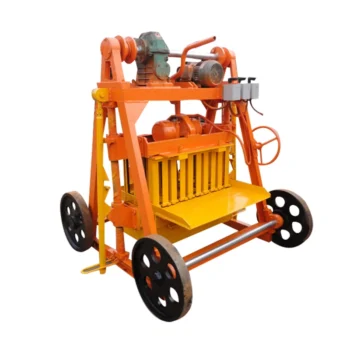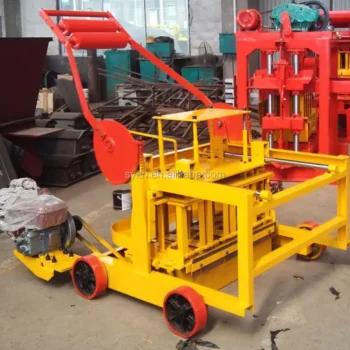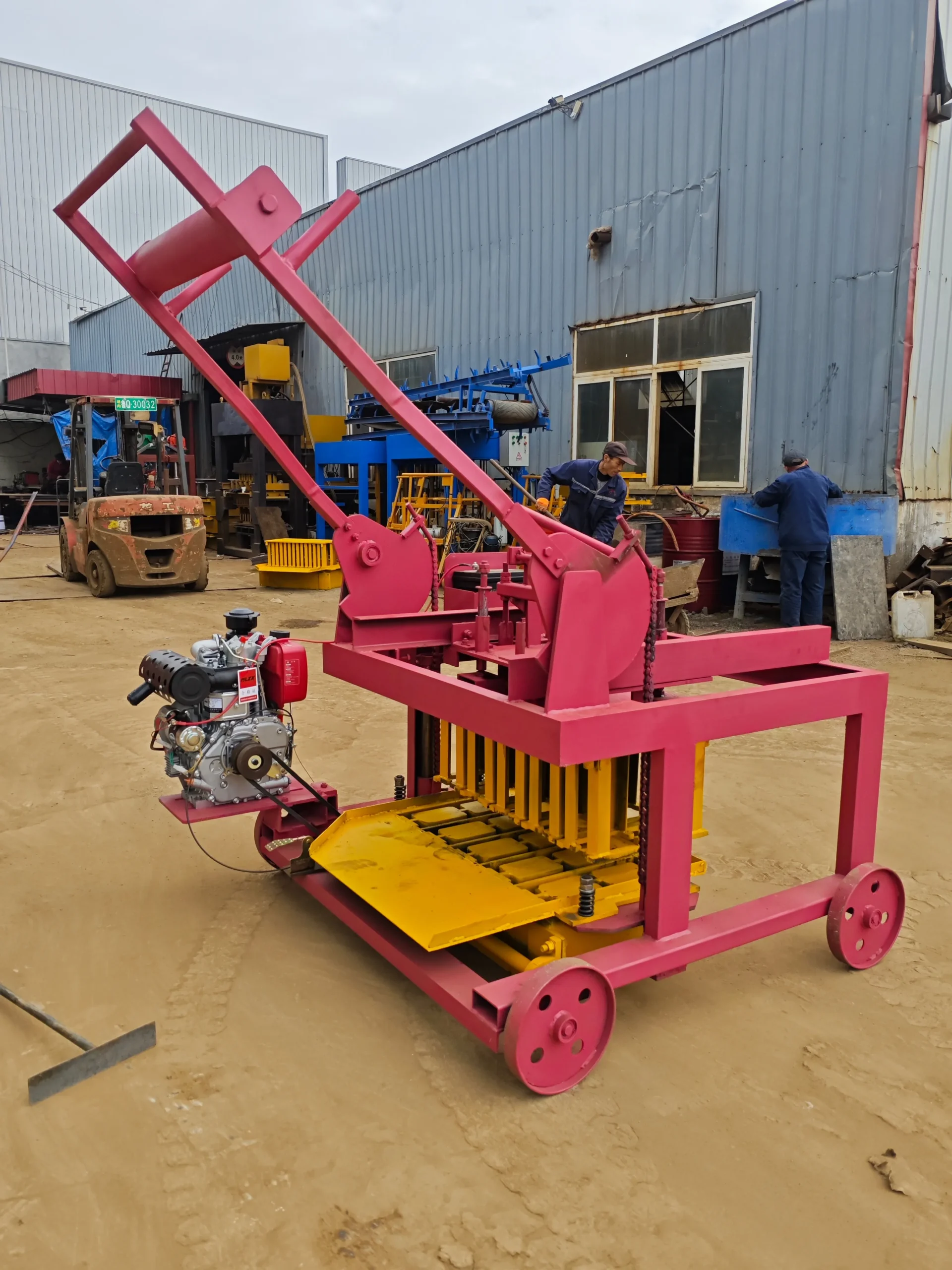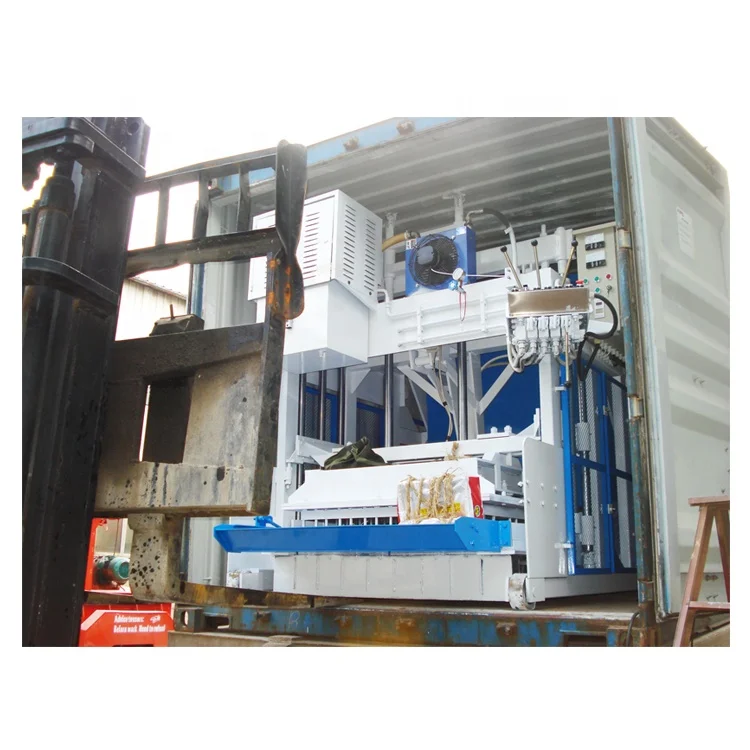


Description
Matched System Design — machine, mould and handling specified as one set against the buyer’s local aggregate and target hollow brick format, not a catalogue default.
Technical Specifications
| Parameter | Value |
|---|---|
| Model | QMJ2-45 |
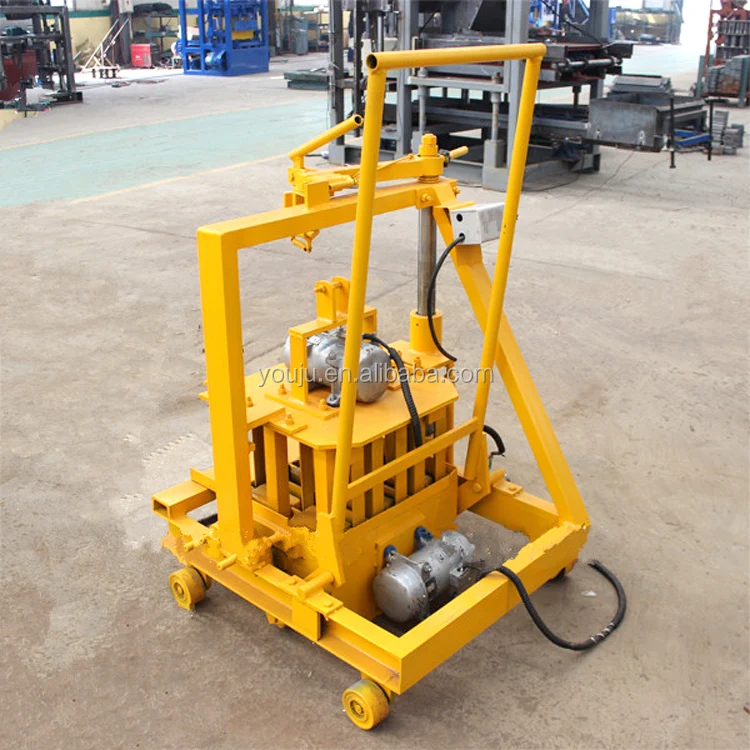
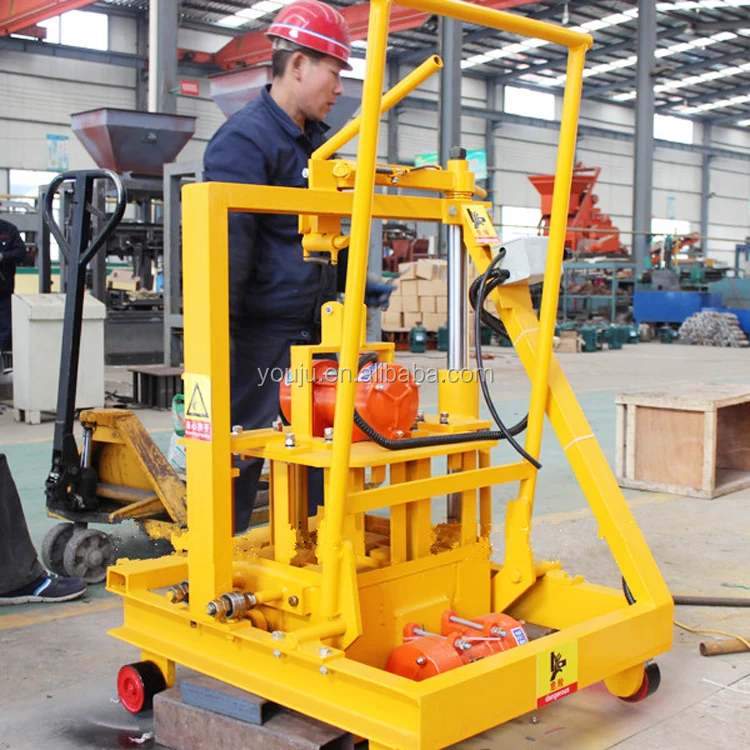
| Product Type | Mobile Egg-Laying Concrete Block Making Machine |
| Machine Type | Mobile / egg-laying (no pallets required) |
| Power Source | Electric |
| Automation Level | Manual |
| Labour Requirement | 1 to 3 workers |
| Mould Change | Manual, supports multiple hollow brick formats |
| Mould Format 1 | 400×200×200 mm hollow brick — 2 pcs/mould — 160 pcs/h (25-30s cycle) — 1280 pcs/8hr |
| Mould Format 2 | 400×150×200 mm hollow brick — 3 pcs/mould — 240 pcs/h (25-30s cycle) — 1920 pcs/8hr |
| Mould Format 3 | 400×100×200 mm hollow brick — 4 pcs/mould — 320 pcs/h (25-30s cycle) — 2560 pcs/8hr |
| Stacking Method | Manual (blocks laid on ground) |
| Space Requirement | Small footprint, no fixed plant needed |
| Certification | ISO9001:2000, CE (verify current validity with supplier) |
Application Suitability
| Application | Material or Output |
|---|---|
| On-site hollow block production | Crushed stone, river sand, cement and water for small construction projects |
| First block plant for entrepreneurs | Hollow bricks in multiple formats with minimal capital and no fixed infrastructure |
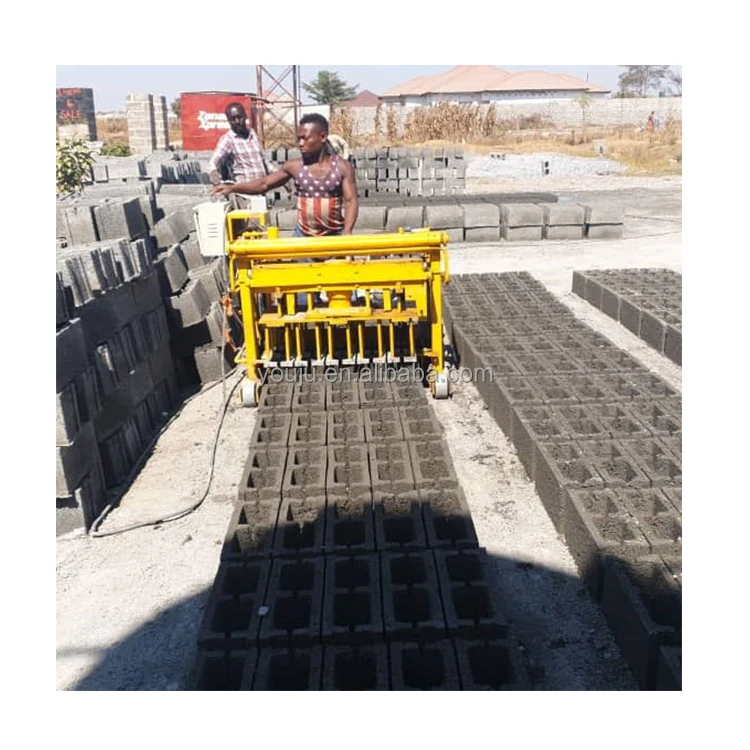
| Remote or space-constrained sites | Egg-laying production directly on prepared ground without pallet inventory |
| Small building-material suppliers | Format flexibility to serve local demand for 400×200, 400×150 and 400×100 mm hollow bricks |
What "1280 Blocks per Day" Actually Means on Site
Capacity only matters when tied to the exact block format you sell.
When I visit small block yards in Latin America, the most common complaint is that the machine never reaches the daily output the seller quoted. The reason is almost always that the quoted figure assumed one specific block size, while the yard spends half the week producing a different format with fewer pieces per cycle. With this mobile block machine specifications sheet, every output number is anchored to a specific mould: 1280 pieces per 8-hour shift applies only to the 400×200×200 mm hollow brick at a 25-30 second cycle. Switch to the 400×100×200 mm format and the theoretical output rises to 2560 pieces — but only if the crew maintains that cycle time consistently across the shift. Knowing how to choose a mobile unit means asking the supplier to confirm capacity per format, not as a single headline number. [NEED_CITE: capacity calculation standards for concrete block forming equipment]
Format-Specific Output and Cycle Reality
The QMJ2-45 produces three standard hollow brick sizes from one frame. The 400×200×200 mm format yields 2 pieces per mould, while the 400×150×200 mm and 400×100×200 mm formats yield 3 and 4 pieces respectively. Cycle time across all three sits in the 25-30 second range, which accounts for manual feeding, vibration and the machine moving forward to the next position. This mobile block machine specifications breakdown assumes a prepared, level ground surface and a crew familiar with the rhythm of the egg-laying process.
Mould Interchangeability as the Flexibility Mechanism
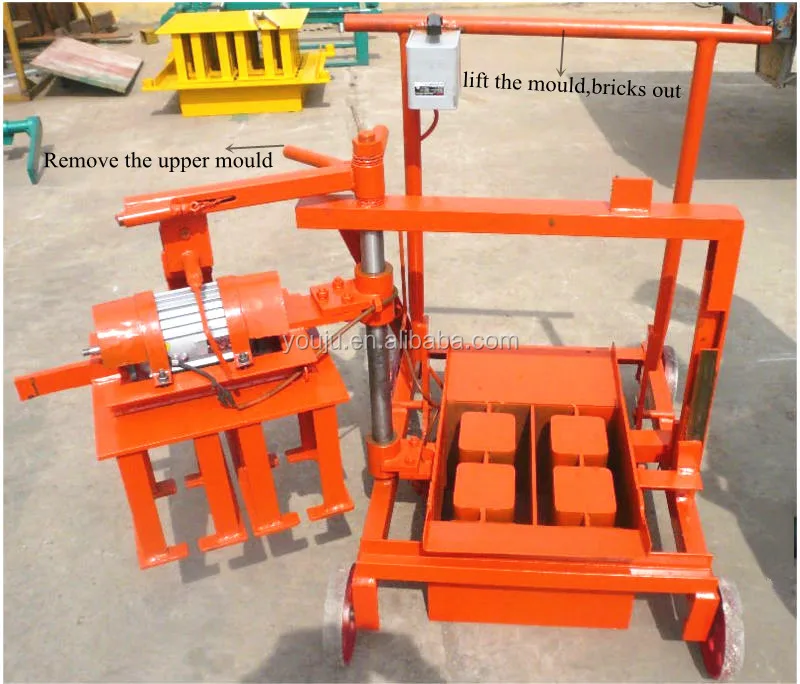
Rather than buying separate machines for each hollow brick size, the operator swaps moulds on the same frame. The change is manual and does not require specialised tools, though the time it takes should be factored into daily planning — every minute the machine sits idle during a mould swap is lost production. For a yard serving a market that demands two or three hollow formats, this interchangeability is what makes the QMJ2-45 a viable single-machine investment. [NEED_CITE: mould change procedures for mobile concrete block machines]
Reading the Specs That Shape Daily Output
The egg-laying design eliminates pallets entirely, which removes pallet cost, curing-area mismatch and the labour of moving pallets through a stacking cycle. However, it also means block quality depends heavily on the ground surface — uneven or soft ground produces uneven blocks. The manual automation level keeps the machine simple and repairable in remote locations, but it places the consistency burden on the operator. Labour is listed at 1 to 3 workers: one to feed the mix, one to operate the machine, and one to manage the fresh blocks. Power source is electric, so confirming voltage and frequency at the site before shipment is essential to avoid commissioning delays. The absence of hydraulic pressure in the specification reflects the manual mechanical design, where vibration force and the weight of the mix provide compaction.
The Cost of Skipping Ground Preparation and Mix Verification
I once spent two weeks at a site in Central America where every batch of hollow blocks crumbled at the edges. The machine was fine — the problem was that the yard was using river sand with high clay content, and no one had adjusted the mix or the vibration timing to compensate. With an egg-laying mobile block machine, there is no pallet to absorb minor inconsistencies, so the ground surface and the mix design must be correct from the first cycle. Skipping a sample test of local aggregate before ordering means the machine may arrive configured for a mix the site cannot actually source, forcing costly material changes or producing blocks that fail compressive-strength requirements. [NEED_CITE: aggregate testing requirements for concrete block production]
Why Sourcing the Complete Set Matters
Shandong Shiyue Intelligent Machinery Co., Ltd focuses exclusively on block making machinery, which means the QMJ2-45 is supplied with moulds designed as matched tooling rather than generic add-ons. The configuration is set against the buyer’s actual mix design and target block format, not a catalogue default. Mould design covers the formats the local market sells, with custom drawings available if the buyer’s region uses non-standard hollow brick dimensions. The machine ships with a factory test record demonstrating cycle times per format, so the buyer knows the output before the crate is opened. Documentation includes voltage and control language confirmation to prevent delays once the machine reaches the site.
Documentation & Verification
- Capacity calculation sheet stating output per hollow brick format and assumed shift length
- Mould drawing and format list matching the buyer’s local hollow brick dimensions
- Factory test record showing cycle times for each configured mould format
- Voltage, frequency and plug type confirmation aligned to site electrical supply
- Operation and maintenance manual with wear parts list and replacement intervals
Installation, Commissioning & Support
- Level, compacted ground surface required — the egg-laying design places blocks directly on the earth
- Electrical supply verified against the machine’s voltage and frequency rating before energising
- Machine arrives assembled; operator walks through the mould-change procedure on first day
- Vibration timing adjusted on site to match the buyer’s specific cement-to-aggregate ratio
- Spare mould wear plates and vibration components included in the first-order parts kit
- Daily maintenance focuses on cleaning the mould cavity and checking vibration mounting bolts
Before You Send an Inquiry
To get a configuration that matches your actual production conditions, provide the hollow brick sizes your market sells, the daily volume you need per format, and a sample or lab report of your local sand and aggregate. Confirm your site voltage, frequency and available power capacity so the motor can be wound correctly before production starts. If you plan to produce more than one format, indicate how frequently you expect to change moulds so the labour and downtime can be factored into the capacity plan.
Frequently Asked Questions
Q: How is daily output calculated and which block format does each figure assume?
A: Each output figure is tied to a specific mould. The 1280 pieces per 8-hour shift assumes the 400×200×200 mm hollow brick at a 25-30 second cycle with 2 pieces per mould. The 2560 figure applies only to the 400×100×200 mm format with 4 pieces per mould. Always confirm which format the quoted capacity assumes.
Q: What hollow brick sizes can the QMJ2-45 produce and how does the mould change work?
A: The machine supports three standard formats: 400×200×200, 400×150×200 and 400×100×200 mm hollow bricks. Mould change is manual and requires no specialised tools, but the downtime must be accounted for in daily planning. Custom mould dimensions are available if your local market requires non-standard sizes.
Q: What voltage and frequency options are available and how is this confirmed before shipment?
A: The motor is wound to match the buyer’s site supply. Voltage and frequency must be confirmed during the quotation stage so the factory test runs on the correct electrical specification. This prevents commissioning delays and protects the motor from damage on first start-up.
Q: What local aggregate and mix design work with this egg-laying machine?
A: The QMJ2-45 compacts through vibration and mechanical pressure, so the mix must suit that profile. High-clay river sand may require adjustment to the water-cement ratio or vibration timing. Sending a sample of local aggregate before ordering allows the factory to confirm compatibility and recommend a starting mix design.
Q: What spare moulds and wear parts should be ordered with the first machine?
A: Vibration mounting components, mould wear plates and any consumable seals should be included in the initial shipment. The exact list depends on the formats configured and the abrasiveness of the local aggregate. Request a wear parts list matched to your production volume and ordering lead time.