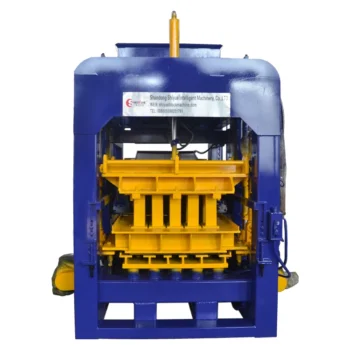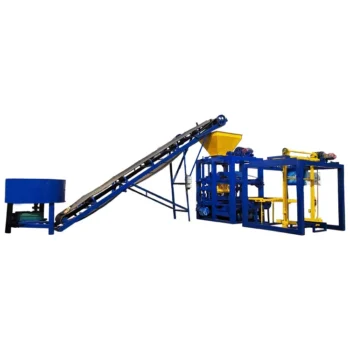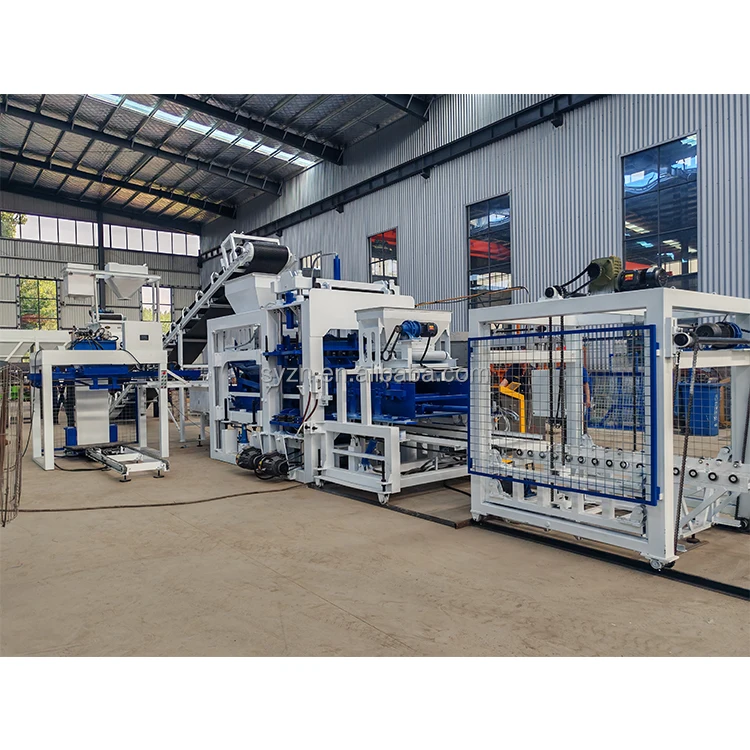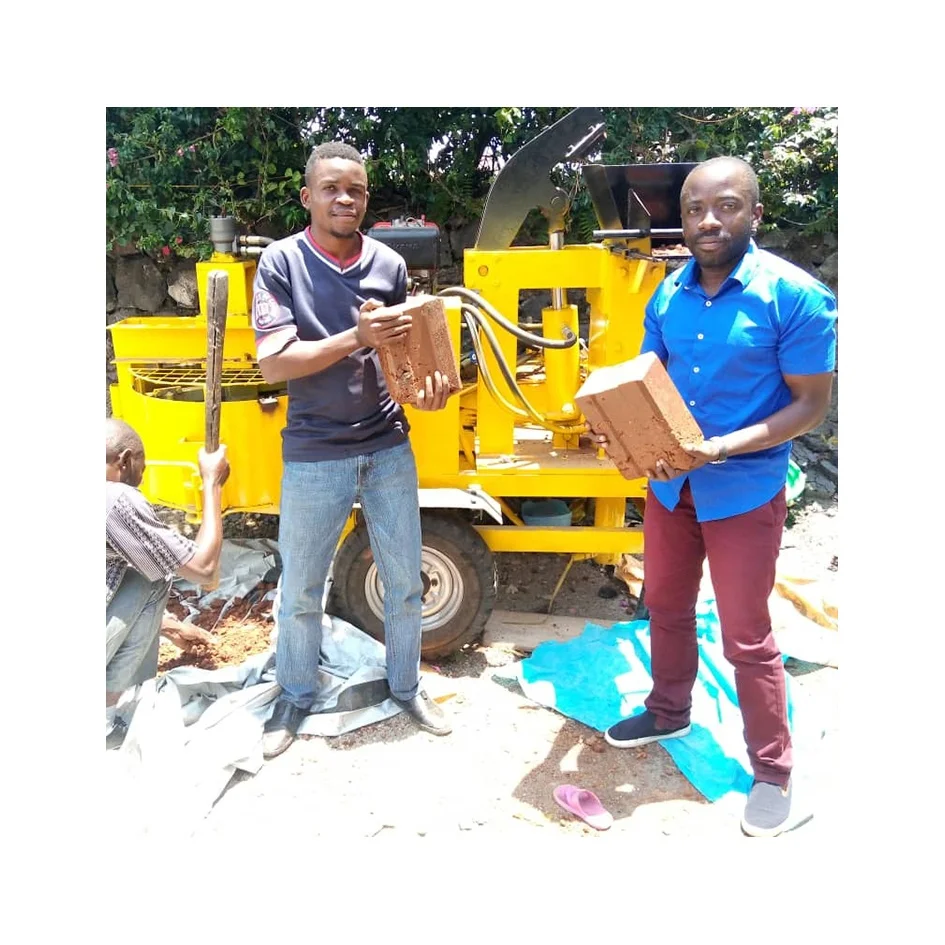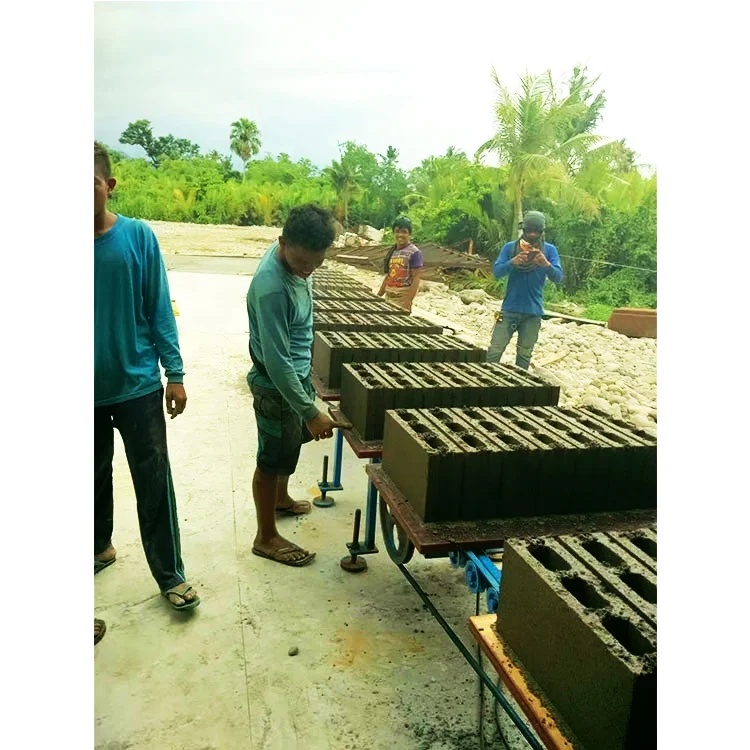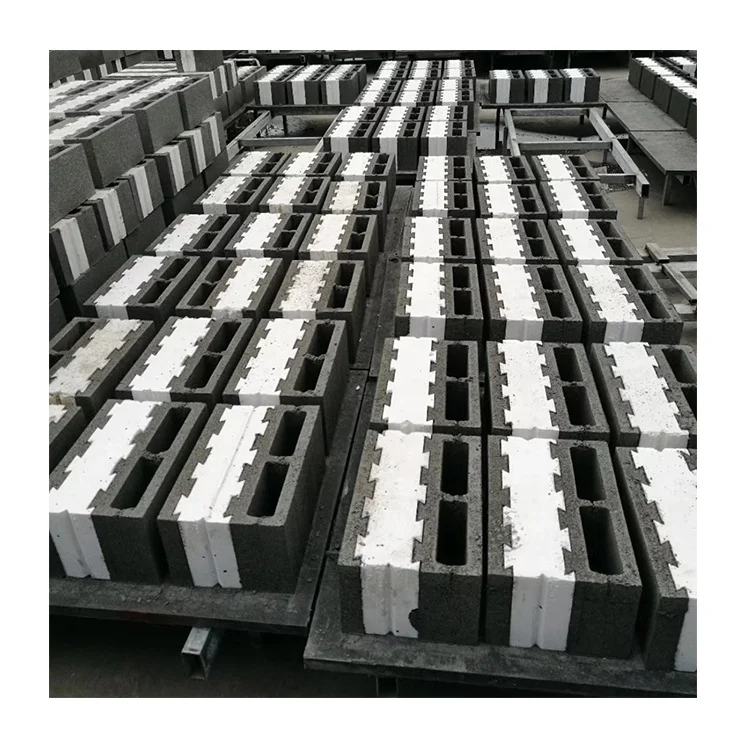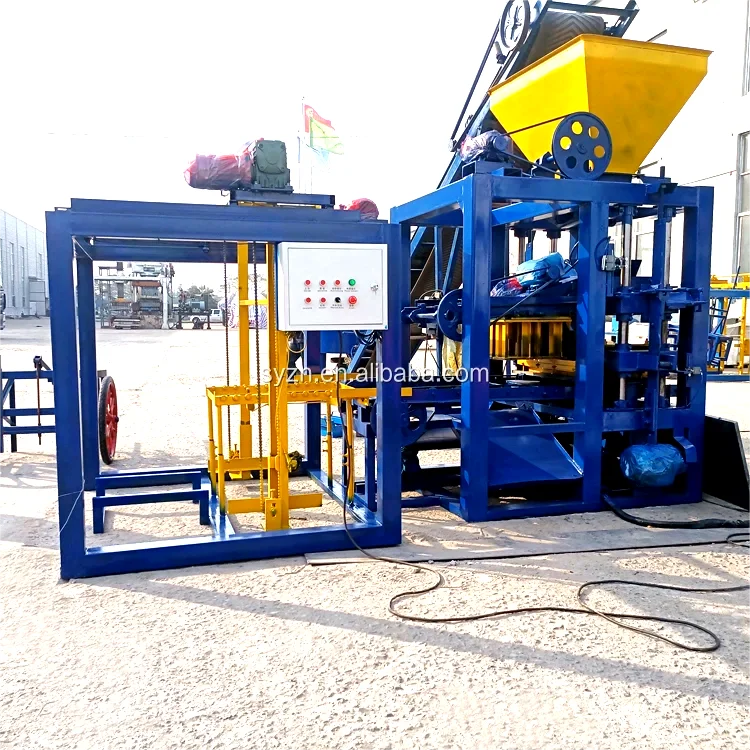
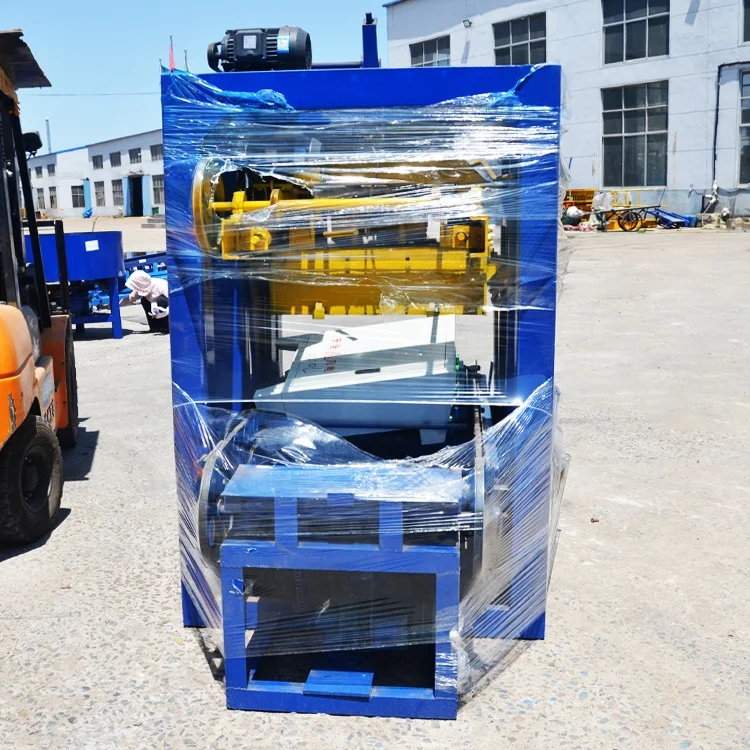
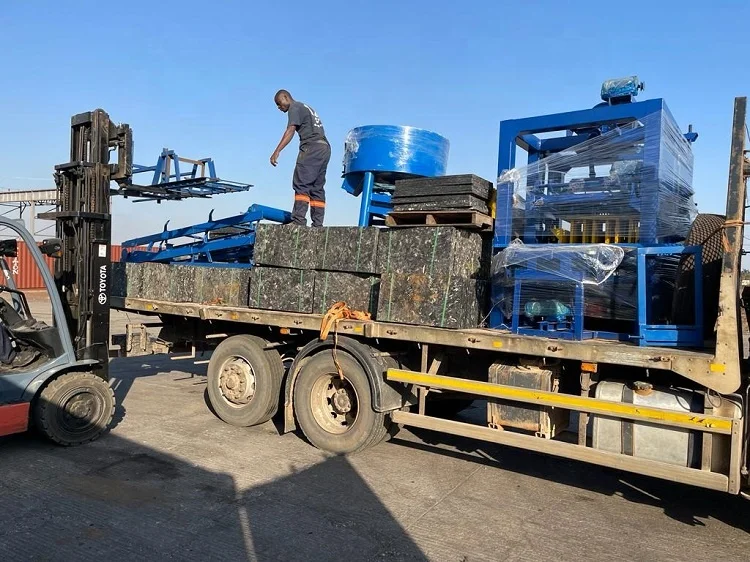


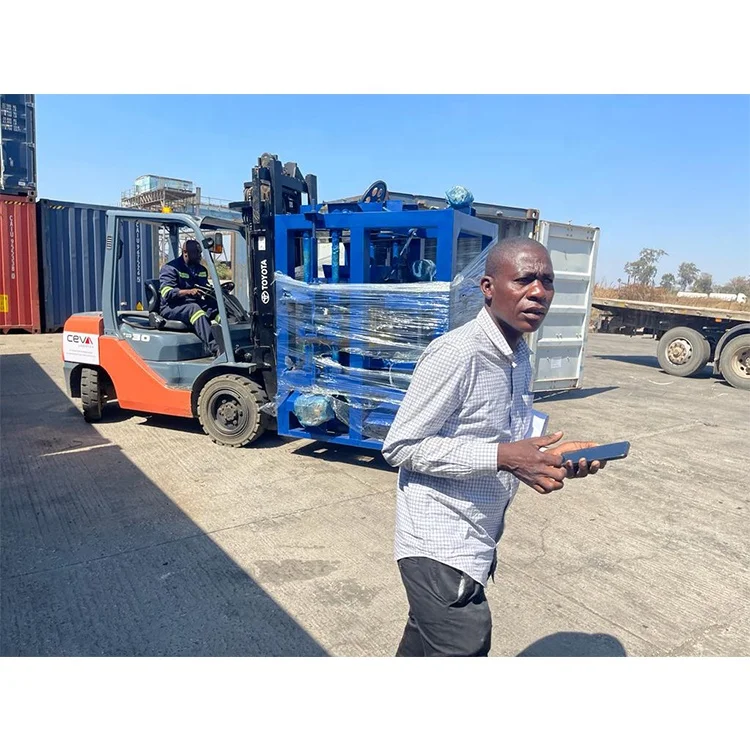
Description
Honest capacity stated per block format — the QTJ4-26 is specified with output figures tied to exact mould and pallet dimensions, not a single catalogue headline that ignores what you actually produce.
Technical Specifications
| Parameter | Value |
|---|---|
| Model | QTJ4-26 |
| Product Type | Semi-Automatic Concrete Block Making Machine |
| Overall Dimensions (L×W×H) | 2060×1730×2580 mm |
| Net Weight | 1800 kg |
| Molding Cycle | 26 s |
| Vibration Frequency | 4200 r/min |
| Exciting Power (Vibration Force) | 35.5 kN |
| Rated Power | 11.95 kW |
| Mixer Model | JQ350 |
| Pallet Size | 850×450×20 mm |
| Guide System | Four guide pillars with automatic mould travel |
| Vibration Type | Dual vibrating motors under mould, combined with upper mould pressing |
| Output Capacity (Hollow Block 390×190×190 mm) | 480 pcs/h, 3800 pcs per 8-hour shift (basis: 4 pcs/mould) |
| Output Capacity (Hollow Block 400×150×200 mm) | 600 pcs/h, 4800 pcs per 8-hour shift (basis: 5 pcs/mould) |
| Output Capacity (Solid Brick 240×115×53 mm) | 2100 pcs/h, 17000 pcs per 8-hour shift (basis: 18 pcs/mould) |
| Mould Formats Supported | Hollow block (8 inch, 6 inch), solid brick |
| Raw Materials | Crushed stone, sand, cement, dust, fly ash |
| Automation Level | Semi-automatic |
| Voltage & Frequency | Configurable to buyer’s site requirement (to be confirmed) |
| Control System | PLC or relay logic (to be confirmed) |
| Stacking Method | Manual pallet handling |
Application Suitability
| Application | Material or Output |
|---|---|
| Small-scale hollow block plant | Crushed stone and sand mix, 8-inch and 6-inch hollow blocks |
| On-site block production for contractors | Local aggregate with cement binder, hollow blocks for building walls |
| Solid brick production for local market | Sand, fly ash, cement mix, standard 240×115×53 mm bricks |
| First block plant for entrepreneurs | Multiple format flexibility with semi-automatic operation |
| Building material distributors adding formats | Switching between hollow block and solid brick on the same machine |
What "26-Second Cycle" Actually Means for Your Daily Output
The cycle time is a baseline, not a guarantee — real throughput depends entirely on which mould is loaded and how your local mix behaves under 35.5 kN vibration.
I once watched a buyer in West Africa unpack a machine that promised a 26-second cycle, only to find that their river sand carried so much clay that the vibration could not compact the mix before demoulding. Blocks collapsed at the edges, the operator kept adding seconds to the cycle, and daily output dropped to less than half the brochure figure. That is why the QTJ4-26 block machine specifications list output per format rather than a single headline number [NEED_CITE: impact of local aggregate composition on block cycle time]. When you size a semi-automatic concrete block making machine, how to choose the right configuration starts with telling the supplier exactly what you plan to produce.
Matching the Mould to Your Best-Selling Block Format
The QTJ4-26 supports hollow blocks at 390×190×190 mm and 400×150×200 mm, plus solid bricks at 240×115×53 mm. Each format uses a different mould cavity count, so the hourly output shifts from 480 pieces per hour on the larger hollow block (basis: 4 pcs/mould) up to 2100 pieces per hour on solid brick (basis: 18 pcs/mould). Before ordering, check which format your local construction market actually purchases in volume, because that determines which capacity figure matters.
Pallet Size and the Curing Area You Already Have
The 850×450×20 mm pallet is fixed for this machine. If your existing curing racks or forklift were designed around a different pallet dimension, you will face daily handling friction from the first shift. Confirm the pallet material — typically bamboo or PVC — against your local humidity and curing duration, because warped pallets produce uneven blocks and force unplanned stops [NEED_CITE: pallet material selection for concrete block curing conditions]. This is a detail that belongs in the conversation before the QTJ4-26 block machine specifications sheet is finalised.
Why Vibration Force and Mix Design Must Be Checked Together
The dual under-mould vibrating motors deliver 35.5 kN at 4200 r/min, combined with upper mould pressing through four guide pillars. This configuration compacts standard crushed-stone mixes well, but a high-clay or high-moisture aggregate absorbs vibration energy differently, leaving blocks under-densified. Share a sample of your local sand or crushed stone gradation before production so the vibration parameters can be evaluated against your actual material.
The Hidden Cost of Skipping the Voltage and Control Conversation
Arriving machines that have not had voltage, frequency, and PLC display language confirmed before shipment sit idle while transformers are sourced or control panels are reprogrammed. On a small semi-automatic line, that delay eats into the first weeks of revenue you counted on [NEED_CITE: common commissioning delays in exported block machinery]. The QTJ4-26 block machine specifications leave voltage and control system as items to be confirmed with the buyer — treat that as a required step, not an optional line on a checklist.
Why Buyers Start Conversations Here
Every configuration discussion begins with the block format your market sells and the raw materials you can source locally. The machine, mould, and pallet are specified as a matched system rather than assembled from separate catalogues. Mould drawings and format lists are provided so you can verify dimensions before production. Output capacity is calculated per block format, not averaged across a range. Installation guidance covers the foundation, power supply, and operator workflow specific to this semi-automatic setup.
Documentation & Verification
- Capacity calculation sheet stating output per block format and mould cavity count
- Mould drawing with dimensional tolerances for your selected block formats
- Pallet specification including material grade and load rating per pallet
- Voltage and control language confirmation record signed before production
- Factory test record run on your specified mix proportion and block format
- Wear parts and mould list with part numbers for first replacement order
Installation, Commissioning & Support
- Foundation must support 1800 kg net weight plus dynamic vibration load on a level concrete pad
- Dedicated electrical circuit rated for 11.95 kW total draw including the JQ350 mixer
- Machine ships partially assembled; guide pillars and vibration motors require on-site alignment
- First production run used to verify cycle time against your actual raw material mix
- Operator training covers mould change procedure, pallet loading rhythm, and daily greasing points
- Wear parts list supplied with part numbers so spares can be ordered before first failure
What to Share Before Requesting a Quotation
Tell us the hollow block or solid brick format your market buys most, the daily volume you need to hit, and the local aggregate you plan to use. Confirm your site voltage and frequency so the motor and control panel are wound correctly. If you already have curing racks or a forklift, share the pallet dimensions they were built around so the 850×450 mm pallet requirement can be verified before order confirmation.
Frequently Asked Questions
Q: How is the output capacity of the QTJ4-26 calculated, and which block format does each figure assume?
A: Each output figure is tied to a specific mould. The 480 pieces per hour assumes a 390×190×190 mm hollow block with 4 cavities per mould at a 26-second cycle. The 2100 pieces per hour assumes a 240×115×53 mm solid brick with 18 cavities. Always match the figure to the format you will actually produce.
Q: What pallet size does this machine require, and how should it be matched to my curing area?
A: The QTJ4-26 uses an 850×450×20 mm pallet. Before ordering, measure your curing rack spacing and forklift fork width to confirm compatibility. Mismatched pallets create daily handling bottlenecks and can damage blocks during transport to the curing zone.
Q: How do I confirm that the vibration force and mix design are matched to my local aggregate?
A: Share a gradation analysis or sample of your local sand and crushed stone before production. The 35.5 kN vibration force at 4200 r/min works with standard mixes, but high-clay or high-moisture aggregates may require adjustment. An early conversation prevents under-compacted blocks on arrival.
Q: Which voltage, frequency, and control display language options need to be confirmed before shipment?
A: Confirm your site voltage and frequency so the motors and control panel are configured correctly. Specify the language for the control display if a PLC is selected. These items appear as open fields in the QTJ4-26 block machine specifications and must be closed before production begins.
Q: What is involved in changing the mould on the QTJ4-26, and how long does it take?
A: The four guide pillars allow the mould to travel vertically, and mould bolts are accessible from the sides. Mould change time is not published in the source documentation — request a step-by-step procedure and estimated duration from the supplier before ordering multiple mould formats.