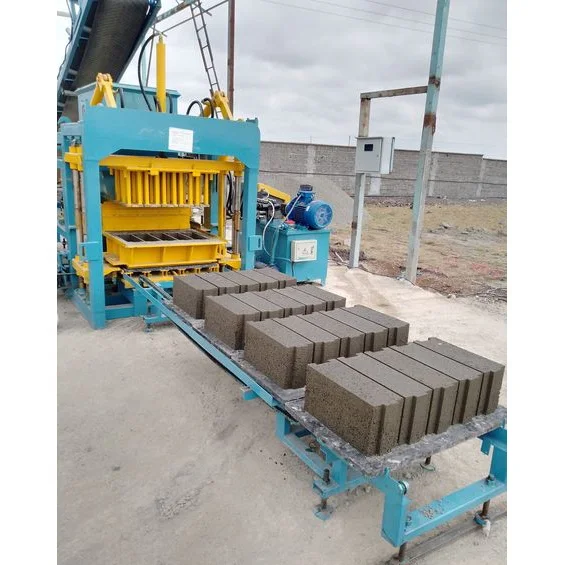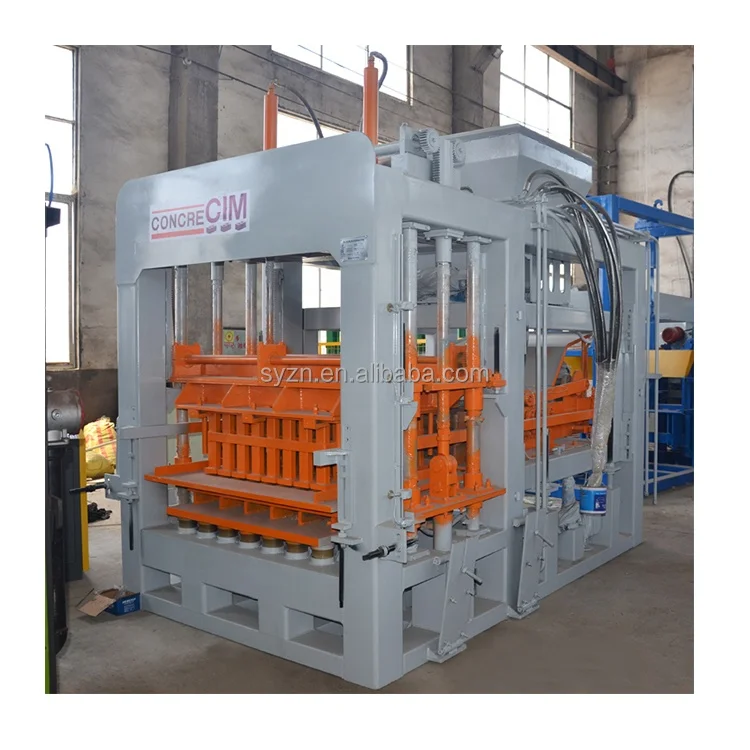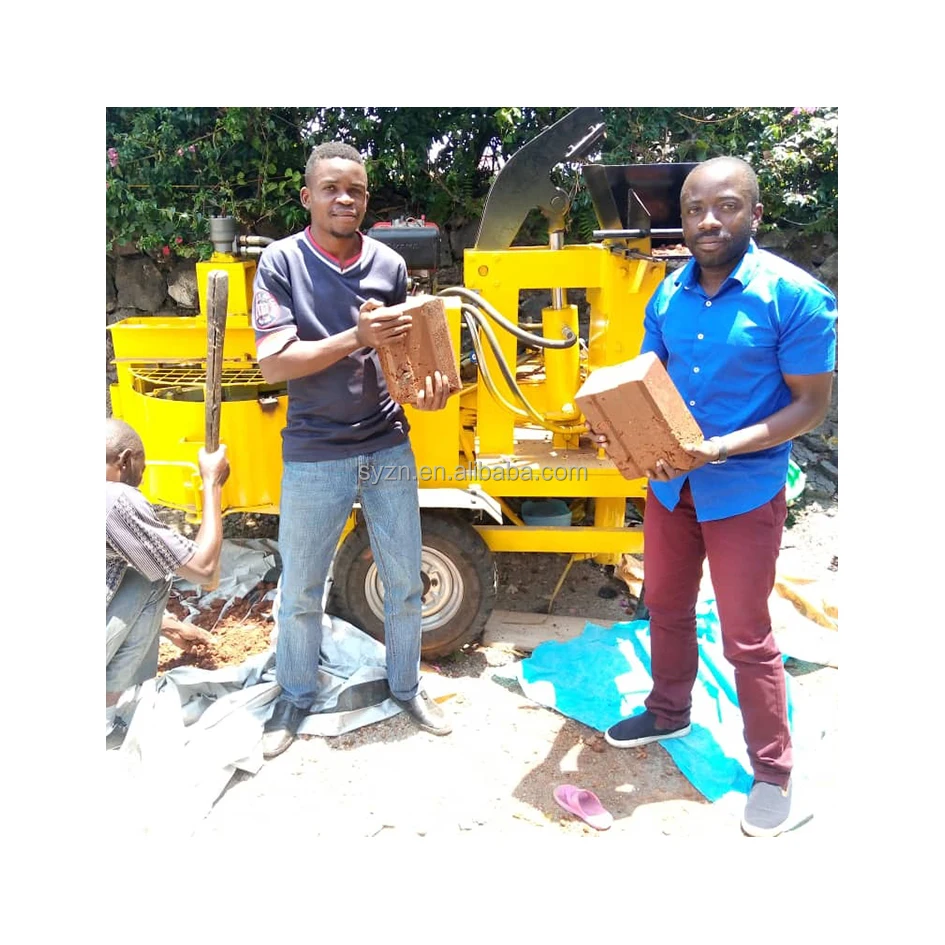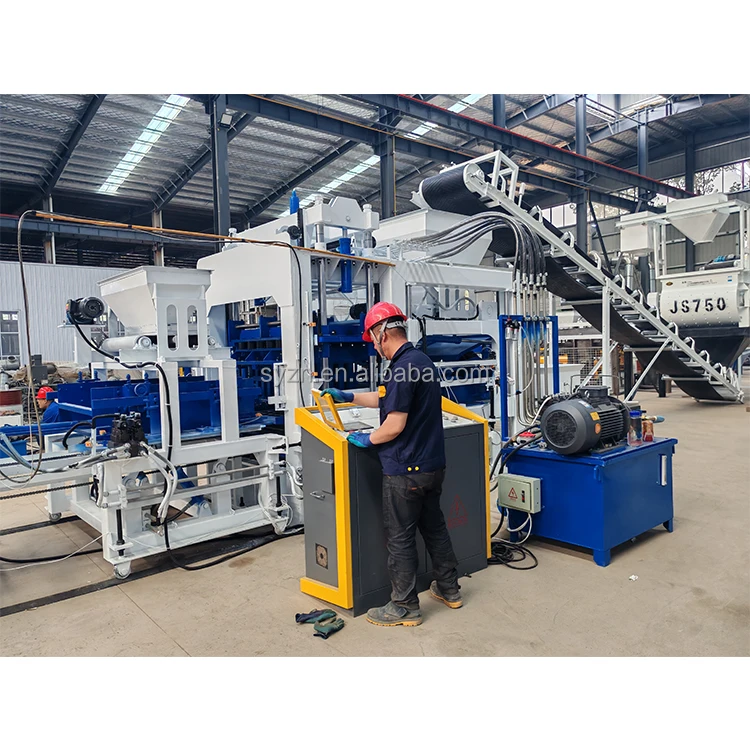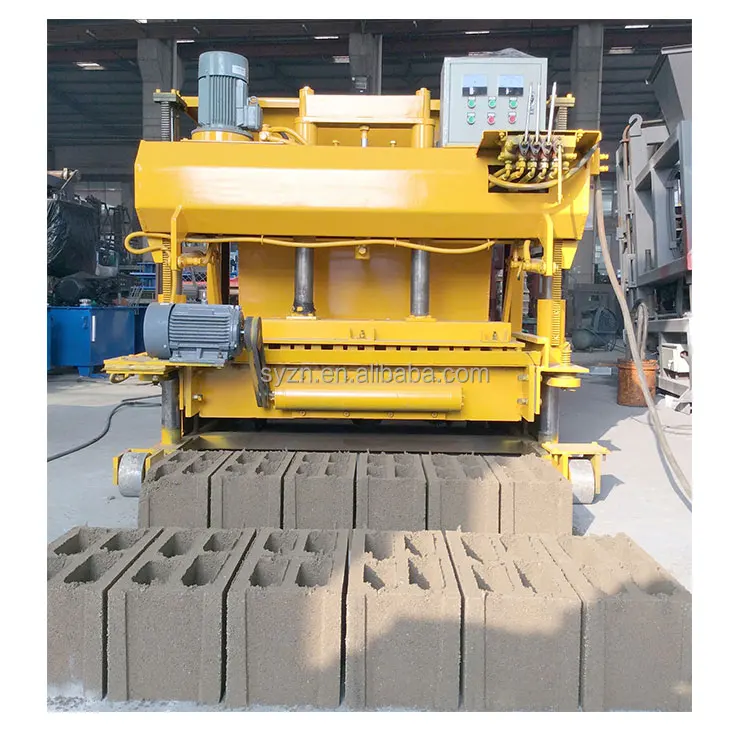
Description
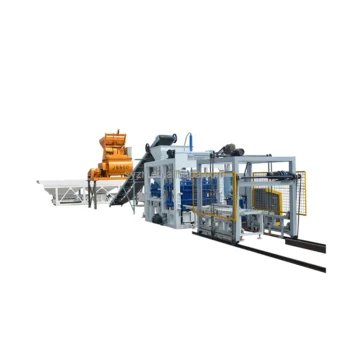
Matched System Configuration — the Qmy6-25 is specified with mould, power, and vibration settings validated against your actual block format and local aggregate sample before production.
Technical Specifications
| Parameter | Value |
|---|---|
| Model | Qmy6-25 |
| Product Type | Mobile Egg Layer Block Making Machine |
| Molding Capacity | 6 pcs/mold |
| Hydraulic Pressure | 16 MPa |
| Vibration Form | Mold Vibration |
| Molding Cycle | 20s–25s (basis not stated in source — confirm block format / material / thickness) |
| Turning Method | Hydraulic |
| Total Power | 9.6 kW |
| Total Mass | 2.5 Tons |
| Voltage & Frequency | Customizable according to buyer requirement |
| Automation Level | Semi-automatic / Mobile egg-laying |
| Optional Mixer | JS500 double shaft mixer / JQ500 or JQ750 pan mixer |
Application Suitability
| Application | Material or Output |
|---|---|
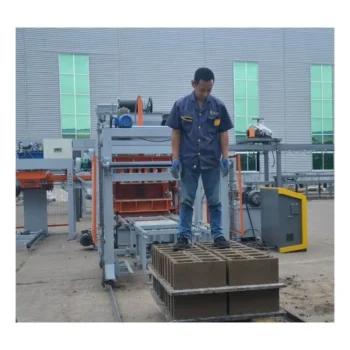
| On-site hollow block production for building contractors | Cement, crushed stone, sand, and water mixture laid directly on concrete floor |
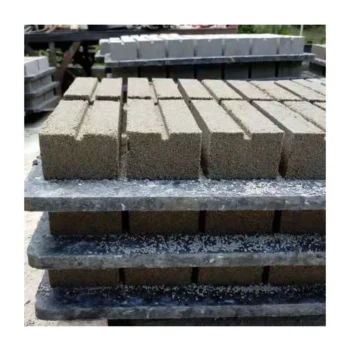
| Solid block manufacturing for housing projects | Local aggregate blended with cement, cured in open yard |
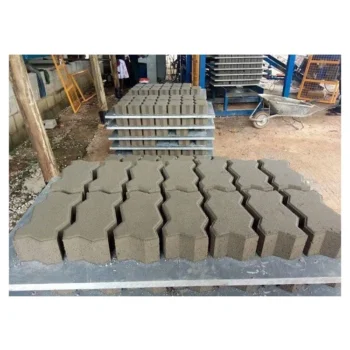
| Paving block runs for site roads and walkways | Fine aggregate and cement pressed through dedicated paving mould |
| Small-scale block yard start-ups | Various formats produced by changing mould on a single machine |
What "20-Second Cycle" Actually Means for Your Daily Output
The cycle time only holds value when tied to the exact block format, wall thickness, and mix design you will run.
Capacity figures on mobile block machines are often quoted as a single molding cycle range without naming the block type behind that number. I have seen buyers arrive at a job site expecting a certain daily count, only to find that the 20s–25s cycle was measured on a thin solid block while their actual hollow block format demands noticeably longer compaction. The mobile egg layer block making machine specifications must state which format the cycle assumes, otherwise the output projection is just a guess. [NEED_CITE: standard testing formats for block machine cycle time claims]
Matching Mould Format to the Block Your Market Actually Buys
The Qmy6-25 supports mould changes across hollow, solid, and paving formats. The critical point is that each format changes the effective cycle time and the daily output you can realistically plan around. A 6 pcs/mold capacity tells you what happens per press stroke, but the number of strokes you complete per shift depends on how long that specific block needs under vibration and hydraulic pressure. This is why the mobile egg layer block making machine specifications should always list cycle time per format, not just a blanket range.
How Local Aggregate Changes Everything
When we shipped an egg-laying machine to a customer in West Africa, the trial runs used standard river sand and the blocks met strength targets without issue. The customer then switched to the red laterite soil available near their site and the vibration settings were completely wrong — blocks cracked during curing. We sent a team on-site, ran samples with the actual aggregate, and adjusted the hydraulic pressure and vibration duration to match. That experience shapes how every order is handled now: we ask for a raw material sample before finalizing the mobile egg layer block making machine specifications. [NEED_CITE: effect of aggregate type on concrete block compressive strength]
Reading the Specs That Actually Matter
The 16 MPa hydraulic pressure works together with the mold vibration to determine the density and strength of each block. Higher pressure compresses the mix more tightly, but if the vibration force is not matched to the same mix design, you get inconsistent compaction across the block face. The hydraulic turning method means the machine pivots the mould box smoothly, reducing the physical strain on the operator compared to manual lever systems. At 9.6 kW total power, the Qmy6-25 can run from a standard industrial generator on remote sites where grid power is unreliable. The 2.5-ton mass provides enough machine weight to stabilize during vibration without requiring a fixed foundation, which is the whole point of a mobile egg layer design.
The Hidden Cost of Skipping Configuration Checks
When voltage and frequency are not confirmed before the machine leaves the factory, the motor may not match the local supply, and the machine sits idle on site waiting for a replacement motor or transformer. I have also seen pallet handling left out of quotations entirely, leaving workers to move blocks by hand after the machine lays them — which defeats the purpose of buying a mobile egg layer in the first place. [NEED_CITE: common commissioning delays from unconfirmed electrical specifications] Choosing a pallet size without considering the curing yard dimensions and the forklift already on site means wasted floor space and double handling. These are not theoretical risks; they show up on real projects every month.
Why Source This Machine Through Shiyue
Block machinery is the single focus here, so the Qmy6-25 is not assembled from unrelated suppliers — the machine, mould, and optional supporting equipment are specified as one matched system. Configuration is set against your actual mix design and target block format, not pulled from a catalogue default. Mould design is available for the formats your local market sells, including custom drawings if your region uses a block shape outside the standard range. The automation level is selectable, so you can start with the base mobile egg layer and add a block clamper or upgrade mixing equipment later as volume grows. Every order ships with a factory test record that documents actual cycle times on the block format you specified.
Documentation & Verification
- Line layout and capacity calculation stating the block format assumed for each output figure
- Mould drawing and format list confirming included block types before shipment
- Voltage, frequency, and control language confirmation sheet signed before production
- Factory test record with cycle time measured on your specified block format
- Hydraulic and electrical schematic matching the as-built configuration
- Operation and maintenance manual in the operator’s working language
Installation, Commissioning & Support
- Flat concrete floor required with minimum area for machine turning radius and curing yard
- Power supply matching the confirmed voltage and frequency, dedicated circuit for 9.6 kW load
- Machine arrives fully assembled; no fixed foundation bolts needed for egg-laying operation
- First-run adjustment of hydraulic pressure and vibration duration using your local aggregate sample
- Operator training covering mould change procedure and daily maintenance checks
- Wear parts and mould inventory list provided for planning first replacement order
- Ongoing technical support for mix design adjustments as local material sources change
What We Need to Quote Accurately
To size the Qmy6-25 properly for your project, share the exact block format and dimensions you plan to produce, along with a sample or description of the aggregate available near your site. Let us know the local voltage and frequency so the motor and control panel are built to match. If you already have a mixer or loader on site, tell us the model so the optional supporting equipment connects without duplication.
Frequently Asked Questions
Q: What block format does the stated cycle time assume, and what is realistic daily output for my block type?
A: The 20s–25s molding cycle needs to be confirmed against your specific block format, wall thickness, and mix design. We run a factory test on your exact mould and aggregate to measure actual cycle time, then provide a capacity calculation showing realistic daily output for that block type rather than a generic figure.
Q: How is the machine configured to match my local aggregate rather than a default setting?
A: We ask buyers to send a raw material sample before finalizing configuration. The hydraulic pressure and vibration duration are then adjusted to suit that aggregate’s particle size and shape. This prevents the common problem where blocks meet strength targets in the factory but crack on site with local materials.
Q: What mould formats are available, and can I order custom moulds to my own drawings?
A: Standard moulds cover hollow, solid, and paving block formats in the dimensions common to your market. If your region uses a block shape or size outside that range, we design and manufacture custom moulds from your drawings. Mould drawings and a format list are confirmed before production begins.
Q: What voltage, frequency, and control language options are confirmed before shipment?
A: Voltage and frequency are customizable to match your local supply standard. The exact values are confirmed and documented before the machine enters production, along with the language for any control displays. This prevents commissioning delays caused by electrical mismatches after the machine arrives on site.
Q: How long does a mould change take, and what tools or training are required?
A: Mould change procedure is covered during operator training at installation. The hydraulic turning method simplifies access to the mould box compared to manual systems. We provide the specific tools needed and document the procedure in the operation manual so your team can handle format switches independently.