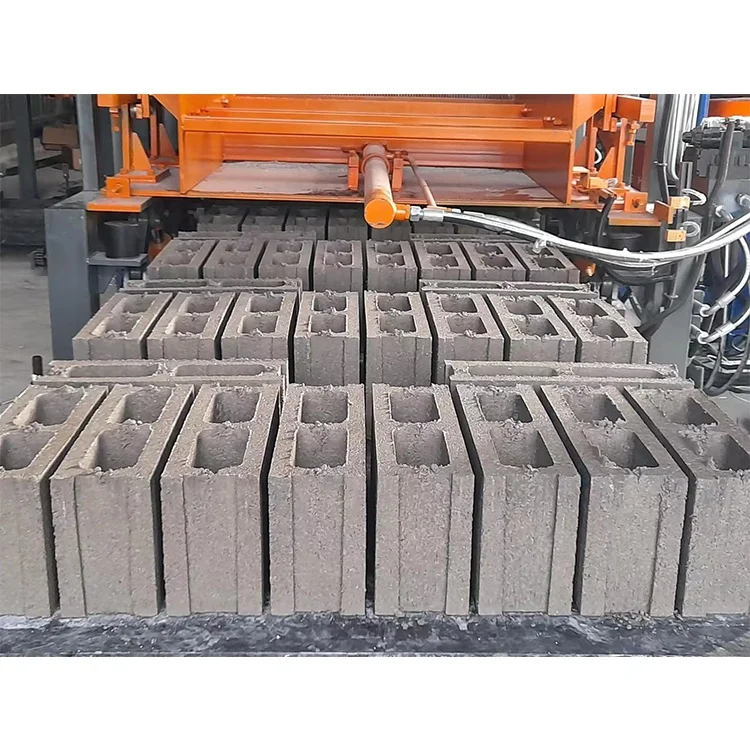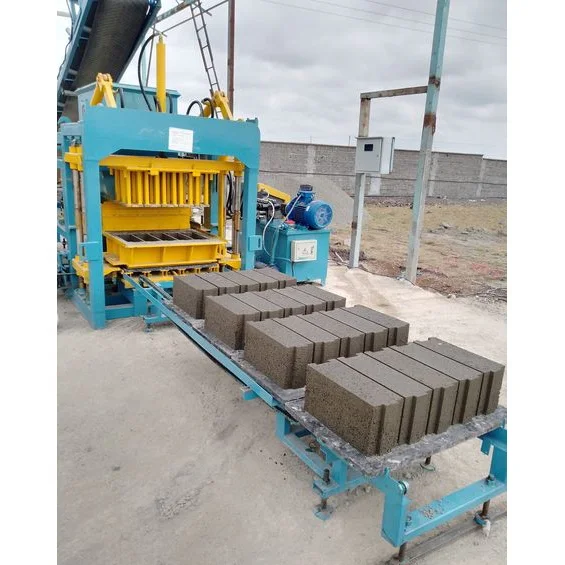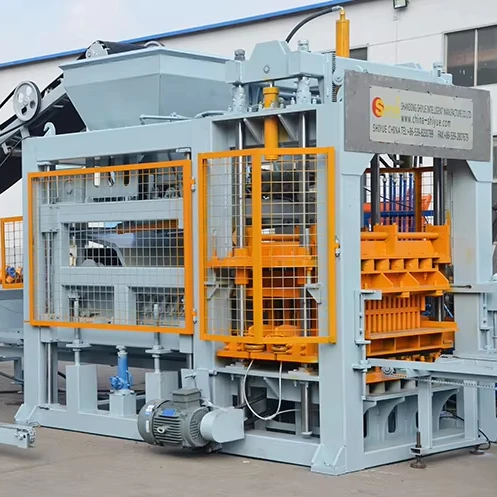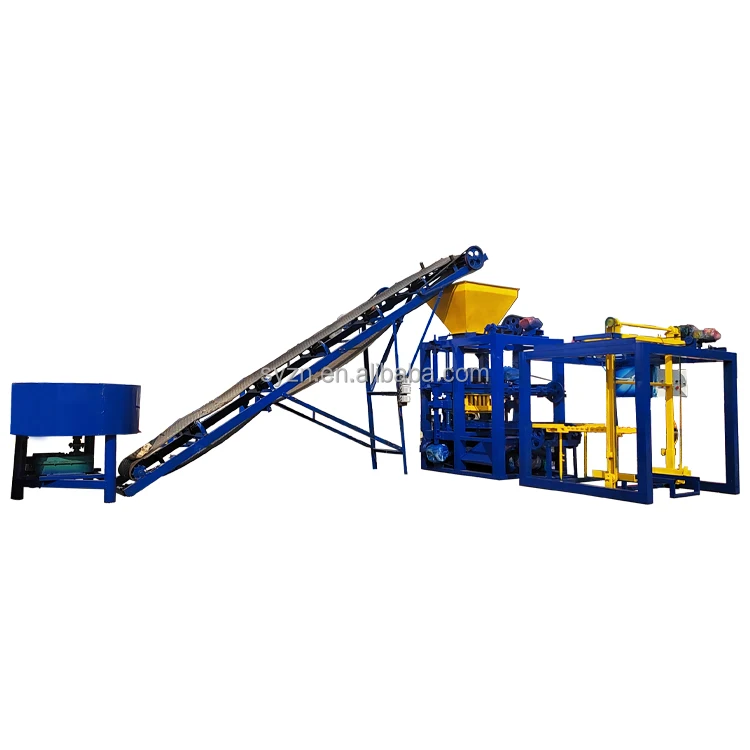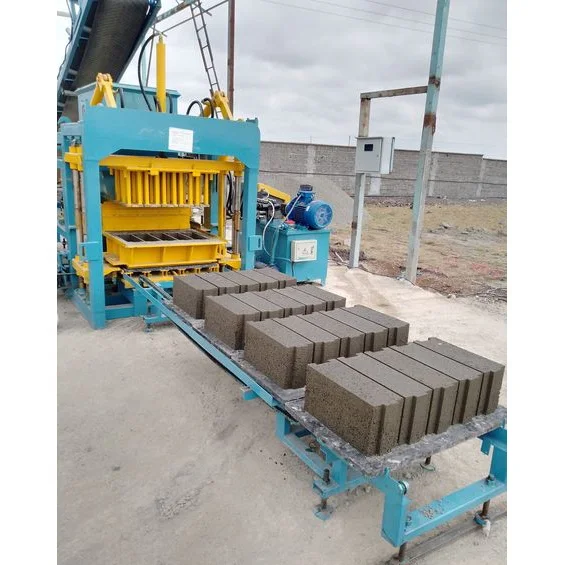
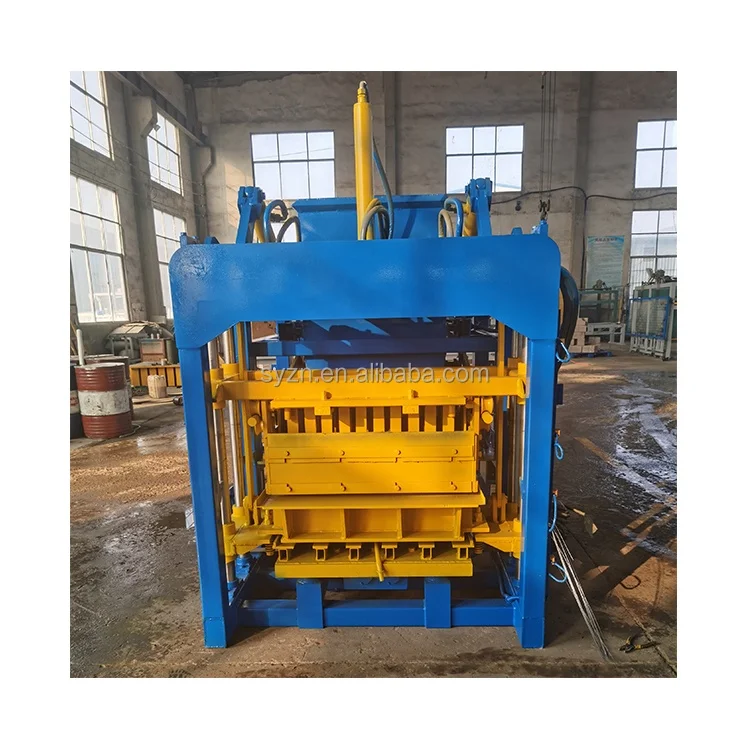
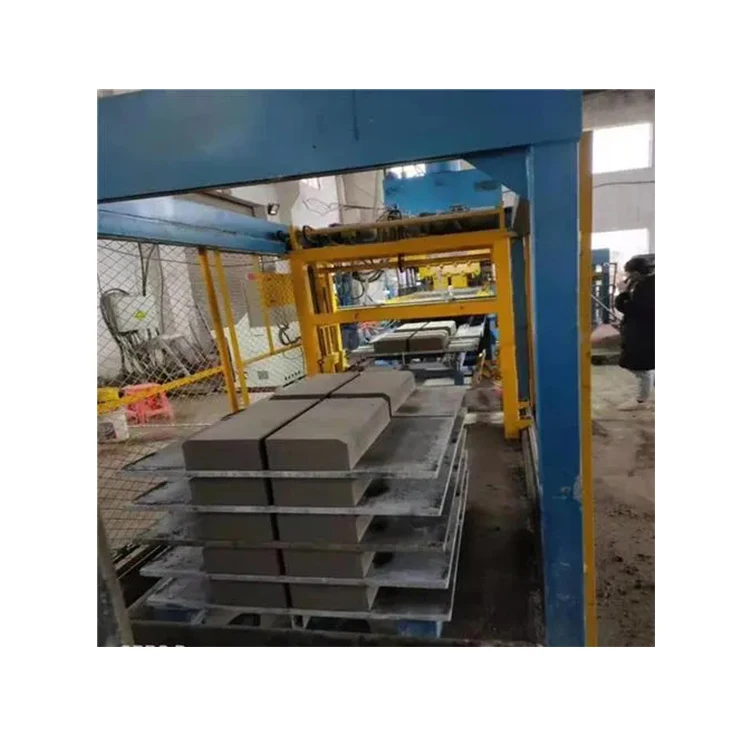
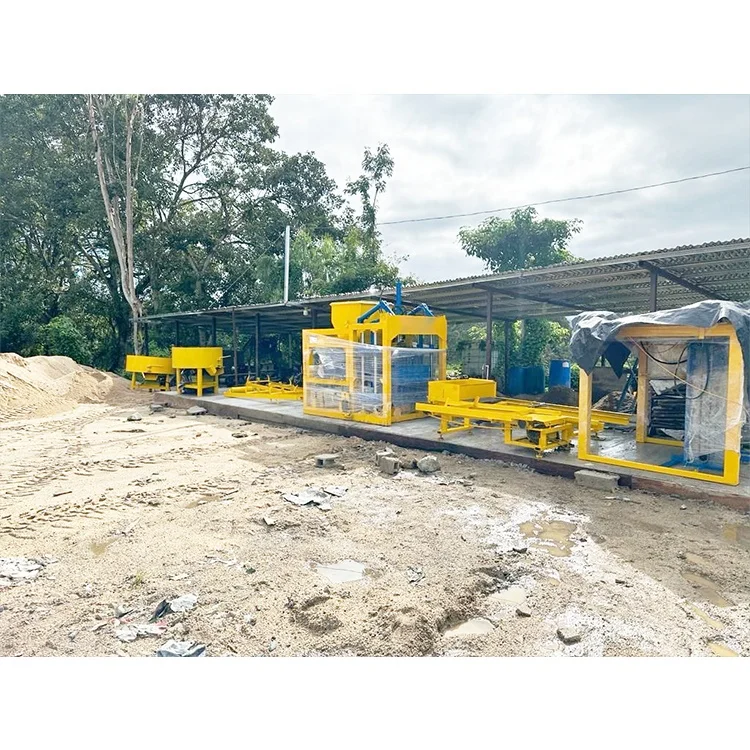
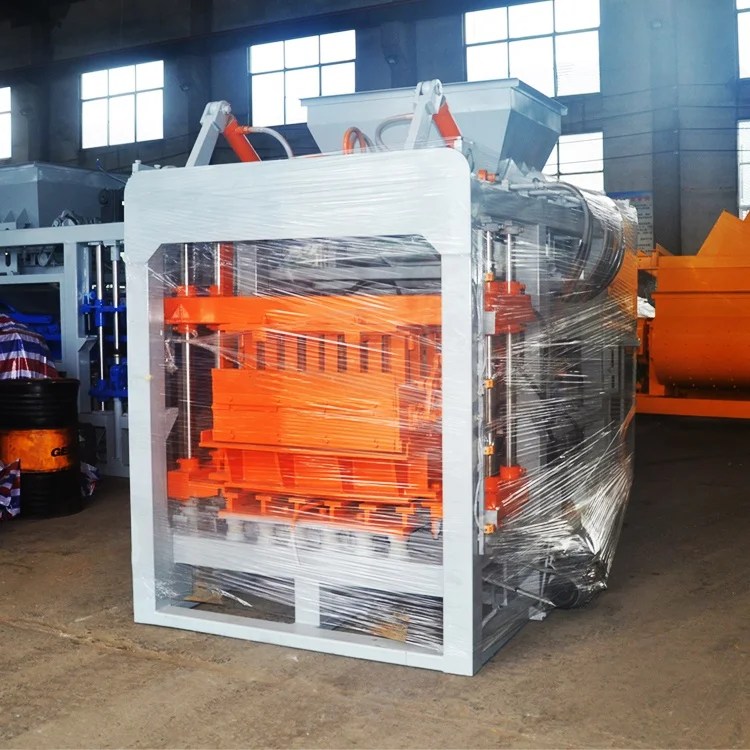
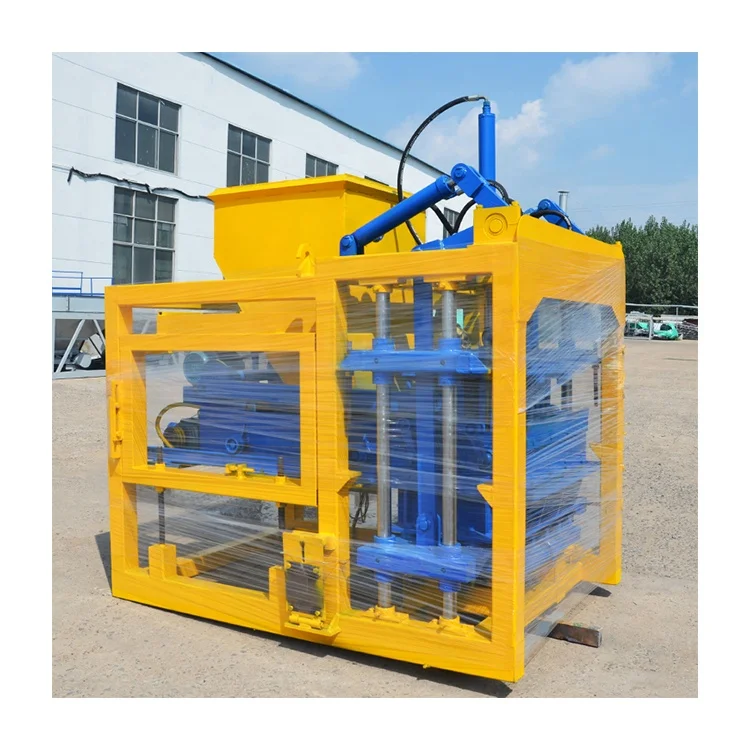
Description
Mould and host matched to your format — QT4-15 capacity figures are stated per block type so daily output expectations align with the products your market actually buys.
Technical Specifications
| Parameter | Value |
|---|---|
| Model | QT4-15A |
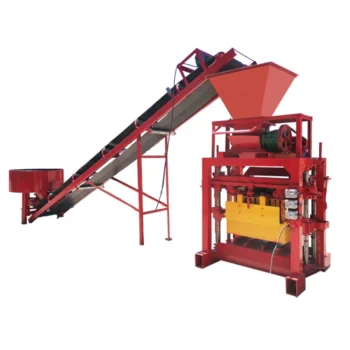
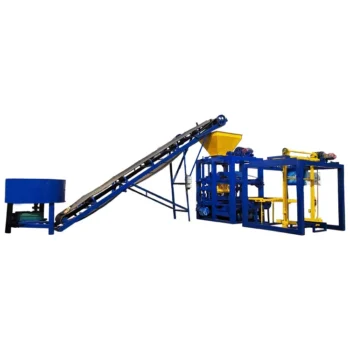
| Product Type | Hydraulic Concrete Block Making Machine |
| Overall Dimensions (L×W×H) | 7100 × 1600 × 2610 mm |
| Total Weight | 3 T |
| Moulding Cycle | 15–25 s |
| Vibration Frequency | 4600 r/min |
| Vibration Force | 40–50 kN |
| Total Power | 18.45 kW |
| Mixer Model | JQ350 |
| Pallet Size | 850 × 550 × 25 mm |
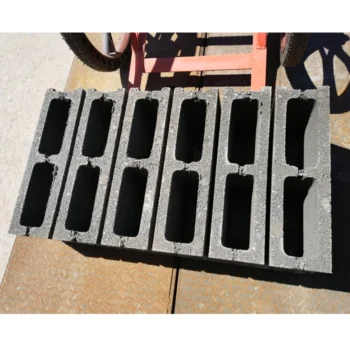
| Applied Products | Hollow block, solid brick, paver, curbstone |
| Raw Materials | Crushed stone, sand, cement, fly ash, dust |
| Automation Level | Semi-automatic (automatic stacker available) |
| Output Capacity | 408 pcs/h based on 400×200×200 mm hollow block, 4 pcs/mould |
| Output Capacity | 510 pcs/h based on 400×150×200 mm hollow block, 5 pcs/mould |
| Output Capacity | 2100 pcs/h based on 240×115×53 mm solid brick, 18 pcs/mould |
| Daily Output (8 h) | 3264 pcs based on 400×200×200 mm hollow block |
| Daily Output (8 h) | 4080 pcs based on 400×150×200 mm hollow block |
| Daily Output (8 h) | 17000 pcs based on 240×115×53 mm solid brick |
| Control System | PLC or relay — confirm before order |
| Voltage & Frequency | Configurable — confirm before order |
| Standards | CE / ISO — confirm applicability |
Application Suitability
| Application | Material or Output |
|---|---|
| 6-inch and 8-inch hollow block production | Crushed stone, sand, cement, fly ash mixes |
| Solid clay-format brick for masonry | Cement and dust-based blends |
| Interlocking paving block for walkways and yards | Aggregate and cement with fine sand |
| Kerbstone and curb units for road edges | Coarse aggregate with cement binder |
| Small to medium block plant start-ups | Local raw material sourcing with semi-automatic handling |
What "Cycle Time" Leaves Out About QT4-15 Block Machine Specifications
A 15-second cycle on paper means nothing unless you know which block format it was measured on.
Many quotations for concrete block making machine capacity by format list a single headline number — usually the fastest format the press can run. In practice, a plant selling mostly 8-inch hollow blocks will never see the solid-brick throughput figure. The QT4-15 block machine specifications separate each format so the buyer can plan curing space, pallet circulation and labour around the product that actually leaves the yard [NEED_CITE: common discrepancies between quoted and realised block plant output].
Matching Vibration Force to the Block You Actually Sell
The QT4-15 delivers 40–50 kN of vibration force at 4600 r/min, paired with a hydraulic station that maintains steady pressure through the compaction stroke. This combination determines how densely the mix is packed into the mould cavity. For hollow blocks with thin webs, consistent density across the wall thickness depends on the vibration reaching the far corners of the 850 × 550 mm pallet before the hydraulic head completes its press. When the machine is configured for the buyer’s specific aggregate gradation, the QT4-15 block machine specifications translate directly into uniform block strength across a production run.
Pallet Size as a Curing Yard Constraint
The 850 × 550 × 25 mm pallet is the interface between the press and everything that happens after it. Curing rack spacing, forklift tine width and the stacking pattern in the yard all have to accommodate this dimension. A buyer who already operates a curing area designed for a different pallet footprint will face re-racking costs or handling bottlenecks. Confirming pallet compatibility before the QT4-15 enters production avoids a situation where freshly pressed blocks sit on the machine table waiting for space that does not exist [NEED_CITE: pallet handling as a bottleneck in semi-automatic block lines].
Reading the Numbers Behind the Press
The 18.45 kW total power rating covers the hydraulic pump, vibration motors and the JQ350 pan mixer feeding the hopper. On a site with limited transformer capacity, this figure determines whether the QT4-15A can share a supply circuit with other plant equipment or needs a dedicated feeder. The 15–25 second moulding cycle range reflects the difference between a simple solid brick draw and a deep-cavity hollow block that requires extended vibration to fill. Mould changeover on a single host machine lets the same press produce pavers in the morning and hollow blocks after lunch, though the actual change time depends on the operator’s familiarity with the bolt pattern and alignment pins. Semi-automatic operation keeps the capital outlay lower than a fully automatic line, while the optional automatic stacker removes the most labour-intensive step at the end of the table.
The Cost of Skipping the Mix-Design Conversation
When a block machine arrives configured for a standard river-sand mix but the buyer’s local aggregate is crushed volcanic rock, the vibration force that worked in the factory produces under-compacted blocks on site. Adjusting after installation means trial runs, scrapped product and delayed deliveries. I have seen plants in Latin America lose an entire commissioning week chasing density targets because the mix-design conversation happened after shipment instead of before [NEED_CITE: effect of aggregate hardness on vibration compaction in concrete block production]. Specifying the QT4-15 against the buyer’s actual raw materials removes this variable from the start-up phase.
Why Sourcing the QT4-15 Through a Block-Line Specialist Matters
Block machinery is the sole product focus, so the QT4-15A is specified together with its moulds, pallets and handling equipment as one matched system rather than a collection of separate purchases. Mould design covers the formats the buyer’s market actually trades, including custom drawings when standard sizes do not fit local building codes. Configuration is set against the buyer’s mix design and target block format, not pulled from a catalogue default. Automation level is selectable — a plant can start with manual pallet handling and add the automatic stacker later without replacing the host machine. Installation support includes operator training so the crew understands mould change procedure, vibration adjustment and daily maintenance from the first production run.
Documentation & Verification
- Line layout showing QT4-15A footprint with curing yard pallet circulation path
- Capacity calculation sheet stating block format assumed for each output figure
- Mould drawing and format list confirming included and separately priced moulds
- Pallet specification matched to buyer’s existing forklift and rack dimensions
- Voltage, frequency and PLC display language confirmed before production begins
- Factory test record on buyer’s specified block format prior to dispatch
Installation, Commissioning & Support
- Foundation pad sized to the 7100 × 1600 mm machine footprint with anchor bolt plan
- Dedicated circuit rated for the 18.45 kW total load with voltage confirmed in writing
- Mixer and press assembled on site from shipping configuration with alignment checked
- First-run parameter setting for vibration duration and hydraulic pressure per block format
- Operator training covering mould change, pallet feeding and daily grease-point maintenance
- Wear parts list with hydraulic seal and mould liner part numbers for reorder reference
Preparing Your QT4-15 Enquiry
To size the QT4-15 concrete block making machine capacity by format accurately, share the block dimensions your market demands, the local aggregate type available and the daily output target per format. Include your site voltage and frequency, the pallet size your curing yard currently handles, and whether you plan to start semi-automatic or add stacking automation from day one.
Frequently Asked Questions
Q: How is the daily output of the QT4-15 calculated, and which block format does each figure assume?
A: Each daily output figure is tied to a specific block size and mould cavity count. For example, 3264 pieces per eight-hour shift is based on 400×200×200 mm hollow blocks at four pieces per mould. Solid brick output is higher because the mould holds eighteen cavities. Always match the quoted figure to the format you intend to produce.
Q: What pallet size does the QT4-15 use, and can it work with pallets I already have?
A: The standard pallet is 850 × 550 × 25 mm. If your curing racks and forklift are set up for a different dimension, the line layout must be reviewed before order. Running mismatched pallets causes handling delays and potential damage to freshly pressed blocks during transfer.
Q: How long does a mould change take on the QT4-15, and what tools are needed?
A: Mould change time depends on operator familiarity and whether quick-release fittings are specified. Basic hand tools are sufficient, but the first changeover will take longer than subsequent ones. Request the mould change procedure document so your team can rehearse before production begins.
Q: Can the vibration force and hydraulic pressure be adjusted to my local raw materials?
A: Yes. The 40–50 kN vibration range and hydraulic station are configured during factory testing based on the buyer’s mix design and aggregate sample. Providing material specifications before production ensures the QT4-15 block machine specifications match your actual conditions rather than a generic default.
Q: Which mould formats are included in the base quotation?
A: The base quotation typically covers one mould format. Additional moulds for pavers, kerbstones or alternative hollow block sizes are priced separately. Confirm the included format list and any custom mould drawings before the order is finalised to avoid surprise costs at first format change.