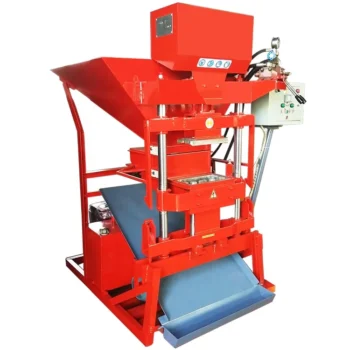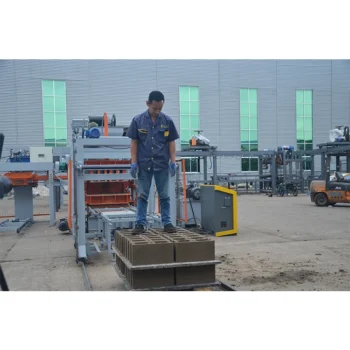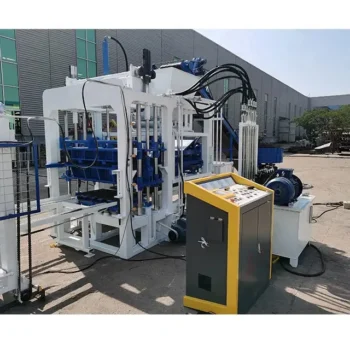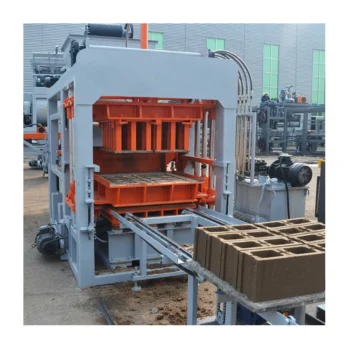

Description
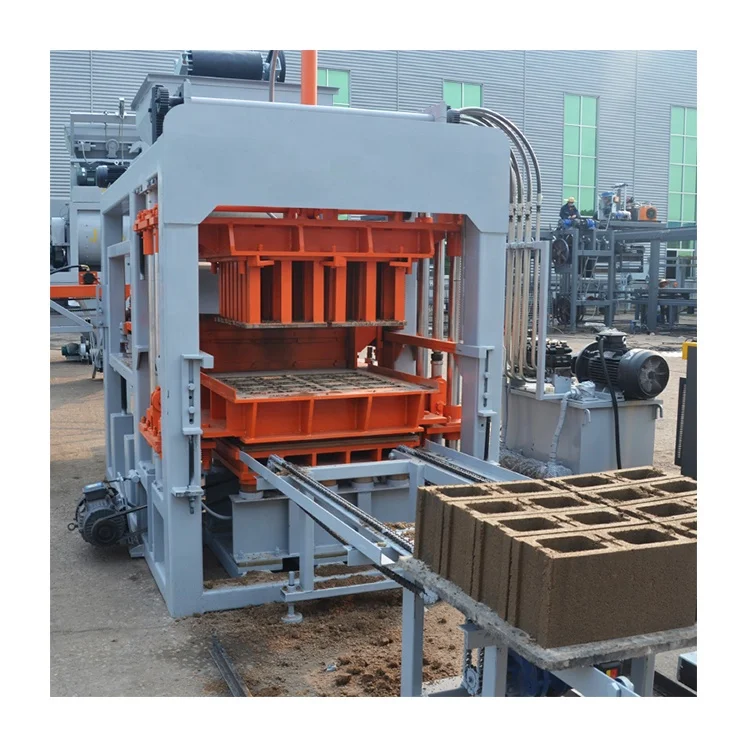
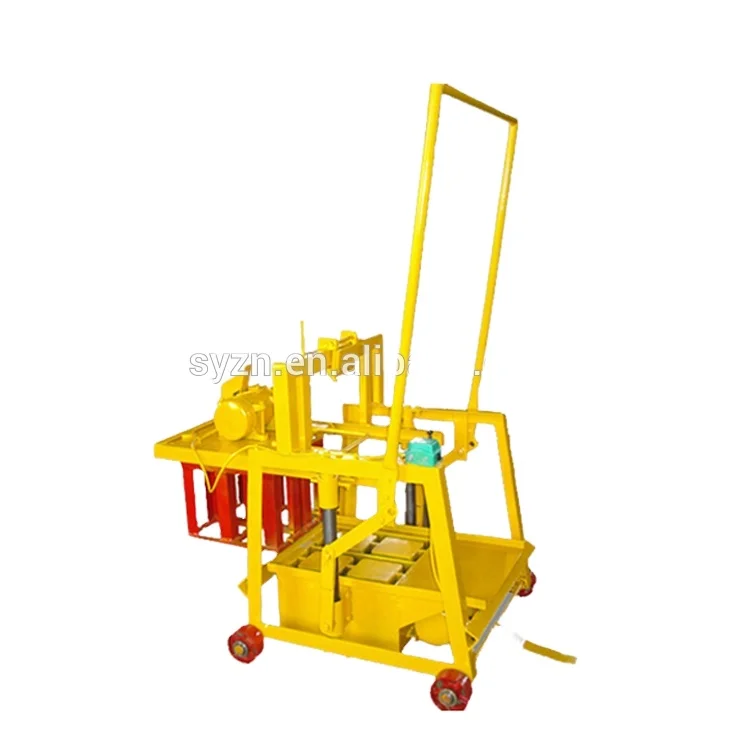
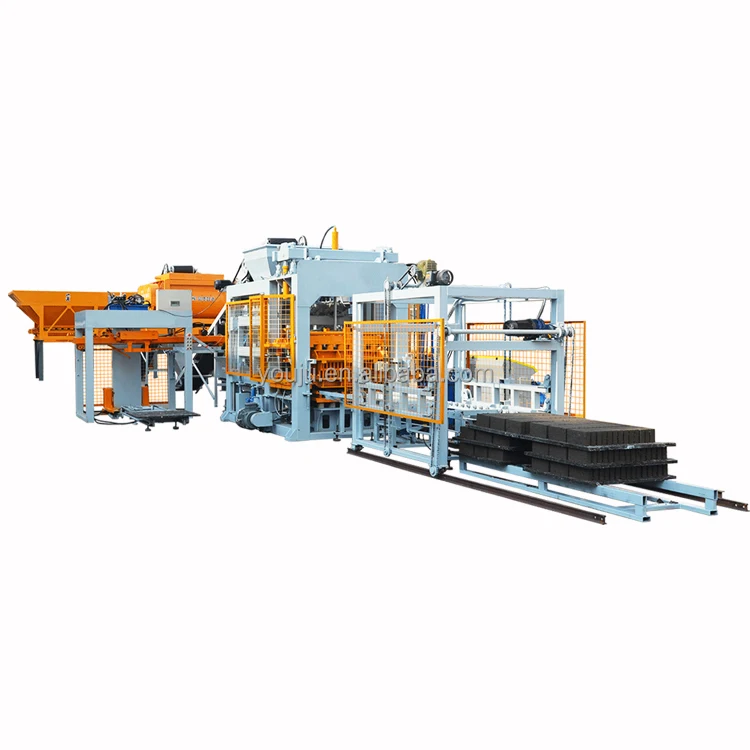
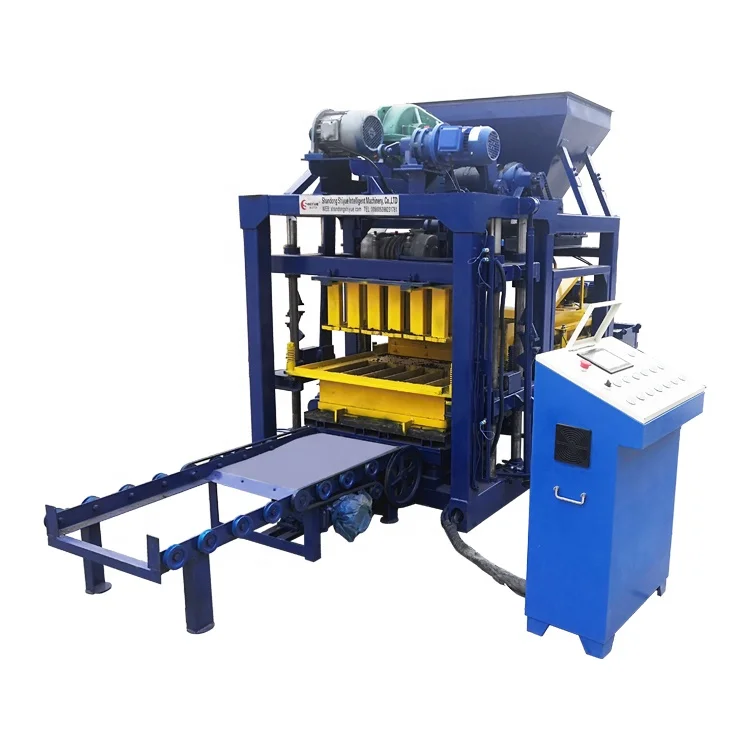
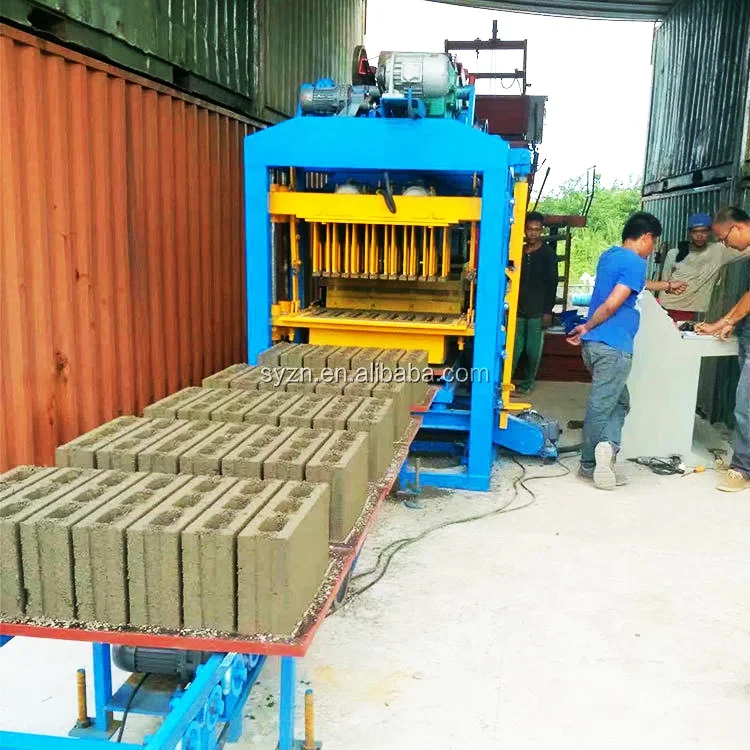
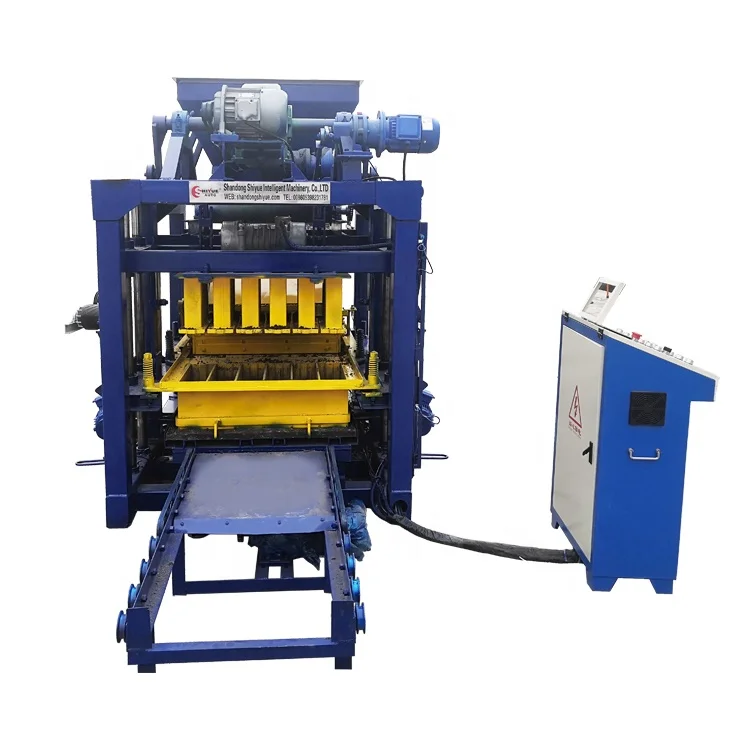
Configuration Matched to Your Local Aggregate and Mix Design — the QTJ4-25 semi-automatic block machine is set up against the buyer’s actual raw materials, target block format, and site conditions, not a generic catalogue default, so capacity numbers hold true once the line is running.
Technical Specifications
| Parameter | Value |
|---|---|
| Model | QTJ4-25 |
| Product Type | Semi-Automatic Concrete Block Making Machine |
| Overall Dimensions (L×W×H) | 3060×1730×2580 mm |
| Total Weight | 4 T |
| Vibration Force | 45 KN |
| Cycle Time | 25 s per cycle |
| Pallet Size | 850×550 mm |
| Block Height Range | 40–280 mm |
| Workshop Area Required | 50–150 m² |
| Material Storage Area | 300–500 m² |
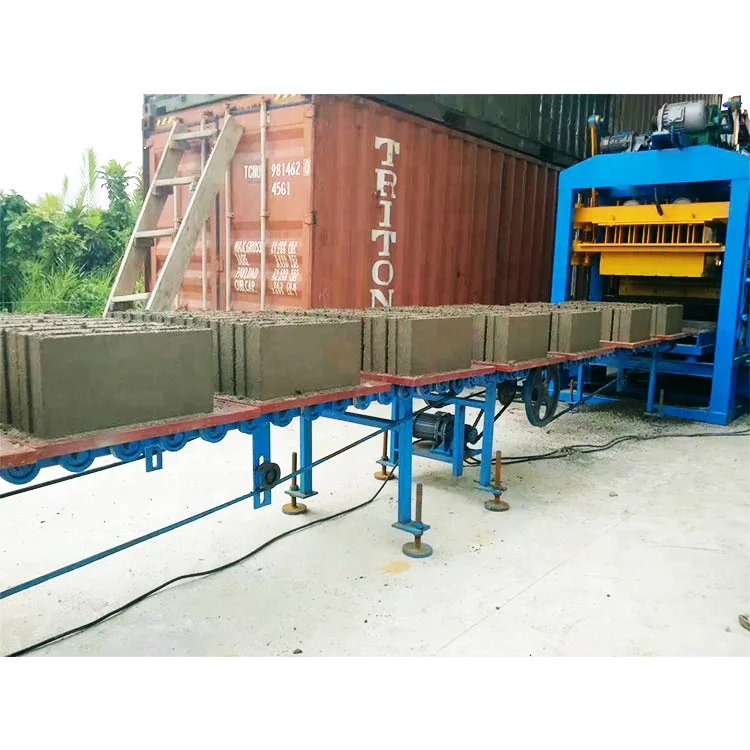
| Belt Conveyor Length | 8 m |
| Mixer Model | JQ500 |
| Motor Options | Siemens or ABB |
| Automation Level | Semi-automatic |
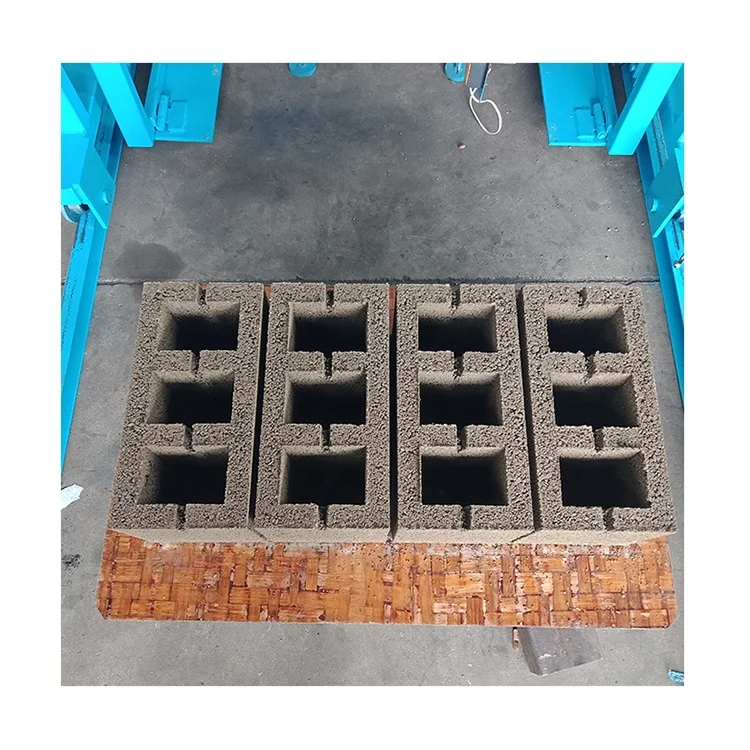
| Output Capacity | 480 pcs/h based on 400×200×200 mm hollow block, 4 pcs/mould |
| Output Capacity | 600 pcs/h based on 400×150×200 mm hollow block, 5 pcs/mould |
| Output Capacity | 840 pcs/h based on 400×100×200 mm hollow block, 7 pcs/mould |
| Output Capacity | 2880 pcs/h based on 240×115×53 mm solid brick, 24 pcs/mould |
| Voltage & Frequency | 380 V, 3-phase, 50 Hz (configurable to local supply) |
| Control System | Electric control |
| Warranty | 1 year (excluding wearing parts) |
Application Suitability
| Application | Material or Output |
|---|---|
| Hollow block production for residential and commercial walls | Crushed stone, sand, cement, and local aggregate blends |
| Solid brick manufacturing for load-bearing structures | Fly ash, sand, and cement mixes |
| Interlocking paver and colored paver runs | Fine aggregate with pigment additives |
| Curbstone and riverside revetment brick | Coarse aggregate with high cement content |
| Grassed brick for permeable landscaping | Open-cell mould with standard concrete mix |
| Small and medium-scale block plants starting first production line | Semi-automatic operation with manual pallet handling |
What "Pieces per Hour" Leaves Out About QTJ4-25 Block Machine Specifications
A capacity figure without a block format attached is not a capacity figure — it is a cycle count.
I have watched buyers in Latin America sign contracts based on a single headline output number, only to discover on the shop floor that the figure assumed a solid brick mould while their market needed hollow blocks. The QTJ4-25 block machine specifications listed above tie every output claim to a specific block size and cavity count: 480 pieces per hour means four 400×200×200 mm hollow blocks per cycle, not twenty-four solid bricks. When you compare machines, compare them on the same format. Anything else is arithmetic dressed up as engineering. [NEED_CITE: block machine capacity calculation standards by format]
Format-Specific Capacity as the Real Benchmark
Every cycle of the QTJ4-25 produces a fixed number of blocks determined by the mould cavity count, and the 25-second cycle time stays constant across formats. The difference between 480 and 2880 pieces per hour is not a speed change — it is simply the number of cavities in the mould. Technical buyers evaluating the QTJ4-25 block machine specifications should anchor their daily output projection to the exact block format their market moves, then multiply by available shift hours and a realistic utilization factor.
Matching Vibration Force to Local Aggregate
The 45 KN vibration force on this press was set for standard sand and crushed stone mixes. When a buyer in Peru ran volcanic ash aggregate with different particle density, the same vibration setting left blocks under-compacted and prone to breakage during curing. Adjusting the vibration parameters to the specific mix design restores block strength consistency — but only if the supplier asks about your raw material before quoting the machine.
Pallet Size, Curing Area, and the Forklift You Already Own
The 850×550 mm pallet on the QTJ4-25 is not arbitrary. It determines how many blocks sit on each board, how the boards stack in the curing area, and whether your existing forklift can handle a loaded rack. A pallet chosen without checking these three things means either buying new handling equipment or watching operators carry boards by hand [NEED_CITE: pallet handling and curing layout in block plants]. The block height range of 40–280 mm covers most common hollow block, solid brick, and paver formats on a single press, but every format change still requires a mould swap and pallet clearance check.
Reading the Numbers That Actually Matter
Three specs on the QTJ4-25 deserve close attention before an order is placed. The vibration force of 45 KN, combined with the electric control system, determines the compaction density the press can achieve — and density is what gives a block its compressive strength. The pallet size of 850×550 mm sets the footprint of every board in your curing yard; if your yard is laid out for a different dimension, boards will not stack cleanly and forklift travel paths will need re-planning. The 25-second cycle time governs throughput across all formats, so when you calculate daily output, divide available production seconds by 25 and multiply by cavity count. The motor options — Siemens or ABB — let you choose a brand with a service center near your plant, which matters the first time a bearing or contactor needs replacing.
The Cost of Skipping the Format Conversation
Buyers who order on a single headline capacity number end up with a machine configured for a block they do not sell. Moulds sit unused, daily revenue falls short of the business plan, and the operator spends the first week trying to source a replacement mould that fits the press footprint. Voltage mismatches compound the delay: a machine wired for 380 V / 50 Hz arriving at a 440 V / 60 Hz site cannot be commissioned until a transformer or rewinding is arranged. [NEED_CITE: voltage and frequency standards by export market] These are not defects — they are specification gaps that a pre-order conversation would have closed.
Why Source the QTJ4-25 Through This Line
Block machinery is the single focus of this supply operation, meaning the press, mould, pallet, and handling equipment are specified as one matched system. Configuration is set against your actual mix design and local aggregate, not a catalogue default. Mould design covers the formats your market actually sells, with custom drawings available for non-standard shapes. The automation level is selectable, so a buyer can start with semi-automatic pallet handling and add stacking equipment later. Installation and commissioning support includes operator training on the exact block format you intend to produce.
Documentation & Verification
- Line layout and capacity calculation stating the block format assumed for each output figure
- Mould drawing and format list confirming which block shapes the quoted moulds produce
- Pallet specification matched to your curing area dimensions and forklift capacity
- Voltage, frequency, and control language confirmed in writing before production begins
- Factory test record on your target block format before dispatch
Installation, Commissioning & Support
- Workshop area of 50–150 m² required with a level concrete floor rated for the 4 T machine weight
- 380 V three-phase dedicated circuit with breaker sizing confirmed against the Siemens or ABB motor rating plate
- Machine arrives partially assembled; belt conveyor, mixer, and host press are positioned and bolted on site
- First production run supervised to set vibration timing and cycle parameters for your specific mix design
- Operator training covers mould change procedure, pallet loading sequence, and daily greasing points
- Wearing parts list with part numbers supplied so re-order does not require a site visit
What to Include in Your Inquiry
To size the QTJ4-25 correctly, share the exact block format you plan to sell, your target daily output, and the local raw materials you intend to use. Confirm your workshop area, available voltage and frequency, and the pallet dimensions your existing curing racks accept. If you have a sample block or a compressive strength requirement from local building codes, include that as well.
Frequently Asked Questions
Q: How is the output capacity of the QTJ4-25 calculated and which block format does each figure assume?
A: Every capacity figure is tied to a specific block size and mould cavity count. For example, 480 pieces per hour assumes a 400×200×200 mm hollow block with 4 cavities per mould at a 25-second cycle. Switching to a solid brick mould with 24 cavities raises the figure to 2880 pieces per hour on the same cycle time. Always compare machines on the format you actually produce.
Q: What block formats can the QTJ4-25 produce and how does the mould change process work?
A: The press covers hollow blocks, solid bricks, interlocking pavers, curbstones, and specialty formats within the 40–280 mm block height range. Moulds are swapped manually on this semi-automatic model. The time required depends on mould weight and alignment fixtures — confirm the exact procedure with your supplier before planning daily format changes.
Q: How are pallet size and material chosen to match my curing area and handling equipment?
A: The standard 850×550 mm pallet is selected to balance block count per cycle with curing yard layout and forklift capacity. If your existing racks or forklift are sized for a different pallet, discuss this during the quotation stage so the pallet specification — material, thickness, and weight — is adjusted before production.
Q: What voltage, frequency, and control language will the machine be configured for before shipment?
A: The default configuration is 380 V, 3-phase, 50 Hz, but this is adjustable to match your local supply. Voltage, frequency, and control panel labeling must be confirmed in writing before the machine enters production to avoid commissioning delays on arrival.
Q: How is the vibration force matched to my local aggregate and mix design for consistent block strength?
A: The 45 KN vibration setting works for standard crushed stone and sand mixes. If your local aggregate — such as volcanic ash, lightweight expanded clay, or recycled concrete — has a different particle density, the vibration parameters need adjustment. Share your mix design and a sample of your aggregate so the press can be tuned before shipment.