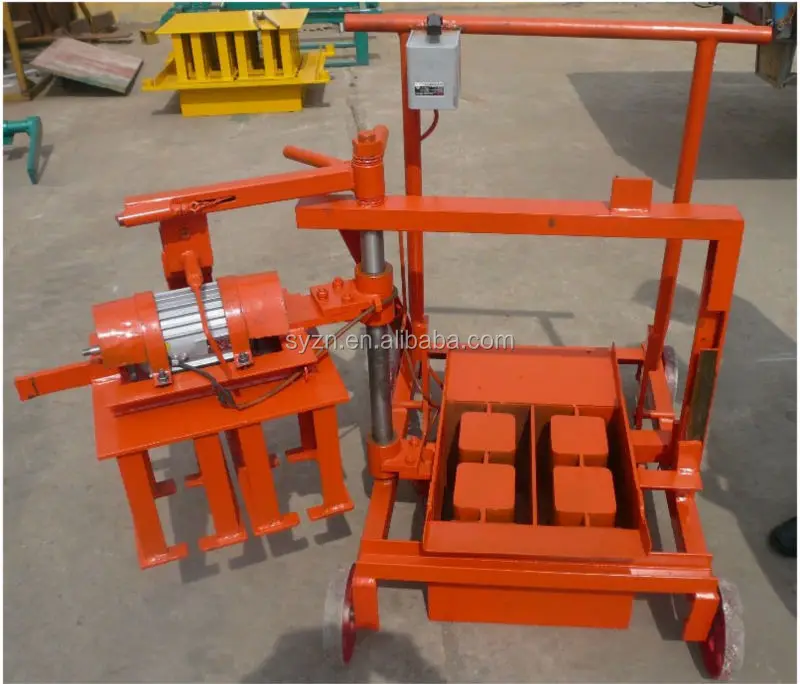
Description
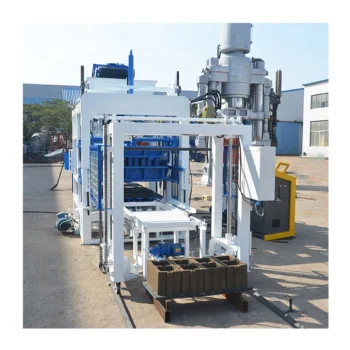
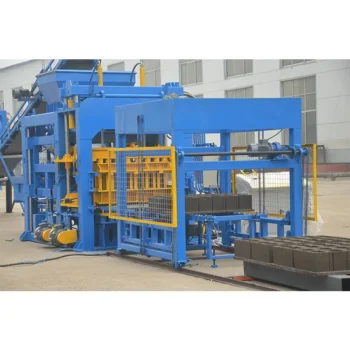
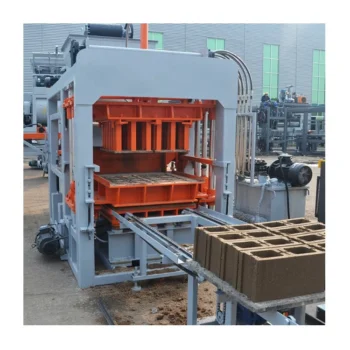
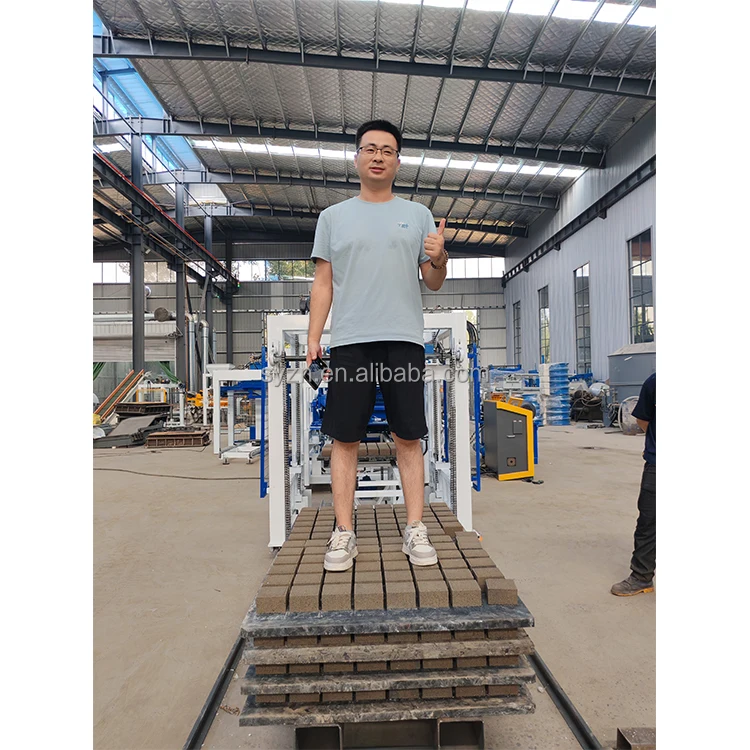
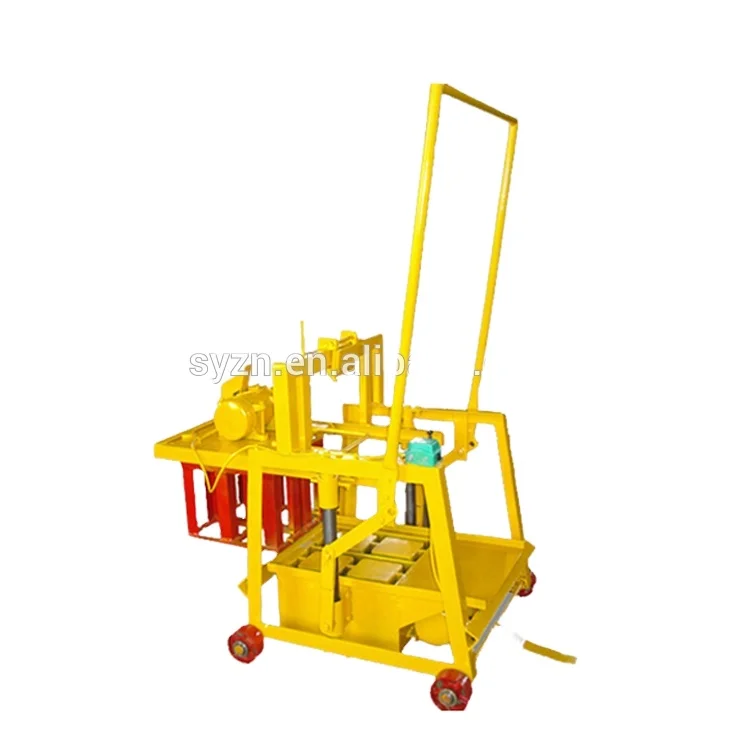
Matched System Delivery — the QMY2-45 mobile block machine is specified as a complete unit with mixer, mould, and power configuration aligned to your local site conditions before shipment.
Technical Specifications
| Parameter | Value |
|---|---|
| Model | QMY2-45 |
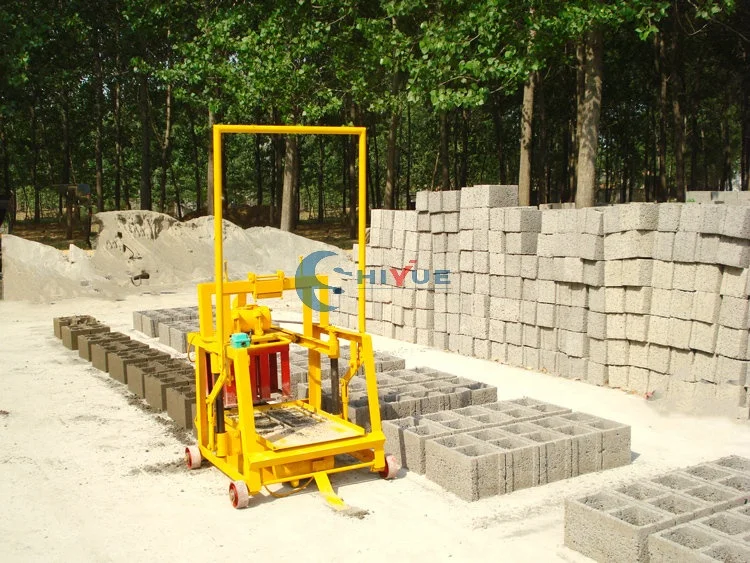
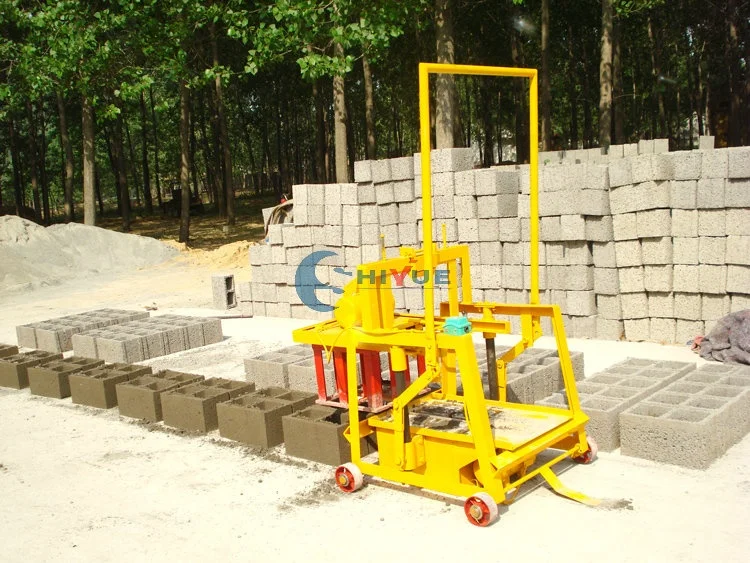
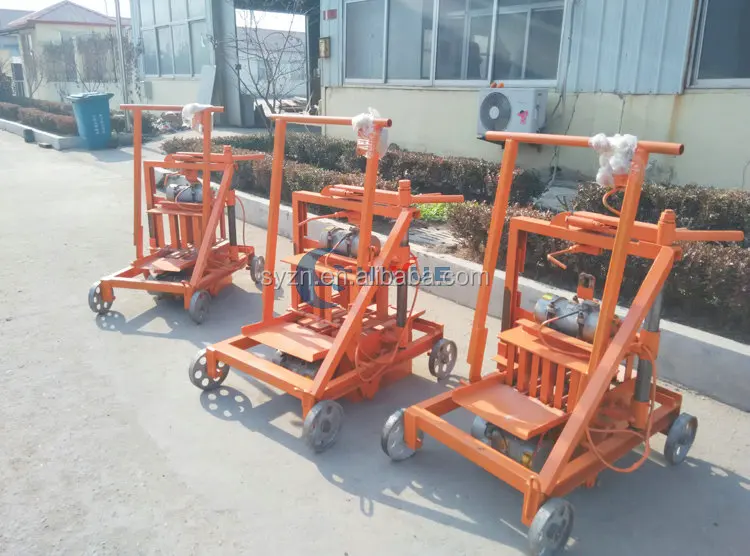
| Product Type | Mobile Egg-Laying Block Making Machine |
| Rated Power | 1.5 kW |
| Voltage & Frequency | Customizable to buyer’s local voltage |
| Control System | Manual operation |
| Overall Dimensions (L×W×H) | 1000 × 800 × 1300 mm |
| Net Weight | 215 kg |
| Vibration Type | Mold vibration |
| Cycle Time | 45 s per mould (basis not stated in source) |
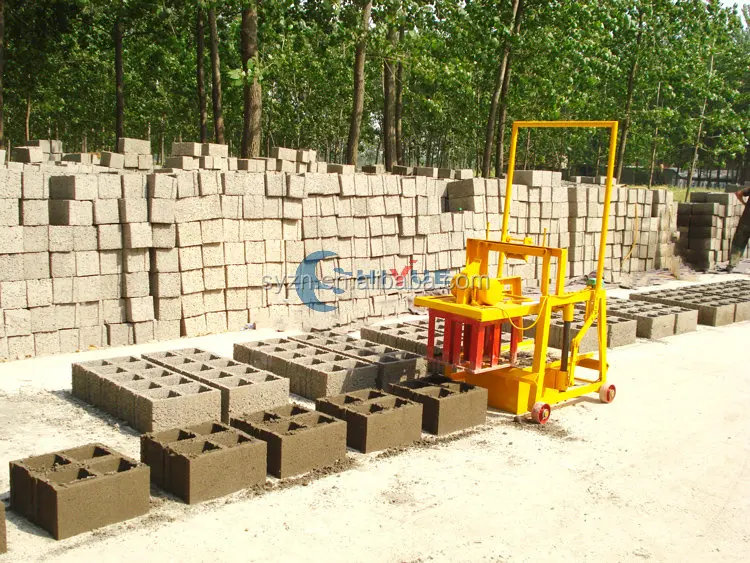
| Mould Format | 400 × 200 × 200 mm hollow block, 2 pcs per mould |
| Output Capacity | 1000 pcs/day (basis not stated in source) |
| Automation Level | Manual |
| Basic Equipment Included | JQ350 Mixer |
| Pallet Requirement | Not required (egg-laying type) |
| Assembly State | Fully assembled |
Application Suitability
| Application | Material or Output |
|---|---|
| On-site hollow block production | Cement, crushed stone, river sand, and water mixed on project sites |
| Small-scale entrepreneurship manufacturing | Local aggregate and cement for community building material supply |
| Construction contractor self-production | Hollow blocks laid directly on the ground without pallets or curing racks |
| Low-investment block plant entry | Manual batching with the included JQ350 mixer feeding the QMY2-45 mobile block machine |
What "1000 Pieces per Day" Actually Means for the QMY2-45 Mobile Block Machine
The QMY2-45 mobile block machine specifications quote 1000 pieces per day, but that figure only holds if you run the standard 400×200×200 mm hollow block at a steady 45-second cycle with no material delays.
Every mobile egg-laying machine I have sent out in the last few years has hit a wall when the buyer assumed that catalogue number applied to any block format they wanted. The truth is more specific: cycle time changes with mould size, and daily output changes with how fast your crew can mix, move the machine forward, and keep the hopper full. When a contractor in Southeast Asia ordered this class of machine expecting 1000 solid pavers a day, the actual output dropped sharply because solid pavers need longer vibration and more mix per piece [NEED_CITE: mobile block machine output variation by block format]. The QMY2-45 mobile block machine specifications must therefore be read against the exact mould and block format you plan to produce, not taken as a blanket promise.
How the 45-Second Cycle Translates to Real Site Output
The 45-second cycle time listed in the QMY2-45 mobile block machine specifications applies to one mould pressing two 400×200×200 mm hollow blocks at a time. On a clear, flat concrete floor with a well-practiced two-person crew, that cycle can sustain a steady rhythm through an eight-hour shift. On uneven ground or with a mix that is too dry, the operator spends extra seconds adjusting the machine position or clearing the mould, and the real cycle stretches beyond the quoted number. The key is matching your daily target to your actual site conditions rather than to the laboratory figure.
Why Mould Format Decides Your Real Daily Throughput
A buyer who needs 4-inch solid blocks instead of 8-inch hollow blocks will find the QMY2-45 mobile block machine specifications tell a different story. Solid blocks consume more concrete per piece and require longer vibration to reach adequate density, so the cycle time extends and the daily count drops. Before confirming an order, I always ask which block format the buyer’s market actually buys, then calculate the realistic output for that specific mould rather than letting the buyer discover the gap after the machine arrives [NEED_CITE: block format impact on egg-laying machine throughput].
Reading the Power and Vibration Specs Together
The 1.5 kW rated power drives the mould-box vibration system that compacts the concrete inside the mould cavity. For a lightweight 215 kg machine that lays blocks directly on the ground, this vibration force is matched to the small mould volume and the typical cement-to-aggregate ratios used in small-scale hollow block production. Running a mix that is too wet will cause the block to slump once the mould lifts; running it too dry will leave the block under-compacted and weak. The vibration setting and the mix design must be dialed in together during the first production run.
The Hidden Cost of Ignoring Voltage Confirmation
One of the most common avoidable failures I see with small mobile machines is a motor that burns out within the first month because the voltage at the buyer’s site does not match the motor winding shipped from the factory. A 1.5 kW motor wound for 380 V three-phase will not survive on a 220 V single-phase supply, yet this mismatch still happens when the buyer skips the voltage confirmation step [NEED_CITE: industrial motor voltage mismatch failures in export markets]. Confirming local voltage and frequency before the QMY2-45 enters production is a five-minute conversation that prevents weeks of downtime.
Why Procurement Should Start with Your Local Aggregate
The QMY2-45 mobile block machine specifications list a JQ350 mixer as standard, which is sized to feed one machine at a comfortable pace. What the spec sheet cannot predict is whether your local river sand carries high clay content, whether your crushed stone is angular or rounded, or whether your cement brand sets faster than average. Each of these variables changes the water demand, the vibration time needed, and the final block strength. Sending a sample of your local sand and stone before the order allows a trial mix to be run on the same machine class, so the configuration that ships is the one that actually works on your site.
Documentation & Verification
- Capacity calculation sheet stating the block format and cycle time behind the daily output figure
- Machine specification document confirming motor voltage, frequency, and power rating for your country
- Mould drawing and format list showing available block sizes beyond the standard hollow block
- Operation and maintenance manual with wearing parts list delivered with the machine
- Factory test record on your target block format before dispatch
Installation, Commissioning & Support
- Machine ships fully assembled at 215 kg, movable by two people onto a flat concrete floor
- JQ350 mixer requires a dedicated circuit matching the confirmed local voltage and frequency
- First production run includes mix adjustment and vibration timing calibration for your aggregate
- Manual operation training covers mould filling, machine advancement, and block spacing on the ground
- Wearing parts list identifies vibration motor brushes and mould liner plates for local stocking
Preparing Your Inquiry for the QMY2-45
To get an accurate configuration rather than a catalogue default, share the block format your market sells most, the daily volume you need to hit, and a sample or description of your local sand and stone. Include your site voltage and frequency so the motor can be wound correctly before the QMY2-45 mobile block machine specifications are finalized for production. If you already own a mixer or plan to use a concrete batching setup upstream, mention it so the included JQ350 can be swapped or removed from the package.
Frequently Asked Questions
Q: How is the 1000 pcs/day output verified and which block format does it assume?
A: The 1000-piece figure is based on continuous operation using the standard 400×200×200 mm hollow block mould at a 45-second cycle. Before your order ships, a capacity calculation document is prepared stating the exact block format, cycle time, and assumed shift hours behind the daily number so you can compare it directly against your project target.
Q: Can the motor voltage be customized for my local power supply before shipment?
A: Yes. The 1.5 kW motor on the QMY2-45 mobile block machine can be wound to match your local voltage and frequency. You provide the exact supply specification during the inquiry stage, and the motor is confirmed on the machine specification sheet before production begins, eliminating commissioning delays on arrival.
Q: What other block formats and mould sizes are available beyond 400×200×200 mm?
A: Moulds for alternative hollow block dimensions, solid blocks, and smaller paver formats can be designed and supplied to match your market demand. A mould drawing and format list is provided with your quotation so you can confirm every block size the machine will produce before the order is finalized.
Q: Which wearing parts need regular replacement and are they available separately?
A: The main wearing items are the mould liner plates, vibration motor components, and mixer blades. A wearing parts list is included in the operation manual at delivery, and each part can be ordered separately so you can maintain stock locally and avoid unplanned stoppages during peak production periods.