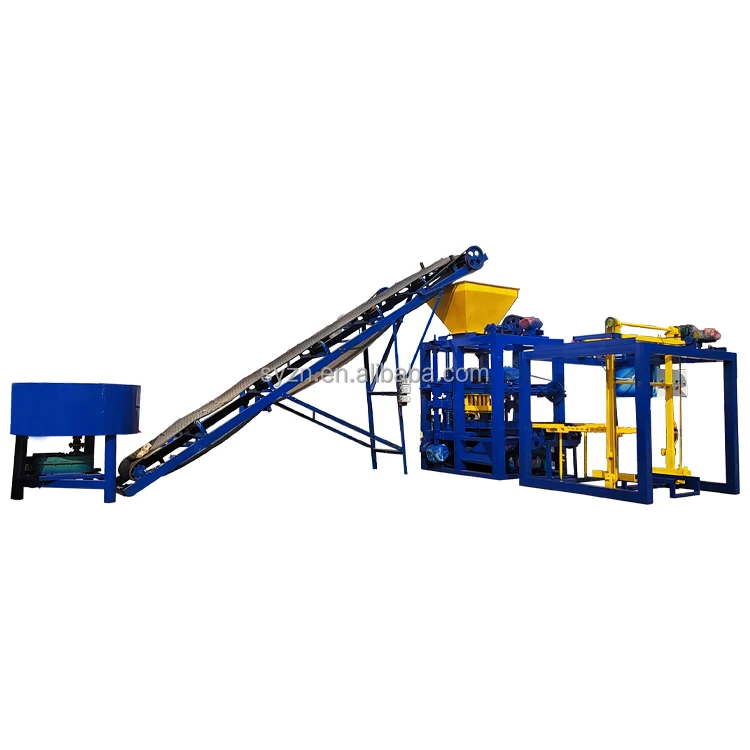
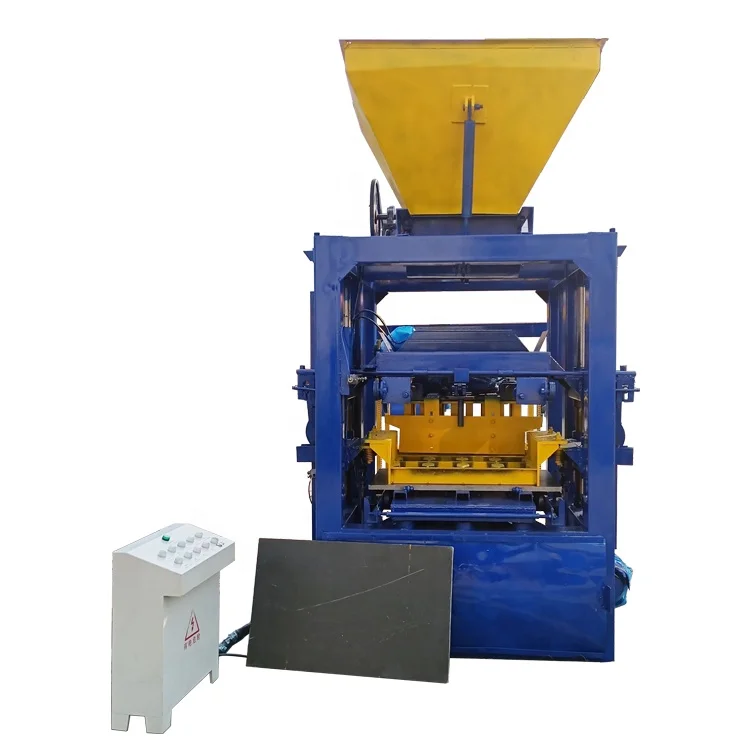
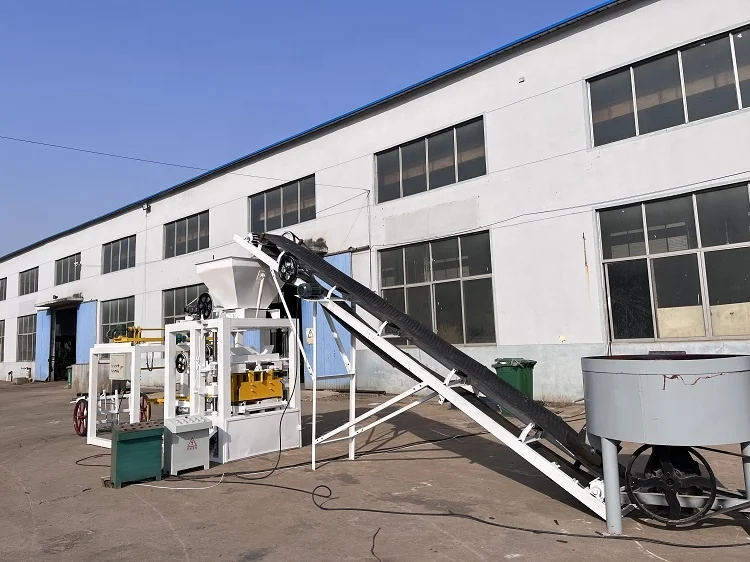
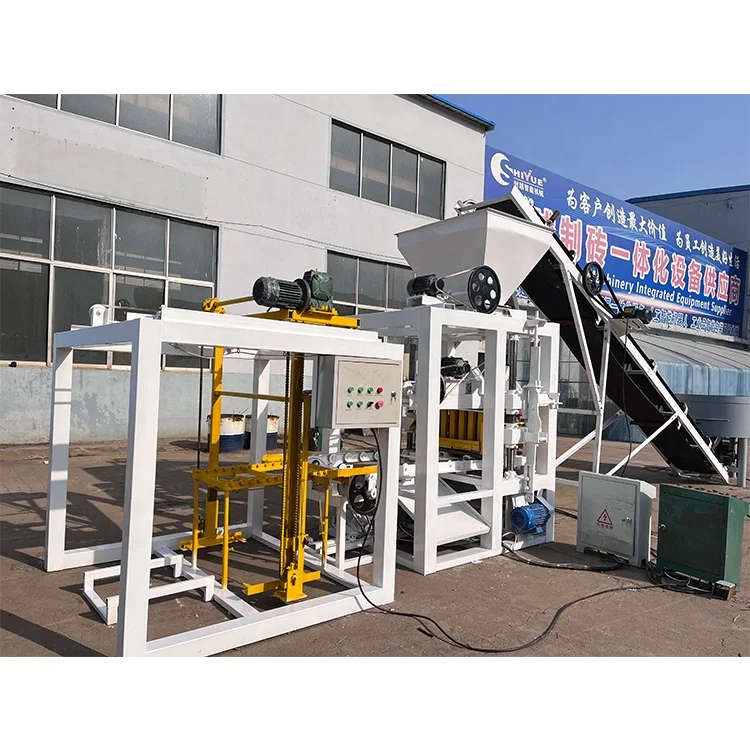
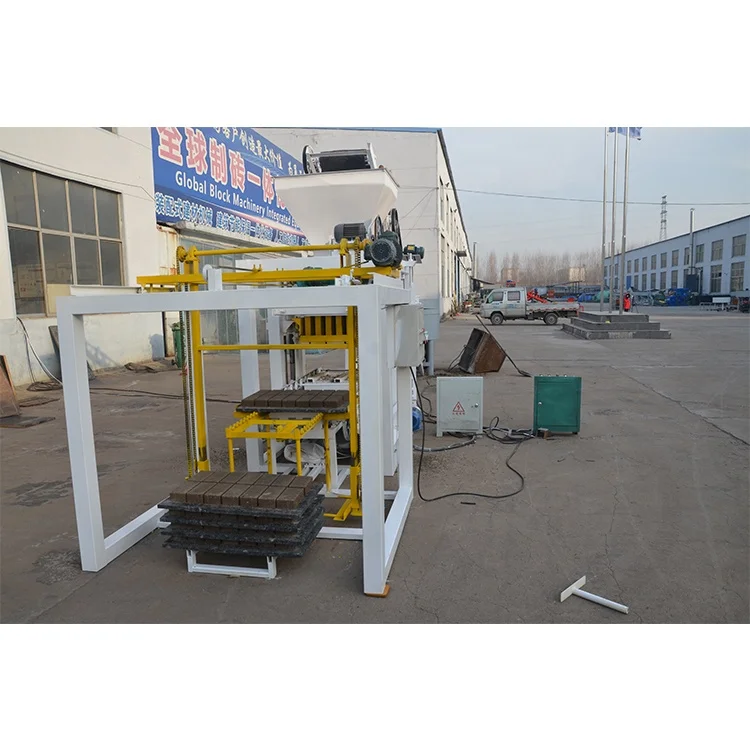
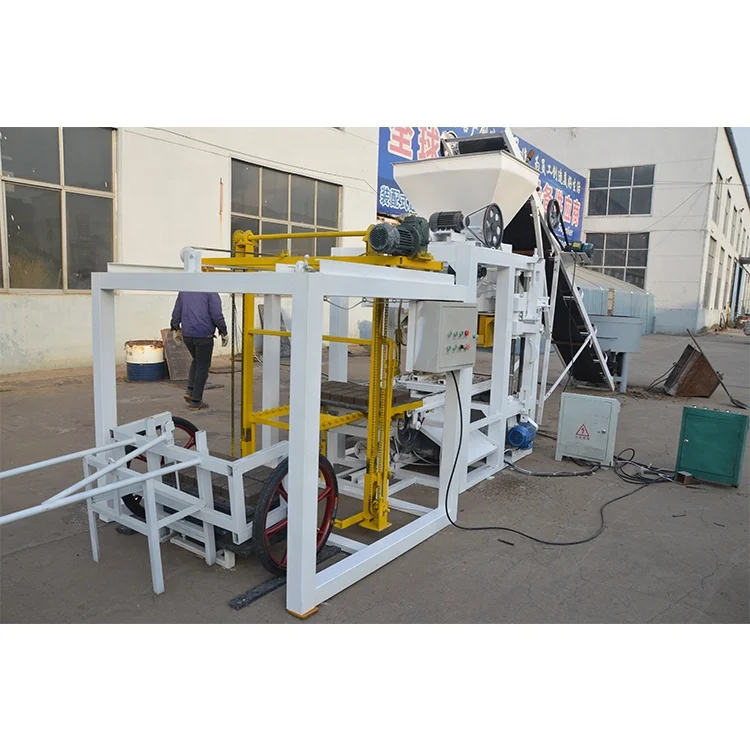
Description
Mould-Driven Sizing — Every QTJ4-24 configuration starts from the block format your market actually buys, not a catalogue default.
Technical Specifications
| Parameter | Value |
|---|---|
| Model | QTJ4-24 |
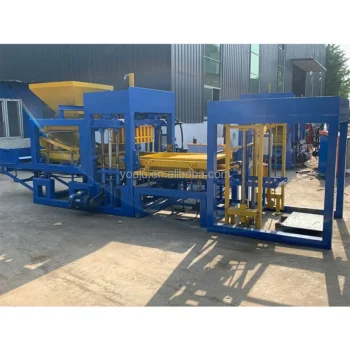
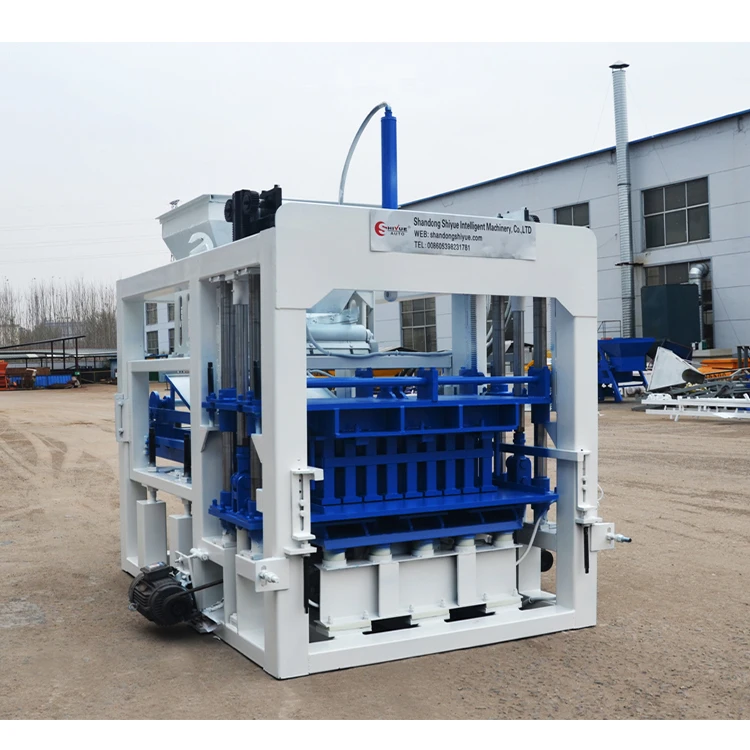
| Product Type | Stationary Block Making Machine |
| Overall Dimensions (L×W×H) | 3600×1700×2560 mm |
| Pallet Size | 850×450 mm |
| Molding Cycle | 24–26 s (basis not stated in source — confirm block format / material / thickness) |
| Molding Method | Mechanical |
| Vibration Configuration | 2×3 kW lower vibrators + 2×1.5 kW upper vibrators |
| Vibration Force | 45 kN |
| Overall Power | 11.95 kW |
| Reducer for Mold Lifting | 350-type |
| Material Distribution | Full-automatic spiral |
| Total Mass | 2 T |
| Materials Processed | Cement, sand, stone |
| Control System | To be confirmed (PLC or manual panel) |
| Voltage & Frequency | To be confirmed before order |
| Hydraulic Pressure | Not applicable (mechanical molding) |
| Mould Format | To be confirmed (block format / cavity count) |
| Mould Change Time | To be confirmed |
| Automation Level | Semi-automatic (spiral feeding; pallet handling to be confirmed) |
| Warranty | 1 year for whole machine (excluding spare parts) |
Application Suitability
| Application | Material or Output |
|---|---|
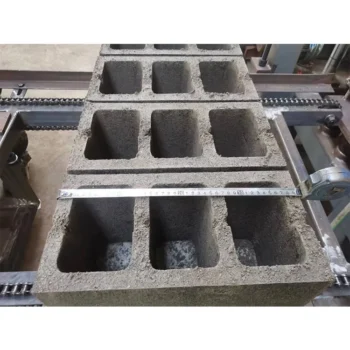
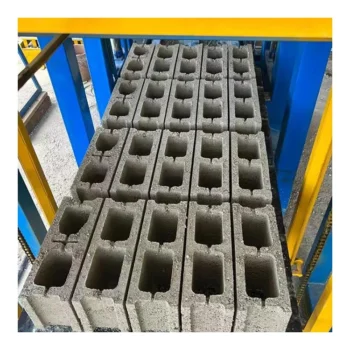
| Hollow block production for load-bearing and partition walls | Cement, sand, and crushed stone aggregate |
| Solid concrete block manufacturing for foundation and structural work | Cement, sand, and graded stone |
| Interlocking brick production for perimeter walls and landscaping | Cement, sand, and fine aggregate |
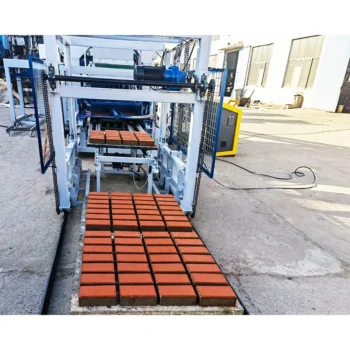
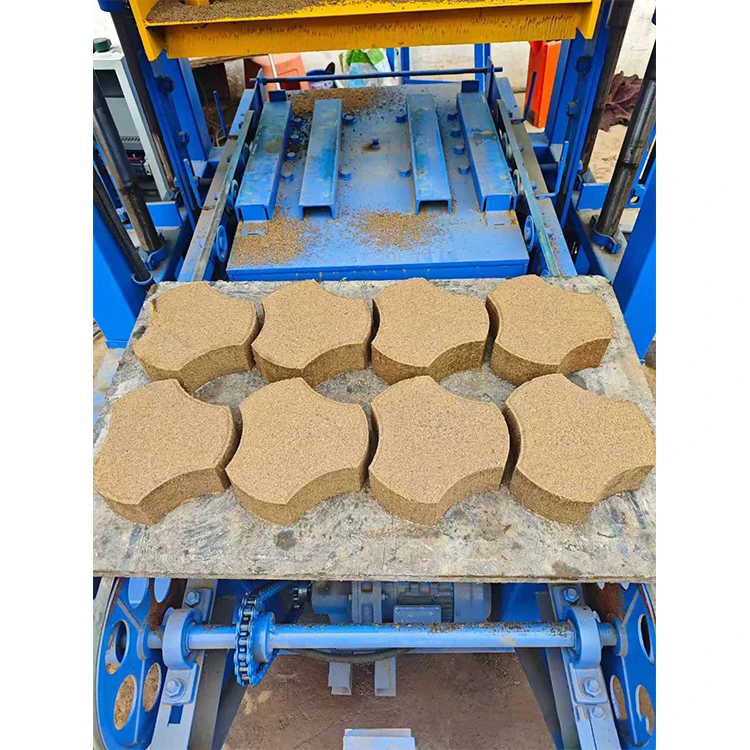
| Paving brick runs for walkways and light-duty yards | Cement, sand, and stone dust |
What the 24–26 Second Cycle Actually Means for Your Output
Cycle time only becomes daily output when the block format and cavity count are fixed.
Buyers often see a cycle number and assume a single daily tonnage, but the QTJ4-24 block making machine specifications tell a different story. A pallet holding four large hollow blocks at 26 seconds produces a very different daily count than a pallet holding twelve paving bricks at the same cycle. [NEED_CITE: how block format and cavity count determine actual daily output in stationary block making]. Without the format assumption written into the capacity calculation, the number on the quotation has no meaning on the shop floor. I have watched plants arrive on site only to discover the output they planned their contracts around was based on a format they never intended to sell.
Matching Vibration to Your Aggregate Profile
The vibration system on the QTJ4-24 block making machine specifications lists 45 kN generated by four motors — two 3 kW units underneath and two 1.5 kW units above. That split matters because the lower vibrators consolidate the mix against the mould floor while the upper units settle the face. When the local aggregate is heavier or more angular than standard river sand, the balance between upper and lower force determines whether blocks leave the press with clean edges or cracked corners.
Pallet Size Sets the Curing Area Footprint
Every pallet that leaves the press needs a slot on the curing rack. The 850×450 mm pallet is compact enough for small-yard operations, but the total rack area must match the number of pallets in circulation during a shift. If the curing zone is undersized, pallets stack on the ground and block strength suffers before the cement has hydrated. [NEED_CITE: relationship between pallet circulation count and curing rack capacity in block plants].
What the Power and Reducer Numbers Tell You
The 11.95 kW overall power covers vibration, spiral feeding, and the 350-type reducer that lifts the mould assembly. A 350-type reducer is sized for the repeated shock of mechanical demoulding; undersized reducers develop backlash after a few thousand cycles and introduce slop into the mould alignment. The full-automatic spiral feeder distributes mix across the mould cavity without operator intervention, which keeps wall thickness consistent from the first block of the day to the last. That consistency matters more than raw cycle speed when a buyer is selling to projects with compressive strength clauses in the contract.
The Cost of Skipping the Mix Trial
When a buyer orders without sending a sample of local aggregate, the vibration force and cycle time are set against a reference mix that may not exist at the destination. Blocks pressed from a high-fines volcanic scoria, for instance, demand different consolidation energy than those pressed from clean quartz sand. [NEED_CITE: effect of aggregate grading and fines content on mechanical block compaction]. The result is a machine that runs, but produces blocks that fail the drop test or crumble at the edges — and the only fix is a full parameter reset on site, which means lost production days and frustrated masons.
Why Sourcing Here Reduces Format Risk
Block machinery is the single focus of this operation, so the press, mould, pallet, and handling are specified as one matched set rather than assembled from separate vendors. Configuration is set against the buyer’s actual target format and local aggregate, not a generic catalogue line. Mould design covers the formats the buyer’s market sells, with custom drawings available when standard cavity layouts do not fit. The semi-automatic starting point means a plant can begin with manual pallet handling and add automation stations later as volume grows. Installation support includes operator training so the crew understands mould change procedure and daily maintenance from week one.
Documentation & Verification
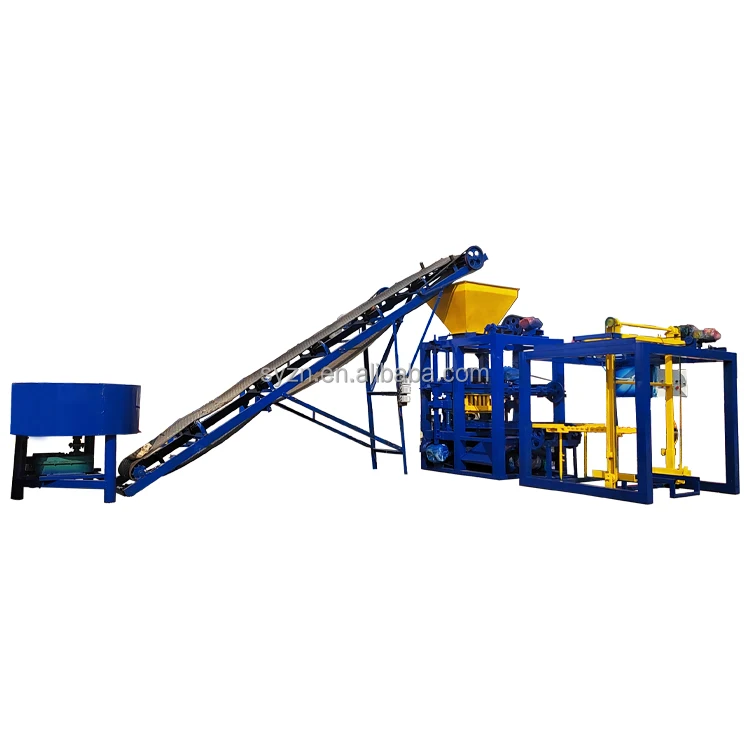
- Line layout showing pallet flow from press to curing rack with capacity stated per block format
- Mould drawing listing cavity count and block dimensions for the 850×450 mm pallet
- Voltage, frequency, and control language confirmation sheet signed before production begins
- Factory test record documenting cycle time and block weight on the confirmed format
- Packing photographs showing machine dismantling and container loading arrangement
- Operation and maintenance manual with wear parts list and mould change procedure
Installation, Commissioning & Support
- 3600×1700 mm footprint requires a level concrete slab with anchor points for the vibration table
- 11.95 kW total load needs a dedicated breaker; confirm local voltage and frequency before wiring
- Machine ships partially dismantled; reassembly on site covers vibration table, feeder, and mould frame
- First-day commissioning sets spiral feed timing and vibration duration for the buyer’s confirmed mix
- Operator training covers mould lifting via the 350-type reducer and daily grease-point schedule
- Wear parts list supplied at handover so first reorder can be planned before stock runs out
What to Share Before the Quotation
Send the exact block format and dimensions your market buys most, along with a photo or sieve analysis of the local sand and stone. Confirm the voltage and frequency at the site panel, and note the control language your operators read. If you already have pallets or curing racks on site, share their dimensions so the pallet specification can be cross-checked.
Frequently Asked Questions
Q: How do I calculate real daily output from the 24–26 second cycle?
A: Multiply the number of cavities on one 850×450 mm pallet by the number of cycles per hour, then by shift hours. The cycle time is the same regardless of format, but cavity count changes with every mould — four hollow blocks per pallet versus twelve pavers gives very different totals.
Q: Which mould formats actually fit the 850×450 mm pallet?
A: Common formats include 400×200×200 mm hollow blocks at four cavities, solid blocks at higher counts, and paving bricks in interlocking or rectangular shapes. The exact layout depends on wall thickness and block height, so a mould drawing is prepared once the target format is confirmed.
Q: Will 45 kN of vibration force compact my local aggregate properly?
A: That depends on the aggregate density, fines content, and cement ratio. A mix trial using your actual sand and stone is the only reliable way to confirm. If the aggregate is unusually light or porous, vibration duration or motor balance may need adjustment.
Q: How involved is a mould change on this press?
A: The 350-type reducer handles mould lifting mechanically, which keeps alignment stable during the swap. Tools required are standard wrenches and alignment pins. The time depends on operator familiarity — first change takes longer, but repeat changes follow a set sequence.
Q: What electrical and control details must be confirmed before production starts?
A: Voltage, frequency, and whether the control is a PLC screen or a manual push-button panel. The display language must also be specified so operators can read alarms and cycle counters without translation on site.