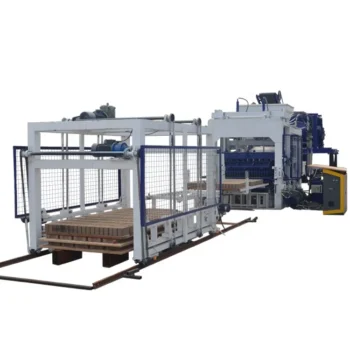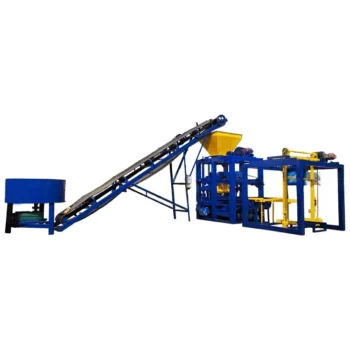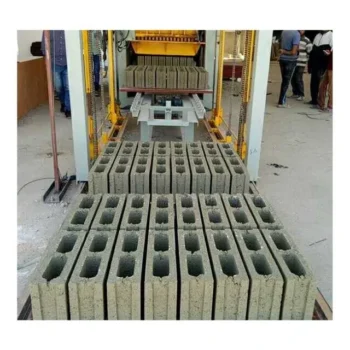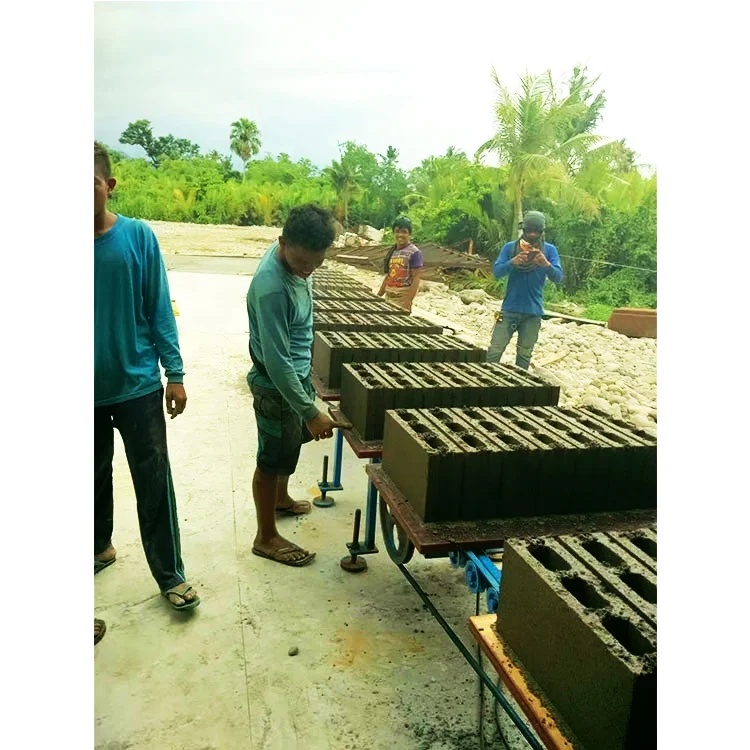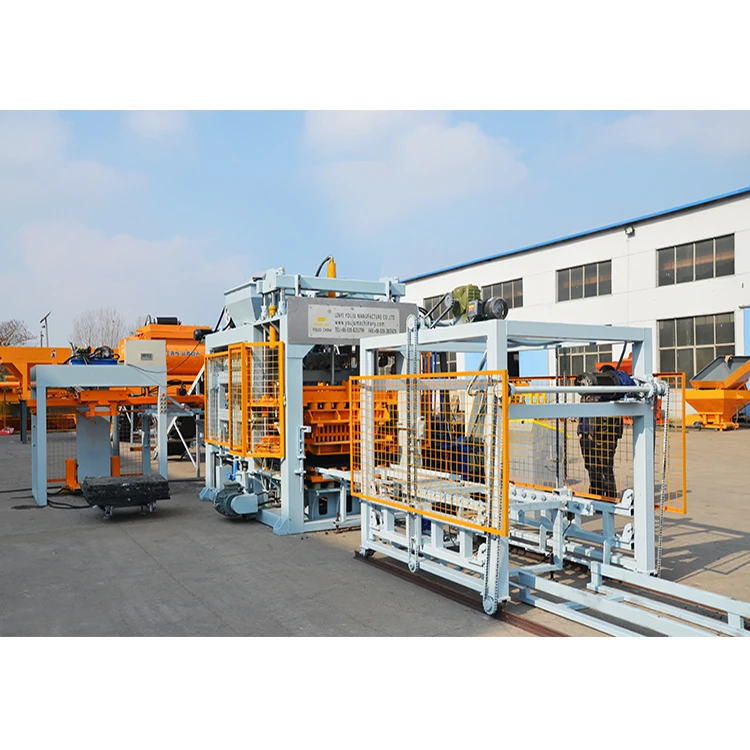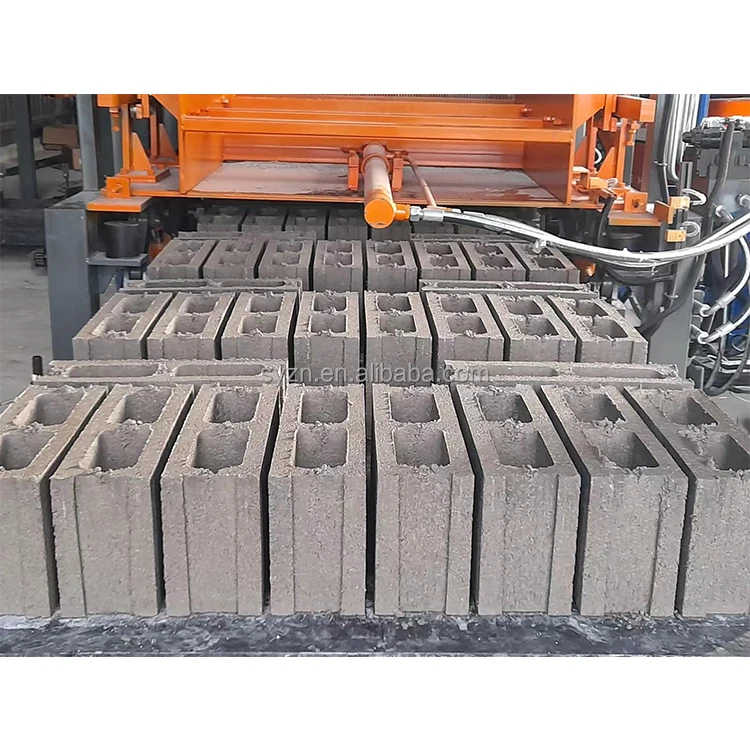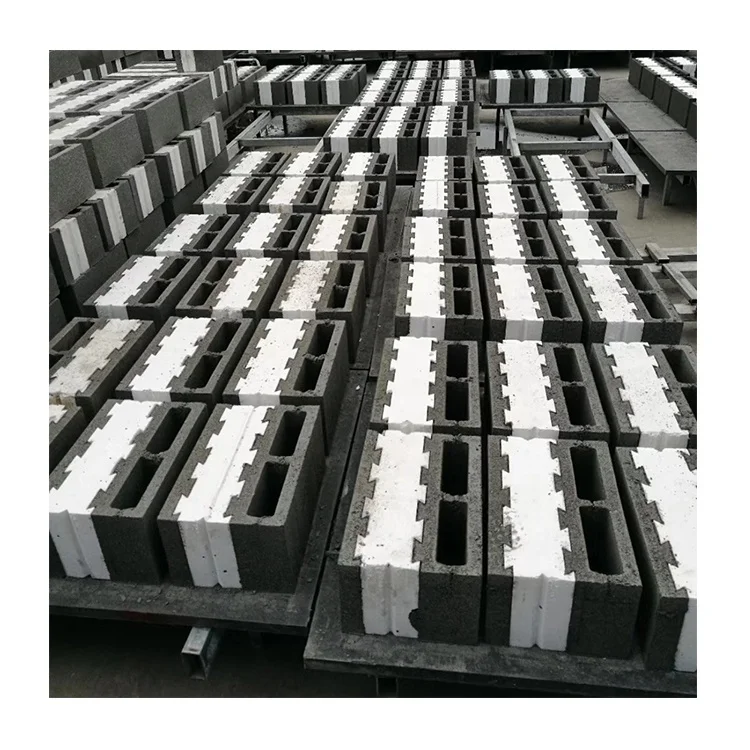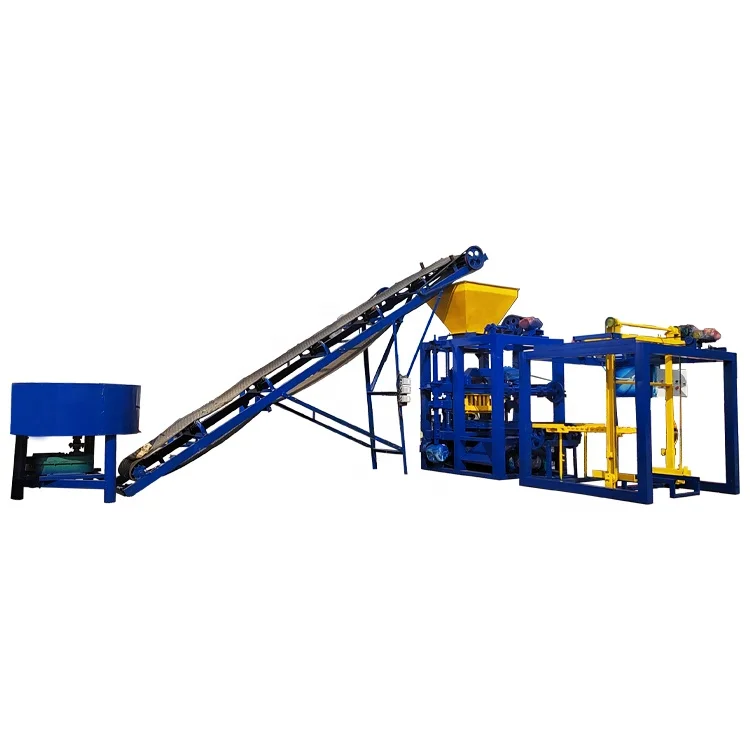
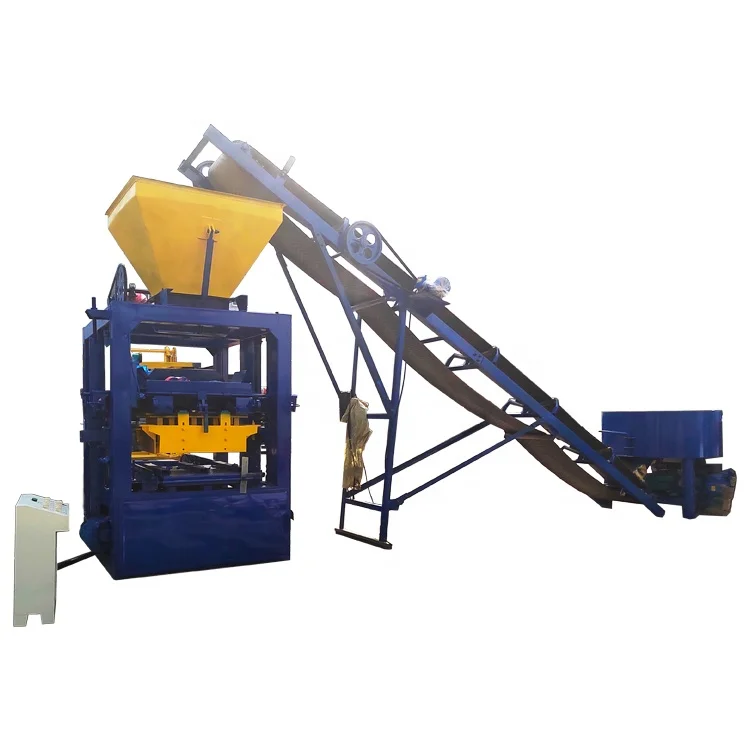

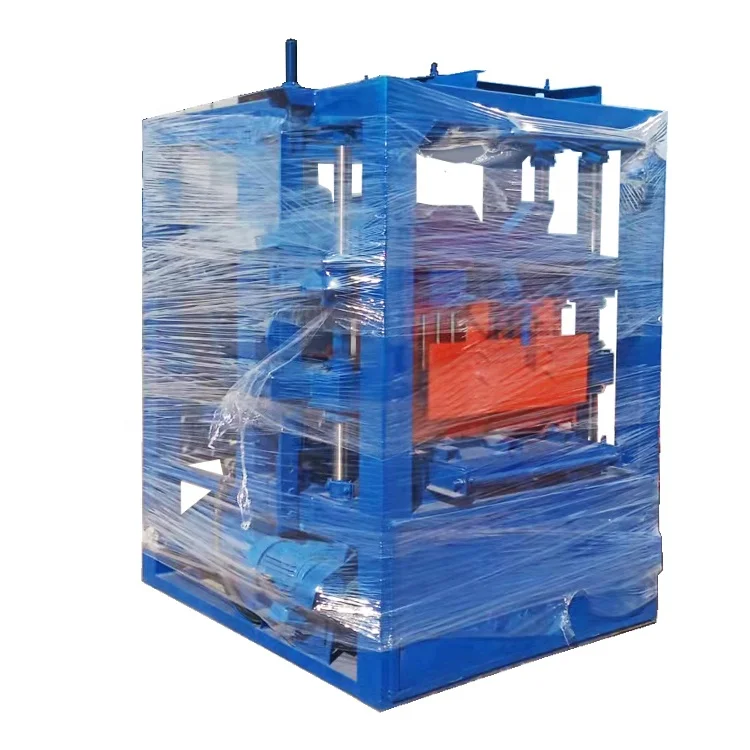

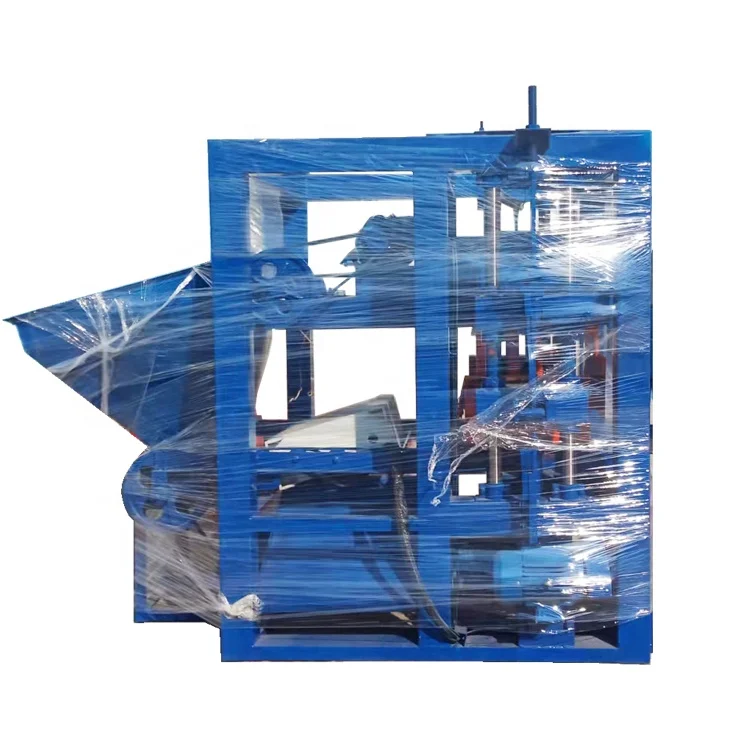
Description
Format-Specific Cycle Matching — the QTJ4-24 moulding cycle is validated against your exact block dimensions and local aggregate density before any capacity claim is made.
Technical Specifications
| Parameter | Value |
|---|---|
| Product Type | Semi-Automatic Concrete Block Making Machine |
| Model | QTJ4-24 |
| Overall Dimensions (L×W×H) | 2060 × 1700 × 2650 mm |
| Rated Vibration Force | 35.5 kN |
| Main Vibration Form | Platform Vibration |
| Vibration Frequency | 4200 r/min |
| Pallet Size | 900 × 450 mm |
| Moulding Cycle | 24 s (basis to be confirmed by block format and material) |
| Overall Power | 11.95 kW |
| Total Mass | 2000 kg |
| Demolding Method | Vibration |
| Recommended Factory Area | 260 m² |
| Raw Materials | Crushed stone, sand, cement, fly ash, gravel, slag |
| Automation Level | Semi-automatic, manual pallet handling |
| Stacking Method | Manual |
| Warranty | 1 year (whole machine, excluding spare parts) |
| Loading | 1 × 40HQ container (basic equipment) |
Application Suitability
| Application | Material or Output |
|---|---|
| Hollow block production for load-bearing walls | Crushed stone and cement with local sand |
| Solid block manufacturing for partition walls | Fly ash, sand and cement blends |
| Interlocking paver production for driveways | Fine aggregate with pigment additives |
| Kerbstone and curb production for roadworks | Coarse aggregate with high cement content |
| On-site block manufacturing for housing projects | Locally sourced gravel and dust mixes |
What "24-Second Cycle" Actually Means for Your Output
The cycle time is only meaningful when paired with the exact block format you intend to produce and the aggregate available at your site.
Buyers often receive a quotation stating a fixed number of cycles per hour, only to discover on commissioning day that their hollow blocks require longer vibration to reach minimum strength, or their paver mix needs a different pressure profile. The QTJ4-24 block machine specifications list a 24-second moulding cycle, but that figure must be validated against your target format — a 400×200×200 mm hollow block behaves very differently under vibration than a 200×100×60 mm interlocking paver. [NEED_CITE: vibration compaction requirements vary by block geometry and aggregate grading]
Pallet Size and Curing Area Compatibility
The 900×450 mm pallet is the physical interface between the press and your curing yard. Before confirming an order, measure the pallet slots on your existing curing racks and check whether your forklift tines can handle that dimension loaded with wet concrete. A mismatch here means either rebuilding your curing infrastructure or watching finished blocks pile up on the floor because the handling system cannot keep pace with the press.
Matching Vibration Force to Local Aggregate
The semi-automatic concrete block making machine capacity depends heavily on how well the 35.5 kN platform vibration compacts your specific mix. Heavier aggregates such as laterite or coral sand absorb more energy, sometimes requiring extended vibration or adjusted spring tension in the mould. I have seen machines of this class produce cracked hollow blocks for weeks before anyone realised the vibration force was calibrated for standard river sand rather than the dense volcanic aggregate the buyer was actually using. [NEED_CITE: aggregate density impact on block compaction and strength]
Interpreting the Key Specifications for Production Planning
Rated vibration force and frequency together determine compaction density. The QTJ4-24 delivers 35.5 kN at 4200 r/min through platform vibration, which suits standard concrete mixes for hollow and solid blocks. The 11.95 kW overall power draw means a dedicated circuit is necessary — sharing a line with a mixer or conveyor can cause voltage dips that interrupt the PLC sequence mid-cycle. The 2000 kg total mass provides a stable base that reduces frame resonance during compaction, contributing to more consistent block dimensions across a full production shift.
The Hidden Cost of Skipping Format Validation
Confirming pallet size, voltage and control language after the machine arrives leads to commissioning delays that push project timelines back by weeks. I once spent days on-site rewiring a control panel because the frequency was wrong for the local grid, and the operator could not read the display language. These are not engineering failures — they are specification oversights that a single pre-production checklist would have prevented. [NEED_CITE: common commissioning delays caused by unconfirmed electrical standards]
Why Source This Configuration Here
Block machinery is our single focus, so the QTJ4-24 is specified as a matched system — machine, mould, pallet and handling are evaluated together rather than assembled from separate suppliers. Configuration is set against your actual mix design and target block format, not pulled from a catalogue default. Mould design is available to your drawings for the formats your local market demands, and automation level is selectable so you can begin with semi-automatic operation and add pallet feeding or stacking later as volume justifies the investment.
Documentation & Verification
- Line layout drawing showing QTJ4-24 footprint within your 260 m² recommended area
- Capacity calculation sheet stating the exact block format assumed for cycle time
- Mould drawing and format list confirming included and custom block types
- Pallet specification matched to your curing rack dimensions and forklift capacity
- Voltage and control language confirmation signed off before production begins
Installation, Commissioning & Support
- Foundation pad sized to the 2060 × 1700 mm footprint with anchor bolt template provided
- Dedicated 11.95 kW circuit with voltage and frequency confirmed to your local grid standard
- Machine shipped dismantled in one 40HQ container with reassembly guided on-site
- First-run parameter tuning against your local aggregate and target block format
- Operator training covering mould change procedure and daily vibration system inspection
- Wear parts list with hydraulic and vibration component replacement intervals defined
Before You Request a Quotation
To configure the QTJ4-24 for your operation, share your target block format and dimensions, the daily output you need to meet, and the raw materials available locally including aggregate type and grading. Confirm your site voltage and frequency, and let us know the pallet size your existing curing area and forklift can accommodate.
Frequently Asked Questions
Q: What is the realistic daily output for hollow blocks versus pavers?
A: The 24-second moulding cycle produces different quantities depending on block format because pallet coverage varies. A 400×200×200 mm hollow block yields fewer pieces per pallet than a 200×100×60 mm paver. Realistic daily output must be calculated per format, factoring in pallet handling time and curing logistics, not just raw press cycles.
Q: Which voltage and frequency options are available?
A: The QTJ4-24 is configurable to match your local grid standard. Voltage and frequency must be confirmed before production so the motor, control panel and any PLC display are correct on arrival. Caribbean and African markets commonly require 220V/60Hz or 380V/50Hz, but each order is verified individually.
Q: How long does a mould change take?
A: Mould change time depends on the format and whether quick-release fasteners are specified. On a semi-automatic machine of this class, expect a full shift segment for the changeover including alignment verification. Multiple formats in one shift are possible if the production schedule groups similar block types together.
Q: Is the pallet compatible with hardwood or bamboo alternatives?
A: The QTJ4-24 uses a 900×450 mm pallet. Both hardwood and bamboo pallets can work if their thickness and rigidity match the vibration table design. Confirm the pallet material and thickness with your supplier so the demolding stroke and vibration transfer remain consistent.
Q: Can the machine process coral sand or volcanic ash aggregate?
A: Local aggregates such as coral sand and volcanic ash can be used, but the mix design and vibration settings must be adjusted accordingly. Denser or more abrasive materials may require mould spring modifications or extended compaction time to achieve target block strength without cracking during curing.