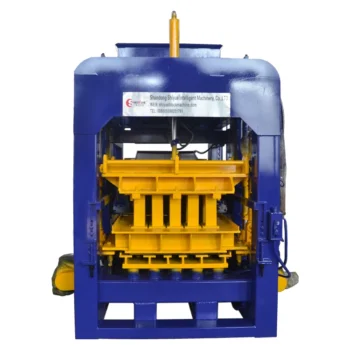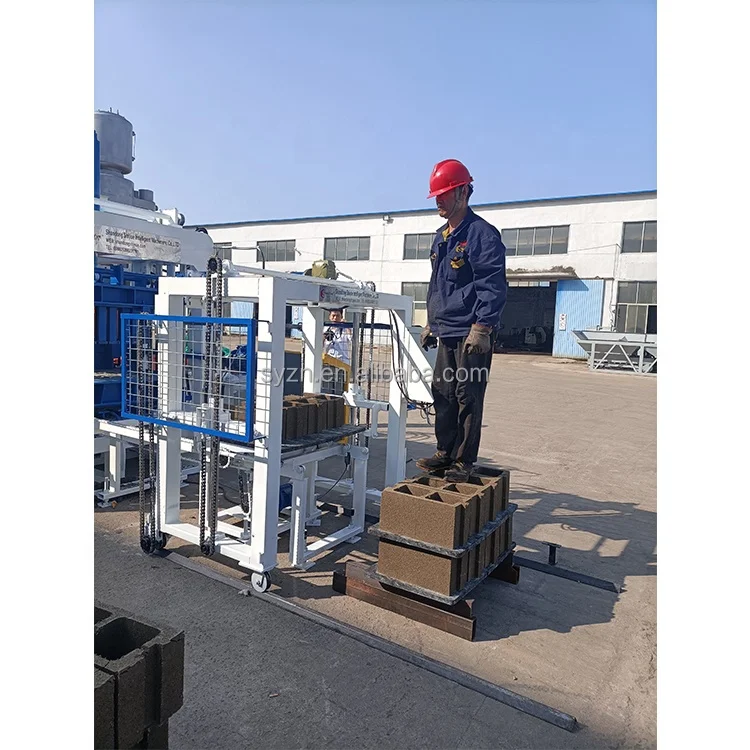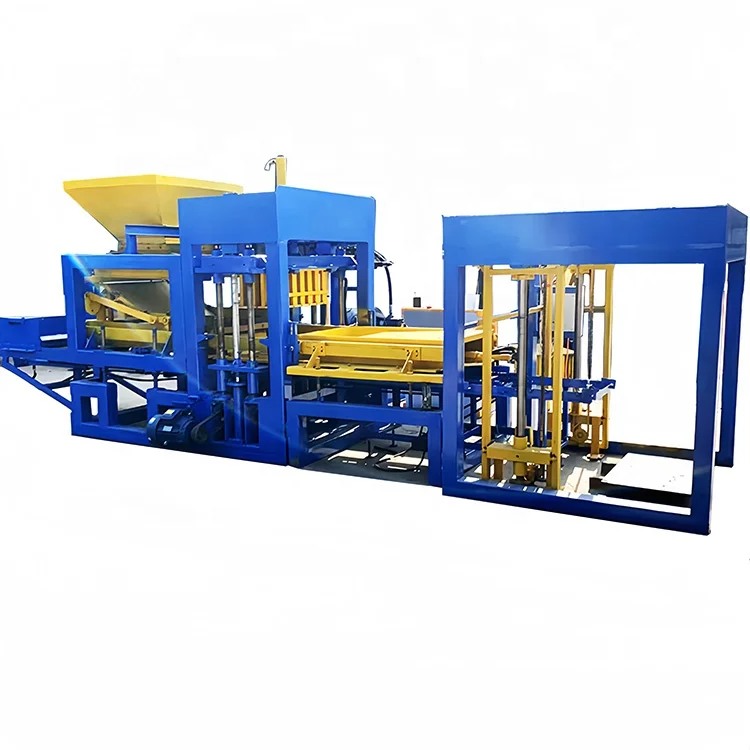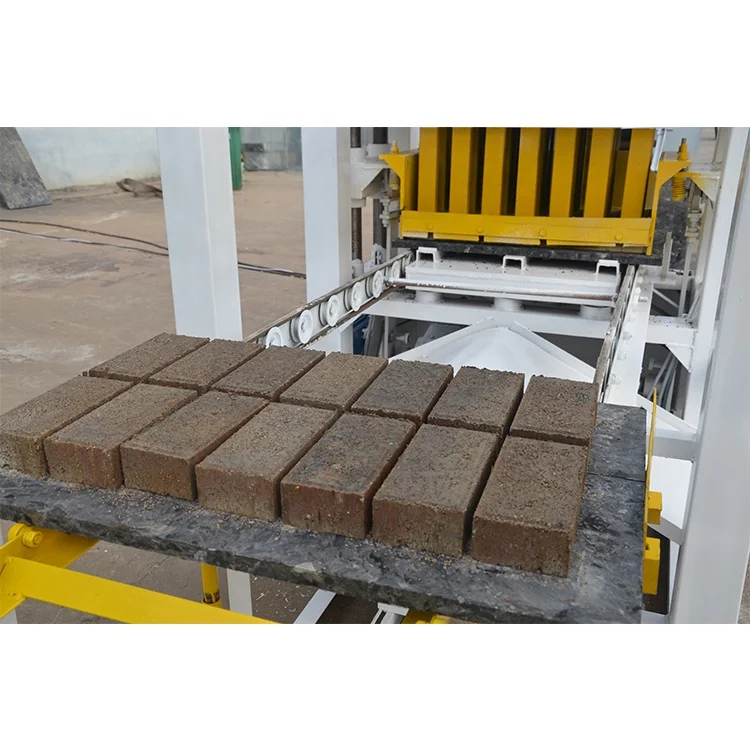
Description
Specified capacity per block format — every output calculation for the QTJ4-24 states the exact mould dimension, cycle time, and shift length assumed, so daily production figures match what your plant will actually deliver.
Technical Specifications
| Parameter | Value |
|---|---|
| Model | QTJ4-24 |
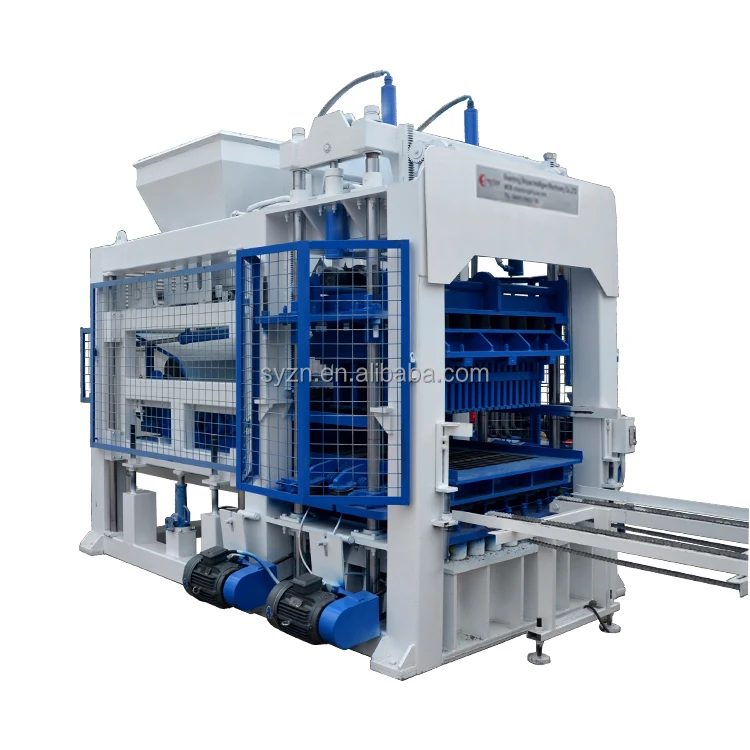
| Product Type | Semi-Automatic Concrete Block Making Machine |
| Overall Dimensions (L×W×H) | 3600mm × 1700mm × 2560mm |
| Total Mass | 3.5T |
| Main Machine Power | 11.95 kW |
| Pallet Size | 900mm × 450mm |
| Molding Cycle | 24–26 seconds (basis not stated in source) |
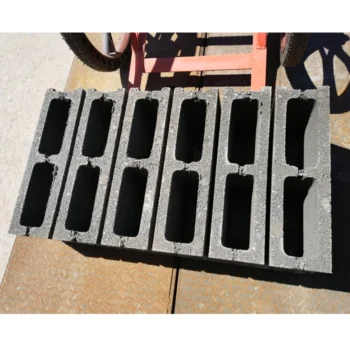
| Mould Format Options | 400×200×200mm (4 pcs/mould), 390×240×190mm (3 pcs/mould), 390×120×190mm (6 pcs/mould), 240×115×53mm (21 pcs/mould) |
| Vibration Type | Table vibration with feeding material, fluctuation vibration molding |
| Automation Level | Semi-automatic (manual feeding, electrical control and mechanical interworking) |
| Feed Way | Manual feeding, two-stage feed |
| Recommended Mixer | JQ350 or JQ500 vertical mixer |
| Recommended Conveyor | 6m or 8m belt conveyor |
| Wire Spec — General Power | 3×16 mm² |
| Wire Spec — Main Machine | 3×6 mm² |
| Wire Spec — Mixer | 3×4 mm² |
| Wire Spec — Conveyor | 3×2.5 mm² |
| Control System | Electrical control cabinet with knife switch (PLC brand and language to be confirmed) |
| Voltage & Frequency | To be confirmed before ordering |
| Hydraulic Pressure | Not stated in source |
| Vibration Force | Not stated in source |
| Stacking Method | Manual (to be confirmed) |
| Warranty | 1 year for the whole machine, excluding spare parts |
Application Suitability
| Application | Material or Output |
|---|---|
| Hollow block production | Crushed stone, sand, cement, fly ash — 400×200×200mm format, 4 pcs per mould |
| Solid standard brick | River sand, quarry dust, cement — 240×115×53mm format, 21 pcs per mould |
| Multicellular brick | Lightweight aggregate, cement blend — 390×240×190mm format, 3 pcs per mould |
| Paving brick production | Coarse aggregate, pigment, cement — 390×120×190mm format, 6 pcs per mould |
| On-site contractor production | Locally sourced aggregate and cement for project-specific block formats |
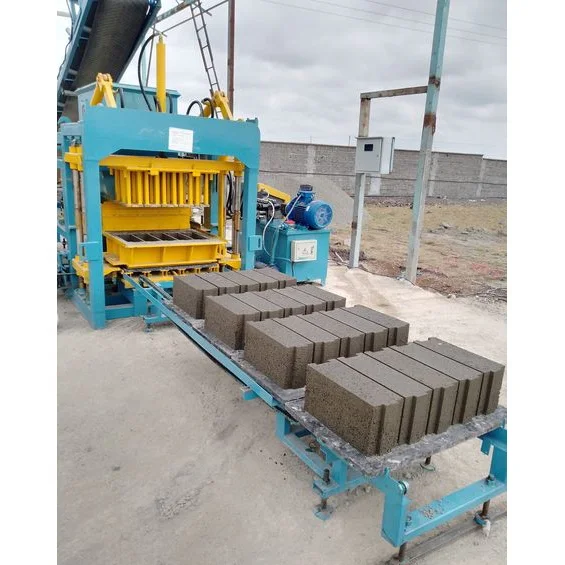
| Small-scale first block plant | Semi-automatic line with JQ350/JQ500 mixer and belt conveyor, no pit required |
What the QTJ4-24 Block Machine Specifications Don’t Tell You Until You Ask
Cycle time is always tied to a specific block format — a number without a mould dimension is meaningless.
Catalogue sheets frequently list a single "pieces per hour" figure without disclosing the block size or raw material behind it. When a buyer in a hot climate runs the same cycle setting with a high-clay local sand, the material needs longer vibration to fully compact, and the QTJ4-24 block machine specifications shift from the listed 24–26 seconds to something noticeably longer. That gap between catalogue capacity and real output is where most first-time plant owners discover they cannot meet their delivery commitments [NEED_CITE: common causes of block plant output shortfall in emerging markets]. The only way to close that gap before purchase is to test the buyer’s actual mix and measure the cycle per format.
Mould Format Matching and Realistic Daily Output
Choosing the right QTJ4-24 block machine specifications starts with the format your market actually buys. The four standard mould options range from large hollow blocks at four pieces per cycle to standard solid bricks at twenty-one pieces per cycle, and each format carries a different realistic daily output even though the machine itself remains unchanged. Custom mould design is available to buyer drawings, so non-standard interlocking or kerb formats can be added once market demand is confirmed. This means a buyer can launch with one or two formats and expand without replacing the press.
Vibration Force, Hydraulic Pressure, and Block Strength
Table vibration combined with fluctuation vibration molding is the mechanism that compacts the concrete mix inside the mould cavity. For hollow blocks using crushed stone, adequate vibration energy drives the coarse aggregate into tight contact, producing the wall density needed for structural load-bearing. For paving bricks using finer sand and pigment, the same vibration must be tuned lower to avoid segregating the colour layer from the base mix [NEED_CITE: vibration tuning for different concrete block formats]. If vibration force and hydraulic pressure are not matched to the buyer’s specific mix design and local aggregate, block strength will vary from batch to batch — sometimes within the same pallet.
Pallet Size, Curing Area, and Handling Equipment
The 900mm × 450mm pallet size on the QTJ4-24 is not an arbitrary choice; it dictates how many pallets fit in a standard curing rack, what turning radius a forklift needs in the yard, and how many square metres of covered curing space the plant must provide. A buyer who already operates a curing yard designed for a different pallet dimension will face wasted floor space or the cost of new racking. Confirming pallet material — bamboo, hardwood, or composite — against local humidity and curing duration is equally important, because a pallet that warps mid-cycle will jam the feed mechanism and damage blocks on the return stroke.
Voltage, Frequency, and Control Language Confirmation
Electrical control on the QTJ4-24 runs through a cabinet with a knife switch, but the voltage, frequency, and any display language remain unconfirmed until the buyer specifies them. A 380 V / 50 Hz machine shipped to a 440 V / 60 Hz market will run the motor above rated speed, shortening bearing life and altering vibration frequency in ways that directly affect block density. Similarly, a control panel labelled only in Chinese delays commissioning when the local operator cannot read the fault codes [NEED_CITE: voltage and frequency standards by export market]. These are details that must be locked in before production begins, not discovered at the port of arrival.
The Hidden Cost of a Misconfigured Block Line
A line where pallet handling, stacking, and curing are omitted from the quotation looks cheaper on paper but forces the buyer to add labour for tasks the machine should cover. Manual stacking of 900×450mm pallets loaded with wet blocks is slow, physically demanding, and introduces breakage that erodes the margin the buyer calculated from the machine’s rated output. Equally, a mixer that does not match the main machine’s feed rate leaves the press idle between batches, turning a semi-automatic line into a series of stops and starts that cut daily production well below the figure used to justify the investment [NEED_CITE: line balancing errors in small block plants].
Why Procurement Through This Channel Reduces Configuration Risk
Every QTJ4-24 configuration is set against the buyer’s actual mix design, local aggregate, and target block format rather than a catalogue default, which means the mould, pallet, and vibration settings arrive as one matched system. Mould design and supply covers the formats the buyer’s market sells, including custom drawings for non-standard shapes. The automation level is selectable, allowing a buyer to start with manual pallet handling and upgrade the feed and stacking stations later without replacing the press. Installation and commissioning support includes operator training on the specific mix and mould formats the plant will run. Factory test records are generated with the buyer’s chosen block format before dispatch, not a generic test block.
Documentation & Verification
- Line layout drawing showing QTJ4-24 position, mixer, and conveyor footprint on your site plan
- Capacity calculation sheet stating block format and cycle time assumed for each output figure
- Mould drawing and format list confirming which standard and custom block sizes are included
- Pallet specification matched to your curing rack dimensions and forklift capacity
- Voltage, frequency, and control panel language confirmation signed before production
- Factory test record produced on your selected block format before dispatch
Installation, Commissioning & Support
- Flat-ground foundation sufficient for 3600mm × 1700mm footprint with no pit excavation required
- Dedicated circuit with 3×16 mm² cable for general power and 3×6 mm² for the 11.95 kW main machine
- Machine ships assembled; only hopper, control cabinet, and conveyor require on-site connection
- First-run parameter setting covers vibration duration, feed volume, and molding cycle for your mix
- Operator training on mould change procedure, manual feed technique, and electrical interlock safety
- Wear parts list with reorder intervals for mould liners, vibration springs, and feed box scrapers
What to Include in Your Inquiry
Provide the block format your market buys most, the daily volume you need to meet, and a sample or description of your local aggregate and cement source. State your site’s voltage, frequency, and the language your operators read. If you already have a curing yard or forklift in place, share the pallet dimensions they were designed for so the 900×450mm pallet can be confirmed or adjusted.
Frequently Asked Questions
Q: How is daily output calculated for each block format on the QTJ4-24?
A: Daily output is calculated by multiplying the pieces per mould by the number of cycles achievable in your shift length, using the molding cycle time specific to that block format. Because the 24–26 second cycle varies with mix design, raw material moisture, and vibration tuning, each output figure must be stated alongside the exact mould dimension and the mix used during testing.
Q: Which mould formats are included and can I add custom block shapes later?
A: Four standard mould formats are available — 400×200×200mm, 390×240×190mm, 390×120×190mm, and 240×115×53mm. Custom moulds can be designed to buyer drawings at any time, and the press accepts additional moulds without modification, so you can start with one format and add shapes as market demand develops.
Q: What voltage and frequency options are available, and what language does the control panel display?
A: Voltage and frequency are configured to the buyer’s grid specification before production; these values must be confirmed during the quotation stage. The control panel display language is also set at this point. Leaving these items unspecified risks commissioning delays and motor damage once the machine arrives on site.
Q: How long does a mould change take, and what tools are required?
A: Mould change time depends on operator familiarity and the bolt configuration specified for your press. Standard tools are sufficient; no hydraulic disconnect is needed because the QTJ4-24 uses mechanical clamping. A trained operator can complete the change within a shift, but first-time changes take longer and should be planned during a non-production window.
Q: What pallet material is recommended for the 900×450mm size, and how does it affect curing?
A: Bamboo, hardwood, and composite pallets are all compatible with the 900×450mm size. Bamboo offers light weight and flexibility but absorbs moisture in humid curing environments, which can cause warping. Hardwood is heavier and more dimensionally stable. Composite pallets resist moisture entirely but carry a higher unit cost. The choice should match your local humidity and curing duration.