

Description
Honest Capacity by Format — every output figure for the QT10-15 is stated against the exact block format, cycle time, and mould cavity count that produced it, so your daily planning starts from reality instead of a catalogue headline.
Technical Specifications
| Parameter | Value |
|---|---|
| Model | QT10-15 |
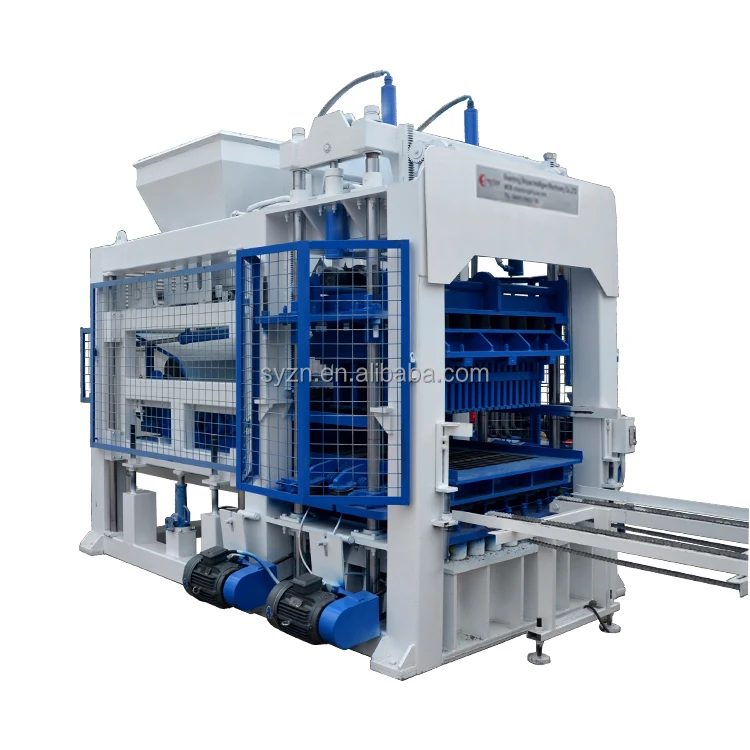
| Product Type | Automatic Concrete Block Making Machine |
| Moulding Cycle | 15–25 s (basis not stated in source — confirm block format, material, thickness) |
| Vibration System | Vertical station mode resonance with automatic FM-AM tuning |
| Hydraulic System | Independent integrated hydraulic station |
| Control System | PLC control cabinet |
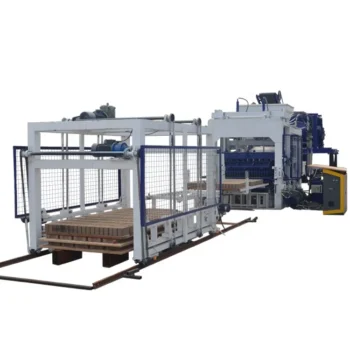
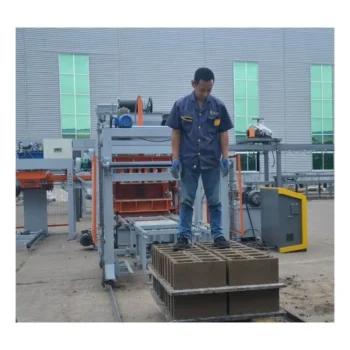
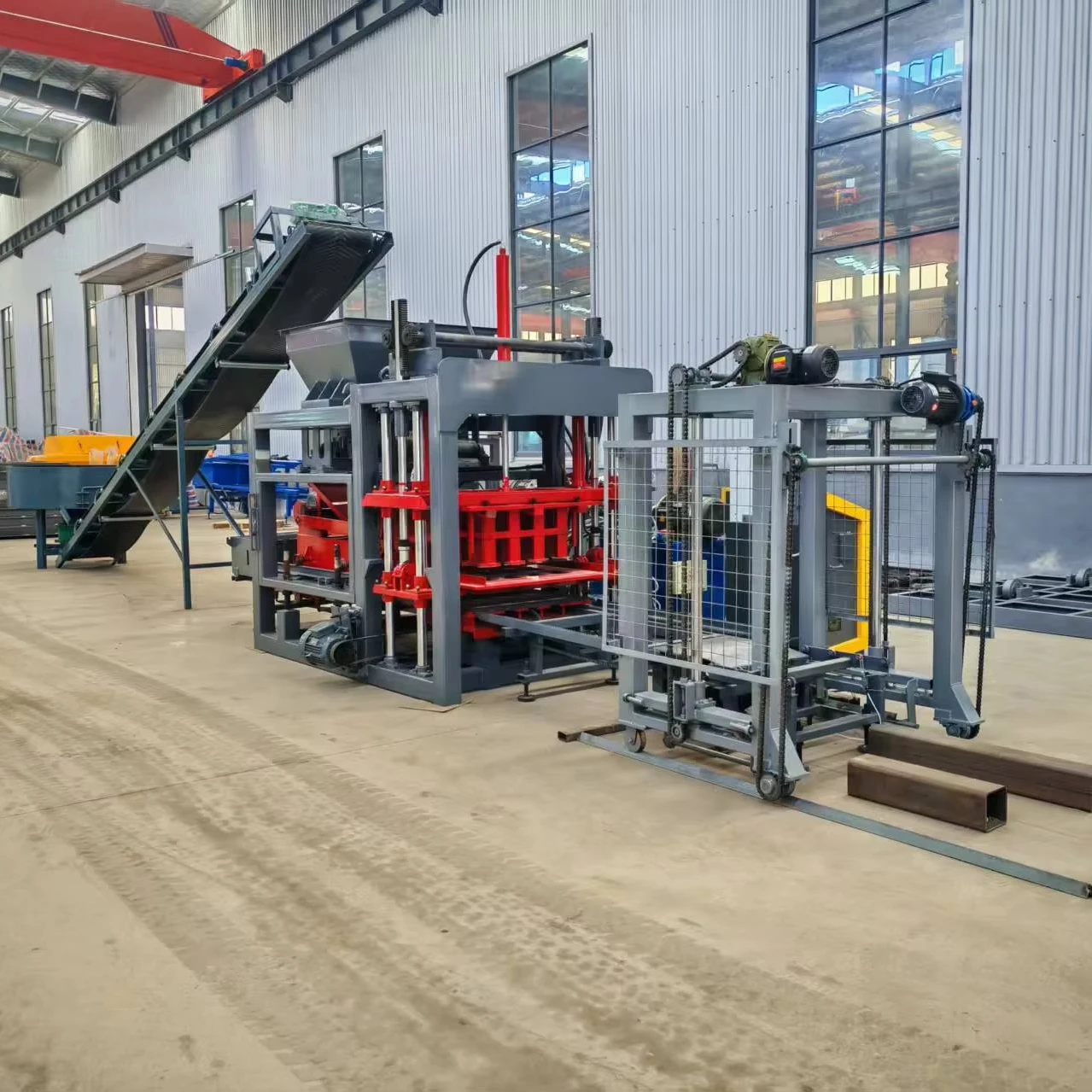
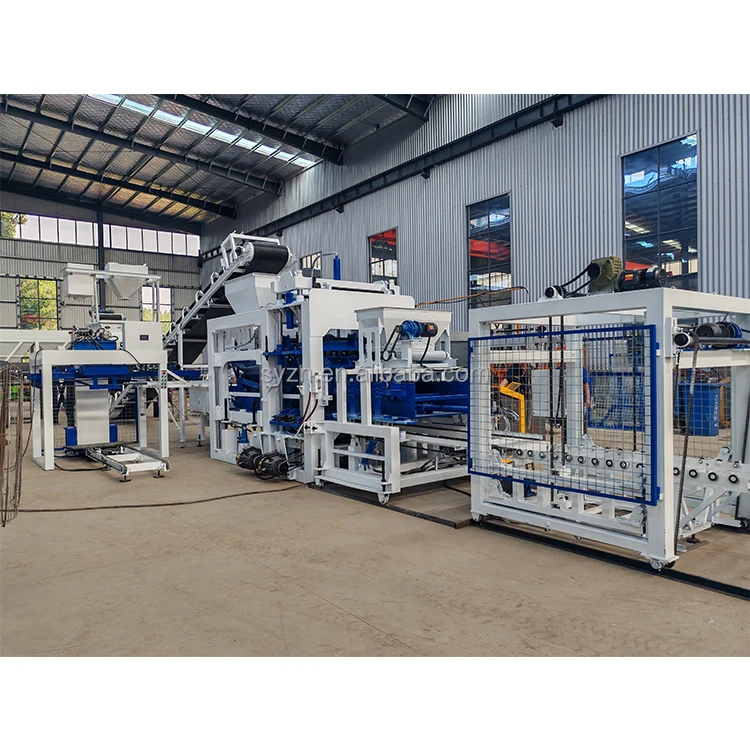
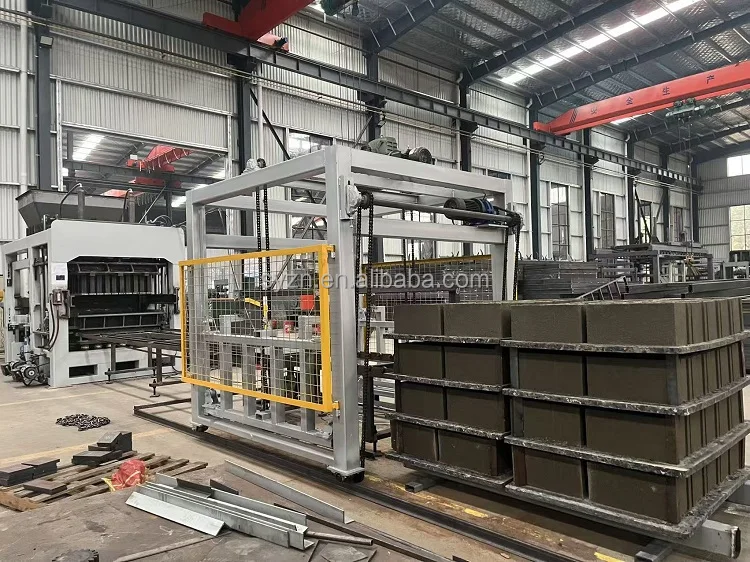
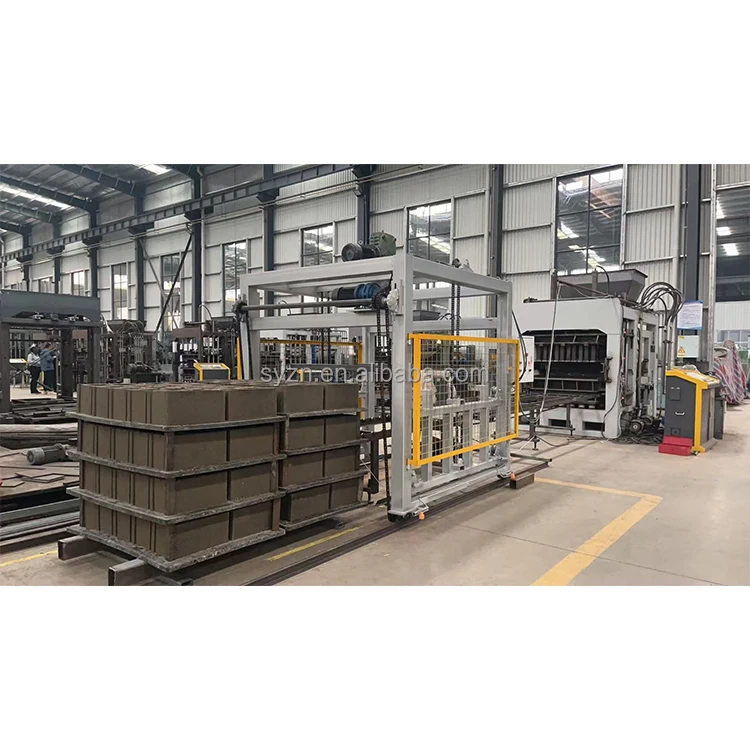
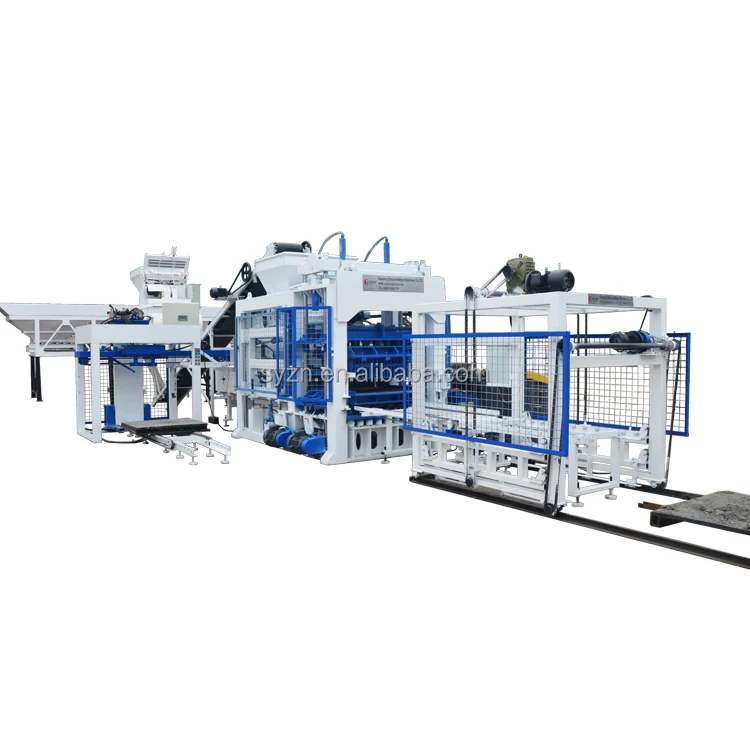
| Line Components | Pallet feed machine, block making machine, storage hopper, conveyor, hydraulic unit |
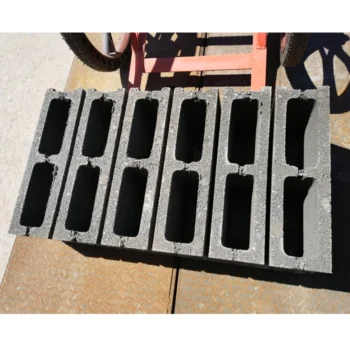
| Output — Hollow Block 400×200×200 mm | 1,800–2,400 pcs/h (10 pcs/mould, 15–20 s cycle) |
| Output — Hollow Block 400×150×200 mm | 2,160–2,880 pcs/h (12 pcs/mould, 15–20 s cycle) |
| Output — Solid Brick 240×115×53 mm | 8,928–11,160 pcs/h (62 pcs/mould, 15–20 s cycle) |
| Output — Paver 200×100×60 mm | 5,184–6,480 pcs/h (27 pcs/mould, 20–25 s cycle) |
| Output — Interlock 225×112.5×60 mm | 4,032–5,040 pcs/h (24 pcs/mould, 20–25 s cycle) |
| 8-hour Shift — Hollow Block 400×200×200 mm | 14,400–19,200 pcs |
| 8-hour Shift — Paver 200×100×60 mm | 41,472–51,840 pcs |
| Mould Change Method | Simple mould replacement for multi-format production |
| Assembly State | Multi-station line assembly required |
| Warranty | 1 year (excluding spare parts) |
Application Suitability
| Application | Material or Output |
|---|---|
| Hollow block production for load-bearing walls | Crushed stone, sand, cement, water — 400×200×200 mm or 400×150×200 mm formats |
| Paving stone production for roads and walkways | Fine aggregate, cement, pigment — 200×100×60 mm interlocking or rectangular pavers |
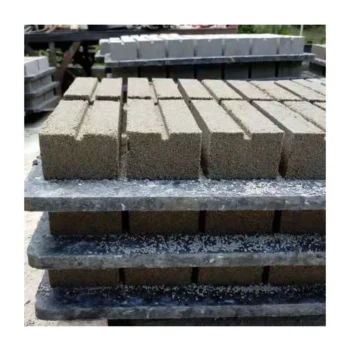
| Solid brick production for partition walls | Sand, fly ash, cement — 240×115×53 mm standard format |
| Interlocking paver production for landscaping | Colored concrete mix — 225×112.5×60 mm interlock format |
| On-site block production for housing projects | Local aggregate blended with cement — format matched to regional building code |
Why the Concrete Block Making Machine Specifications Must Name the Block Format
A capacity number without a format name is not a specification — it is a guess.
I learned this the hard way early in my career. I once handed a client a single hourly output figure pulled from a catalog test run on a small solid brick, and they sized their entire curing yard around that number. When the machine arrived and they ran the 400×200×200 mm hollow block their market actually bought, the real throughput was less than half. The curing space sat empty and the crew finished shifts early. That mistake is why every concrete block making machine specifications table on this page names the format, cavity count, and cycle range behind each number. [NEED_CITE: block machine capacity verification methods by format]
Mould Cavities and Cycle Range Define Real Output
The QT10-15 drops ten 400×200×200 mm hollow blocks per press with a 15–20 second cycle, which sets the ceiling for structural block output. Switch the mould to a 27-cavity paver plate and the cycle stretches to 20–25 seconds because the smaller cavities need longer vibration settling. The concrete block making machine specifications here reflect that difference rather than hiding it behind a single peak number.
Vibration Tuning Across Block Formats
The vertical station mode resonance system on the QT10-15 uses automatic FM-AM adjustment so the vibration profile changes when the operator switches from a heavy hollow block mould to a thinner paver mould. This matters because fixed-frequency vibration leaves density variations across the pallet when the format changes. [NEED_CITE: vibration frequency matching for concrete compaction density]
Hydraulic Isolation and Press Reliability
The independent integrated hydraulic station sits apart from the main press frame, which keeps hydraulic oil away from concrete dust and continuous vibration. In my experience on the assembly floor, hydraulic valve failures on block machines trace back to contaminated fluid more often than any other cause. Keeping the station separate means seal and valve life extends noticeably, and maintenance intervals stay predictable across an eight-hour shift.
Reading the Specs That Actually Determine Block Quality
Hydraulic pressure and vibration force must be balanced against each other for every mix design. Too much vibration without enough hydraulic clamping and the block surface fractures before ejection; too much pressure without adequate vibration and the core stays porous. The QT10-15 pairs its independent hydraulic station with the FM-AM vibration system so both forces can be tuned independently per format. Pallet size is another spec that reaches beyond the press — it dictates the curing rack spacing and the forklift tine width your yard already uses, so confirming pallet dimensions before the machine ships prevents a mismatch that would otherwise force a yard re-layout.
What Happens When Format Is Left Out of the Quote
Buyers who accept a single headline capacity figure often discover during commissioning that the number was measured on a format their market does not sell. The curing area turns out too large or too small for the pallets that actually arrive, the forklift cannot stack them, and the first mould change takes most of a shift because the change tooling was never specified. [NEED_CITE: common commissioning delays from unconfirmed block format and pallet size]
Why Buyers Source the QT10-15 Here
- Block machinery is our single focus, so the press, mould, pallet, and handling equipment are specified together as one matched line rather than assembled from unrelated suppliers.
- Every capacity calculation states the block format assumed, and the mould drawing confirms cavity count and cycle range before production begins.
- Mould design covers the formats the buyer’s market actually sells, including custom drawings when standard formats do not match local building codes.
- Automation level is selectable — the QT10-15 ships with PLC control and pallet feed, and further automation such as stacking can be added later without replacing the press.
- Factory testing runs the buyer’s chosen format and mix design, not a default test block, so the test record reflects real production conditions.
Documentation & Verification
- Line layout drawing with capacity calculation stated per block format and cycle range
- Mould drawing and format list confirming cavity count for each product type
- Hydraulic and electrical schematic with voltage and control language marked
- Factory test record measured on buyer’s chosen block format before dispatch
- Operation and maintenance manual with wear parts and mould replacement schedule
- Packing photographs and customs documentation support for container loading
Installation, Commissioning & Support
- Multi-station line assembly on leveled concrete foundation with anchor bolt template provided for the QT10-15 press frame
- Dedicated electrical circuit sized to the machine’s rated power with voltage and frequency confirmed before wiring
- PLC control cabinet powered on and display language set to operator preference during first commissioning run
- Pallet feed machine aligned to press entry and storage hopper conveyor calibrated for mix feed rate
- Mould change procedure demonstrated with buyer’s second format so operators practice before the support team leaves site
- Wear parts list and hydraulic seal kit handed over with reorder lead times noted
What We Need to Size Your Line Correctly
Send us the block format your market sells most — dimensions, target strength, and daily volume. Tell us what local aggregate is available and its typical grading, along with your site voltage and frequency. If you already have curing racks or forklifts on site, share their dimensions so the pallet specification matches what you have rather than forcing a yard rebuild.
Frequently Asked Questions
Q: How is the capacity figure calculated — which block format and cycle time is it based on?
A: Each output figure on this page names the exact block format, mould cavity count, and cycle range used to calculate it. For example, the hollow block figure assumes a 400×200×200 mm block with 10 cavities and a 15–20 second cycle. If your format differs, we recalculate before quoting.
Q: Can the QT10-15 be configured for my local aggregate without material changes?
A: Yes. Before production we review your aggregate grading, cement type, and target block strength. The vibration and hydraulic parameters are then set to match that mix, so you run local material from day one instead of sourcing a catalog-spec blend.
Q: What is the actual mould change time between formats on a working shift?
A: The QT10-15 uses a simple mould replacement method. Exact change time depends on the mould weight and whether a crane or hoist is available on site. We demonstrate the full change procedure during commissioning so your crew can measure it on your own line.
Q: Which pallet size does the QT10-15 require, and does it match my existing curing area?
A: Pallet size is confirmed during the configuration stage based on your chosen block format and mould layout. We cross-check it against your curing rack spacing and forklift dimensions so pallets fit your yard without modification.
Q: How are voltage, frequency, and PLC display language confirmed before shipment?
A: We request your site electrical specifications and preferred operator language during the order stage. The PLC cabinet is wired and labeled accordingly, and the factory test is run at the confirmed voltage so no rewiring is needed after arrival.