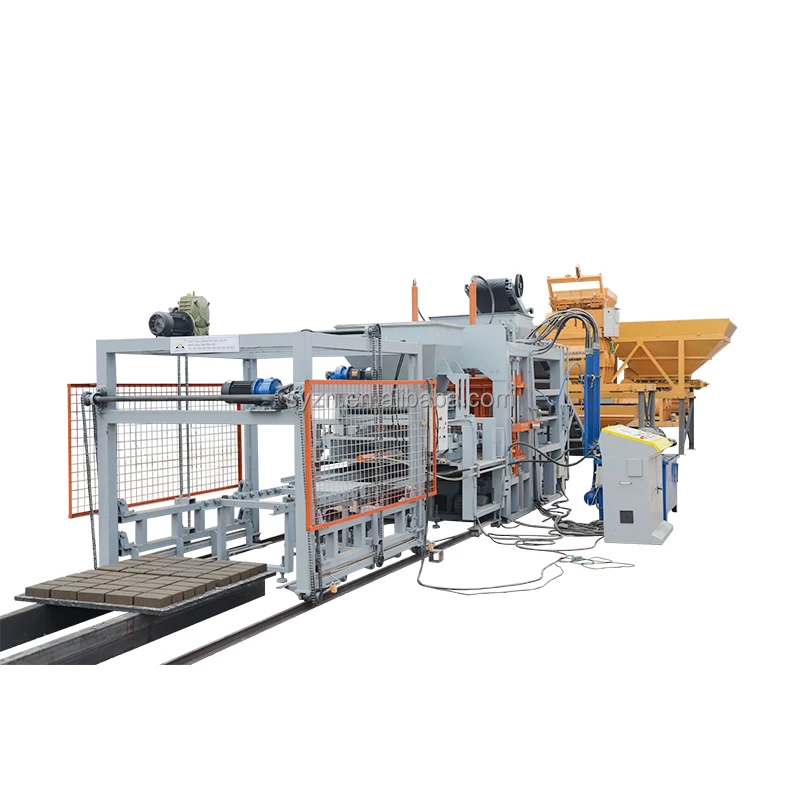
Description
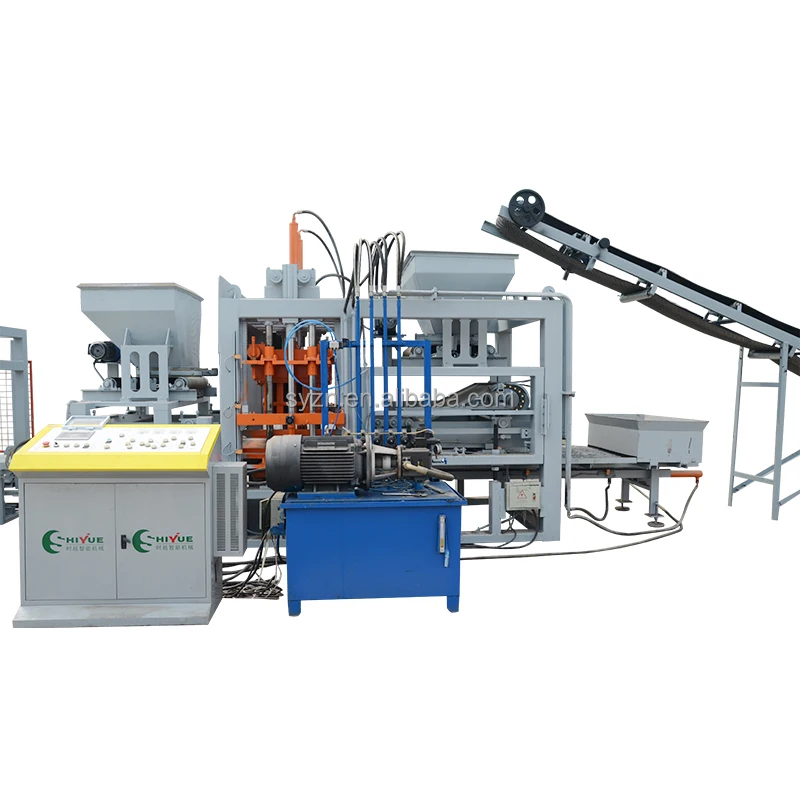
Configuration set against the buyer’s actual mix design, local aggregate and target block format — every QT7-15 block making machine we ship is specified around the real products your market buys, not pulled from a catalogue default.
Technical Specifications
| Parameter | Value |
|---|---|
| Model | QT7-15 |
| Product Type | Automatic Hydraulic Block Making Machine |
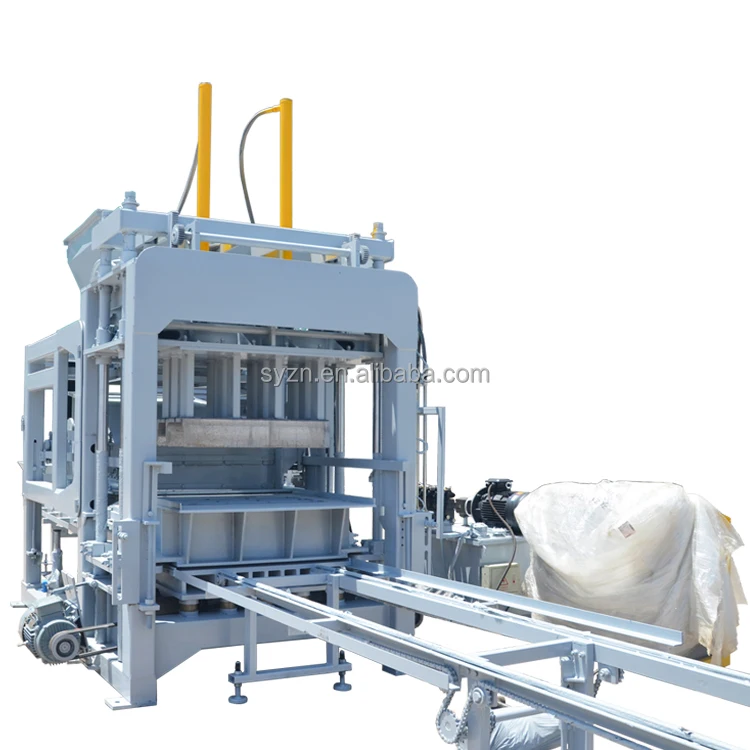
| Dimension of Host Machine | 3200 × 2300 × 2750 mm |
| Weight of Host Machine | 6 Tons |
| Molding Area | 1150 × 700 mm |
| Workshop Area Requirement | 200 ㎡ |
| Host Machine Power | 45 kW |
| Vibration Force | 100 kN |
| Vibration Method | Hydraulic + Platform Vibration |
| Vibration Frequency | 2800–4500 Times/Minute |
| Molding Period | 15 Seconds (basis not stated in source — confirm block format / material / thickness) |
| Pallet Size | 1150 × 700 × 25 mm |
| Voltage | Customizable: 220 / 380 / 415 / 440 V |
| Control System | Siemens PLC with independently developed control program |
| Motor Brand | Germany SIEMENS or CE standard brand |
| Travel Switch | France Schneider and Japan Omron |
| Mould Treatment | Heat treatment and carburizing (54–58 HRC, lifespan over 100,000 cycles) |
| Material and Welding | Carbon dioxide protection welding, international CE standards |
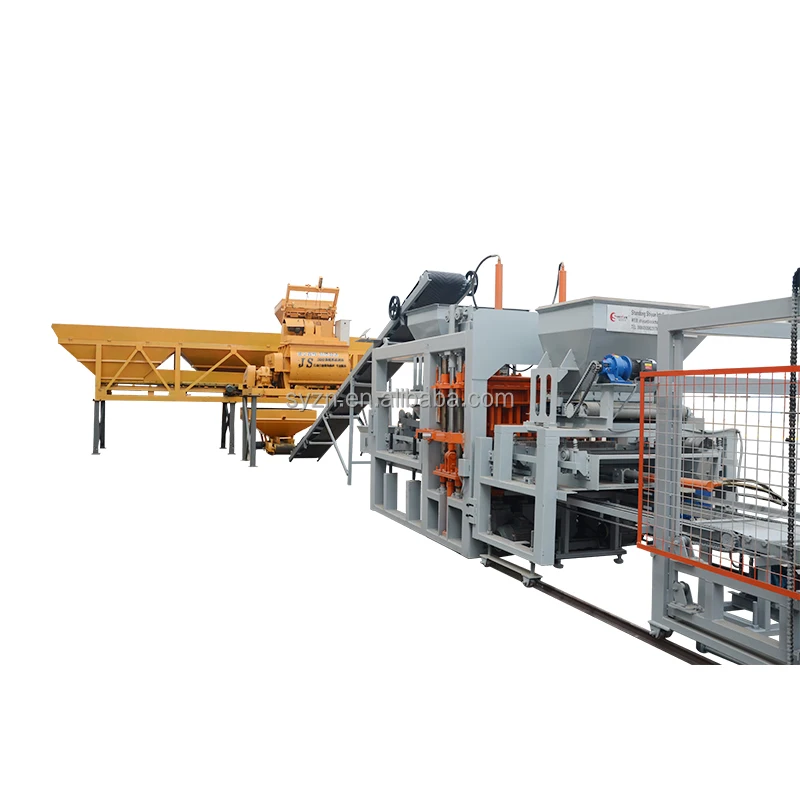
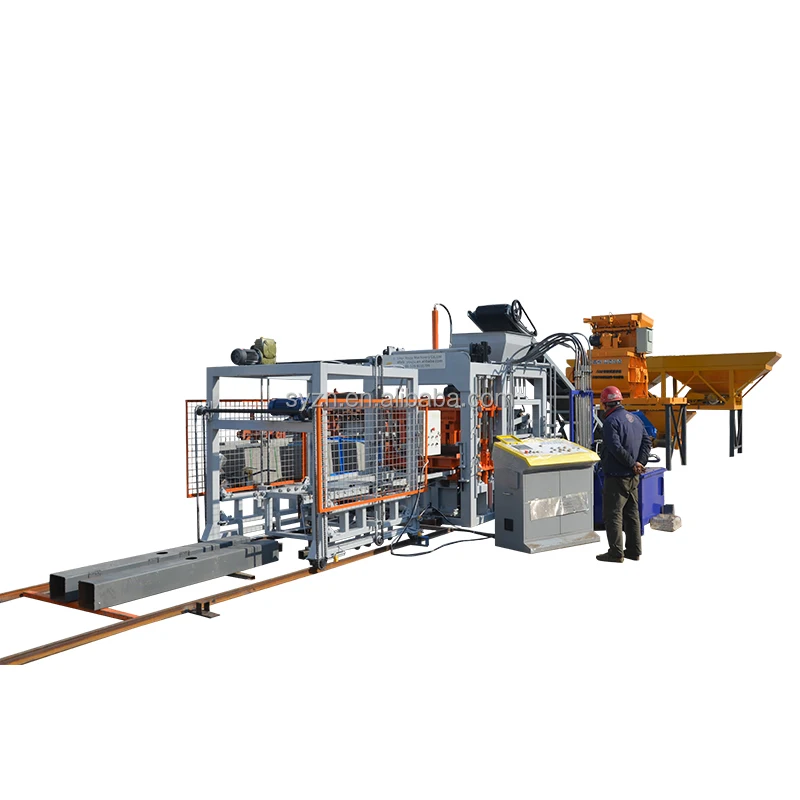
| Grouped Equipment | PLD1200 Batching Machine, JS500 Mixer, Conveyor belt, Hydraulic station, Pallet feeder, Brick receiver, Hydraulic trolley, SY-4 Stacker |
| Batching Machine Capacity | 1200 L weigh-batching hopper, 4 × 2.5 m³ storage hopper |
| Batching Machine Productivity | 56 m³/h (theoretical) |
| Concrete Mixer Charging Volume | 800 L |
| Concrete Mixer Discharging Volume | 500 L |
| Concrete Mixer Production Capacity | 25 m³/h |
| Stacker Model / Power | SY-4 / 3 kW |
| Automation Level | Automatic with PLC control |
| Standards | CE |
Application Suitability
| Application | Material or Output |
|---|---|
| Hollow block production for load-bearing walls | Crushed stone, sand, cement, fly ash, water |
| Solid block production for foundations and partition walls | Dense aggregate, cement, mineral sand |
| Pavement brick and interlocking brick production | Fine aggregates, pigment, cement |
| On-site block production for construction contractors | Locally sourced gravel, river sand, cement |
| Concrete product manufacturers expanding format range | Existing mix designs adapted to new mould formats |
What "15 Seconds per Cycle" Leaves Out About QT7-15 Block Making Machine Specifications
A cycle time only means something when you know exactly which block format and mix design it was measured on.
Many buyers receive a QT7-15 block making machine capacity figure quoted in cycles per hour, then discover on commissioning that their local aggregate—high in clay, moisture, or irregular in grading—requires a longer vibration hold and a different pressure profile. The 15-second molding period listed in standard specifications does not state which block size, wall thickness, or concrete mix was assumed. I have seen buyers plan their curing yard and labour shifts around a theoretical output, only to find the real daily throughput falls noticeably short once the machine is tuned to their actual raw materials. [NEED_CITE: aggregate moisture and clay content effects on concrete block compaction]
Matching Vibration and Pressure to Your Local Aggregate
The QT7-15 automatic hydraulic block machine uses a hydraulic-plus-platform vibration method with a frequency range of 2800 to 4500 times per minute. This range matters because different aggregate gradings respond differently to vibration: a well-graded crushed stone mix compacts efficiently at higher frequencies, while a sand-heavy mix with fine particles may need a lower frequency and longer hold to avoid surface cracking. The hydraulic pressure must also be matched to the mix. Too much pressure on a lean mix pushes cement paste to the surface and leaves the core weak; too little leaves voids that reduce block strength below the buyer’s target specification. We always request a sample of the buyer’s local aggregate and run trial batches before locking in the vibration and pressure settings.
Mould Format, Pallet Size, and Realistic Daily Output
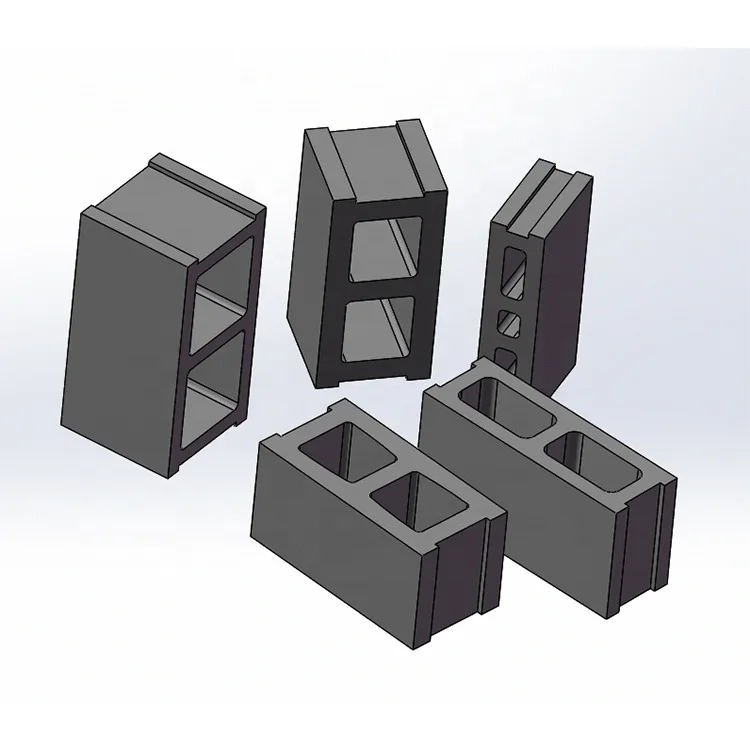
The 1150 × 700 mm molding area accepts moulds for hollow blocks, solid blocks, pavement bricks, interlocking bricks, and porous bricks. Each format occupies a different area on the pallet and requires a different compaction depth, which changes both the cycle time and the number of pieces per pallet. A standard 400 × 200 × 200 mm hollow block yields fewer pieces per cycle than a 200 × 100 × 60 mm paving brick, and the vibration parameters differ between them. The pallet size—1150 × 700 × 25 mm—must also match the buyer’s existing curing racks and forklift capacity. If the curing area uses racks designed for a different pallet dimension, the buyer faces either a rack replacement or a pallet redesign, both of which add cost and delay after the machine arrives. [NEED_CITE: pallet and curing rack compatibility in concrete block plants]
Specifying the Full Line, Not Just the Press
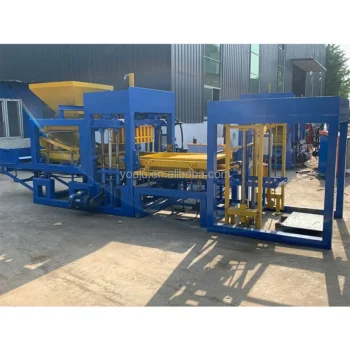
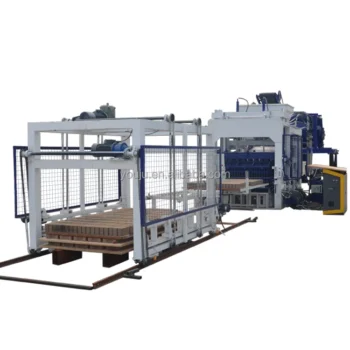
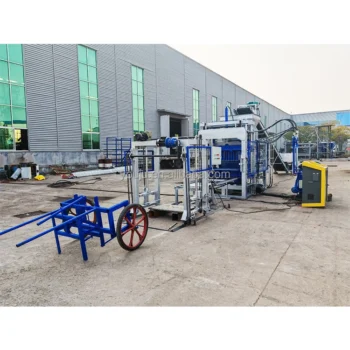
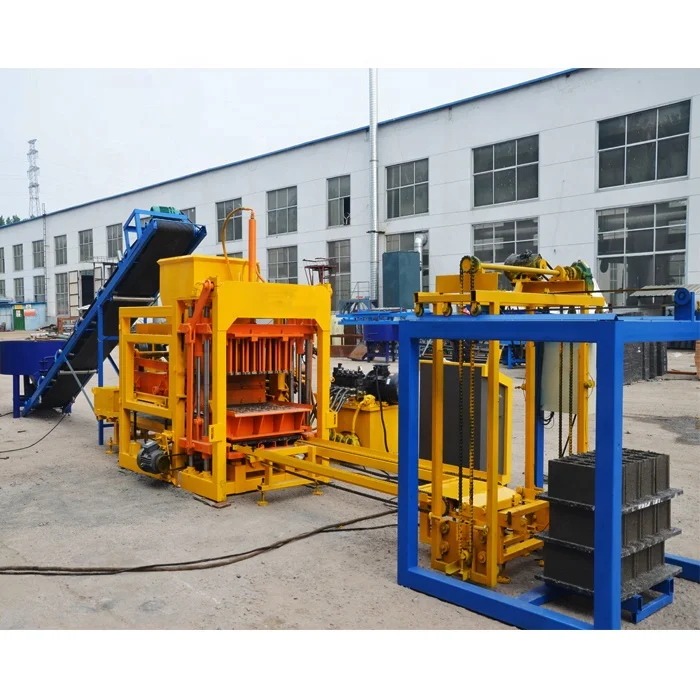
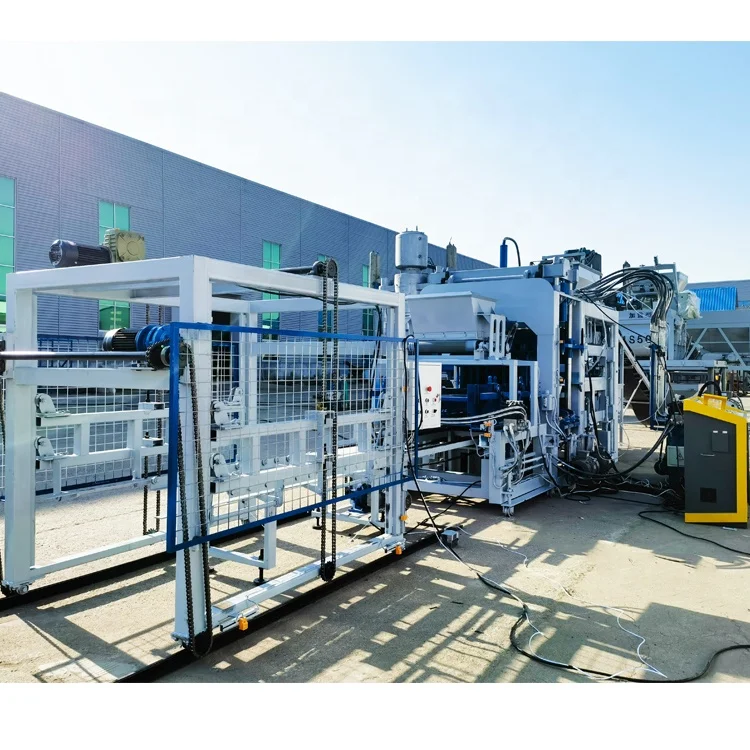
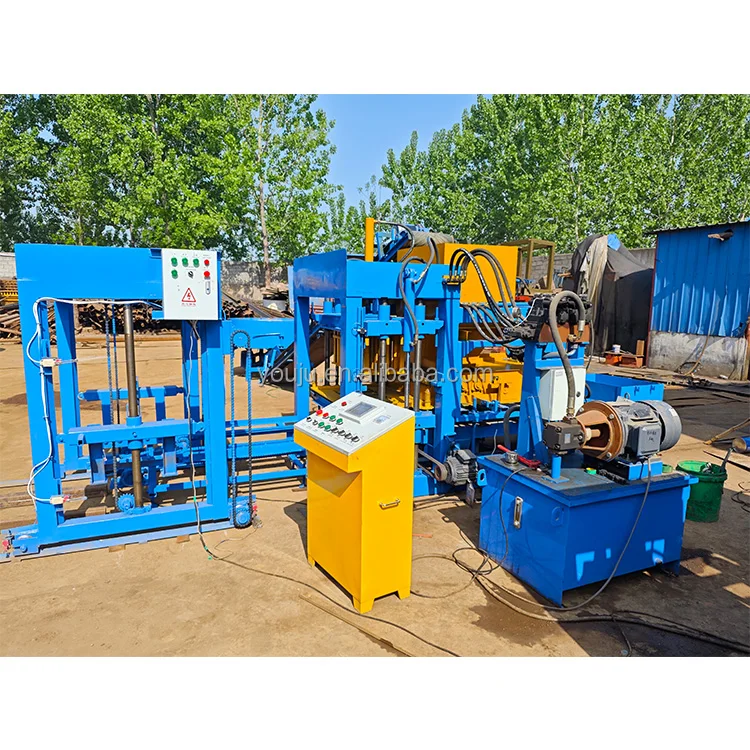
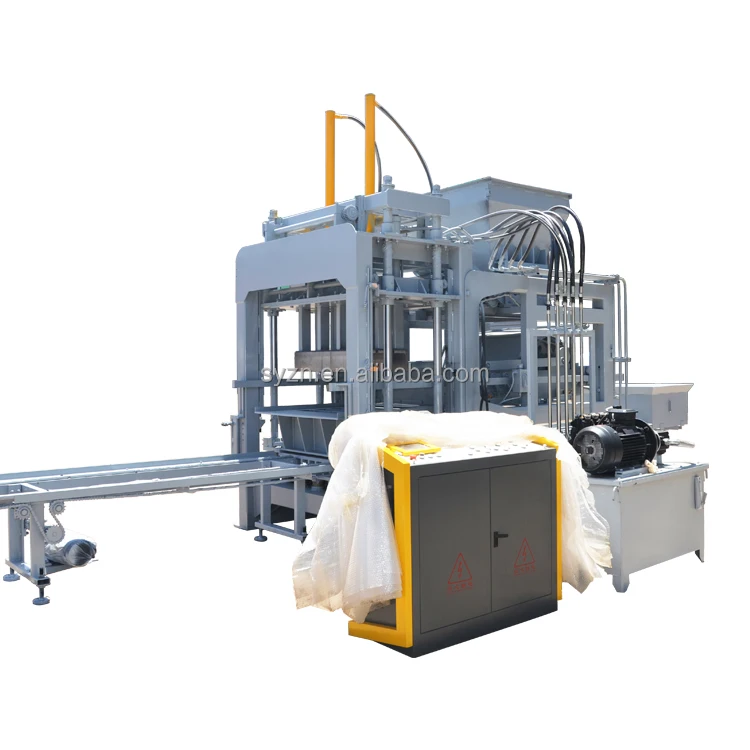
The QT7-15 block making machine specifications include grouped equipment: a PLD1200 batching machine with four 2.5 m³ storage hoppers, a JS500 mixer with 500 L discharge volume, a conveyor belt, a hydraulic station, a pallet feeder, a brick receiver, a hydraulic trolley, and an SY-4 stacker. Each station must be sized so the press is never left waiting for mix or pallets. The batching machine’s theoretical productivity is 56 m³/h, and the mixer’s production capacity is 25 m³/h; if the press cycle time is shortened by changing to a smaller block format, the mixer becomes the bottleneck unless its discharge cycle is also adjusted. The stacker, rated at 3 kW, must be able to handle the pallet weight at the speed the line delivers them. A mismatch anywhere in this chain leaves the press idle and the daily output below what the press alone was rated to produce.
Inside the Compaction Engineering
The 100 kN vibration force and the hydraulic pressure work together to achieve block density. Vibration fluidises the concrete mix so particles settle into a tighter arrangement, while hydraulic pressure from above compresses the mix into the mould cavity. The 2800–4500 times/minute frequency range allows the operator to select a setting that matches the particle size distribution of the local aggregate. The mould itself is heat-treated and carburised to 54–58 HRC hardness, which extends its working life through over 100,000 cycles before replacement is needed. This matters because a worn mould produces blocks with rounded edges and dimensional drift, leading to rejection at the construction site. The Siemens PLC control system stores the vibration, pressure, and timing parameters for each mould format, so the operator can recall a proven recipe rather than re-tuning from scratch at every mould change. [NEED_CITE: relationship between vibration frequency and concrete block compressive strength]
The Hidden Cost of an Unmatched Configuration
When a buyer selects a machine based only on headline cycle time without confirming the format, the downstream consequences accumulate. A pallet size chosen without checking the curing yard dimensions forces the buyer to reconfigure racks or buy a new forklift. Voltage and frequency left unconfirmed until the machine arrives can delay commissioning by weeks while a transformer is sourced locally. A mould set specified for a format the buyer’s market does not actually sell sits unused, while the format that is in demand requires a custom mould ordered separately at extra cost and lead time. I have seen a buyer in West Africa wait two months for a replacement mould because the original set was specified for a European-standard block size that had no local market. [NEED_CITE: voltage and frequency standards by export market]
Why Source This QT7-15 Block Making Machine From Us
Block machinery is our single focus, so the QT7-15 is specified as a matched system—press, mould, pallet, and handling equipment configured together against your actual block format. We set the vibration force, hydraulic pressure, and cycle parameters based on your local aggregate sample and target block strength, not on a catalogue default. Mould design covers the formats your market sells, including custom drawings if your region uses a non-standard dimension. Automation level is selectable; you can start with semi-automatic pallet handling and upgrade to the SY-4 stacker and full PLC control when volume justifies it. Installation, commissioning, and operator training are included so the machine produces saleable blocks from the first day.
Documentation & Verification
- Line layout and capacity calculation stating the exact block format assumed for each cycle time
- Mould drawing and format list confirming every block type the machine will produce
- Pallet specification matched to your curing rack dimensions and forklift capacity
- Voltage, frequency, and PLC display language confirmation documented before production begins
- Factory test record run on your specified block format before dispatch
- Operation and maintenance manual with wear parts and mould replacement list
Installation, Commissioning & Support
- Workshop area of 200 ㎡ must include clearance around the 3200 × 2300 mm host machine for mould change access
- 45 kW host machine power plus batching, mixer, and stacker loads require a dedicated three-phase circuit at your confirmed voltage
- Machine arrives dismantled for container loading; reassembly and alignment on your foundation slab
- First-run commissioning includes vibration frequency tuning and hydraulic pressure calibration for your specific mix
- Operator training covers PLC parameter recall for each block format and routine mould inspection
- Wear parts list and mould replacement schedule provided for planning your first spare order
What We Need to Quote Accurately
To configure the QT7-15 automatic hydraulic block machine for your project, we need to know the exact block formats you intend to produce—dimensions, wall thickness, and target compressive strength. Tell us the local aggregate type and grading, and whether you have an existing mix design or need one developed. Confirm your site voltage, frequency, and preferred PLC display language. Share your curing yard dimensions and the forklift capacity you already have so we can match the pallet specification. If you are working to a project deadline, let us know the target start date so we can confirm lead time.
Frequently Asked Questions
Q: What block format is the 15-second cycle time based on, and how does output change with different formats?
A: The 15-second cycle time listed in standard specifications does not state which block format or mix was assumed. In practice, a larger hollow block requires longer vibration and pressure hold than a small paving brick, so cycle time and daily output vary by format. We provide a capacity calculation for each block type you plan to produce, based on trial batches with your aggregate.
Q: How is the vibration force and hydraulic pressure matched to my local aggregate and mix design?
A: We request a sample of your local aggregate and run trial batches before finalising the machine settings. The vibration frequency is adjusted within the 2800–4500 range to suit your particle size distribution, and hydraulic pressure is set to achieve the target block density without pushing cement paste to the surface or leaving internal voids.
Q: What is the mould change procedure and how long does it take to switch between block formats?
A: The QT7-15 is designed for mould changeover using the hydraulic system to release and lower the mould box. With trained operators and the correct tools, a full change including parameter recall on the Siemens PLC can be completed within a single shift break. We train your team during commissioning and provide a step-by-step procedure in the manual.
Q: Which pallet size and material should I choose given my curing area and forklift?
A: The standard pallet size is 1150 × 700 × 25 mm, but the material—bamboo, PVC, or steel—depends on your curing method and climate. We confirm your curing rack spacing and forklift tine dimensions before finalising the pallet specification so that loaded pallets move from the press to the curing yard without modification.
Q: What voltage, frequency, and PLC language options are confirmed before machine shipment?
A: Voltage is configurable across 220, 380, 415, and 440 V to match your local supply. Frequency and PLC display language are confirmed in writing before production begins, so the control interface is readable by your operators and the electrical system matches your site supply on arrival, avoiding commissioning delays.