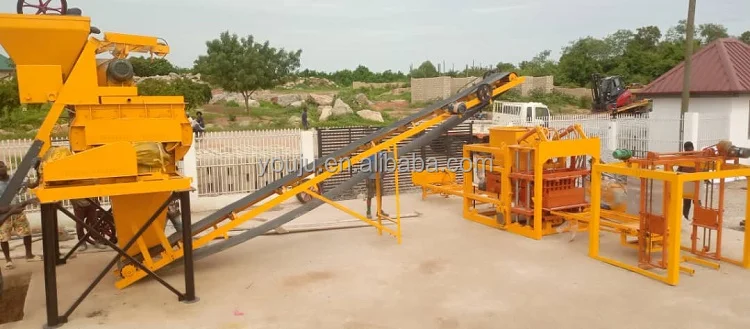
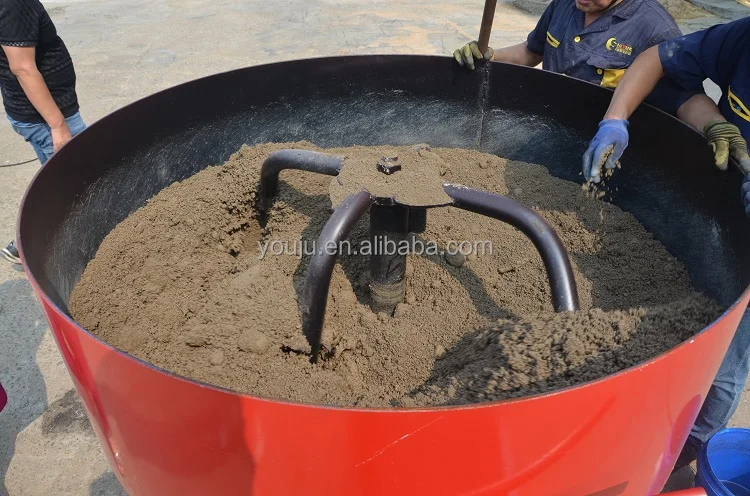
Description
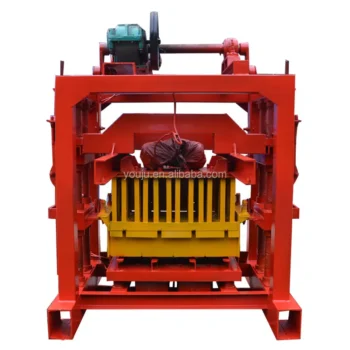
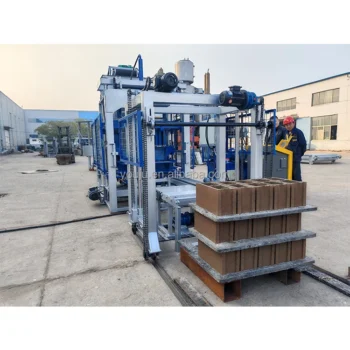
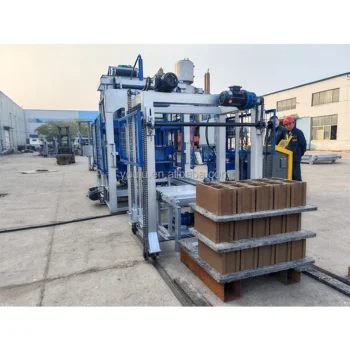
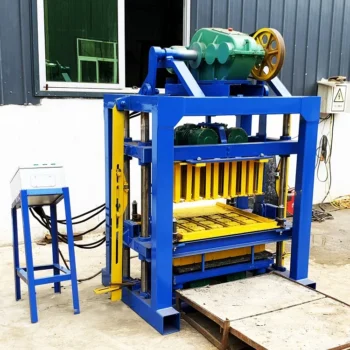
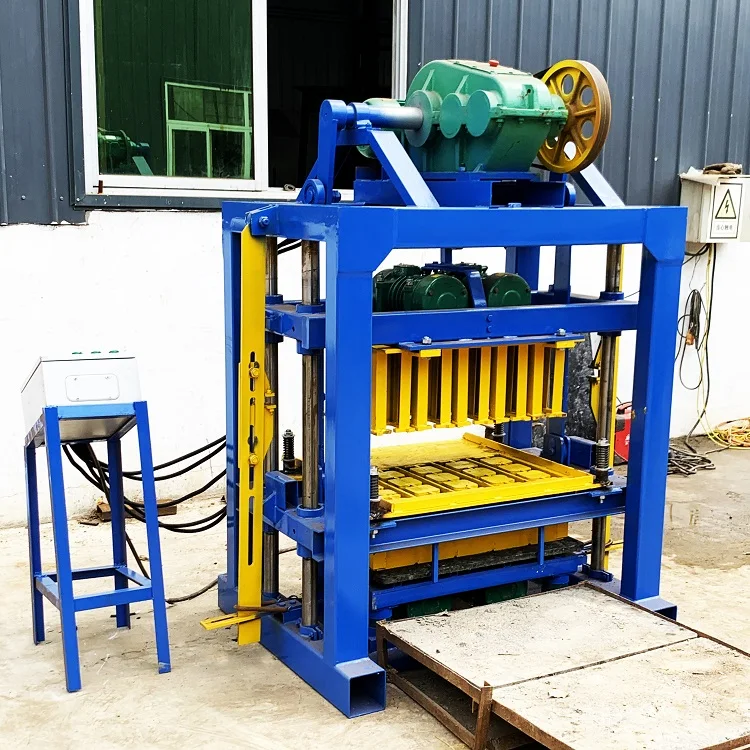
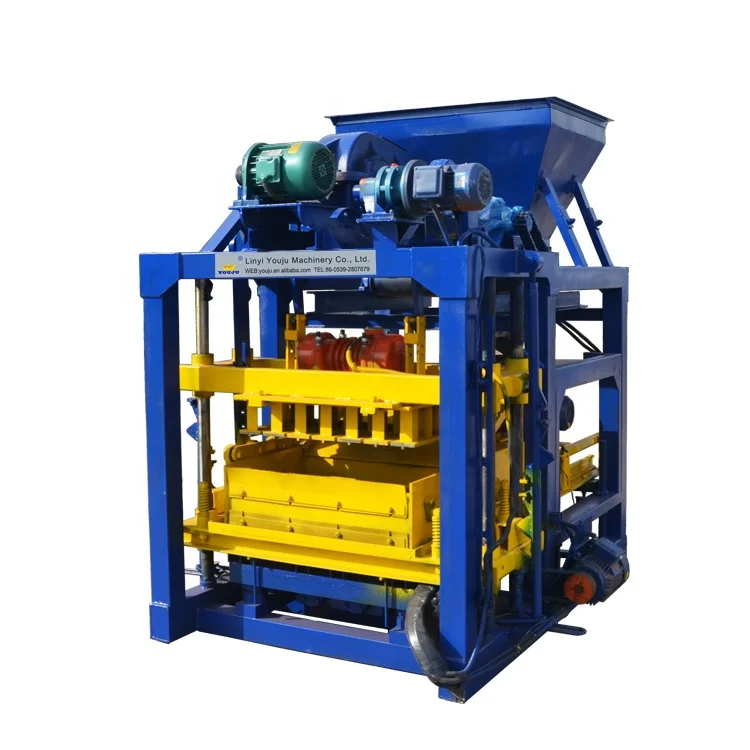
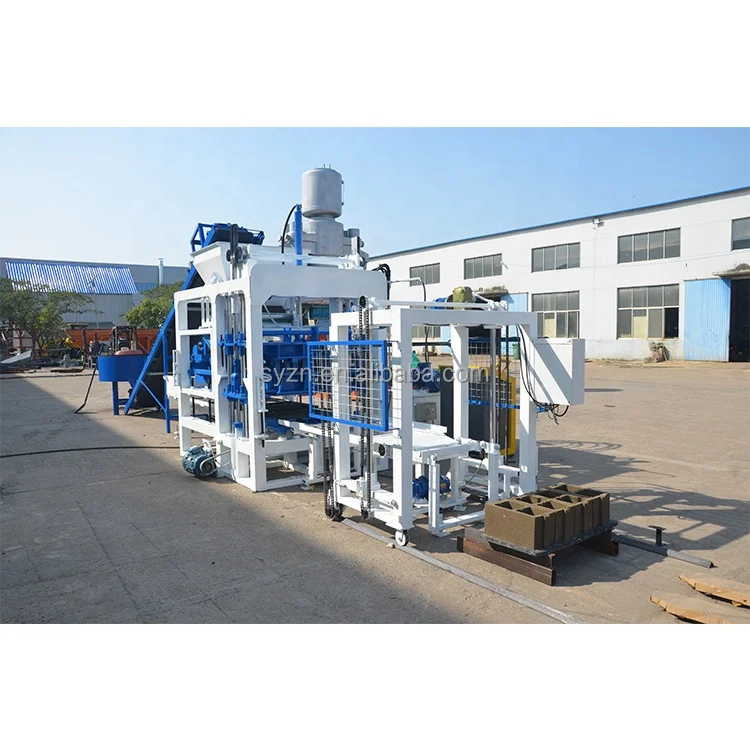
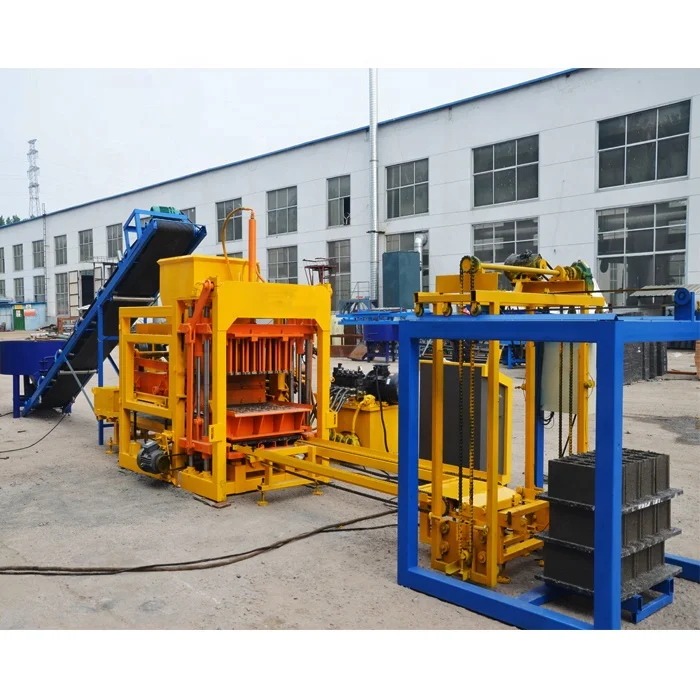
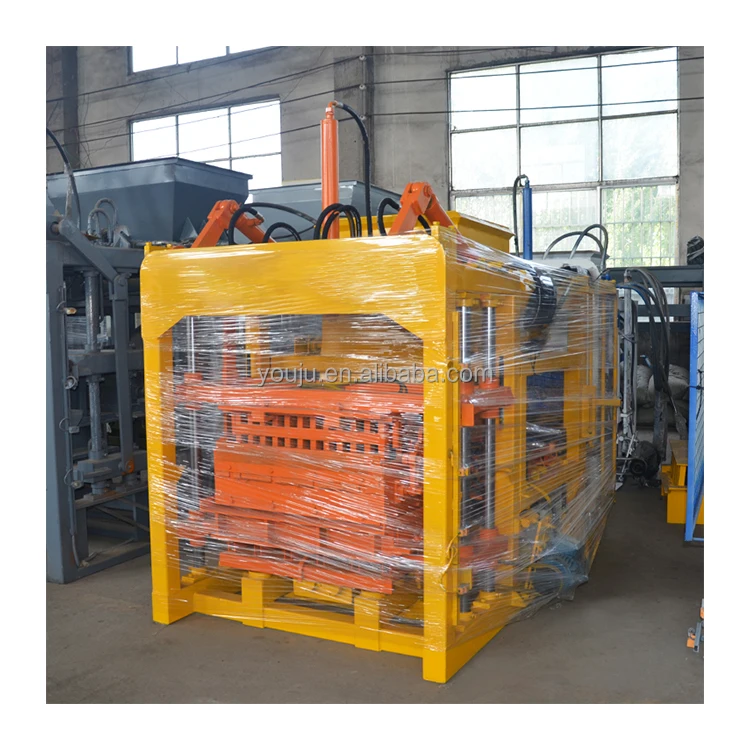
Format-Matched Output — QT4-15 hydraulic vibrating hollow block making machine specifications configured against buyer’s local aggregate and target block dimensions, not catalogue defaults.
Technical Specifications
| Parameter | Value |
|---|---|
| Model | QT4-15 |
| Product Type | Hydraulic Vibrating Hollow Block Making Machine |
| Host Machine Power | 27.5 kW |
| Moulding Cycle | 15 s (basis not stated in source — confirm block format) |
| Vibration Force | 40 kN |
| Vibration Method | Table and mould vibrating together; low-frequency feeding, high-frequency vibrating |
| Feeding System | Hopper with swing-type cutting device for uniform material distribution |
| Pallet Size | 1020 × 570 mm |
| Dimension of Host Machine | 7100 × 1600 × 2610 mm |
| Weight of Host Machine | 5 T |
| Mixer Model | JS500 |
| Motor Brand | Siemens Motor |
| Control System | Computer controlled directional vibration (PLC brand/model to be confirmed) |
| Voltage | 380 V (frequency to be confirmed against target market standard) |
| General Water Consumption | 4 T per day |
| Workers Required | 3–4 |
| Workshop Area | 150 m² |
| Mould Format | Hollow block, solid block, paving block (specific dimensions to be confirmed) |
| Output Capacity | Theoretical chart available (basis not stated in source — confirm block format, material, thickness) |
| Automation Level | Semi-automatic |
| Hydraulic Pressure | Rating to be confirmed |
Application Suitability
| Application | Material or Output |
|---|---|
| Hollow block production for building walls | Crushed stone, cement, sand, water |
| Solid block production for load-bearing structures | Aggregate-cement mix with local stone |
| Paving block production for outdoor surfaces | Fine aggregate, cement, pigment if required |
| Interlocking brick production | Graduated aggregate with controlled moisture |
What the QT4-15 Hollow Block Making Machine Specifications Leave Unsaid About Daily Output
A 15-second moulding cycle only matters once you know which block format it was measured on.
Most quotations for a QT4-15 hollow block making machine quote a single cycles-per-hour figure. That number is typically measured on a standard 400×200×200 mm hollow block with a clean, well-graded aggregate. Switch to a thinner wall block, a paving format, or a local stone with higher clay content, and the cycle extends — vibration time must increase, pressure must be re-tuned, and the 15-second benchmark no longer holds. I have watched buyers plan a production schedule around a headline number, then lose an entire shift to slower cycles once their actual mix design reached the hopper [NEED_CITE: effect of aggregate moisture and clay content on vibration cycle time]. The honest figure is the output per format, not an average across formats.
Vibration Force and Mix Design Must Agree
The QT4-15 delivers 40 kN of vibration force through table and mould vibrating together. That force needs to be matched against your aggregate’s particle size distribution and moisture content. A dry, well-graded crushed stone responds differently from a river gravel with residual clay. If the vibration force is too low for a stiff mix, block density drops and breakage rises during curing. If it is too high for a wet mix, the block slumps before pallet transfer. Computer controlled directional vibration with frequency braking helps, but the starting point must be your material, not a factory default.
Pallet Size Decides Your Curing Layout
The 1020×570 mm pallet is the interface between the press and everything downstream. If your curing racks are built for a different pallet dimension, every pallet becomes a manual handling problem. Forklift tine spacing, rack slot width, and drying area per pallet all trace back to this one measurement. The QT4-15 hollow block making machine specifications list this size, but confirming it against your existing curing infrastructure before shipment avoids a costly rack rebuild after arrival [NEED_CITE: pallet dimension standardisation in block production lines].
Reading the Numbers That Matter
The 27.5 kW host machine power drives both vibration and hydraulic systems. On a semi-automatic line with manual pallet handling, this power rating leaves margin for the high-frequency vibrating stage without stalling the mixer feed. The JS500 mixer pairs with this press because its batch volume matches one moulding cycle’s material demand — oversizing the mixer wastes energy, undersizing it forces the press to wait. The swing-type hopper with cutting device distributes material evenly across the moulding box, which matters most on hollow block formats where thin walls demand uniform fill. Siemens motors carry longer bearing life than generic alternatives, reducing unplanned stops during the first production year.
When the Wrong Configuration Arrives at Your Dock
Voltage and frequency confirmed too late means the motor will not start on site, and rewinding a 27.5 kW motor in a regional workshop takes weeks. A PLC display in a language your operators cannot read turns commissioning into a guessing game. If the moulds supplied do not match the block dimensions your market actually buys, you own a machine with the wrong output [NEED_CITE: common commissioning delays caused by unconfirmed voltage and control language]. These are not specification errors — they are specification omissions, and each one costs production days.
Why Source This Machine Here
Block machinery is the single focus, so the QT4-15 is specified as one system: press, mould, pallet, and handling are matched rather than assembled from separate suppliers. Configuration starts from your actual mix design and target block format, not a catalogue default. Mould design covers the dimensions your market sells, including custom drawings to buyer specifications. Automation level is selectable — you can begin semi-automatic and add automatic stacking later without replacing the press. Installation support includes operator training, and mould and wear parts supply continues after first commissioning.
Documentation & Verification
- Line layout with capacity calculation stating block format assumed for cycle time
- Machine specification sheet confirming vibration force, pallet size, and power rating
- Mould drawing and format list for all blocks achievable on 1020×570 mm pallet
- Voltage and control language confirmation record before production begins
- Factory test record on buyer’s specified block format and mix design
- Hydraulic and electrical schematic for on-site maintenance reference
Installation, Commissioning & Support
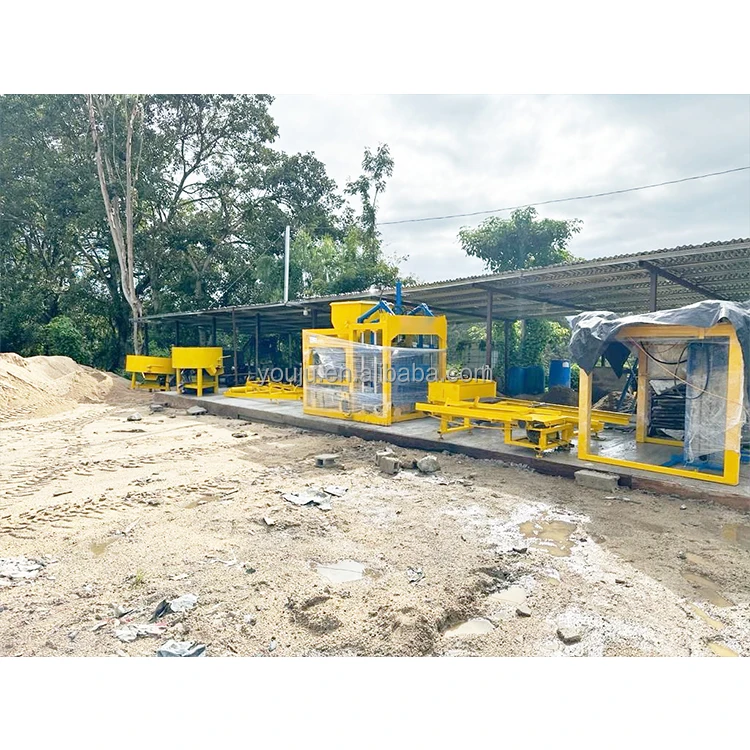
- 150 m² workshop area with level concrete floor and anchor points for 5 T host machine
- 380 V dedicated circuit with confirmed frequency matching Siemens motor nameplate
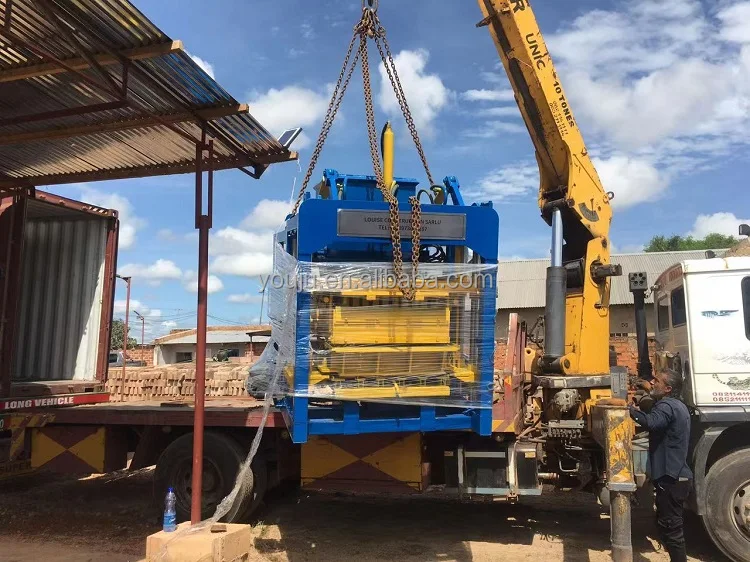
- Host machine arrives assembled; mixer and hopper mounted and aligned on site
- First-run parameter setting against buyer’s aggregate sample and target block strength
- Operator training on mould change procedure and computer controlled vibration adjustment
- Wear parts list supplied at delivery with first reorder interval noted
What to Include in Your Inquiry
Tell me your target block format with exact dimensions, the daily output you need for that format, and your local aggregate type. Include your available voltage and frequency, and confirm the language you need on the PLC display. If you already have curing racks and forklifts, share the pallet size they accommodate.
Frequently Asked Questions
Q: What block format does the 15-second cycle time assume?
A: The source documentation lists a 15-second moulding cycle but does not state which block format or mix design it was measured on. Cycle time changes with block wall thickness, aggregate size, and required density. We confirm cycle time against your specific block drawing and material sample before quotation, so the output figure in your proposal reflects your actual product, not a generic benchmark.
Q: How is the 40 kN vibration force matched to local aggregate?
A: The vibration force is fixed at the press, but its effectiveness depends on your aggregate’s particle distribution and moisture. We review your aggregate test report and adjust vibration frequency and duration during commissioning. Low-frequency feeding followed by high-frequency vibrating on the QT4-15 allows tuning both stages separately, giving consistent block density across different local materials.
Q: Does the 1020×570 mm pallet fit my existing curing setup?
A: This depends on your rack slot dimensions and forklift tine spacing. Share your curing rack specifications before order confirmation. If your existing infrastructure uses a different pallet size, we discuss whether a rack modification or a press pallet adjustment is the more practical path, so no equipment sits idle after arrival.
Q: Is the PLC display language confirmed before shipment?
A: We confirm the required display language during the voltage and control verification stage, before production begins. The QT4-15 uses computer controlled directional vibration, and the interface language must match your operators’ working language to avoid misconfiguration during daily production and mould changes.
Q: How long does mould change take on this machine?
A: Mould change time depends on the format switch and operator familiarity. On a semi-automatic QT4-15, the process involves releasing the mould clamps, lifting the current mould, positioning the new one, and re-calibrating vibration parameters for the new block format. We include change procedure training during commissioning so your team can complete it within a single break period.