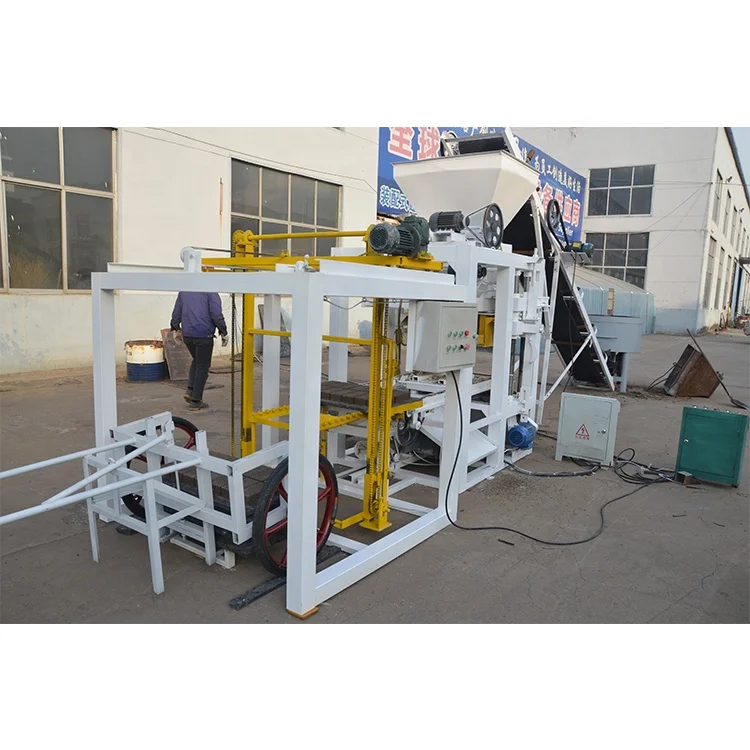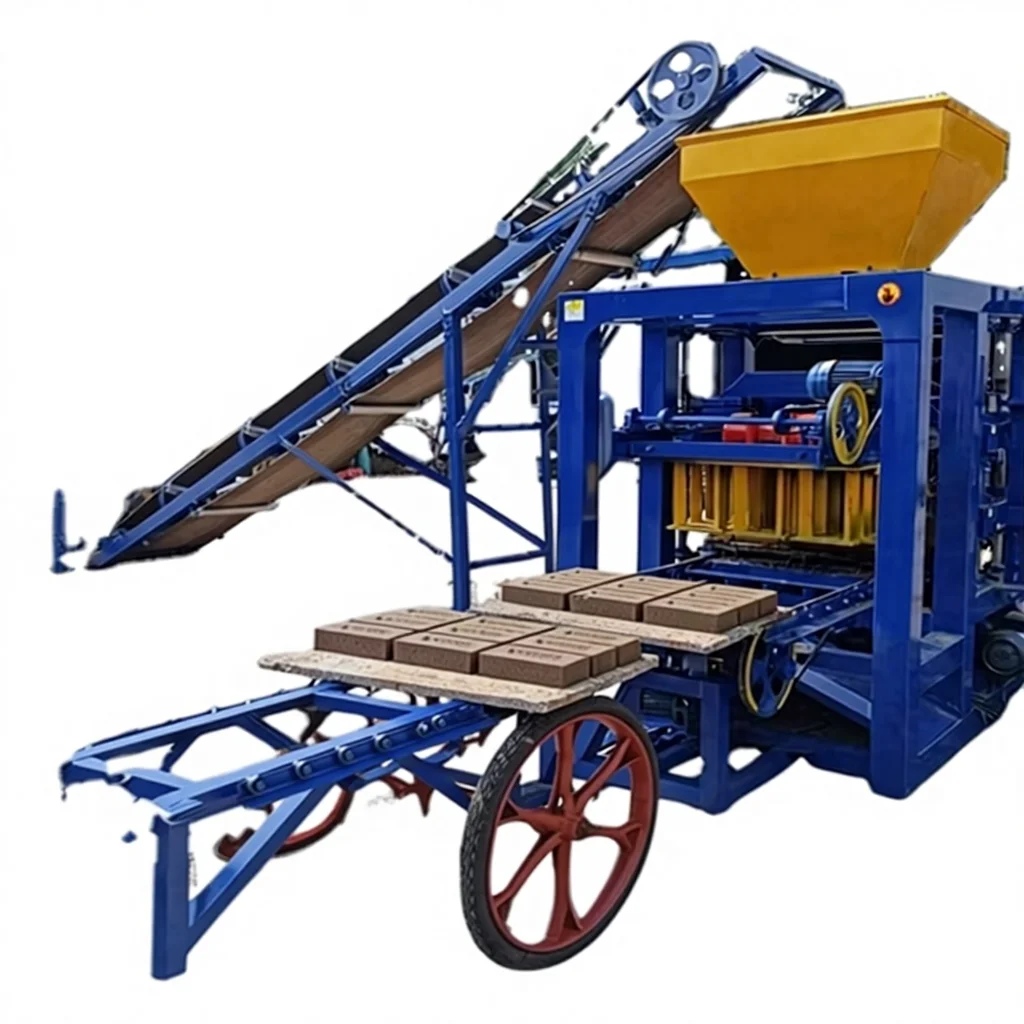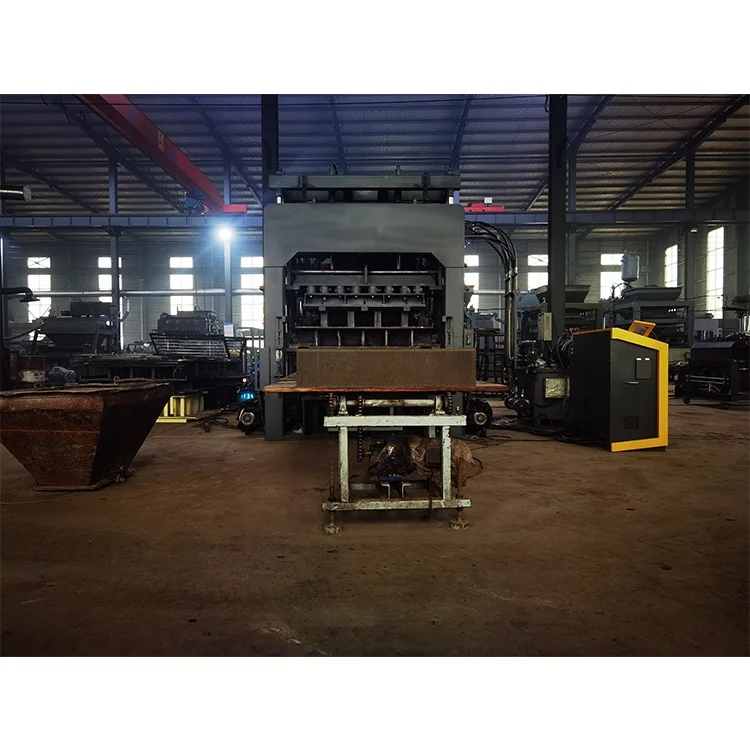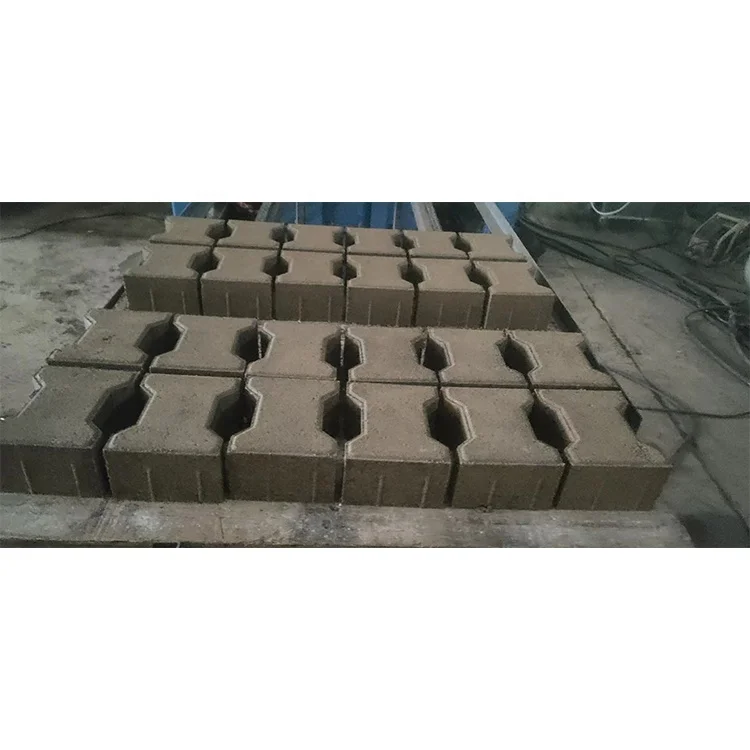
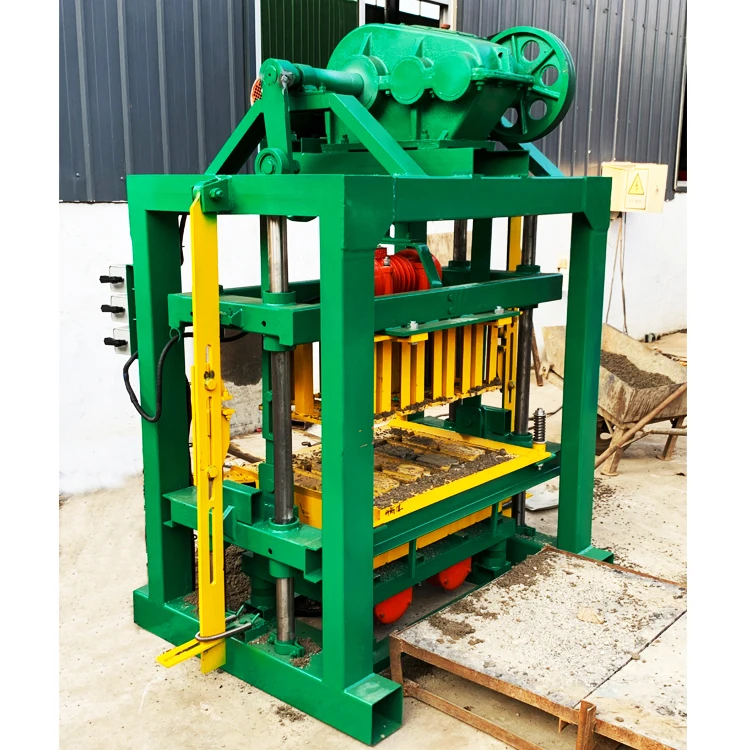
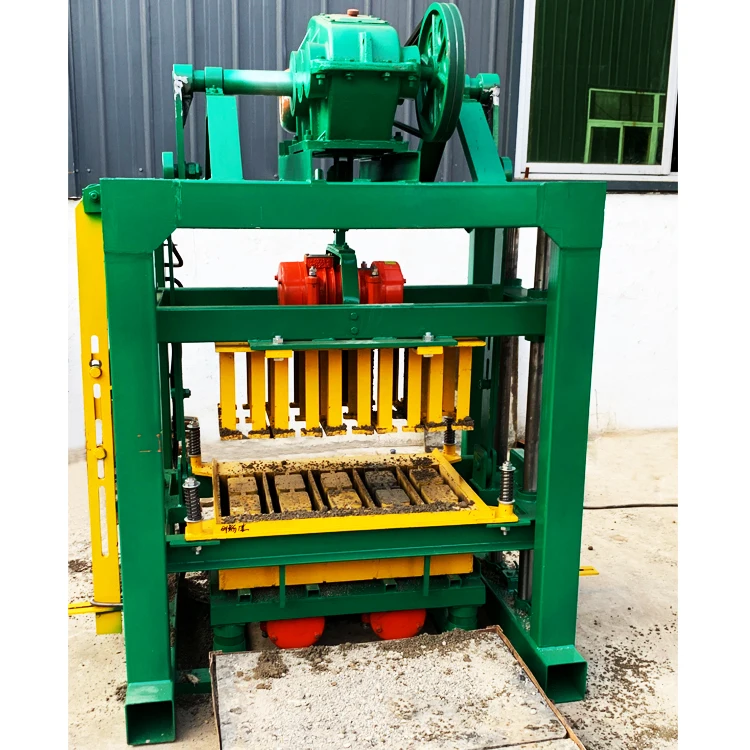
Description
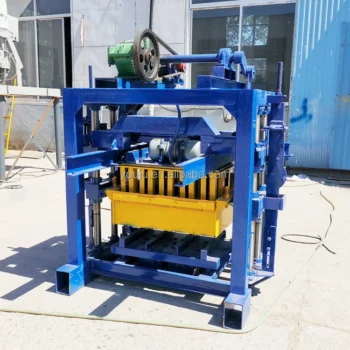
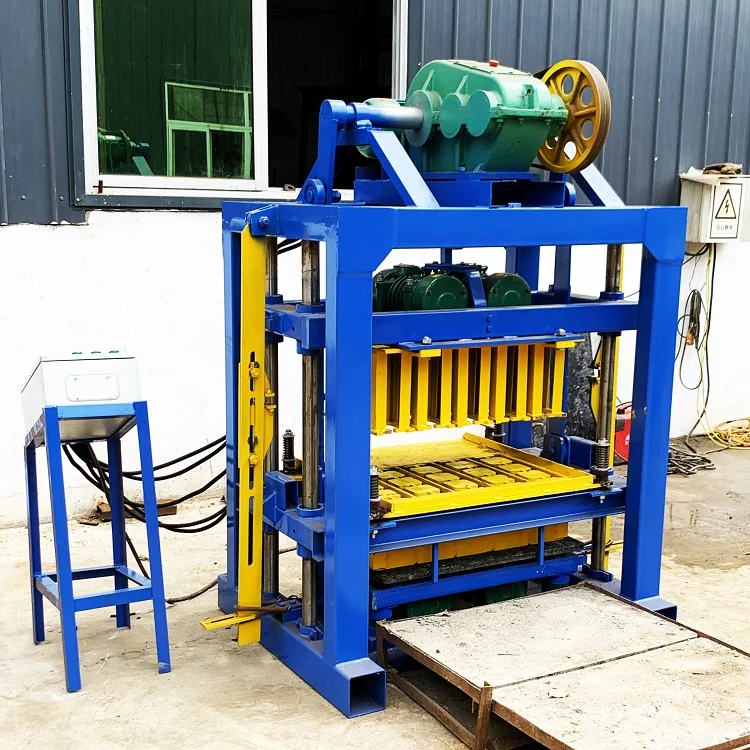
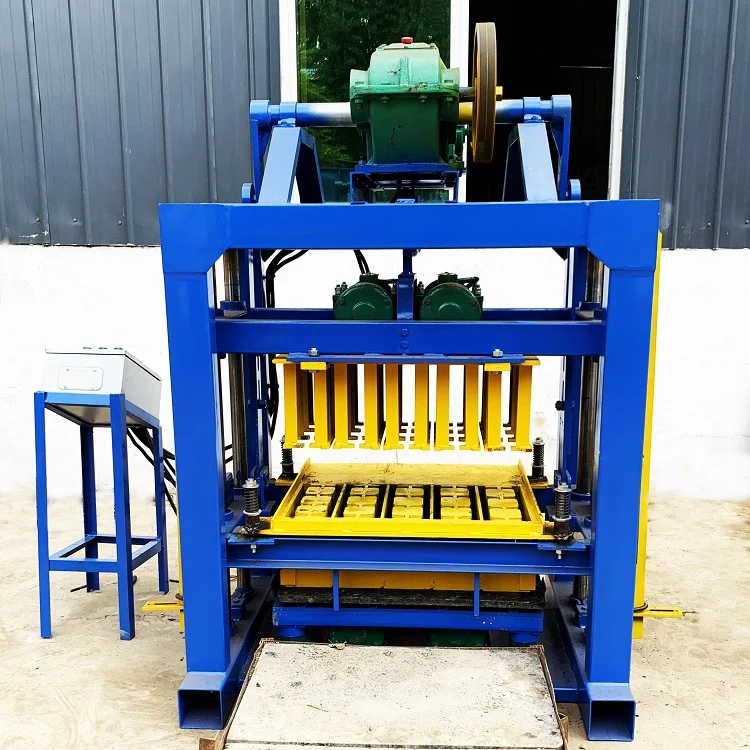
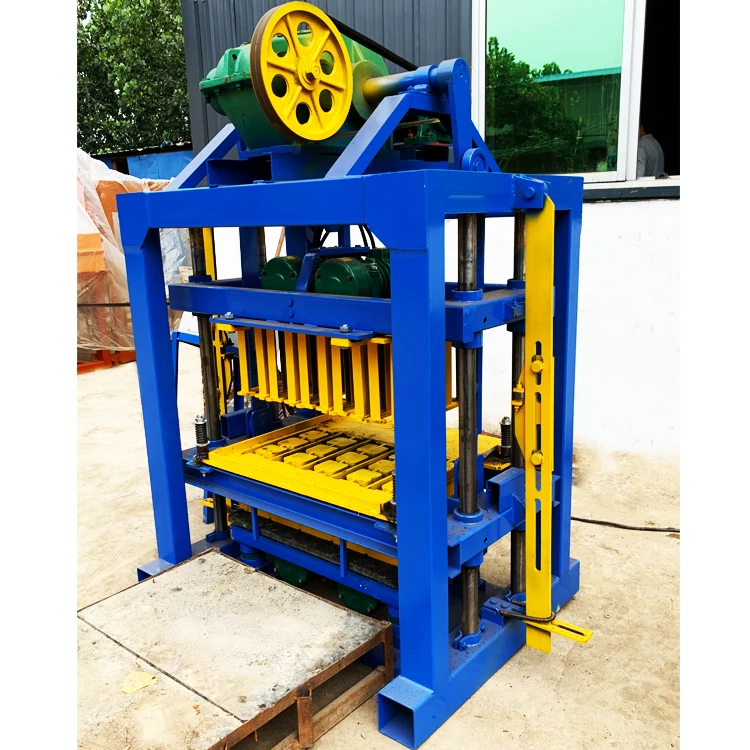
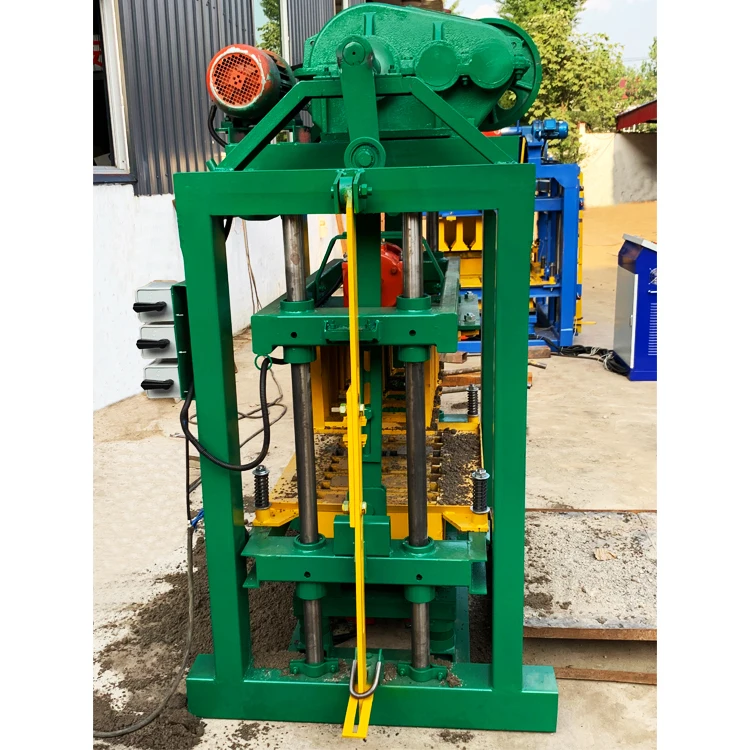
Matched Mould Configuration — Every QTJ4-40 is specified against your actual block format and local aggregate, not a catalogue default, so the machine, pallet and mould work as one verified system.
Technical Specifications
| Parameter | Value |
|---|---|
| Model | QTJ4-40 |
| Product Type | Manual Cement Block Making Machine |
| Capacity (400×200×200mm hollow block) | 360 pcs/h, 2880 pcs/day (4 pcs per mould) |
| Capacity (400×150×200mm hollow block) | 500 pcs/h, 4000 pcs/day (5 pcs per mould) |
| Capacity (225×112.5×60mm solid brick) | 900 pcs/h, 7200 pcs/day (9 pcs per mould) |
| Raw Material | Concrete, cement, fly ash, crushed stone, sand, dust, gravel, slag |
| Main Vibration Form | Platform Vibration |
| Vibration Frequency | 2800 r/min |
| Pallet Size | 850×450 mm |
| Recommended Mix Ratio | Cement 8%-10%, sand 30%-40%, stone 50%-60% (approx. 1:4:5) |
| Machine Weight | 1 T |
| Overall Dimensions (L×W×H) | 1350×1460×1800 mm |
| Worker Requirement | 1-3 people |
| Top Die Operation | Push and pull with automatic scraper |
| Motor Option | Diesel and Electric |
| Control System | Manual operation |
| Applied Products | Concrete blocks, hollow/solid blocks, pavers, interlocking blocks, curbstone |
| Certification | CE |
Application Suitability
| Application | Material or Output |
|---|---|
| Small-scale hollow block production | Crushed stone, sand, cement producing 400×200×200mm and 400×150×200mm hollow blocks |
| Solid brick manufacturing for local construction | Sand and cement mix forming 225×112.5×60mm solid bricks |
| On-site block production for housing projects | Concrete and gravel for hollow blocks directly at the building site |
| Paver and interlocking brick production | Cement, fly ash, and dust for colored pavers and interlocking formats |
| First block plant with low initial investment | Local aggregate and cement for any of the supported block formats |
Why Your "2800 Pieces a Day" Figure Could Be Wrong
The QTJ4-40 Manual Block Making Machine specifications only hold true when the block format, mould cavity count, and mix design are stated together.
Many quotations quote a single headline capacity without naming the format it assumes. A buyer expecting 2800 pieces of 400×200×200mm hollow blocks may receive a machine set up for a smaller solid brick format, where the cycle count is higher but the product is completely different from what the local market demands. I have watched customers arrive at our Linyi workshop for commissioning only to discover the daily output they planned their business around was based on a format they never intended to sell [NEED_CITE: common misalignment between quoted capacity and actual block format in manual block machine procurement].
When I first started configuring machines, I assumed a standard river sand mix would translate anywhere. Last year a customer in Africa sent back samples showing near-zero compressive strength — their local aggregate was volcanic ash, not river sand, and the entire mix ratio had to be recalculated from scratch. Now every Manual Block Making Machine specifications sheet we issue names the exact block format and the material premise behind each capacity figure.
Honest Capacity Breakdown by Block Format
The QTJ4-40 Manual Block Making Machine produces different daily volumes depending on which mould is installed. With the 400×200×200mm hollow block mould, four cavities per cycle yield 360 pieces per hour and 2880 pieces over an eight-hour shift. Switching to the 400×150×200mm hollow block mould increases cavity count to five, raising throughput to 500 pieces per hour and 4000 pieces per day. For solid brick production at 225×112.5×60mm, nine cavities per cycle deliver 900 pieces per hour and 7200 pieces per day.
These figures assume continuous operation with prepared raw material, consistent manual feeding, and no unplanned stoppages. Real-world output depends on operator rhythm, material preparation speed, and pallet circulation logistics on the factory floor. Buyers planning their production schedule should factor in pallet handling time, curing rack loading, and raw material batching intervals alongside the press cycle itself.
Pallet Size and Curing Area Alignment
The 850×450 mm pallet size is a fixed parameter that determines how your entire curing and handling area must be laid out. If your existing curing racks were built for a different pallet dimension, every rack shelf will need modification before the first block can be cured. Forklift tine spacing and pallet stack height must also be checked against this dimension.
I always ask buyers to send photos and measurements of their curing area before we finalize the pallet specification. A mismatch here does not just delay commissioning — it forces manual double-handling of every block, which erodes the labour advantage of even a manual machine [NEED_CITE: pallet handling inefficiencies in small block plants]. The QTJ4-40 pallet size must be confirmed against your specific site infrastructure before production begins.
How Vibration Frequency and Mix Design Shape Block Density
Platform vibration at 2800 r/min compacts the concrete mix inside the mould cavity, and this frequency must be matched to your actual raw material. The recommended mix ratio of cement 8%-10%, sand 30%-40%, and stone 50%-60% provides a starting point, but local aggregate gradation, moisture content, and particle shape all influence the final block density and compressive strength.
The top die push-pull mechanism with automatic scraper ensures consistent fill depth across every cycle, which directly affects weight uniformity from block to block. When the vibration force and mix design are properly aligned, block strength meets the local building code without overusing cement. Over-cementing to compensate for poor compaction raises material cost and still may not produce uniform results.
The manual operation means cycle consistency depends on operator technique. Training operators to maintain a steady rhythm — consistent fill time, vibration duration, and top die engagement — is essential for repeatable block quality across every shift.
What Happens When Mould Change Time Eats Your Shift
A machine advertised as multi-format capable can still lose most of a shift to mould changeover if the change system was not designed for quick swaps. On a manual press, every minute spent unbolting and realigning a mould is a minute of lost production, and inconsistent re-alignment introduces dimensional variation into the next format run.
Buyers who plan to produce three or four block formats from a single QTJ4-40 need to understand the actual changeover procedure before ordering. If your market demands frequent format switching, the time cost of each change must be factored into your daily output plan [NEED_CITE: mould changeover impact on small block plant productivity]. We specify the mould change procedure and estimated time in the quotation so you can plan your production schedule realistically.
Why This Configuration Approach Works
Every QTJ4-40 is configured against the buyer’s specific block format and local aggregate rather than shipped with a catalogue-default mould set. This means the machine, mould, and pallet arrive as a matched system verified for your product.
We provide the mould drawing and format list with the quotation, so you know exactly which block sizes are included and which are available as additional tooling. Pallet specifications are confirmed against your curing rack spacing and forklift capacity before production starts, avoiding double-handling on arrival.
Diesel and electric motor options are available for sites where grid supply is unreliable, and the choice is confirmed during the order stage so the correct motor is installed at the factory. Operator training covers mix adjustment for local materials, ensuring block strength meets your market requirement from the first production run.
Documentation & Verification
- Line layout with capacity calculation stated per your chosen block format
- Mould drawing and format list confirming included and optional block sizes
- Pallet specification matched to your curing rack dimensions and handling equipment
- Voltage and motor type confirmation document before production begins
- Factory test record on your specified block format before dispatch
- Operation and maintenance manual with wear parts and mould replacement list
Installation, Commissioning & Support
- Foundation preparation for 1350×1460×1800 mm footprint with level concrete slab
- Electrical connection verified for your local voltage and frequency before motor energization
- Diesel motor option includes fuel line setup and exhaust routing for enclosed workshops
- First-run commissioning with your local aggregate to validate mix ratio and block density
- Operator training on platform vibration rhythm and top die push-pull technique
- Wear parts list with hydraulic and vibration component replacement intervals
What We Need to Size This Machine Correctly
Send us the exact block format your market sells — dimensions, wall thickness, and whether hollow or solid — along with your target daily output for that specific format. Include a sample or lab report of your local aggregate so we can adjust the mix ratio and verify block strength before the machine leaves our workshop.
Let us know your available power supply — voltage, frequency, and whether you need the diesel motor option — and the dimensions of your existing curing area so we can confirm pallet compatibility. If you plan to produce multiple formats, tell us which moulds you need from day one and which can be added later.
Frequently Asked Questions
Q: How is the QTJ4-40 daily output calculated per block format?
A: Each capacity figure is based on a specific mould cavity count and block dimension. The 400×200×200mm hollow block uses a 4-cavity mould yielding 2880 pieces per eight-hour shift, while the 400×150×200mm hollow block uses a 5-cavity mould for 4000 pieces per shift. These assume continuous operation with prepared material and steady pallet circulation.
Q: Which mould formats are included and how does mould change work?
A: The standard quotation includes one mould format of your choice. Additional moulds are listed with individual pricing and lead times. Mould changeover involves releasing the retaining bolts, lifting the current mould, and aligning the replacement — we provide the procedure and estimated time so you can plan production around format switches.
Q: How should the 850×450 mm pallet size be matched to my curing area?
A: Measure your curing rack shelf dimensions and forklift tine spacing before ordering. The pallet must sit securely on your racks without overhang, and your forklift must handle the loaded pallet weight. We confirm pallet material and dimensions against your site measurements before the machine enters production.
Q: Can the recommended mix ratio be adjusted for my local aggregate?
A: Yes. The starting ratio of cement 8-10%, sand 30-40%, and stone 50-60% is a baseline. We adjust this based on your aggregate lab report — particle size distribution, moisture absorption, and shape all affect compaction under platform vibration. The adjusted ratio is validated during factory testing before shipment.
Q: What is the upgrade path from this manual machine to semi-automatic?
A: The QTJ4-40 manual press can be supplemented with automated pallet feeding and stacking equipment as production volume grows. We design the initial line layout with future automation stations in mind, so adding a pallet feeder or stacker later does not require repositioning the press or rebuilding the foundation.