

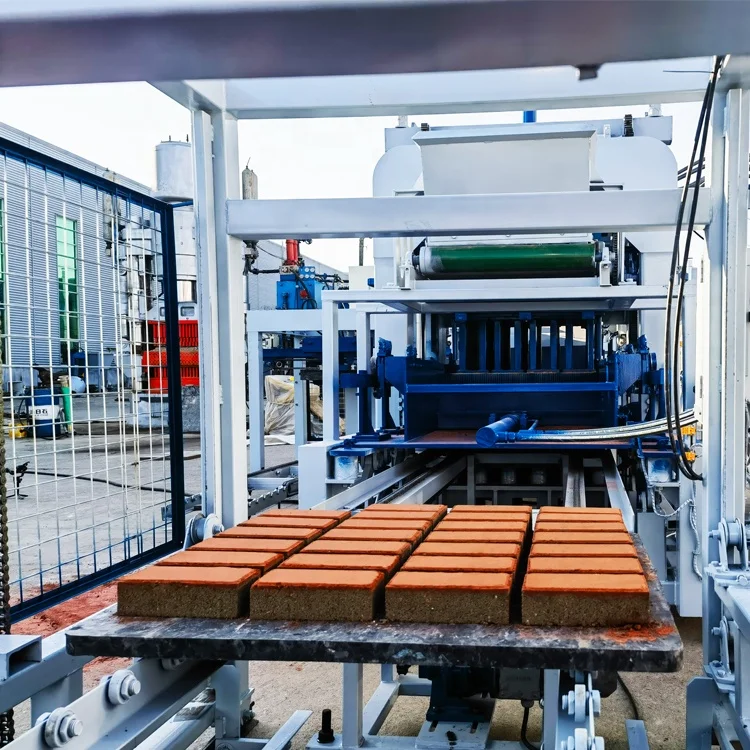
Description
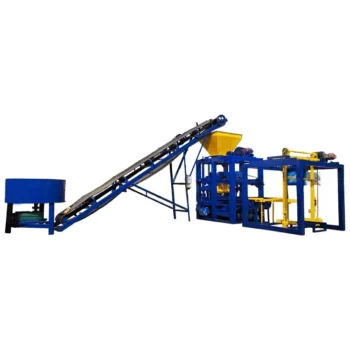
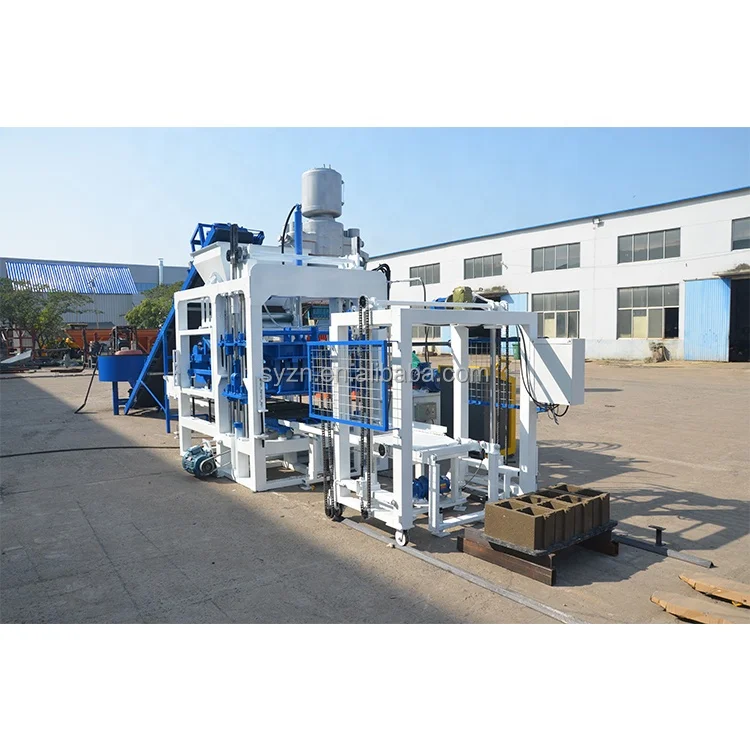
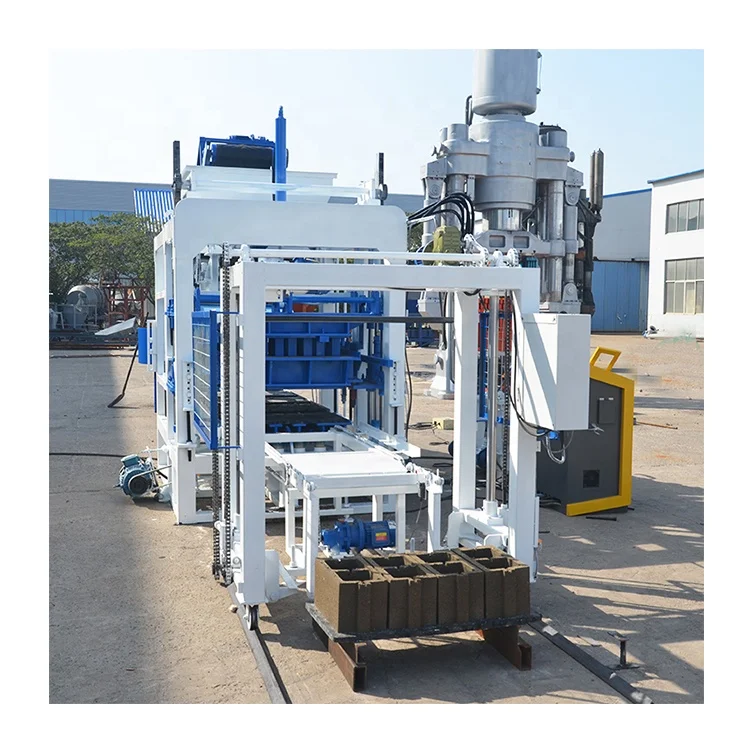
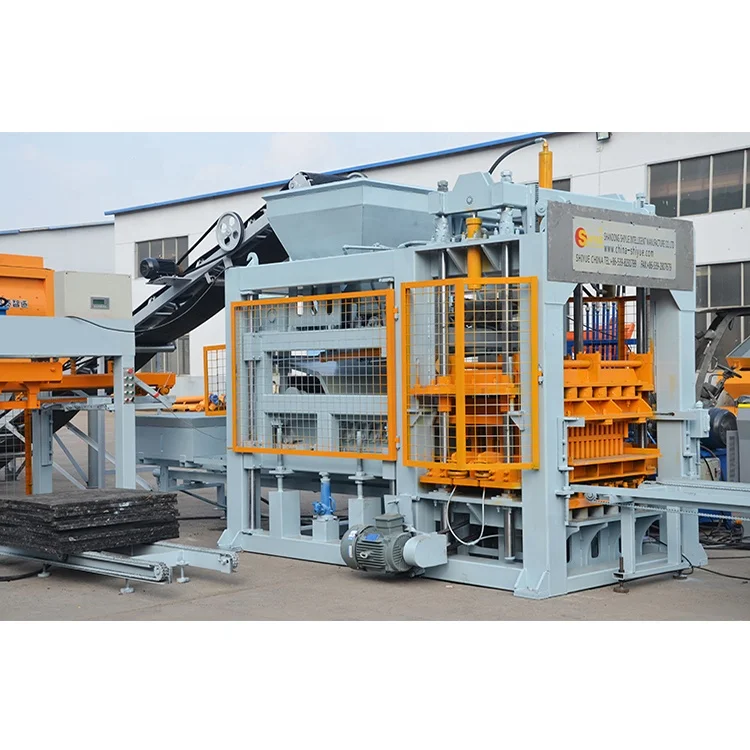
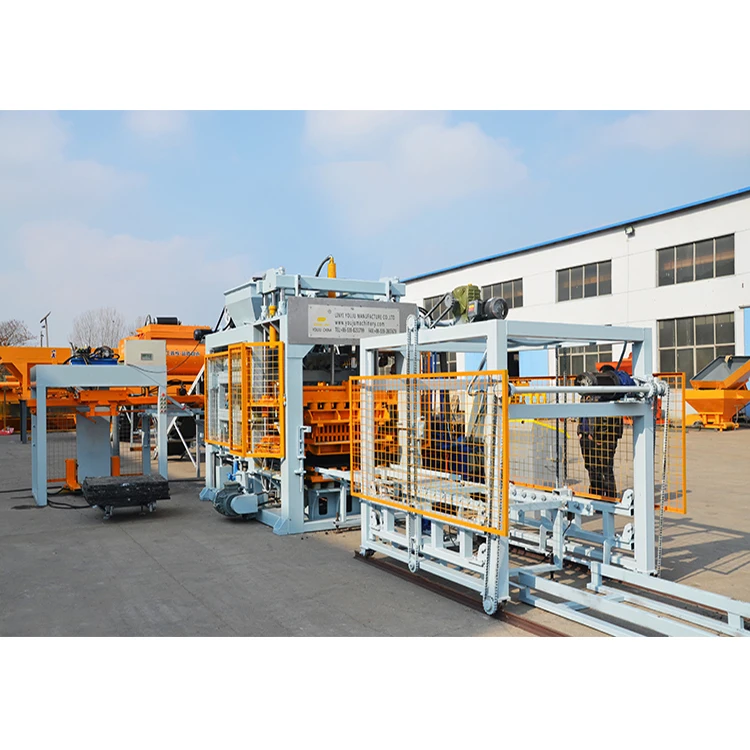
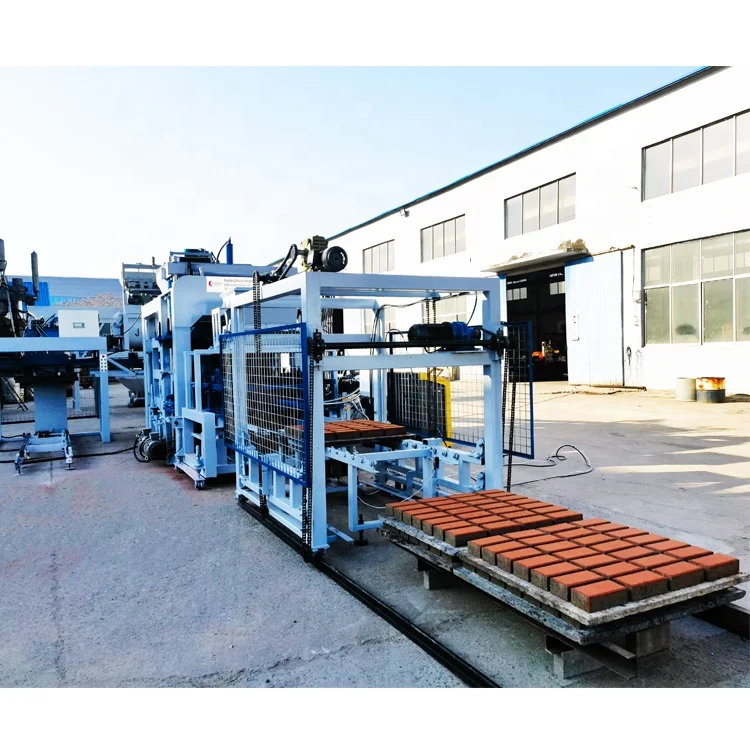
Matched System Configuration — the QT6-15 block making machine, mould, pallet and handling are specified as one integrated line, with capacity calculated against the block format your market actually buys.
Technical Specifications
| Parameter | Value |
|---|---|
| Model | QT6-15 |
| Product Type | Automatic Hydraulic Concrete Block Making Machine |
| Moulding Cycle | 15–20 s (basis not stated in source — confirm block format / material / thickness) |
| Vibration Force | 55 kN |
| Rated Power | 37.2 kW |
| Mixer | JS750 |
| Pallet Size | 1020 × 900 mm |
| Overall Dimensions | 8300 × 1860 × 3000 mm |
| Net Weight | 8 T |
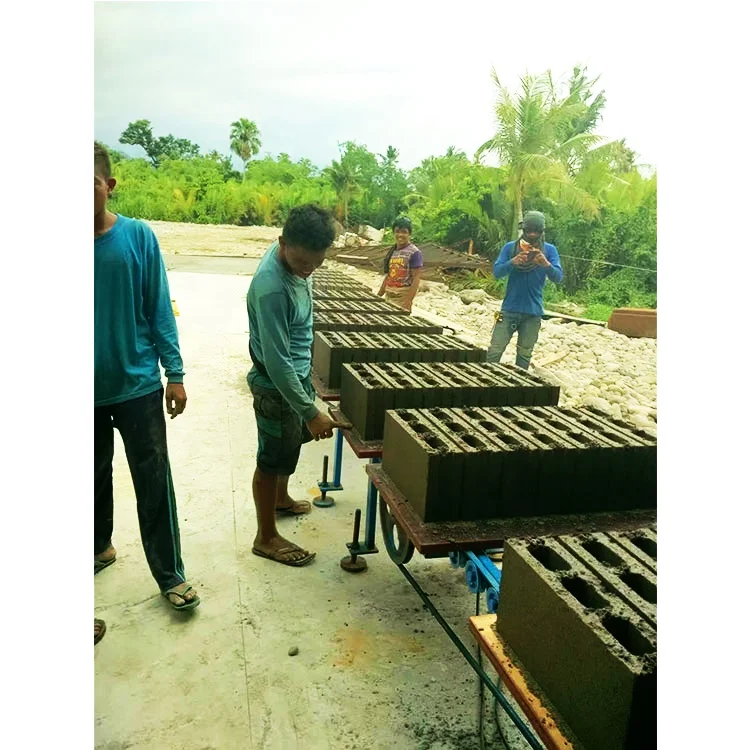
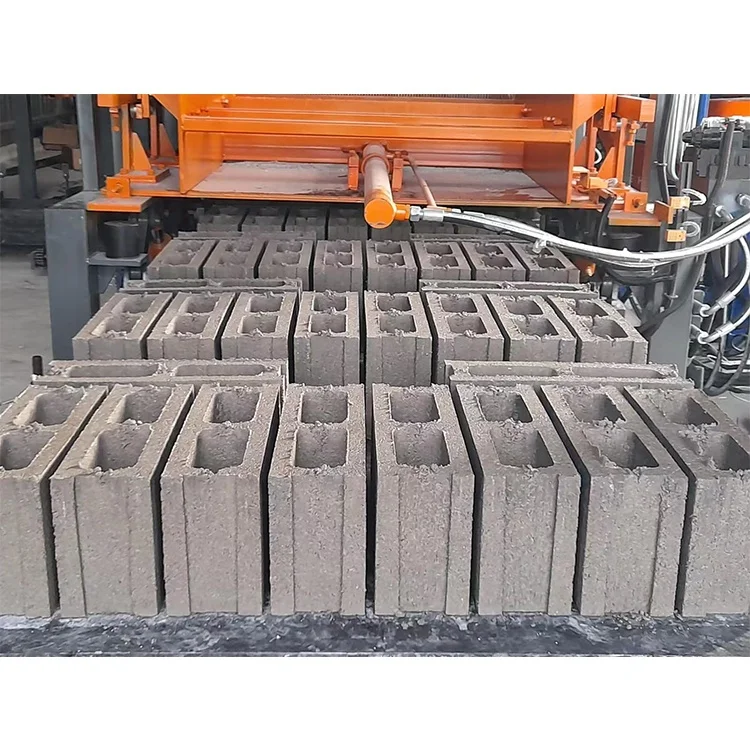
| Applicable Products | Paver, solid block, hollow block, curbstone |
| Raw Materials | Crushed stone, sand, cement, dust, fly ash |
| Control System | PLC control system |
| Hydraulic Station | Included |
| Automation Level | Automatic (pallet feeder, material feeder, block conveyor, block sweeper included) |
| Voltage & Frequency | Configurable (basis to be confirmed before quotation) |
| PLC Display Language | Configurable (basis to be confirmed before production) |
Application Suitability
| Application | Material or Output |
|---|---|
| Hollow block production for residential and commercial walls | Crushed stone, sand, cement, fly ash blends |
| Solid block manufacturing for load-bearing structures | Dense aggregate and cement mixes |
| Paving block production for walkways and yards | Fine aggregate with pigment additives |
| Kerbstone forming for road and driveway edges | Coarse aggregate with high cement content |
What "Cycles per Hour" Actually Means for Your Daily Output
Every capacity figure we quote names the exact block format it assumes.
Buyers often receive a single cycles-per-hour number that sounds impressive on paper, then discover their real daily output falls far short once production starts. The reason is simple: a 15-second cycle on a small solid block does not translate to the same cycle on a large hollow block with a different mix and thickness. When the Automatic Block Making Machine specifications are presented without tying each figure to a specific format, the buyer is left guessing what the plant will actually deliver. This gap between quoted and real output is one of the most common frustrations we see when equipment arrives on site [NEED_CITE: common discrepancies between quoted and actual block plant output].
Matching Vibration Force to Your Local Aggregate
The 55 kN vibration force on the QT6-15 must be evaluated alongside your specific aggregate type and mix design. Volcanic碎石, river sand, crushed limestone and fly ash each respond differently to the same vibration profile. A mix that works well under high vibration in one region may produce weak or cracked blocks in another. This is why the Automatic Block Making Machine specifications only become meaningful once your raw material sample has been tested and the vibration parameters adjusted to match. Getting this alignment right before the machine ships prevents costly re-commissioning and line stoppages after arrival.
Pallet Size and the Curing Area You Already Have
The 1020 × 900 mm pallet dimension was selected to balance block output per cycle with practical handling constraints. However, this size must be checked against your existing curing racks, forklift tine spacing and stacking height before the order is confirmed. A pallet that does not match the curing infrastructure forces the buyer into manual re-handling, which erodes the output advantage the press was supposed to deliver. We confirm pallet compatibility as part of the configuration process so that the press, pallet and curing area function as one continuous flow [NEED_CITE: pallet handling mismatches in block production lines].
How Hydraulic Pressure and Vibration Shape Block Density
Block density is not determined by vibration force or hydraulic pressure alone — it is the combined effect of both, applied in the correct sequence and duration. The QT6-15 hydraulic station delivers steady pressure while the vibration table consolidates the mix, and the PLC controls the timing of each phase. For hollow blocks with thin webs, excessive vibration can collapse the cavity, while insufficient pressure leaves the block fragile. The 37.2 kW rated power supports both systems simultaneously, but the actual pressure and vibration settings must be tuned to the specific block format and mix being produced.
The Hidden Cost of Skipping Configuration Checks
When voltage, frequency and PLC display language are left unconfirmed until the machine arrives, commissioning delays follow. Operators cannot read the interface, electricians spend days sourcing transformers, and the plant sits idle while the buyer waits for a software update or a new control board. These delays are entirely preventable with a signed confirmation sheet before production starts, yet they remain among the most frequent reasons for post-arrival disputes in machinery exports [NEED_CITE: voltage and control language mismatches in exported industrial equipment].
Why Buyers Specify the QT6-15 With Us
Configuration is set against your actual mix design, local aggregate and target block format rather than a default catalogue setting. Mould design covers the formats your regional market sells, including custom drawings when standard options do not fit. The pallet size and automation level are confirmed against your existing curing and handling infrastructure before the order enters production. Factory testing runs your specified block format so the test record reflects real conditions, not a generic demo cycle. Installation support includes operator training on your chosen PLC language and block format.
Documentation & Verification
- Line layout with capacity stated per block format for the QT6-15
- Mould drawing and format list confirming changeover compatibility
- Voltage, frequency and PLC language confirmation signed pre-production
- Hydraulic and electrical schematic matching the shipped QT6-15 configuration
- Factory test record run on your specified block format and mix
Installation, Commissioning & Support
- Foundation plan accounts for the 8300 × 1860 mm footprint and 8 T operating weight
- Dedicated circuit sized for the 37.2 kW rated power plus mixer starting surge
- JS750 mixer positioned to match the material feeder height on the QT6-15
- PLC parameters loaded in your confirmed language before first production run
- Mould changeover procedure trained on your specific block format sequence
- Wear parts list matched to your local aggregate abrasiveness
Before You Request a Quote
To size the QT6-15 accurately, we need your target block format with dimensions, the local aggregate type and a raw material sample if possible, your daily output target per format, and the voltage and frequency at your site. If you have existing curing racks or forklifts, share the dimensions so pallet compatibility can be confirmed before the order is placed.
Frequently Asked Questions
Q: How is daily output calculated and which block format does each figure assume?
A: Every output figure on our capacity sheet names the exact block format, dimensions and mix assumed for that number. The QT6-15 moulding cycle of 15–20 seconds varies by format, so a hollow block and a paving block will show different daily totals. We provide the calculation per format so you can match it to your actual production plan.
Q: How is vibration force matched to my local aggregate and mix design?
A: We ask for a raw material sample before finalizing the QT6-15 configuration. The 55 kN vibration force is then adjusted in duration and amplitude to suit your specific aggregate — whether river sand, crushed stone or fly ash — so block density remains consistent across production runs without cracking or weak spots.
Q: What is the realistic mould change time and what formats are available?
A: Standard mould formats include hollow block, solid block, paver and kerbstone for the QT6-15. Changeover time depends on the mould size and whether quick-clamp fittings are specified. We state the expected changeover duration for your chosen formats in the proposal so you can plan shift schedules accordingly.
Q: Is pallet size chosen with my existing curing racks and forklift in mind?
A: The 1020 × 900 mm pallet is checked against your curing rack spacing, forklift tine width and stacking height before the order is confirmed. If your infrastructure requires a different dimension, we adjust the pallet specification so the QT6-15 output flows directly into your existing handling system without manual re-sorting.
Q: What documentation arrives with the machine for on-site commissioning?
A: The QT6-15 ships with a factory test record run on your block format, hydraulic and electrical schematics, a mould drawing and format list, and a signed voltage and PLC language confirmation. These documents let your local electrician and operator begin commissioning without waiting for additional information from the factory.