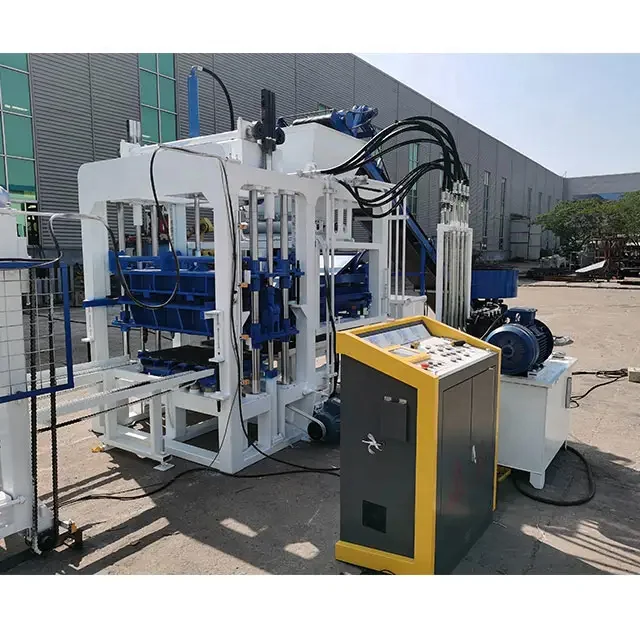
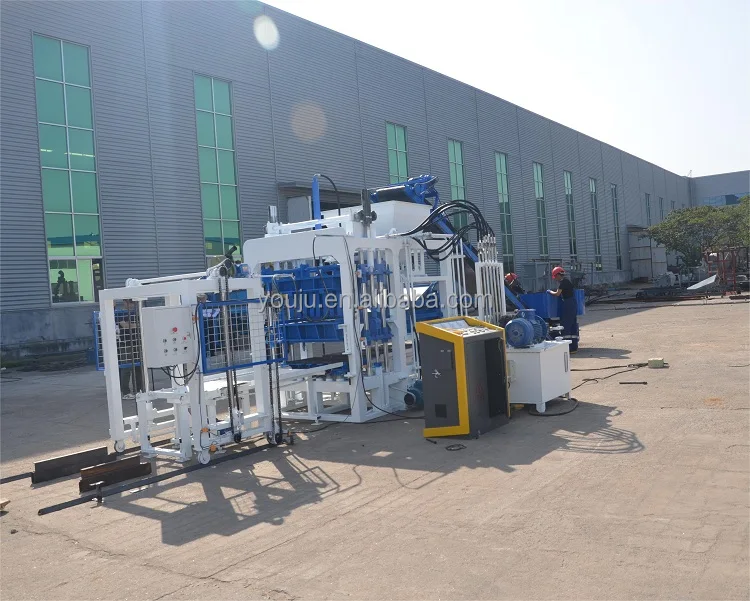
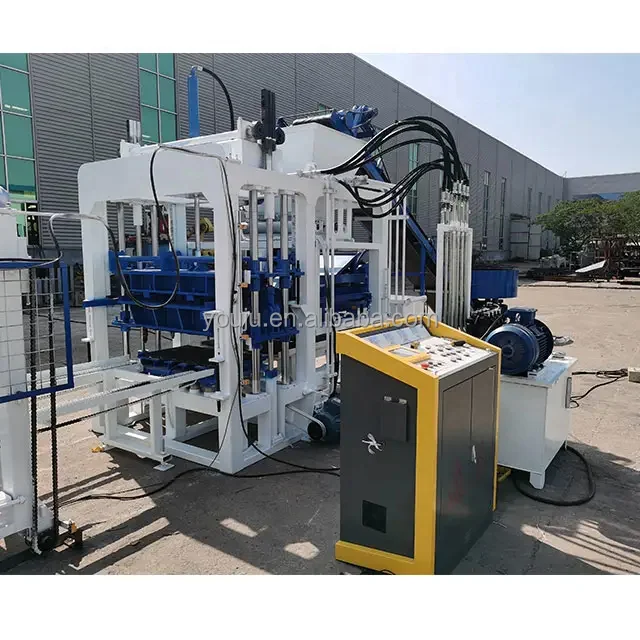
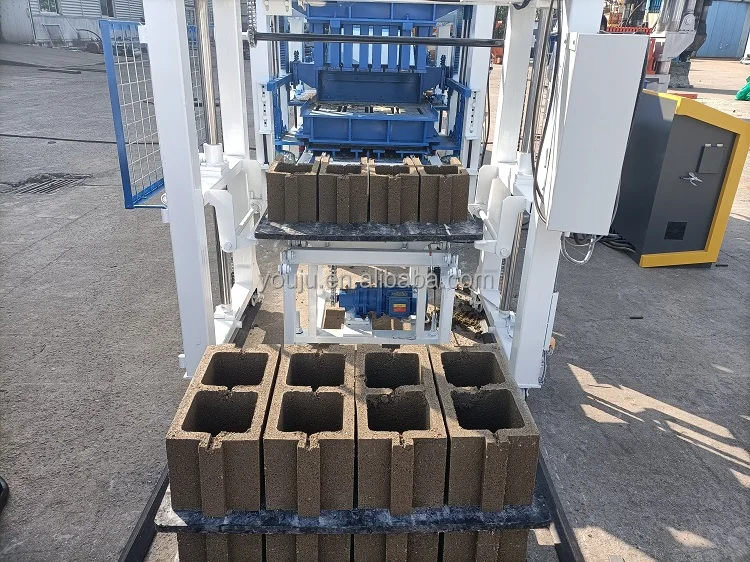
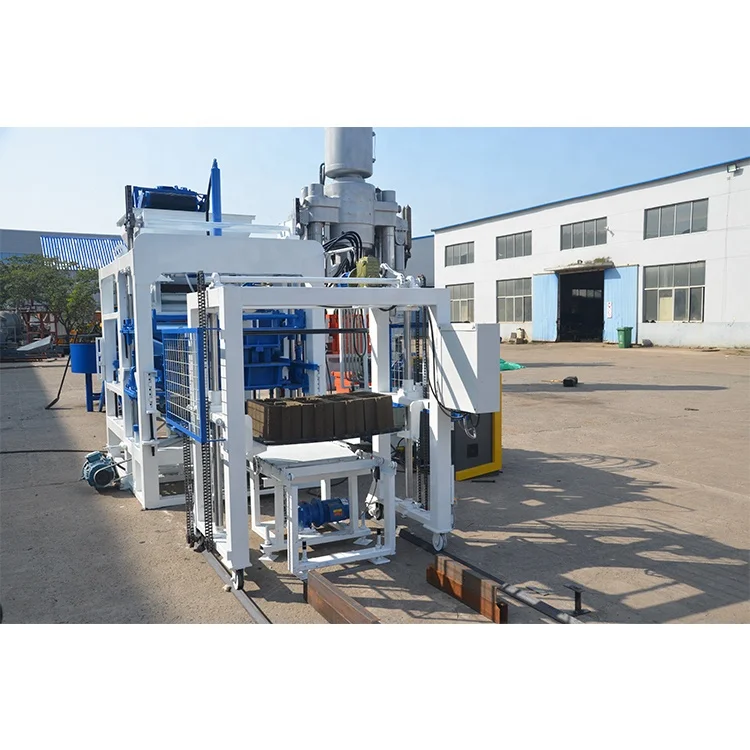
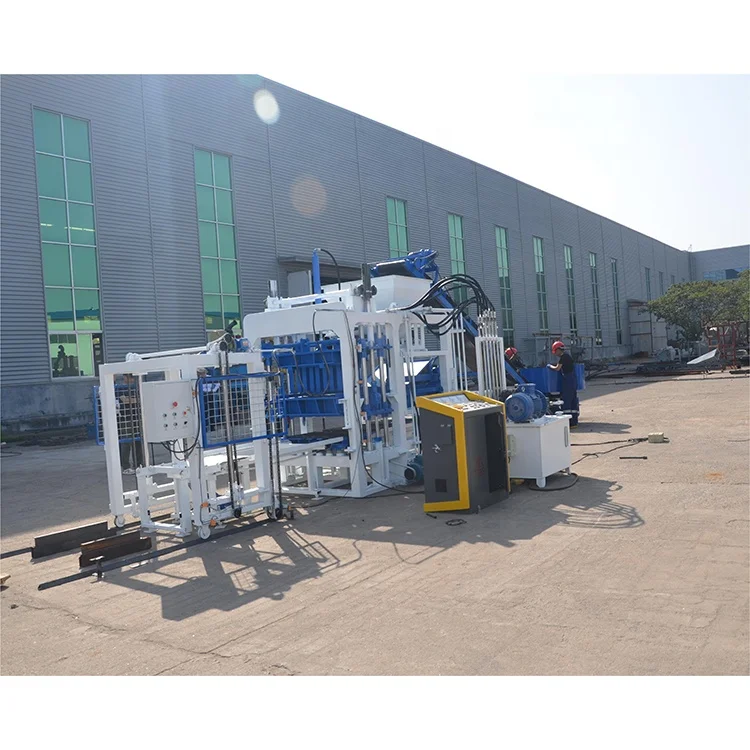
Description
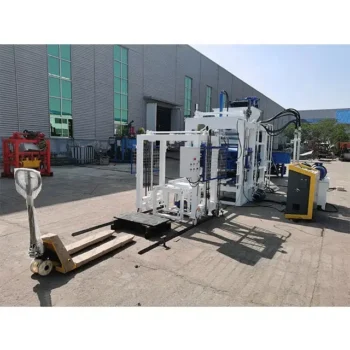
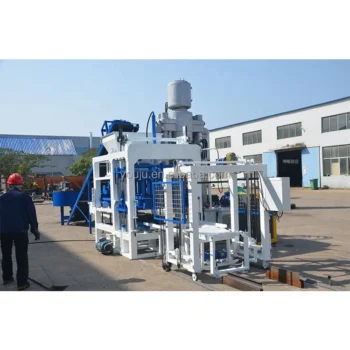
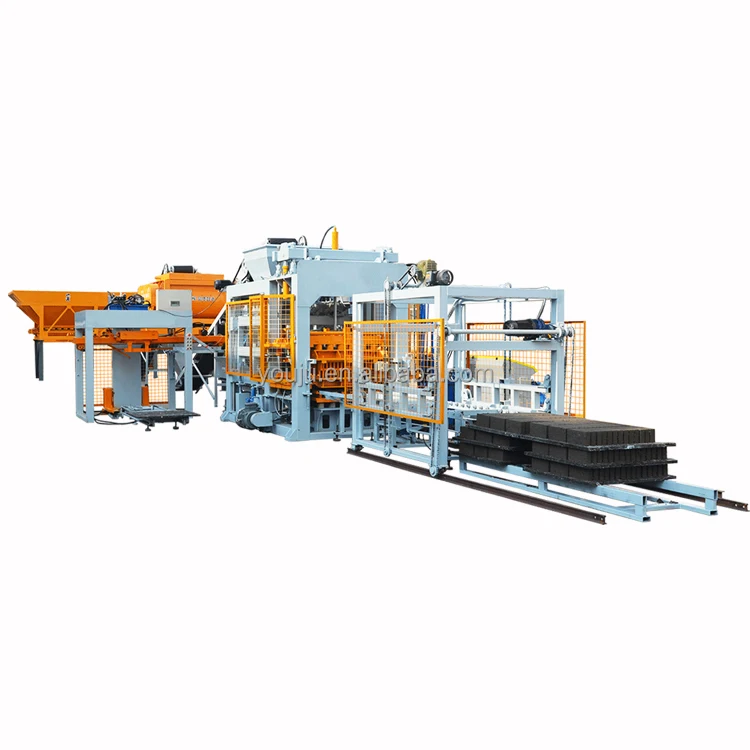
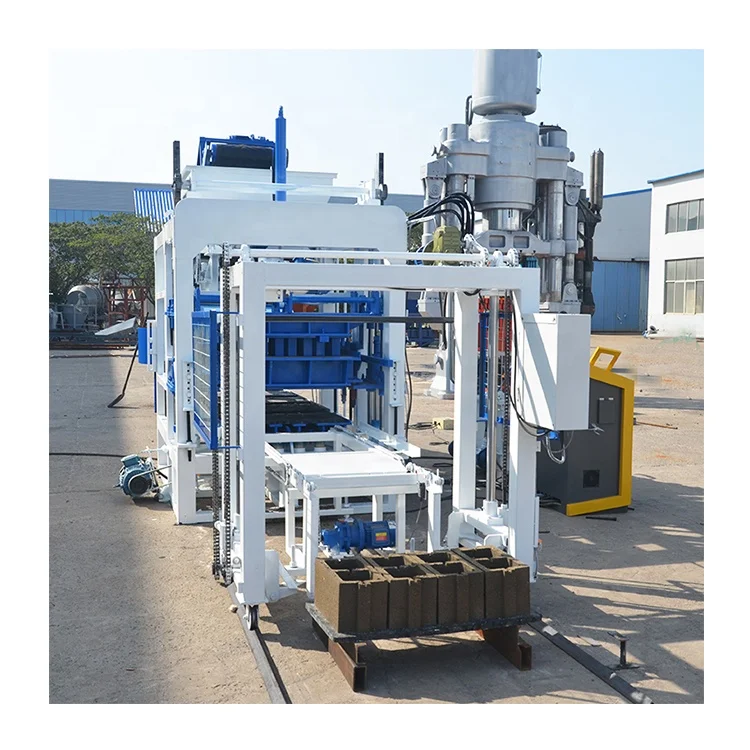
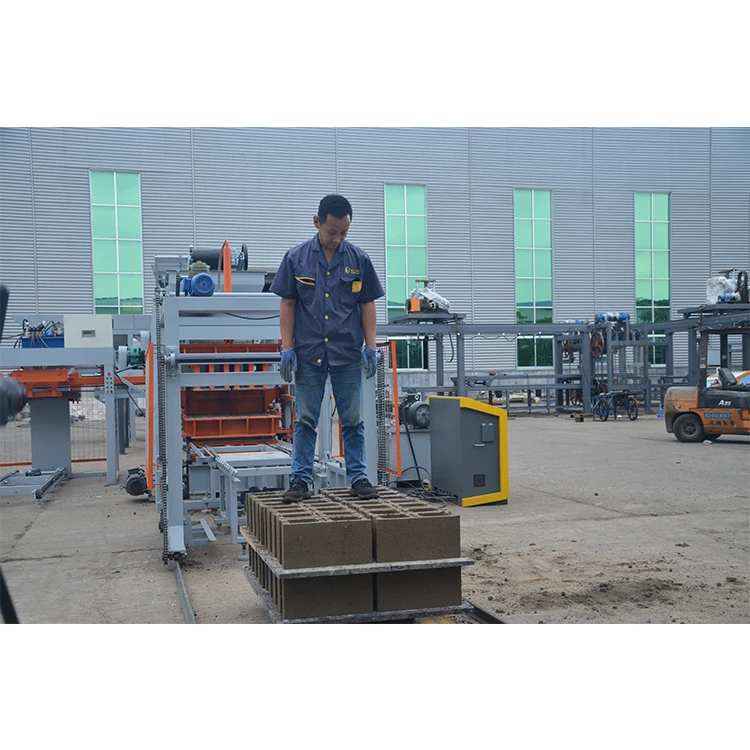
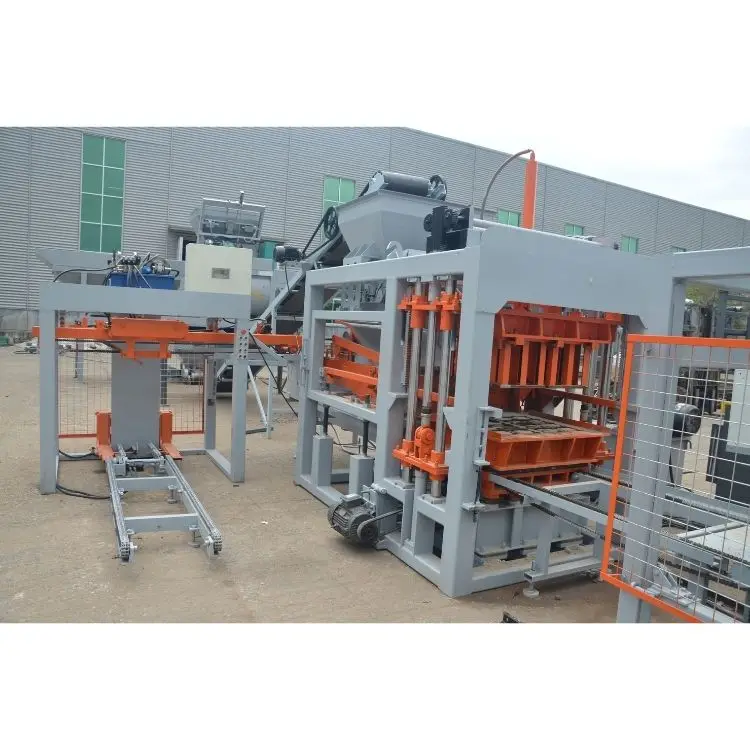
Matched System — The QT4-18 block machine, its moulds, pallets, and handling equipment are configured together against your actual block format and local aggregate, not pulled from a catalogue default.
Technical Specifications
| Parameter | Value |
|---|---|
| Model | QT4-18 |
| Product Type | Semi-Automatic Concrete Block Making Machine |
| Overall Dimensions | 2500 × 1750 × 2200 mm |
| Rated Pressure | 16 MPa |
| Vibration Form | Platform Vibration |
| Pallet Size | 950 × 550 mm |
| Molding Cycle | 18–25 s (basis to be confirmed by block format and mix) |
| Overall Power | 27.5 kW |
| Control System | PLC with frequency converter |
| Electrical Components | Schneider |
| Mould Lifting Mechanism | Double-sided synchronous gears |
| Material Feeder | Distribution belt hopper |
| Automation Level | Semi-automatic |
| Voltage & Frequency | Configurable to buyer’s site (basis to be confirmed) |
| Net Weight | Basis not stated in source |
| Output Capacity | Basis not stated in source — confirm block format, material, and thickness |
| Mould Change Time | Basis not stated in source |
| Mould Format Options | Hollow block, solid brick (one free hollow mould included; extra moulds customizable) |
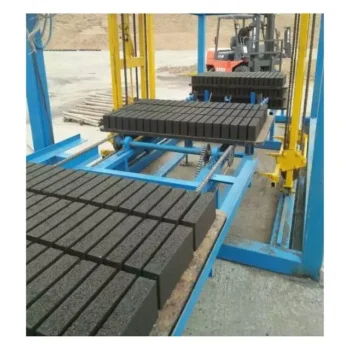
| Stacking Method | Manual or mechanical (stacker available) |
| Language Options | PLC display language configurable (basis to be confirmed) |
| Assembly State | Requires foundation pouring and on-site installation |
Application Suitability
| Application | Material or Output |
|---|---|
| Concrete hollow block production | Cement, crushed stone, sand, water — standard building blocks for wall construction |
| Cement solid brick production | Fine aggregate and cement mix for load-bearing or partition bricks |
| Paving block production | Dense aggregate blend with colour pigment for driveways and walkways (additional mould required) |
| Interlocking brick production | Shaped mould with interlocking profile for retaining walls (additional mould required) |
| On-site construction block manufacturing | Local quarry sand and cement mixed on location for housing and development projects |
What the Molding Cycle Number Hides About Your Actual Output
A cycle time of 18–25 seconds means very different daily outputs depending on which block format you are running and what your local sand looks like.
Suppliers often quote the shortest cycle — typically a small solid brick — and let you assume that number applies to the hollow block your market actually buys. In practice, a 200 mm hollow block needs a longer press cycle than a 60 mm paver, and aggregate with high clay content demands slower vibration ramp-up to avoid surface cracking. I once saw a buyer in West Africa arrive expecting to run a full shift on day one; it took two weeks of adjusting vibration timing and hydraulic hold just to stabilise the cycle on his local laterite sand [NEED_CITE: aggregate clay content effect on concrete block vibration parameters]. The honest QT4-18 block machine specifications must state which format and which mix each cycle figure assumes, so you can project daily tonnage without guessing.
How Format Drives Cycle Time on the QT4-18
The frequency converter on the QT4-18 lets the operator dial vibration intensity from the PLC panel, which matters because each block format has a different resonance sweet spot. A thin-walled hollow block collapses under the same force that compacts a solid paving block, so the vibration curve must be shaped per mould. Without this adjustable control, you end up choosing between under-compacted hollow blocks and cracked solid bricks on the same machine.
Matching Vibration and Pressure to Your Aggregate
Platform vibration alone does not guarantee block density — it has to work against the hydraulic pressure holding the mould box down. The QT4-18 rated pressure of 16 MPa is a ceiling, not a set-and-forget value. If your sand is coarse and angular, you can push closer to that ceiling; if it is fine and rounded, you pull back to avoid extrusion through the mould gaps [NEED_CITE: hydraulic pressure adjustment for different aggregate gradations in block production]. This is why the commissioning phase always includes test pressing with your actual raw material before locking in the PLC recipe.
Reading the Spec Sheet Against Your Production Plan
Three numbers on the QT4-18 spec table deserve a closer look. The 950 × 550 mm pallet size dictates how many blocks cure per cycle and whether those pallets fit the forklift tines already in your yard — ordering the wrong pallet width is one of the most common delays on semi-automatic lines. The 27.5 kW overall power rating tells your electrician whether the existing transformer can absorb the start-up surge of the vibration motor alongside the hydraulic pump, or whether a dedicated circuit is needed. Finally, the double-sided synchronous gear mould lifting mechanism shortens the physical swap between a hollow block mould and a solid brick mould, but the actual changeover time still depends on how many bolts the mould designer used and whether your crew has the right socket sizes on hand.
The Cost of Guessing the Wrong Pallet and Mould Combo
When the pallet size is chosen without checking your curing yard layout, blocks end up stacked manually in the aisle because the forklift cannot turn between rows. When moulds are ordered for a block format that is not your best seller, the machine sits idle while you source a replacement — and lead times for custom moulds are measured in weeks, not days [NEED_CITE: typical lead times for custom concrete block mould fabrication]. These mistakes do not show up on the quotation; they show up on your payroll three months later when you are paying two extra workers to handle output by hand.
Why Buyers Come Back for the Second Machine
We treat the QT4-18 as one element in a system: the machine, the mould, the pallet, and the handling equipment are specified together so nothing bottlenecks the press. Configuration starts with your mix design and target format, not a default catalogue page, which means vibration and pressure settings arrive pre-mapped rather than discovered by trial and error. Mould design covers the formats your market actually sells, with custom drawings available when standard shapes do not fit. The semi-automatic level lets you begin with manual pallet handling and add a mechanical stacker later without replacing the press. Commissioning includes on-site operator training so your crew understands the PLC recipe screen before we leave.
Documentation & Verification
- Line layout showing pallet flow and capacity calculation stated per block format
- Mould drawing and format list confirming which block types each included and optional mould produces
- Pallet specification matched to your curing yard dimensions and forklift load rating
- Voltage, frequency, and PLC display language confirmation sheet signed before production starts
- Factory test record pressed on a mix matching your local aggregate
- Operation and maintenance manual with wear part and mould replacement intervals
Installation, Commissioning & Support
- Foundation drawing provided so your contractor can pour the slab to the QT4-18 footprint of 2500 × 1750 mm before the machine arrives
- Power supply confirmed against the 27.5 kW load, including a dedicated breaker for the vibration motor start-up current
- Machine arrives dismantled; our technician supervises reassembly and aligns the synchronous gear mould lift on site
- First production run uses your local aggregate to tune the PLC vibration curve and hydraulic hold pressure per block format
- Operator training covers recipe entry on the Schneider PLC, mould change procedure, and daily greasing points
- Wear parts list with reorder codes for platform springs, mould liners, and hydraulic seals
Before You Request a Quote
Tell us the exact block dimensions your market sells, the daily output you need in that format, and the type of sand and stone available locally. We also need your site voltage and frequency, plus the language your operators read, so the PLC panel is ready the day the QT4-18 block machine specifications are finalised for production.
Frequently Asked Questions
Q: How is QT4-18 output capacity calculated per block format?
A: Output depends on the block size, mould cavity count, and the confirmed molding cycle for that specific format and mix. We provide a capacity table that lists pieces per hour for each mould you plan to run, based on tested cycle times with your aggregate — not a single headline number that assumes the smallest brick in the range.
Q: How do I match vibration force and hydraulic pressure to my local aggregate?
A: We ask for a sample or description of your sand and stone before building the machine. Coarse, angular aggregate tolerates higher pressure; fine or clay-rich sand needs a gentler vibration curve. The QT4-18 frequency converter and PLC let us store a recipe per mix so your operators simply select the correct programme at start-up.
Q: What is involved in changing moulds on the QT4-18?
A: The double-sided synchronous gear system lifts the mould box evenly, reducing misalignment. Your crew unbolts the current mould, slides the new one onto the platform, re-tightens, and selects the matching PLC recipe. The physical swap time varies with mould bolt count and crew practice, which is why we include a step-by-step changeover sheet with every delivery.
Q: How do I choose the right pallet size and material?
A: The standard pallet for the QT4-18 is 950 × 550 mm, but the material — bamboo, PVC, or steel — depends on your curing method and climate. We cross-check this size against your forklift tine spacing and curing rack layout so pallets move from press to yard without manual re-stacking or damage.
Q: How are voltage, frequency, and PLC language confirmed before shipment?
A: We send a confirmation sheet listing your site voltage, phase, frequency, and the display language for the Schneider PLC. You sign it before production begins. This avoids the common delay where a machine arrives wired for a voltage standard that does not match the local grid or where operators cannot read the control screen [NEED_CITE: voltage and frequency standards by export market].