

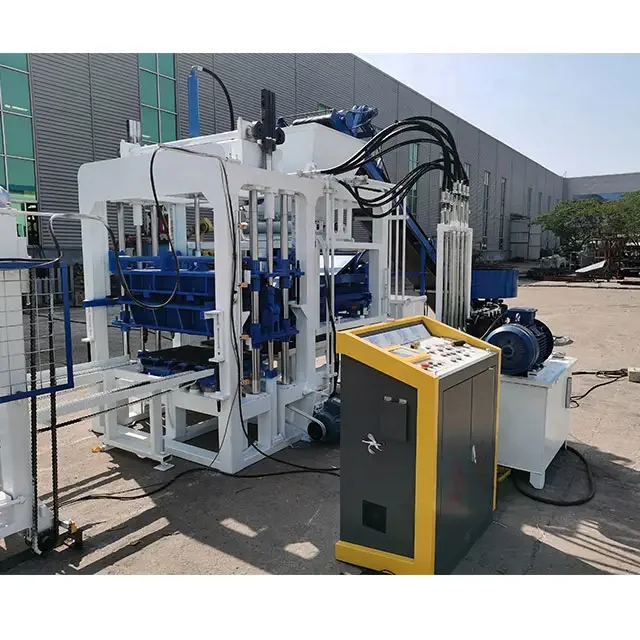
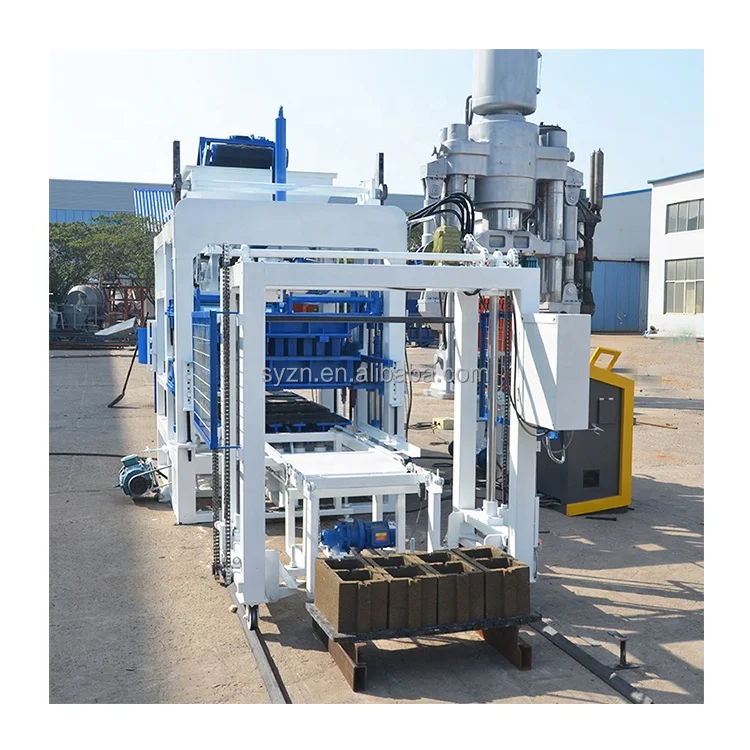
Description
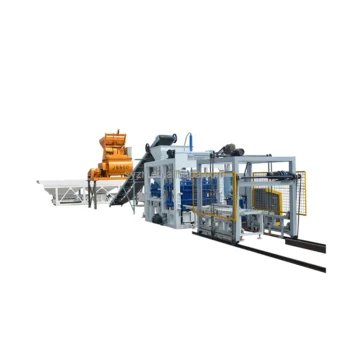
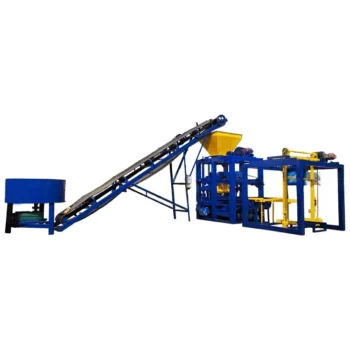
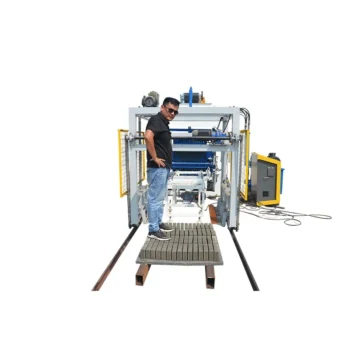
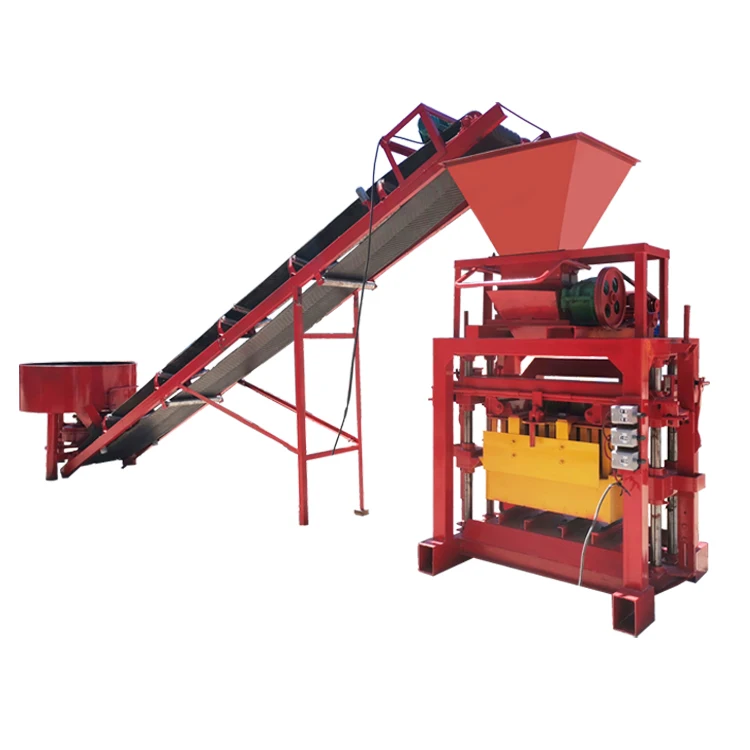
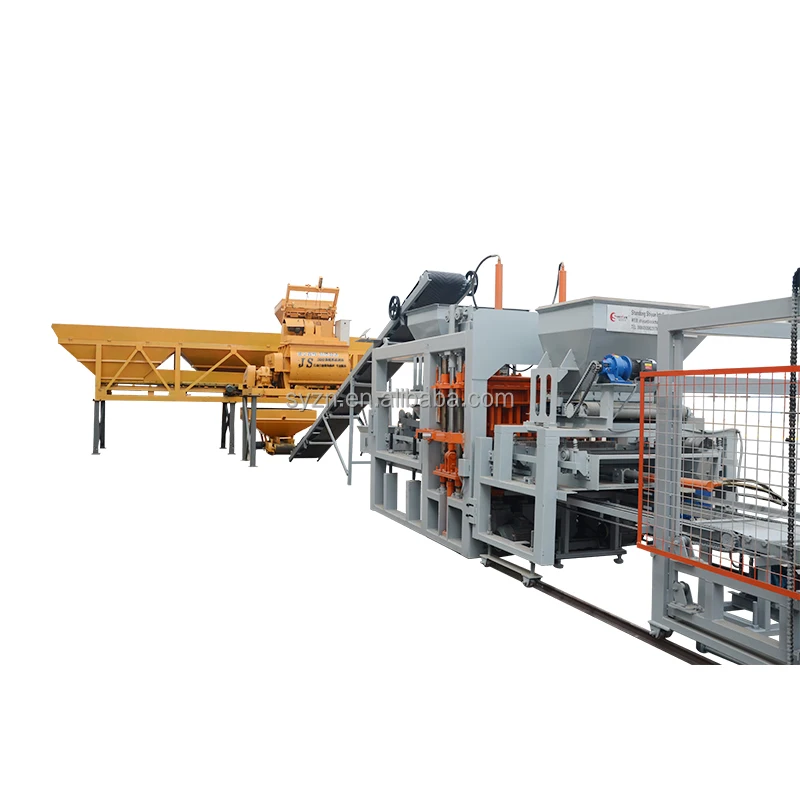
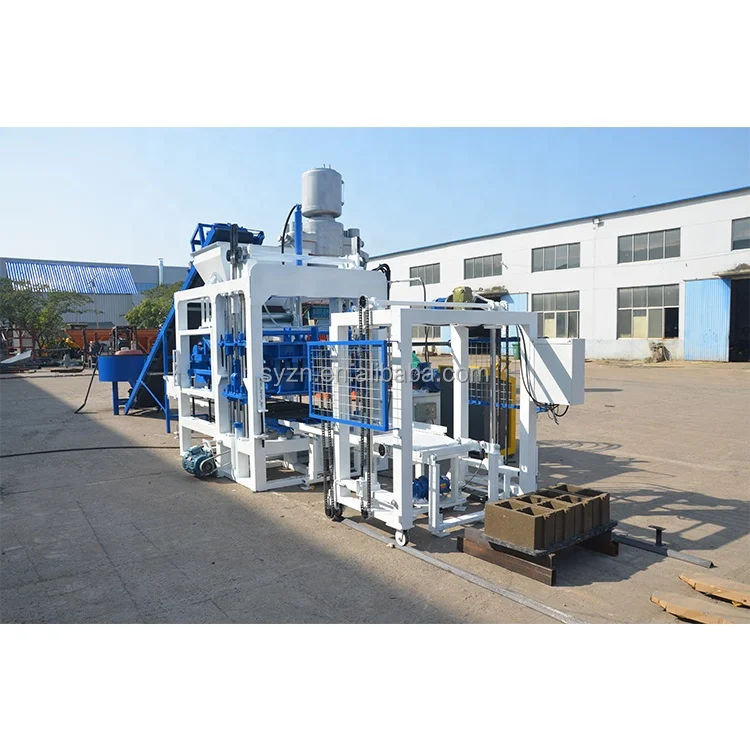
Matched System Sizing — the QT4-18 block machine, its mould, pallet, and supporting handling equipment are specified together against the hollow block or paver format your market actually sells, rather than quoted as a standalone press with generic cycle figures.
Technical Specifications
| Parameter | Value |
|---|---|
| Model | QT4-18 |
| Product Type | Hydraulic Concrete Block Making Machine |
| Overall Dimensions (L×W×H) | 3900×1600×2300 mm |
| Molding Cycle | 15-25s (basis not stated in source — confirm block format / material / thickness) |
| Vibration Force (Exciting Power) | 40-50 kN |
| Total Power | 24 kW |
| Mixer Model | JQ350 |
| Pallet Size | 850×550×25 mm |
| Net Weight | 3 T |
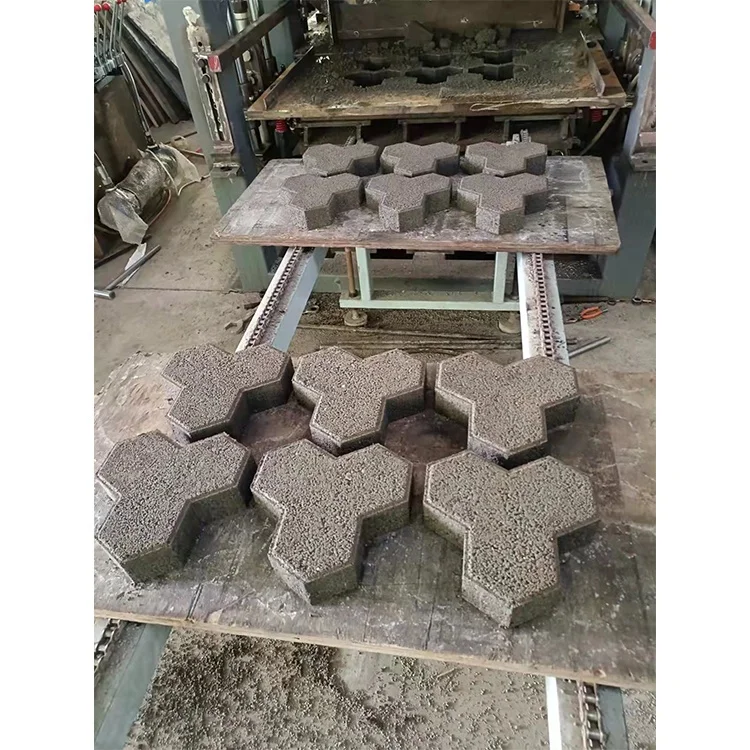
| Applied Products | Paver, solid block, hollow block, curbstone |
| Raw Materials | Crushed stones, sand, cement, dust, fly ash |
| Control System | PLC control system |
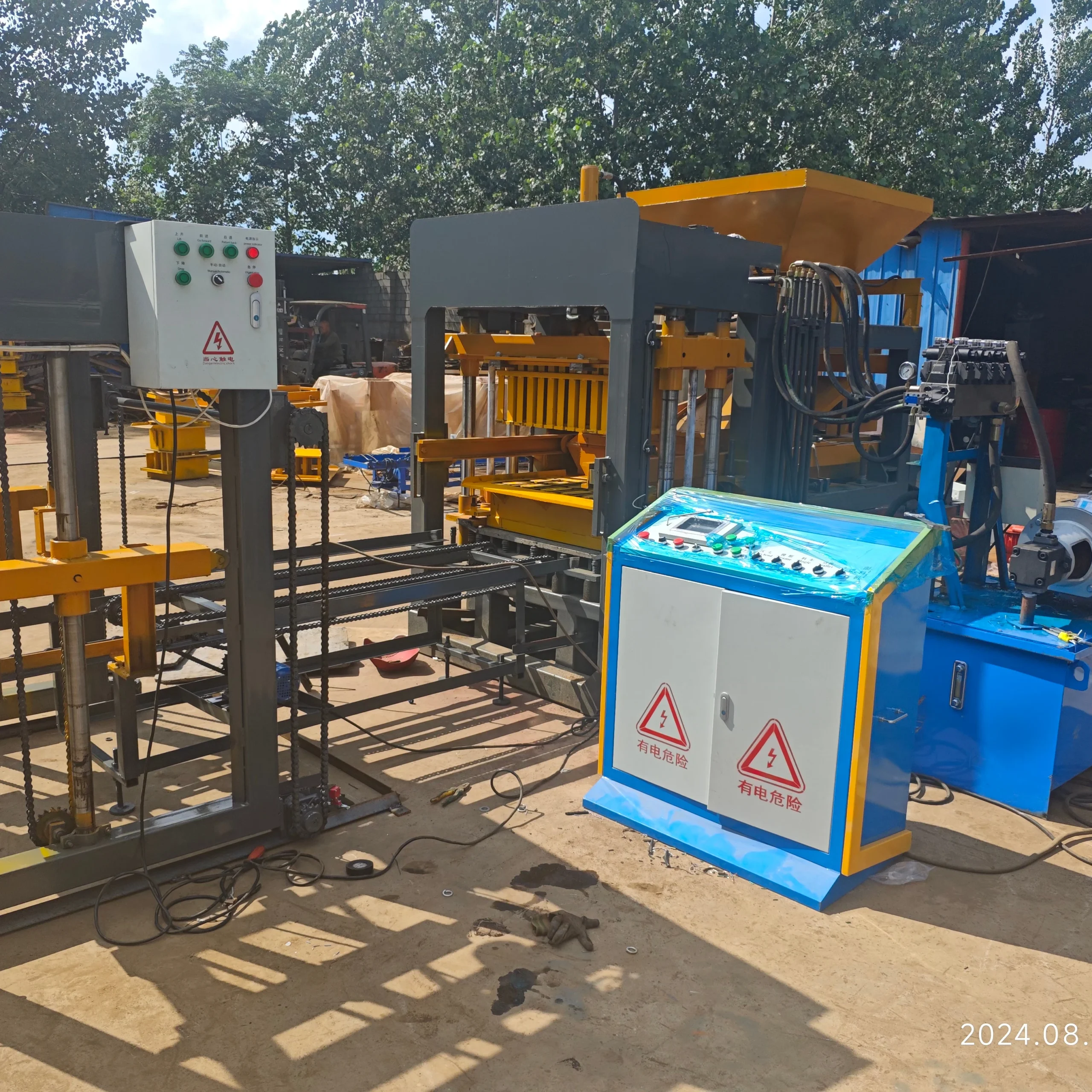
| Hydraulic Station | Included (high pressure, stable operation) |
| Included Equipment | Block making machine, hydraulic station, PLC control system, pallet feeder, brick conveyor, block sweeper |
| Free Accessories | Manual hydraulic trolley, spare parts and tools |
| Output Capacity (Hollow block 400×200×200 mm) | 1200-1680 pcs/hr, 9600-13440 pcs/8hr |
| Output Capacity (Hollow block 400×150×200 mm) | 1800-2400 pcs/hr, 14400-19200 pcs/8hr |
| Output Capacity (Solid brick 240×115×53 mm) | 3240 pcs/hr, 16200-19440 pcs/8hr |
| Cycle Time per Format | 15-20s (stated in capacity table for hollow block and solid brick formats) |
| Automation Level | Semi-automatic (with PLC, pallet feeder, conveyor, sweeper) |
Application Suitability
| Application | Material or Output |
|---|---|
| Block and paver production plants | Hollow blocks, solid bricks, pavers, and curbstones from local crushed stone, sand, cement, and fly ash |
| Construction contractors producing on-site | Moderate-volume hollow block runs using available site aggregates for housing or commercial builds |
| Entrepreneurs setting up a first block plant | Entry-level semi-automatic line with JQ350 mixer and manual pallet handling for regional markets |
| Concrete product manufacturers adding formats | Solid brick and curbstone production alongside existing hollow block output from one machine platform |
Why "Blocks per Hour" Means Nothing Without the Format Behind It
A headline capacity number hides the mould, the cycle time, and the block dimensions that produced it.
I have seen buyers sign contracts based on a single output figure, only to discover the machine was rated on a small solid brick while their market demands 200mm hollow blocks. The QT4-18 block machine specifications address this by listing capacity per format: 9600-13440 pieces per 8-hour shift for a 400×200×200mm hollow block at a 15-20s cycle, versus 14400-19200 pieces for the narrower 400×150×200mm hollow block [NEED_CITE: block format and cycle time assumptions in capacity quoting]. When the format changes, the number changes — and any quotation that does not state which block sits behind its figure is incomplete.
Format-by-Format Capacity Breakdown
The QT4-18 block machine specifications separate output into three verified formats, each tied to a specific mould cavity count and cycle window. For the 400×200×200mm hollow block, the machine produces 1200-1680 pieces per hour; for the 400×150×200mm variant, the narrower profile allows more cavities per pallet, raising throughput to 1800-2400 pieces per hour. Solid brick output at 240×115×53mm reaches 3240 pieces per hour because the smaller format packs more units onto the 850×550mm pallet surface. These figures assume the stated 15-20s cycle time and a consistent mix feed from the JQ350 mixer.
Matching the Pallet to Your Curing Area and Forklift
The 850×550×25mm pallet size is fixed for this machine platform, and it dictates how many blocks cure per rack and what forklift tine spacing is required. Before ordering, a buyer should walk their curing yard with a tape measure and confirm that standard rack dimensions accept this pallet without modification [NEED_CITE: pallet sizing and curing rack compatibility in block plants]. If the yard already runs a different pallet format from an older machine, the curing infrastructure may need adjustment, which is a cost that never appears on the machine quotation itself.
How Vibration Force and Hydraulic Pressure Interact with Your Mix
The 40-50 kN vibration force works together with the hydraulic station to compact the concrete mix into the mould cavity. Dense aggregates like river gravel transmit vibration differently from lightweight materials such as fly ash or volcanic stone, so the same machine settings produce different block densities depending on the raw material. I once worked on an order where the buyer switched from sand to a local crushed basalt and found the blocks cracked at the corners until we adjusted the vibration duration. The PLC control system on the QT4-18 allows cycle parameters to be tuned once the actual mix design is established during commissioning.
What Happens When Configuration Is Skipped
When voltage and frequency are not confirmed in writing before production, the machine arrives with a motor wound for the wrong supply and commissioning stalls until a replacement is shipped. When the PLC display language defaults to one the operator cannot read, every parameter adjustment becomes a guess [NEED_CITE: PLC language and voltage confirmation before machinery export]. When the quotation omits stacking and curing rack handling, the buyer discovers after delivery that output must be moved by hand from the conveyor to the yard, turning a semi-automatic line into a labour-intensive operation.
Why Buyers Specify This Machine With Us
Block machinery is our single focus, so the QT4-18 is not quoted as a standalone press but as a matched system including the mould, pallet, feeder, conveyor, and sweeper configured together. We set the vibration and hydraulic parameters against the buyer’s actual mix design and local aggregate sample, not a catalogue default. Mould design covers every format the buyer’s market sells, with custom drawings available for non-standard dimensions. The automation level is selectable — a buyer can start with the semi-automatic configuration and add automatic stacking later. Installation support includes on-site commissioning and operator training on the PLC system.
Documentation & Verification
- Line layout showing capacity calculation for each block format the buyer intends to produce
- Mould drawing and format list confirming achievable dimensions on the 850×550mm pallet
- Voltage, frequency, and PLC display language confirmed in writing before production begins
- Factory test record showing cycle time and block strength with the buyer’s target mix design
- Hydraulic and electrical schematic for local maintenance reference
- Packing photographs and customs documentation support for shipment
Installation, Commissioning & Support
- Foundation must support the 3T net weight and 3900×1600mm footprint with level concrete pad
- Dedicated 24 kW power circuit required with voltage and frequency confirmed before motor winding
- Machine ships dismantled for container loading; reassembly and alignment performed on site
- PLC parameter tuning during commissioning matches vibration cycle to buyer’s confirmed mix design
- Operator training covers mould change procedure, pallet feeder adjustment, and daily greasing points
- Wear parts list and spare tools shipped with the machine for first replacement cycle
What We Need to Quote Accurately
To size the QT4-18 correctly for your project, we need the specific block format and dimensions your market sells, the daily output target based on an 8-hour shift, and a sample or description of your local aggregate and cement type. Please also confirm your site voltage, frequency, and preferred PLC display language, along with whether your existing curing racks and forklifts match the 850×550mm pallet or if handling equipment needs to be included in the scope.
Frequently Asked Questions
Q: How is the QT4-18 capacity verified for each block format, and what cycle time sits behind each number?
A: Capacity is stated per format with the mould cavity count and cycle time that produced it. The 400×200×200mm hollow block runs at 1200-1680 pieces per hour on a 15-20s cycle, while the narrower 400×150×200mm block yields 1800-2400 pieces per hour on the same pallet. Each figure is tied to a specific mould, not a generic machine rating.
Q: Which mould formats fit the 850×550mm pallet, and what is the realistic mould change time on site?
A: The pallet accepts moulds for hollow blocks, solid bricks, pavers, and curbstones within its surface area. Mould change time depends on the quick-release mechanism and operator familiarity; we confirm the expected changeover duration during commissioning and train your team on the procedure so format switches do not consume a full shift.
Q: How should the machine be configured against my local aggregate and mix design to ensure block strength?
A: We request a sample or detailed description of your local crushed stone, sand, or fly ash before finalising the vibration and hydraulic parameters. During on-site commissioning, test blocks are pressed with your actual mix and the PLC cycle is adjusted until the target density and strength are achieved consistently.
Q: What voltage, frequency, and PLC language options are confirmed before shipment?
A: Voltage and frequency must be confirmed in writing before the motor is wound and the electrical panel is built. The PLC display language is set to the buyer’s preference so operators can read cycle parameters and alarm messages without translation during daily production.
Q: Which supporting equipment is included and what must be sourced separately?
A: The standard package includes the block machine, hydraulic station, PLC control system, pallet feeder, brick conveyor, block sweeper, a manual hydraulic trolley, and spare parts. Automatic stacking, curing rack handling, and cubing systems are available as additions and should be discussed during the line layout stage.