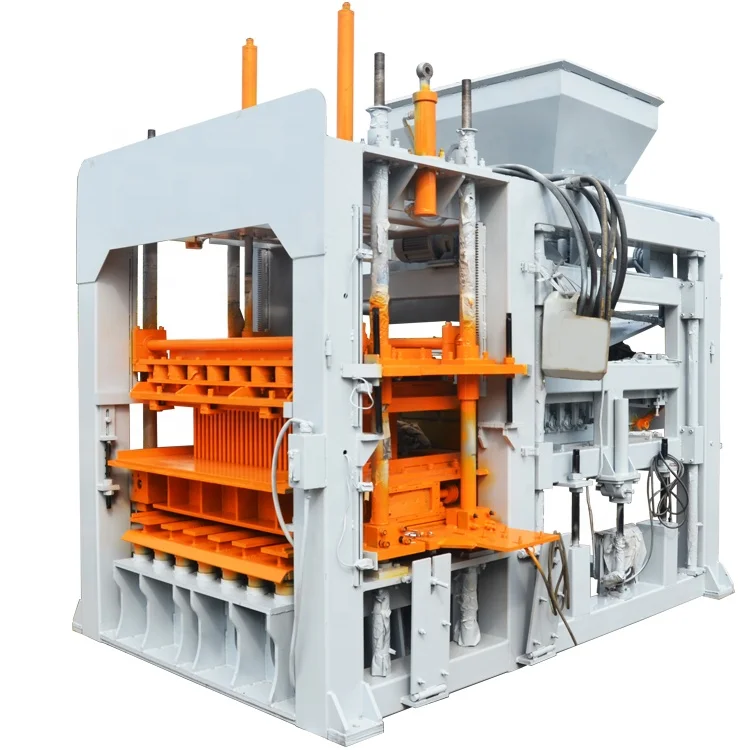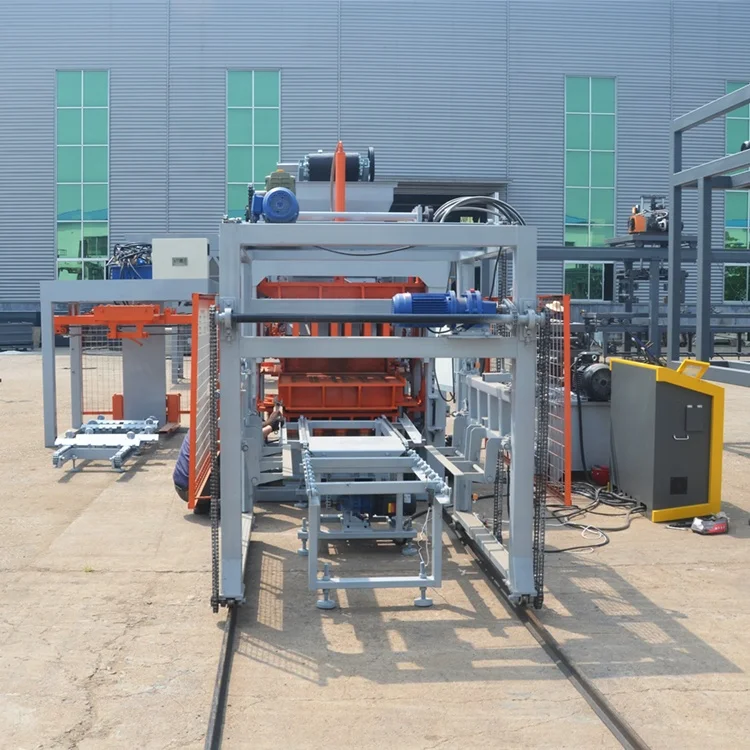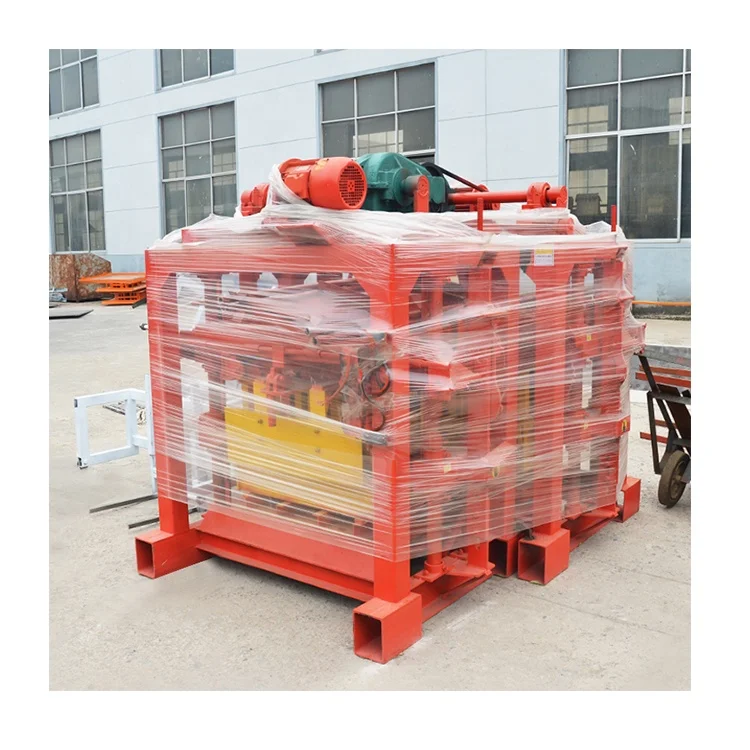
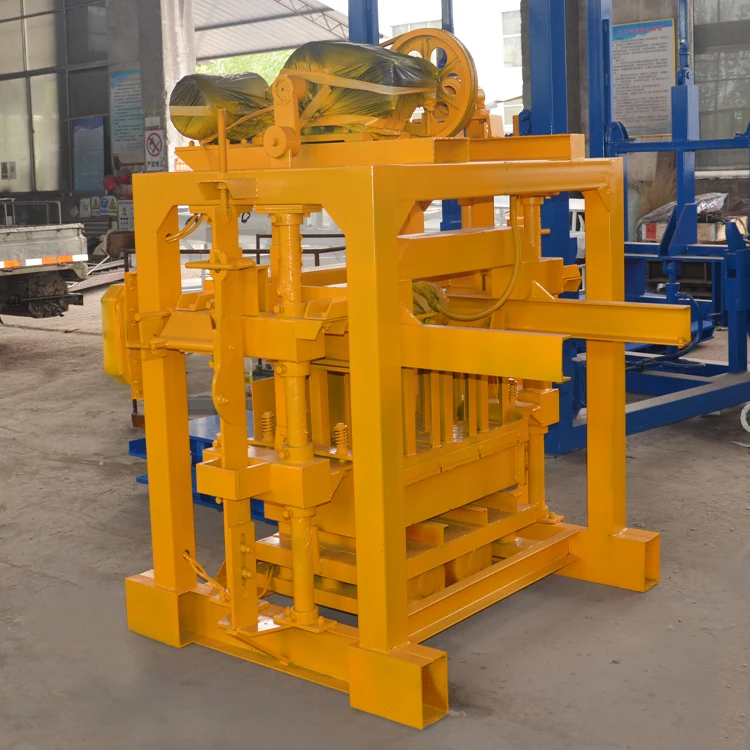

Description
Configuration anchored to your local aggregate and target block format — vibration force, hydraulic pressure and mould cavity count are matched to your specific mix design before production, preventing the output drop we see when machines ship on catalogue defaults.
Technical Specifications
| Parameter | Value |
|---|---|
| Model | QTJ4-40 |
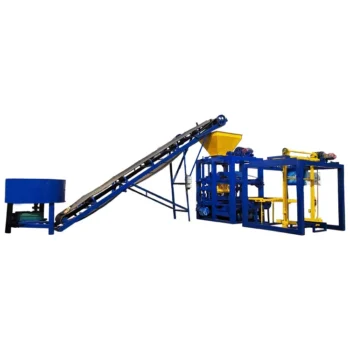
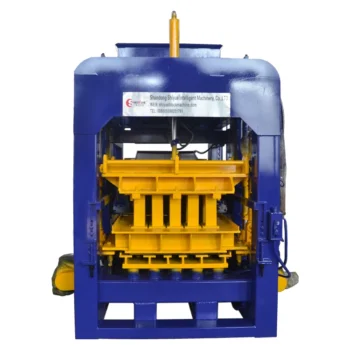
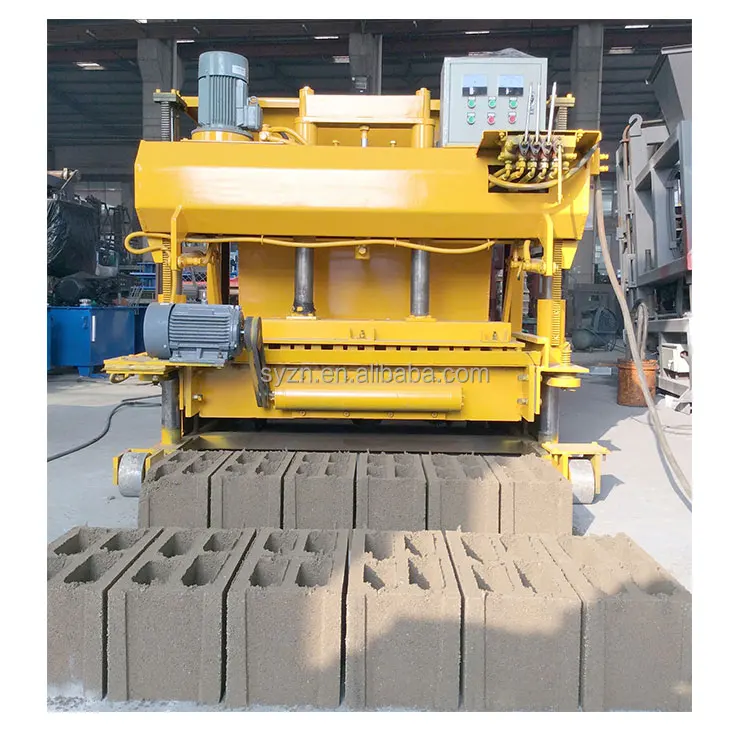
| Product Type | Semi-Automatic Concrete Block Making Machine |
| Rated Power | 9.5 kW |
| Molding Cycle | 40 s |
| Output Capacity | 2000–2500 pcs/8 hours (basis not stated in source — confirm block format / material / thickness) |
| Theoretical Productivity (Format 1) | 360 pcs/h, 2800 pcs/day (based on 400×200×200 mm hollow block, 4 pcs/mould) |
| Theoretical Productivity (Format 2) | 450 pcs/h, 3600 pcs/day (based on 400×150×200 mm hollow block, 5 pcs/mould) |
| Theoretical Productivity (Format 3) | 800 pcs/h, 6400 pcs/day (based on 225×112.5×60 mm solid brick, 9 pcs/mould) |
| Machine Weight | 1 T |
| Overall Dimensions (L×W×H) | 1350×1460×1800 mm |
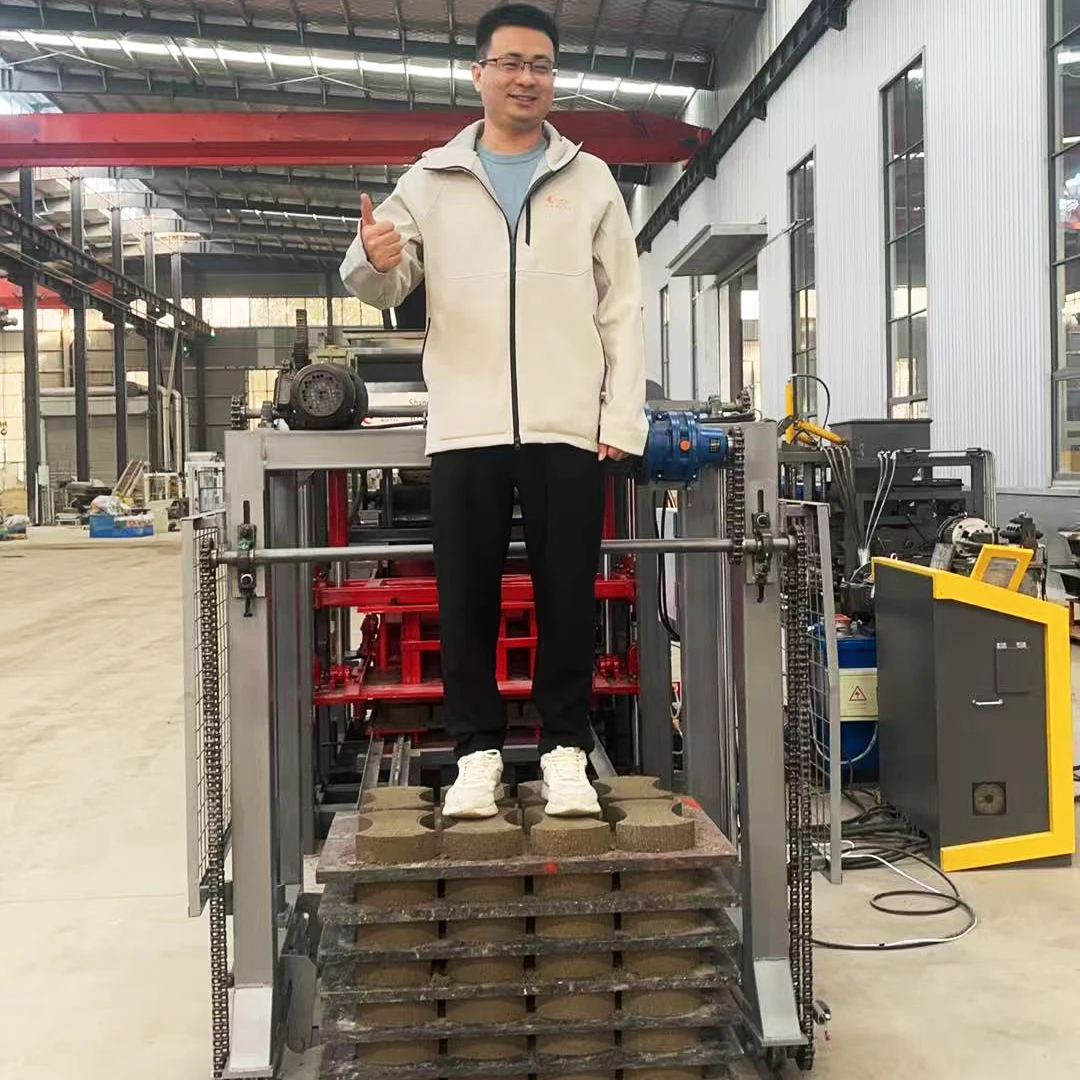
| Pallet Size | 850×450 mm |
| Voltage | According to local voltage (source value — verify against manufacturer catalog) |
| Control System | Semi-automatic (top die push/pull, automatic scraper) |
| Vibration Method | Bed mould vertical vibration + upper mould compression vibration |
| Raw Materials | concrete, sand, cement, fly ash, lime, gypsum |
Application Suitability
| Application | Material or Output |
|---|---|
| Small to medium-scale block plants | Hollow and solid concrete blocks from crushed stone, sand and cement |
| On-site production for contractors | Interlocking bricks and pavers from locally available aggregate |
| Fly ash brick manufacturing | Bricks formed from fly ash, lime and gypsum blends |
| First plant setups | Lower-investment entry into concrete product manufacturing |
What the "2500 Pieces Per Day" Label Leaves Out
A single cycle time means nothing without the block format and mould cavity count that produced it.
When a quotation says 2500 pieces per shift, buyers assume that applies to whatever block their market buys. In reality, that figure may come from a solid brick mould with nine cavities, while the hollow block you actually need yields fewer than half that number on the same semi-automatic block machine specifications sheet. I have watched machines sit idle on site because the buyer ordered on headline output and discovered the real format ran at a completely different pace. The QTJ4-40 block machine how to choose question starts with naming your primary block size, then working backward to the mould that delivers it [NEED_CITE: block format and cycle time relationship in concrete masonry production].
Mould Cavity Count Determines Your Real Daily Tonnage
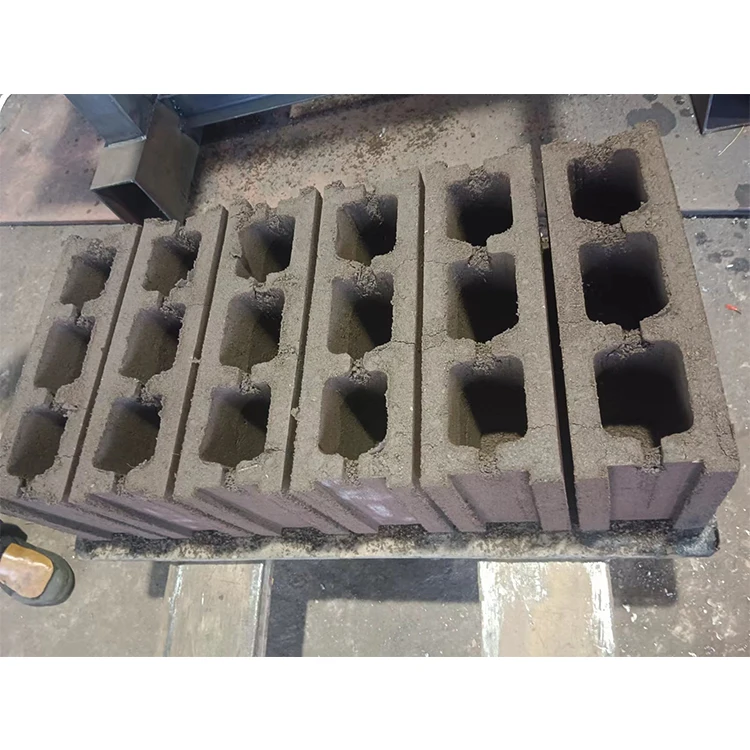
The QTJ4-40 runs a fixed 40-second molding cycle regardless of which block format is loaded. That means the only variable between 2800 hollow blocks per day and 6400 solid bricks per day is how many cavities the mould carries. A 400×200×200 mm hollow block fills four cavities per cycle, while a 225×112.5×60 mm solid brick fills nine — both on the same 850×450 mm pallet. Before comparing semi-automatic block machine specifications across suppliers, confirm which format the output figure assumes.
Pallet Size Must Match Your Curing Yard, Not Just the Press
An 850×450 mm pallet sounds like a small detail until you realise hundreds of them will occupy your curing racks simultaneously. If your existing forklift tines are spaced for a different pallet dimension, or your curing shed racks were built around another size, every pallet becomes a manual handling problem. We confirm pallet material — typically bamboo or PVC — and thickness against your curing environment and forklift capacity before the machine enters production [NEED_CITE: pallet material selection for concrete block curing conditions].
Dual Vibration and What It Actually Does to Block Density
This machine combines bed mould vertical vibration with upper mould compression vibration. The bed vibration settles the concrete mix into the mould cavity, while the upper compression squeezes out trapped air and increases density from the top down. For a semi-automatic block machine at this output tier, dual vibration addresses the common complaint of blocks that look good on the surface but crumble under load — the upper compression stage is what separates a decorative block from a structural one.
When the Local Aggregate Rewrites Your Entire Mix
I spent weeks on a site in West Africa where the machine produced well on standard river sand at the factory, then arrived to find the buyer using laterite — a high-clay red soil that absorbs water differently and changes the entire moisture-to-cement ratio. Vibration force that compacts clean sand left laterite blocks under-densified. The fix was never the machine itself; it was recalibrating the mix design and adjusting the mould clearance to suit that specific material. This is why semi-automatic block machine specifications must be read alongside your local raw material profile, not in isolation [NEED_CITE: effect of local aggregate on concrete block compressive strength].
The Cost of Getting Pallets and Voltage Wrong at the Same Time
Ordering without confirming pallet size means your curing racks may not accept the output, forcing you to rebuild your entire yard layout after commissioning. Ordering without confirming voltage and frequency means the 9.5 kW motor may not start, or worse, runs at the wrong speed and burns out within a week. Both issues compound: a machine that cannot produce sits in a yard that cannot store, and the contractor’s project deadline passes with nothing to show. These are the conversations that need to happen before the quotation is signed, not after the container arrives.
Why Buyers Source the QTJ4-40 Through This Channel
We treat the machine, mould and pallet as one matched system — not three separate purchases from different vendors that you are expected to integrate yourself. Every capacity calculation on this page states the exact block format and mould cavity count behind it, so you compare real numbers, not catalogue claims. The QTJ4-40 is configured against your local aggregate and target block format before production begins. Mould options cover hollow, solid, interlocking and paver formats for the 850×450 mm pallet, with custom drawings available when your market demands a size not in the standard range. Automation level is selectable, meaning you can start semi-automatic now and add pallet feeding or stacking automation later without replacing the press.
Documentation & Verification
- Line layout stating which block format each output figure assumes
- Mould drawing and format list with cavity count per block size
- Pallet specification sheet covering material, thickness and load rating
- Voltage and frequency confirmation sheet signed before production starts
- Factory test record on your target block format before dispatch
Installation, Commissioning & Support
- Foundation pad sized to the 1350×1460 mm footprint with level tolerance
- Dedicated circuit for the 9.5 kW motor matched to local voltage and frequency
- Top die push-and-pull mechanism aligned on site during commissioning
- Dual vibration system tuned to your local aggregate density and moisture content
- Mould change procedure demonstrated for all ordered block formats
- Wear parts list covering vibration springs, scraper blades and hydraulic seals
What We Need From You to Quote Accurately
Tell us which block format your market actually buys — dimensions, solid or hollow, and the target compressive strength. Share your local aggregate type so we can match vibration force and mould clearance to it. Confirm your site voltage and frequency, and whether your curing yard and forklift are already set up for 850×450 mm pallets or need adjustment.
Frequently Asked Questions
Q: How is the QTJ4-40 output capacity verified per block format?
A: Each output figure on this page is tied to a specific block size and mould cavity count. The 2800 pcs/day figure applies to 400×200×200 mm hollow blocks with four cavities per cycle, while 6400 pcs/day applies to 225×112.5×60 mm solid bricks with nine cavities. The generic 2000–2500 pcs/8h label does not state which format it assumes, which is why we break it down.
Q: Which mould formats fit the 850×450 mm pallet?
A: Standard options include hollow block, solid brick, interlocking brick and paver block moulds, all designed for the 850×450 mm pallet. Mould change time depends on the format pair and operator experience. Custom mould drawings are available when your local market requires a block size outside the standard range.
Q: How does local aggregate affect block strength on this machine?
A: The dual vibration system is calibrated for a specific mix density and moisture content. High-clay soils like laterite absorb water differently from clean river sand, which changes compaction behaviour. We adjust vibration settings and mould clearance to your actual material before finalising the configuration.
Q: What supporting equipment is needed to sustain the 40-second cycle?
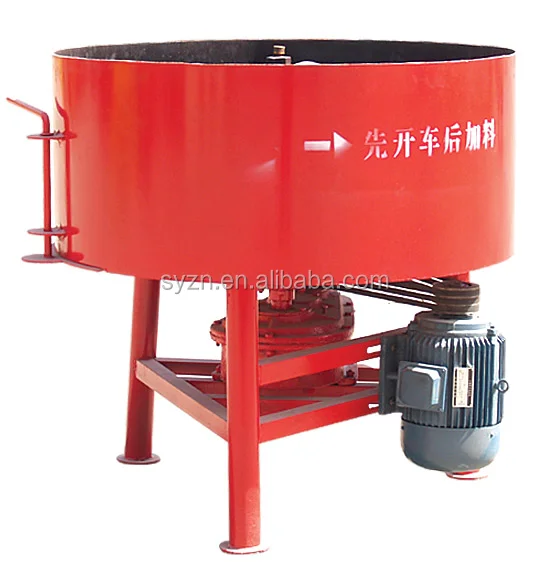
A: The press completes a cycle every 40 seconds, so your mixer must deliver a fresh batch within that window and your pallet supply must keep up. Without matched upstream mixing and downstream pallet handling, the press waits and real output drops below the theoretical figure.