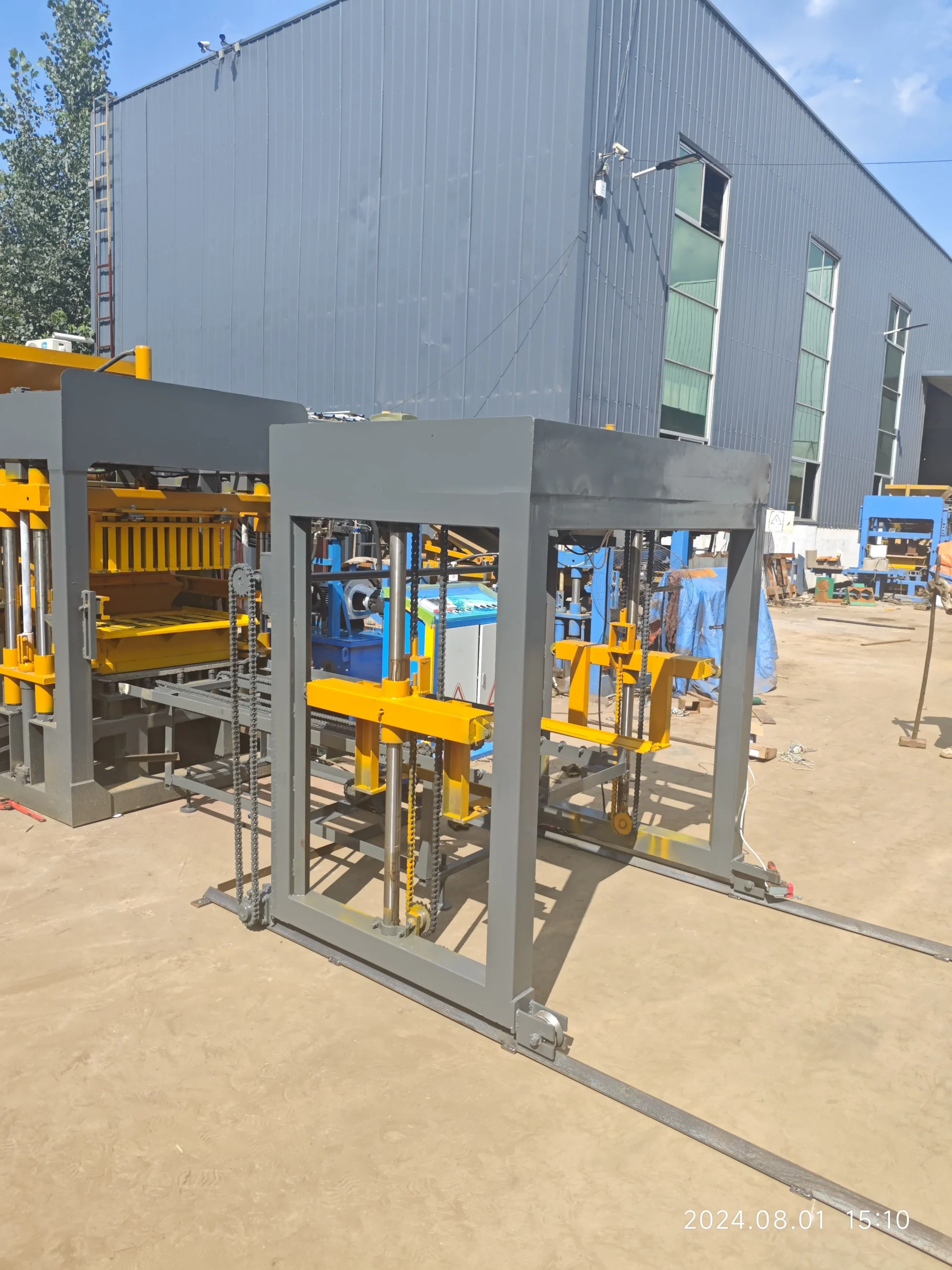
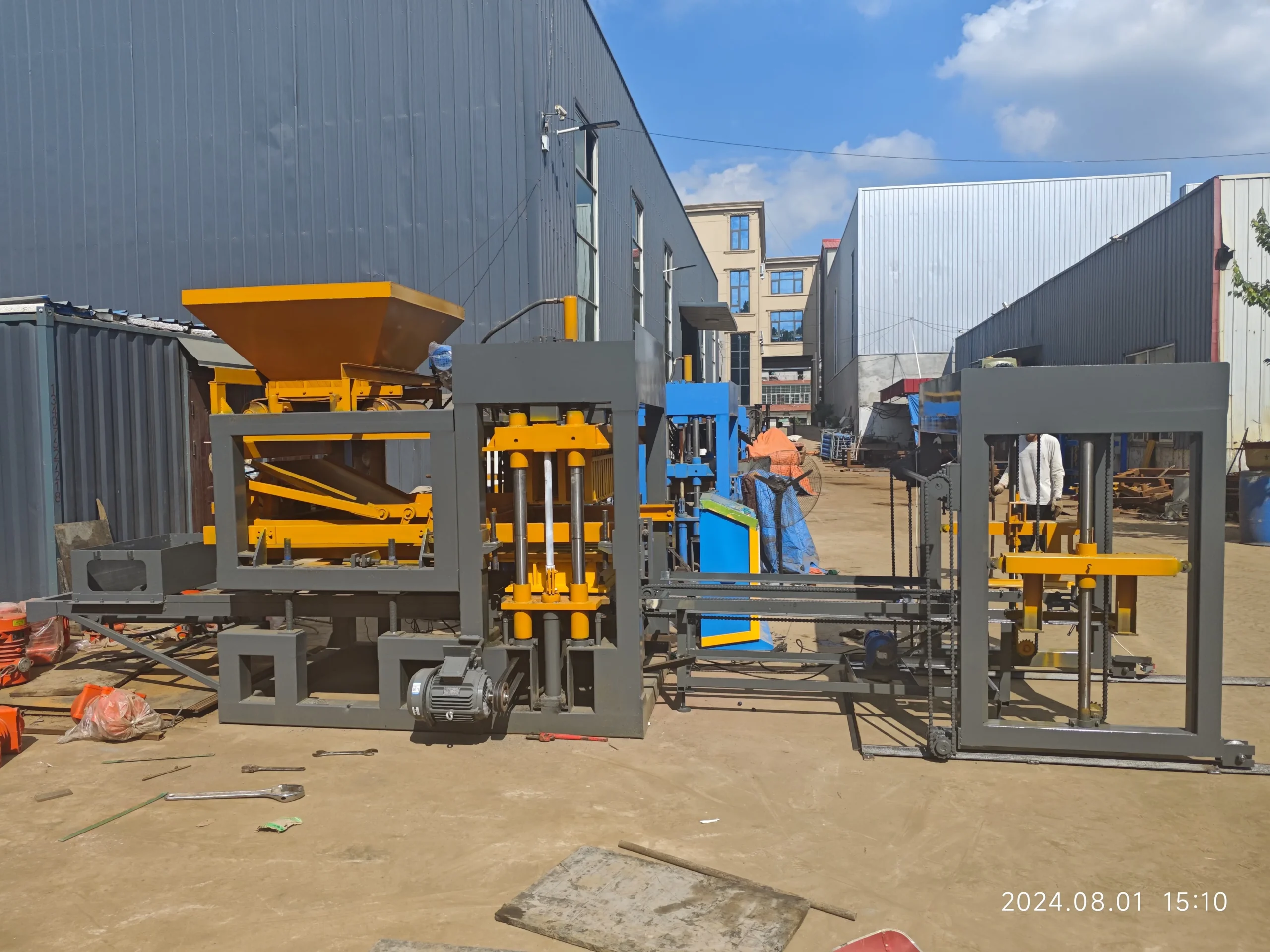
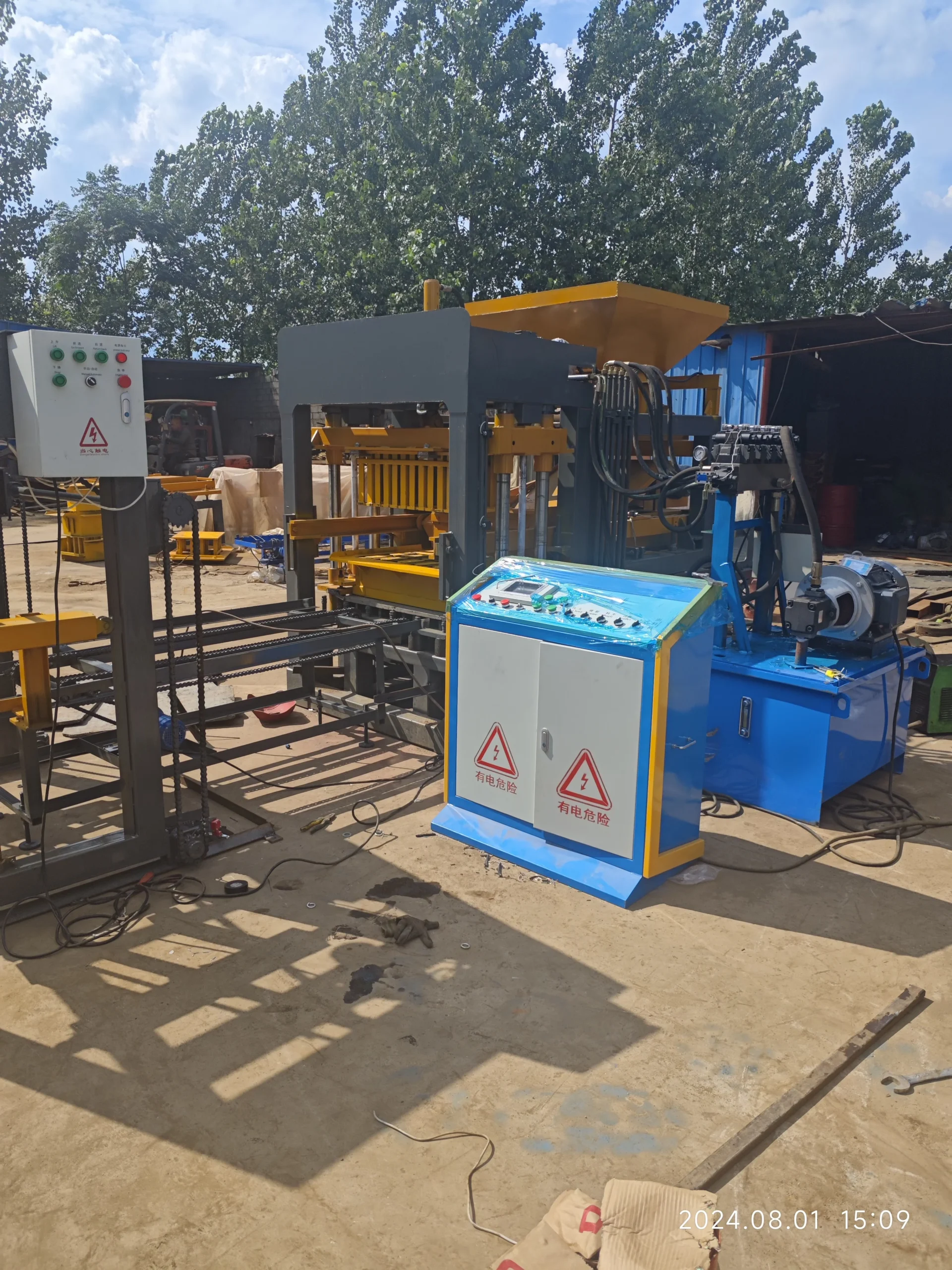
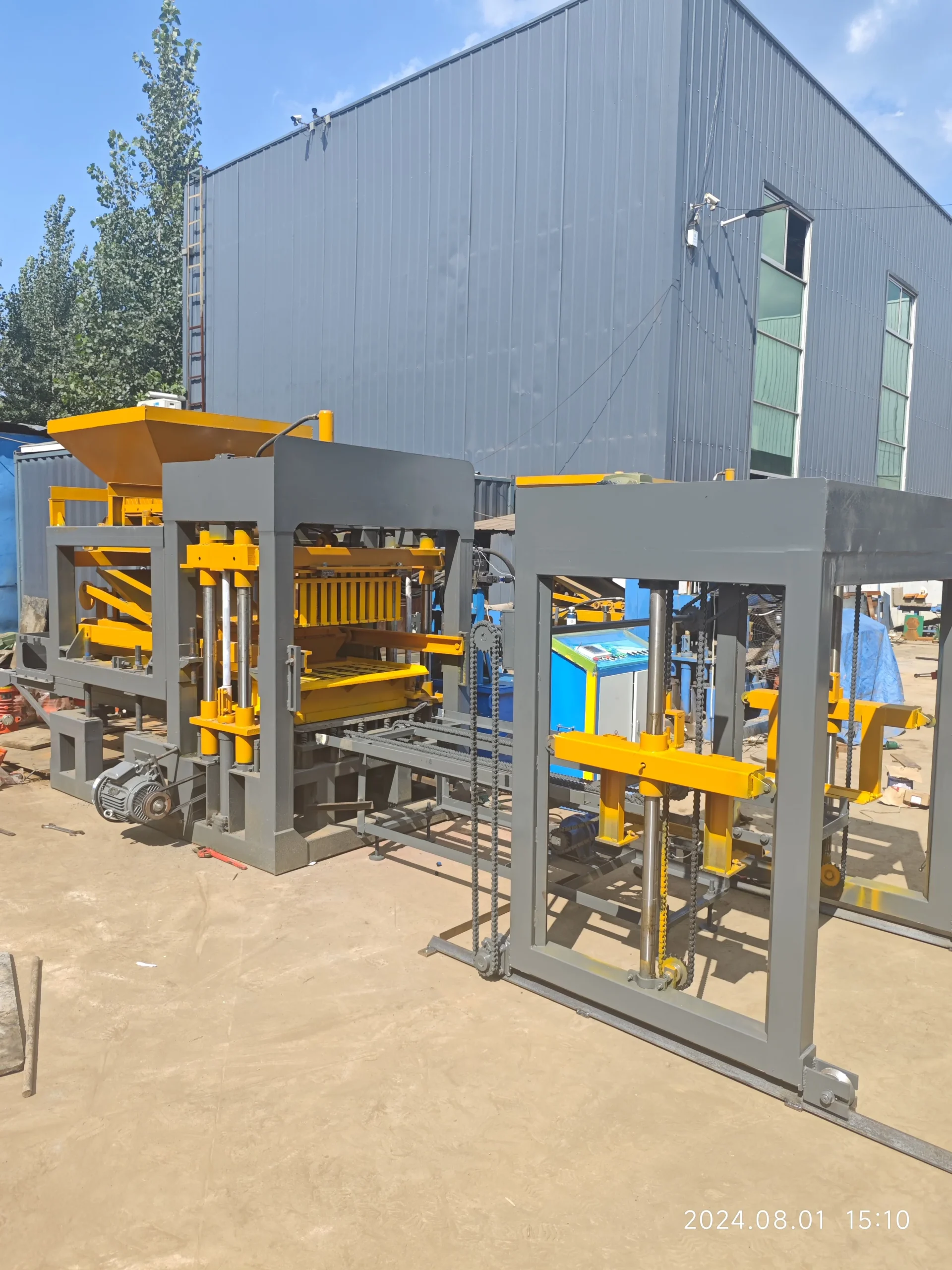
Description
Format-Specific Block Output — Every QT4-18 capacity figure we quote names the exact block format, mould layout and cycle time it assumes, so your daily plan matches the machine’s actual behaviour on your site.
Technical Specifications
| Parameter | Value |
|---|---|
| Model | QT4-18 |
| Product Type | Automatic Concrete Block Making Machine |
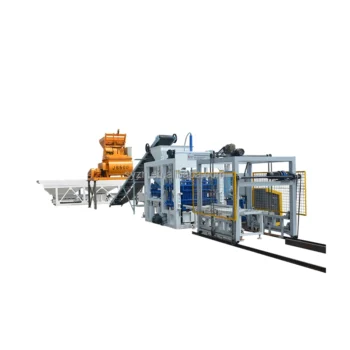
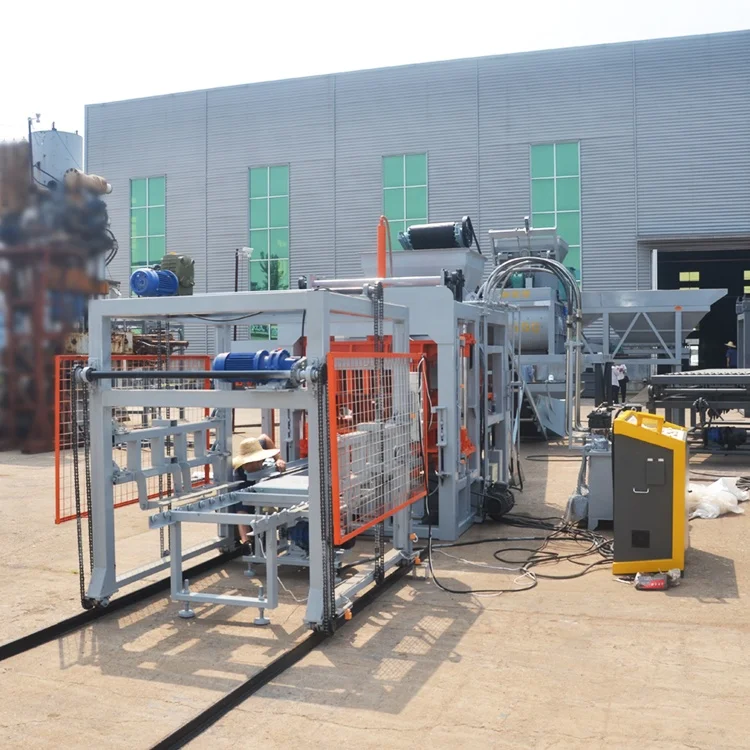
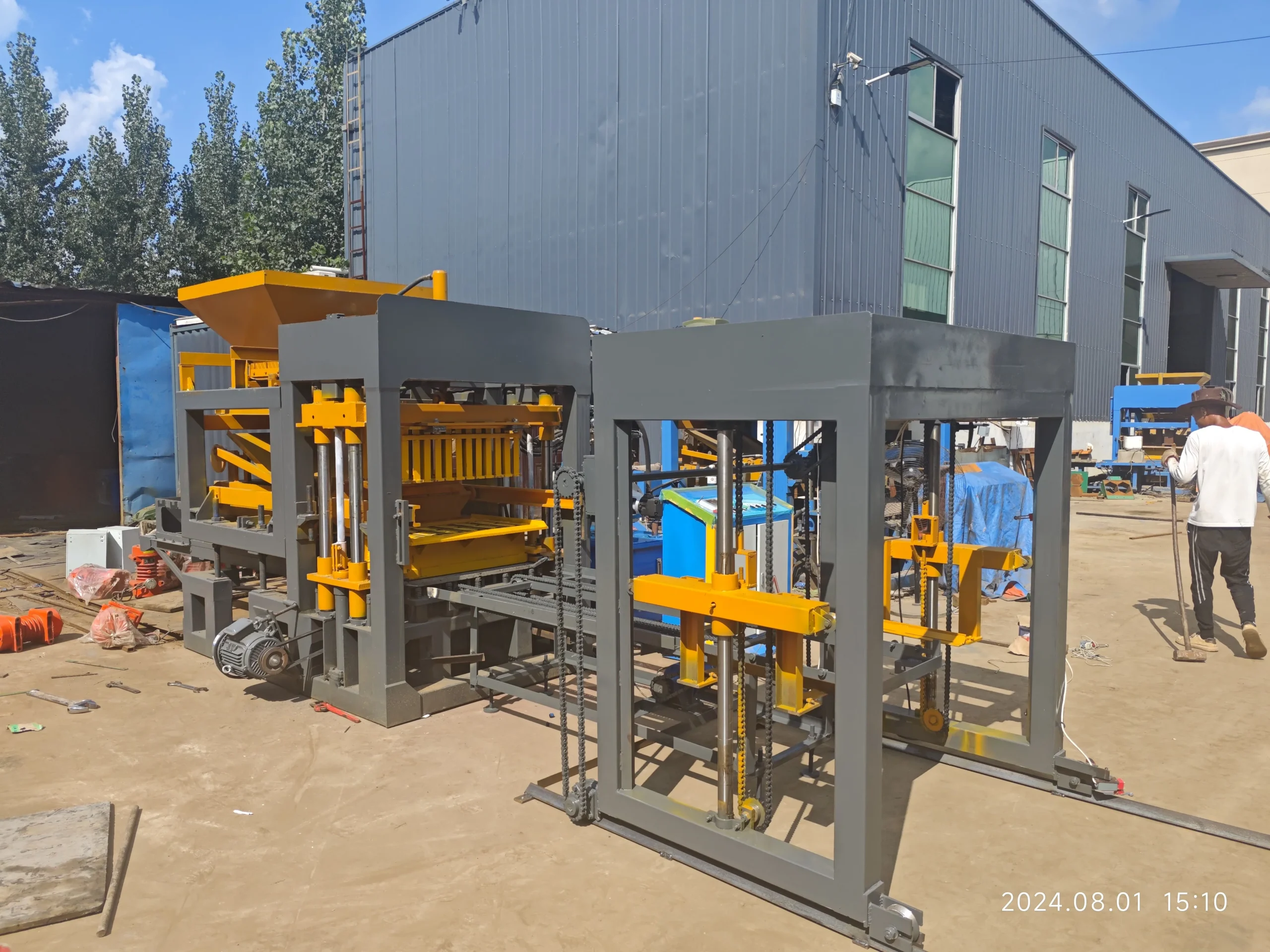
| Overall Dimensions | 3900 × 1600 × 2300 mm |
| Molding Cycle | 15–25 s (basis not stated in source — confirm block format, material and thickness) |
| Vibration Force | 40–50 kN |
| Rated Power | 24 kW (verify rated vs. peak with manufacturer) |
| Mixer Model | JQ350 |
| Pallet Size | 850 × 550 × 25 mm |
| Net Weight | 3 T (verify against manufacturer catalog) |
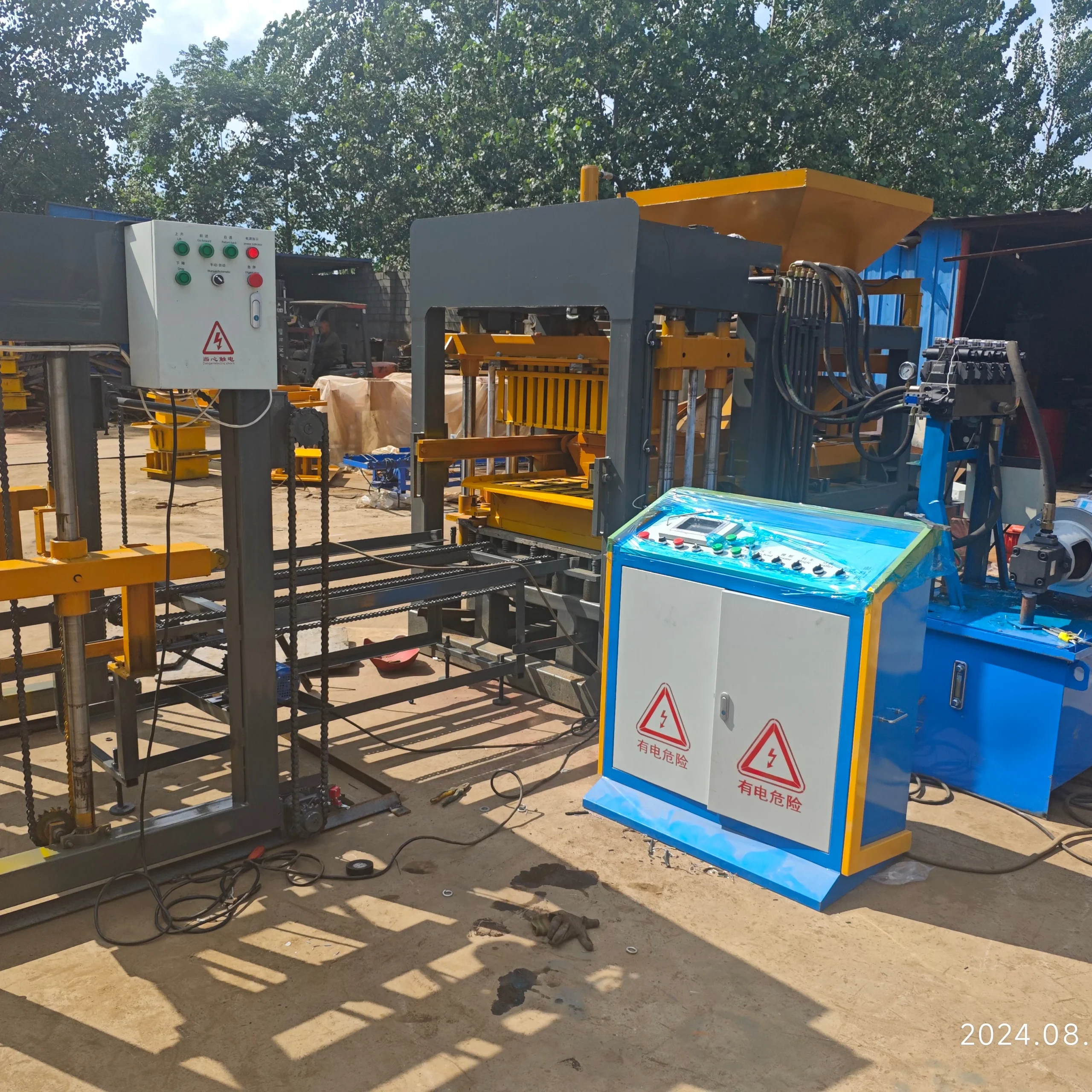
| Hydraulic Station | Equipped (pressure rating in MPa to be confirmed) |
| Vibration Type | Bed mould vertical vibration + upper mould compression vibration |
| Automation Level | Semi-automatic (verify against manufacturer catalog) |
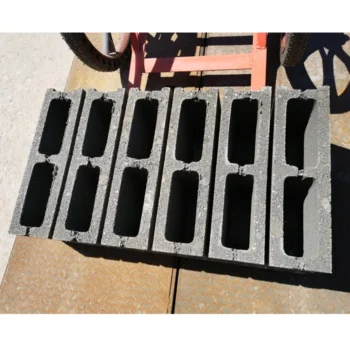
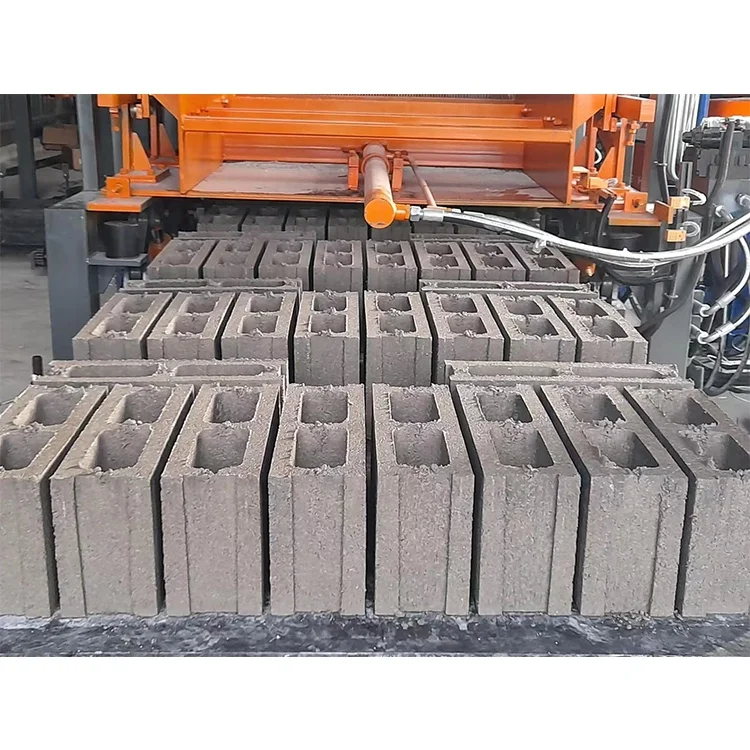
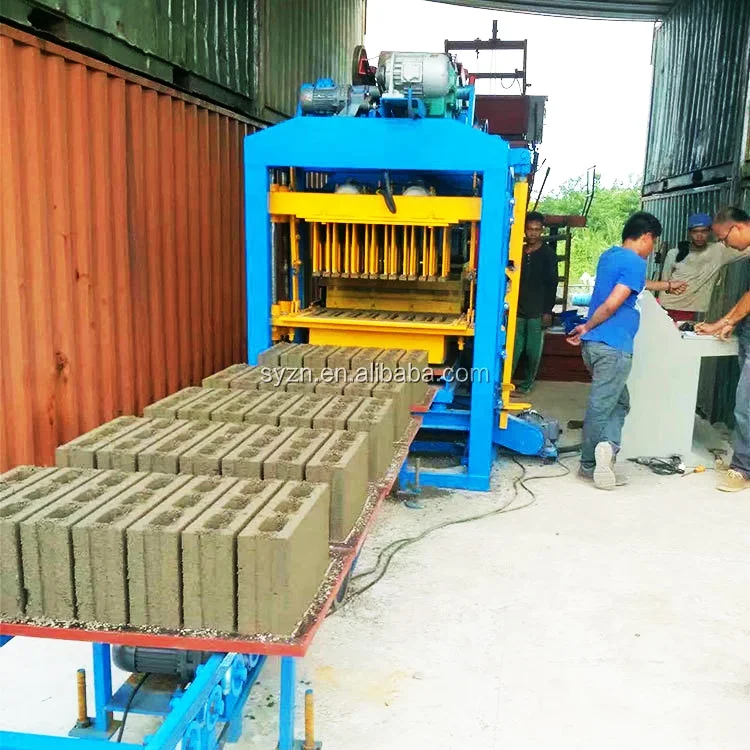
| Applicable Products | Hollow block, solid brick, paver, curbstone |
| Raw Materials | Crushed stone, sand, cement, dust, fly ash |
| Output Capacity (Hollow Block 400×200×200 mm) | 1200–1680 pcs/hr based on 4 pcs/mould and 15–20 s cycle (source also states 360 pcs/hr — verify with manufacturer) |
| Output Capacity (Hollow Block 400×150×200 mm) | 1800–2400 pcs/hr based on 15–20 s cycle |
| Output Capacity (Solid Brick 240×115×53 mm) | 3240 pcs/hr based on 15–20 s cycle |
Application Suitability
| Application | Material or Output |
|---|---|
| Hollow block production for masonry walls | Crushed stone, sand, cement, fly ash mixes targeting 400×200×200 mm or 400×150×200 mm formats |
| Solid brick manufacturing for load-bearing and infill | Sand, cement and stone dust blends forming 240×115×53 mm units |
| Paving block and curbstone production | High-strength mixes with fine aggregate for interlocking pavers and kerbstones |
| On-site block production for housing projects | Locally sourced aggregate with portable mixer feeding the press directly |
| Format expansion for existing concrete product plants | Additional moulds fitted to the same pallet size and vibration platform |
What the QT4-18 Block Making Machine Specifications Actually Mean for Your Daily Output
Capacity numbers without a named block format are marketing, not engineering.
I once watched a site manager stare at a fresh pallet of hollow blocks that crumbled at the edges, then look at the brochure promising a daily volume the machine clearly was not delivering. The brochure had quoted a cycle time but never said which block size or mix that cycle assumed. When you review the QT4-18 block making machine specifications, every output line above ties back to a specific format and cycle range. [NEED_CITE: how block format and mix design affect actual cycle time in hydraulic vibration presses] Without that link, you cannot build a credible production schedule or cost model.
Pallet Size, Curing Area and Forklift Compatibility
The 850 × 550 × 25 mm pallet defines how many blocks the QT4-18 presses per cycle and how your curing yard must be laid out. If your existing forklift tines are spaced for a different pallet footprint, you will spend the first week re-stacking output by hand. We confirm pallet material — bamboo, steel or PVC — against your local humidity and curing duration so the pallets survive thousands of cycles without warping or splintering into the block surface.
Mould Format Coverage and Changeover Reality
This QT4-18 block making machine accepts moulds for hollow blocks in two standard depths, solid bricks, pavers and kerbstones, all riding on the same pallet envelope. The vibration table and upper compression head must be re-tuned when you switch from a tall hollow block to a thin paver, because the amplitude that compacts a 200 mm wall will shatter a 60 mm paver face. [NEED_CITE: vibration force adjustment requirements when changing block format on hydraulic presses] Confirming the mould change procedure and tooling before shipment avoids a full shift lost to trial-and-error on your first format swap.
Vibration and Hydraulic Pressure as a Matched System
The bed mould vertical vibration combined with upper mould compression vibration gives the QT4-18 a two-axis compaction approach. The vibration settles the aggregate into the mould cavity, while the hydraulic compression head squeezes from above to close voids. If your local sand carries high clay content, the vibration force range of 40–50 kN may need to sit at the upper end to break through the sticky matrix; with clean crushed stone, the lower range prevents over-compaction that causes micro-cracking. Matching vibration and hydraulic pressure to your actual mix is the single biggest factor in block strength consistency.
Specification Interpretation for Site Conditions
The 24 kW rated power figure tells your electrician the minimum dedicated circuit capacity, but it does not tell you whether the motor and control panel are wired for your local voltage and frequency. A 50 Hz motor running on a 60 Hz supply will overspeed the hydraulic pump and alter the cycle timing you planned around. The JQ350 mixer paired with this press handles the volume needed for continuous feeding, but its discharge height must align with the press hopper — a mismatch means an extra conveyor or manual shovelling. [NEED_CITE: voltage and frequency confirmation checklist for exported concrete machinery] The overall footprint of 3900 × 1600 × 2300 mm fits inside a standard 20 GP container for nude packing, which keeps freight straightforward but means your foundation slab must be poured and cured before the machine arrives.
The Hidden Cost of Configuring for the Wrong Mix
When a machine is set up for a clean washed sand that you cannot source locally, every batch you run with your available river sand produces blocks that fail the compressive strength test. The vibration settings, moisture tolerance and cycle time all assumed a material you do not have. You end up buying imported aggregate at a premium or accepting a rejection rate that wipes out your margin. [NEED_CITE: impact of local aggregate properties on concrete block compressive strength]
Why Procure the QT4-18 Through This Channel
Block machinery is our single product focus, which means the press, mould, pallet and handling equipment are specified as one matched system rather than sourced from separate vendors. Every QT4-18 configuration we propose is set against your actual mix design, local aggregate sample and the block format your market buys. Mould design covers the formats you need, including custom drawings when your market demands a non-standard size. You can start with the semi-automatic level and add automatic pallet feeding or stacking later, keeping your initial investment aligned with your current output. Installation support includes operator training on your site, so the crew running the machine on day one is the same crew that watched it commissioned.
Documentation & Verification
- Line layout drawing showing the QT4-18 footprint, pallet flow path and curing rack positions
- Capacity calculation sheet naming the exact block format and cycle time behind each output figure
- Mould drawing and format list confirming every cavity layout available for your pallet size
- Pallet specification covering material, thickness and quantity matched to your curing duration
- Voltage, frequency and PLC display language confirmation signed before production begins
- Factory test record showing the QT4-18 running your chosen block format before crating
Installation, Commissioning & Support
- Foundation slab poured to level tolerance under the 3900 × 1600 mm footprint before the QT4-18 arrives
- Dedicated circuit matching the confirmed voltage and frequency feeding the 24 kW rated power draw
- Nude packing in 20 GP container requiring on-site reassembly of hopper, mixer and hydraulic lines
- First-cycle commissioning with your local aggregate to verify block density and adjust vibration force
- Operator training covering mould change procedure, daily lubrication points and hydraulic fluid inspection
- Wear parts list identifying the vibration springs, hydraulic seals and mould liner plates to stock locally
Before You Send the Inquiry
Tell us the block format your market buys most, the daily volume you need to hit, and the aggregate you can actually source within hauling distance of your site. Share your existing voltage and frequency so the QT4-18 block making machine specifications on the nameplate match your grid the day it powers on.
Frequently Asked Questions
Q: How is output capacity calculated per block format on the QT4-18?
A: Each capacity line pairs a specific block size, mould cavity count and cycle time range. A 400×200×200 mm hollow block with 4 cavities and a 15–20 s cycle yields a different hourly volume than a solid brick mould with more cavities on the same pallet. We state the format behind every figure so you can compare machines on equal ground.
Q: How do I match the pallet size to my curing area and forklift?
A: The 850 × 550 mm pallet must fit your forklift tine spacing and stack within your curing rack dimensions. We confirm your existing equipment before recommending pallet material and quantity, so wet blocks move from press to curing without manual re-handling or pallet damage.
Q: What affects realistic mould change time on this machine?
A: Mould change involves unbolting the current mould, lowering in the new one, and re-adjusting vibration amplitude and compression head travel for the new block height. Having the correct spanners, alignment pins and a practiced operator reduces this from a full shift to a manageable window between production runs.
Q: How does local aggregate affect block strength on the QT4-18?
A: High clay content in river sand absorbs water differently than crushed stone, changing the mix moisture at the press. We ask for your aggregate sample before finalizing vibration force and cycle settings, so the machine compacts your actual material to the target density rather than a laboratory assumption.
Q: Is the QT4-18 semi-automatic or fully automatic?
A: Source documents carry both descriptions. We confirm the automation level — whether pallet feeding, stacking and cubing are manual, semi-automatic or fully automatic — in the signed specification before production, so there is no surprise at commissioning.