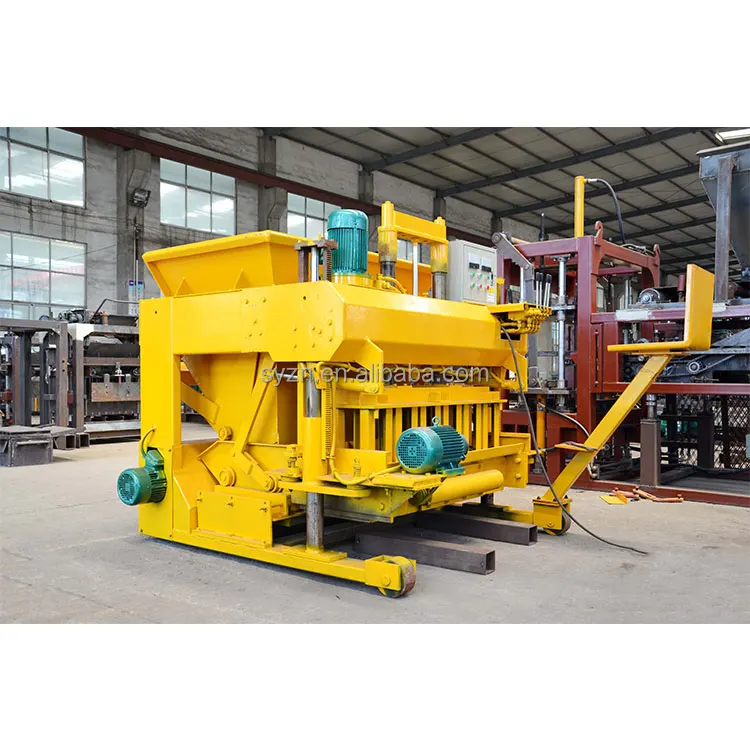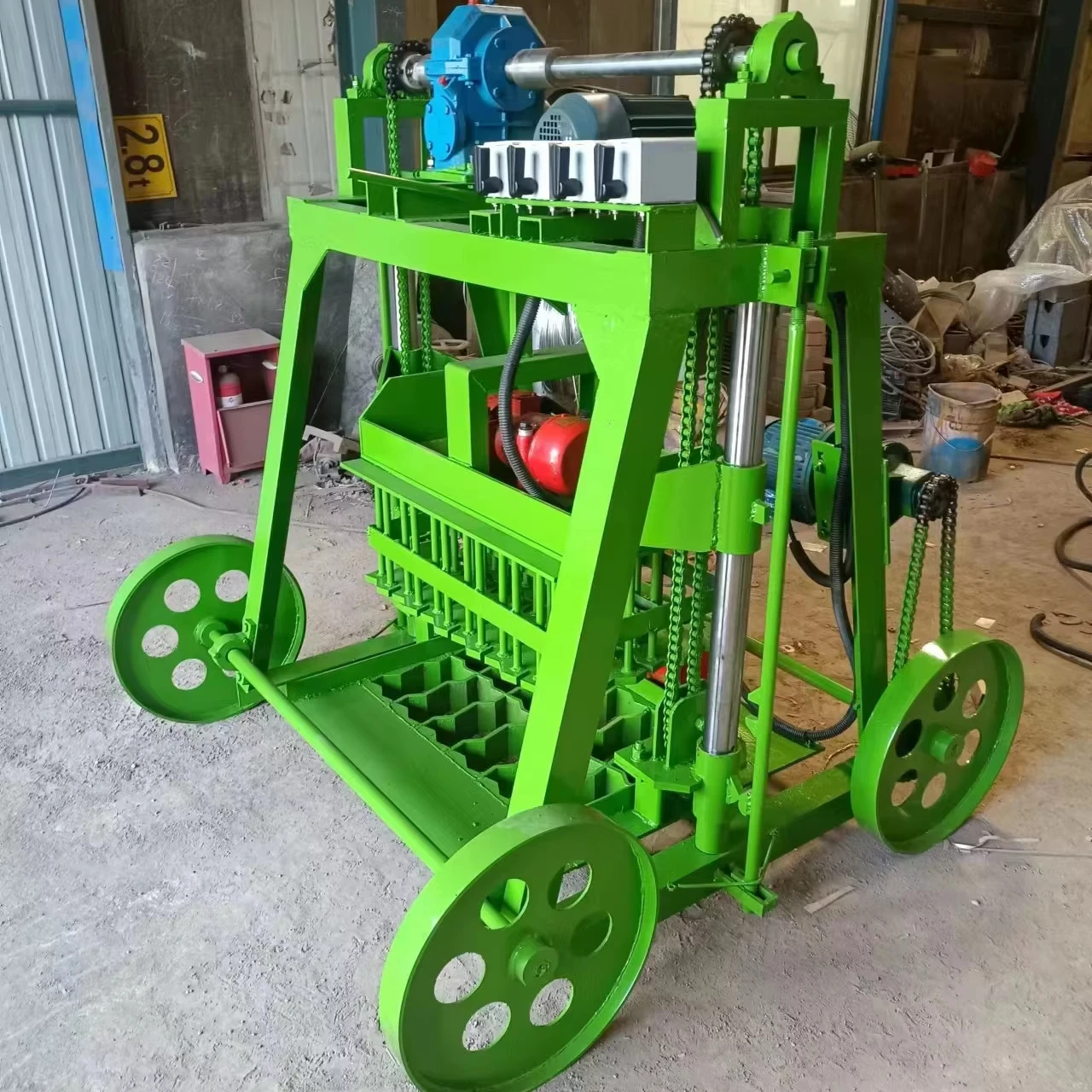
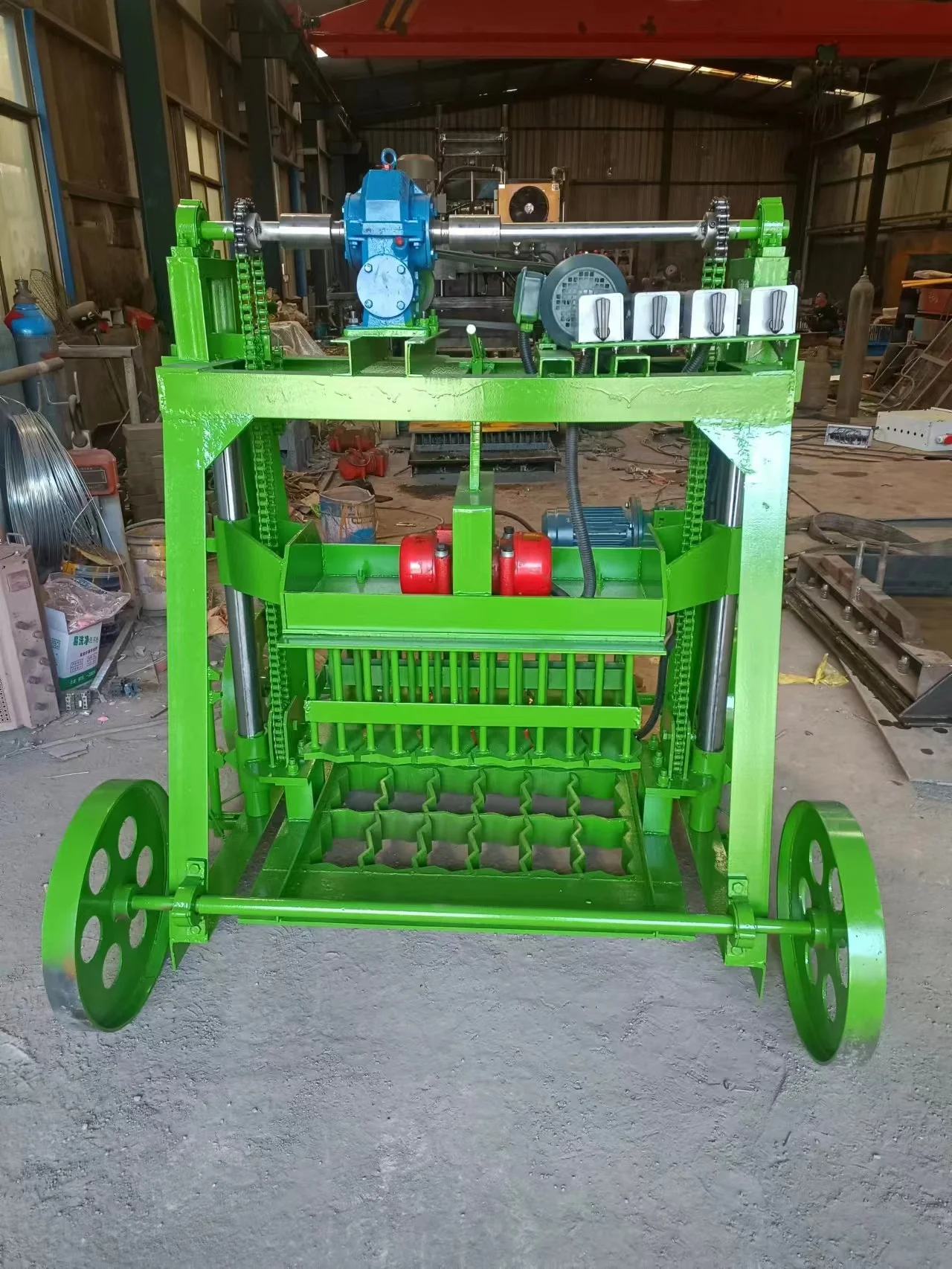

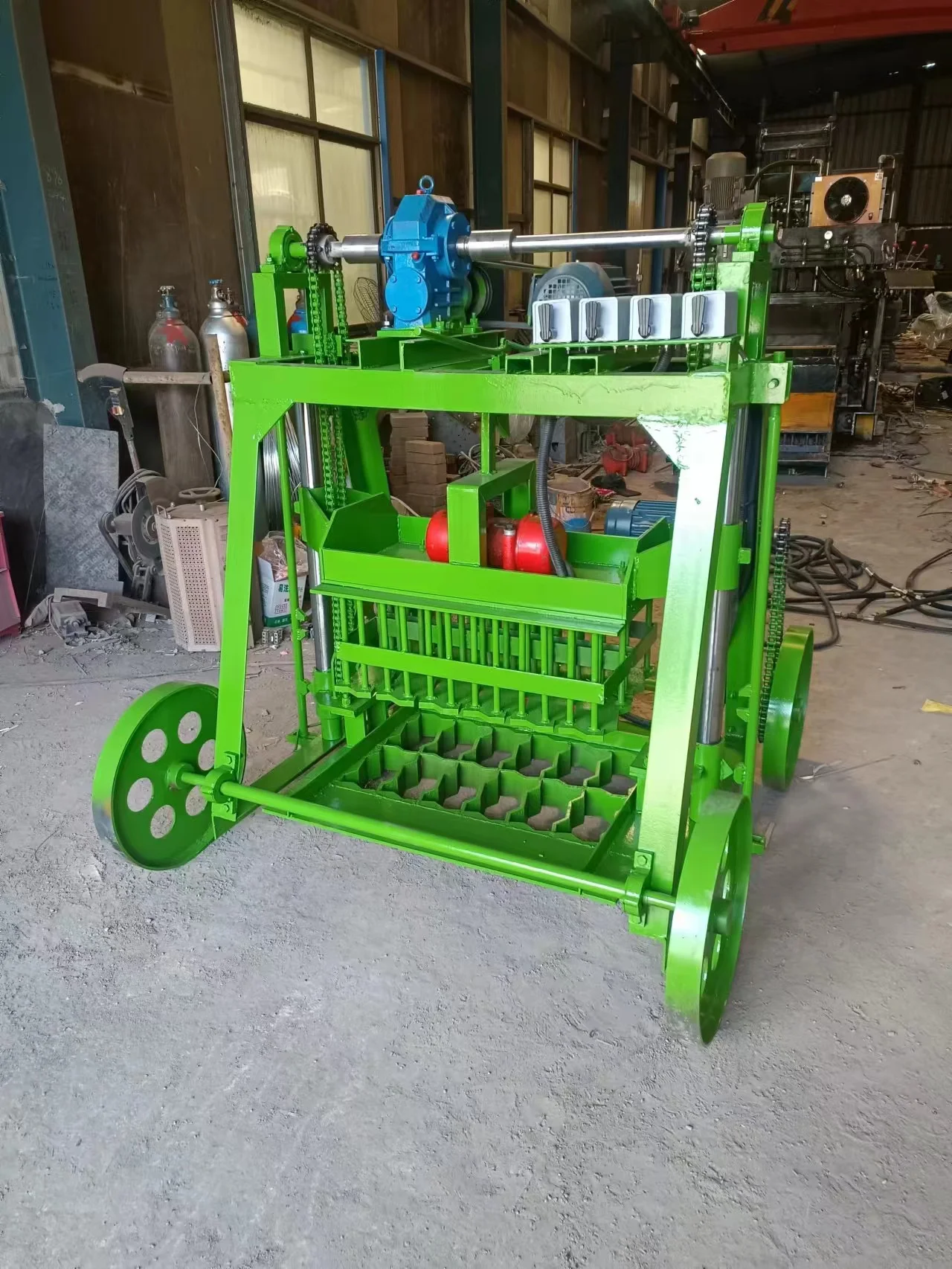
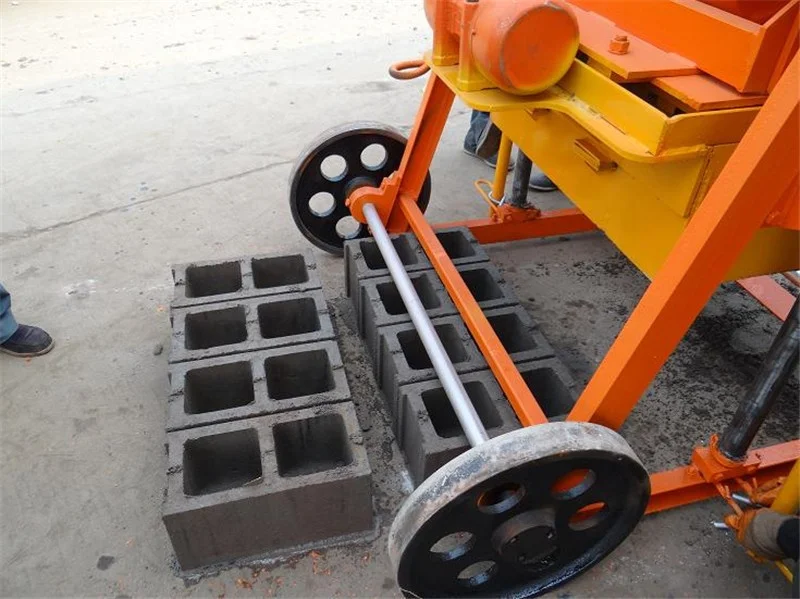

Description
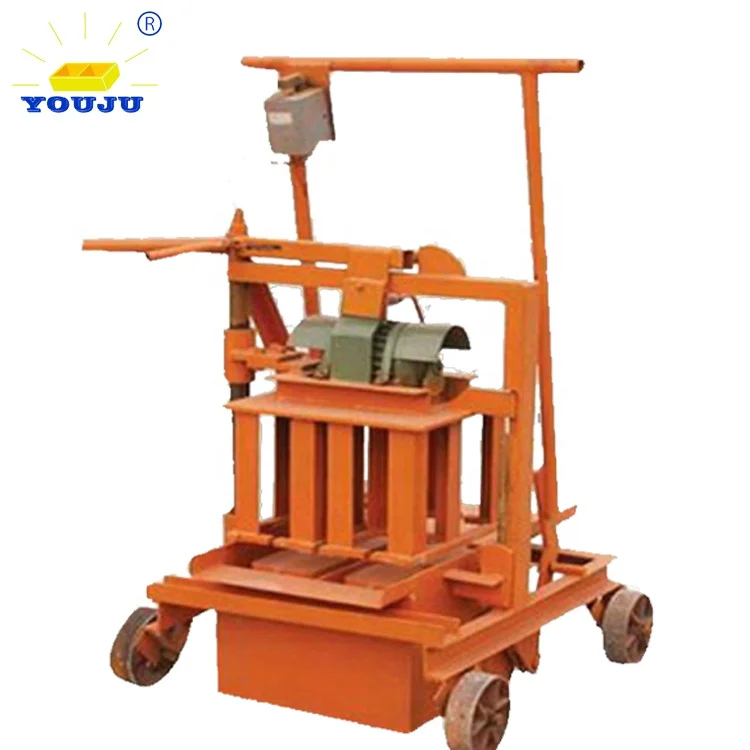
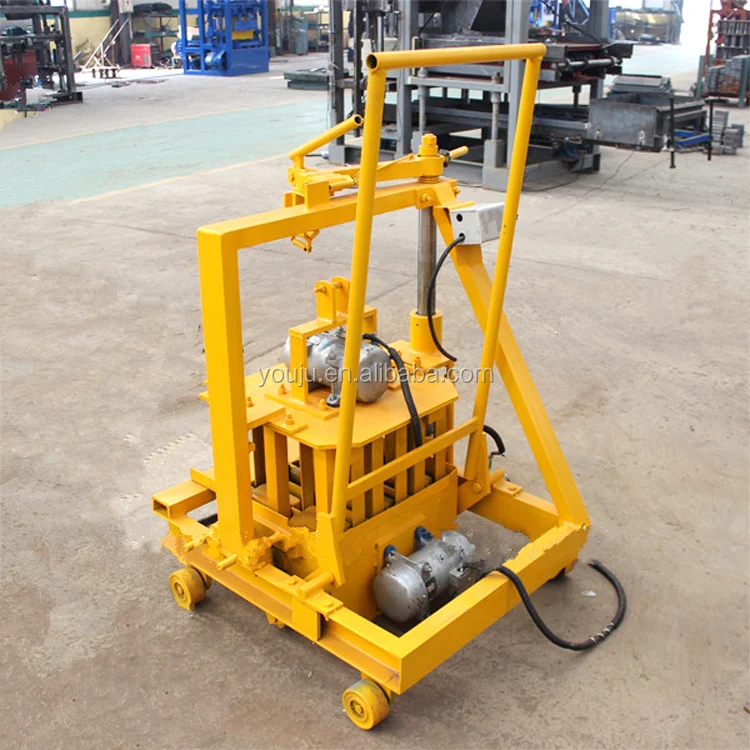
Honest Output by Format — the QMJ4-45 mobile egg laying block machine is configured against your actual hollow block size and local aggregate, not a catalogue default.
Technical Specifications
| Parameter | Value |
|---|---|
| Model | QMJ4-45 |
| Product Type | Mobile Egg Laying Block Making Machine |
| Molding Capacity | 4 pcs/mould (basis: 400×200×200mm hollow block) |
| Daily Output — 400×200×200mm Hollow Block | 3000 pcs/day (8-hour shift) |
| Daily Output — 400×150×200mm Hollow Block | 3500 pcs/day (8-hour shift) |
| Daily Output — 400×120×200mm Hollow Block | 4500 pcs/day (8-hour shift) |
| Vibration Frequency | 2400 r/min |
| Vibration Method | Mould vibration (twice-vibration molding core) |
| Molding Cycle | 40–45 s per cycle |
| Demold Method | Manual |
| Turning Method | Manual |
| Total Power | 6 kW |
| Power Source | Diesel or petrol engine |
| Pallet Consumption | None required (egg-laying operation) |
| Automation Level | Manual / semi-manual |
| Mould Format Options | 400×200×200, 400×150×200, 400×120×200 hollow block |
| Assembly State | Mobile, on-site production without fixed plant |
Application Suitability
| Application | Material or Output |
|---|---|
| On-site hollow block production at building sites | Crushed stone, river sand, cement mixes laid directly on ground |
| First block plant with low initial investment | Local aggregate and cement with manual batching |
| Remote or off-grid construction projects | Diesel or petrol engine operation without grid electricity |
| Contractor-produced blocks for housing projects | Hollow blocks in 200mm, 150mm, and 120mm wall thicknesses |
What "3000 Blocks per Day" Actually Means on a Mobile Egg Laying Machine
Every output figure here names the block format it assumes — no single inflated number.
Buyers of mobile block machines often receive a capacity quote stated as cycles per hour with no mention of which hollow block size was used to calculate it. The QMJ4-45 mobile egg laying block machine specifications break output by format: 3000 pieces per day on 400×200×200mm blocks, rising to 4500 on the narrower 400×120×200mm format. When a supplier quotes only the highest figure, a buyer producing the larger block will find real daily volume falls noticeably short. I have watched a contractor in West Africa plan a housing timeline around a single output number, only to discover on arrival that the figure assumed the thinnest block in the mould range — and his project required the widest. [NEED_CITE: capacity calculation methods for mobile block machines]
Mould Vibration and Block Density at Every Format
The twice-vibration molding core in this mobile egg laying block machine replaces the single-vibration setup found on earlier egg-laying designs. Two vibration phases compact the mix in stages, which improves density uniformity across the block cross-section. For hollow blocks — where wall thickness varies between 120mm and 200mm depending on the mould — consistent compaction matters because thin walls are more prone to cracking under single-vibration molding. The 2400 r/min vibration frequency is set to match the mass of a four-cavity mould loaded with standard aggregate.
Diesel Power and What It Changes on Site
Running the QMJ4-45 from a diesel or petrol engine instead of grid electricity opens up production at sites where no reliable power supply exists. This matters for remote housing projects, road-side block yards, and contractor sites in regions where grid outages are frequent. The 6 kW total power demand is within the range of a small single-cylinder diesel engine. The trade-off is that engine maintenance — fuel filters, oil changes, belt tension — becomes part of the daily routine, and fuel cost per block must be factored into the production calculation from day one. [NEED_CITE: off-grid block production with diesel-powered equipment]
Reading the Specs That Decide Block Quality
The molding cycle of 40–45 seconds is the time from one block release to the next, and it sets the rhythm your entire site will follow. A shorter cycle sounds better, but on a manual-turn, manual-demold machine the operator’s speed between cycles determines real throughput more than the vibration timer does. The vibration frequency of 2400 r/min is tuned for crushed stone and river sand mixes; if your local aggregate is laterite or volcanic scoria, the frequency may need adjustment to avoid surface cracking. The 4 pcs/mould figure means each cycle produces four blocks simultaneously — so a single incomplete fill wastes a quarter of that cycle’s output. Mould format options span three wall thicknesses, letting a buyer match the hollow block that local builders actually purchase rather than forcing a single size.
The Cost of Specifying the Wrong Mould or Power Source
Choosing a mould format that does not match local building practice means producing blocks that sit in the yard unsold. I have seen mobile egg laying machines arrive with only 200mm moulds in a market where 150mm hollow blocks dominate residential walls — the buyer then pays for a second mould and waits weeks for delivery. Similarly, specifying a petrol engine in a region where diesel is half the price per litre doubles fuel cost over the machine’s working life. These are not errors the machine can correct; they are decisions locked in at order time. [NEED_CITE: mould format selection and local block market demand]
Why Source This Mobile Egg Laying Block Machine Here
Block machinery is our single focus, so the QMJ4-45 arrives as a matched system — machine, mould, and engine specified together rather than assembled from separate suppliers. Configuration is set against your local aggregate and the hollow block format your market sells, not a catalogue default. Mould design covers the three standard formats and can be extended to custom drawings if your buyers need a non-standard size. The manual and semi-manual automation level keeps initial investment low, with an upgrade path available if production grows. Every machine ships with a factory test record run on the block format you confirm at order.
Documentation & Verification
- Line layout stating daily output per hollow block format confirmed at order
- Mould drawing and format list matching your local block dimensions
- Diesel or petrol engine specification with fuel type and maintenance schedule
- Factory test record on your chosen hollow block size before dispatch
- Operation and maintenance manual covering mould change and vibration adjustment
- Voltage and power source confirmation document for engine type selected
Installation, Commissioning & Support
- Level compacted ground required; no fixed foundation or concrete slab needed for the QMJ4-45
- Diesel engine pre-filled with recommended oil grade and run-in procedure included
- Machine arrives assembled; operator positions and levels on site within one shift
- First production run supervised remotely or on-site with vibration and cycle parameters set per your mix
- Mould change procedure trained for all three hollow block formats
- Wear parts list with mould liner and vibration spring replacement intervals provided
What to Share Before Requesting a Quote
To size the QMJ4-45 mobile egg laying block machine correctly, tell us which hollow block format your market buys most, the local aggregate type available near your site, and whether diesel or petrol fuel is easier to source. If you are producing at an existing yard, describe the ground surface and curing area layout so we can confirm the egg-laying workflow will fit. Share your target daily output per format so the capacity calculation matches your actual production plan.
Frequently Asked Questions
Q: How is daily output calculated, and which hollow block format does each figure assume?
A: Output is calculated from the 40–45 second molding cycle multiplied across an 8-hour shift, with allowances for manual demold and repositioning. The QMJ4-45 produces 3000 pcs/day on 400×200×200mm blocks, 3500 on 400×150×200mm, and 4500 on 400×120×200mm. Every figure names its format so you can match it to your market.
Q: Which mould formats are available, and can custom moulds be designed?
A: Standard moulds cover 400×200×200mm, 400×150×200mm, and 400×120×200mm hollow blocks. Custom moulds can be designed to buyer drawings for non-standard sizes or solid block formats. Mould change is manual and typically completed within one shift once the operator is trained on the procedure.
Q: What local aggregate does the QMJ4-45 need for consistent block strength?
A: The machine handles crushed stone, river sand, and cement mixes typical for hollow block production. If your local aggregate is laterite, volcanic scoria, or high-clay soil, share a sample analysis so vibration frequency and mix ratio can be adjusted before dispatch. This prevents cracking and low-strength output on arrival.
Q: What power source options exist, and how does diesel affect maintenance?
A: The QMJ4-45 runs on either a diesel or petrol engine at 6 kW total power. Diesel suits regions where fuel cost is lower and engine service networks are established. Daily maintenance includes checking fuel filters, oil level, and drive belt tension — tasks that add a short routine before each production shift begins.