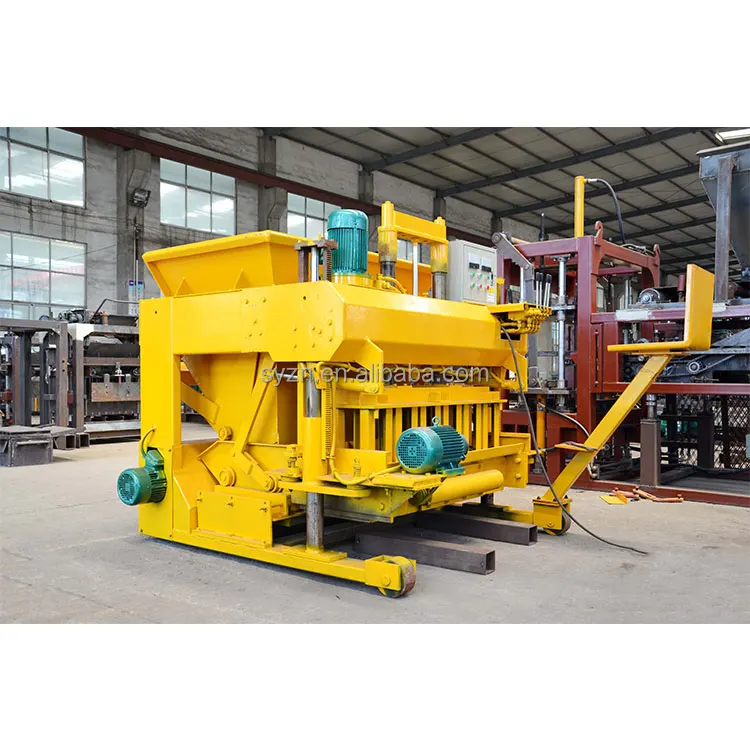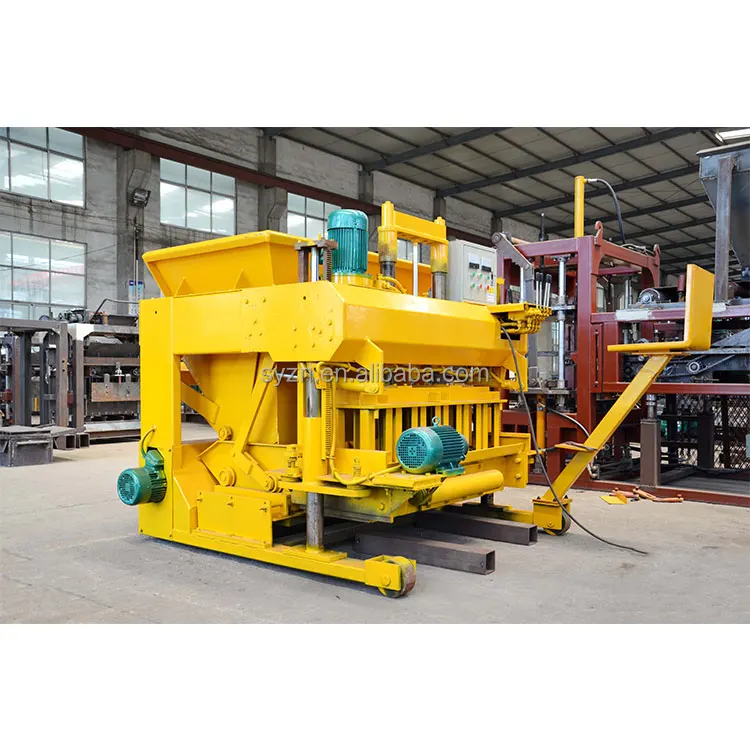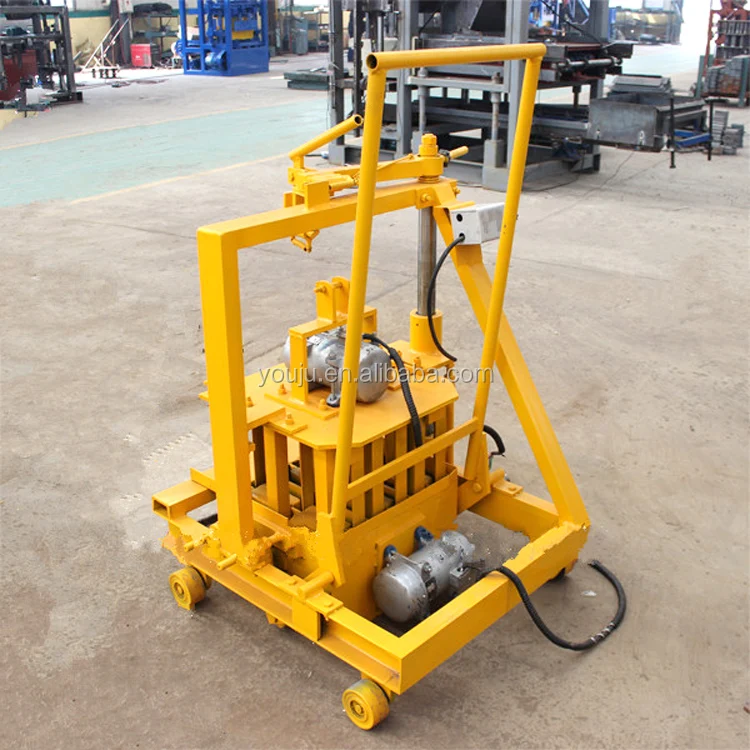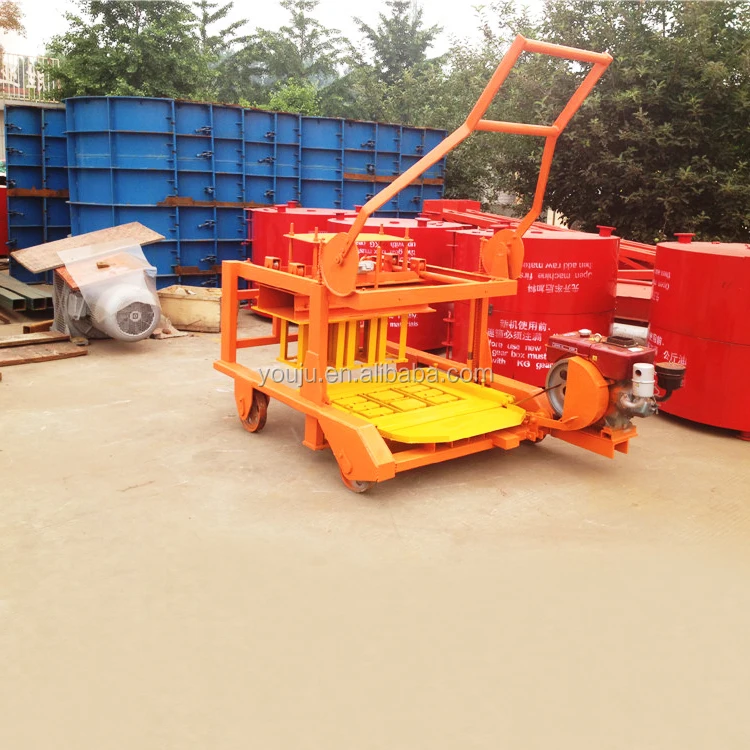


Description
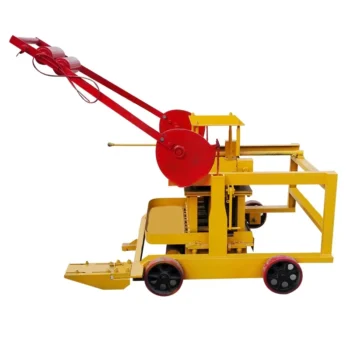
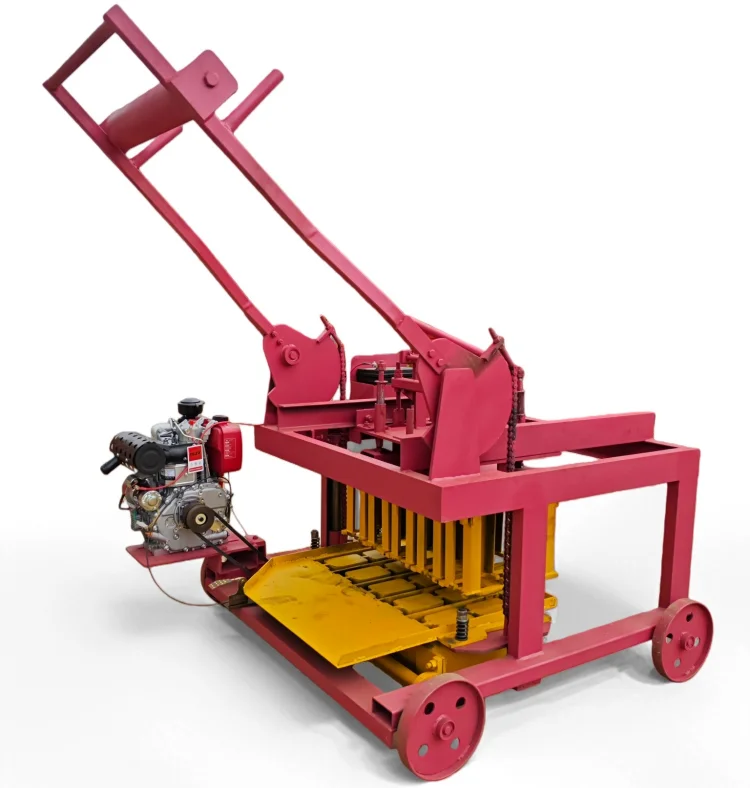
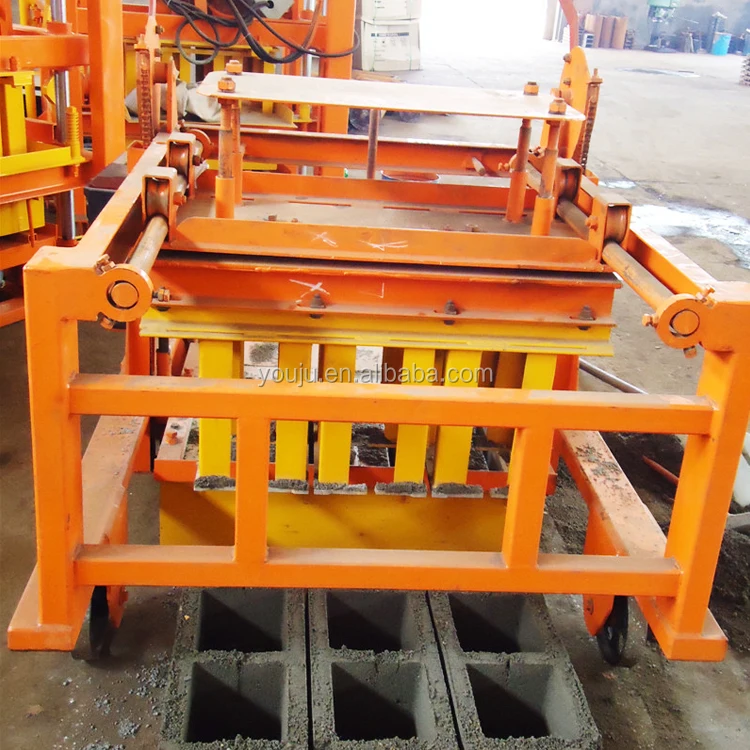
Specified to your block format — the QMR4-45 mobile egg laying block machine is configured around the hollow block dimensions your market actually trades, not a generic cycle-time claim.
Technical Specifications
| Parameter | Value |
|---|---|
| Product Type | Mobile Egg Laying Block Making Machine |
| Model | QMR4-45 |
| Overall Dimensions (L×W×H) | 2420×1320×1650 mm |
| Net Weight | 810 kg |
| Rated Power | 6 kW |
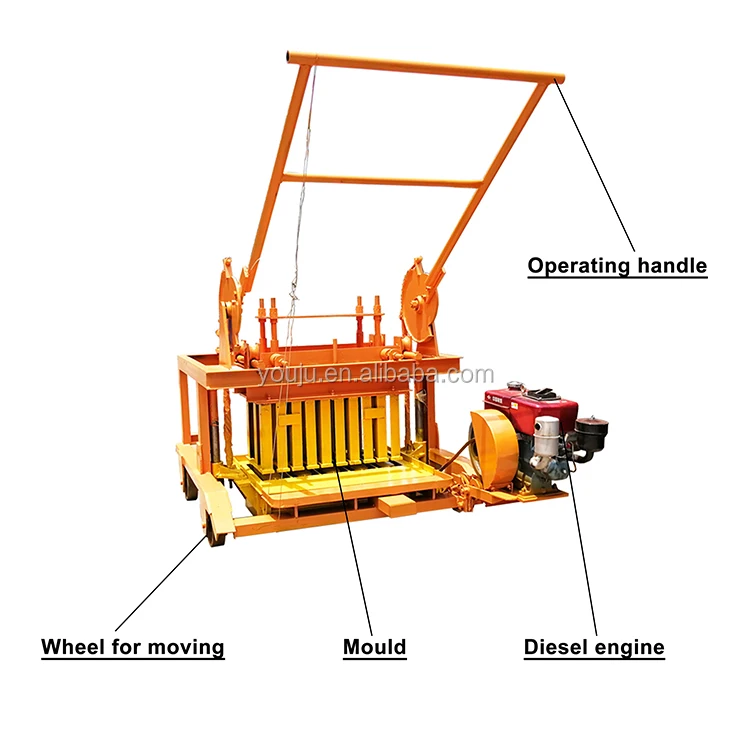
| Diesel Engine Option | 6 kW or 6–8 HP |
| Voltage & Frequency | 220V / 380V or local standard (Hz to confirm) |
| Moulding Cycle | 40–45 s per mould |
| Pallet Requirement | None — egg-laying on ground |
| Mould Format | 400×200×200 mm (4 cavities) / 400×150×200 mm (5 cavities) / 400×120×200 mm (6 cavities) |
| Output Capacity | 3,000 pcs/day at 400×200×200 mm / 3,500 pcs/day at 400×150×200 mm / 4,500 pcs/day at 400×120×200 mm (8-hour shift) |
| Automation Level | Manual / semi-automatic, diesel-driven |
| Assembly State | Fully assembled mobile unit |
| Warranty | One year for the whole machine |
| Certification | CE |
Application Suitability
| Application | Material or Output |
|---|---|
| On-site hollow block production for housing projects | Crushed stone, sand, cement and water mix |
| Off-grid construction sites without stable power | Fly ash, sand and cement blends |
| Small-scale block plants entering the market | Local aggregate with cement binder |
| Contractors producing blocks at remote development sites | Gravel, quarry dust and cement |
What "3,000 Blocks a Day" Actually Means on the QMR4-45
Every output figure here is tied to a specific hollow block format and an 8-hour shift — no single headline number hides the assumption.
When a mobile block machine specification sheet quotes daily capacity without naming the block size behind it, buyers often discover after delivery that their real output falls far short. I have watched contractors order a machine rated at a round number, only to find their 150 mm wall blocks run slower than the 200 mm format the factory tested. The QMR4-45 egg laying block machine states capacity per mould cavity count and cycle time so your daily plan starts from a verifiable baseline. [NEED_CITE: block format assumptions in capacity quotations]
Honest Capacity Breakdown by Hollow Block Format
The QMR4-45 mobile block machine specifications list three hollow block heights, each with a different cavity count. A 400×200×200 mm mould produces four blocks per cycle, yielding 3,000 pieces across an 8-hour shift. Switch to a 400×150×200 mm mould and five cavities push output to 3,500 pieces in the same window. The narrowest format — 400×120×200 mm — fills six cavities per cycle and reaches 4,500 pieces per day. These numbers assume a consistent 40–45 s moulding cycle and continuous material feed; any pause in the mix supply or operator rotation will reduce them.
Diesel-Driven Independence from the Grid
A diesel engine rated at 6–8 HP powers the hydraulic and vibration systems, so the QMR4-45 does not depend on site electricity for forming pressure. This matters on rural housing developments where grid connections are unstable or absent entirely. The electric start circuit still requires voltage and frequency confirmation before shipment — a 220V/50Hz market differs from a 380V/60Hz one — and getting this wrong delays first production. [NEED_CITE: voltage and frequency standards by export market] The diesel option keeps the main forming cycle running regardless of what the local power line does that day.
Reading the QMR4-45 mobile block machine specifications for Production Reality
The moulding cycle of 40–45 s governs how fast each block leaves the machine, and it stays consistent across formats because the hydraulic stroke and vibration duration do not change with cavity count. Net weight at 810 kg is heavy enough to resist walking during vibration yet light enough to move around a site with a loader or forklift. The pallet-free egg-laying design removes the cost and logistics of buying, storing, and rotating hundreds of curing pallets — blocks are placed directly on a level ground surface. Mould change between formats requires swapping the mould box and adjusting the feed shoe; the time this takes is not stated in the source and should be confirmed before planning multi-format production days.
The Cost of Skipping the Mix-Design Conversation
I once supplied a QMR4-45 to an African contractor who ordered a diesel unit for a site with no grid power. The machine arrived on schedule, but the local fly ash was too coarse for the vibration force the unit delivers. The hollow blocks cracked when handled after curing. We sent a finer-mesh screen recommendation and adjusted the water-to-cement ratio, which solved it — but the first two weeks of production were wasted. Matching the machine’s hydraulic pressure and vibration characteristics to your actual aggregate gradation and cement content before shipment avoids this kind of costly restart. [NEED_CITE: aggregate gradation effects on block strength]
Why Buyers Return to This Configuration
Block machinery is our single focus, so the QMR4-45 is specified as a matched system — machine, mould and ground surface preparation — rather than assembled from separate suppliers. We configure the machine against your local aggregate and target block format, not a catalogue default. Mould design covers the hollow block dimensions your market actually sells, including custom drawings if your standard differs from the three listed formats. Automation level is selectable; a buyer can begin with manual feeding and add a mixer or conveyor later without replacing the press. Installation support includes on-site commissioning and operator training so the first week of production is supervised.
Documentation & Verification
- Capacity calculation document naming the exact hollow block format, cavity count and shift hours behind each output figure
- Mould drawing and format list confirming wall thickness and cavity dimensions for your market standard
- Voltage and frequency confirmation sheet for the electric start circuit matched to your local supply
- Factory test record on your specified mix design before the machine leaves the workshop
- Wear parts and mould availability list with lead times for the first replacement order
Installation, Commissioning & Support
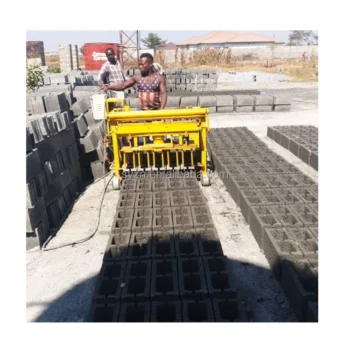
- Level ground surface required for egg-laying; no concrete foundation needed for the 810 kg mobile unit
- Diesel engine pre-filled and tested; electric start circuit wired to your confirmed 220V or 380V supply
- Machine arrives fully assembled — no re-assembly of hydraulic lines or vibration motor on site
- First-day production supervised by a technician who calibrates cycle time to your mix moisture content
- Operator training covers mould change procedure, daily greasing points and belt tension checks
- Mould cavity wear assessment at first month with replacement guidance based on your aggregate abrasiveness
What to Share Before Requesting a Quotation
Send us the hollow block dimensions your market trades most, the daily volume you need to hit, and a sample or lab report of your local aggregate and cement. Include your site voltage and frequency so the electric start circuit is wired correctly before dispatch. If you plan to run multiple formats, list them in priority order so we can size the mould package accordingly.
Frequently Asked Questions
Q: How is the daily output of 3,000, 3,500 or 4,500 pieces calculated?
A: Each figure assumes a specific hollow block format — 400×200×200, 400×150×200 or 400×120×200 mm — running in an 8-hour shift at a 40–45 s moulding cycle. The cavity count per mould determines the per-cycle output. Any interruption in material feed or operator rotation will reduce these numbers proportionally.
Q: Can the QMR4-45 produce solid blocks or paving blocks?
A: The standard mould range covers three hollow block formats only. Solid block or paving block production requires a different mould box and possibly adjusted vibration settings. Share your target format and we will confirm whether the existing hydraulic and vibration configuration can accommodate it before you commit.
Q: What mix design does the QMR4-45 work with?
A: The machine’s vibration and hydraulic pressure work with crushed stone, sand, fly ash or quarry dust blended with cement. However, aggregate gradation and cement content affect block density and strength. We ask for your local material data or a sample so we can verify compatibility before shipment.
Q: What voltage and control language will be confirmed before shipment?
A: The electric start circuit voltage and frequency must match your country’s supply — we confirm 220V or 380V and the correct Hz before wiring. Control labels and any documentation language are also agreed at order stage so operators can read instructions on day one without translation delays.