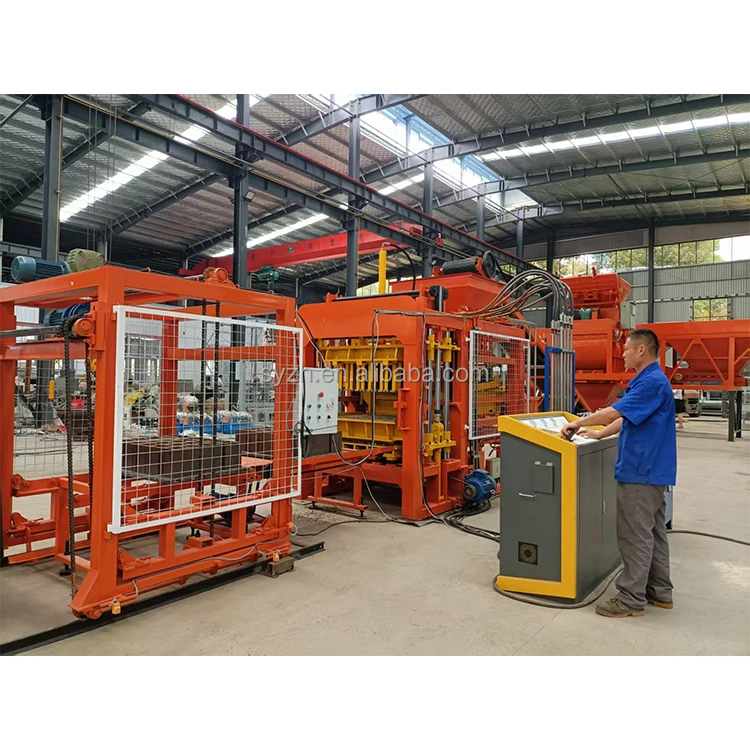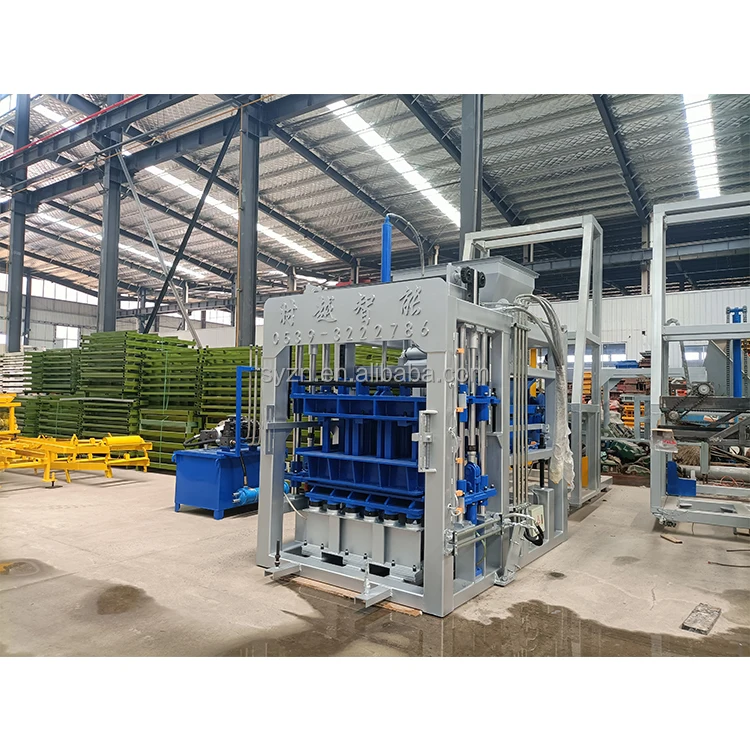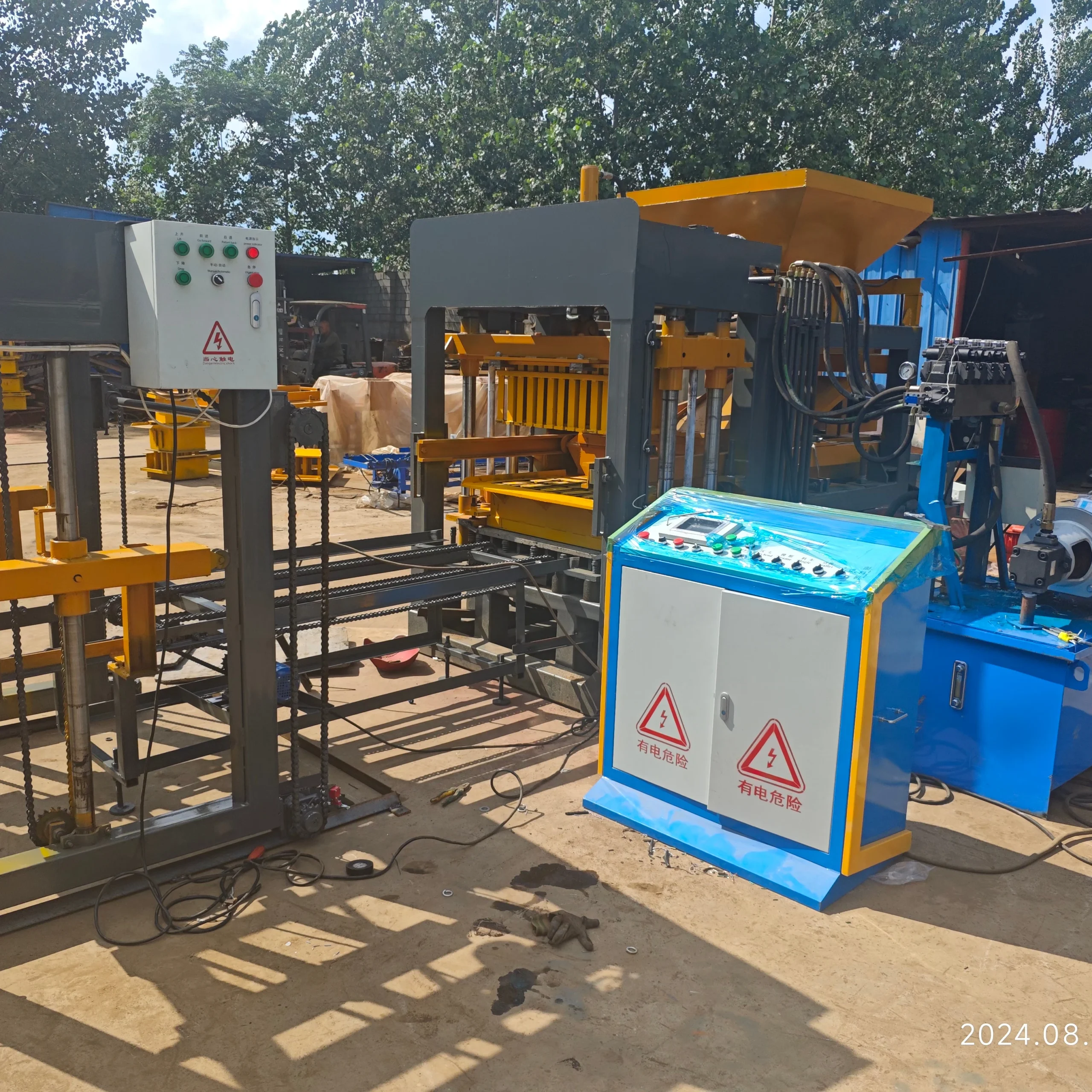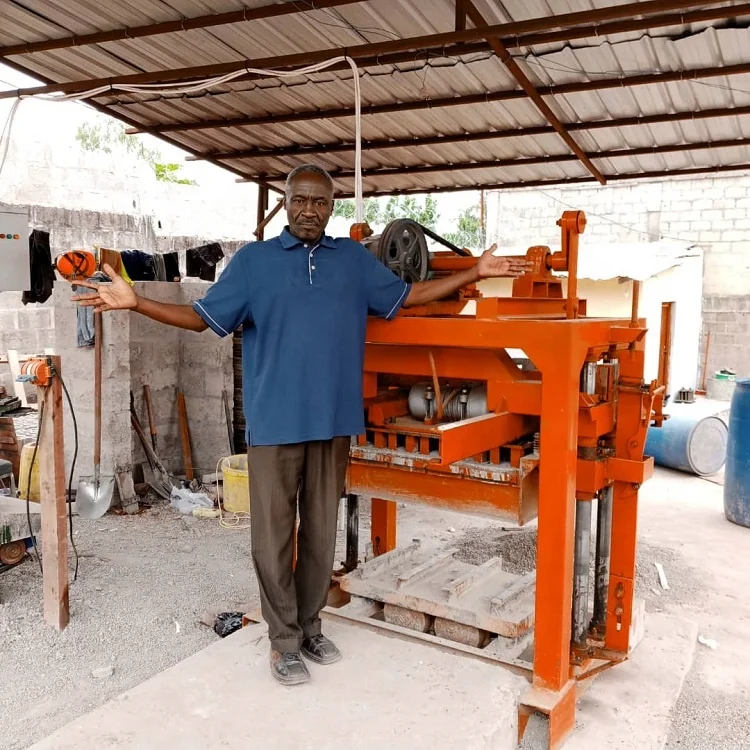
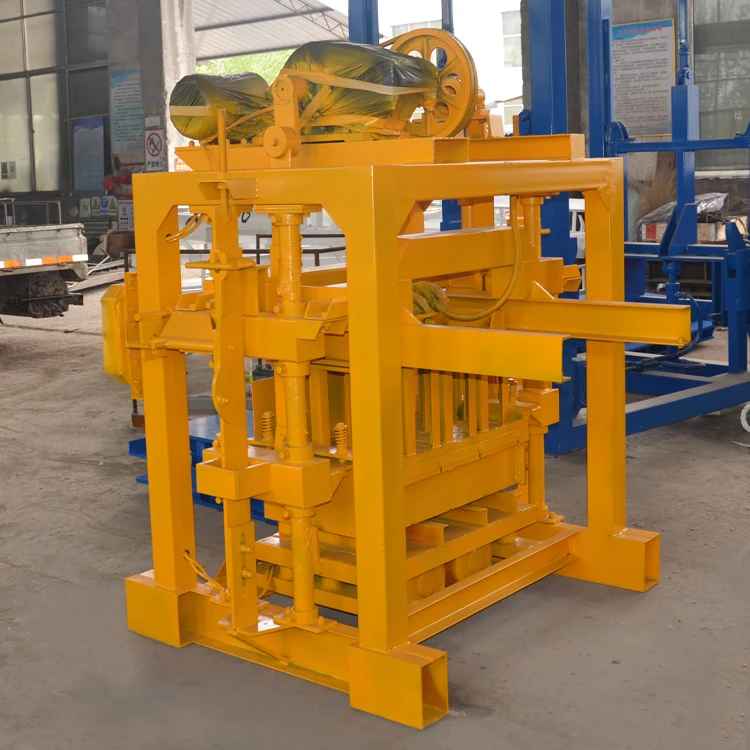


Description
Mould-Format-Specific Capacity — output is calculated per block size and mould cavity count, not a single peak figure that ignores what you actually produce.
Technical Specifications
| Parameter | Value |
|---|---|
| Model | QTJ4-40 |
| Product Type | Small Manual Cement Block Making Machine |
| Machine Power | 9.5 kW |
| Molding Cycle | 40 s |
| Theoretical Output (400×200×200 mm hollow block, 4 pcs/mould) | 360 pcs/h, 2800 pcs/day (basis not stated in source — confirm block format / material / thickness) |
| Theoretical Output (400×150×200 mm hollow block, 5 pcs/mould) | 450 pcs/h, 3600 pcs/day (basis not stated in source) |
| Theoretical Output (225×112.5×60 mm solid brick, 9 pcs/mould) | 800 pcs/h, 6400 pcs/day (basis not stated in source) |
| Pallet Size | 850 × 450 mm |
| Overall Dimensions (L×W×H) | 1350 × 1460 × 1800 mm |
| Machine Weight | 1 T |
| Vibration System | Bed mould vertical vibration + upper mould compression vibration |
| Automation Level | Semi-automatic (top die push-pull, automatic scraper, manual pallet handling) |
| Raw Materials | Concrete, sand, cement, fly ash, lime, gypsum |
| Voltage | According to buyer’s local voltage (to be confirmed) |
| Control System | To be confirmed (PLC / relay / language) |
| Hydraulic Pressure | To be confirmed |
| Certification | To be confirmed |
Application Suitability
| Application | Material or Output |
|---|---|
| Small-scale hollow block production | Crushed stone, sand and cement mixes for 400×200×200 mm and 400×150×200 mm formats |
| Solid brick manufacturing | Sand-cement or fly ash-lime blends for 225×112.5×60 mm bricks |
| On-site contractor block making | Local aggregate and cement for housing or development project formats |
| First block plant for entrepreneurs | Standard masonry formats with one-operator workflow |
What "2800 Blocks per Day" Really Means for the QTJ4-40
Capacity only matters when it names the exact block size and mould cavity count behind the number.
Most quotations I have reviewed in West Africa and South Asia list a single daily output for the QTJ4-40 block machine specifications without saying which block format that figure assumes. A buyer expecting 6000 hollow blocks based on a solid-brick calculation ends up with less than half, and the project timeline slips before anyone identifies the gap. The numbers in this specification sheet are tied to a specific mould — four-cavity 400×200×200 mm hollow, five-cavity 400×150×200 mm hollow, and nine-cavity 225×112.5×60 mm solid — so you can match them to the product your market actually buys. [NEED_CITE: common block format standards by regional market]
Matching Mould Format to Local Market Demand
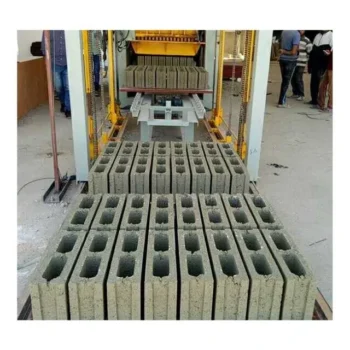
The QTJ4-40 ships with a mould designed around the pallet size of 850 × 450 mm. Before you confirm an order, the block formats that move in your local market must be mapped against this pallet footprint. A four-cavity hollow mould fits the pallet cleanly, while a nine-cavity solid brick mould uses the same area with different spacing. The mould-format-specific capacity calculation keeps the QTJ4-40 block machine specifications honest because every output figure names the format it was measured on.
Dual Vibration and Block Density Consistency
Block strength depends on how uniformly the mix is compacted before curing begins. The QTJ4-40 combines bed mould vertical vibration with upper mould compression vibration, working from both directions to settle aggregate into the cavity corners. When I adjusted vibration force and hold time on a site in Nigeria, the difference between weak corner blocks and uniform-density blocks came down to how well these two vibration stages were balanced for the local sand gradation. [NEED_CITE: relationship between vibration force and compressive strength in concrete masonry units]
Reading the Specs That Matter Beyond the Brochure
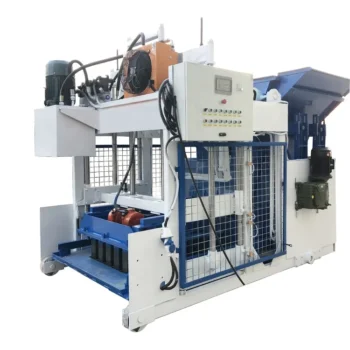
The 9.5 kW motor rating tells you the electrical load the QTJ4-40 places on your site supply, which matters when you are sharing a generator with a mixer and a water pump. The 40-second molding cycle sets the rhythm for the entire manual pallet-handling workflow: one worker feeds a pallet, the machine cycles, and the worker pulls the finished pallet and replaces it. Pallet size at 850 × 450 mm must match the curing rack spacing and the forklift tine width you already have on site — ordering pallets that do not fit your existing racks creates a bottleneck no machine upgrade can solve. The semi-automatic configuration with top die push-pull and automatic scraper keeps the operator count to one worker, but the manual pallet exchange still sets the real pace of production.
When the Wrong Specification Costs More Than the Machine
A pallet size chosen without checking the buyer’s curing area means pallets sit on the ground because the racks were built for a different dimension. Voltage confirmed after the machine arrives delays commissioning by weeks while a transformer is sourced locally. A mould configured for a mix the buyer cannot source forces a material change that adds cost to every single block produced. These mismatches do not show up in the quotation, but they show up on the first day of production. [NEED_CITE: common commissioning delays in exported block machinery]
Why Technical Buyers Source This Machine Here
Block machinery is the single focus, so the QTJ4-40 machine, mould, pallet and handling workflow are specified as one matched set rather than assembled from separate suppliers. Configuration is set against the buyer’s actual mix design and local aggregate, not pulled from a catalogue default. Mould design covers the formats your market sells, with custom drawings available when standard cavities do not match. Automation level is selectable — a buyer can begin with the semi-automatic QTJ4-40 and plan an upgrade path later. Installation support includes on-site commissioning and operator training so the first production day does not become a troubleshooting session.
Documentation & Verification
- Capacity calculation sheet naming block format, mould cavity count and cycle time for each output figure
- Mould drawing and format list showing included cavities and optional extras
- Pallet specification with size, material and thickness cross-checked to your curing rack
- Voltage, frequency and control language confirmation before production begins
- Factory test record on your specified block format before dispatch
Installation, Commissioning & Support
- Foundation pad leveled to the 1350 × 1460 mm footprint with anchor bolt provisions
- Dedicated circuit rated for the 9.5 kW motor load with correct voltage and frequency
- Machine shipped as a single 1 T unit, positioned by forklift at the site
- First-run vibration force and hold-time adjustment to match your local aggregate
- Operator training on pallet exchange rhythm within the 40-second molding cycle
- Wear parts list covering vibration springs, scraper blades and mould liner plates
What to Include in Your Inquiry
Send the exact block formats your market demands, including dimensions and target compressive strength. Confirm your site voltage, frequency and the control display language your operators read. Share your existing pallet dimensions and curing rack layout so the 850 × 450 mm pallet size can be verified against your infrastructure before the QTJ4-40 block machine specifications are locked for production.
Frequently Asked Questions
Q: How is the daily output of the QTJ4-40 calculated for each block format?
A: Each output figure is based on a 40-second molding cycle multiplied across an eight-hour shift, stated per specific mould cavity count — four-cavity hollow, five-cavity hollow or nine-cavity solid. The actual daily yield depends on operator pace during manual pallet exchange, raw material supply continuity and curing logistics. Always ask for the capacity document naming your target format before comparing machines.
Q: Which mould formats come with the QTJ4-40 and how long does a change take?
A: The machine is configured around the 850 × 450 mm pallet, supporting hollow block and solid brick moulds within that footprint. Mould change time depends on the specific cavity design and fastener type. Request the mould drawing and format list with your quotation so you know which cavities are included and which are quoted as optional extras.
Q: How do I match the pallet size to my curing area and forklift?
A: The QTJ4-40 uses an 850 × 450 mm pallet. Measure your curing rack shelf width, rack spacing and forklift tine spread before confirming the order. A mismatch means pallets cannot be racked or moved mechanically, forcing manual handling that slows the entire production cycle. Share these dimensions during the inquiry stage for cross-verification.
Q: How do I confirm voltage and control language before the machine ships?
A: State your site voltage, frequency and required control panel language in the initial inquiry. The QTJ4-40 block machine specifications are then locked with a written voltage and control confirmation before production starts. This step prevents commissioning delays caused by incorrect motor winding or an unreadable display when the machine arrives on site.
Q: What block strength can I expect and how does vibration match my local mix?
A: Block strength depends on the interaction between vibration force, upper mould compression and your specific aggregate gradation and cement ratio. The dual vibration system — bed mould vertical and upper mould compression — must be adjusted to your local sand and stone characteristics. Share your mix design during the specification stage so vibration settings are tuned before dispatch.