


Description
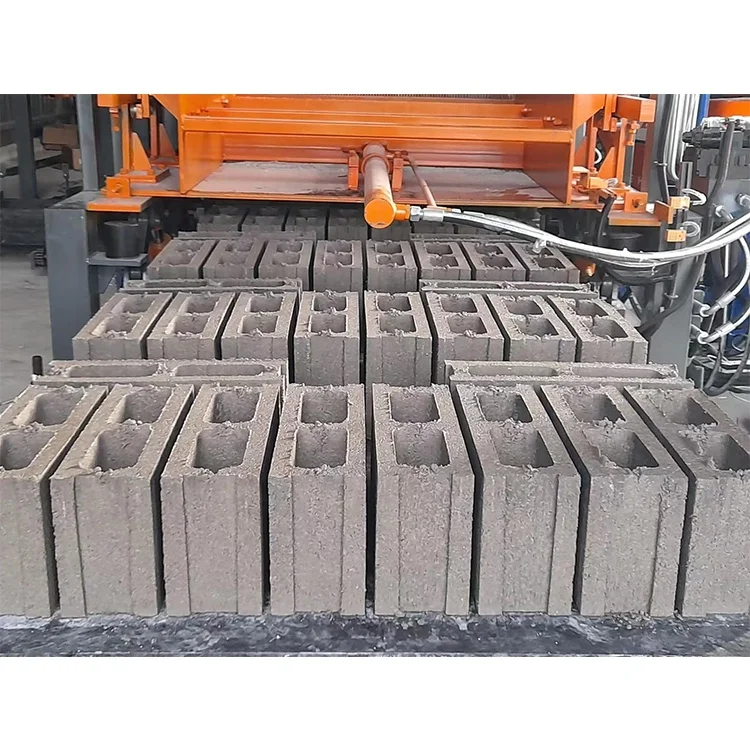
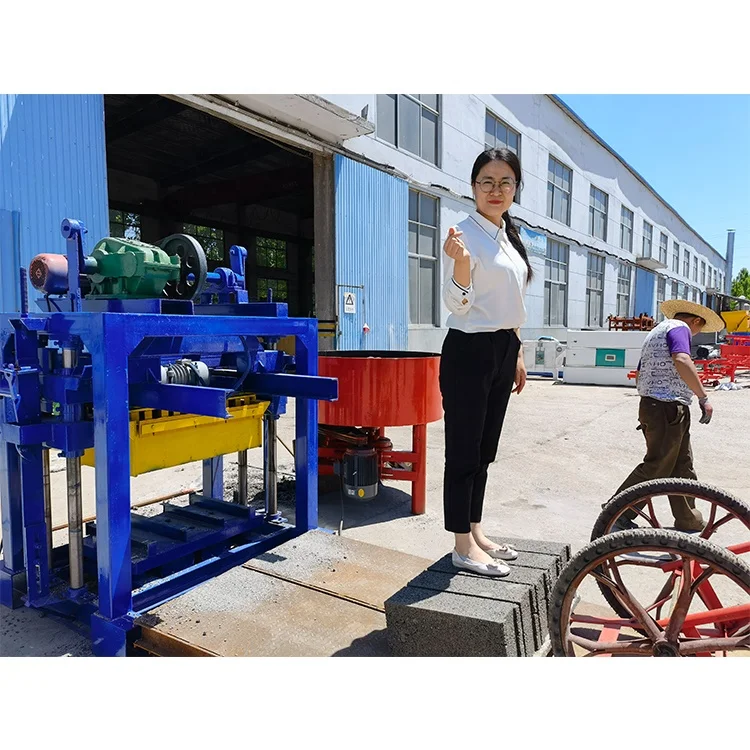
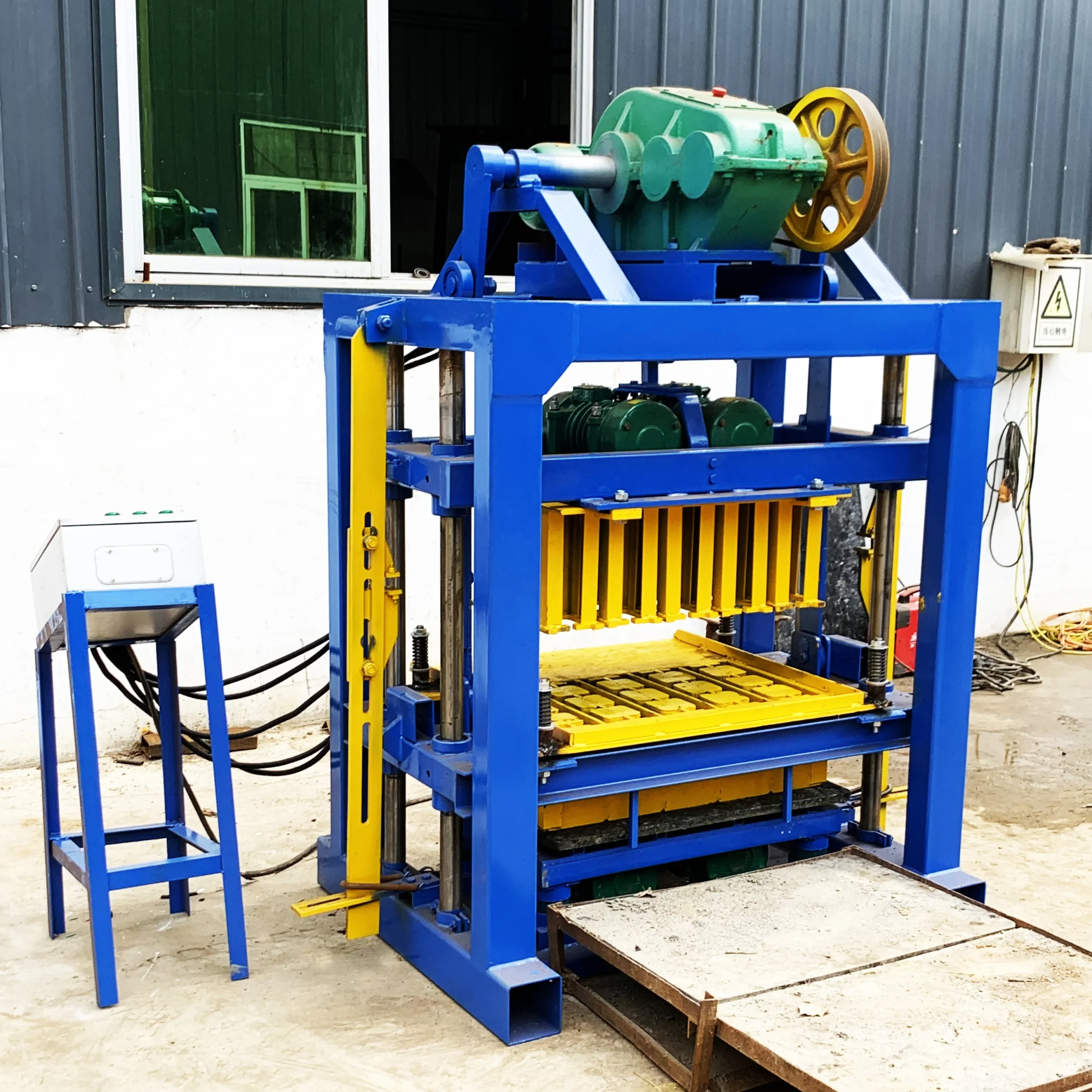
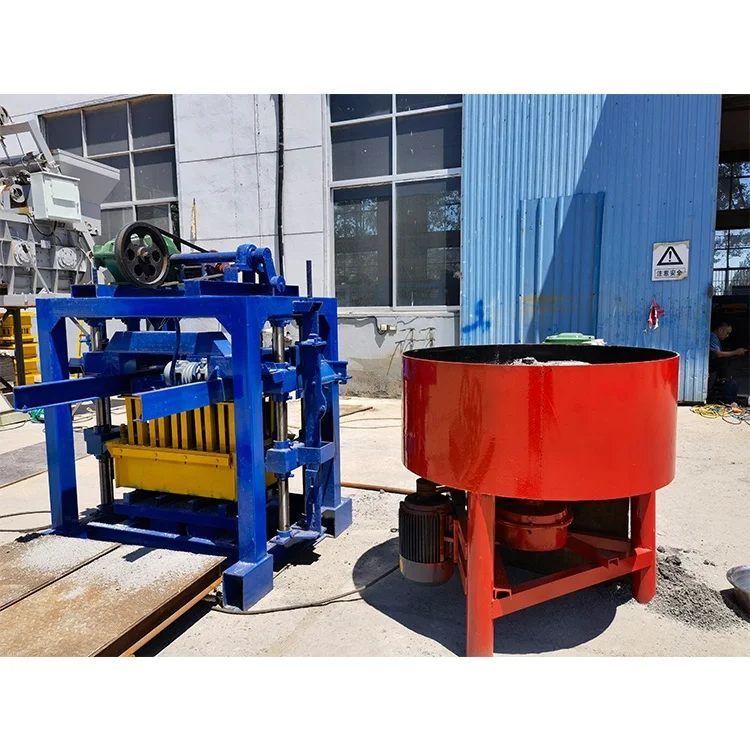
Mould-specific capacity planning — the QTJ4-40 block machine is configured around the hollow block or solid brick your market actually buys, with throughput stated per format rather than a single headline figure.
Technical Specifications
| Parameter | Value |
|---|---|
| Model | QTJ4-40 |
| Product Type | Semi-Automatic Concrete Block Making Machine |
| Rated Power | 10.4 kW |
| Molding Cycle | 40 s |
| Vibration System | Bed mould vertical vibration + upper mould compression vibration |
| Pallet Size | 850 × 450 mm |
| Overall Dimensions (L×W×H) | 1350 × 1460 × 1800 mm |
| Net Weight | 1 T |
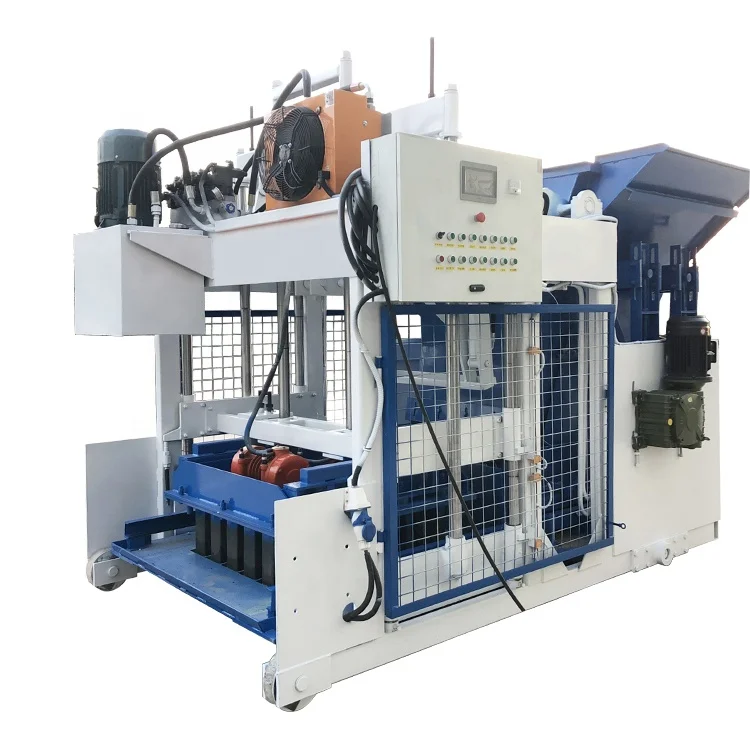
| Automation Level | Semi-automatic (top die push-pull, automatic scraper, manual pallet handling) |
| Raw Materials | Concrete, sand, cement, fly ash, lime, gypsum |
| Voltage & Frequency | Configurable to buyer’s local supply (exact value to be confirmed) |
| Theoretical Output — 400×200×200 mm Hollow Block | 360 pcs/h, 2800 pcs/day (4 pcs/mould) |
| Theoretical Output — 400×150×200 mm Hollow Block | 450 pcs/h, 3600 pcs/day (5 pcs/mould) |
| Theoretical Output — 225×112.5×60 mm Solid Brick | 800 pcs/h, 6400 pcs/day (9 pcs/mould) |
| General Output Capacity | 2000–2500 pcs / 8 h (basis not stated in source) |
| Mould Formats Available | Hollow block, solid brick (specific formats per mould) |
| Control System | To be confirmed (PLC / relay / manual) |
Application Suitability
| Application | Material or Output |
|---|---|
| Small to medium hollow block plants | Crushed stone, sand, and cement mixes for 400×200×200 mm or 400×150×200 mm formats |
| Solid brick production for regional masonry markets | Fly ash, lime, gypsum, and sand blends for 225×112.5×60 mm bricks |
| On-site block production for construction contractors | Locally sourced aggregates with portable semi-automatic operation |
| First plant setup by entrepreneurs | Low-investment semi-automatic line with manual pallet handling |
What "2800 Blocks per Day" Actually Means for the QTJ4-40 Block Machine Specifications
Output depends entirely on which mould is installed and what block format you run.
Sellers quote a single daily number and leave the format assumption buried or missing. When the machine arrives and the buyer installs a different mould — say a 400×150×200 mm hollow block instead of the 400×200×200 mm used for the headline figure — the cycle stays at 40 seconds but the pieces per cycle change. I have walked into plants where the owner spent the first week wondering why the machine was "underperforming," when in reality the quoted capacity was never meant for the format they were producing. The QTJ4-40 block machine specifications on this page list throughput per mould so that comparison is straightforward. [NEED_CITE: block format assumptions in machine capacity quotations]
Mould Selection Defines Your Real Daily Throughput
The QTJ4-40 block machine runs a 40-second molding cycle regardless of format. With the 400×200×200 mm hollow block mould producing 4 pieces per cycle, theoretical output reaches 360 pieces per hour or 2800 over an 8-hour shift. Switch to the 225×112.5×60 mm solid brick mould and each cycle yields 9 pieces, pushing theoretical output to 800 per hour. The machine does not change speed — the mould changes the math. Buyers planning a product range need to calculate capacity for each format they intend to sell, not just the one used in the quotation.
Pallet Sizing and Curing Area Compatibility
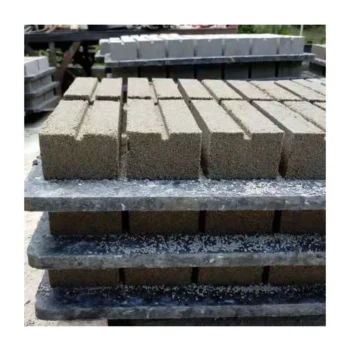
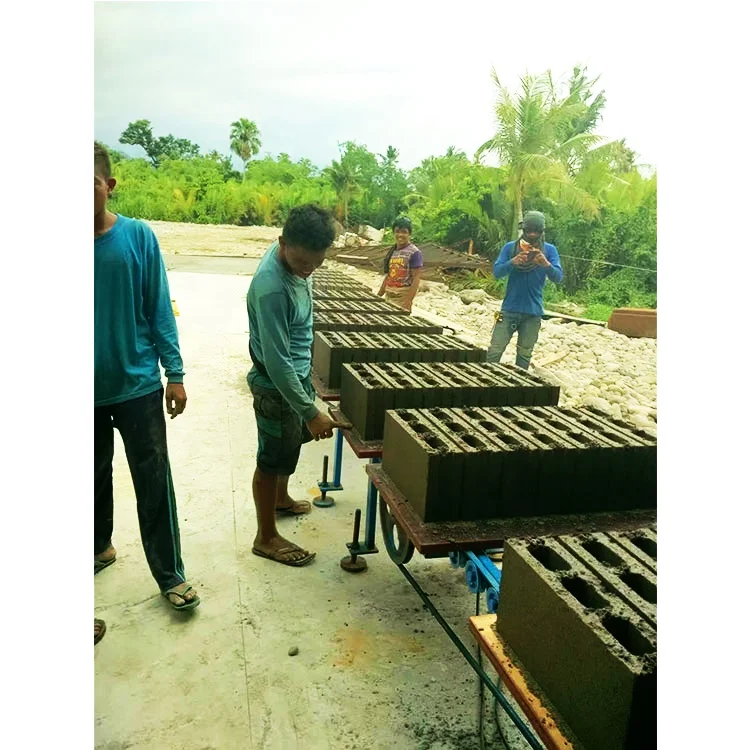
The 850 × 450 mm pallet is the interface between the press and your curing operation. If your existing curing racks or forklift are sized for a different pallet dimension, every pallet must be re-stacked manually before it leaves the press area. Before confirming an order, measure the curing rack width and the forklift tine spacing at your site. The pallet material — typically bamboo, PVC, or steel — also affects weight per loaded pallet and therefore how many a single operator can move in a cycle.
How Vibration and Pressure Interact With Your Mix
The QTJ4-40 uses bed mould vertical vibration combined with upper mould compression vibration. This dual system compacts the concrete mix from both directions during the 40-second cycle, producing consistent block density across formats. However, vibration force must match the aggregate gradation and moisture content of your actual mix. I once saw a machine configured for clean river sand arrive at a site using volcanic aggregate — the vibration parameters had to be completely reworked because the particle shape and absorption were entirely different. Confirming your local raw materials before production prevents this mismatch. [NEED_CITE: aggregate properties and vibration parameter matching in block production]
Reading the Core Specifications Correctly
The 10.4 kW rated power covers the vibration motors, hydraulic pump, and scraper mechanism running simultaneously within each cycle. For sites with limited electrical infrastructure, this draw must be checked against the available supply before the machine is shipped. The 1350 × 1460 × 1800 mm footprint fits inside a standard workshop bay, but floor levelness directly affects block height consistency — an uneven base transfers into uneven compaction across the pallet surface. The 1-tonne net weight means the machine can be repositioned with a standard forklift, which matters for on-site contractors who move between projects. Voltage and frequency must be confirmed to match the buyer’s local grid before production starts; arriving with the wrong motor winding delays commissioning by weeks.
The Hidden Cost of Skipping Configuration Details
When voltage and control language are not confirmed before shipment, the machine sits idle on arrival while replacement contactors or PLC modules are sourced locally. Pallet handling left out of the quotation means output piles up beside the press and must be moved by hand — a semi-automatic machine suddenly requires three operators instead of one. Mould change time is rarely discussed until the buyer needs to switch formats mid-shift and discovers the tooling requires specialized wrenches not included in the delivery. These are not machine defects; they are gaps in the specification conversation that surface after the container is unpacked. [NEED_CITE: common commissioning delays in exported block machinery]
Why Buyers Source the QTJ4-40 Through This Channel
Block machinery is the single focus here, so the QTJ4-40 is specified as a matched system — machine, mould, pallet, and handling are selected together rather than assembled from separate suppliers. Configuration is set against your actual mix design and local aggregate, not a catalogue default that assumes river sand and standard Portland cement. Mould design covers the formats your regional market sells, with custom drawings available when a standard mould does not match. The semi-automatic automation level keeps investment contained while leaving room to add automatic pallet feeding or stacking later. Installation support includes operator training so your team understands mould change procedure, vibration adjustment, and daily maintenance from the first shift.
Documentation & Verification
- Line layout and capacity calculation stating the exact block format assumed for each QTJ4-40 output figure
- Mould drawing and format list confirming which hollow block and solid brick sizes the machine produces
- Pallet specification sheet covering 850 × 450 mm dimensions, material grade, and load rating
- Voltage, frequency, and control language confirmation document signed before production begins
- Factory test record run on the buyer’s target block format prior to dispatch
Installation, Commissioning & Support
- Foundation must be level within tolerance to maintain block height consistency across the 1350 × 1460 mm base
- Dedicated 10.4 kW circuit with correct voltage and frequency confirmed before motor energization
- Machine ships as a single unit at 1 tonne, repositionable on-site with a standard forklift
- Vibration parameters adjusted during commissioning to match the buyer’s local aggregate and mix design
- Operator training covers 40-second cycle operation, mould change procedure, and daily wear-part inspection
- Wear parts and mould replacement list provided with recommended reorder intervals
What to Include in Your Inquiry
To size the QTJ4-40 correctly for your operation, share the block format you intend to produce most — dimensions and whether hollow or solid. Confirm your local aggregate type and whether fly ash or other supplementary materials are part of your mix. Provide your site voltage, frequency, and preferred control language so the electrical package matches your grid on arrival.
Frequently Asked Questions
Q: How is the QTJ4-40 capacity calculated per block format, and why does the hollow block yield fewer pieces per day than the solid brick?
A: The 40-second molding cycle stays constant across formats. The 400×200×200 mm hollow block mould produces 4 pieces per cycle, yielding a theoretical 2800 per 8-hour day. The 225×112.5×60 mm solid brick mould produces 9 pieces per cycle, reaching 6400 per day. The machine speed does not change — only the number of cavities per mould determines the output difference.
Q: What pallet size does the QTJ4-40 use, and how do I confirm it fits my existing curing area and forklift?
A: The machine uses an 850 × 450 mm pallet. Before ordering, measure your curing rack width and forklift tine spacing to confirm compatibility. If your existing infrastructure uses a different pallet dimension, loaded pallets will need manual re-stacking, adding labour to every shift.
Q: How long does a mould change take on the QTJ4-40, and what tools are required?
A: Mould change time depends on the specific mould design and whether quick-release fasteners are included. Confirm the changeover procedure and required tooling during the specification stage so your team can switch formats without losing a full shift to the process.
Q: Can the QTJ4-40 be configured for my local aggregate and mix design, or is it set to a factory default?
A: The machine vibration parameters should be matched to your actual raw materials — aggregate type, particle shape, and moisture absorption all affect compaction. Providing your mix design before production ensures the vibration system is adjusted for your local conditions rather than a generic test mix.