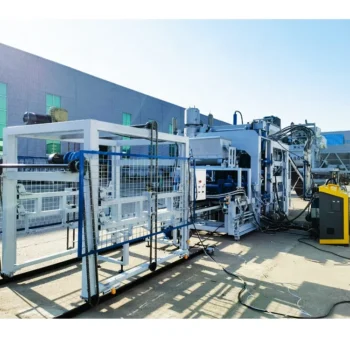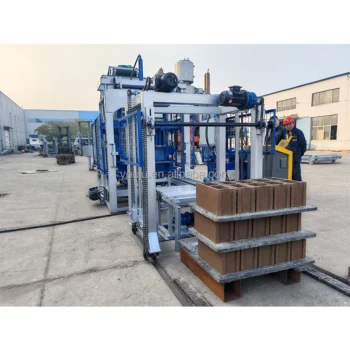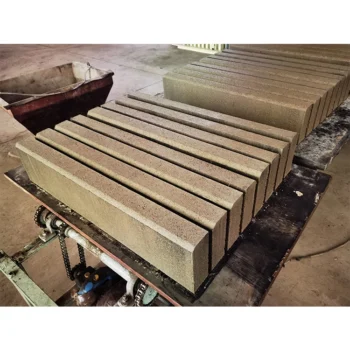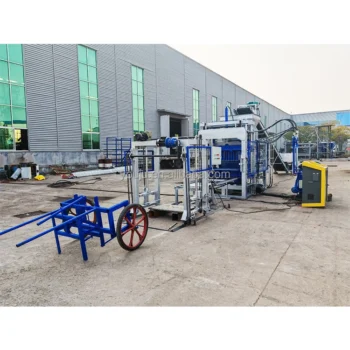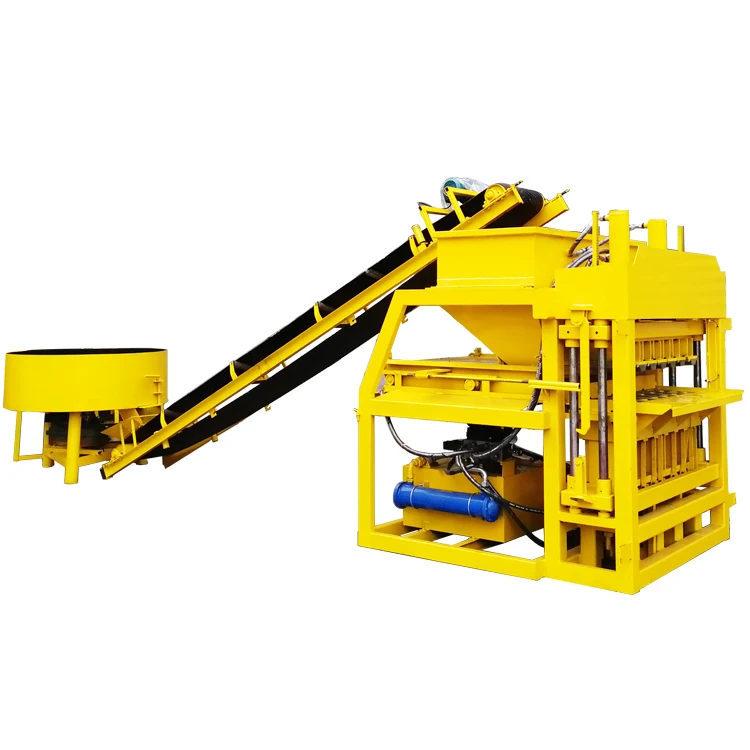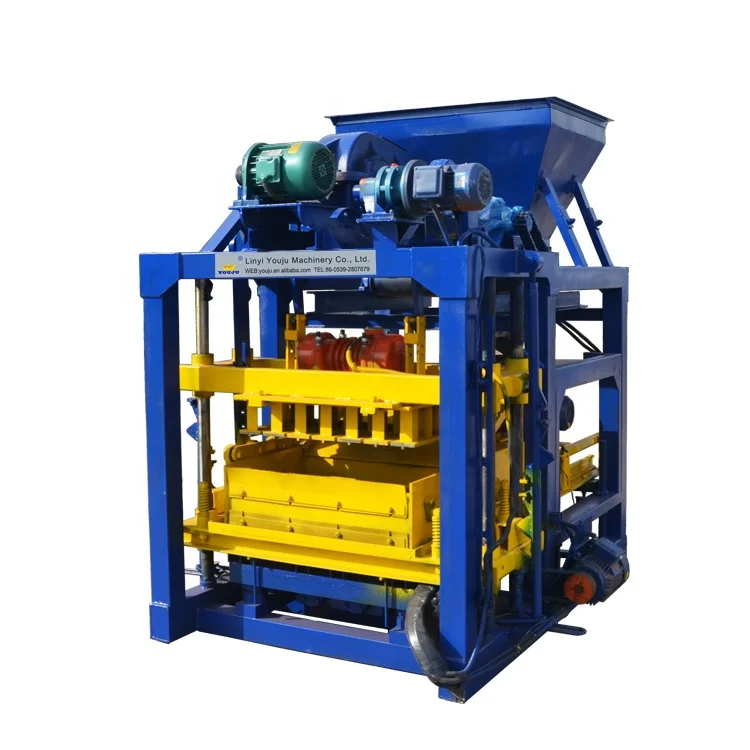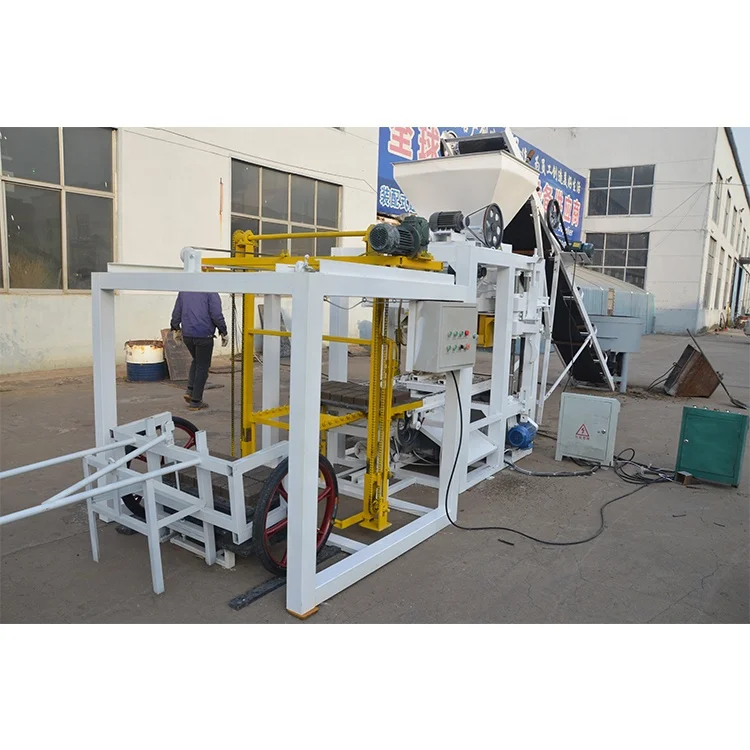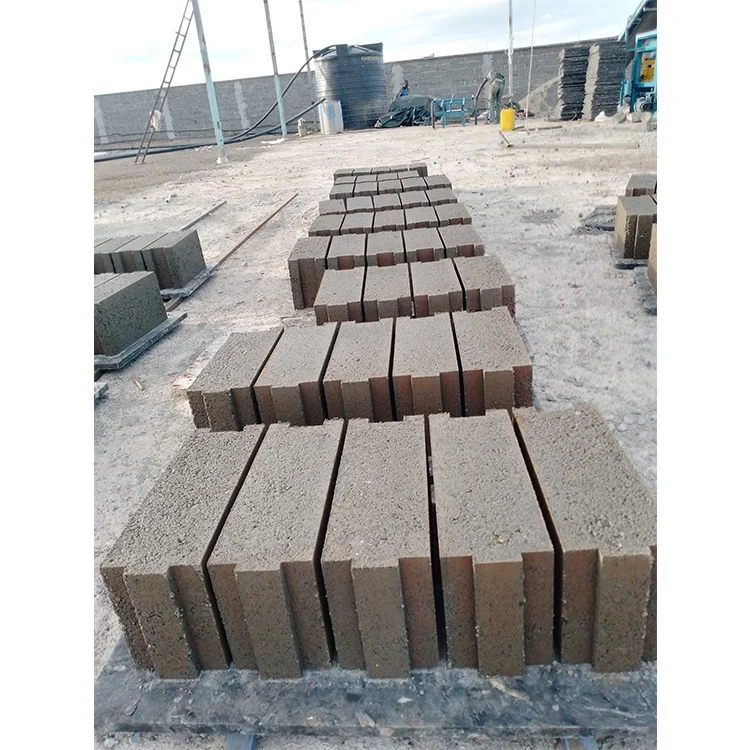
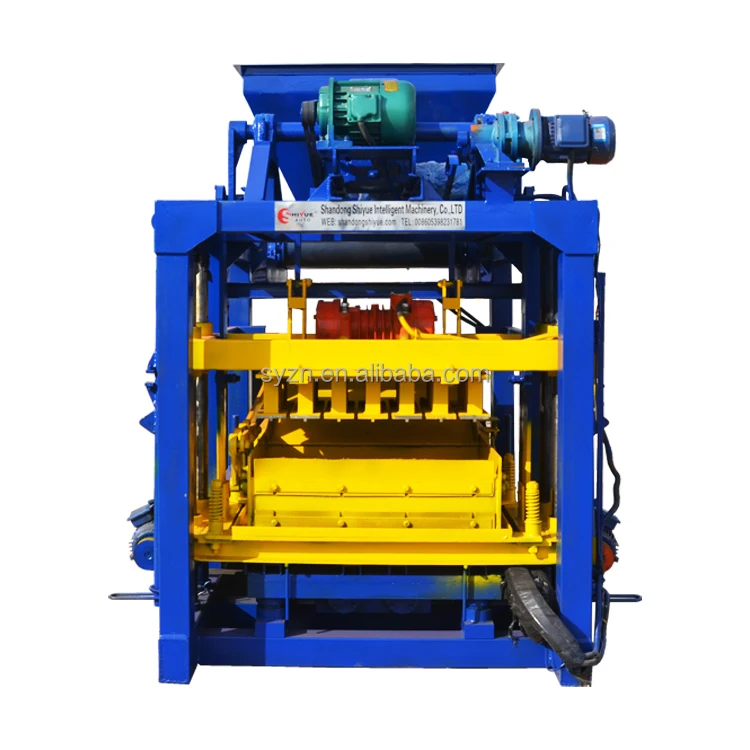
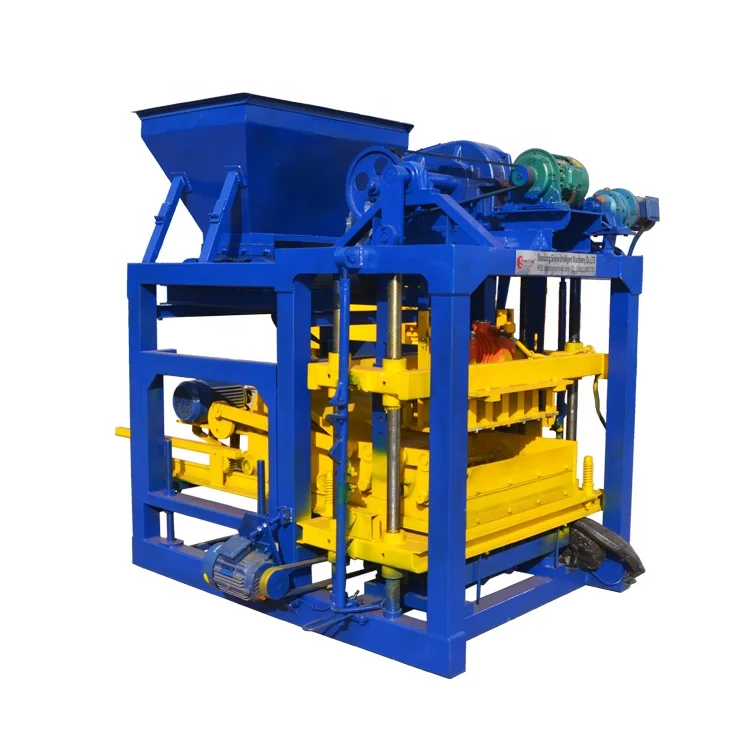
Description
Format-specific capacity calculation — every output figure for the QTJ4-25 is tied to a named block size and mould cavity count, so daily planning starts from your actual product, not a catalogue average.
Technical Specifications
| Parameter | Value |
|---|---|
| Model | QTJ4-25 |
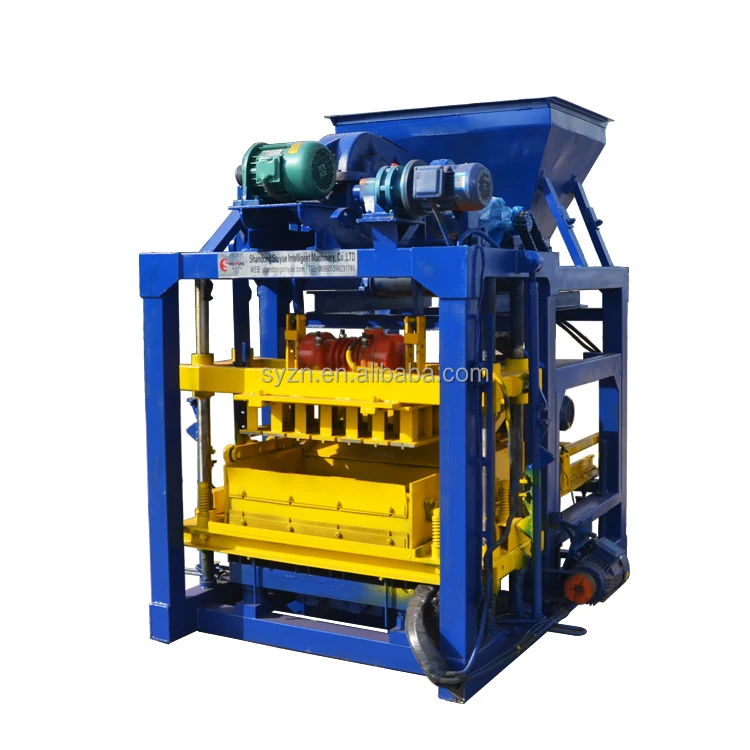
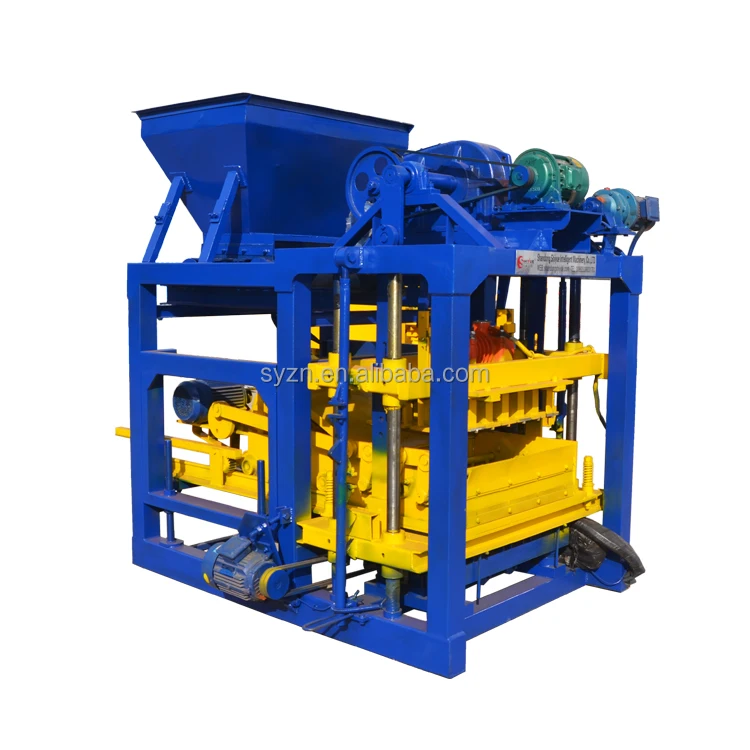
| Product Type | Semi-Automatic Concrete Block Making Machine |
| Overall Dimensions (L×W×H) | 3060×1730×2580 mm |
| Total Weight | 4 T |
| Vibration Force | 45 kN |
| Cycle Time | 25 s |
| Pallet Size | 850×550 mm |
| Block Height Range | 40–280 mm |
| Workshop Area | 50–150 m² |
| Material Storage Area | 300–500 m² |
| Mixer Model | JQ500 |
| Belt Conveyor Length | 8 m |
| Motor Brand | Siemens or ABB (confirm exact brand at order) |
| Voltage & Frequency | 380V, 3-phase, 50Hz (customizable) |
| Automation Level | Semi-automatic |
| Control System | Electric control (PLC option to be confirmed) |
| Mould Format Compatibility | Hollow blocks, solid blocks, pavers, interlocking blocks, kerbstone, grassed bricks, revetment bricks, colored pavers |
| Mould Change Method | Manual (change time to be confirmed) |
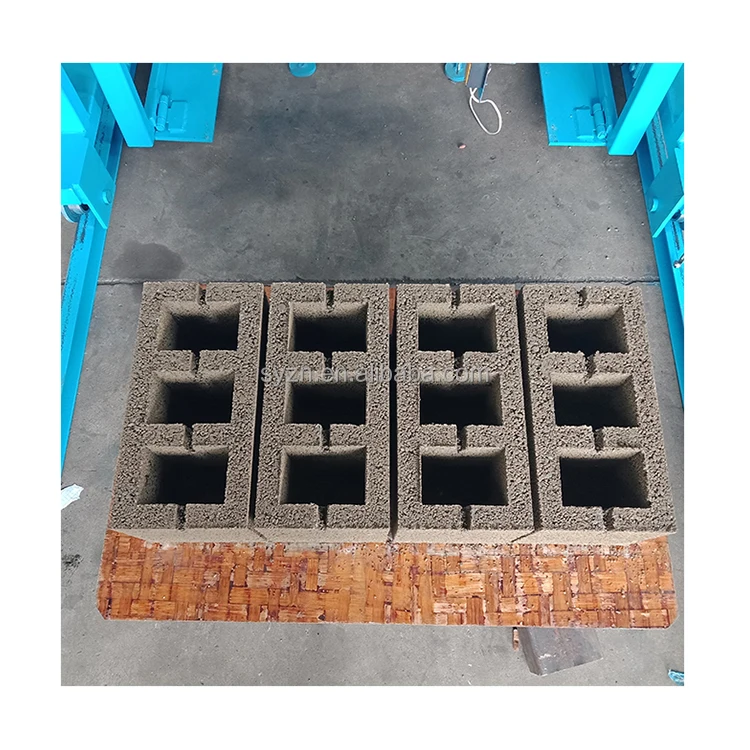
| Output — 400×200×200 mm hollow | 480 pcs/h (4 pcs/mould) |
| Output — 400×150×200 mm hollow | 600 pcs/h (5 pcs/mould) |
| Output — 400×100×200 mm hollow | 840 pcs/h (7 pcs/mould) |
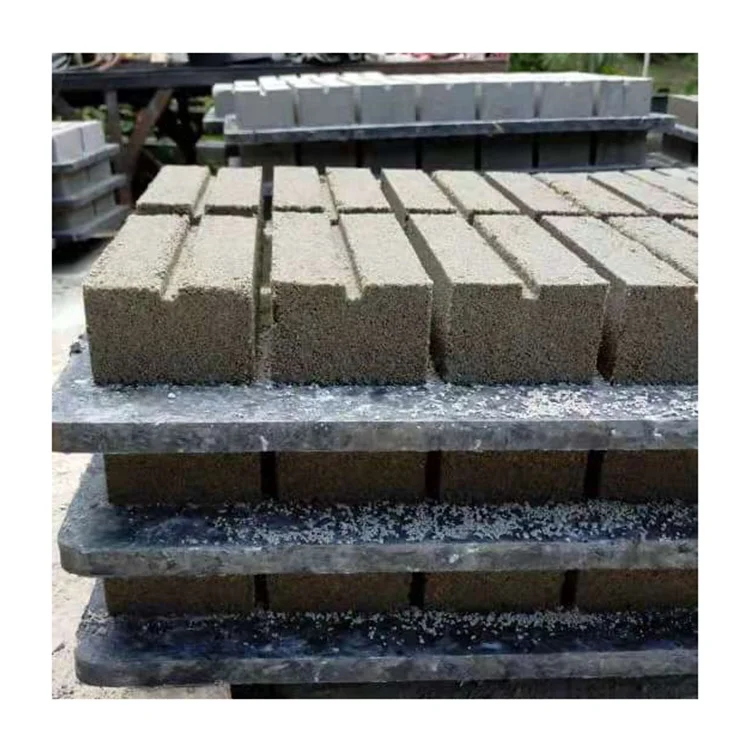
| Output — 240×115×53 mm solid brick | 2880 pcs/h (24 pcs/mould) |
| Warranty | 1 year (excluding wearing parts) |
Application Suitability
| Application | Material or Output |
|---|---|
| Hollow block production for residential walls | Crushed stone, sand, cement and fly ash mixes |
| Solid brick runs for load-bearing structures | Dense aggregate with cement binder |
| Interlocking paver manufacturing | Fine aggregate with pigment for colored surfaces |
| Kerbstone and revetment brick forming | Coarse aggregate with high cement content |
| On-site block production for housing projects | Locally sourced sand and gravel with portable mixer |
What "840 Pieces per Hour" Actually Means for Your Plant
The QTJ4-25 block machine specifications only hold when the stated block format, mould cavity count and 25-second cycle are all met in continuous operation.
Buyers often receive a single capacity number and assume it applies across every block they plan to produce. In practice, switching from a 400×100×200 mm hollow block to a 400×200×200 mm hollow block cuts hourly output almost in half because the mould holds fewer cavities. I have watched contractors base their entire project timeline on the higher figure, only to discover the gap when the first production run falls short [NEED_CITE: capacity calculation methods for concrete block plants].
Matching Mould Format to Market Demand
The QTJ4-25 block machine specifications cover a block height range of 40–280 mm, which spans most hollow block, solid brick and paver formats sold in developing construction markets. The real question is not what the machine can make, but what your local buyers actually order. A mould for 400×200×200 mm hollow blocks may sit idle if your market has shifted to 150 mm wide partitions, so confirming the format list against local demand comes before confirming the machine itself.
Vibration Force and Local Aggregate Compatibility
A rated vibration force of 45 kN is a fixed mechanical value, but the block strength it produces depends entirely on the mix it meets. High-clay sand from a riverbed absorbs vibration differently than washed crushed granite, and the resulting density can vary enough to fail a compressive strength test. Before we confirm a QTJ4-25 configuration, I ask buyers to send a sample of their local aggregate so we can run a test cycle and adjust the vibration duration or recommend a mix correction [NEED_CITE: aggregate testing standards for concrete block production].
Reading the Specs Beyond the Brochure Numbers
The 25-second cycle time is measured under controlled factory conditions with a pre-set mix and standard pallet feeding. On a real shop floor, manual pallet handling adds seconds between cycles, and a JQ500 mixer that cannot keep pace will leave the press waiting. The 8 m belt conveyor must deliver material fast enough to refill the hopper before the next cycle begins, otherwise the 25-second rhythm breaks and daily output drops. Pallet size at 850×550 mm determines how many blocks cure per rack, and if your existing forklift cannot handle that pallet dimension, you will be moving product by hand. The 4 T machine weight and 3060×1730×2580 mm footprint set the foundation load and workshop clearances, which matters when the available space is at the lower end of the 50–150 m² range.
The Cost of Skipping the Format Conversation
When a buyer orders without confirming which block formats the local market purchases, the machine arrives with a mould that produces the wrong size. Commissioning then waits weeks for a replacement mould to ship, and the pallet order placed for the wrong curing rack dimensions cannot be returned. I have seen projects where the voltage and frequency were assumed rather than confirmed, and the motor burned out on first start because the local supply ran at a different standard [NEED_CITE: voltage and frequency standards by export market]. These are not machine defects — they are specification gaps that surface only after the container is opened.
Why Sourcing Through a Single-System Supplier Matters
Block machinery is the only product line here, so the QTJ4-25 press, its moulds, pallets and the JQ500 mixer are specified as one matched set rather than sourced from separate vendors and bolted together on site. Mould drawings are produced for the exact formats your market sells, including custom profiles from buyer-supplied sketches. The pallet size is confirmed against your curing area dimensions before the order is locked, not chosen from a default list. Automation level is selectable, so a buyer running a 50 m² workshop can start with manual pallet handling and add automatic stacking later without replacing the press. Installation support includes operator training on the specific mix and mould combination your plant will run.
Documentation & Verification
- Line layout showing QTJ4-25 placement within your 50–150 m² workshop footprint
- Capacity calculation sheet stating block format and cavity count for each output figure
- Mould drawing and format list matching your local market requirements
- Pallet specification confirmed against your curing rack and forklift dimensions
- Voltage, frequency and control language written confirmation before production
- Factory test record using your specified block format before container loading
Installation, Commissioning & Support
- Foundation pad sized for 4 T operating weight and 3060×1730 mm footprint
- Dedicated 3-phase circuit matching confirmed voltage and frequency at your site
- Machine shipped assembled with plastic-wrapped packing for container loading
- First production run supervised to set cycle timing against your local mix
- Operator training on manual mould change and pallet feeding sequence
- Wear parts list covering vibration springs, hydraulic seals and mould liners
What We Need to Size Your Line Correctly
Send us the block formats your market currently buys, along with daily volume targets for each. Include a sample or lab report of your local sand and aggregate so we can match vibration parameters to your actual material. Confirm your site voltage, frequency and preferred control language so electrical components are ordered correctly before assembly begins.
Frequently Asked Questions
Q: How is realistic daily output calculated for my specific block format?
A: We take the 25-second cycle time, multiply by the cavity count for your chosen mould, then deduct realistic allowances for pallet loading, mixer refill and mould changeover. The result is stated per block format, not as a single blanket number, so you can plan shifts around the product you actually sell.
Q: Which mould formats are available and how long does mould change take?
A: The QTJ4-25 accepts moulds for hollow blocks, solid bricks, pavers, interlocking blocks and kerbstones within the 40–280 mm height range. Mould change is manual, and the exact changeover time depends on operator familiarity. We confirm available formats and changeover procedure before you place the order.
Q: How do you match vibration force to my local aggregate?
A: We ask you to send a sample of your sand and aggregate, then run test cycles on a machine of this class to check block density and surface finish. If the 45 kN vibration force needs duration adjustment or if your mix requires a different ratio, we document the correction before production starts.
Q: What pallet size do I need and does it fit my existing curing setup?
A: The standard pallet is 850×550 mm, but we confirm this against your curing rack spacing and forklift capacity before the order is finalised. If your existing racks require a different dimension, the pallet specification is adjusted so that no manual rehandling is needed after the press discharges.
Q: Can the machine be configured for my country’s voltage and control language?
A: Yes. Voltage and frequency are customised to your local supply standard, and the control display language is confirmed in writing before electrical assembly. This avoids the situation where a machine arrives and cannot be commissioned until a transformer or new control board is shipped separately.