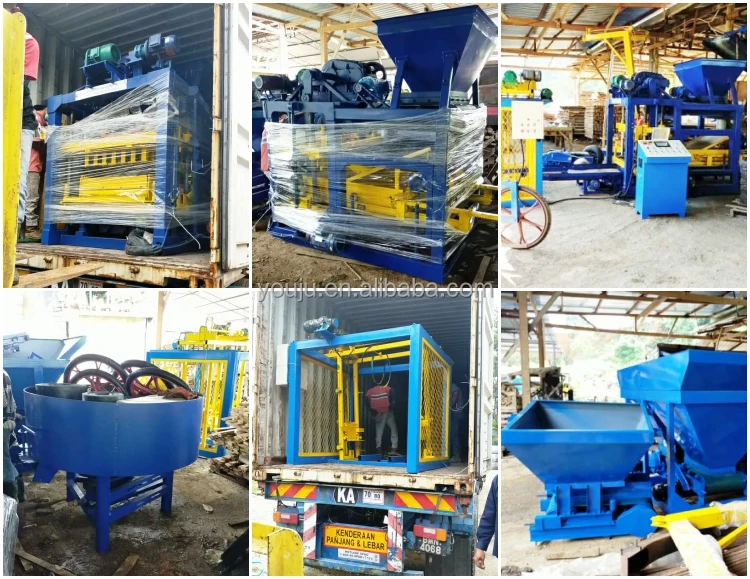
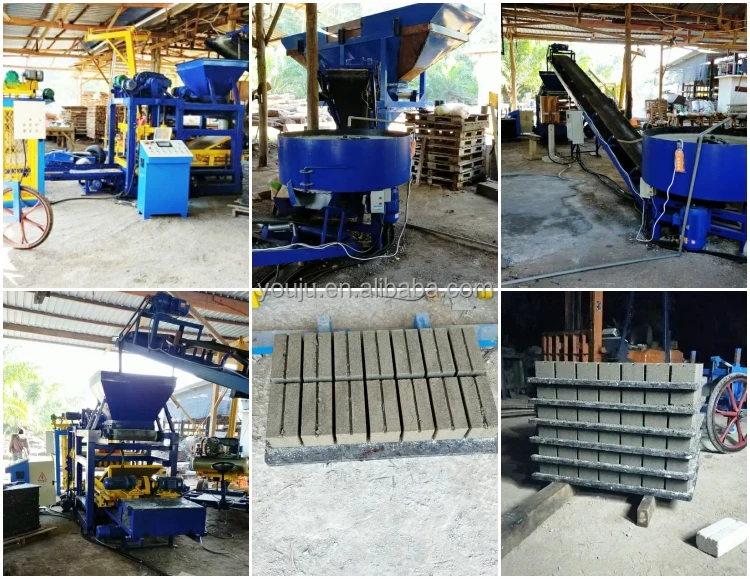
Description
Mould-to-Market Matching — Every output figure for the QTJ4-25 is tied to a named block size, pallet dimension, and cavity count so buyers can map capacity directly to the formats their local market actually moves.
Technical Specifications
| Parameter | Value |
|---|---|
| Model | QTJ4-25 |
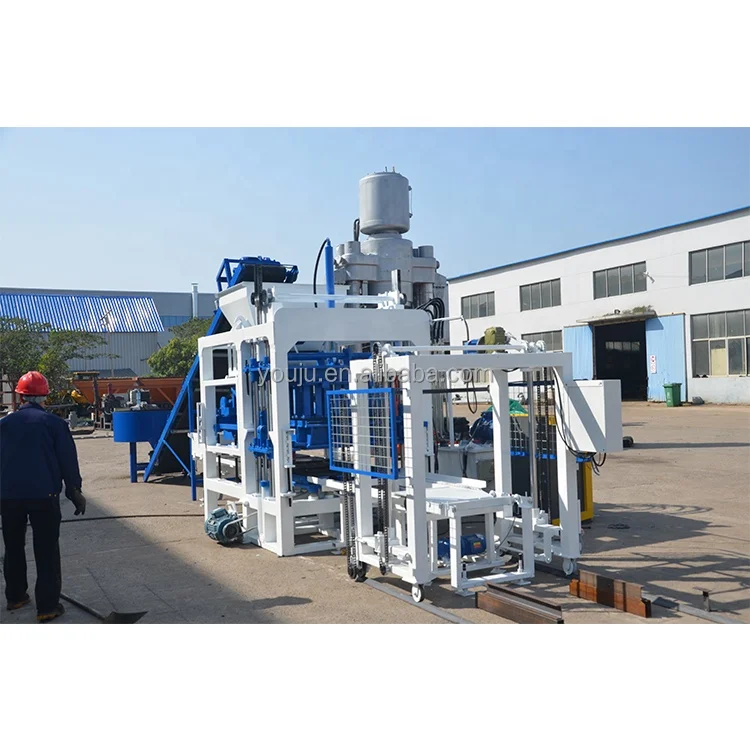
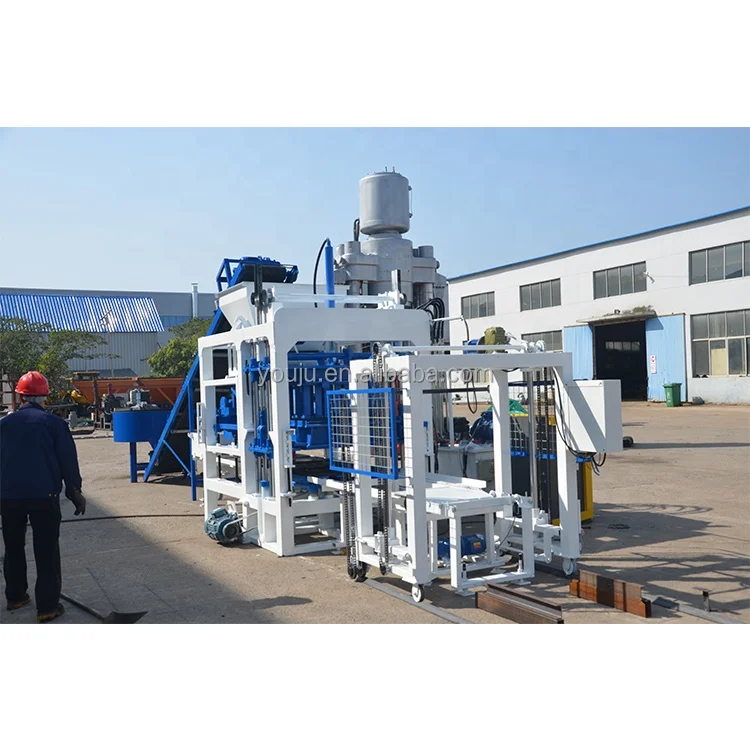
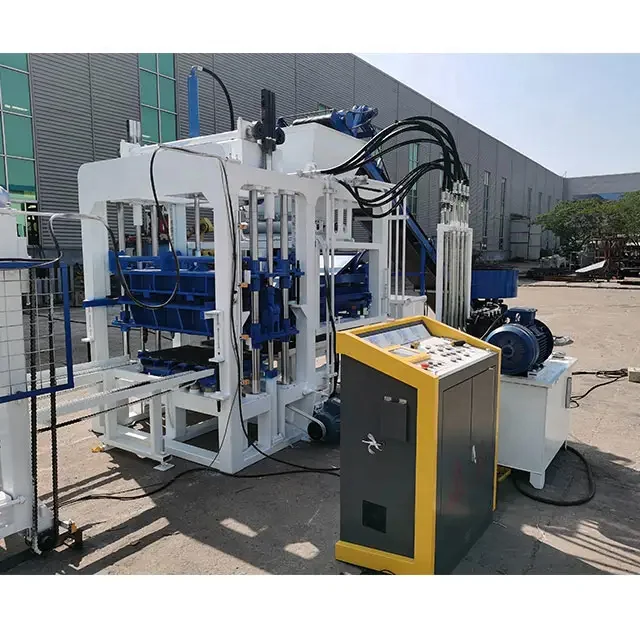
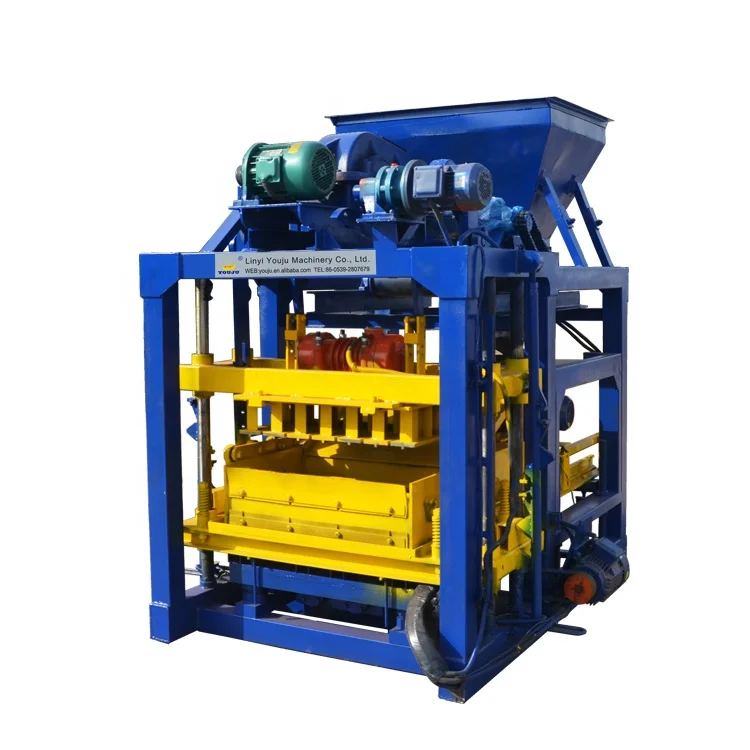
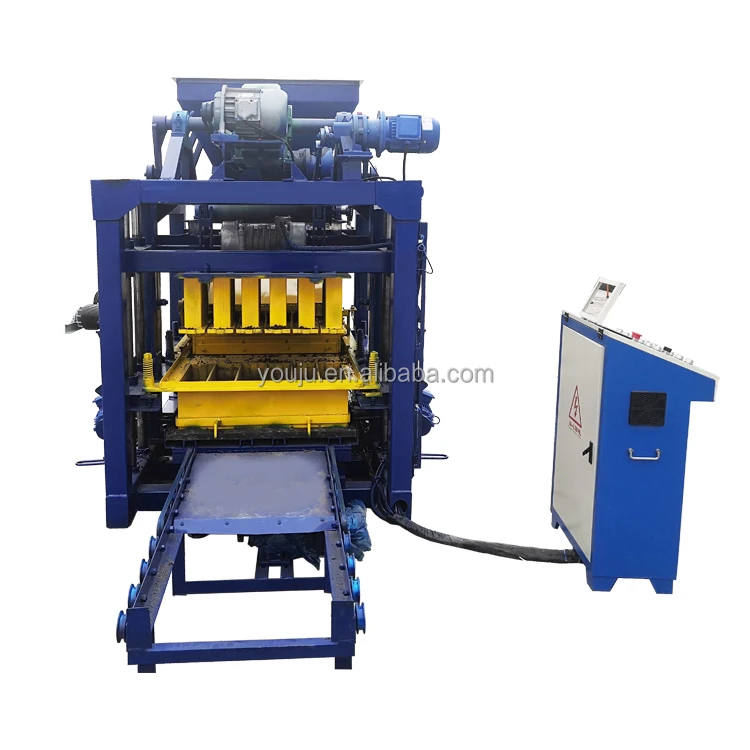
| Product Type | Semi-Automatic Concrete Block Making Machine |
| Overall Dimensions (L×W×H) | 3000×1800×2680 mm |
| Total Mass | 3.5 T |
| Overall Power | 16.58 kW |
| Main Vibration Form | Platform Vibration |
| Vibration Force | 60 kN |
| Vibration Frequency | 2800–4500 r/min |
| Control System | Mechanical demolding, electrical control |
| Pallet Size | 850×480 mm |
| Cycle Time | 25 s |
| Guide Column | Four-column, overlong guide, chrome-plated |
| Frame Material | National standard manganese steel |
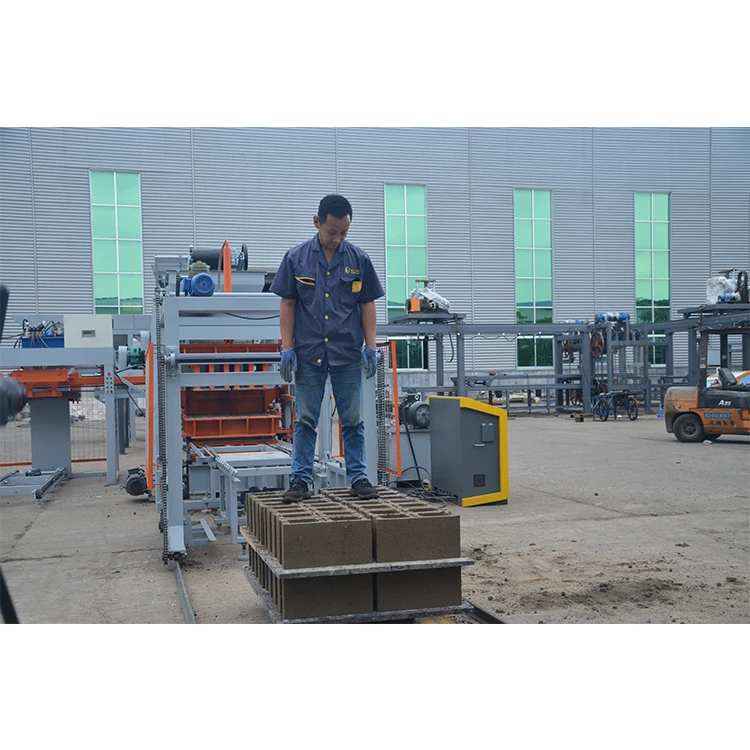
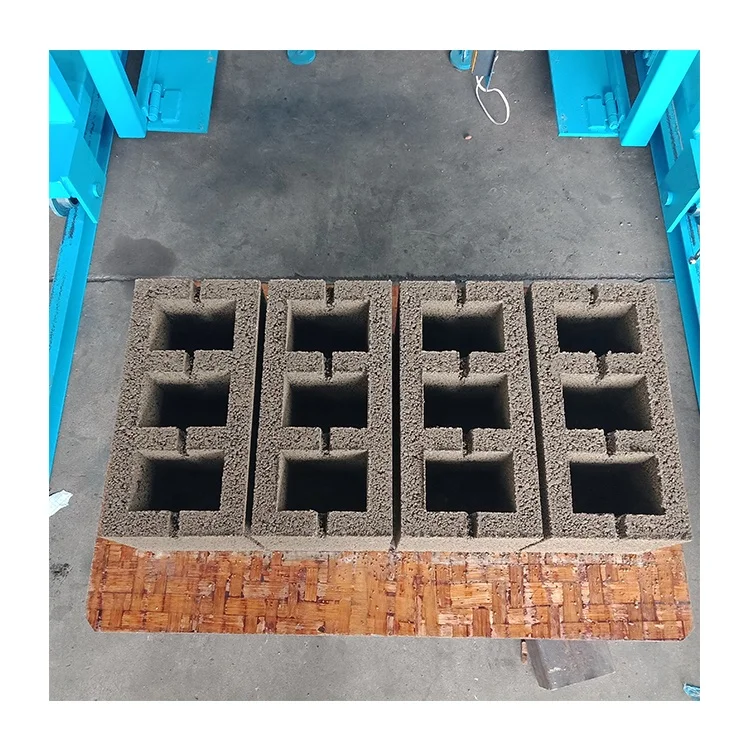
| Output: 400×200×200 mm Hollow Block | 580 pcs/h (4 pcs/mould basis) |
| Output: 240×115×90 mm Multi-cellular Brick | 1,400 pcs/h (9 pcs/mould basis) |
| Output: 240×115×53 mm Standard Brick | 3,300 pcs/h (21 pcs/mould basis) |
| Daily Output (8-hour shift) | 4,640 / 11,200 / 26,400 pcs/day depending on format |
| Factory Area Required | 300 m² |
| Warranty | 1 year (excluding spare parts) |
Application Suitability
| Application | Material or Output |
|---|---|
| Hollow Block Production | Crushed stone, sand, cement, fly ash aggregates |
| Standard and Multi-cellular Brick | Sand, cement, gravel, slag, dust blends |
| Paving and Interlocking Blocks | Fine aggregate and cement mix for dense pavers |
| On-site Contractor Production | Locally sourced aggregate for housing project blocks |
| Porous and Kerbstone Forming | Permeable aggregate blends and heavy-format moulds |
What "Pieces per Hour" Actually Means for the QTJ4-25 Block Machine Specifications and Mould Options
A single cycle time means nothing until you know which block sits on the pallet.
Sellers frequently quote a headline number like "3,300 pieces per hour" without mentioning that figure assumes a 240×115×53 mm standard brick with 21 cavities per mould. If your market buys 400×200×200 mm hollow blocks, that same QTJ4-25 block machine specifications and mould options list drops the realistic rate to 580 pieces per hour because each mould only holds four cavities. I have seen buyers sign contracts expecting five-figure daily hollow block output, only to discover on commissioning day the press simply cannot push enough volume through a four-cavity mould. Asking for the capacity calculation sheet per format, not just per cycle, is the single most important document in this purchase. [NEED_CITE: block format versus mould cavity impact on daily output]
Matching Mould Formats to the Block Your Market Sells
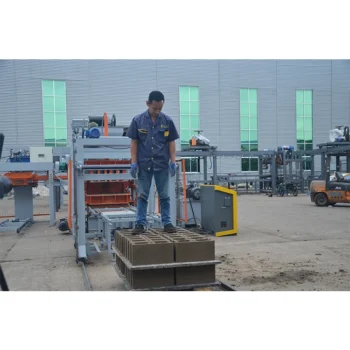
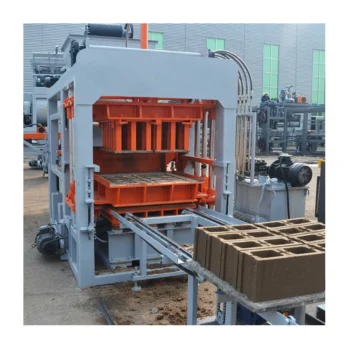
The QTJ4-25 accommodates solid blocks, hollow blocks, porous blocks, pavers, interlocking blocks, kerbstones, and colored pavers through manual mould exchange. The chrome-plated four-column guide system keeps the upper and lower mould halves aligned across every format swap, which matters when a plant runs hollow blocks in the morning and switches to interlocking pavers after lunch. Mould alignment directly controls block dimensional consistency, and a worn or misaligned guide shows up first as uneven wall thickness on hollow formats.
Cycle Time, Local Aggregate, and the Mix You Can Actually Source
A 25-second cycle time is measured under factory test conditions with a controlled mix design. When the QTJ4-25 block machine specifications and mould options are evaluated against a buyer’s actual aggregate — say, desert sand with high salt content or crushed limestone with unusual moisture retention — the vibration frequency between 2,800 and 4,500 r/min and the 60 kN vibration force may need adjustment. I once spent four full days recalibrating a semi-automatic press in Dubai because the local sand demanded nearly double the standard compaction time to achieve target block strength. Send a sample of your aggregate before finalizing the order. [NEED_CITE: aggregate properties and their influence on vibration compaction time]
Reading the Specs That Actually Affect Your Plant Layout
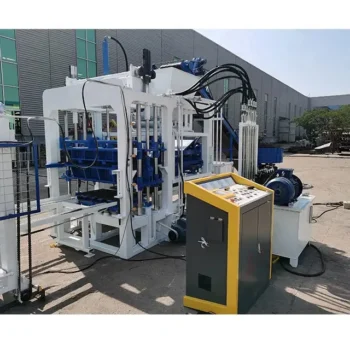
The 850×480 mm pallet size is a fixed dimension that dictates your curing rack spacing, forklift tine width, and stacking area footprint. Buyers who already operate a curing yard must verify this pallet dimension against existing infrastructure before confirming the order. The 60 kN vibration force, delivered through dual super motors driving the platform vibration box and supplemented by an upper mould vibration motor, determines the maximum aggregate particle size the press can compact without segregation. The 16.58 kW total power draw defines the electrical supply requirement and should be cross-referenced with site transformer capacity. The 300 m² factory area figure covers the press, material staging, and pallet circulation but excludes external curing yards.
The Hidden Cost of Skipping Format-Level Capacity Verification
When a buyer accepts a single output number without format breakdown, the consequences arrive after the container is unloaded. A plant designed around an assumed hollow block volume that is actually triple the achievable rate will face missed delivery deadlines from the first month. Pallet handling and stacking, which are manual on this machine and not included in the quoted scope, compound the gap because hand-stacking speed becomes the bottleneck rather than the press cycle. Mould change time, also unlisted in the source data, can consume a significant portion of a shift if the crew has not been trained on the manual exchange procedure. [NEED_CITE: manual mould exchange time and its effect on format flexibility]
Why This Source Works for Format-Matched Procurement
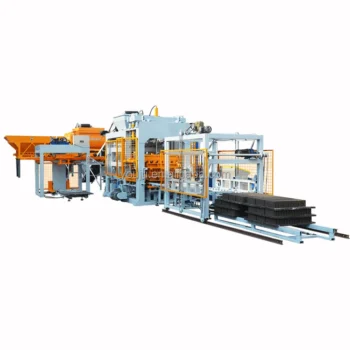
Block machinery is the single focus here, meaning the press, mould, pallet, and handling equipment are specified as one matched system rather than assembled from unrelated suppliers. Configuration is set against the buyer’s actual mix design, local aggregate, and target block format, not pulled from a catalogue default. Mould design covers the formats the buyer’s market sells, with custom drawings available for non-standard sizes. The automation level is selectable, allowing a buyer to start semi-automatic and add automatic stacking or cubing later. Installation support includes on-site commissioning and operator training so the crew understands cycle time adjustment per format from day one.
Documentation & Verification
- Line layout and capacity calculation stating the block format assumed for each output figure
- Mould drawing and format list confirming included and optional block sizes
- Pallet specification sheet detailing 850×480 mm dimensions and material grade
- Voltage, frequency, and control language confirmation document before production starts
- Factory test record on the buyer’s specified block format before dispatch
- Operation and maintenance manual with wear parts and mould replacement schedule
Installation, Commissioning & Support
- 300 m² factory floor with level concrete foundation to support the 3.5 T machine mass
- Dedicated electrical circuit rated for the 16.58 kW overall power at confirmed voltage and frequency
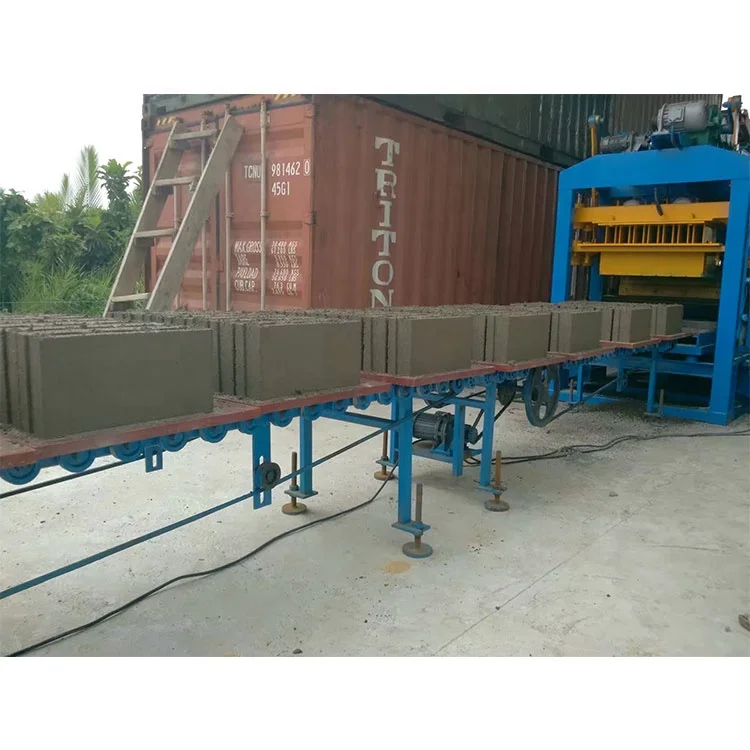
- Machine shipped in dismantled state for container loading, reassembled on-site with four-column guide alignment check
- First-run commissioning includes vibration frequency calibration between 2,800 and 4,500 r/min against buyer’s aggregate sample
- Operator training covers manual mould exchange procedure, pallet loading sequence, and mechanical demolding operation
- Wear parts list provided at handover with reorder intervals for vibration motor brushes and guide column seals
Before You Request a Quotation
Provide the exact block formats your market sells, including dimensions and required daily volume per format. Share your locally available aggregate type, cement grade, and any existing mix design data so the vibration force and cycle time can be matched before production. Confirm your site voltage, frequency, and preferred control panel language to avoid commissioning delays after the QTJ4-25 block machine specifications and mould options are finalized and the machine arrives.
Frequently Asked Questions
Q: How is output capacity verified per block format, and what happens if I change moulds?
A: Output is calculated per named format and cavity count, for example 580 pieces per hour on 400×200×200 mm hollow blocks at four cavities per mould. Changing to a different mould alters the cavity count and therefore the hourly rate. The capacity calculation document lists every included format so you can plan daily production schedules around the blocks your market actually orders.
Q: What pallet size does the QTJ4-25 use, and how does it affect my curing area layout?
A: The machine uses an 850×480 mm pallet. This dimension determines curing rack spacing, forklift handling requirements, and stacking yard layout. Buyers with existing curing infrastructure should measure rack width and forklift tine spacing against this pallet size before confirming the order to avoid costly yard modifications after delivery.
Q: How long does a mould change take on this machine, and what tools are required?
A: Mould exchange is manual and involves unbolting the current mould set from the vibration platform and guide columns, then fitting and aligning the replacement set. The exact time depends on crew experience and the number of fasteners on the specific mould format. Operator training at commissioning covers the full procedure with the tools included in the machine scope.
Q: Can the vibration force and cycle time be adjusted to match my local aggregate and mix design?
A: The vibration frequency is adjustable between 2,800 and 4,500 r/min, and the 60 kN force is delivered through platform and upper mould motors. Cycle time may need to extend beyond the standard 25 seconds when processing aggregate with unusual moisture content, high fines, or salt contamination. Sending a material sample before production allows these parameters to be calibrated at the factory.