

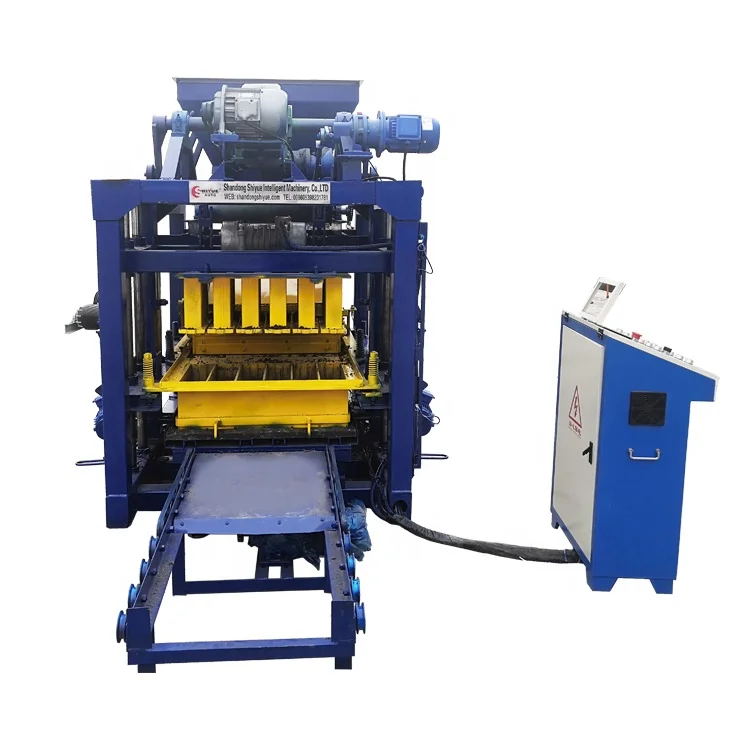

Description
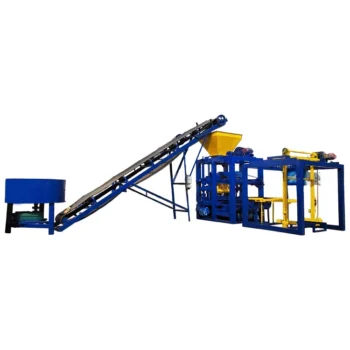
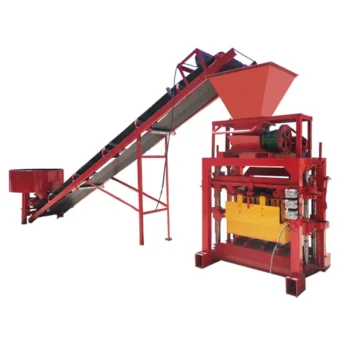
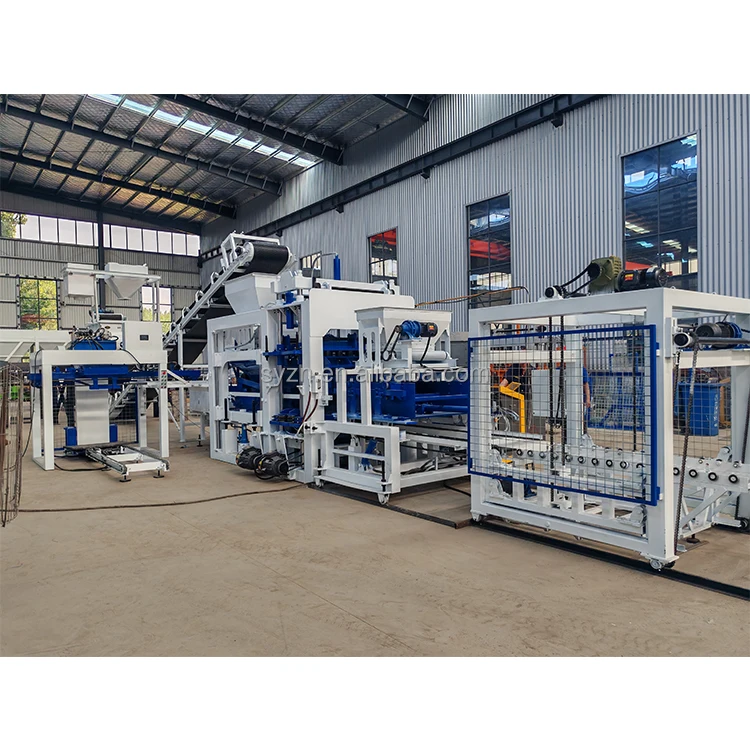
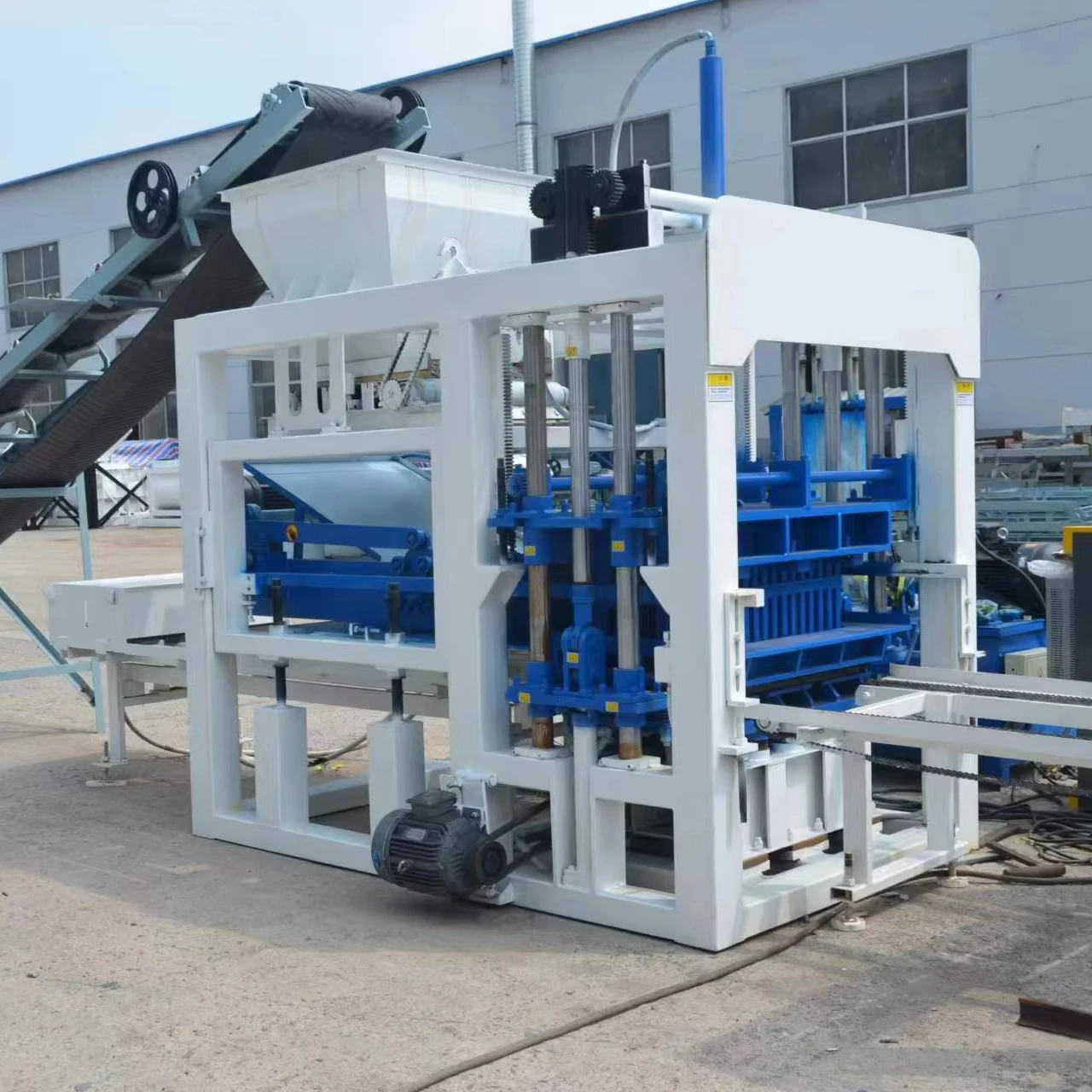
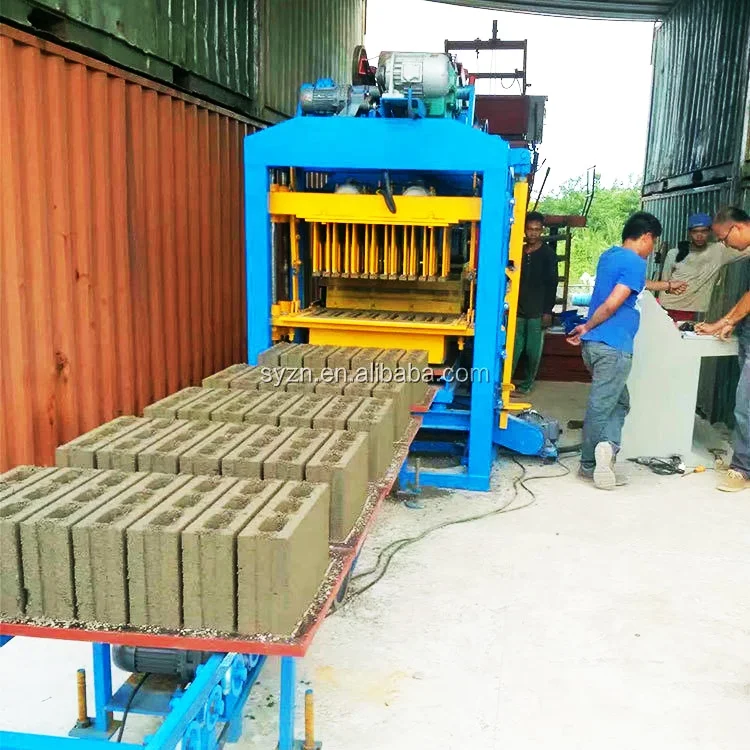
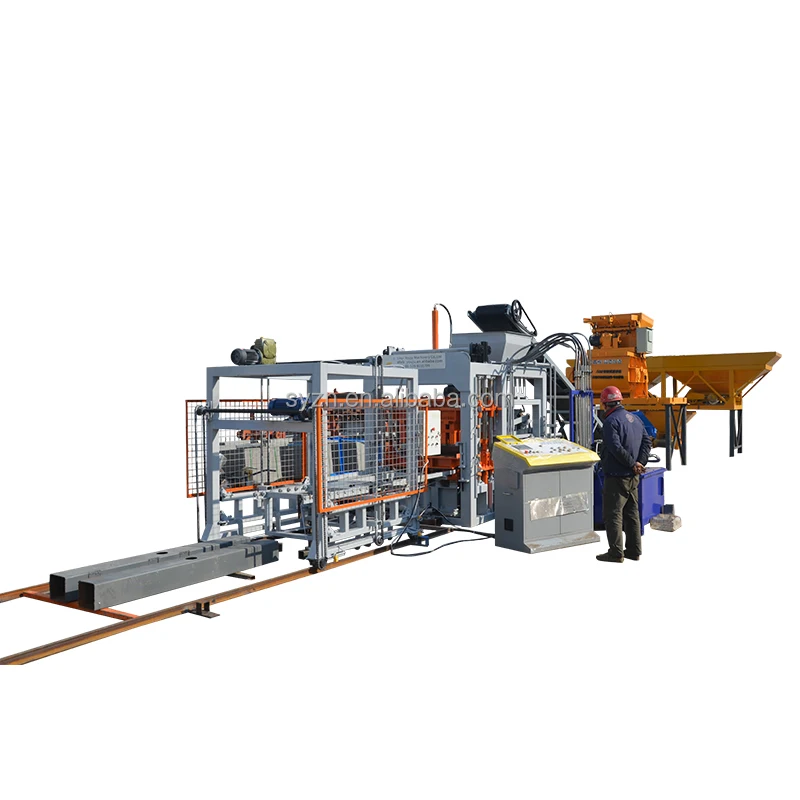
Matched System Configuration — The QTJ4-25 kerb stone brick making machine, mould, pallet and handling are specified together against your local aggregate and block format, not pulled from a catalogue default.
Technical Specifications
| Parameter | Value |
|---|---|
| Model | QTJ4-25 |
| Product Type | Kerb Stone Brick Making Machine |
| Overall Dimensions (L×W×H) | 3060×1730×2580 mm |
| Rated Pressure | 16–21 MPa |
| Vibration Form | Platform Vibration |
| Vibration Frequency | 4200 r/min |
| Vibration Force | 45.5 kN |
| Pallet Size | 850×550 mm |
| Molding Cycle | 25–30 s per board (basis not stated in source — confirm block format, material and thickness) |
| Overall Power | 14.9 kW |
| Total Mass | 4 T |
| Demolding Method | Vibration |
| Factory Area Required | 200 m² |
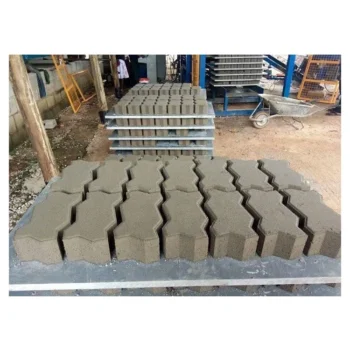
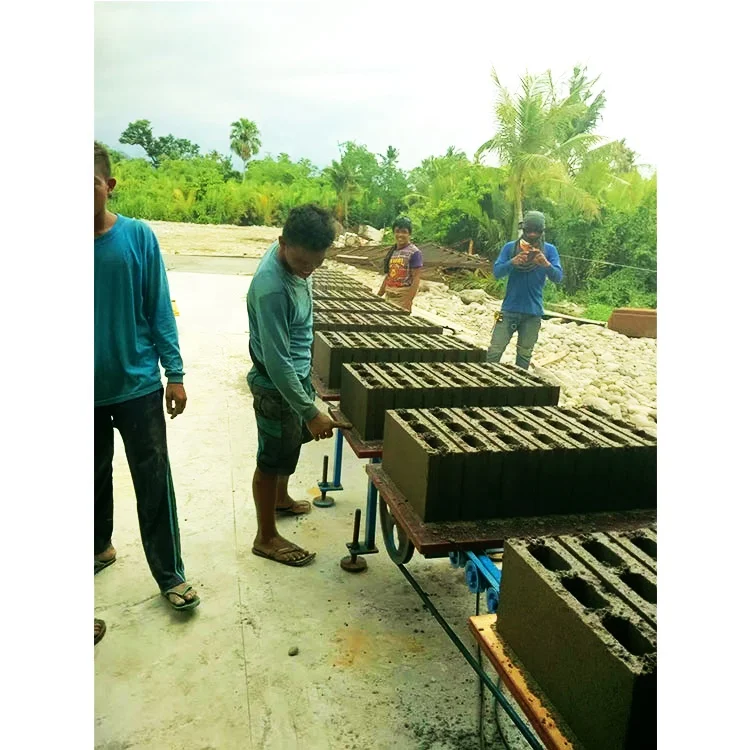
| Applied Products | Concrete blocks, hollow/solid blocks, pavers, interlocking blocks, kerb stone, colored pavers |
| Raw Materials | Crushed stone, sand, cement, fly ash, gravel, slag |
| Warranty | 1 year for the whole machine (excluding spare parts) |
| Shipment | 1×40HQ container (basic equipment) |
Application Suitability
| Application | Material or Output |
|---|---|
| Municipal kerb stone production | Crushed stone and cement mixes conforming to local road authority density specs |
| Housing project on-site block making | Hollow and solid concrete blocks from locally sourced sand and gravel |
| Paver and interlocking brick runs | Colored concrete pavers using fine aggregate and pigment blends |
| Small plant adding kerb format | Curbstone and kerb profiles from the same raw material feed as existing block lines |
Why "25–30 Seconds per Cycle" Means Less Than You Think
Cycle time only matters when tied to a specific block format, mix design and thickness.
Many quotations list a single cycle figure without naming the block format behind it. A 25-second cycle on a thin paver is very different from the same figure on a 200 mm kerb stone drawing a stiff, low-slump mix. Buyers who take the headline number at face value often discover that real daily output falls noticeably short once their actual product runs on the machine [NEED_CITE: realistic cycle time variation by block format and mix stiffness]. When you evaluate kerb stone brick making machine specifications, the format assumption behind every cycle claim must be documented before the deal is signed.
Vibration and Pressure Tuned for Kerb Stone Density
Kerb stones demand higher compaction energy than standard hollow blocks because municipal specifications often require compressive strength well above residential block grades. The QTJ4-25 delivers 45.5 kN of vibration force through platform vibration at 4200 r/min, paired with 16–21 MPa rated hydraulic pressure. This combination forces aggregate particles into tight interlock, reducing void ratio and producing a kerb stone that survives transport and installation without corner spalling. The vibration frequency is fixed, so matching the output to your specific kerb stone format depends on selecting the correct mould and confirming the mix gradation beforehand.
Pallet Size as the Hidden Constraint
An 850×550 mm pallet governs how many kerb stone units fit per board and, equally important, whether those loaded pallets match the curing racks and forklifts already on your shop floor. Buyers who overlook pallet dimensions end up reconfiguring their entire curing area or purchasing new handling equipment after arrival [NEED_CITE: pallet size compatibility with existing curing rack systems]. Before confirming an order, share your current rack spacing and forklift fork width so the pallet specification can be validated against your existing infrastructure.
Reading the Specs That Actually Matter
Rated pressure and vibration force together determine the green strength of the demoulded kerb stone — too little compaction and the product slumps before curing; too much and the mix segregates, leaving weak fines at the surface. The 4200 r/min platform vibration is effective on mixes with coarse crushed stone up to 10 mm aggregate size, but finer sands may require adjusted moisture content to achieve full consolidation. The 14.9 kW total power draw covers the main press motor, vibration motor and hydraulic pump, meaning a single dedicated circuit with appropriate breaker sizing is required. Molding cycle of 25–30 seconds per board is achievable on standard kerb profiles, yet thicker or more complex interlocking kerb geometries will extend that figure. Factory area of 200 m² accounts for the press, raw material batching zone, and short pallet return conveyor, but additional curing yard space must be planned separately. Voltage and frequency are not stated in the base specification, so confirming your local supply standard before production begins avoids rewiring or transformer costs at commissioning.
The Cost of Skipping Format-Level Confirmation
When the mould is chosen from a catalogue page rather than matched to the kerb profile your market actually buys, the machine arrives and produces a format that sits in the yard unsold. Mould wear accelerates if the local aggregate contains abrasive volcanic or river-worn particles that were never declared during specification. Voltage mismatches discovered after the machine is bolted to the floor mean days of idle time while a step-down transformer is sourced locally [NEED_CITE: common commissioning delays caused by unconfirmed electrical specifications]. These are not warranty issues — they are specification gaps that shift cost and schedule risk entirely onto the buyer.
Why Buyers Source This Machine Here
Block machinery is the sole focus of the production line, so the QTJ4-25 press, mould, pallet and handling equipment are engineered as one matched system rather than assembled from unrelated suppliers. Each configuration is set against the buyer’s actual mix design, local aggregate characteristics and target kerb stone format. Custom mould design is available to buyer drawings, ensuring the kerb profile matches local municipal or project specifications. Automation level is selectable, allowing a buyer to begin with manual pallet handling and add semi-automatic stacking later as volumes grow. Installation and commissioning include operator training so the crew understands vibration and pressure settings from day one.
Documentation & Verification
- Line layout and capacity calculation stating the kerb stone format assumed for cycle time
- Mould drawing and format list confirming kerb stone dimensions to buyer specifications
- Voltage, frequency and control language confirmation recorded before production starts
- Pallet specification cross-checked against buyer curing rack and forklift dimensions
- Factory test record on the buyer’s declared raw material mix before dispatch
- Hydraulic and electrical schematic included with each shipment
Installation, Commissioning & Support
- 200 m² factory footprint requires level concrete slab with embedded anchor bolts for the 4 T machine mass
- 14.9 kW total power demands a dedicated three-phase circuit with correctly rated breaker panel
- Machine ships dismantled in one 40HQ container; reassembly includes press frame, vibration table and hydraulic unit
- First-run commissioning verifies vibration force and pressure settings against the buyer’s mix sample
- Operator training covers mould change procedure, daily lubrication points and pallet return alignment
- Wear parts list and recommended spare mould inventory provided at handover
What to Share Before Requesting a Quote
Provide the exact kerb stone profile drawing or reference standard your project specifies, along with the local aggregate type and gradation you plan to use. State your target daily output in finished kerb stone units and the shift length you intend to run. Confirm your site voltage, frequency and preferred control display language so the electrical package is built correctly before the machine leaves the factory.
Frequently Asked Questions
Q: How is the 25–30 second molding cycle verified, and which kerb stone format does it assume?
A: The cycle figure is measured on a standard kerb profile with a typical crushed stone and cement mix at controlled moisture. Thicker or more complex kerb geometries will extend the cycle. Before quotation, we calculate realistic cycle time based on your specific kerb stone drawing, aggregate type and required compaction density so daily output projections are honest.
Q: Can the mould be customized to our local kerb stone drawing, and what is the mould change procedure?
A: Moulds are designed and manufactured to buyer-supplied drawings, matching local municipal or project kerb profiles exactly. The mould is bolted to the vibration table and can be swapped with standard hand tools. We provide a step-by-step change procedure during commissioning so your crew can handle format switches independently.
Q: Will the 850×550 mm pallet match our existing curing racks and forklift?
A: Pallet dimensions must be cross-checked against your current rack spacing and forklift fork width before the order is confirmed. Share your curing area layout and handling equipment specs during the inquiry stage so the pallet size and material can be validated or adjusted to fit your infrastructure.
Q: What voltage and control language will be configured before shipment?
A: Voltage, frequency and PLC or MCC display language are confirmed during the quotation stage and locked into the production work order. This prevents commissioning delays caused by electrical mismatches or an interface the operator cannot read. Provide your local supply standard early to keep the build schedule on track.
Q: Which raw materials and aggregate gradations work with this machine’s vibration and pressure settings?
A: The 45.5 kN vibration force and 16–21 MPa pressure are effective on crushed stone, sand, fly ash and gravel mixes with aggregate up to 10 mm. Abrasive or highly angular aggregates such as volcanic scoria may require adjusted moisture ratios and harder mould steel. Declare your local material during inquiry so settings and mould specification are matched accordingly.