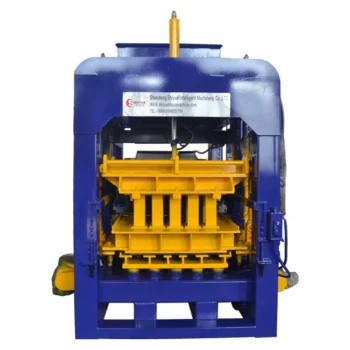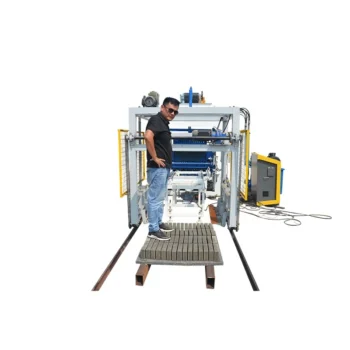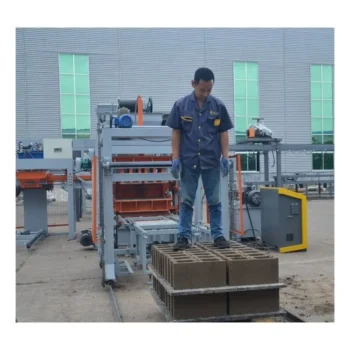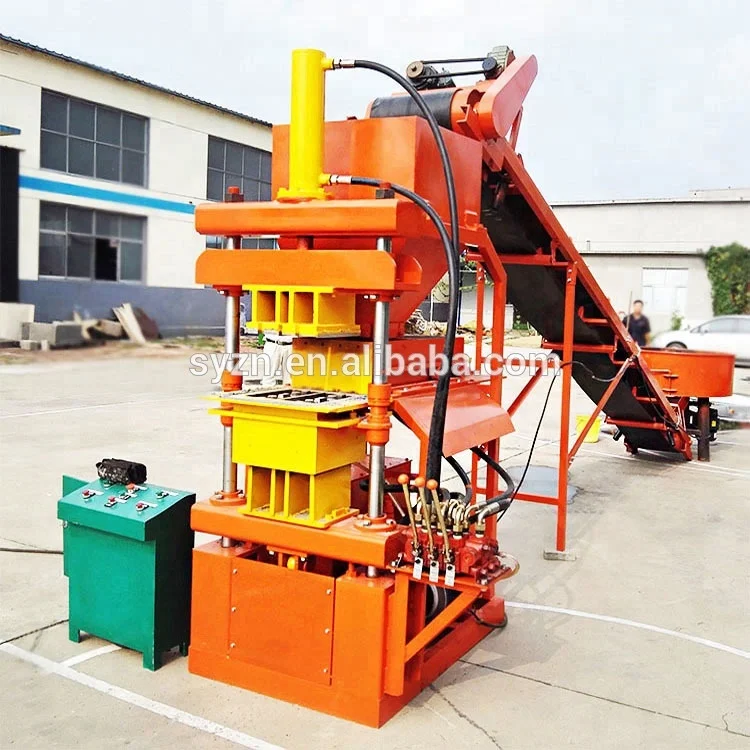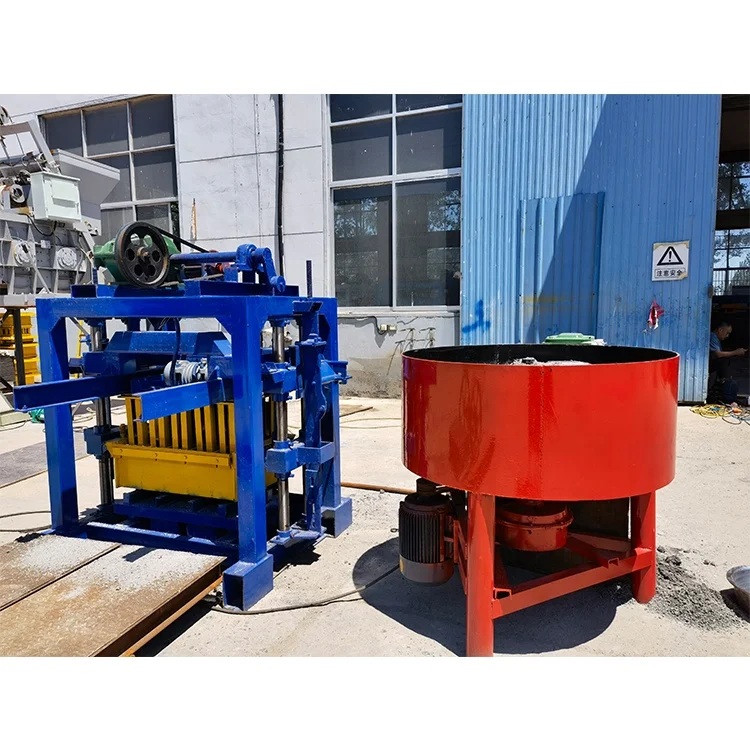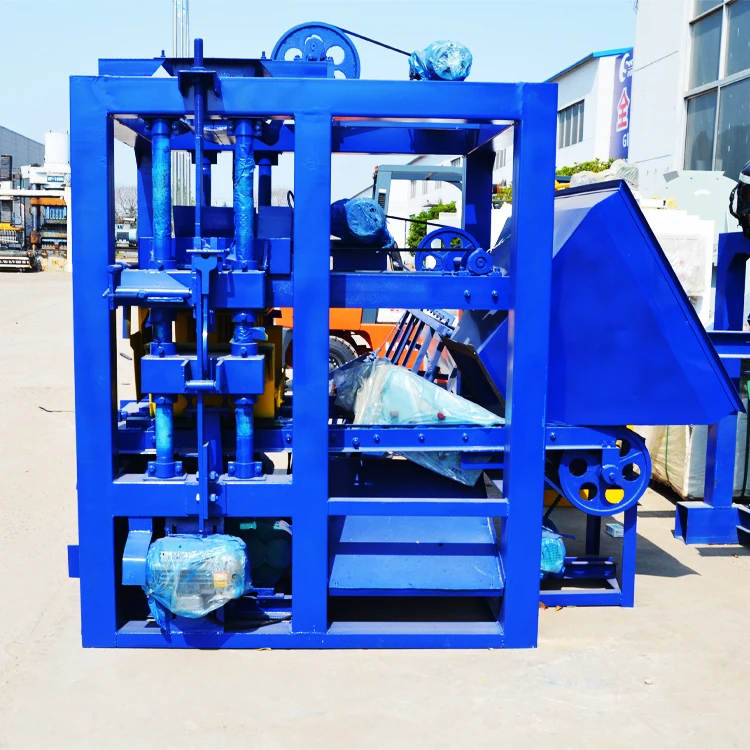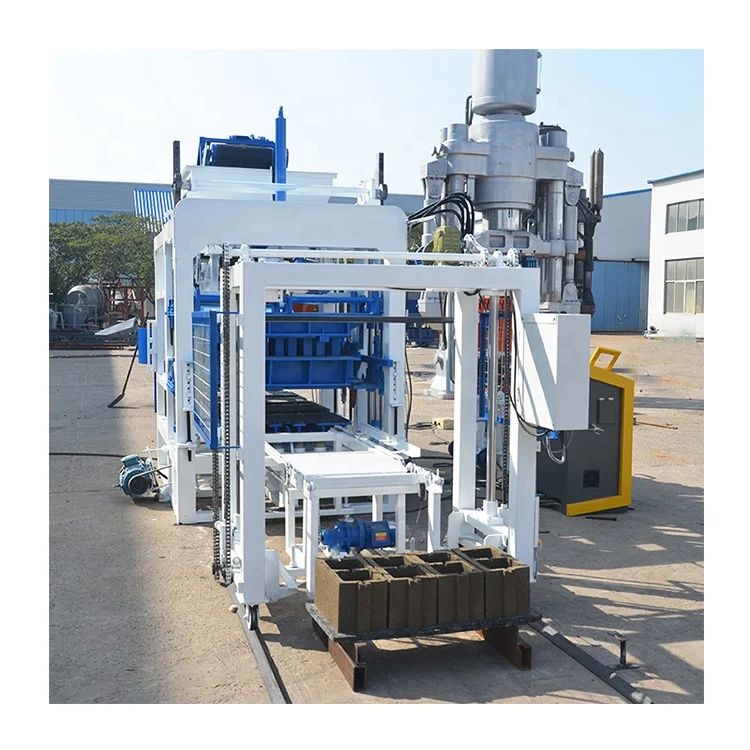
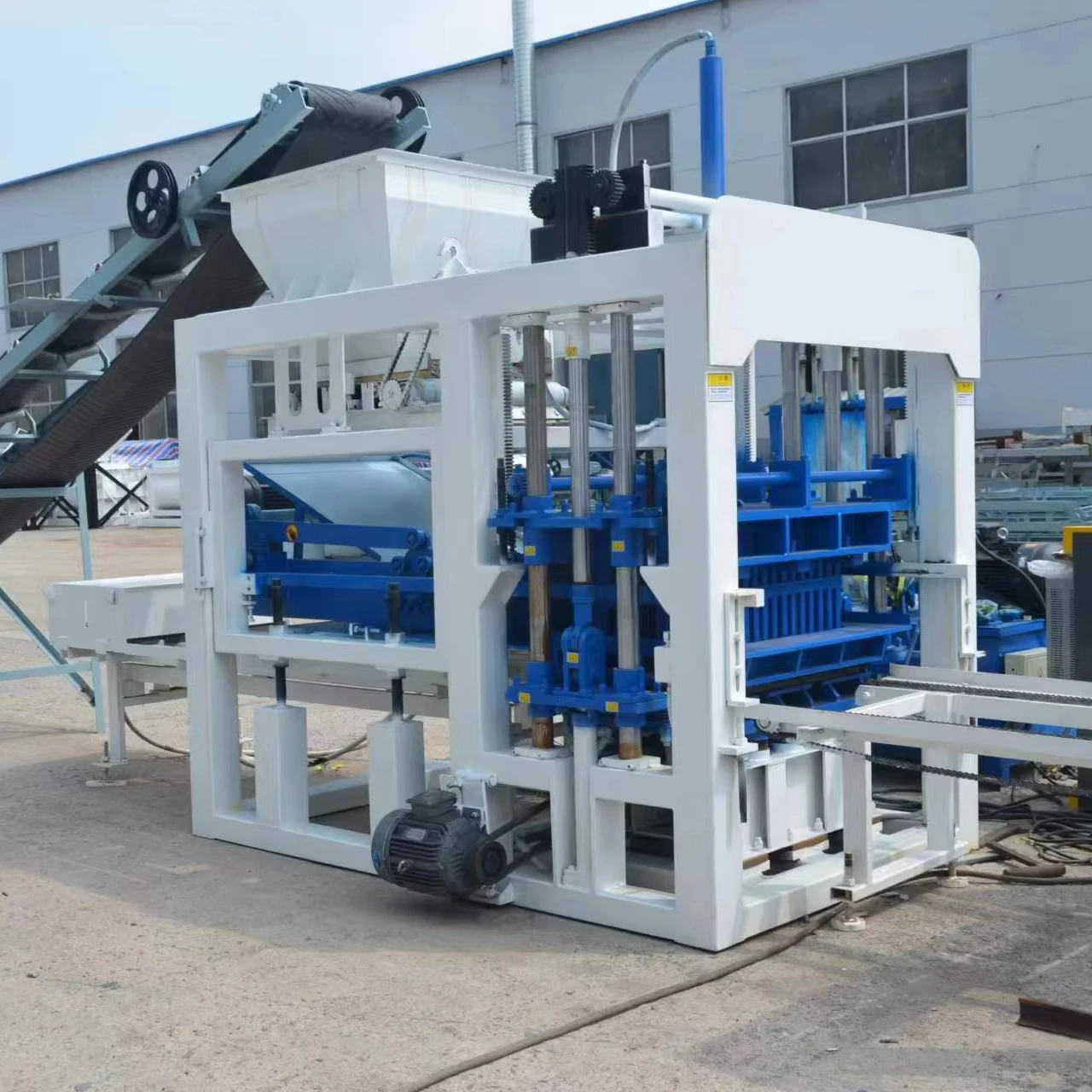
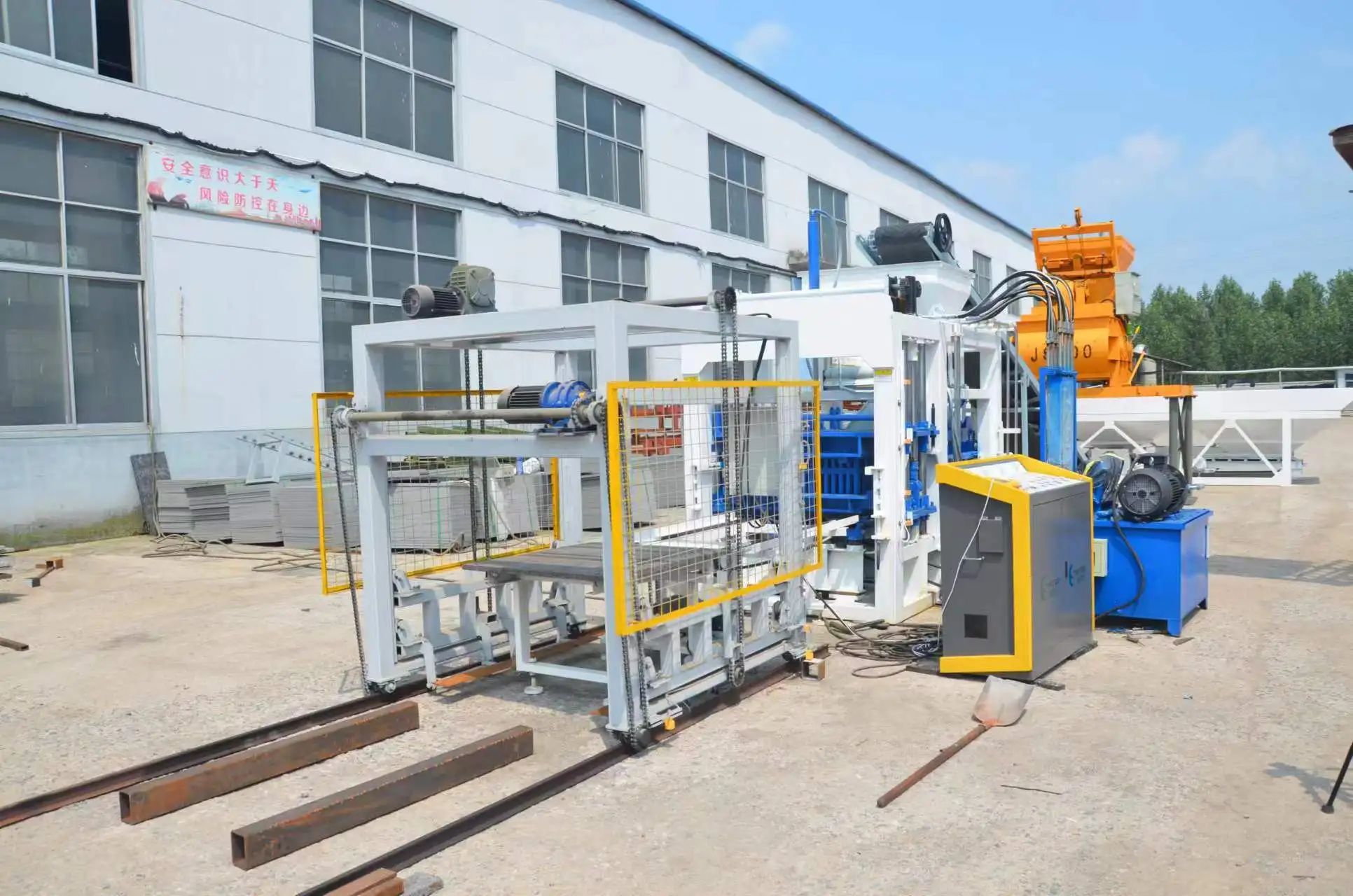
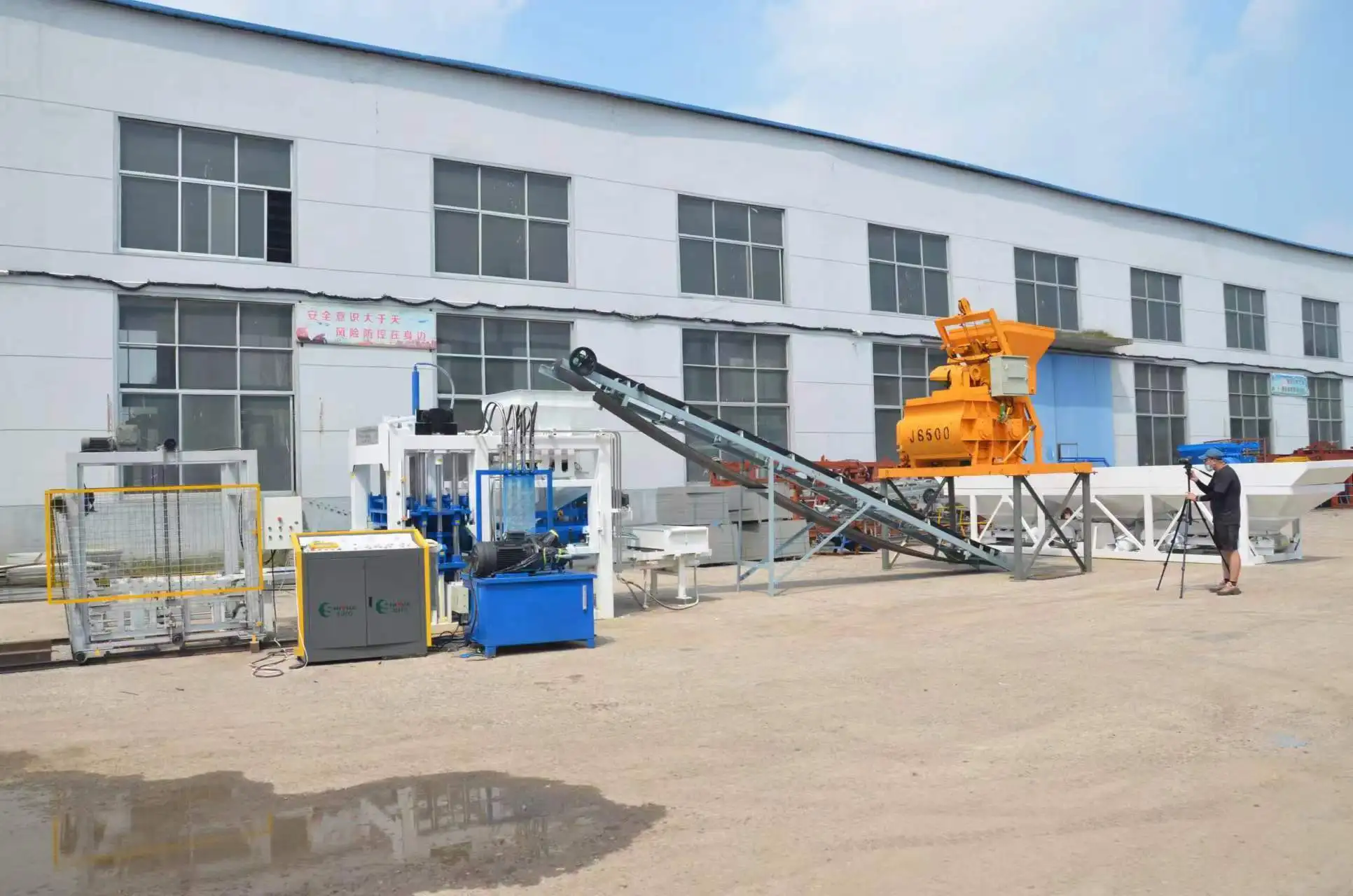
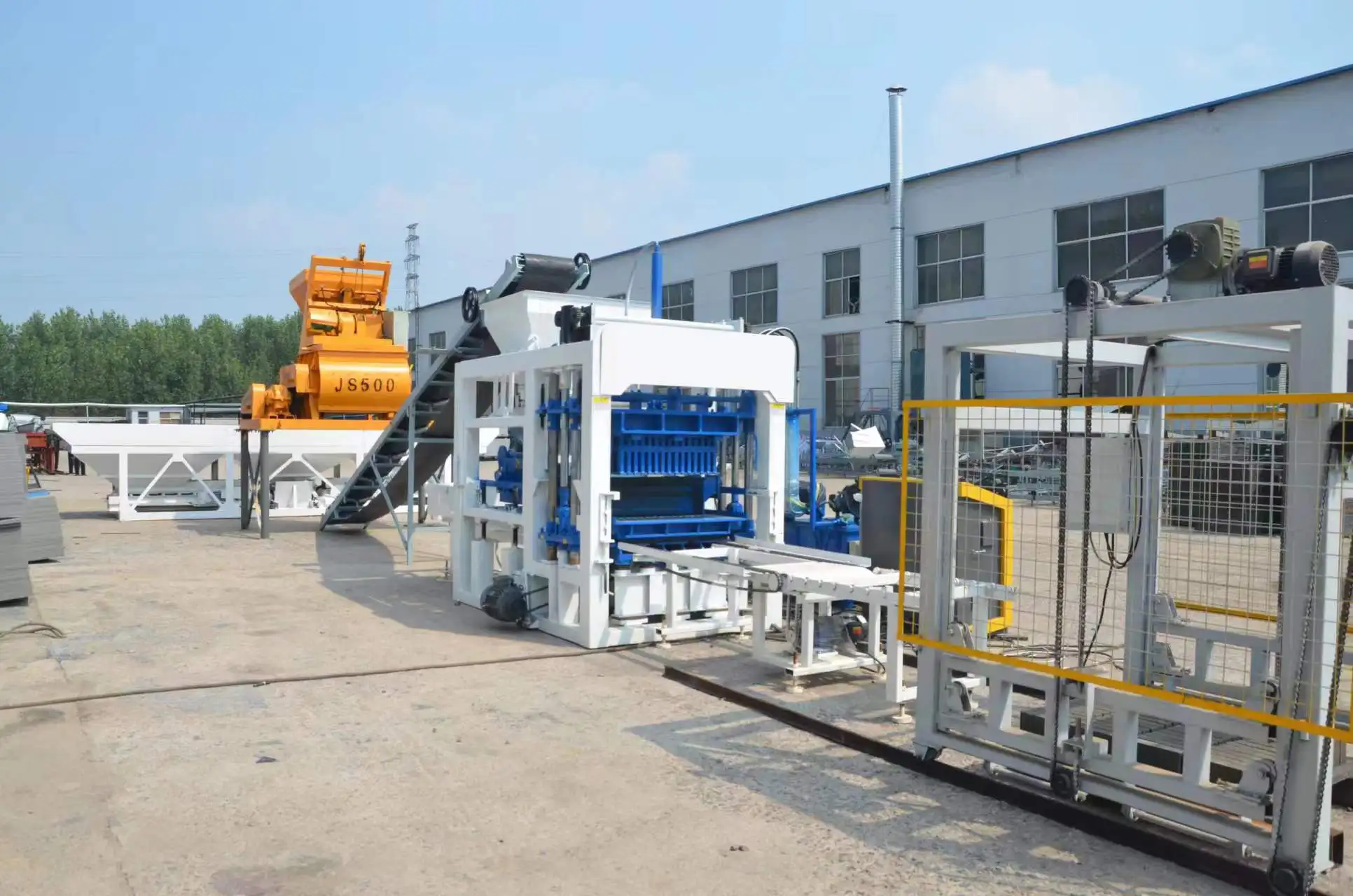
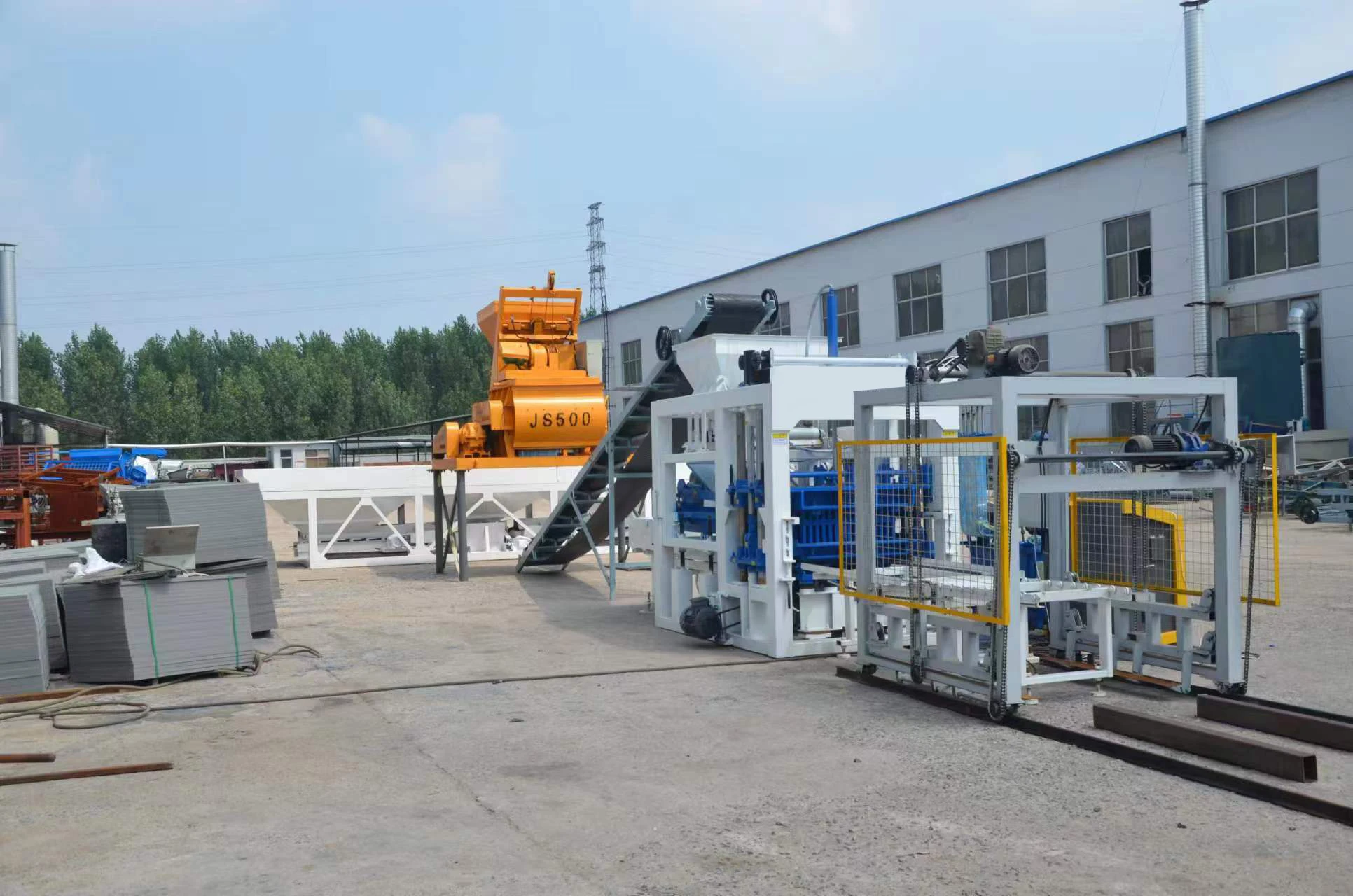

Description
Configured to Your Block Format — Every QT6-15 parameter is set against the buyer’s target brick dimensions, local aggregate, and curing setup, not a catalogue default.
Technical Specifications
| Parameter | Value |
|---|---|
| Model | QT6-15 |
| Product Type | Automatic Concrete Block Making Machine |
| Host Machine Dimension | 5870×2220×2850mm |
| Host Machine Weight | 5.5 Tons |
| Molding Area | 1050×500mm |
| Workshop Area | 200㎡ (basis to be confirmed) |
| Host Machine Power | 31.5kW |
| Vibration Force | 55kN |
| Vibration Method | Hydraulic + Platform Vibration |
| Vibration Frequency | 2800–4500 Times/Minute |
| Pallet Size | 1100×550×25mm |
| Voltage | 220/380/415/440V (Customized) |
| Molding Period | 15 Seconds (basis not stated in source) |
| Control System | Siemens PLC with independently developed control program |
| Motor | Germany SIEMENS brand or CE standard brand |
| Travel Switch | France Schneider / Japan Omron |
| Mould Treatment | Heat treatment + carburizing treatment, hardness 54–58 HRC, lifespan >100,000 cycles |
| Welding | Carbon dioxide protection welding, CE standard materials |
| Batching Machine | PLD1200, 1200L hopper capacity, 4×2.5m³ storage hopper, 56m³/h productivity, ±2% ingredient precision |
| Concrete Mixer | JS500, 800L charging volume, 500L discharging volume, 25m³/h capacity, 18.5kW motor |
| Stacker | SY-4, 3kW, mobile pallet stack, 600kg weight |
| Automation Level | Automatic |
| Standards | CE |
Application Suitability
| Application | Material or Output |
|---|---|
| Hollow Block Production | Crushed stone, river sand, cement, fly ash, lightweight aggregates |
| Solid Block Production | Dense aggregate mixes, stone dust, cement blends |
| Paving Block Production | High-strength concrete mixes, pigmented face layers |
| Interlocking Brick Production | Laterite, quarry dust, volcanic ash blends (subject to lab trial) |
What "15-Second Cycle Time" Leaves Out About the QT6-15 Block Machine Specifications
A cycle time printed on a nameplate tells you nothing unless you know which block format, wall thickness, and target strength it was measured on.
I have watched buyers take a headline figure from a brochure and build their entire daily production plan around it. When the QT6-15 arrives and they load a mould for a thick-walled 200mm hollow block, the actual cycle stretches well past the quoted number because the vibration table n*row cavity. The QT6-15 block machine specifications must always be read format by format. [NEED_CITE: block cycle time variance across mould geometries and mix stiffness].
Matching the Vibration Profile to Your Mix Design
The QT6-15 delivers 55kN vibration force through a combined hydraulic and platform vibration system, running between 2800 and 4500 times per minute. That frequency range matters because a light aggregate like pumice needs a different energy profile than a dense crushed granite mix. We run your local aggregate sample through trial pressings to find where the frequency and hydraulic pressure produce the target compressive strength without cracking the green block.
Mould Selection and Format Flexibility
Every QT6-15 block machine specifications sheet should list which block formats the quoted mould set covers. The 1050×500mm molding area accommodates multiple cavity layouts — you might run a 6-cavity hollow block mould and swap to a 12-cavity paving block mould on the same pallet size. Moulds are carburized to 54–58 HRC hardness and rated for over 100,000 cycles, which reduces the urgency of sourcing first replacements. [NEED_CITE: mould wear rates across aggregate hardness scales].
Specifying the Line Around the Press
A press that waits for material is wasted capital. The PLD1200 batching machine runs at 56m³/h with ±2% ingredient precision, and the JS500 mixer discharges 500L batches at 25m³/h — these rates are selected so the press is not starved during consecutive cycles on a standard hollow block format. The 1100×550×25mm pallet size is locked in before production so it matches your curing rack spacing and the fork tine width you already have on site.
How the Control System Holds Consistency
The Siemens PLC runs a custom-developed program that stores recipes for each block format. When the operator selects a mould profile, the system adjusts vibration duration, hydraulic pressure ramp, and feed cycle to match that specific cavity. This removes the guesswork that causes batch-to-batch strength variation, especially on shift changes or when a new operator takes the controls.
The Hidden Cost of Skipping the Voltage Conversation
I once saw a block line sit unpowered for three weeks because the buyer assumed the factory would ship at 380V/50Hz, and the plant was wired for 415V/60Hz. The QT6-15 voltage is configurable across 220/380/415/440V, but that configuration only works if someone confirms the target before the motor is wound and the transformer is sourced. [NEED_CITE: voltage and frequency standards by export market]. Getting the PLC display language right at the same stage saves hours during commissioning — the operator needs to read fault codes in a language they understand.
Why Sourcing Here Reduces Mismatch Risk
Block machinery is our single focus, so the QT6-15 is specified as one matched system: press, mould, pallet, batching, mixing, and stacking are all sized against each other, not pulled from separate catalogues. We configure the vibration force and hydraulic pressure against your actual mix design and target block format rather than a default setting. Mould design covers the formats your market sells, including custom drawings. The automation level is selectable — you can start semi-automatic and add stacking later. Installation support includes operator training on your specific block types.
Documentation & Verification
- Line layout with capacity calculation stated per block format and mould cavity count
- Mould drawing and format list confirming covered brick dimensions
- Voltage, frequency, and PLC display language confirmation record
- Factory test record showing actual cycle times on your target block format
- Hydraulic and electrical schematic matching as-built configuration
Installation, Commissioning & Support
- Foundation plan matched to the 5870×2220mm host footprint and vibration isolation requirements
- Dedicated power circuit sized for 31.5kW host draw plus mixer and batching loads
- Machine dispatched in dismantled modules for container loading, reassembled on site
- First-run commissioning with parameter tuning against your local aggregate sample
- Operator training covering mould change, recipe selection, and daily maintenance
- Wear parts list with lead times for hydraulic seals, vibration springs, and mould liners
Before You Request a Quote
Tell us which block formats your market actually sells — dimensions, wall thickness, and target compressive strength. Share a sample or analysis of your local aggregate so we can trial the mix before locking in vibration settings. Confirm your site voltage, frequency, and the language your operators need on the PLC screen.
Frequently Asked Questions
Q: What is the real daily output of the QT6-15 for my specific block format?
A: Daily output depends on block size, wall thickness, and mix stiffness — a 15-second cycle applies only to a specific format under test conditions. We calculate realistic output per format you plan to produce and state it on the capacity document so your production plan matches reality, not a brochure headline.
Q: How do I match mould selection to the blocks my market sells?
A: We start with the dimensions and strength grades your customers demand, then design mould cavity layouts that fit the 1050×500mm molding area. Each quoted mould set comes with a format list and drawing so you can verify coverage before production begins.
Q: What pallet size should I choose given my curing area and forklift?
A: The standard 1100×550×25mm pallet is specified alongside your curing rack dimensions and forklift tine width. We confirm pallet material — steel, bamboo, or composite — based on your local climate and expected handling cycles before the order is locked.
Q: How is the QT6-15 configured to my local aggregate rather than a default?
A: We ask you to ship a sample of your local aggregate so we can run trial pressings and find the vibration frequency and hydraulic pressure that produce your target block strength. The PLC recipe is then set to those proven parameters before dispatch.
Q: What is the mould change time and does it support format flexibility?
A: Mould change duration depends on whether you select the quick-release system or a bolted setup. We state the change time on the specification sheet for your chosen system so you can plan shift schedules around your format rotation needs.