Description
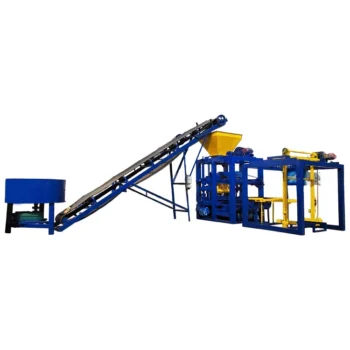
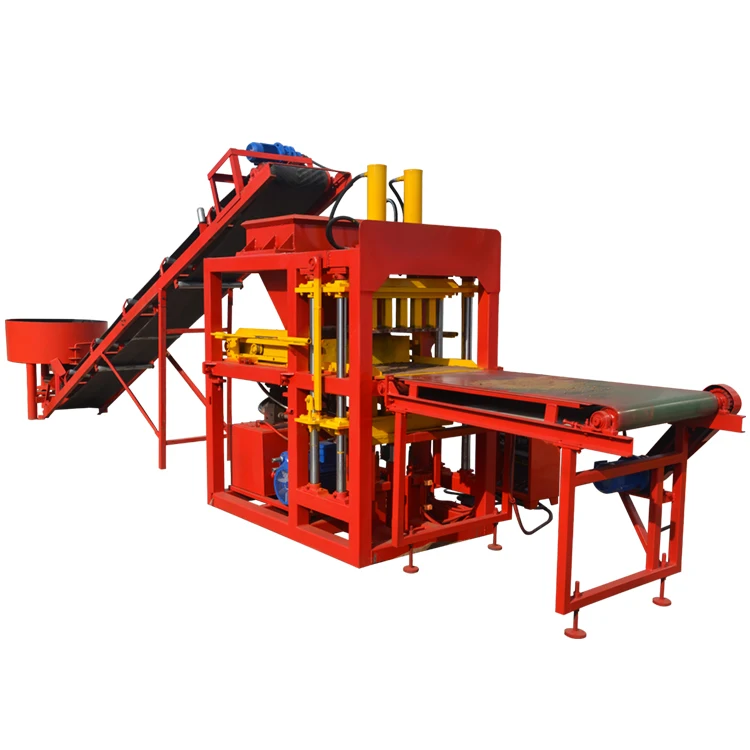
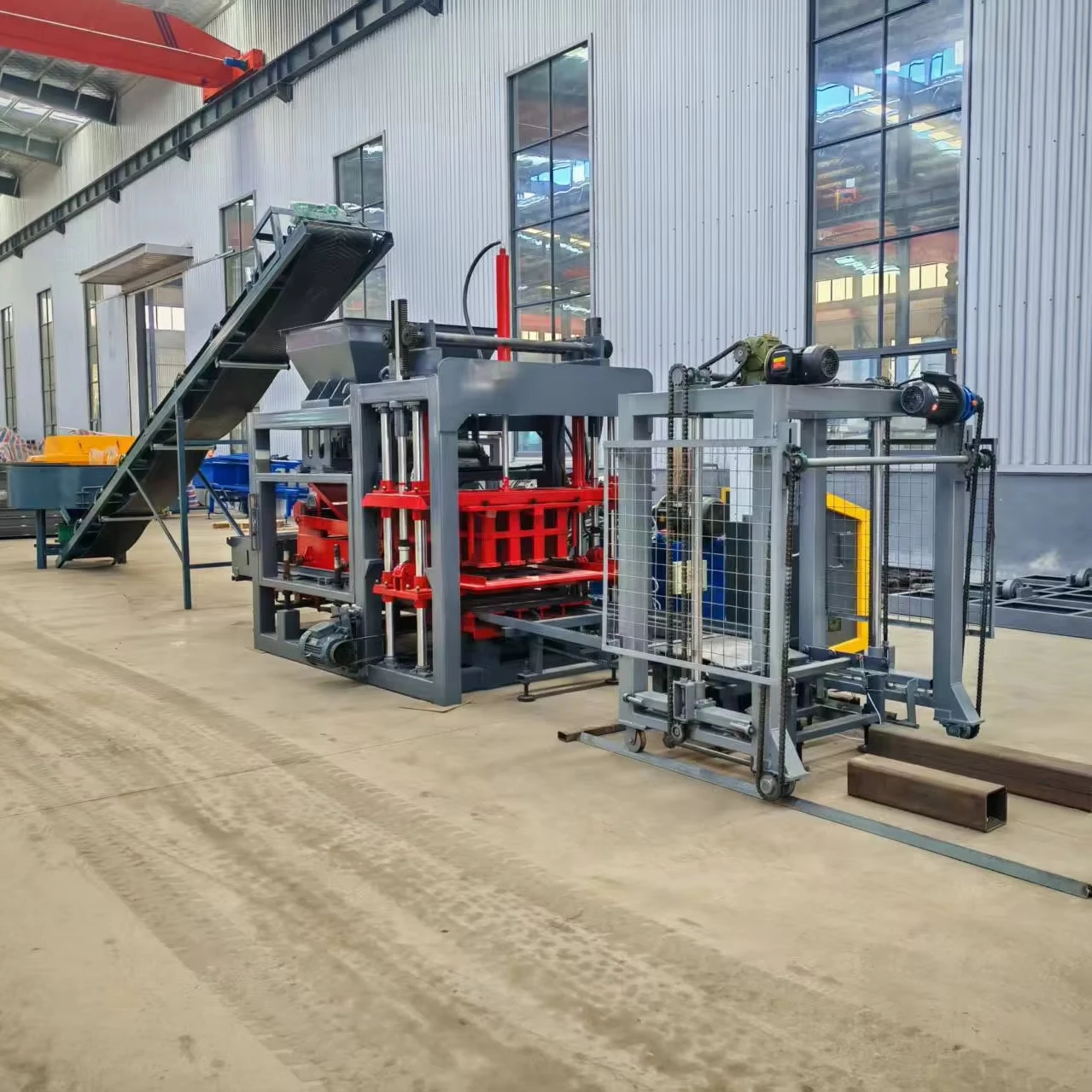
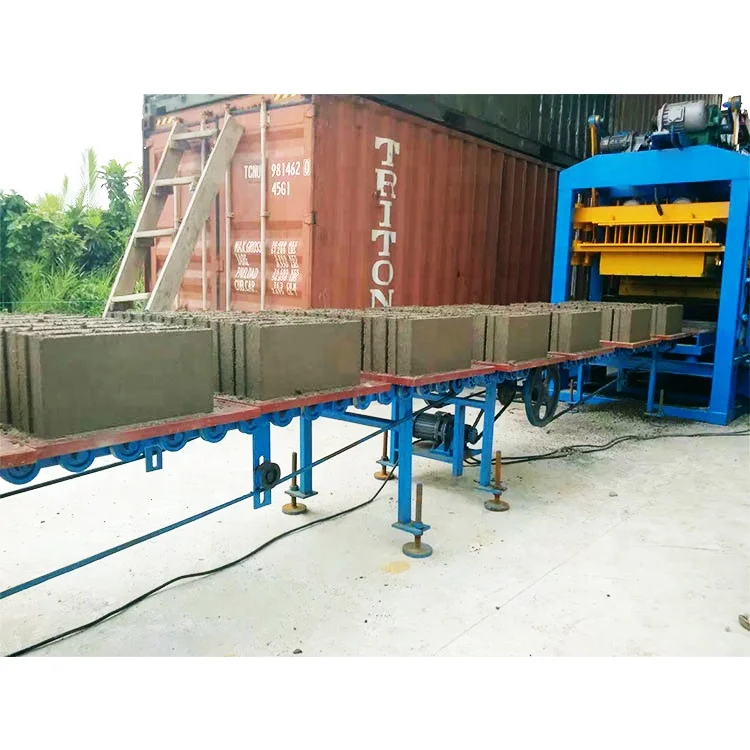
Matched-System Block Press — every QTJ4-25 configuration is paired with the specific mould cavity count, pallet size, and mixer model required to hit the stated output per block format.
Technical Specifications
| Parameter | Value |
|---|---|
| Model | QTJ4-25 |
| Product Type | Semi-Automatic Concrete Block Making Machine |
| Machine Dimensions | 3060 × 1730 × 2580 mm |
| Total Weight | 4 T |
| Cycle Time | 25 s |
| Vibration Force | 45 KN |
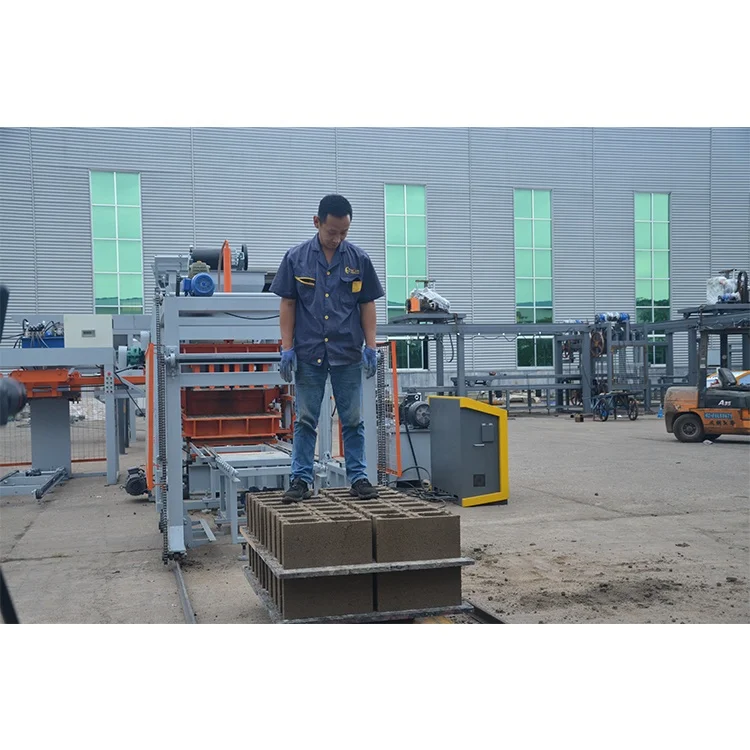
| Pallet Size | 850 × 550 mm |
| Block Height Range | 40 – 280 mm |
| Mixer Model | JQ500 |
| Belt Conveyor Length | 8 m |
| Workshop Area Required | 50 – 150 m² |
| Material Storage Area Required | 300 – 500 m² |
| Motor Brand | Germany SIEMENS or ABB |
| Control System | Electric control (PLC availability to be confirmed) |
| Voltage | 380V, 3-phase, 50Hz (customizable to buyer’s local voltage) |
| Automation Level | Semi-automatic |
| Output Capacity (Hollow) | 480 pcs/h based on 400×200×200mm hollow block, 4 pcs/mould |
| Output Capacity (Hollow) | 600 pcs/h based on 400×150×200mm block, 5 pcs/mould |
| Output Capacity (Hollow) | 840 pcs/h based on 400×100×200mm block, 7 pcs/mould |
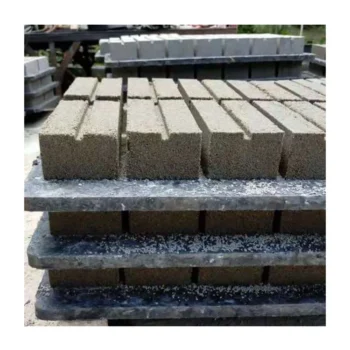
| Output Capacity (Solid) | 2880 pcs/h based on 240×115×53mm solid brick, 24 pcs/mould |
| Mould Change System | Manual mould change supported |
| Stacking Method | Manual (semi-automatic configuration) |
| Warranty | 1 year (excluding wearing parts) |
Application Suitability
| Application | Material or Output Context |
|---|---|
| 400×200×200mm hollow block | Standard concrete mix with local aggregate, 4 cavities per cycle |
| 400×150×200mm hollow block | Lighter wall partition block, 5 cavities per cycle |
| 240×115×53mm solid brick | High-density clay or fly-ash blend, 24 cavities per cycle |
| Interlocking and paving blocks | Pigmented face-mix concrete, mould-dependent cavity count |
| Curbstone and grassed bricks | Coarse aggregate mix with reinforced mould tooling |
| On-site contractor production | Crushed stone and cement fed through JQ500 mixer |
| Small plant startup | Fly ash, cement, and locally sourced sand within 50–150 m² workshop |
What "480 Blocks per Hour" Actually Means on a Job Site
A rated capacity figure is useless the moment it leaves the specific block format and cavity count it was measured against.
I have stood on production floors in Latin America watching operators chase a brochure number that never materialized because the quoted capacity assumed a 400×200×200mm hollow block while the plant was actually running a 400×100×200mm partition format with a completely different cycle dynamic. When the QTJ4-25 block machine specifications are reviewed without tying each output tier to its exact mould, buyers end up signing for a machine that will not meet their daily target on the product they actually sell. [NEED_CITE: block machine output calculation methodology by format and cavity count]
Matching the Press to Your Block Format
The QTJ4-25 semi-automatic block making machine covers a block height range from 40 mm to 280 mm, which spans most standard hollow blocks, solid bricks, pavers, and interlocking formats found in small-to-medium markets. The 25-second cycle time holds for the standard hollow block formats listed in the specification table, but switching to a denser solid brick or a face-mix paver alters both the vibration duration and the demoulding behaviour. Choosing the right QTJ4-25 block machine specifications set starts with defining the two or three formats that will generate the majority of your revenue.
Mould Inventory and Format Changeover Reality
Manual mould change on this press is straightforward mechanically, but the time it takes depends on operator familiarity and whether the replacement mould is staged and pre-heated if required. A plant running hollow blocks five days a week and pavers on the sixth will handle the swap differently from a contractor alternating formats multiple times per shift. Before confirming your order, the exact mould list and format drawings should be reviewed so there is no ambiguity about which tooling ships with the machine and which is optional. [NEED_CITE: block machine mould change procedure and tooling compatibility]
Reading the Vibration and Pressure Numbers Correctly
The 45 KN vibration force must be evaluated alongside your specific mix design and the local aggregate you intend to feed into the JQ500 mixer. A volcanic scoria or lightweight pumice absorbs vibration energy differently from crushed granite, which means the same force rating can produce blocks of noticeably different density and compressive strength depending on the raw material. The pallet size of 850 × 550 mm should also be checked against your curing area dimensions and the forklift you already have on site — a mismatch here creates a bottleneck in pallet circulation that has nothing to do with the press itself. Motor selection between SIEMENS and ABB units gives buyers flexibility for spare parts sourcing in their local market, and the customizable voltage configuration ensures the QTJ4-25 block machine specifications align with the grid standard at the installation site.
The Cost of Skipping the Aggregate Conversation
Buyers who confirm a machine order before sharing their local aggregate gradation and mix proportions frequently encounter inconsistent block strength during the first production runs. The vibration timing and pressure curves that work with river sand do not transfer directly to crushed limestone or recycled concrete aggregate, and recalibrating on site after delivery adds days of downtime and material waste. This is a pattern I have seen repeat across multiple job sites, and it is entirely avoidable if the QTJ4-25 block machine specifications are locked only after the mix design is confirmed. [NEED_CITE: aggregate compatibility and vibration calibration for concrete block production]
Why Buyers Specify This Line Here
Block machinery is the sole product focus, so the press, mould, pallet, and mixer are quoted as one matched system rather than assembled from unrelated suppliers. Configuration decisions are made against your actual mix design, local aggregate, and the specific block format your market demands — not pulled from a catalogue default. Mould design and supply cover the formats you sell, including custom drawings when standard tooling does not match your product line. The automation level is selectable, meaning a buyer can start with the semi-automatic QTJ4-25 and plan a future upgrade path without replacing the entire press. Installation and commissioning support includes operator training so the crew understands cycle timing, mould change procedure, and daily maintenance from the first production day.
Documentation & Verification
- Line layout and capacity calculation stating the block format assumed for each output figure
- Mould drawing and format list confirming included and optional tooling
- Pallet specification sheet matching 850 × 550 mm size to your curing area and forklift
- Voltage, frequency, and control language confirmation document before shipment
- Factory test record on your target block format prior to dispatch
- Operation and maintenance manual covering JQ500 mixer and press servicing
Installation, Commissioning & Support
- Workshop floor must accommodate 3060 × 1730 mm press footprint plus 8 m belt conveyor run
- Dedicated 3-phase circuit at confirmed voltage and frequency for SIEMENS or ABB motor
- Machine shipped in dismantled state for container loading with reassembly on arrival
- Vibration timing and pressure curves calibrated to your aggregate during first production run
- Operator training on manual mould change, cycle control, and daily lubrication schedule
- Wear parts list and mould inventory provided for first-year replacement planning
What to Prepare Before Requesting a Quote
Share the exact block formats you plan to produce, including dimensions and target daily output for each, along with a sample or gradation report of your local aggregate. Confirm the voltage and frequency standard at your site, the control panel language your operators need, and the dimensions of your curing area so the pallet circulation plan can be sized correctly. If you have existing mixers or handling equipment, provide their specifications so the line layout can integrate them rather than duplicate them.
Frequently Asked Questions
Q: How is the output capacity calculated for each block format?
A: Every output figure is tied to a specific block size and mould cavity count. The 480 pcs/h rate applies to 400×200×200mm hollow blocks with 4 cavities per cycle at the rated 25-second cycle time. Different formats change both the cavity count and the material flow behaviour, so each format you plan to run will have its own calculated capacity.
Q: Which moulds ship with the machine and how long does a change take?
A: The included mould list is confirmed during the quotation stage based on your target formats. Manual mould change is supported, and the actual swap duration depends on operator familiarity and whether the replacement mould is pre-staged at the press.
Q: How is the machine configured for my local raw material?
A: Configuration begins with your aggregate gradation and mix proportions. Vibration timing and pressure curves are adjusted during commissioning to match the density and strength requirements of blocks made from your specific material blend.
Q: Will the pallet size work with my existing curing setup?
A: The standard pallet is 850 × 550 mm. Before shipment, your curing area dimensions and forklift specifications are reviewed to confirm that pallet circulation and stacking will function without modification to your existing infrastructure.
Q: What voltage and control language will the machine use?
A: The base configuration is 380V, 3-phase, 50Hz, but voltage and frequency are customizable. Control panel language is confirmed during the order process so operators can read the interface from the first production day.