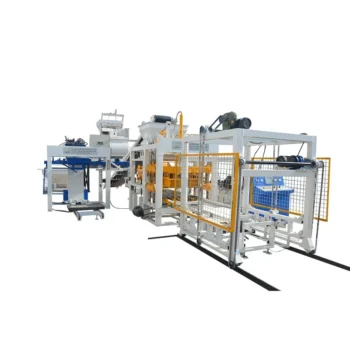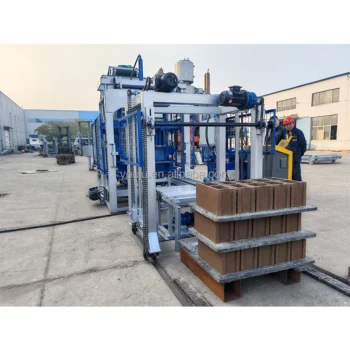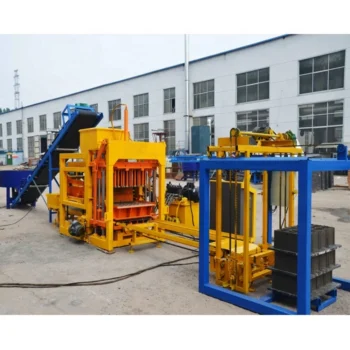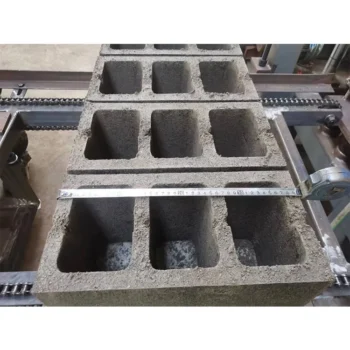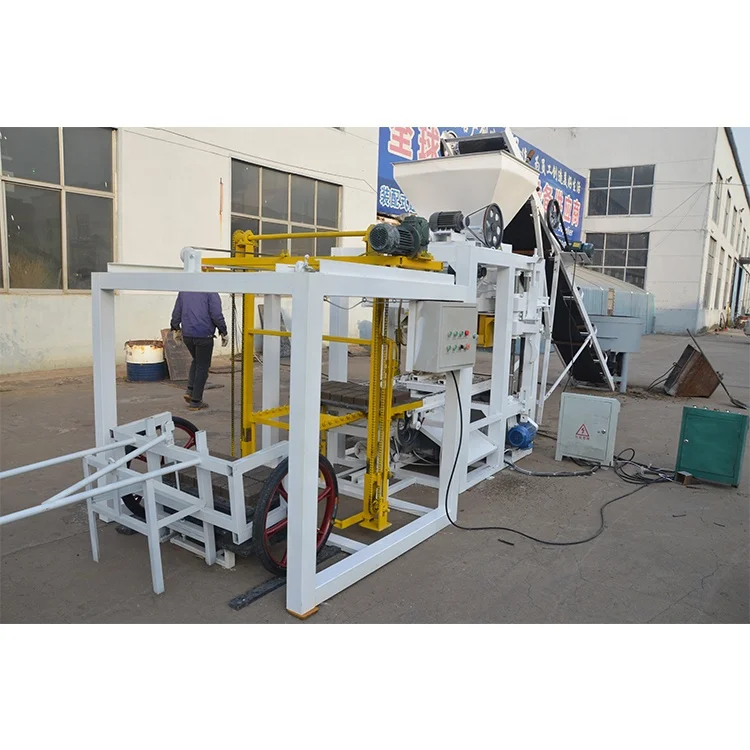
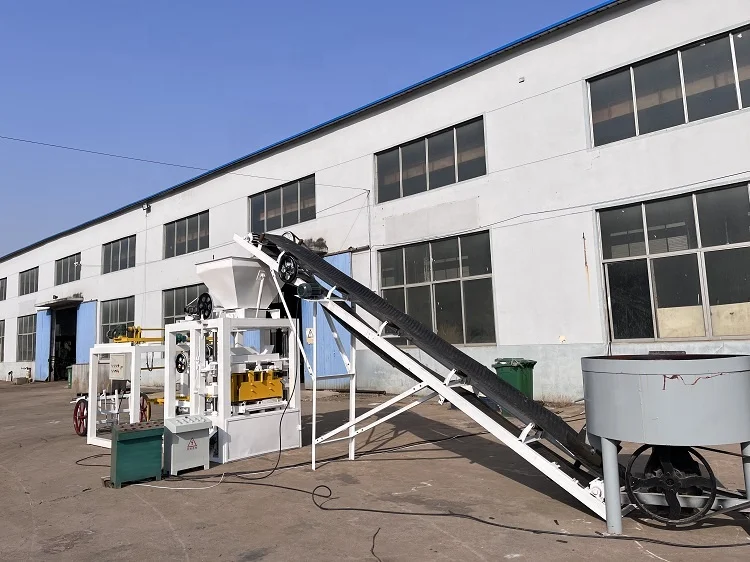
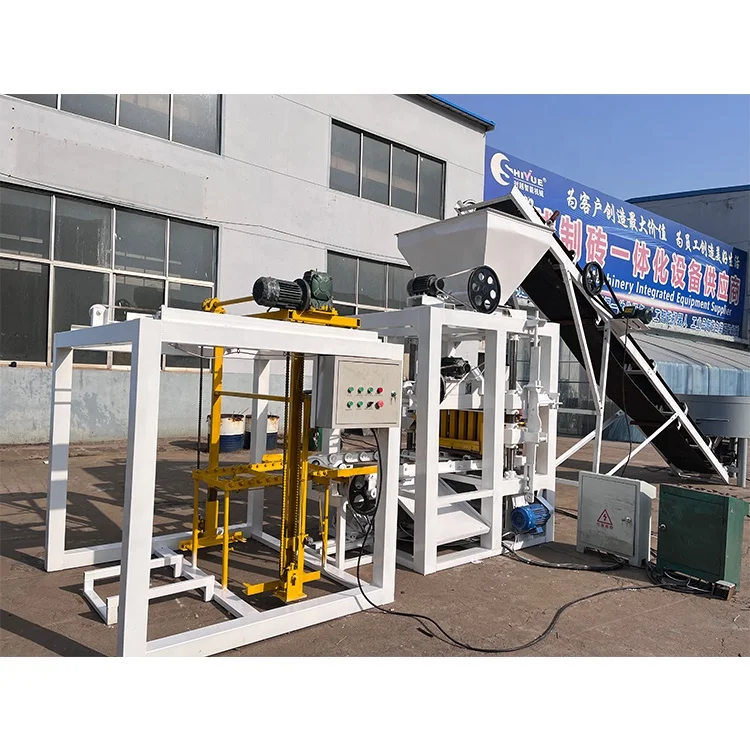
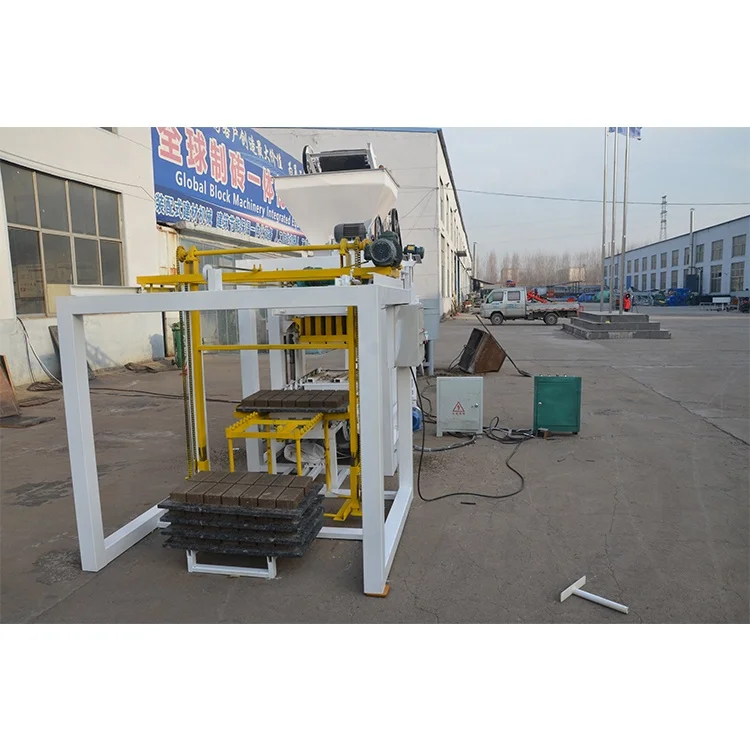
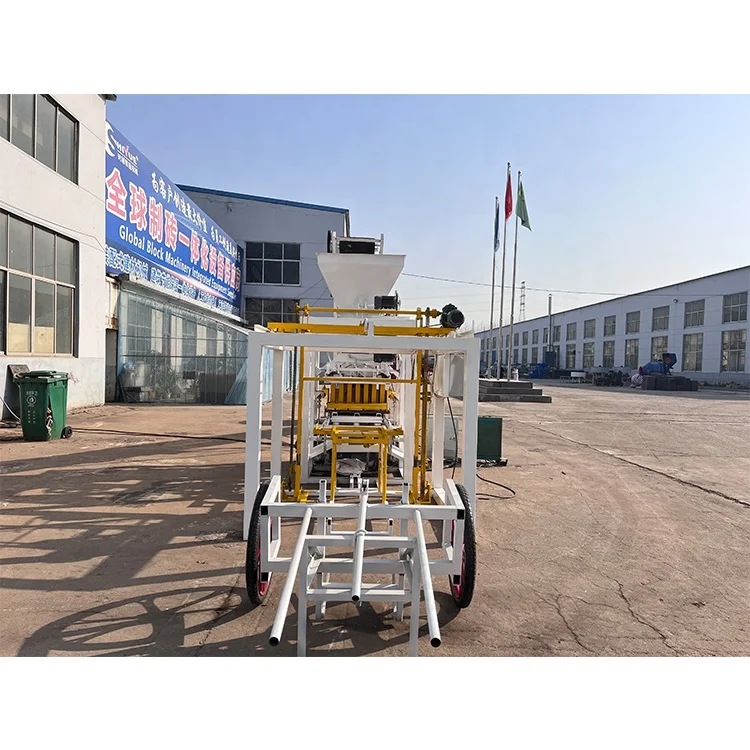
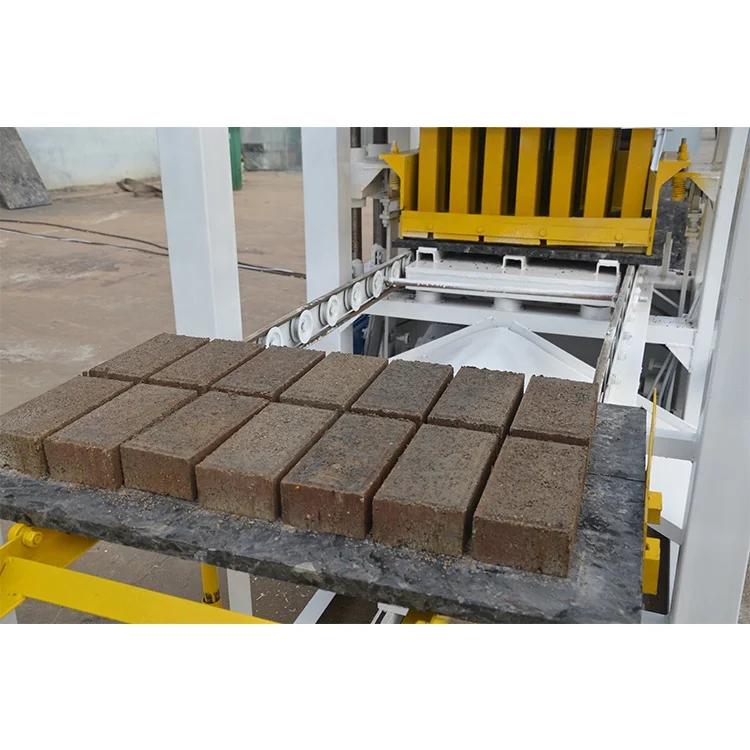
Description
Mould-to-Press Matching — the QTJ4-24 is configured against the buyer’s actual block format, local aggregate, and curing setup rather than shipped as a catalogue default.
Technical Specifications
| Parameter | Value |
|---|---|
| Model | QTJ4-24 |
| Product Type | Stationary Block Making Machine |
| Overall Dimensions (L×W×H) | 3600×1700×2560 mm |
| Pallet Size | 850×450 mm |
| Molding Cycle | 24–26 s (basis to be confirmed per block format) |
| Overall Power | 11.95 kW |
| Vibration Force | 45 kN |
| Vibration Configuration | 2×3 kW lower vibrators + 2×1.5 kW upper vibrators |
| Reducer for Mold Lifting | 350-type |
| Material Distribution | Full-automatic spiral |
| Molding Method | Mechanical |
| Total Mass | 2 T |
| Materials | Cement, sand, stone |
| Automation Level | Semi-automatic (mechanical molding, spiral feeding) |
| Stacking Method | Manual |
| Control System | To be confirmed (PLC or manual panel) |
| Voltage & Frequency | To be confirmed for target market |
| Mould Format | To be confirmed (hollow / solid / paving options) |
| Output Capacity | Basis to be confirmed per block format and material |
| Warranty | 1 year (whole machine, excluding spare parts) |
Application Suitability
| Application | Material or Output |
|---|---|
| Hollow brick production for wall construction | Cement, sand, crushed stone aggregate |
| Solid block manufacturing for load-bearing structures | Cement, sand, stone with adjusted mix ratio |
| Paving brick production for walkways and yards | Cement, sand, fine aggregate |
| Interlocking brick for retaining walls and slopes | Cement, sand, stone with interlock mould |
What a "24-Second Cycle" Actually Means for Your Daily Output
The cycle time only translates to real output when the block format, mould cavity count, and material feed rate are all stated alongside it.
When stationary block making machine specifications list a single cycle number, buyers often multiply that figure by the hours in a shift and expect the result on the curing racks. In practice, the mould cavity count for a 400×200×200 mm hollow block differs from that of a smaller paving brick, so the pieces-per-cycle figure shifts every time you swap moulds. I have watched contractors in Southeast Asia set daily targets from a brochure number, only to find their actual count falling well short because the quoted cycle assumed a format they were not even producing [NEED_CITE: block format assumptions in capacity quotations].
How the QTJ4-24 Fits a Format-Specific Production Plan
The QTJ4-24 runs a mechanical molding cycle between 24 and 26 seconds, driven by four vibrators that together deliver 45 kN of compaction force. That vibration level, paired with the mechanical pressure of the mould head, determines the green strength of every block that leaves the press. The full-automatic spiral feeder ensures the cavity fills evenly before each press stroke, which reduces density variation across the pallet. Buyers evaluating stationary block making machine specifications should confirm which block format and cavity count the cycle time refers to before projecting daily numbers.
Pallet Sizing Against Your Existing Curing Area
The 850×450 mm pallet is the interface between the press and everything downstream. If your curing racks were built for a different pallet footprint, every board will need repositioning by hand before stacking — and the forklift tines may not match. We confirm pallet dimensions and material against the buyer’s curing rack spacing and handling equipment before the machine enters production. A mismatched pallet specification is one of the most common reasons a newly delivered block press sits idle during its first week [NEED_CITE: pallet and curing area alignment in block plants].
Reading the Vibration and Power Figures
The QTJ4-24 uses two 3 kW lower vibrators beneath the mould box and two 1.5 kW upper vibrators on the press head. Lower vibrators consolidate the mix from the base upward, while upper vibrators close the surface and sharpen the block edges. The combined 45 kN force is transmitted through a mechanical linkage rather than a hydraulic cylinder, which keeps maintenance simpler but means compaction pressure is fixed by the machine geometry — not adjustable on the control panel. The 11.95 kW total power draw includes the spiral feeder motor and the mold-lifting reducer, so the electrical supply must account for simultaneous starting current across all four vibrator motors plus the feeder.
The Cost of Skipping Format-Level Configuration
When a stationary block machine arrives without confirmed mould drawings, the buyer often discovers that the standard mould produces a block dimension the local market does not buy. Mould change then becomes a full-shift exercise because the replacement was never ordered. I have seen projects in Vietnam and the Philippines lose entire production weeks while waiting for a custom mould that should have been specified during the inquiry stage. Voltage and control panel language, if left to default settings, add another layer of delay once the electrician opens the cabinet on site [NEED_CITE: commissioning delays from unconfirmed voltage and language].
Why Buyers Source This Machine Through Our Configuration Process
Every QTJ4-24 leaves the factory with a line layout that states the exact block format behind each output figure, so there is no ambiguity between quotation and delivery. Mould design is handled against the buyer’s target block dimensions, including custom drawings when the local market demands a non-standard size. The pallet specification is cross-checked against the curing area and forklift already in use at the buyer’s site. Automation level is selectable — a buyer can begin with manual pallet handling and add stacking equipment later without replacing the press. Installation support includes operator training on mould change procedure and daily maintenance routines specific to the mechanical vibration system.
Documentation & Verification
- Line layout stating capacity per confirmed block format and mould cavity count
- Mould drawing and format list matching quoted cycle time to specific dimensions
- Pallet specification cross-referenced with buyer’s curing rack and forklift
- Voltage, frequency, and control language confirmation sheet before production
- Factory test record on the buyer’s target block format before dispatch
- Operation and maintenance manual covering the 350-type reducer and vibrator servicing
Installation, Commissioning & Support
- Foundation pad leveled to 3600×1700 mm footprint with anchor bolt template provided
- Dedicated circuit sized for 11.95 kW total draw plus simultaneous motor starting current
- Machine shipped as a single assembly with vibrators and spiral feeder pre-mounted
- First-run parameter setting includes vibration timing and spiral feed duration per mould
- Operator training on 350-type reducer lubrication and vibrator bolt torque checks
- Wear parts list covering mould liner, vibrator mounting bolts, and spiral flight edges
Before You Request a Quote
Share the exact block dimensions your market buys, including wall thickness for hollow formats, so we can match the mould cavity count and confirm cycle output. Tell us the local aggregate type and the cement ratio you plan to run, because these affect vibration tuning. Confirm your site voltage, frequency, and preferred control panel language to prevent electrical rework after arrival.
Frequently Asked Questions
Q: How is daily output calculated and which block format is the cycle time based on?
A: The 24–26 second cycle applies to a specific mould and block format that must be confirmed during the inquiry. Daily output is calculated by multiplying pieces per cycle by confirmed cycles per hour, then adjusting for mould change intervals and shift breaks. We provide a written capacity sheet stating the exact format behind every number before the order is placed.
Q: Which mould formats are available for the QTJ4-24 and how long does a mould change take?
A: The machine supports hollow, solid, paving, and interlocking brick moulds within the 850×450 mm pallet envelope. Mould change time depends on whether the replacement mould is pre-fitted with matching locator pins and whether the operator has been trained on the 350-type reducer release sequence. We supply a format list and changeover procedure with each delivery.
Q: How do you match vibration force and mechanical pressure to my local aggregate?
A: The 45 kN vibration force is delivered through four vibrators in a fixed mechanical arrangement. We adjust the vibration duration and spiral feed timing during commissioning to suit the buyer’s aggregate gradation and cement ratio, ensuring consistent block density without requiring hardware modification.
Q: What pallet size and material do you recommend for my existing curing area?
A: The standard 850×450 mm pallet must be checked against your curing rack spacing and forklift tine width. We confirm pallet material — timber, bamboo, or composite — based on local humidity and the expected curing cycle length, then match the pallet order to your rack capacity so no boards sit unused.
Q: What voltage, frequency, and control panel language will be confirmed before production?
A: Voltage and frequency are confirmed in writing before the machine enters production, matching the buyer’s site supply. The control panel language is set to the operator’s preference when a PLC is specified. This confirmation step prevents rewiring and reprogramming delays during on-site commissioning.