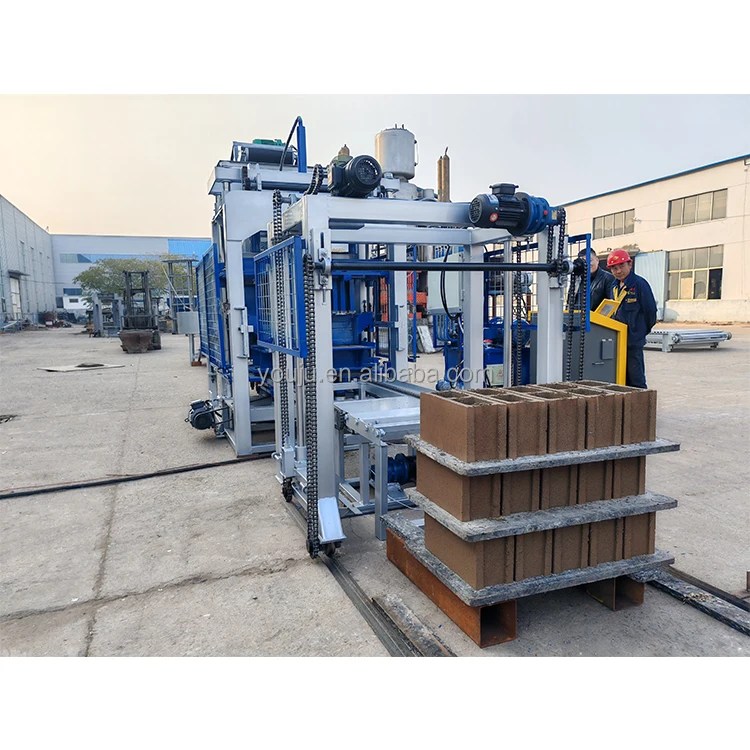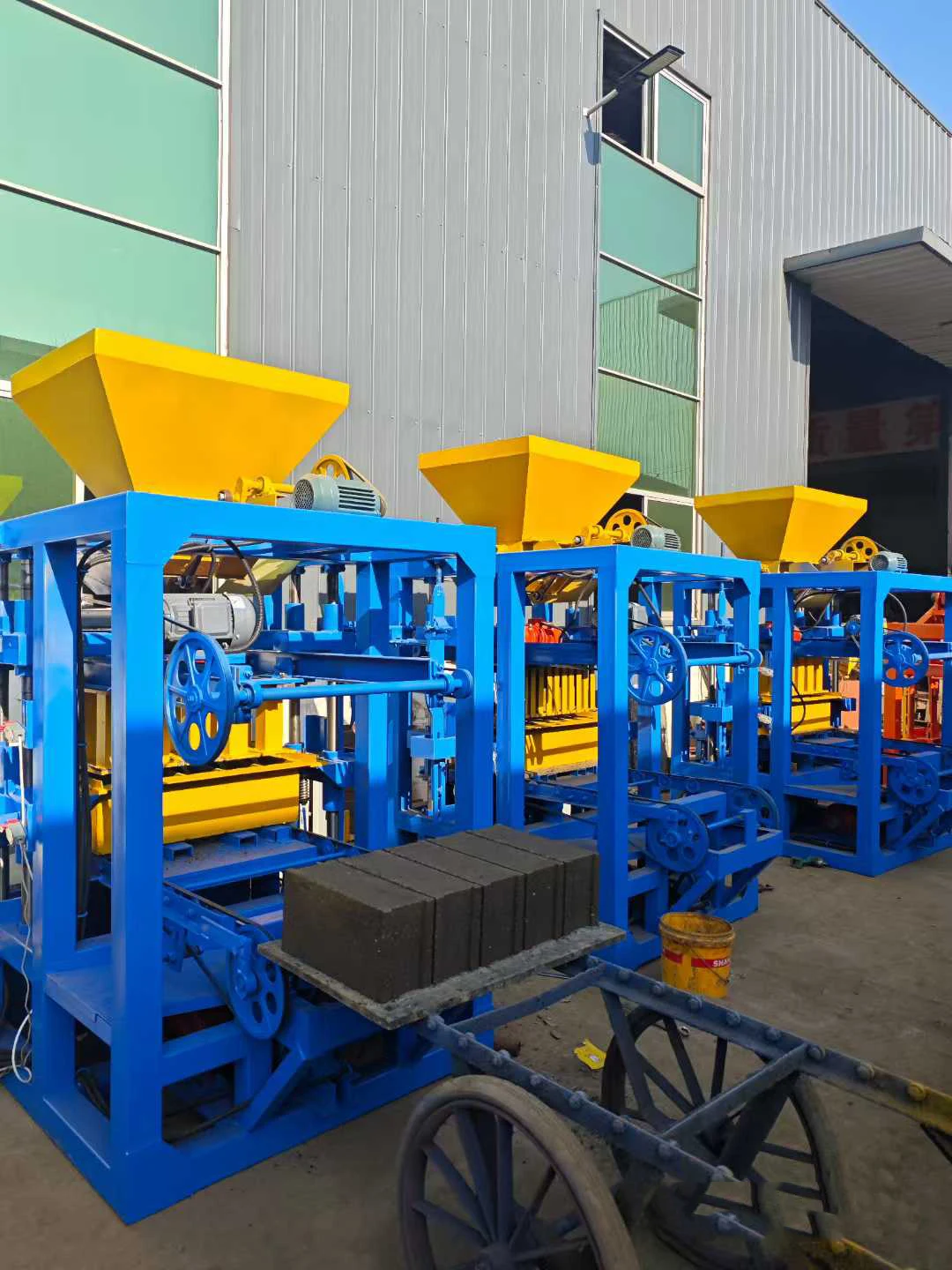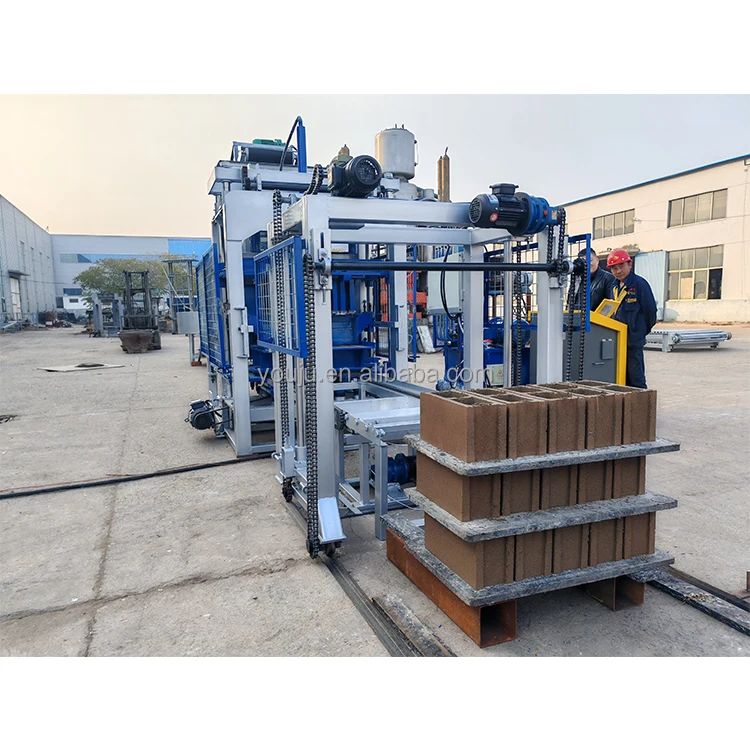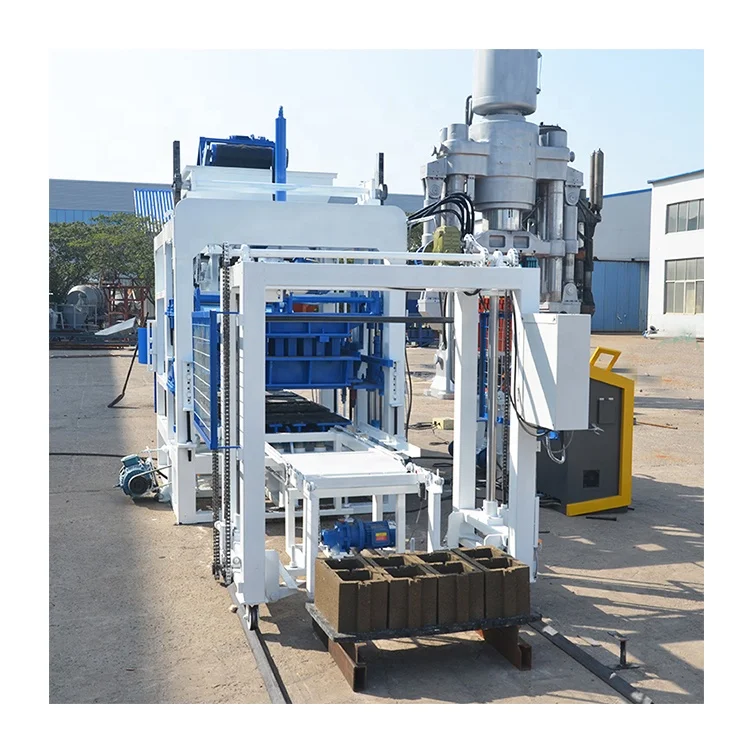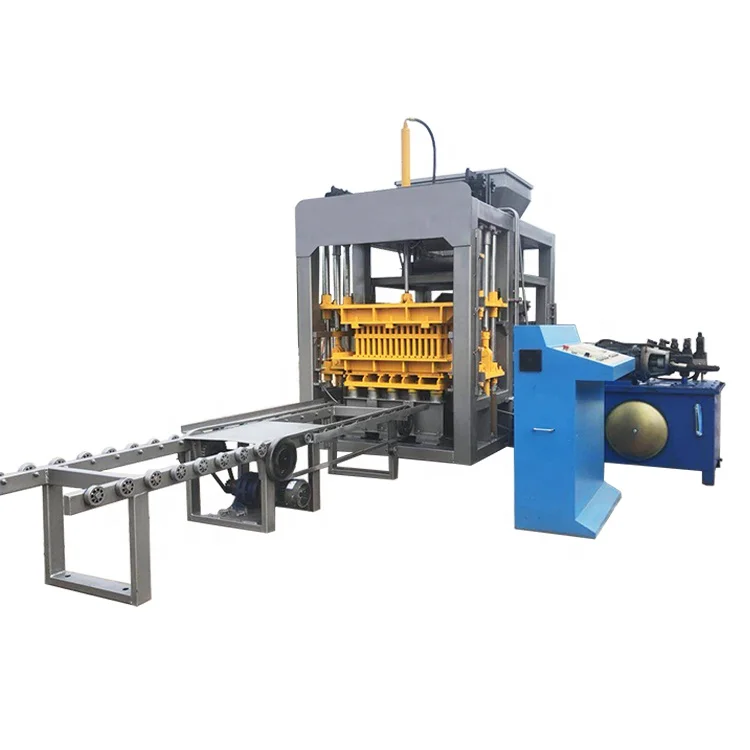
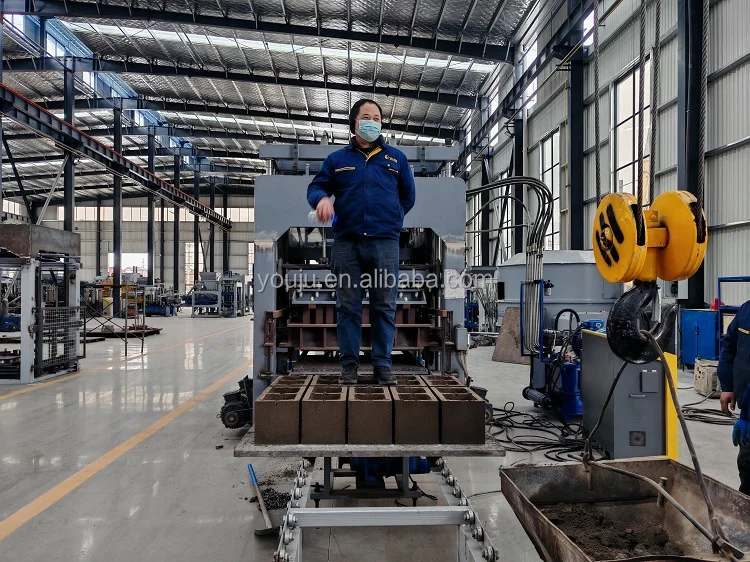

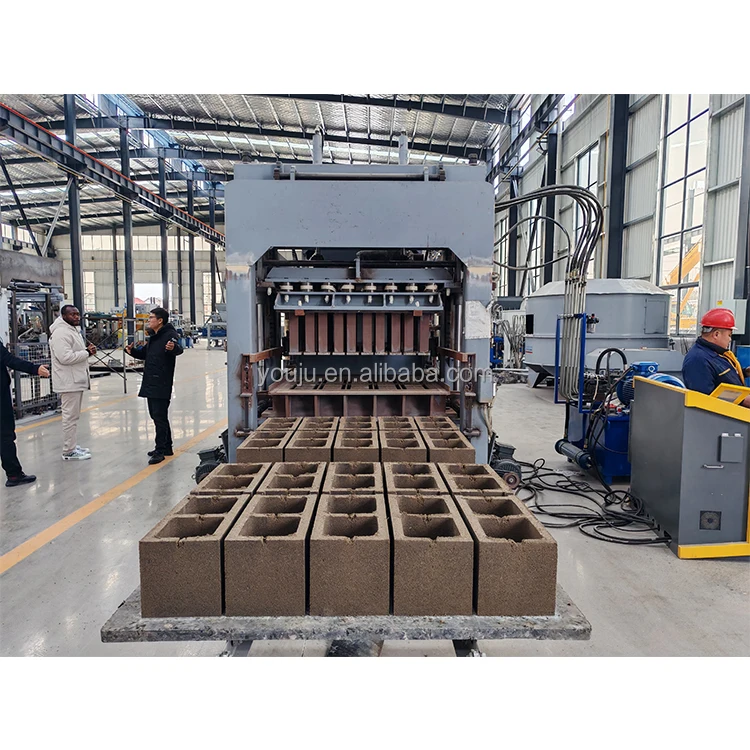
Description
Format-Specific Sizing — Every throughput figure for the QT5-15 names the exact block format, cycle time, and mould cavity count it assumes, so capacity planning starts from your actual product range rather than a catalogue default.
Technical Specifications
| Parameter | Value |
|---|---|
| Model | QT5-15 |
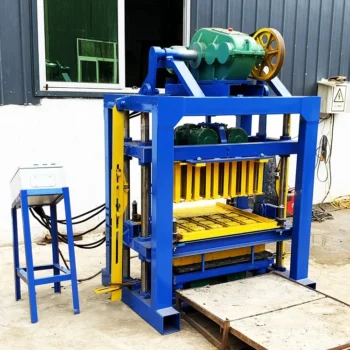
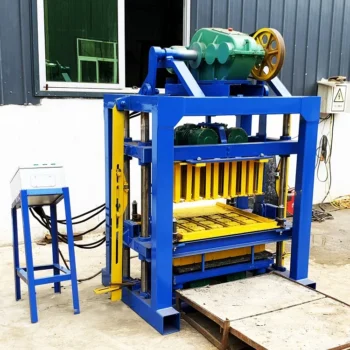
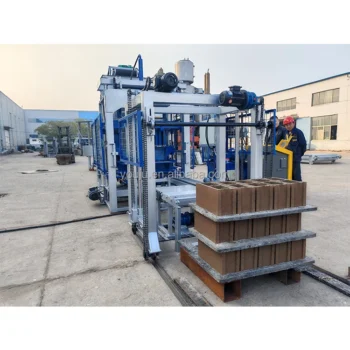
| Product Type | Fully Automatic Hydraulic Concrete Block Making Machine |
| Overall Dimensions (L×W×H) | 7400 × 1950 × 2800 mm |
| Rated Pressure | 21 MPa |
| Main Vibration Form | Hydraulic platform vibration |
| Vibrating Frequency | 2800–4500 rolls/min |
| Cycle Time | 15–20 seconds (basis not stated in source — confirm block format / material / thickness) |
| Motors Power | 26.5 kW |
| Pallet Size | 1100 × 550 mm |
| Weight | 6 T |
| Voltage | According to buyer requirement |
| Control System | PLC with fault diagnosis and remote monitoring capability |
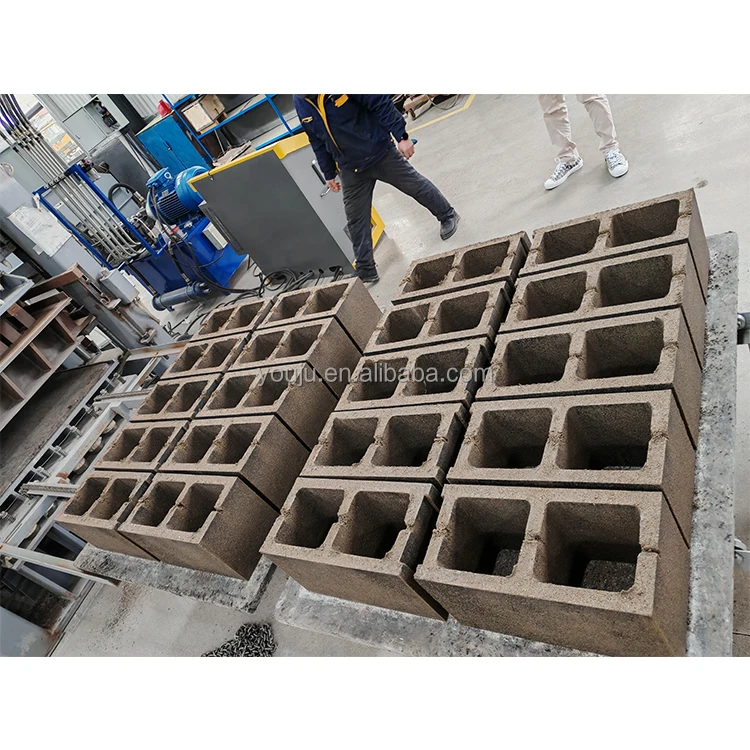
| Output Capacity | 7,200–9,600 pcs/8h (based on 400×200×200 mm hollow block, 5 pcs/mould) |
| Output Capacity | 23,040–28,800 pcs/8h (based on 240×115×90 mm standard brick, 16 pcs/mould) |
| Output Capacity | 61,440–70,400 pcs/8h (based on 400×115×53 mm brick, 32 pcs/mould) |
| Automation Level | Fully automatic |
| Mould Formats Supported | Standard brick, hollow block, and other custom formats |
| Warranty | One year (whole machine) |
Application Suitability
| Application | Material or Output |
|---|---|
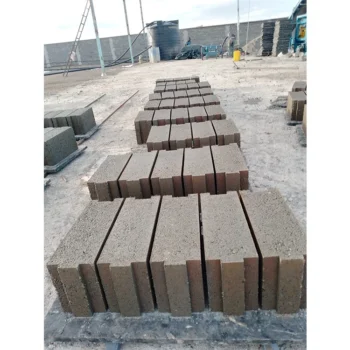
| Hollow block production for building walls | Crushed stone, sand, cement, and water at standard ratios |
| Standard solid brick for load-bearing structures | Fine aggregate and cement with hydraulic pressing at 21 MPa |
| Paving block for walkways and yards | Coarse aggregate blends requiring high-frequency vibration up to 4500 rolls/min |
| Multicellular brick for thermal insulation | Lightweight aggregate mixes needing adjustable vibration and pressure balance |
What "Cycle Time 15–20 Seconds" Actually Depends On
The QT5-15 concrete block making machine specifications only hold when the vibration frequency, hydraulic pressure, and mix design are matched to one specific block format and local aggregate.
Many quotations list a single cycle time without naming the block size, wall thickness, or aggregate type that figure assumes. I once worked with a buyer in West Africa who ordered a stationary block machine based on a brochure claiming a 15-second cycle. When the machine arrived, his local laterite-rich sand required longer vibration to achieve acceptable compaction, pushing the real cycle closer to 25 seconds and cutting daily output well below his business plan. The machine was not defective — the specification had simply been quoted without the format and material context that gives it meaning [NEED_CITE: importance of material-specific cycle time validation in block production].
How Vibration Frequency Range Shapes Block Density
The QT5-15 concrete block making machine specifications list a vibrating frequency range of 2800–4500 rolls/min rather than a single fixed value. Lower frequencies work better for coarse aggregate mixes where the particles need more time to settle into position under vibration, while higher frequencies suit fine sand and cement-rich blends where rapid consolidation produces a smoother surface finish. The operator adjusts this range through the PLC based on the specific mould format loaded and the target block strength for that product line.
Pallet Dimensions and Their Impact on Curing Logistics
The 1100 × 550 mm pallet size on this model is not an arbitrary choice — it determines how many wet blocks can move from the press to the curing rack in a single trip, and whether those pallets fit the forklift tines and rack spacing the buyer already operates. I have seen plants where a new press arrived with pallets sized for a curing system the buyer did not have, forcing a complete re-layout of the curing yard before production could begin. Confirming pallet compatibility with existing handling equipment before the machine enters production is a step that prevents costly site modifications after delivery [NEED_CITE: pallet and curing area compatibility planning for block plants].
Reading the Pressure and Vibration Relationship
The rated pressure of 21 MPa and the adjustable vibration frequency work together rather than independently. Hydraulic pressure provides the static compaction force that squeezes air out of the mix, while platform vibration reorients aggregate particles into a denser packing arrangement during that same pressing window. A hollow block with thin walls needs higher vibration to fill narrow mould cavities but lower pressure to avoid cracking the green block during ejection. A solid paving block needs the opposite — maximum pressure with moderate vibration to achieve the density required for traffic loads. The QT5-15 concrete block making machine specifications provide both adjustment ranges so the operator can tune this balance for each format the plant produces.
The Cost of Skipping Format-by-Format Capacity Checks
When a buyer evaluates a stationary block machine based on a single headline output number, the gap between expectation and reality surfaces on the first production day. A machine that genuinely delivers the quoted hollow block count may fall short on interlocking pavers because the thicker product demands a longer cycle and fewer cavities per mould. That shortfall compounds across shifts, affecting delivery schedules and contract penalties on projects where block supply is on the critical path [NEED_CITE: risks of single-figure capacity claims in block machinery procurement].
Why This Configuration Approach Differs
The QT5-15 is specified as a matched system where the press, mould, pallet, and handling stations are sized together rather than sourced from separate suppliers and assembled on site. Capacity calculations are stated per block format with the cavity count and cycle time named, so the buyer can cross-reference against their actual product range before committing. Mould design covers the formats the buyer’s local market actually sells, with custom drawings available when standard formats do not match regional building codes. The automation level is selectable within the line, allowing a plant to start with semi-automatic pallet handling and add automatic stacking later as production volume grows. Voltage, frequency, and PLC display language are confirmed in writing before production begins, not left as assumptions that surface during commissioning.
Documentation & Verification
- Line layout showing capacity calculation per block format with assumed cycle time
- Mould drawing and format list confirming cavity count for each product type
- Pallet specification matched to buyer’s existing curing rack dimensions
- Voltage, frequency, and PLC language confirmation document before production
- Factory test record on buyer’s specified block format before dispatch
- Wear parts and mould list with part numbers for first-replacement planning
Installation, Commissioning & Support
- Foundation pad sized for 7400 × 1950 mm footprint with vibration isolation provisions
- Dedicated power circuit rated for 26.5 kW total motor load at confirmed voltage
- PLC fault diagnosis walkthrough with operator during first commissioning week
- Mould change procedure training covering all formats in the buyer’s product list
- Wear parts inventory handover with reorder thresholds for hydraulic and vibration components
- Remote monitoring setup for ongoing diagnostics after the commissioning team departs
What to Include in Your Inquiry
Send the specific block formats your market requires — dimensions, wall thickness, and target compressive strength — along with the daily output you need for each format. Include your local aggregate type and any existing curing rack or forklift specifications so the pallet and handling configuration can be verified against your site conditions before the proposal is finalized.
Frequently Asked Questions
Q: How is the output capacity calculated, and which block format does each figure assume?
A: Each capacity figure on the QT5-15 concrete block making machine specifications names the exact block dimensions and cavity count behind it. The 7,200–9,600 pieces per 8-hour shift applies to 400×200×200 mm hollow blocks at 5 pieces per mould, while the 23,040–28,800 figure assumes 240×115×90 mm standard bricks at 16 per mould. Always confirm which format your daily target refers to before comparing machines.
Q: Can the mould be configured for the specific block formats my local market requires?
A: Mould design covers standard brick, hollow block, and custom formats drawn to buyer specifications. If your regional building code calls for a block size outside the standard range, the mould can be engineered to those dimensions while maintaining compatibility with the 1100 × 550 mm pallet and the hydraulic platform vibration system of this machine.
Q: How does the QT5-15 vibration and pressure setting get matched to my local aggregate and mix design?
A: Before the machine enters production, the vibration frequency within the 2800–4500 rolls/min range and the hydraulic pressure up to 21 MPa are adjusted based on your specific aggregate type, cement ratio, and target block strength. This matching process ensures the cycle time quoted actually applies to your material rather than a generic test mix.
Q: Is the pallet size compatible with my existing curing area and handling equipment?
A: The 1100 × 550 mm pallet is confirmed during the proposal stage against your curing rack spacing and forklift tine dimensions. If a mismatch is identified, the pallet specification or curing layout is adjusted before the machine ships so that wet blocks can move from press to rack without requiring site modifications after delivery.