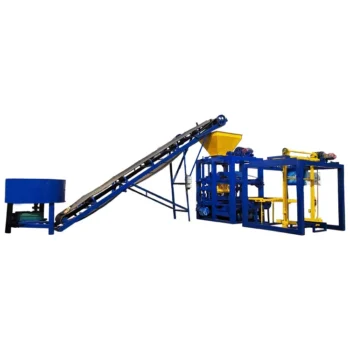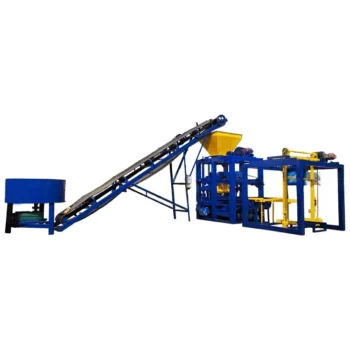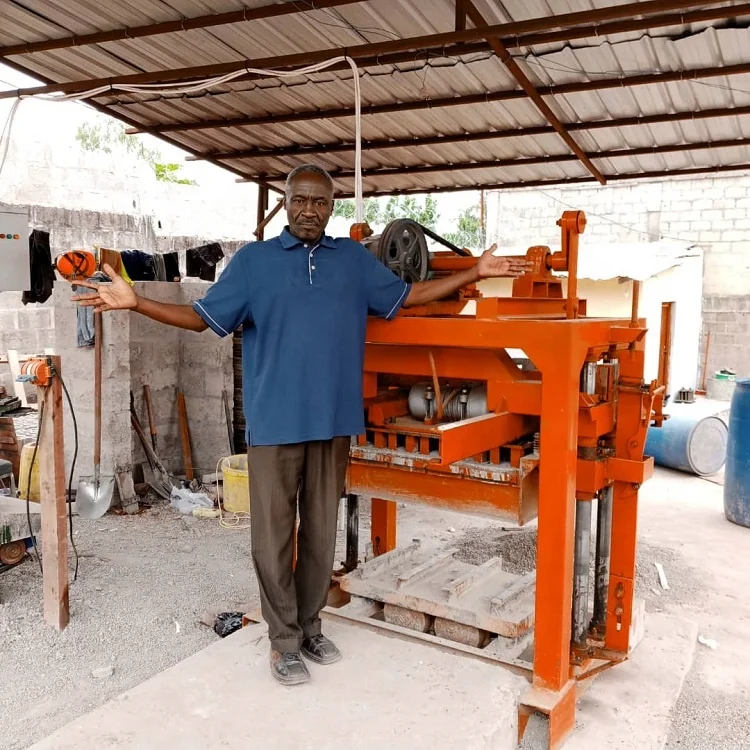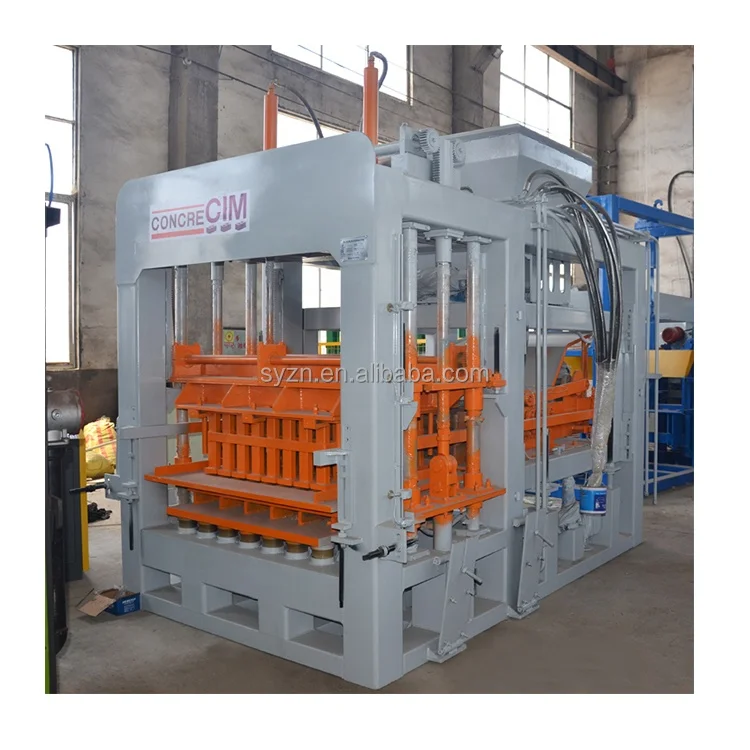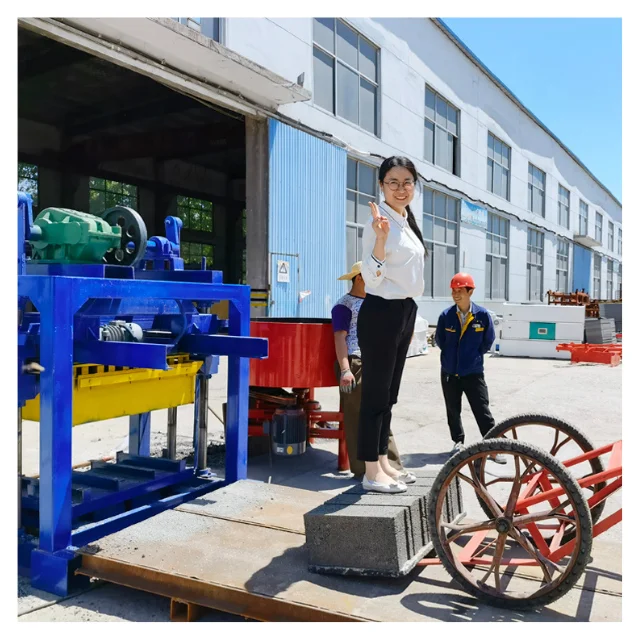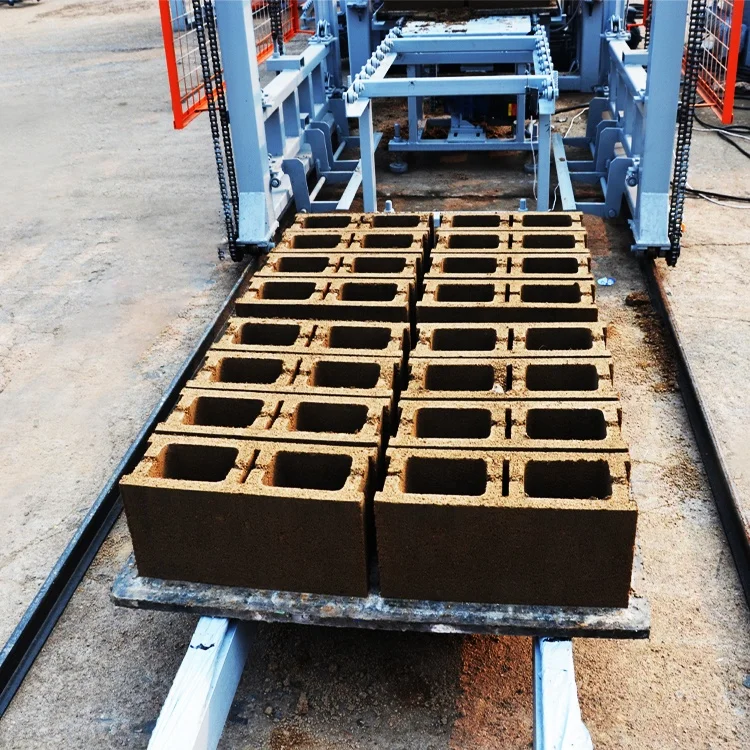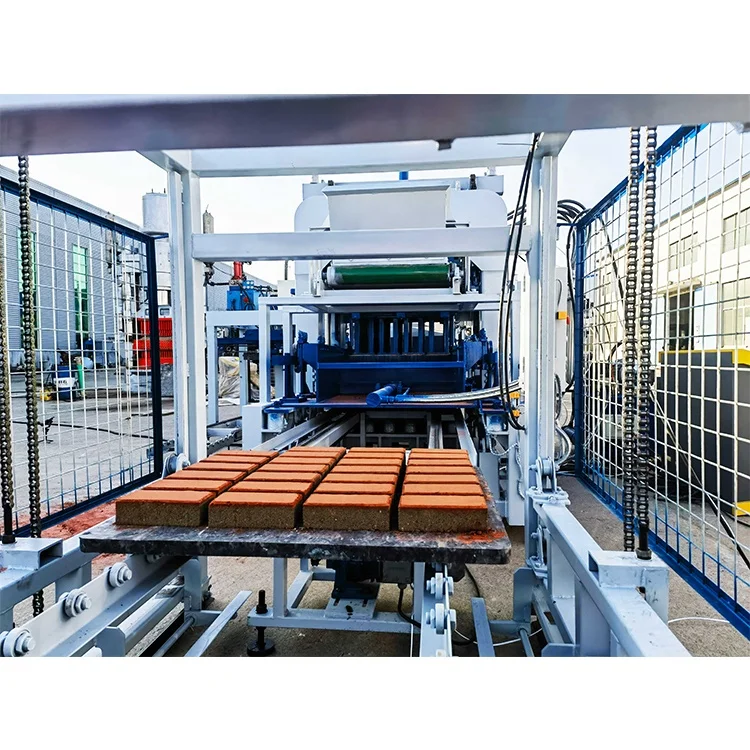
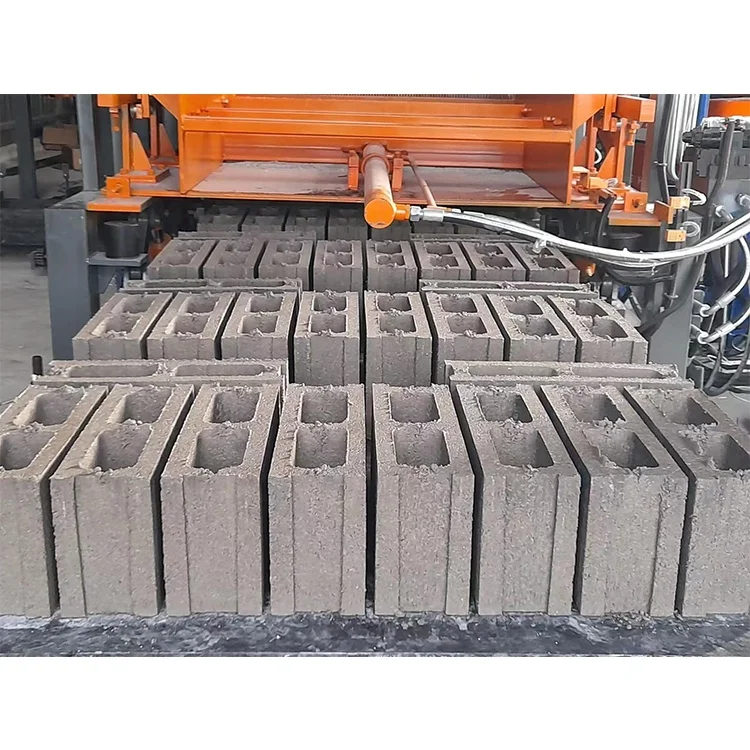

Description
Specified per format — capacity calculations for the QT8-15 list the exact block dimensions and cycle assumptions rather than collapsing every product into a single headline number.
Technical Specifications
| Parameter | Value |
|---|---|
| Model | QT8-15 |
| Product Type | Concrete Block Making Machine |
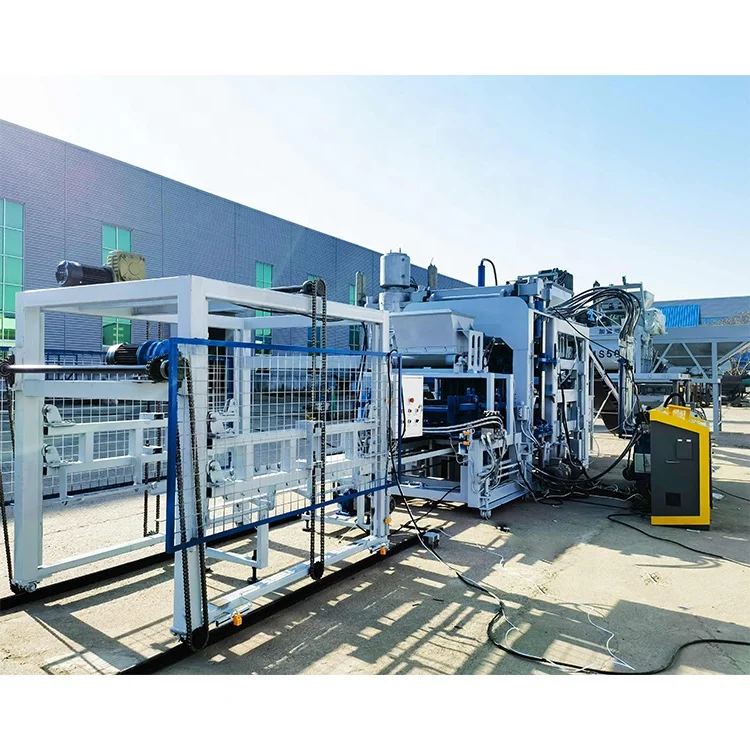
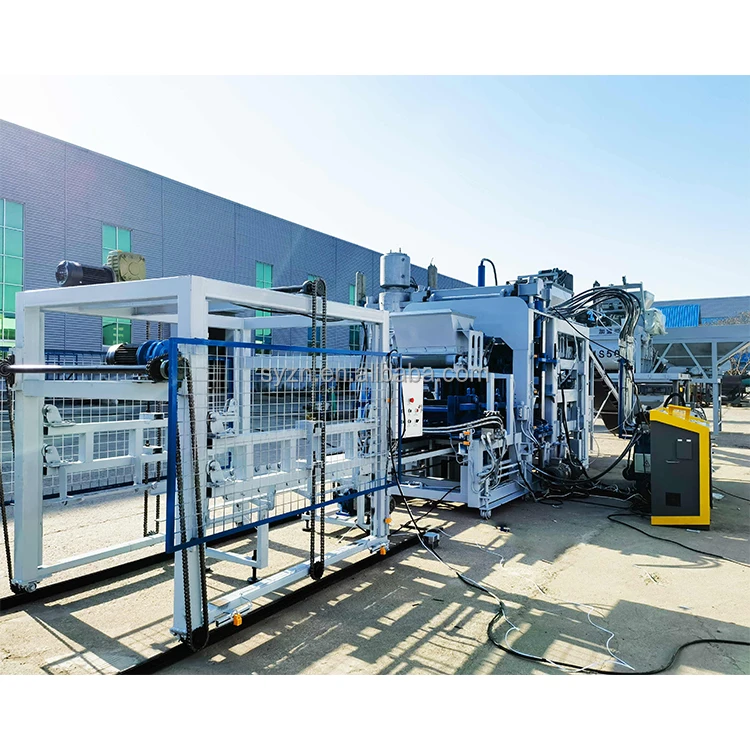
| Overall Dimensions (L×W×H) | 8300 × 1860 × 3000 mm |
| Total Mass | 8 T |
| Rated Pressure | 21 MPa |
| Vibration Force | 45 kN |
| Main Vibration Form | Platform Vibration |
| Vibration Frequency | 2800–4500 r/min |
| Pallet Size | 950 × 900 mm |
| Molding Cycle | 15–20 s (basis not stated in source — confirm block format / material / thickness) |
| Overall Power | 55.5 kW |
| Demolding Method | Hydraulic |
| Factory Area | 300 m² |
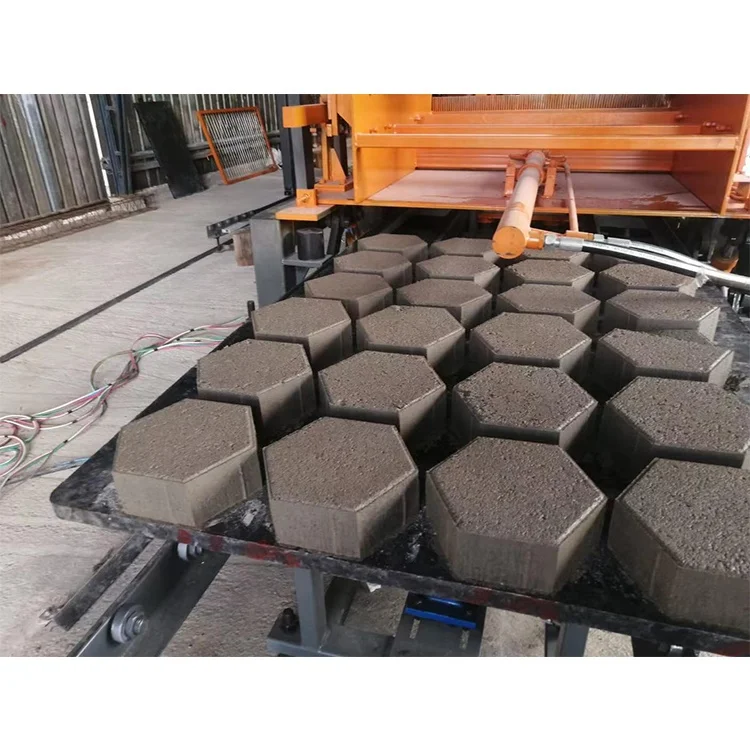
| Applied Products | Hollow blocks, solid blocks, pavers, interlocking blocks, curbstones, colored pavers |
| Raw Materials | Crushed stone, sand, cement, fly ash, gravel, slag, dust |
| Voltage & Frequency | To be confirmed before order |
| Control System | PLC options and display language to be confirmed |
| Automation Level | Configurable; semi-automatic to fully automatic stacking |
| Warranty | 1 year |
Application Suitability
| Application | Material or Output |
|---|---|
| Hollow block production for residential walls | Crushed stone, sand, cement, fly ash blends |
| Solid block manufacturing for load-bearing structures | Gravel, sand, cement with higher cement ratios |
| Paving block and colored paver runs for municipal projects | Fine aggregate, cement, pigment additives |
| Interlocking block and kerbstone for landscaping | Sand, crushed stone, cement at varied moisture |
| On-site production for housing developments | Locally sourced aggregate matched to mix design |
Why the Molding Cycle Claim Needs a Block Format Attached
A 15–20 second cycle on the QT8-15 concrete block making machine specifications is only meaningful once the block format, mix consistency, and mould configuration are defined.
Buyers often receive a single cycles-per-hour figure that looks strong on paper but quietly assumes a small solid block at optimal moisture. When the same machine switches to a large hollow block or a thick paver, the vibration dwell and hydraulic hold extend the cycle noticeably. [NEED_CITE: cycle time variance by block format and mix moisture in hydraulic block presses] Without format-level data, daily output projections fall short of what the plant actually delivers, and shift planning breaks down before the first pallet leaves the press.
Matching the Press to Your Block Format
The QT8-15 sits in a mid-to-high output tier where buyers typically run multiple block formats across a single week. Platform vibration at 2800–4500 r/min paired with 45 kN of force gives the press enough range to handle both hollow blocks and dense pavers, but only if the mould and vibration dwell are tuned per format. The QT8-15 concrete block making machine specifications should always be read alongside a format-by-format capacity sheet that states which block dimensions produced which cycle time.
Pallet Size and Curing Area Alignment
The 950 × 900 mm pallet is a common size for this class, but it must be checked against your existing curing racks and forklift tine spacing before the order is placed. A mismatch here means either rebuilding the curing area or handling pallets manually after demolding. [NEED_CITE: pallet dimension compatibility with standard curing rack and forklift configurations] Confirming the pallet material — whether bamboo, PVC, or steel — against your curing environment humidity is equally important to avoid warping mid-cure.
What the Pressure and Vibration Numbers Mean on the Floor
Rated pressure at 21 MPa and vibration force at 45 kN together determine how densely the mix compacts before demolding. Higher pressure alone does not guarantee block strength if the vibration frequency is not matched to the aggregate particle size in your local supply. A coarse gravel mix needs a different vibration profile than a fly-ash-heavy blend. The 55.5 kW total power supports sustained cycling across a full shift, but the hydraulic system and vibration motor draw must be verified against your site transformer capacity before the machine arrives. [NEED_CITE: hydraulic pressure and vibration force interaction in concrete block compaction]
What Happens When Configuration Is Skipped
Ordering the QT8-15 without confirming the mix design, pallet material, and voltage up front leads to problems that surface only after commissioning. A control panel in the wrong display language stalls the first production day while operators guess at menus. [NEED_CITE: commissioning delays caused by unconfirmed PLC language and voltage mismatch] Pallets that do not fit existing curing racks force a manual handling workaround that erases the output advantage the buyer paid for. Voltage and frequency mismatches can damage the motor winding before the warranty period even begins.
Why This Machine Is Specified Here
Every QT8-15 leaves the factory with a line layout that states the block format assumed for each output figure, so there is no ambiguity about what the press can actually produce on your mix. Mould drawings and format lists are provided before production, confirming which block types are included and which are optional add-ons. Pallet specifications are matched to your curing area dimensions and forklift capacity rather than defaulted to a catalogue size. Voltage, frequency, and PLC display language are confirmed in writing before assembly begins. Installation includes operator training on mould change procedure and daily maintenance intervals specific to the configuration you received.
Documentation & Verification
- Line layout with capacity calculation stating block format for each output row
- Mould drawing and format list showing included and optional block types
- Pallet specification matched to your curing rack and forklift dimensions
- Voltage, frequency, and PLC language confirmation sheet signed before production
- Factory test record run on your specified block format and mix ratio
- Hydraulic and electrical schematic for on-site maintenance reference
Installation, Commissioning & Support
- Foundation plan sized to the 8300 × 1860 mm footprint and 8 T operating mass
- Dedicated circuit rated for 55.5 kW total draw at confirmed voltage and frequency
- Machine dismantled for container loading with reassembly supervised on site
- First-run commissioning with parameter setting for your confirmed block format
- Operator training covering mould change, hydraulic checks, and daily lubrication
- Wear parts list with hydraulic seals and vibration motor brushes identified for first reorder
What to Prepare Before Sending an Inquiry
Share the specific block formats your market sells, including dimensions and target compressive strength. Provide your local aggregate source and typical mix design so the vibration and pressure settings can be matched before the quotation. Confirm your site voltage, frequency, and preferred PLC display language along with the curing area dimensions and forklift model already in use.
Frequently Asked Questions
Q: What is the realistic daily output of the QT8-15 for each block format?
A: Output varies by block size, mix consistency, and mould configuration. A capacity sheet listing cycle time per format — hollow, solid, paver, interlocking — is provided with every proposal so the daily figure you plan around matches what the press actually delivers on your confirmed mix.
Q: How are vibration force and hydraulic pressure matched to my local aggregate?
A: The 45 kN vibration force and 21 MPa pressure are baseline values. Before production, your aggregate sample and mix design are reviewed so the vibration frequency dwell and hydraulic hold time are adjusted to achieve the target block density without cracking at demolding.
Q: What mould formats are available and how long does a change take?
A: Moulds for hollow, solid, paver, interlocking, kerbstone, and colored paver formats are available, including custom drawings. Mould change time depends on the format and whether quick-clamp fittings are specified; this is confirmed per configuration before the order ships.
Q: Is the 950 × 900 mm pallet compatible with my existing curing setup?
A: Pallet dimensions must be verified against your curing rack spacing and forklift tine width before order. If your existing infrastructure uses a different size, the pallet system is adjusted to match, and material selection is based on your curing environment humidity.
Q: How do I confirm voltage, frequency, and control language before shipping?
A: A confirmation sheet covering voltage, frequency, and PLC display language is signed off before assembly begins. This prevents the commissioning delays that occur when a control panel arrives in a language the local operators cannot read.