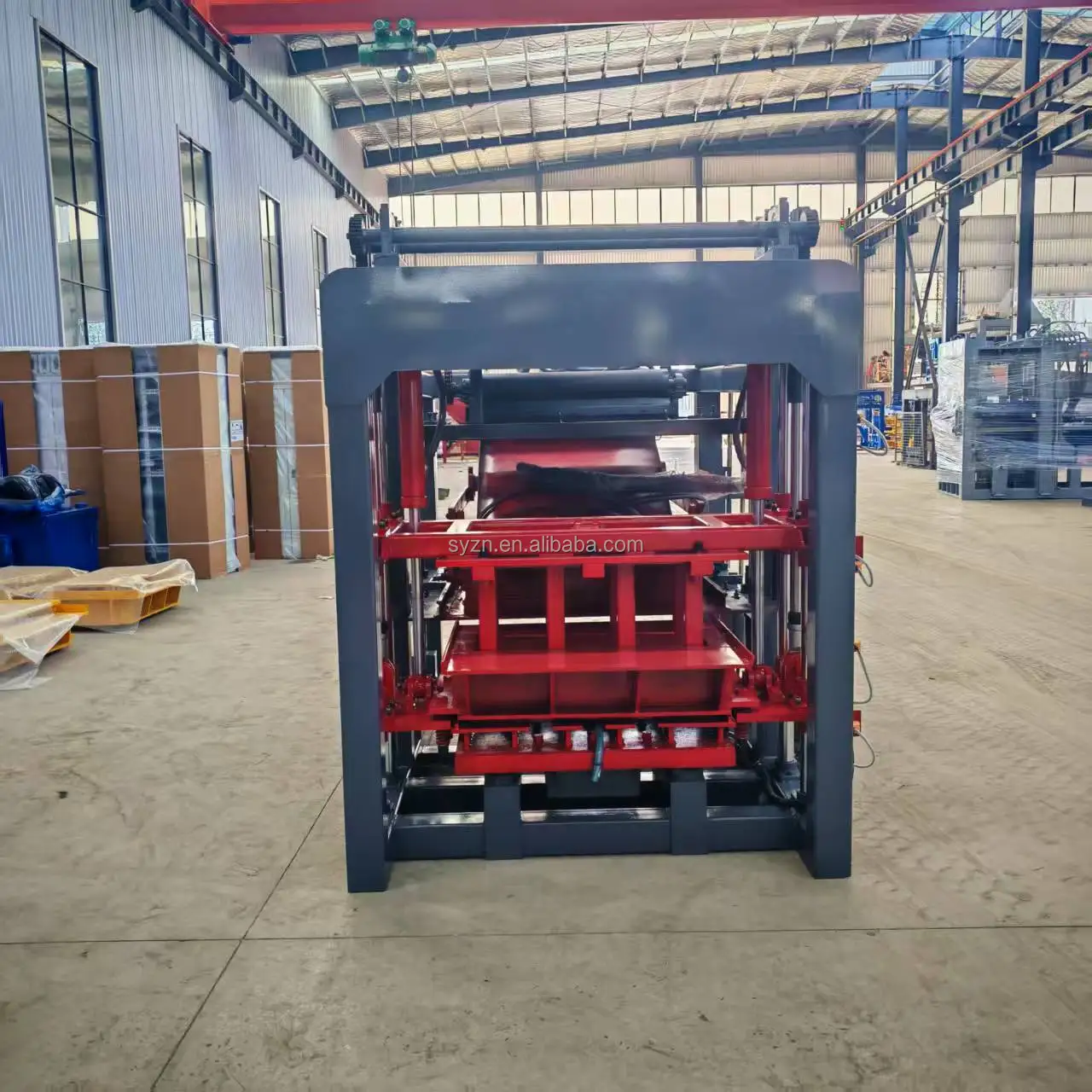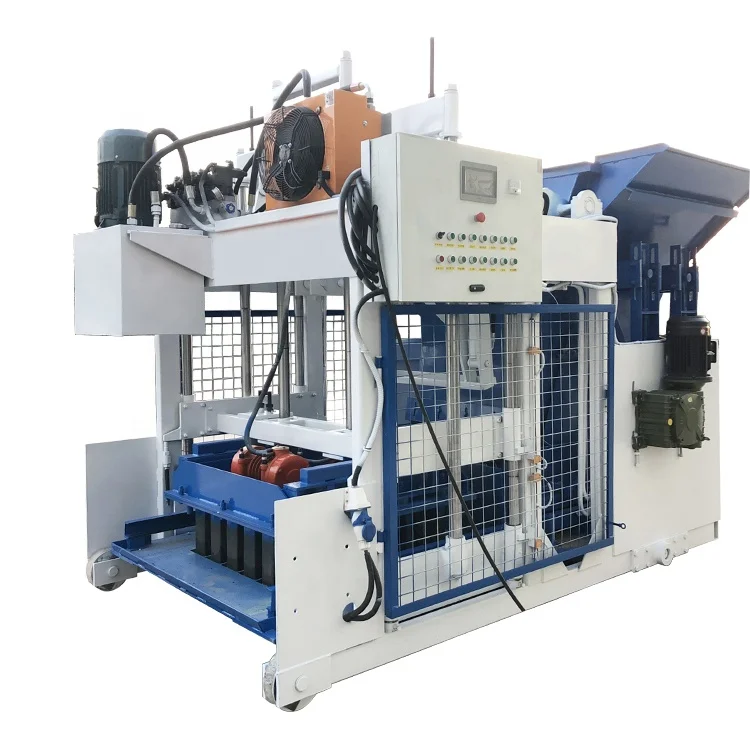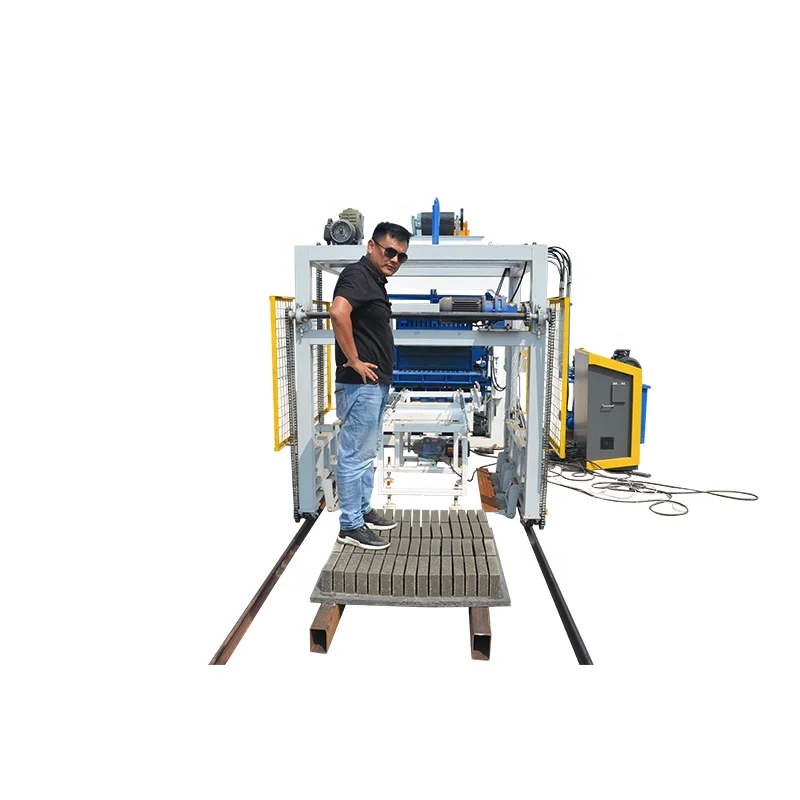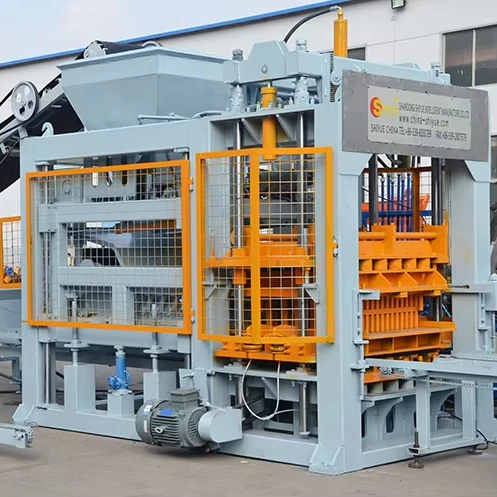
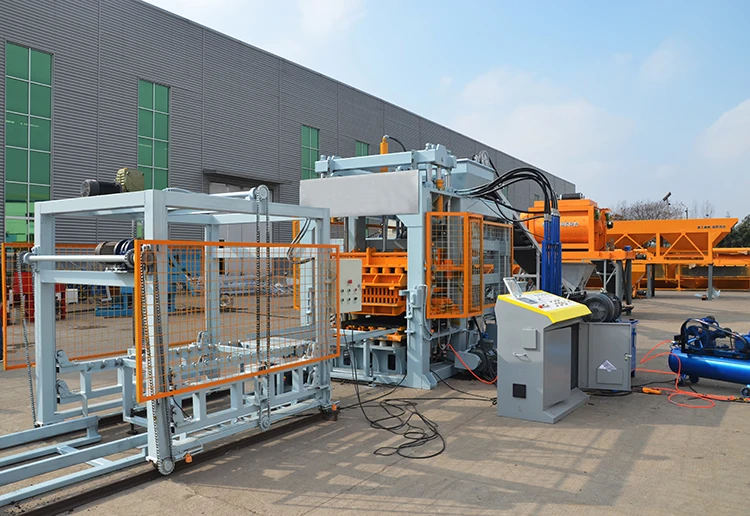
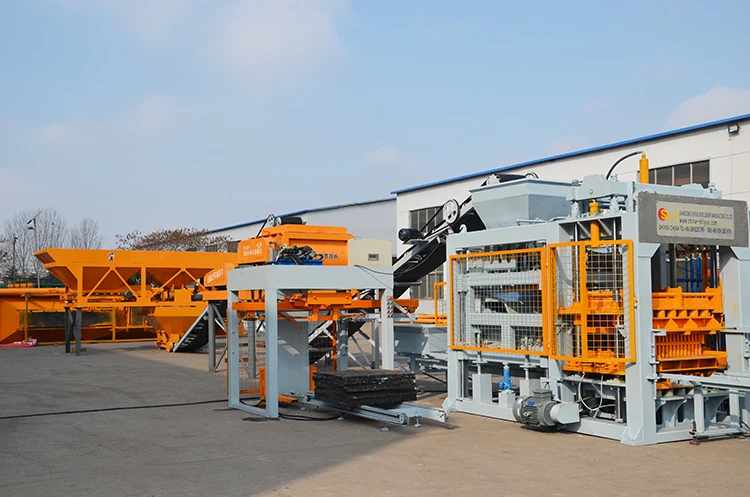
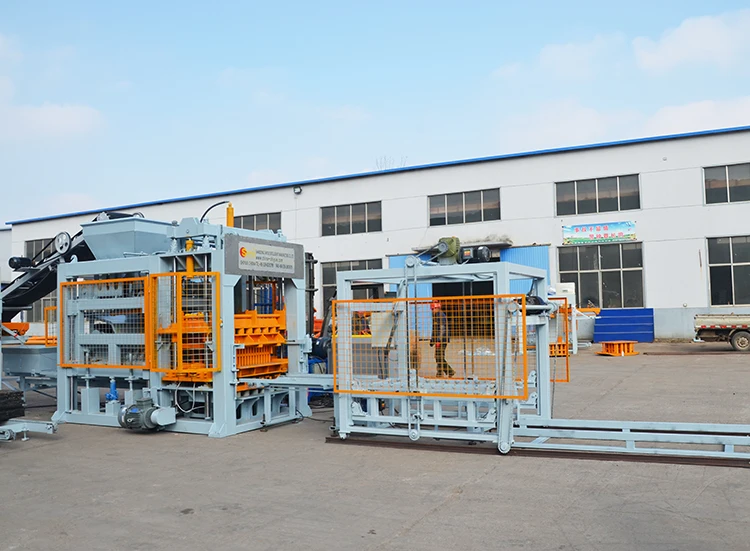
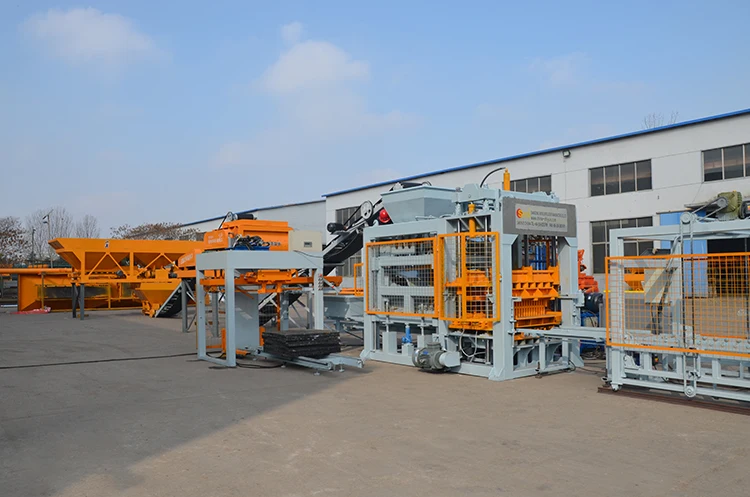
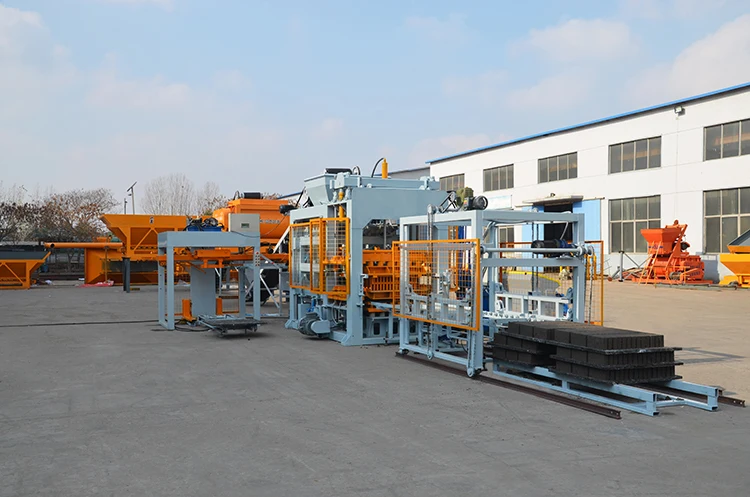
Description
Honest Capacity by Format — We calculate the QT8-15 cycle time against your target block design, local aggregate and required strength, not a brochure default.
Technical Specifications
| Parameter | Value |
|---|---|
| Model | QT8-15 |
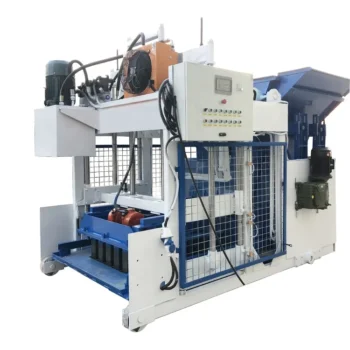
| Product Type | Automatic Concrete Block Making Machine |
| Overall Dimensions (L×W×H) | 8300 x 1860 x 3000 mm |
| Rated Pressure | 21 MPa |
| Vibration Form | Platform Vibration |
| Pallet Size | 950 x 900 mm |
| Molding Cycle | 15-25s (basis to be confirmed by block format) |
| Overall Power | 46 kW |
| Vibration Frequency | 2800-4500 RPM |
| Control System | PLC with touch screen human-computer interface |
| Automation Level | Automatic (manual mode available) |
| Block Comprehensive Strength | up to 15 MPa |
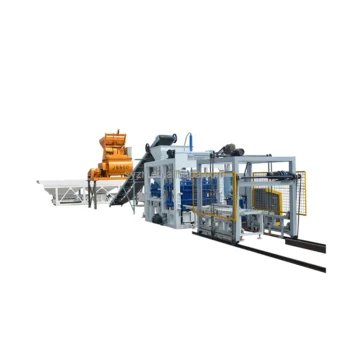
| Support Equipment | JS750 mixer, 8m belt conveyor, automatic stacker |
| Mould | One free hollow mould included; extra moulds available |
| Output Capacity | (basis not stated in source — confirm block format, material, and thickness) |
Application Suitability
| Application | Material or Output |
|---|---|
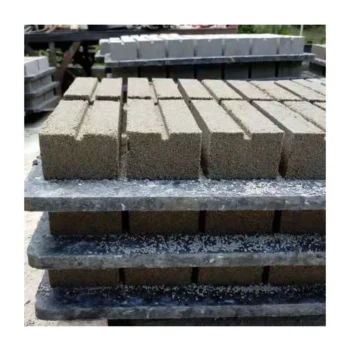
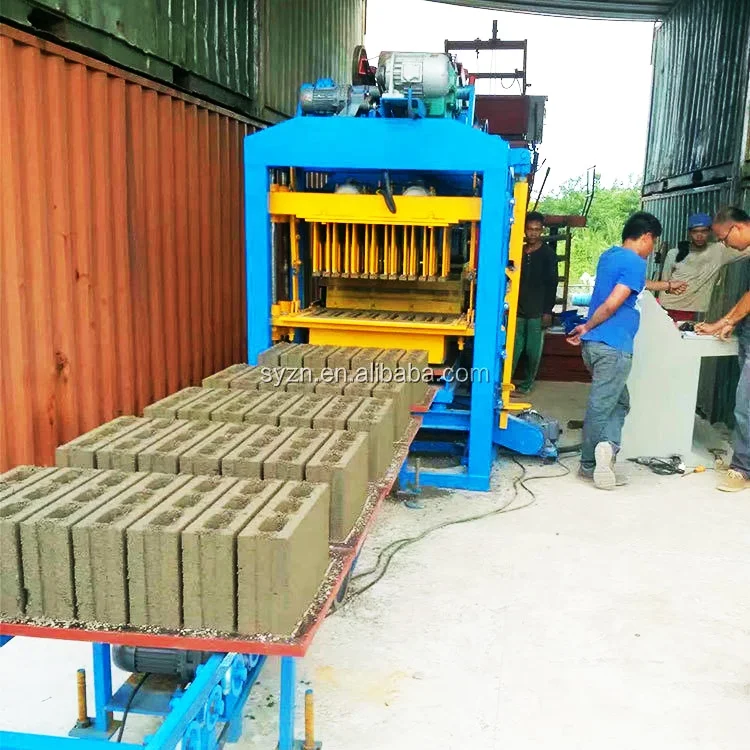
| Hollow Block Production | Concrete mixes with crushed stone, sand, and cement; standard walling formats. |
| Solid Block Manufacturing | Dense aggregate mixes for load-bearing or sound-proofing structural units. |
| Paving Block Production | High-strength mixes requiring maximum hydraulic pressure and vibration for kerbs and pavers. |
What "15-25 Seconds" Leaves Out Regarding QT8-15 Block Machine Specifications
The cycle speed only holds if your local aggregate allows the mix to settle and compact within that window.
I’ve seen operators crank the vibration frequency to 4500 RPM hoping to beat the clock, only to find the blocks crack because the fines in their local river sand couldn’t bond fast enough. When you look at the QT8-15 block machine specifications, the cycle time is a mechanical floor, not a guarantee of daily output. If your aggregate is sticky or high-clay, the mold must vibrate longer to release cleanly, and your realistic capacity drops. [NEED_CITE: Impact of aggregate grading on concrete block molding cycle times]
Matching Moulds to Market Demand
This platform supports a variety of block formats through mold exchange. The 950 x 900 mm pallet is the physical limit of what the machine can press in one cycle. Whether you are making 400×200×200mm hollow blocks or interlocking pavers, the QT8-15 block machine specifications show that the hydraulic pressure remains constant at 21 MPa, meaning the density is managed by vibration duration and mix design rather than pressure changes.
The Logic of Platform Vibration
Platform vibration transfers energy from the table through the pallet and into the mold. This is necessary for dense products like pavers where the mix is relatively dry. The frequency range of 2800-4500 RPM allows the operator to tune the shake. Lower frequencies move larger stones; higher frequencies consolidate the fines. [NEED_CITE: Principles of platform vibration in concrete masonry production]
How 21 MPa and 46 kW Define the Output
The 21 MPa rated pressure is the force clamping the mold and compressing the mix. This pressure, paired with the 46 kW total power draw, ensures the vibration motors have enough torque to maintain amplitude even when the mold is full of heavy aggregate. If the voltage drops or the power supply is unstable, the vibration force collapses, leading to weak blocks that fail the drop test.
When the Machine Spec is Right but the Line is Wrong
A common issue is sizing the mixer or the curing racks to the "best case" cycle time. If the QT8-15 presses a pallet every 15 seconds but the JS750 mixer takes 45 seconds to batch the next load, the press sits idle. The automatic stacker handles two pallets at a time, which is efficient, but if your forklift cannot clear the curing area fast enough, the stacker blocks the line. [NEED_CITE: Line balancing in automated concrete block plants]
Why We Match Specs to Your Site
- Format-Specific Capacity: We provide a layout document calculating output based on the exact block dimensions you sell, not a generic maximum.
- Mould Compatibility: We supply drawings for custom molds that fit the 950 x 900 mm pallet and match your local market’s preferred bond patterns.
- Voltage Confirmation: We lock in the motor winding and PLC language before production to ensure the touch screen is readable by your local operators.
- Mix Design Tuning: We adjust the vibration parameters based on your sand and stone samples to reach the target 15 MPa strength.
Documentation & Verification
- Line layout showing capacity calculation for your specific block format.
- Mould drawings confirming dimensions and cycle time per format.
- Pallet specification sheet matching your curing rack dimensions.
- Factory test record running your target mix design before shipment.
Installation, Commissioning & Support
- Foundation must support 8300 mm length and dynamic vibration loads.
- Electrical supply requires stable voltage for the 46 kW total load.
- PLC interface language configured to your local operator’s requirement.
- Hydraulic pressure set to 21 MPa and verified against block density.
- Automatic stacker timed to match the JS750 mixer batch intervals.
Preparing Your Inquiry
To determine if this machine fits your project, we need to know the exact block sizes in demand and the source of your raw sand and aggregate. Please also confirm your available three-phase voltage and the dimensions of your existing curing area. This allows us to verify if the 950 x 900 mm pallet integrates with your current forklift and racking system.
Frequently Asked Questions
Q: How is output capacity calculated for the QT8-15, and what does it assume?
A: We calculate capacity by multiplying the confirmed cycle time for a specific block format by the operating hours, then applying a realistic efficiency factor for mold changes and mixer delays. We do not quote a single "pieces per hour" number without stating the exact block dimensions and mix design assumed.
Q: Can the QT8-15 produce custom block formats not in the standard catalog?
A: Yes. The machine accepts custom molds designed to fit the 950 x 900 mm pallet area. We design the mold to your drawing or your market sample, ensuring the hydraulic pressure and vibration frequency are suitable for the geometry and wall thickness of the custom shape.
Q: How does the 950 x 900 mm pallet size affect my factory layout?
A: This pallet size dictates the dimensions of your curing racks and the turning radius required for your forklift. We provide a pallet specification sheet so you can verify that your existing curing area and handling equipment are compatible before the machine is ordered.
Q: What settings are required for local river sand with high clay content?
A: High-clay sand often requires longer vibration times to consolidate and may need a reduction in vibration amplitude to prevent the mix from sticking to the mold. We test your material to set the PLC parameters for the correct duration and intensity.