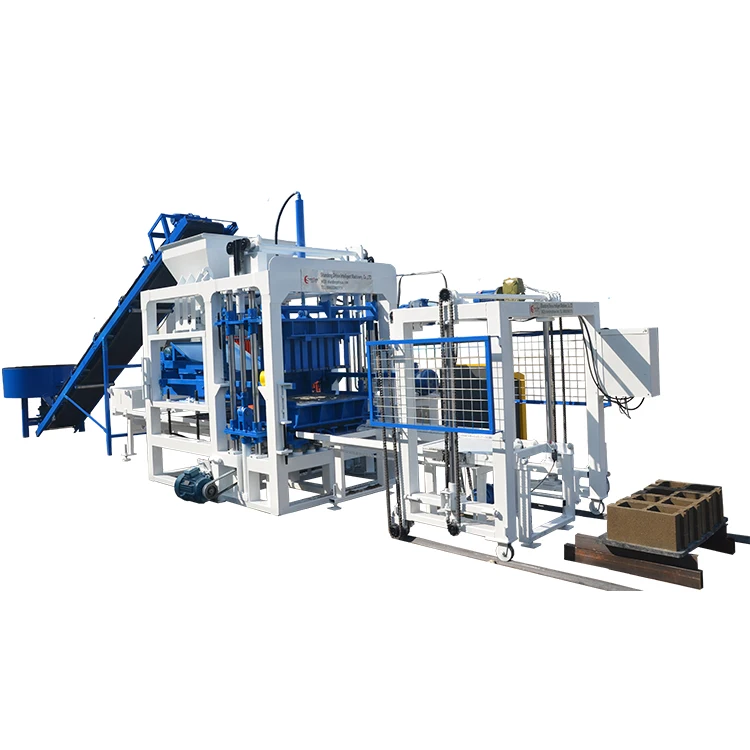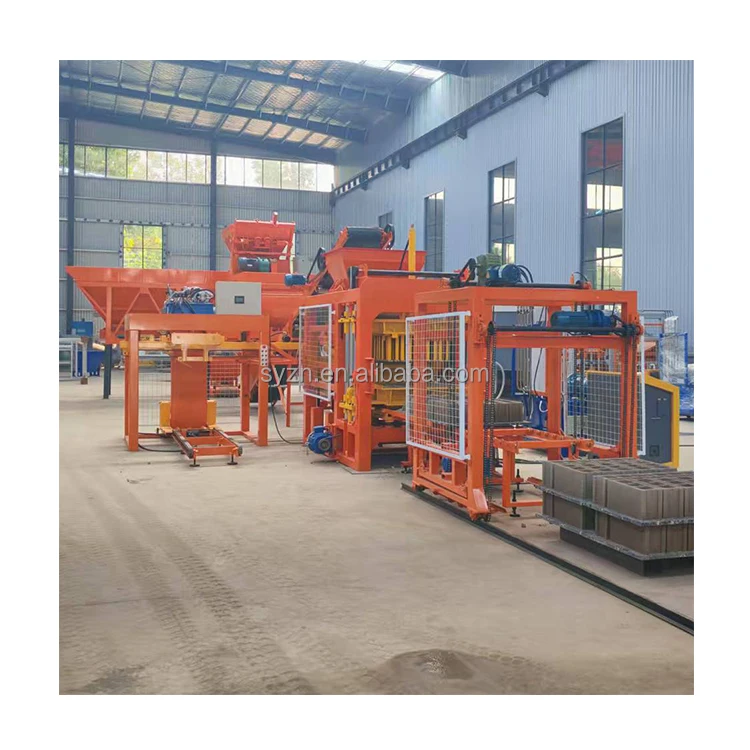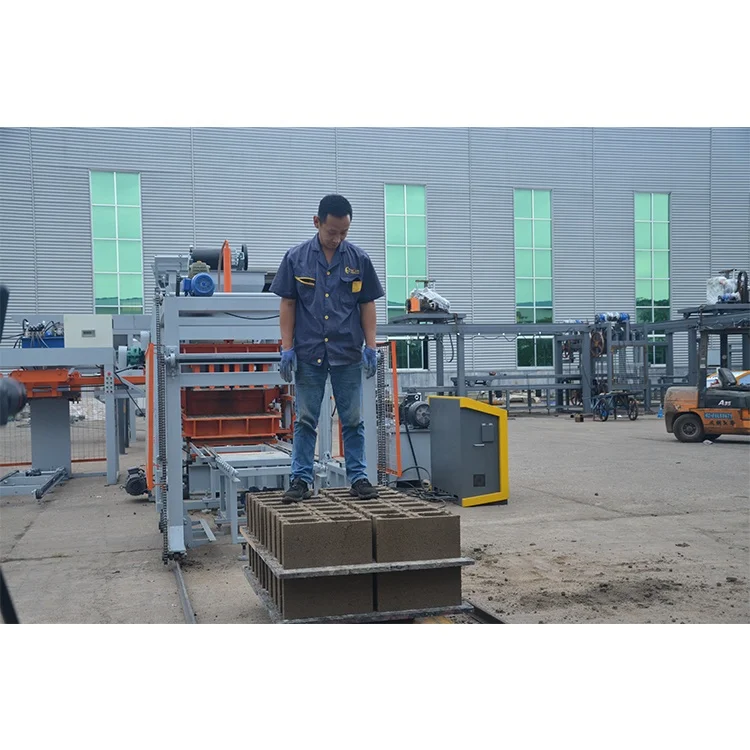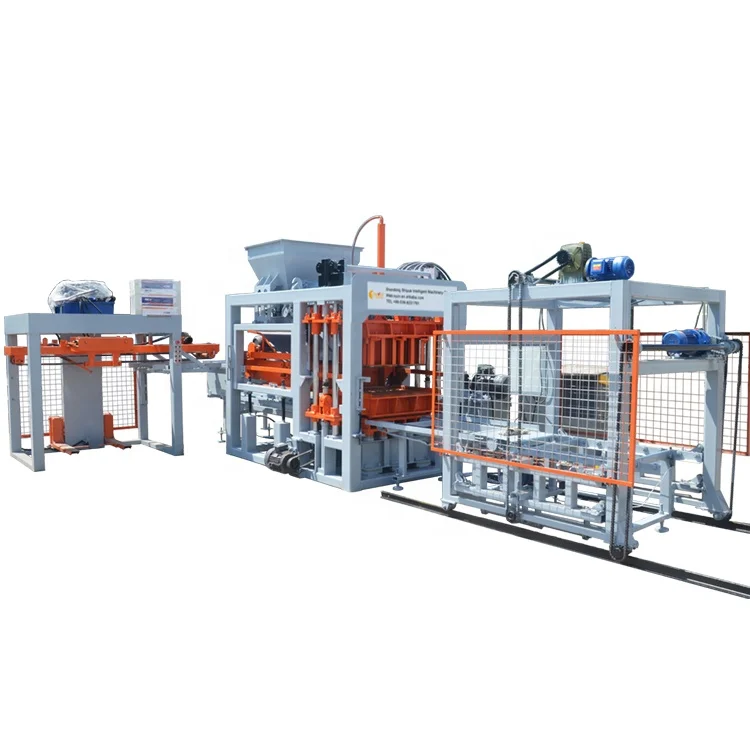
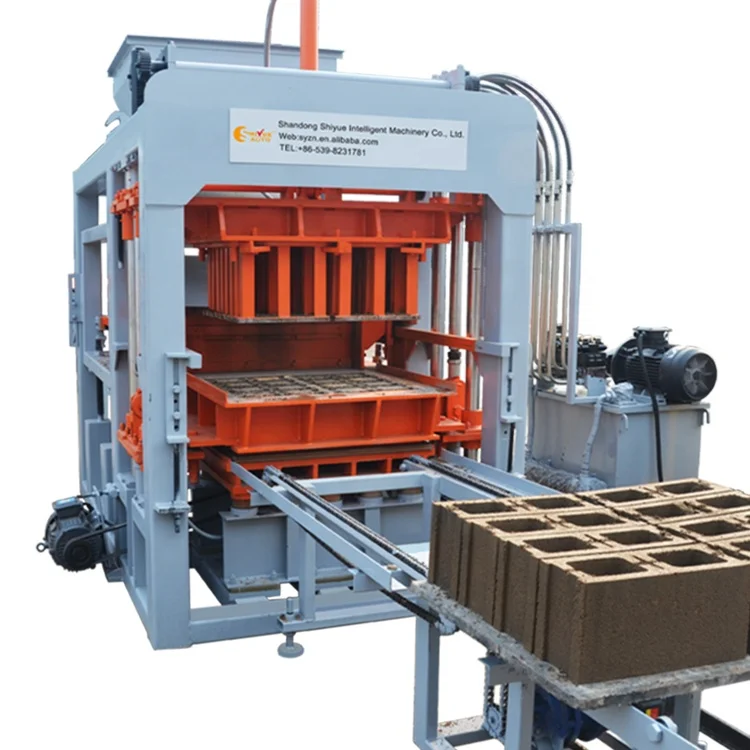
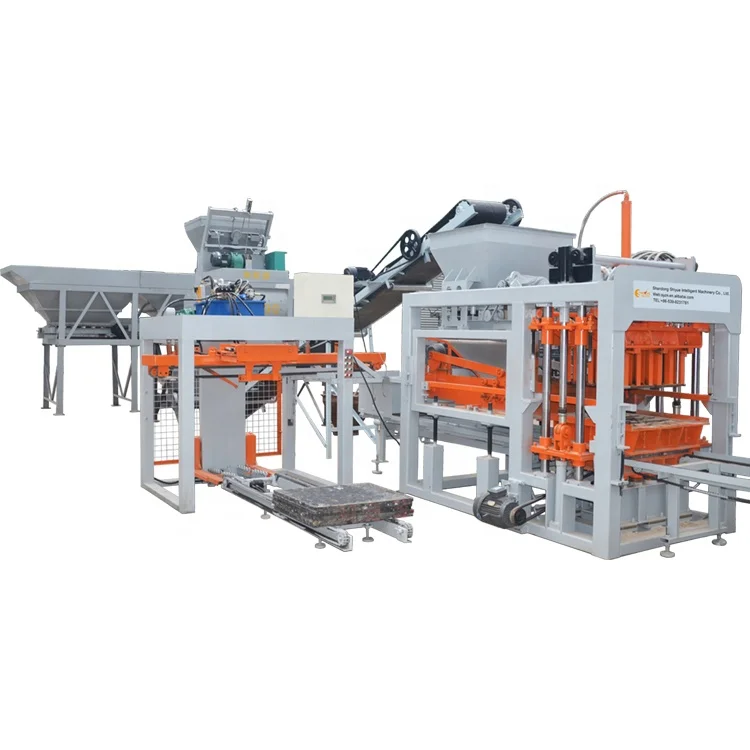
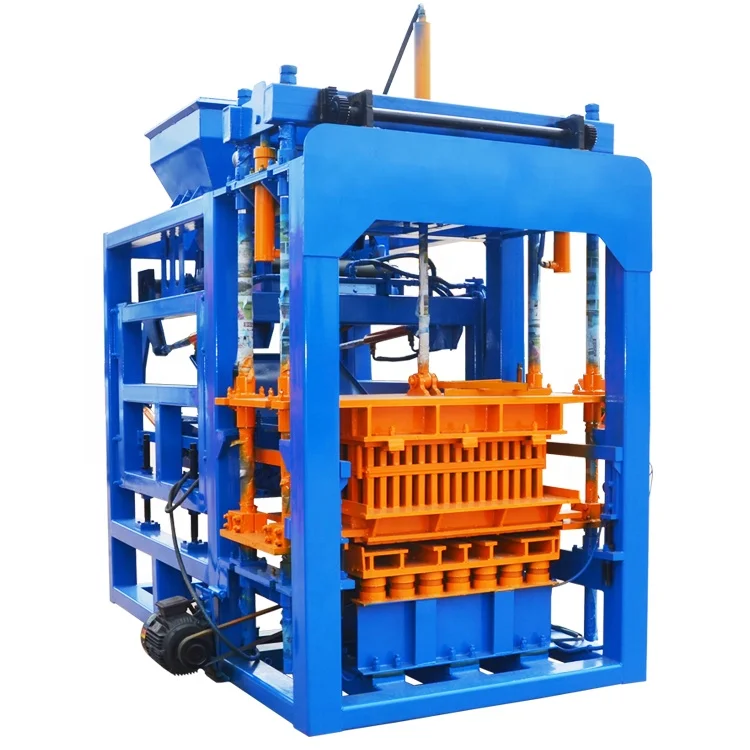
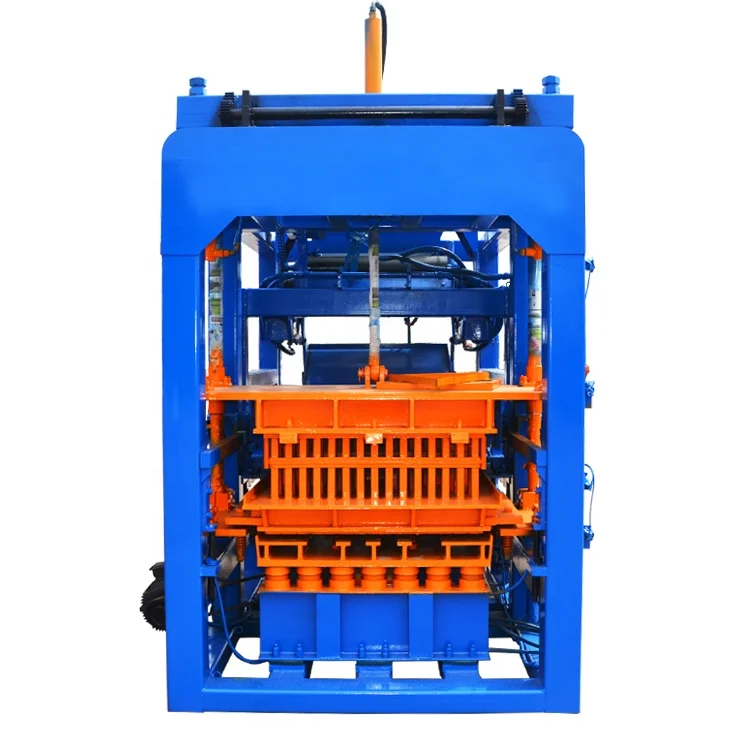

Description
Cycle-Time Transparency — output figures for the QT6-15 are stated per block format with cycle assumptions, not a single headline number that hides the product mix behind it.
Technical Specifications
| Parameter | Value |
|---|---|
| Model | QT6-15 |
| Product Type | Hollow Block Making Machine |
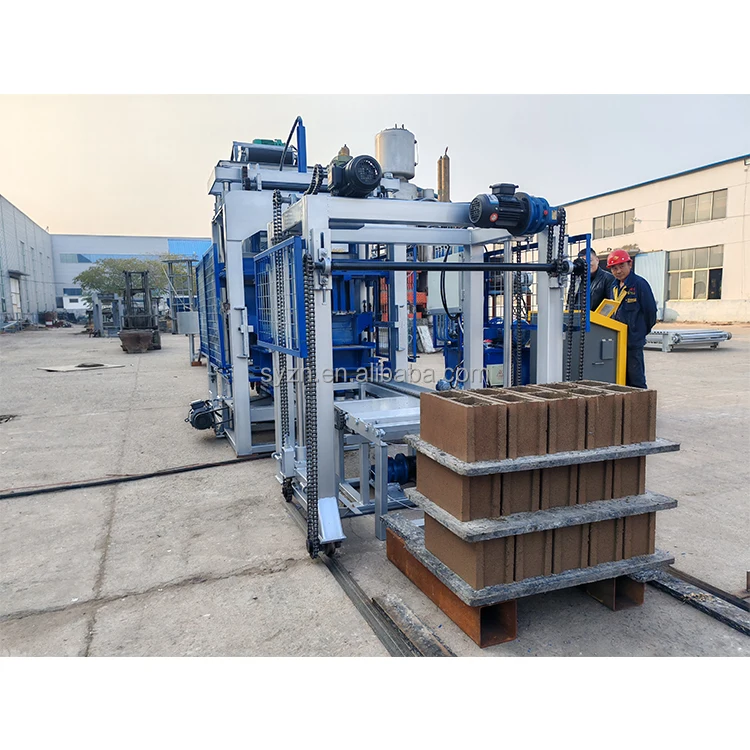
| Overall Dimensions (L×W×H) | 8200×1700×2950 mm |
| Total Mass | 7 T |
| Overall Power | 37 kW |
| Vibration Frequency | 0-60 Hz |
| Vibration Form | Platform Vibration |
| Vibration Force | 45 kN |
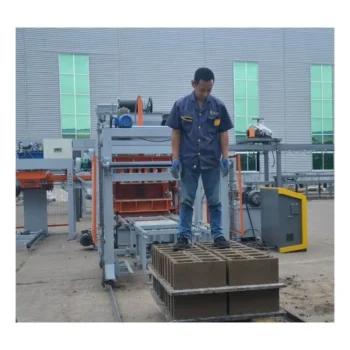
| Moulding Mode | Load automatically, vibration moulding |
| Demolding Method | Hydraulic |
| Pallet Size | 880×850 mm |
| Molding Cycle | 15-20 s (hollow blocks and solid bricks); 20-25 s (pavers) |
| Control System | PLC with touch screen HMI, built-in fault diagnosis |
| Hydraulic System | Independent integrated hydraulic station |
| Factory Area Required | 1200 m² |
| Block Compressive Strength | More than 15 MPa |
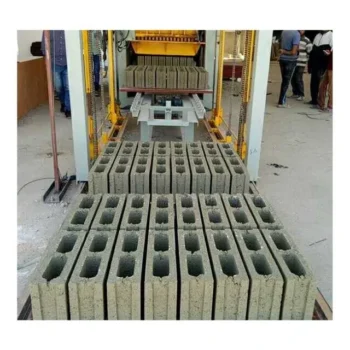
| Output — Hollow Block 400×200×200 mm | 1080-1440 pcs/h, 8640-11520 pcs/8hr (based on 6 pcs/mould, 15-20s cycle) |
| Output — Hollow Block 400×150×200 mm | 1440-1920 pcs/h, 11520-15360 pcs/8hr (based on 8 pcs/mould, 15-20s cycle) |
| Output — Solid Brick 240×115×53 mm | 5760-7680 pcs/h, 46080-61440 pcs/8hr (based on 32 pcs/mould, 15-20s cycle) |
| Output — Rectangular Paver 200×100×60 mm | 2160-2880 pcs/h, 17280-23040 pcs/8hr (based on 21 pcs/mould, 20-25s cycle) |
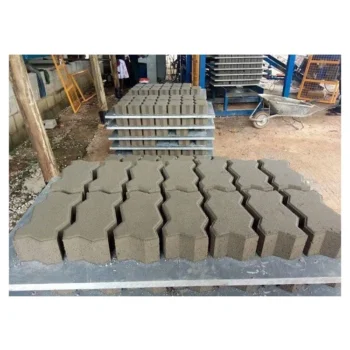
| Output — Zigzag Paver 225×112.5×60 mm | 2160-2880 pcs/h, 17280-23040 pcs/8hr (based on 15 pcs/mould, 20-25s cycle) |
| Raw Material Adaptability | Waste ash, slag, various aggregates; reduced cement dosage possible |
| Voltage & Frequency | To be confirmed against buyer’s local grid (basis not stated in source) |
| PLC Display Language | To be confirmed before manufacturing (basis not stated in source) |
| Automation Level | Automatic, intelligent electronic control |
| Warranty | 1 year for whole machine (excluding spare parts) |
Application Suitability
| Application | Material or Output |
|---|---|
| Hollow block production | Concrete with waste ash, slag, and local crushed aggregates in various cavity configurations |
| Solid brick production | Dense concrete mixes using locally available fine aggregates and cement |
| Rectangular paving brick | High-strength concrete for driveway, walkway, and municipal paving projects |
| Interlocking / zigzag paver | Interlocking profile concrete for heavy-traffic surfaces requiring mechanical keying |
| Multi-cellular brick | Lightweight or standard concrete mixes for partition and infill wall applications |
What "1080 Pieces per Hour" Actually Means on a Hollow Block Making Machine
Capacity only matters when you know which block format the number assumes.
Most quotations for a hollow block making machine specifications sheet quote a single cycles-per-hour figure and leave the buyer to work out what that means for their actual product. I have watched contractors receive a machine rated for impressive hourly output, only to discover the number assumed a small solid brick format they never intended to produce. On the QT6-15, the 1080-1440 pcs/h figure is valid only when pressing 400×200×200 mm hollow blocks at six per mould with a 15-20 second cycle. Switch to a 200×100×60 mm rectangular paver at 21 per mould with a 20-25 second cycle, and the throughput shifts to a different band entirely. Stating output per format is the only honest way to size a line [NEED_CITE: block machine capacity calculation standards by format].
Format-by-Format Throughput Reality
The hollow block making machine specifications for the QT6-15 differentiate cycle time between product families. Hollow blocks and solid bricks run at 15-20 seconds per cycle, while pavers — which demand higher compaction for surface wear resistance — extend to 20-25 seconds. This difference is not a footnote; it directly determines whether a single-shift operation can meet a contractor’s weekly delivery commitment. Buyers evaluating a hollow block making machine specifications sheet should map each target format to its cycle band before signing off on line capacity.
Pallet Dimensions and the Curing Area Bottleneck
The QT6-15 runs on 880×850 mm pallets, a size that governs everything downstream of the press. Curing rack spacing, forklift tine width, and stacking frame dimensions must all accommodate this footprint. I have seen plants where the machine arrived on schedule but the existing curing racks were built for a different pallet standard, forcing weeks of manual re-stacking. Before confirming an order, cross-reference the pallet size against your curing layout and material handling equipment [NEED_CITE: pallet handling compatibility in concrete block plants].
How Vibration Force and Hydraulic Pressure Interact
The 45 kN vibration force on the QT6-15 works through platform vibration, compacting the mix from below while hydraulic pressure closes the mould from above. The combination determines the green density of the block before curing, which in turn sets the achievable compressive strength — here rated above 15 MPa. However, vibration force alone does not guarantee strength. The mix design, aggregate gradation, and moisture content must align with the machine’s compaction energy. When I configured a similar press for a Middle Eastern project, the local limestone aggregate was harder than the default setting expected, and the hollow blocks came out under-compacted until we re-tuned the vibration frequency and hydraulic dwell. A hollow block making machine specifications sheet that lists vibration force without discussing mix compatibility is only telling half the story.
The Hidden Cost of Skipping Configuration Details
A machine ordered on catalogue defaults often arrives with a mould that produces the wrong block dimensions for the local market, a PLC display in a language the operators cannot read, or a voltage mismatch that delays commissioning by weeks. These are not manufacturing defects — they are specification gaps. The cost shows up as idle shifts, emergency air freight for transformer rentals, and mould rework that could have been avoided with a confirmed drawing before production [NEED_CITE: common commissioning delays in exported concrete machinery]. Buyers who skip the configuration conversation end up paying for it on the factory floor.
Why Sourcing the QT6-15 Through a Format-Focused Supplier Matters
Block machinery is the single focus here, which means the machine, mould, pallet, and handling equipment are specified as one matched system rather than assembled from separate vendors. Mould design covers the formats the buyer’s market actually sells, including custom drawings when standard cavity profiles do not match regional building codes. Configuration is set against the buyer’s local aggregate and target block format — not pulled from a catalogue default. Automation level is selectable, so a plant can begin with the QT6-15’s standard automatic cycle and integrate upstream batching or downstream stacking as volume grows. Installation support includes operator training, and mould and wear part availability is addressed before the first replacement falls due [NEED_CITE: after-sales parts supply for exported block machinery].
Documentation & Verification
- Line layout and capacity calculation stating which block format each output figure assumes
- Mould drawing and format list for buyer approval before manufacturing begins
- Pallet specification sheet cross-referenced with curing rack and forklift dimensions
- Voltage, frequency, and PLC display language confirmed in writing prior to build
- Factory test record on the buyer’s target block format before dispatch
- Hydraulic and electrical schematic for on-site maintenance reference
Installation, Commissioning & Support
- 1200 m² factory area required; confirm floor bearing capacity for 7 T machine mass and vibration load
- 37 kW total power draw; dedicated circuit with confirmed voltage and frequency before wiring
- Machine ships in dismantled modules; plan crane access and reassembly sequence on site
- First-run commissioning includes vibration frequency tuning to match buyer’s aggregate and mix
- PLC touch screen HMI training for operators covering cycle adjustment and fault diagnosis
- Wear parts and mould list supplied at delivery; establish reorder points for hydraulic seals and mould liners
What to Include in Your Inquiry
Provide the specific block formats your market demands, including dimensions and target compressive strength. Share your local aggregate type and any available mix design data so the vibration and hydraulic settings can be matched before build. Confirm your site voltage, frequency, and preferred PLC display language, along with your existing curing rack dimensions and forklift specifications so the pallet system integrates without rework.
Frequently Asked Questions
Q: How is the capacity figure calculated, and which block format does each output number assume?
A: Every capacity figure on the QT6-15 sheet is tied to a specific block format, mould cavity count, and cycle time range. For example, 8640-11520 pieces per eight-hour shift assumes 400×200×200 mm hollow blocks at six per mould with a 15-20 second cycle. Switching formats changes the number. We provide a capacity calculation document that lists each format separately before order confirmation.
Q: What pallet size does the machine use, and how does it affect my curing layout?
A: The QT6-15 uses 880×850 mm pallets. This dimension determines your curing rack slot width, forklift tine spacing, and stacking frame size. We supply a pallet specification sheet before production so you can verify compatibility with your existing curing area and handling equipment, avoiding costly reconfiguration after delivery.
Q: Can the machine be configured for my local aggregate and mix design?
A: Yes. The vibration frequency range of 0-60 Hz and the independent hydraulic station allow tuning to different aggregate densities and mix proportions. We request your local material data — aggregate type, gradation, and available cement content — and adjust the machine parameters accordingly rather than shipping a fixed catalogue setting.
Q: What block formats can one QT6-15 produce, and do I need separate moulds?
A: The press can produce hollow blocks, solid bricks, rectangular pavers, and interlocking pavers listed in the specifications. Each format requires its own mould, which is designed and supplied to match the exact dimensions your market requires. Custom mould drawings are available when standard profiles do not match regional building standards.
Q: What electrical and control details must I confirm before manufacturing starts?
A: Voltage, frequency, and PLC display language must be confirmed in writing before production begins. The QT6-15’s 37 kW power requirement and PLC touch screen HMI need to match your site’s electrical supply and your operators’ language. We document these details in the order confirmation to prevent commissioning delays on arrival.